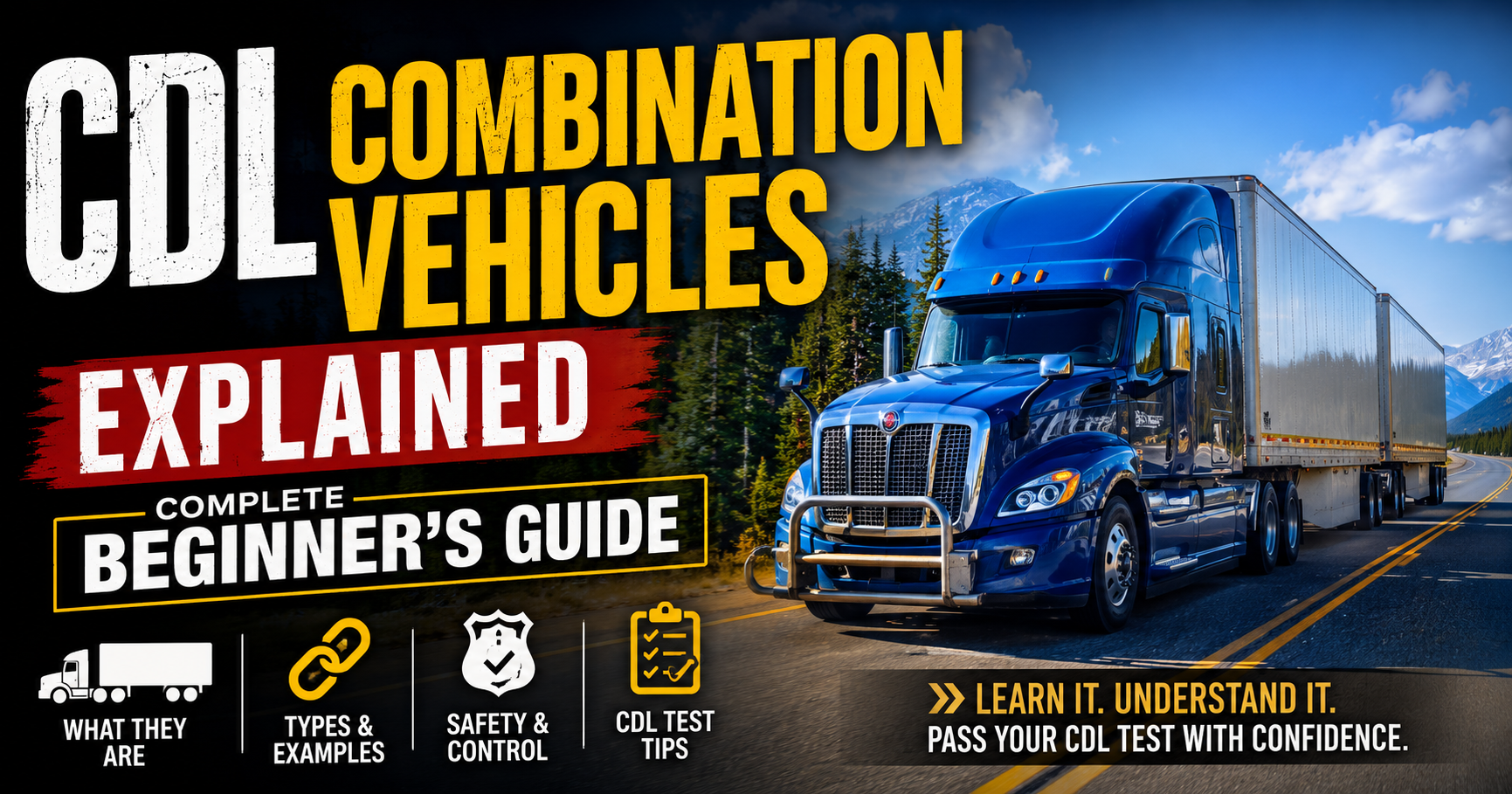
When I first climbed into a tractor-trailer, I honestly thought the trailer was the easy part.
After all, it just follows behind the truck…right?
Not even close.
Once I started learning about coupling, uncoupling, off-tracking, trailer swing, jackknifing, weight transfer, and pre-trip inspections, I realized driving a combination vehicle is very different from driving a straight truck. The What Is Landing Gear on a Semi Trailer? covers one of the trailer components involved when coupling and uncoupling a combination vehicle.
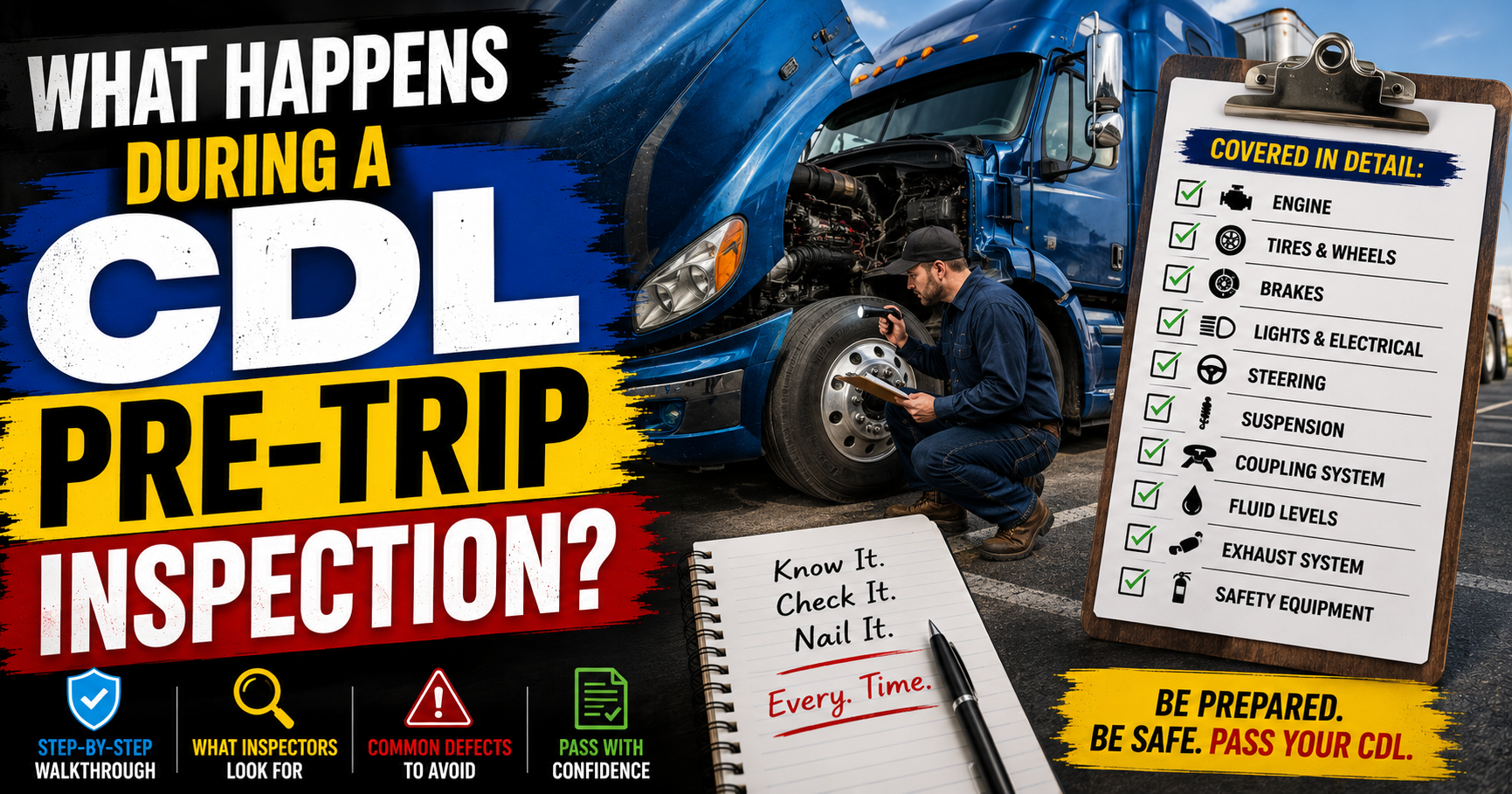
The trailer isn’t simply being pulled behind you. Because the trailer affects how the entire combination vehicle behaves, What Happens During a CDL Pre-Trip Inspection? is an important skill to understand before driving one.
It’s constantly affecting how your truck accelerates, turns, backs, stops, and handles every mile of the trip.
The good news is that once you understand why combination vehicles behave the way they do, they become much easier to drive safely.
This guide explains everything in plain English so you can understand the concepts instead of simply memorizing answers from the CDL manual.
If you’re preparing for your permit exam, I highly recommend working through our Free CDL Combination Vehicles Practice Test after reading this guide. It uses realistic CDL-style questions that reinforce everything you’ll learn here.
For even more practice, our CDL Master Question Bank PDF and 21-Day CDL Permit Exam Mastery Workbook PDF are excellent study tools that help many students pass on their first attempt.
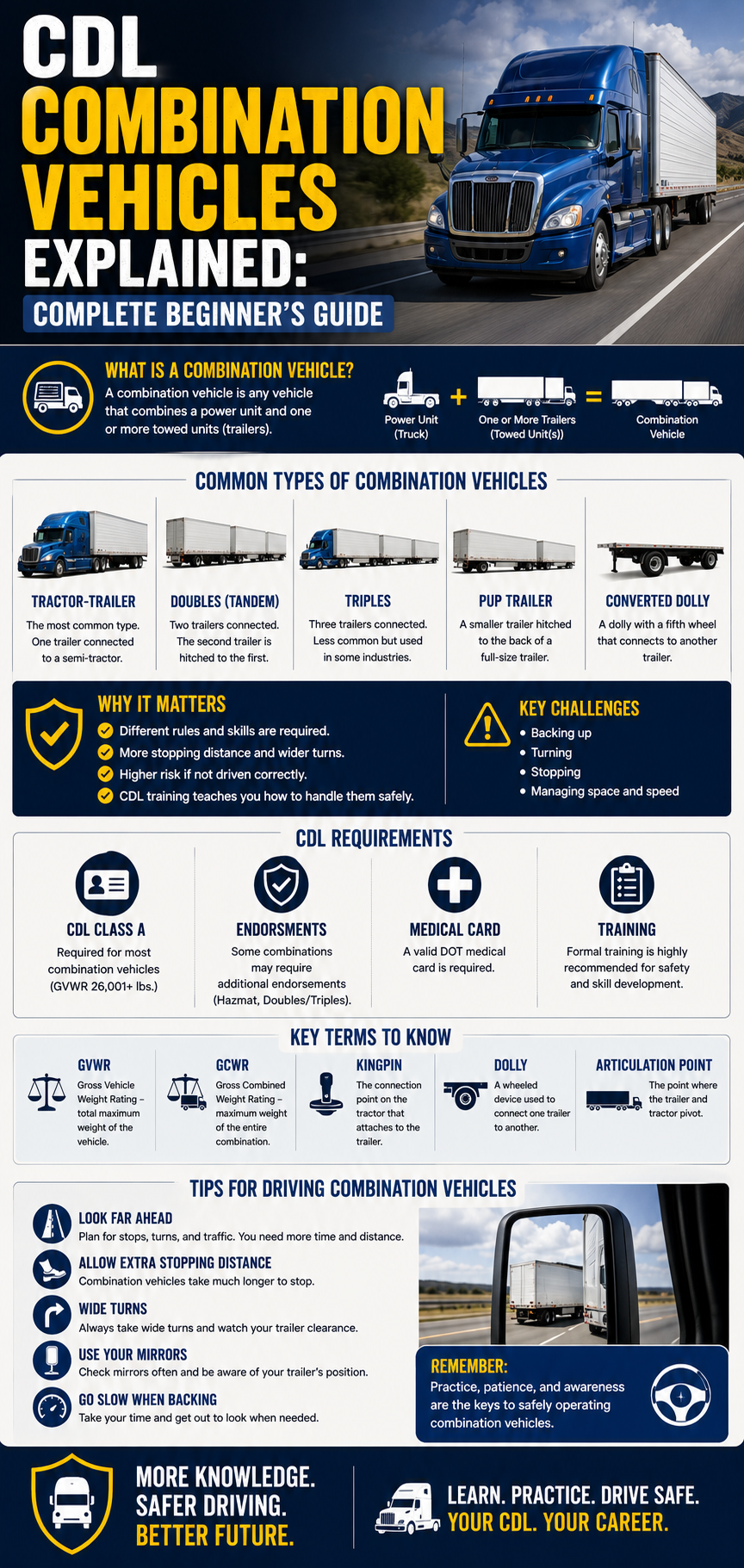
What Is a Combination Vehicle?
A combination vehicle is any commercial vehicle made up of two or more connected units. Because combination vehicles contain multiple connected units, GCWR Explained: What Every CDL Driver Should Know is an important weight rating to understand.
The most common example is a tractor pulling one semi-trailer.
However, the term also includes:
- Tractor-trailers
- Double trailers
- Triple trailers
- Truck and full trailer combinations
- Some specialized commercial combinations
The key idea is simple.
Instead of one rigid vehicle, you’re driving multiple units connected together.
That connection changes everything about how the vehicle behaves.
Why Combination Vehicles Handle Differently
Think about trying to pull a shopping cart backwards.
It doesn’t go exactly where you expect.
A trailer behaves similarly.
Because it’s connected at a pivot point instead of being rigidly attached, it constantly reacts to every steering input you make.
Every time you:
- Turn
- Accelerate
- Brake
- Change lanes
- Back up
the trailer responds differently than the tractor.
Learning how those movements affect each other is one of the biggest parts of becoming a professional truck driver.
The Two Main Parts of a Tractor-Trailer
Most new CDL drivers focus almost entirely on the tractor.
The reality is both halves are equally important.
The Tractor
The tractor contains:
- Engine
- Transmission
- Steering system
- Drive axles
- Air brake system
- Fifth wheel
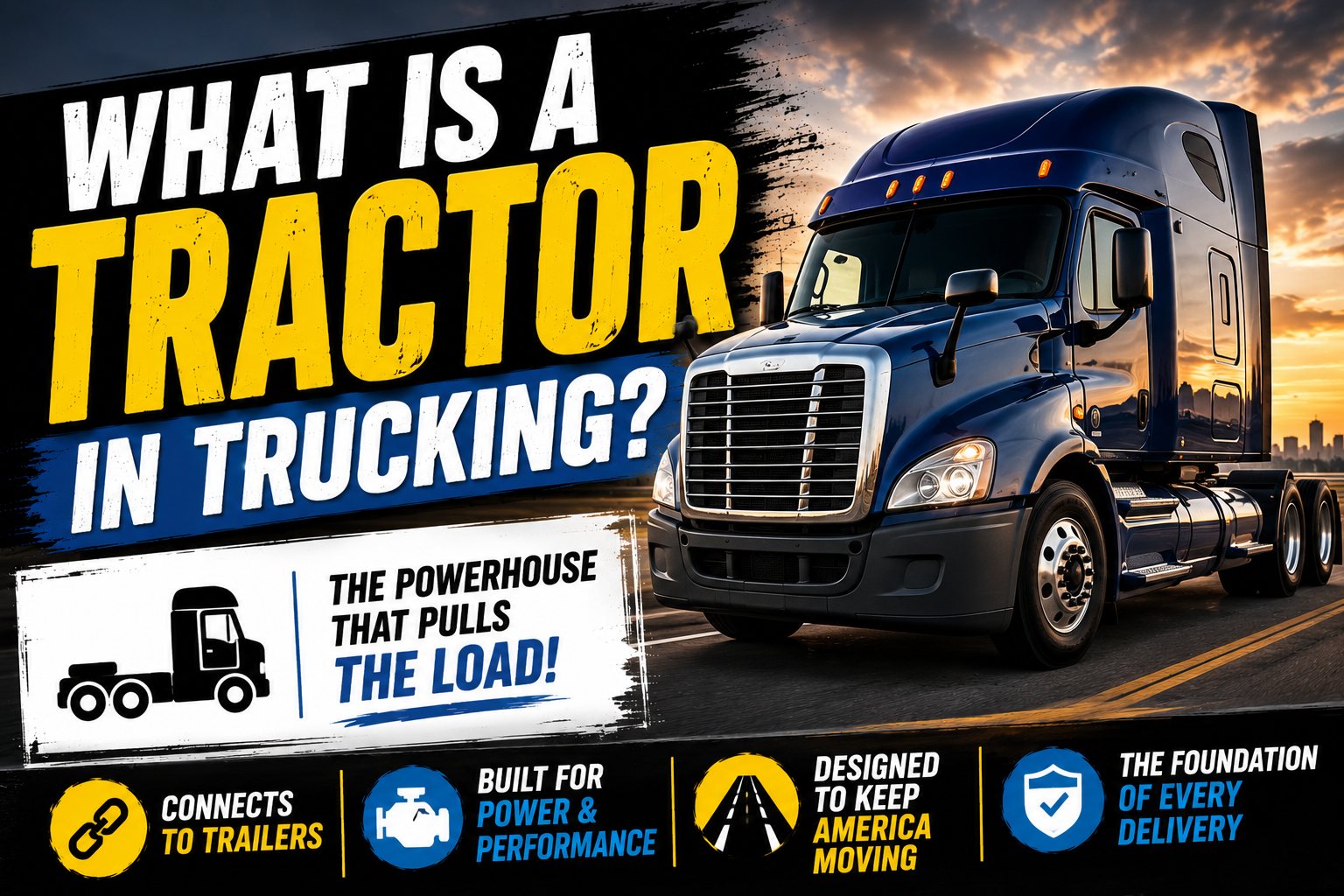
If you’re unfamiliar with the truck itself, our glossary article What Is a Tractor in Trucking? explains its major components and why it’s called a tractor in the first place.
The Trailer
The trailer carries the freight.
Depending on the job, it might be:
- Dry van
- Reefer
- Flatbed
- Step deck
- Lowboy
- Hopper bottom
- Walking floor
- Dump trailer
- Conestoga
Each trailer behaves a little differently because weight distribution, cargo height, suspension, and overall length all affect handling.
We’ve created detailed guides for each of these trailer types if you’d like to learn more about them individually.
The Fifth Wheel Is What Holds Everything Together
One of the most important parts of every tractor-trailer is the fifth wheel.
The fifth wheel is the large horseshoe-shaped coupling mounted to the tractor frame.
Its job is simple.
It securely locks onto the trailer’s kingpin while still allowing the trailer to pivot during turns.
Without this movement, making even a simple right turn would be impossible.
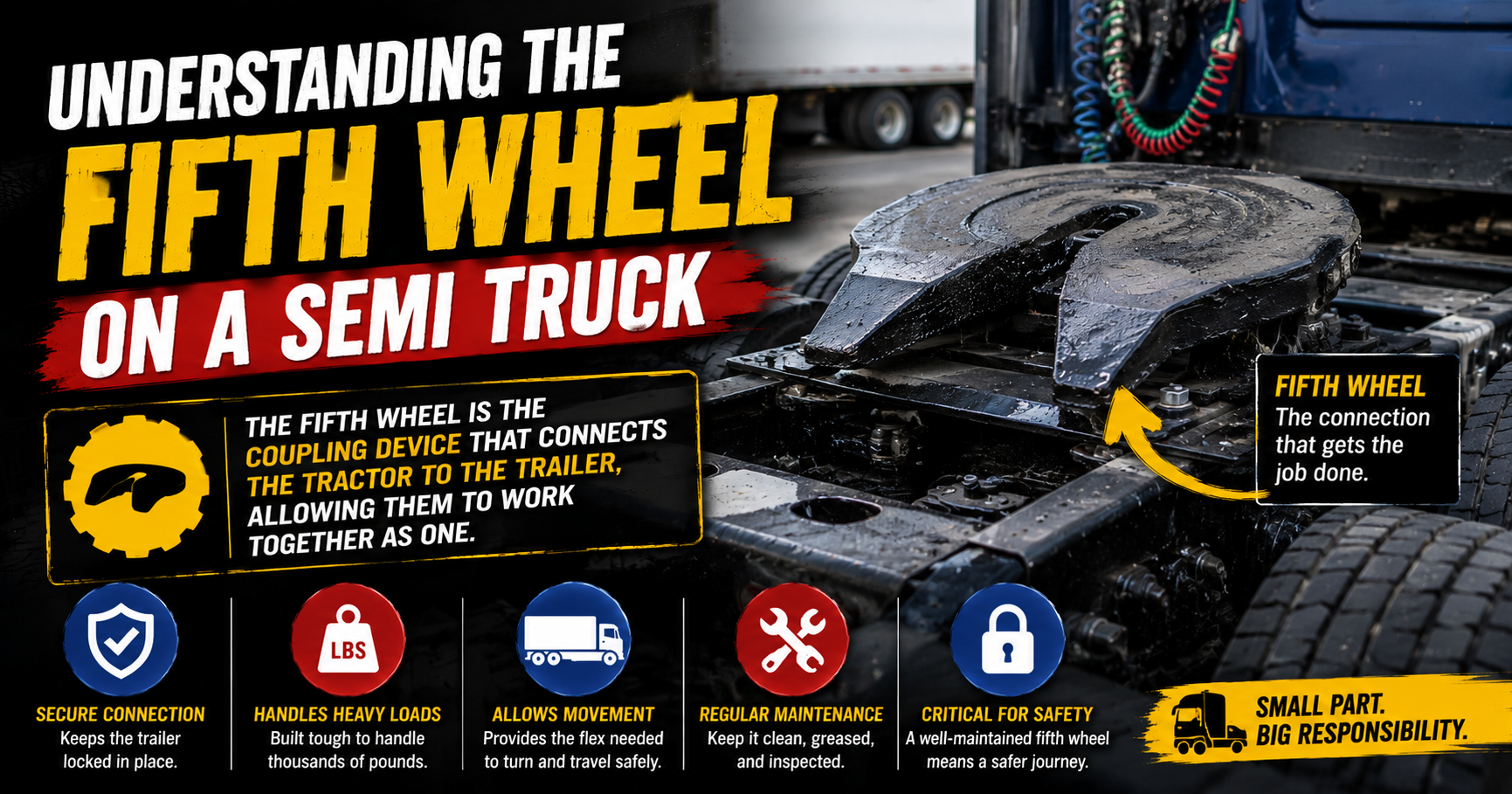
If you’d like a closer look, our article Understanding the Fifth Wheel on a Semi Truck explains how this critical component works.
The Kingpin Connects the Trailer
The trailer’s kingpin fits directly into the fifth wheel.
As you back the tractor under the trailer, the fifth wheel jaws lock around the kingpin.
This connection allows the tractor to pull tens of thousands of pounds safely while still permitting the trailer to rotate during turns.
If the kingpin or locking jaws fail, the trailer can separate from the tractor.
That’s why checking the connection is one of the most important parts of every pre-trip inspection.
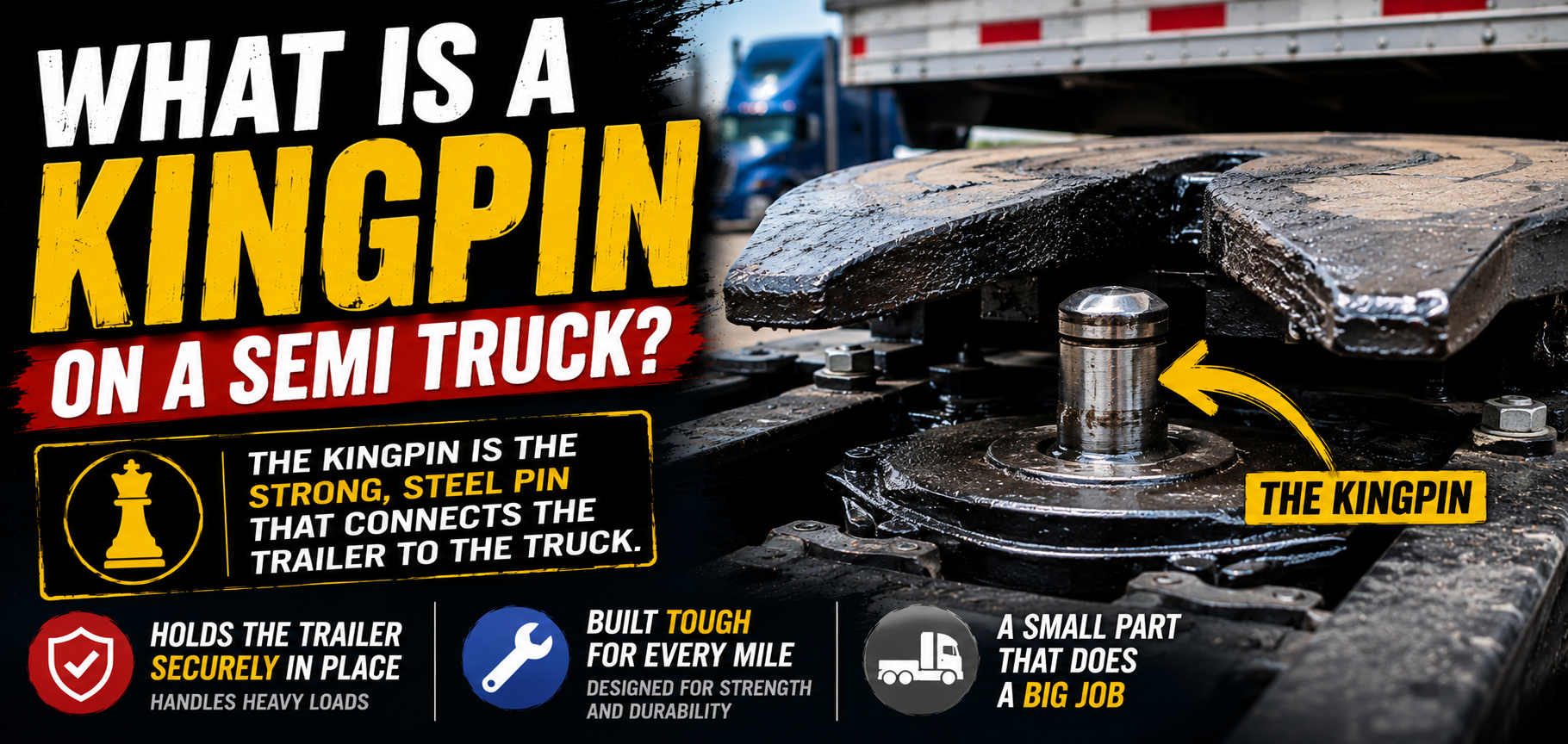
Our guide What Is a Kingpin on a Semi Truck? explains this connection in much greater detail.
Air and Electrical Connections
Connecting the trailer isn’t just about locking the kingpin.
The tractor also needs to supply:
- Air pressure
- Electrical power
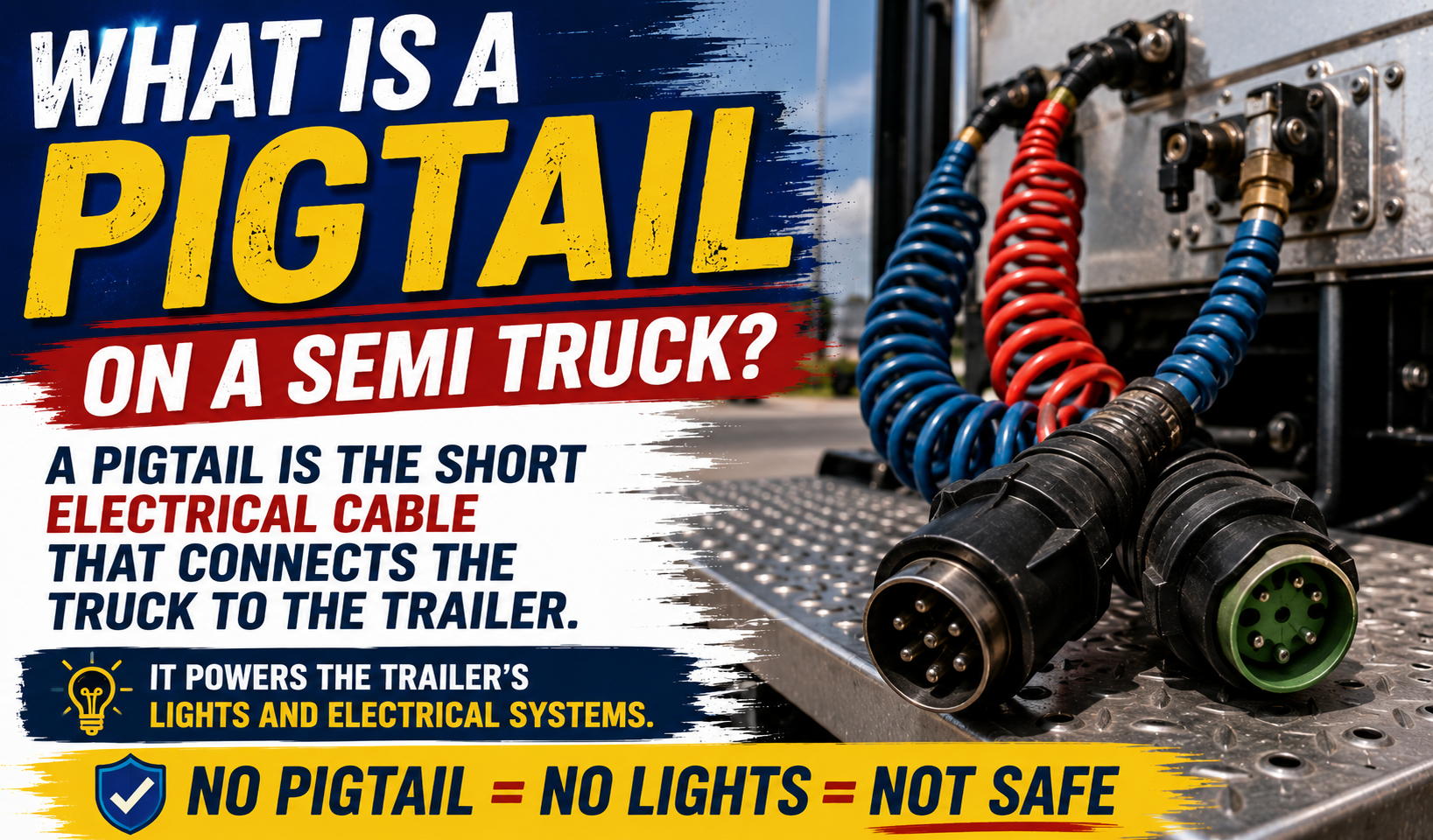
The electrical connection is made using the pigtail.
This powers:
- Brake lights
- Turn signals
- Marker lights
- ABS system
The compressed air travels through the air lines.
These lines supply air to the trailer’s braking system.
Before every trip, I always verify that both glad hands are securely connected and that the air lines aren’t rubbing, twisted, or damaged.
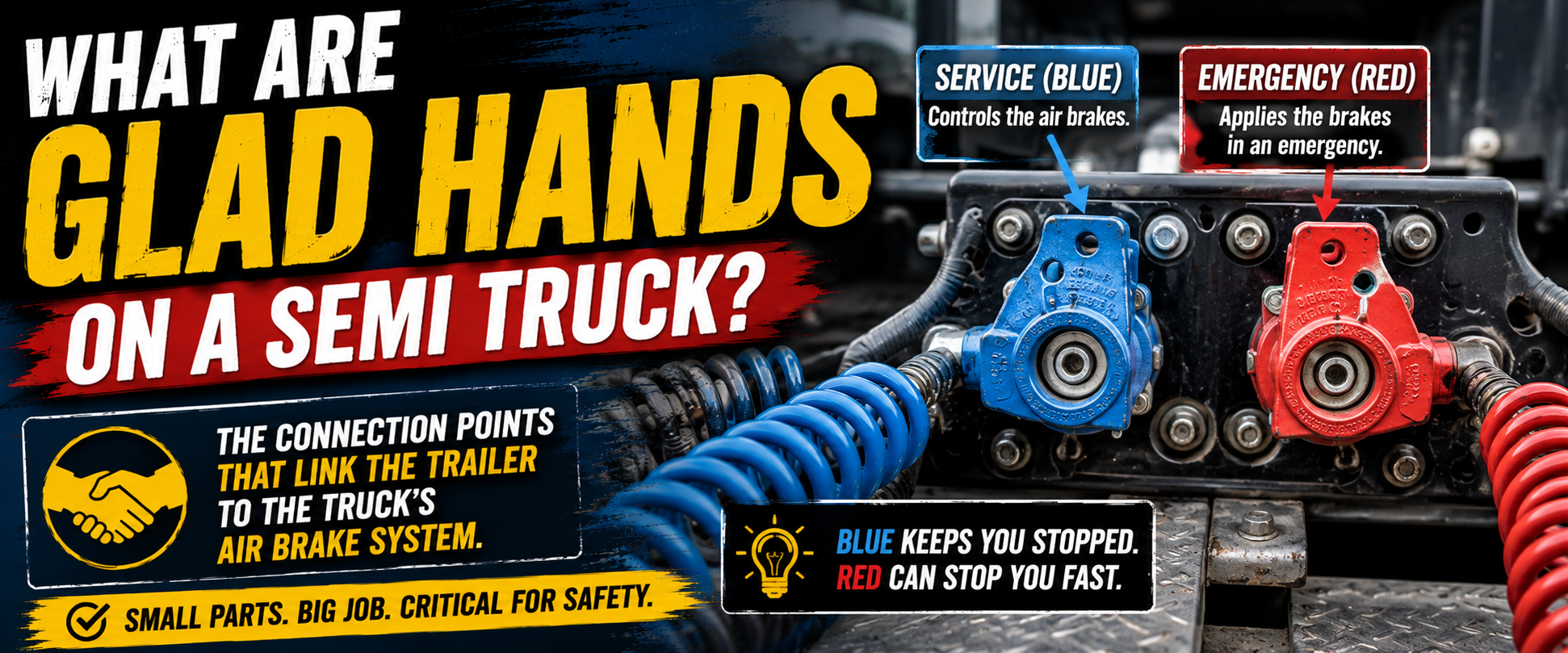
If you’re unfamiliar with these connectors, our article What Are Glad Hands on a Semi Truck? explains exactly how they seal the tractor and trailer air systems together.
Why Proper Coupling Matters
A tractor-trailer connection has to do much more than simply stay attached.
It must safely transfer:
- Pulling force
- Braking force
- Turning movement
- Vertical weight
An improperly coupled trailer can separate while driving.
Fortunately, that’s almost always preventable by following proper coupling procedures and performing a careful tug test before leaving the yard.
One minute spent checking your coupling is far better than dealing with a trailer separation on the interstate.
Coupling a Tractor and Trailer
Coupling a tractor to a trailer is one of the first hands-on skills you’ll learn during CDL training.
At first, it can seem like a long checklist.
After you’ve done it a few dozen times, it becomes second nature.
The important thing is understanding why each step matters.
Every part of the coupling process is designed to prevent one of the most dangerous situations in trucking: a trailer becoming disconnected from the tractor.
That’s why experienced drivers never rush it.

Step 1: Inspect the Trailer Before Backing Under It
Before I even start backing toward the trailer, I always take a quick walk around.
I’m looking for obvious problems like:
- Trailer leaning to one side
- Flat or damaged tires
- Landing gear damage
- Missing lights
- Broken air lines
- Damaged glad hands
- Visible frame damage
Finding a problem now is much easier than discovering it after you’re already hooked up.
Step 2: Check the Fifth Wheel
Next, I inspect the fifth wheel.
I make sure:
- The jaws are open.
- The release handle is in the proper position.
- The fifth wheel isn’t damaged.
- The surface has adequate grease.
- Nothing is blocking the kingpin.
A dry fifth wheel can make steering harder and increase wear over time.
Our guide Understanding the Fifth Wheel on a Semi Truck explains why regular inspection and lubrication are so important.
Step 3: Verify Trailer Height
This is one of the easiest mistakes for new drivers to make.
The trailer should be positioned so the tractor slightly lifts it while backing underneath.
If the trailer is too high, the tractor may hit the front of the trailer instead of coupling correctly.
If it’s too low, the tractor can push the trailer instead of sliding underneath it.
Proper trailer height allows the kingpin to enter the fifth wheel smoothly.
Step 4: Back Slowly
Backing under a trailer isn’t a race.
I back slowly while constantly checking both mirrors.
The goal is keeping the tractor centered with the kingpin.
Small steering corrections are much easier than trying to recover after getting badly out of alignment.
Step 5: Listen for the Lock
As the kingpin slides into the fifth wheel, you’ll usually hear the locking jaws snap into place.
That sound is reassuring.
But hearing it isn’t enough.
Never assume you’re properly coupled just because you heard a click.
Always verify.
The Tug Test
One of the best habits I ever learned was performing a tug test every single time.
After connecting:
- Set the trailer brakes.
- Put the tractor in a low gear.
- Gently pull forward.
If the fifth wheel locked correctly, the trailer won’t move.
If something wasn’t connected properly, you’ll find out at walking speed instead of highway speed.
Never skip this step.
Visual Inspection After Coupling
Once I’ve completed the tug test, I get back out of the truck.
I want to actually see the connection.
I’m checking:
- Fifth wheel jaws completely around the kingpin.
- No visible gap between the trailer apron and fifth wheel.
- Release handle fully seated.
- Kingpin appears properly centered.
- No obvious damage.
This quick inspection only takes a minute and confirms everything is locked exactly as it should be.
Connecting the Air Lines
Once the trailer is physically connected, it still can’t move safely until the air system is connected.
You’ll connect two air lines using the glad hands.
One supplies service brakes.
The other supplies emergency air and charges the trailer’s air system.
Before connecting them, I inspect each seal for damage and make sure the lines aren’t twisted.
Our guide What Are Glad Hands on a Semi Truck? explains how these connectors keep compressed air flowing between the tractor and trailer.
Connecting the Electrical Pigtail
Next comes the electrical connection.
The pigtail powers the trailer’s:
- Brake lights
- Turn signals
- Marker lights
- Clearance lights
- ABS warning system
A loose electrical connection can create several problems at once.
That’s why I always give the plug a quick tug after connecting it.
If it pulls out easily, it wasn’t fully seated.
Raising the Landing Gear
Once everything is connected, the trailer is supported by the tractor instead of the landing gear.
Now it’s time to raise the landing gear completely.
Our article What Is Landing Gear on a Semi Trailer? explains why these legs are much more important than many new drivers realize.
Before driving away, I verify:
- Both legs are fully raised.
- The crank handle is secured.
- Nothing is hanging down.
Driving with partially lowered landing gear can cause expensive damage.
Trailer ABS Check
Modern trailers include Anti-lock Braking Systems.
When you first connect the trailer, it’s normal for the trailer ABS light to illuminate briefly during its self-test.
If it stays on continuously, the system needs attention.
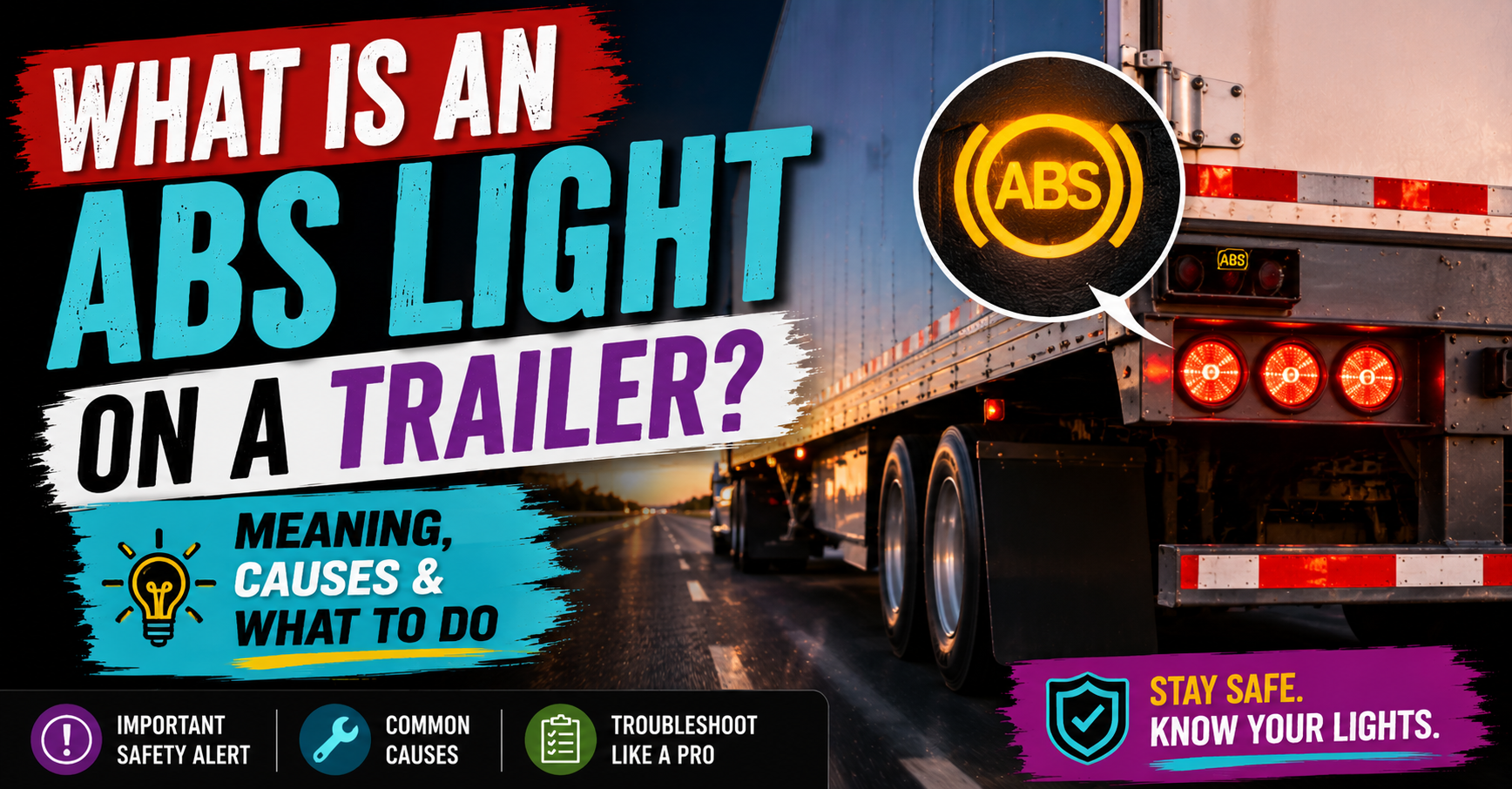
Our What Is an ABS Light on a Trailer? guide explains what the warning light means and when it indicates a problem.
Uncoupling the Trailer
Disconnecting the trailer is basically the reverse process, but it’s just as important.
Before uncoupling, I always make sure:
- The trailer is parked on firm, level ground whenever possible.
- The trailer brakes are set.
- The landing gear is lowered until it just supports the trailer.
- Air lines are disconnected carefully.
- The electrical pigtail is unplugged and stored properly.
- The release handle is pulled only after everything else is ready.
Rushing the uncoupling process is one of the easiest ways to damage equipment.
Common Coupling Mistakes
I’ve seen a handful of mistakes over and over again.
The most common include:
Skipping the Tug Test
Never trust sound alone.
Always verify the fifth wheel actually locked.
Forgetting the Landing Gear
I’ve watched drivers start pulling away with the landing gear still down.
Fortunately, most realize it before serious damage occurs.
Develop the habit of checking it every single time.
Twisted Air Lines
Air lines should have enough slack for turns but shouldn’t drag on the catwalk or frame.
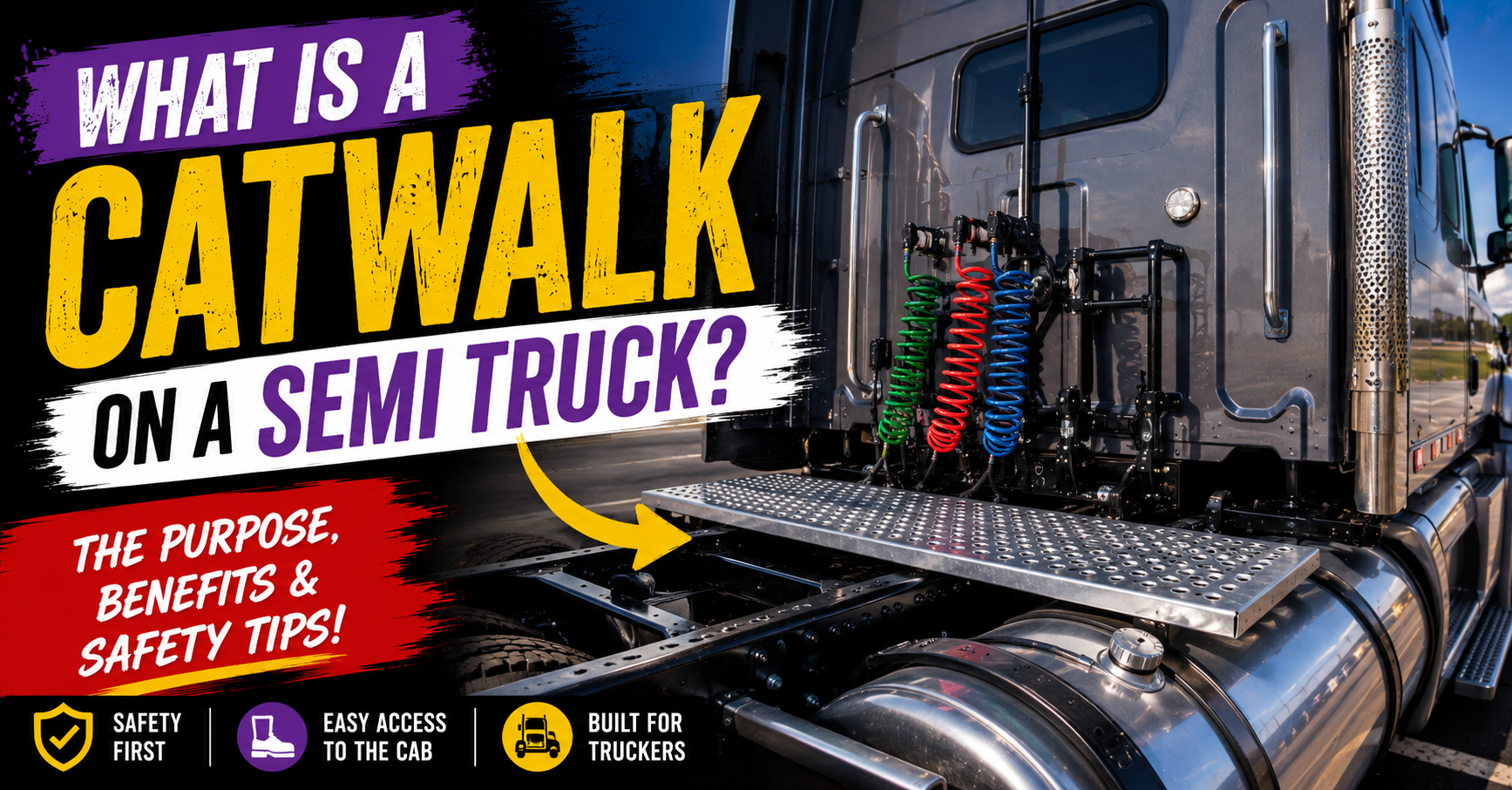
Our What Is a Catwalk on a Semi Truck? article explains why drivers often inspect this area before every trip.
Not Looking at the Fifth Wheel
A visual inspection catches problems that you simply can’t feel from inside the cab.
One minute spent looking can prevent a catastrophic trailer separation.
Weight Transfer Begins at the Fifth Wheel
One thing many new drivers don’t realize is that coupling isn’t just about attaching the trailer.
It’s also about transferring weight.
The trailer’s kingpin places thousands of pounds directly onto the tractor’s drive axles through the fifth wheel.
That weight increases traction, especially during acceleration and on slippery roads.
Understanding how weight moves between the tractor and trailer is one of the keys to understanding why combination vehicles handle the way they do.
In the next section, we’ll dive into trailer tracking, off-tracking, trailer swing, jackknifing, and why combination vehicles turn so differently than passenger vehicles. Those are some of the most important concepts you’ll need to master for both your CDL exam and real-world driving.
Why Combination Vehicles Turn Differently
One of the biggest adjustments new CDL drivers have to make is learning that a tractor-trailer doesn’t follow the same path as a passenger car.
The tractor and trailer are connected by a pivot point.
Every time you turn the steering wheel, the tractor changes direction first.
The trailer reacts a moment later.
That delay is completely normal, but it creates handling characteristics that every professional driver must learn to anticipate.
Once you understand how the trailer moves, making safe turns becomes much easier.
What Is Off-Tracking?
One of the most important combination vehicle concepts you’ll learn is off-tracking.
Off-tracking happens because the trailer always follows a shorter path through a turn than the tractor.
Imagine making a right turn at an intersection.
The tractor clears the curb without any problem.
The trailer, however, cuts the corner much tighter.
If you don’t allow enough room, the trailer tires may:
- Strike the curb.
- Hit a sign.
- Run over landscaping.
- Clip another vehicle.
- Strike a pedestrian.
That’s why experienced truck drivers often move slightly farther into an intersection before beginning the turn.
They’re creating enough space for the trailer to safely follow behind.
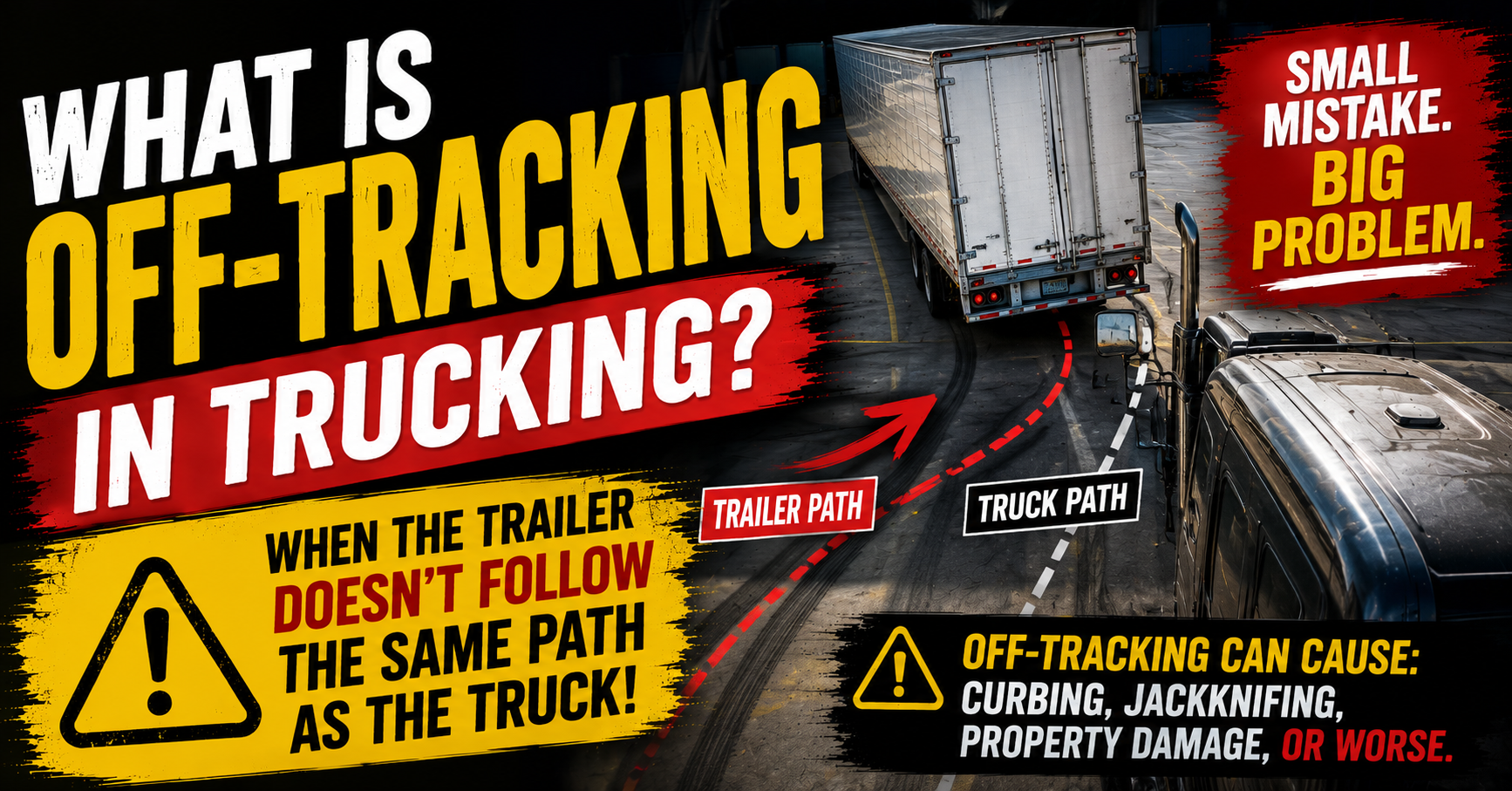
If you’d like a more detailed explanation, our guide on What Is Off-Tracking in Trucking? explains exactly why this happens.
Why Right Turns Are More Difficult
Right turns demand much more attention than left turns.
The trailer naturally wants to cut inside the tractor’s path.
The tighter the corner, the greater the amount of off-tracking.
When making right turns, I always remind myself of three things.
First, slow down.
Second, watch both mirrors continuously.
Third, don’t begin turning too early.
Starting the turn too soon is one of the quickest ways to hit a curb or another vehicle.
Trailer Swing
Most new CDL students focus entirely on what the trailer is doing behind them.
But there’s another movement that’s just as important.
It’s called trailer swing.
As the tractor begins turning, the rear of the trailer swings outward in the opposite direction.
For example, during a right turn, the rear of the trailer initially swings left.
That swing can surprise drivers in nearby lanes.
It can also strike:
- Parked vehicles.
- Fuel pumps.
- Utility poles.
- Signs.
- Fences.
- Pedestrians.
The longer the trailer, the more noticeable this swing becomes.
Lane Changes Require More Planning
Changing lanes in a tractor-trailer isn’t difficult, but it does require more patience.
Before every lane change, I follow the same routine.
I:
- Check both mirrors.
- Check traffic ahead.
- Activate my turn signal.
- Check my mirrors again.
- Make a gradual lane change.
Abrupt steering inputs can cause the trailer to sway much more than you might expect.
Smooth driving keeps everything stable.
Backing a Combination Vehicle
Backing is where many new drivers lose confidence.
The good news is that every experienced truck driver struggled with backing at some point.
The trailer moves opposite the direction you initially turn the steering wheel.
That sounds confusing until you practice it.
A small steering correction creates a small trailer movement.
A large steering correction creates a large trailer movement.
That’s why experienced drivers avoid making huge steering inputs whenever possible.
Small corrections are much easier to control.
Why GOAL Matters
One of the best habits you can develop is using GOAL.
GOAL stands for:
Get Out And Look.
If you’re unsure about clearance, don’t guess.
Stop.
Set the brakes if necessary.
Get out.
Look around the truck.
Then continue backing.
I’ve never heard another professional driver criticize someone for getting out to look.
I have heard plenty of stories about drivers wishing they had.
Blindside Backing
Most drivers consider blindside backing the most difficult backing maneuver.
During a blindside back, the trailer moves toward the passenger side.
That limits visibility because the trailer blocks much of what you’re trying to see.
Even experienced drivers take blindside backing slowly.
Whenever possible, I choose a sight-side backing maneuver instead.
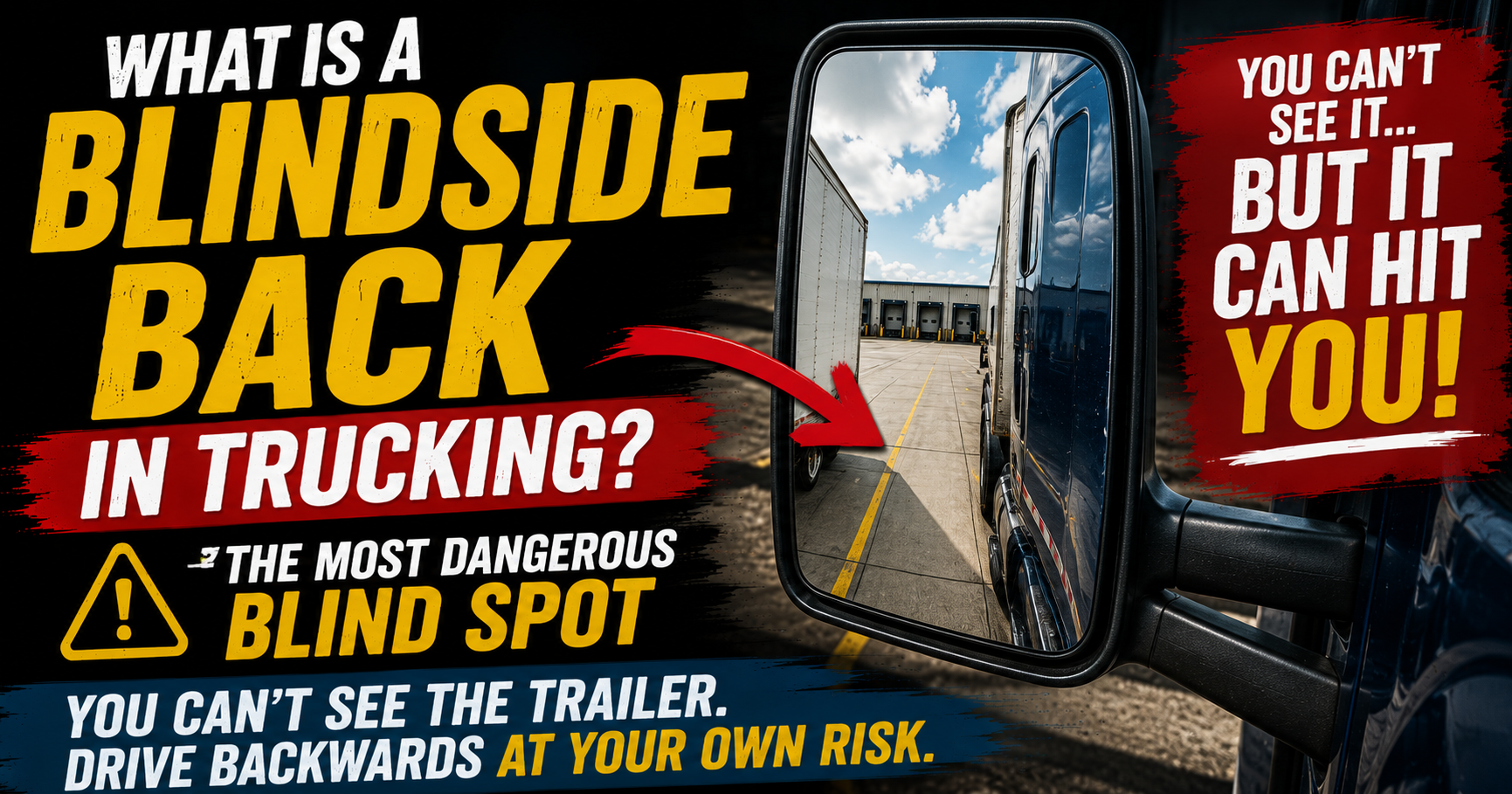
If you’d like to understand the differences, we’ve created detailed guides explaining both What Is a Blindside Back in Trucking? and What Is a Sight-Side Back in Trucking?.
Following Distance Matters Even More
A combination vehicle takes significantly longer to stop than a passenger car.
That means following distance becomes one of your greatest safety tools.
I never want to put myself in a position where I have to slam on the brakes.
Instead, I try to see problems developing well ahead.
The extra space gives me time to:
- Slow gradually.
- Change lanes safely.
- Avoid panic braking.
- Reduce the chance of a jackknife.
Professional driving is about planning ahead, not reacting at the last second.
What Is a Jackknife?
One word every CDL student eventually hears is jackknife.
A jackknife occurs when the tractor and trailer fold toward each other instead of remaining aligned.
Viewed from above, they resemble a partially folded pocketknife.
That’s where the name comes from.
Jackknifes are among the most dangerous crashes involving combination vehicles because the driver often loses directional control.
What Causes a Jackknife?
Several situations increase the risk.
Some of the most common include:
- Braking too hard.
- Driving too fast on slippery roads.
- Sudden steering movements.
- Improper weight distribution.
- Tire traction loss.
- Poor following distance.
Most jackknifes begin when the drive tires lose traction while the trailer continues pushing forward.
How to Reduce the Risk of Jackknifing
Fortunately, most jackknife crashes are preventable.
The habits that reduce the risk include:
- Slow down before curves.
- Increase following distance.
- Brake early instead of suddenly.
- Make smooth steering inputs.
- Reduce speed on wet or icy roads.
- Inspect your tires regularly.
- Keep your brakes properly maintained.
Safe driving habits prevent far more jackknifes than advanced driving skills ever will.
Weight Distribution Changes Everything
One thing you’ll notice quickly is that every load handles a little differently.
A lightly loaded trailer won’t respond exactly like a fully loaded one.
Weight affects:
- Acceleration.
- Braking.
- Turning.
- Stability.
- Ride quality.
Improperly distributed cargo can make handling even worse.
That’s why understanding proper cargo loading is just as important as learning how to drive.
If you’re studying for your CDL exam, our Free CDL Cargo Loading, Weight Distribution & Securement Practice Test is an excellent way to strengthen your understanding of these concepts before test day.
Every Combination Vehicle Is Different
One lesson trucking teaches very quickly is that no two combinations feel exactly alike.
A day cab pulling an empty dry van handles differently than a sleeper cab pulling a fully loaded refrigerated trailer.
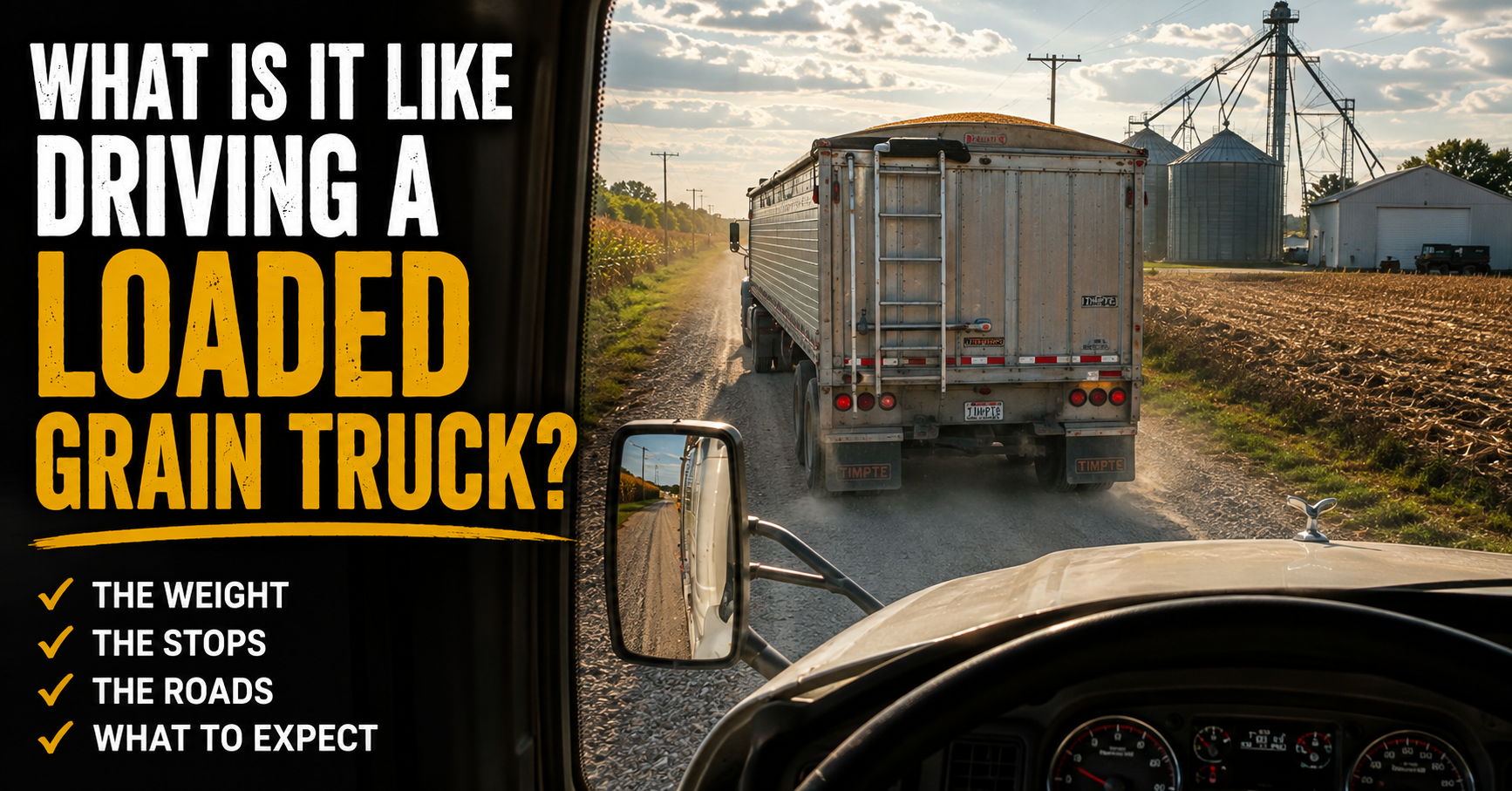
A flatbed loaded with steel behaves differently than a hopper bottom full of corn.
Even trailer length changes how the truck turns and backs.
That’s why experienced drivers take a few miles to get a feel for every load before settling into their trip.
Understanding how your specific combination vehicle responds is one of the most valuable skills you’ll ever develop behind the wheel.
Performing a Combination Vehicle Pre-Trip Inspection
A good pre-trip inspection is one of the most valuable habits you’ll develop as a professional driver.
It’s not just about passing your CDL skills test.
It’s about finding small problems before they leave you stranded on the side of the highway or create a dangerous situation for you and everyone else on the road.
When I inspect a combination vehicle, I always work from front to back.
That helps ensure I don’t accidentally skip anything.
Start With the Tractor
Before I even think about the trailer, I inspect the tractor.
I’m checking the same items I would inspect on any commercial vehicle.
That includes:
- Engine compartment.
- Steering components.
- Suspension.
- Tires.
- Wheels.
- Lights.
- Mirrors.
- Windshield.
- Wipers.
- Horn.
- Air brake system.
Our CDL Vehicle Inspection Practice Test is an excellent way to practice identifying these components before your CDL exam.
Inspect the Coupling System Carefully
The coupling system deserves extra attention because it’s what holds the tractor and trailer together.
I inspect the:
- Fifth wheel.
- Kingpin.
- Locking jaws.
- Release arm.
- Fifth wheel platform.
- Mounting bolts.
- Safety latch.
I’m looking for:
- Cracks.
- Missing hardware.
- Excessive wear.
- Improper locking.
- Lack of lubrication.
Even a small issue here can become a serious problem.
If you’d like a refresher, our guides on Understanding the Fifth Wheel on a Semi Truck and What Is a Kingpin on a Semi Truck? explain why these parts are so important.
Check the Air Connections
Next I inspect both air lines.
I’m looking for:
- Cuts.
- Cracks.
- Abrasions.
- Leaks.
- Loose fittings.
- Twisted hoses.
I also make sure the glad hands are properly connected and the rubber seals are in good condition.
Air leaks may seem small, but they can eventually reduce system pressure enough to create serious braking problems.
Our What Are Glad Hands on a Semi Truck? article explains how these connectors keep both air systems working together.
Inspect the Electrical Connection
The electrical pigtail deserves just as much attention.
I’m checking that:
- The plug is fully seated.
- The cable isn’t pinched.
- The wiring isn’t damaged.
- The connector is secure.
- The cable has enough slack during turns.
Without this connection, your trailer lights and ABS system may not function properly.
Our guide on What Is a Pigtail on a Semi Truck? explains this connection in more detail.
Landing Gear Inspection
The landing gear is often overlooked because most drivers don’t think about it until they need it.
During my inspection I check:
- Both legs.
- Cross brace.
- Mounting bolts.
- Gearbox.
- Crank handle.
- Foot pads.
Everything should be straight, secure, and fully raised before driving.
You can learn more in our article What Is Landing Gear on a Semi Trailer?.
Trailer Inspection
Once the coupling area is complete, I continue around the trailer.
I’m looking at:
- Frame.
- Cross members.
- Suspension.
- Axles.
- Wheels.
- Tires.
- Lights.
- Reflectors.
- Mud flaps.
- Doors.
- Roof (when visible).
Different trailer types have additional inspection points.
For example, a flatbed requires checking chains and binders.
A hopper bottom requires inspecting hopper gates.
A dump trailer requires checking the hydraulic system.
Knowing your equipment is part of becoming a professional driver.
Trailer Brake Inspection
The trailer’s brakes deserve just as much attention as the tractor’s.
I’m checking:
- Brake chambers.
- Pushrods.
- Slack adjusters.
- Brake drums.
- Brake shoes.
- Air lines.
If any of these names sound unfamiliar, we’ve created detailed guides covering each one:
- What Is a Brake Chamber on a Semi Truck?
- What Is a Pushrod on a Semi Truck?
- What Is a Slack Adjuster on a Semi Truck?
- What Is an S-Cam Brake?
- What Is a Brake Drum on a Semi Truck?
- What Are Brake Shoes on a Semi Truck?
Understanding how these components work together makes your inspection much easier than simply memorizing a checklist.
Testing the Trailer Brakes
Once the inspection is complete, I verify that the trailer brakes are actually working.
One simple check is the trailer brake tug test.
With the trailer brakes applied, gently try pulling forward.
The trailer should resist movement.
Then perform the opposite test.
Release the trailer brakes, apply the tractor brakes, and verify the tractor holds while the trailer remains free.
These quick checks help confirm that both braking systems are functioning correctly before heading onto the highway.
Railroad Crossings Require Extra Attention
Combination vehicles require more planning at railroad crossings than passenger vehicles.
Longer vehicles take more time to clear the tracks.
Always:
- Slow down.
- Look both directions.
- Listen for trains.
- Never stop on the tracks.
- Make sure there’s enough room on the opposite side before crossing.
Getting trapped on railroad tracks is one of the most dangerous situations a commercial driver can face.
Our Free CDL Railroad Crossings & Route Planning Practice Test covers these situations in much greater detail.
Driving in Wind
One thing you’ll learn quickly is that trailers act like giant sails.
Strong crosswinds can push a trailer sideways, especially when it’s lightly loaded or empty.
When winds increase, I:
- Reduce speed.
- Hold the steering wheel firmly.
- Increase following distance.
- Avoid sudden steering corrections.
Slowing down is almost always the safest decision.
Driving at Night
Combination vehicles become even more challenging after dark.
Visibility decreases.
Depth perception changes.
Fatigue becomes more noticeable.
I always make sure:
- All lights are working.
- Mirrors are clean.
- Windshield is clean.
- Speed matches visibility.
Our Free CDL Night Driving & Driver Fitness Practice Test covers many of these topics if you’re preparing for your permit exam.
One Piece of Equipment I Always Carry
Pre-trip inspections don’t always happen in broad daylight.
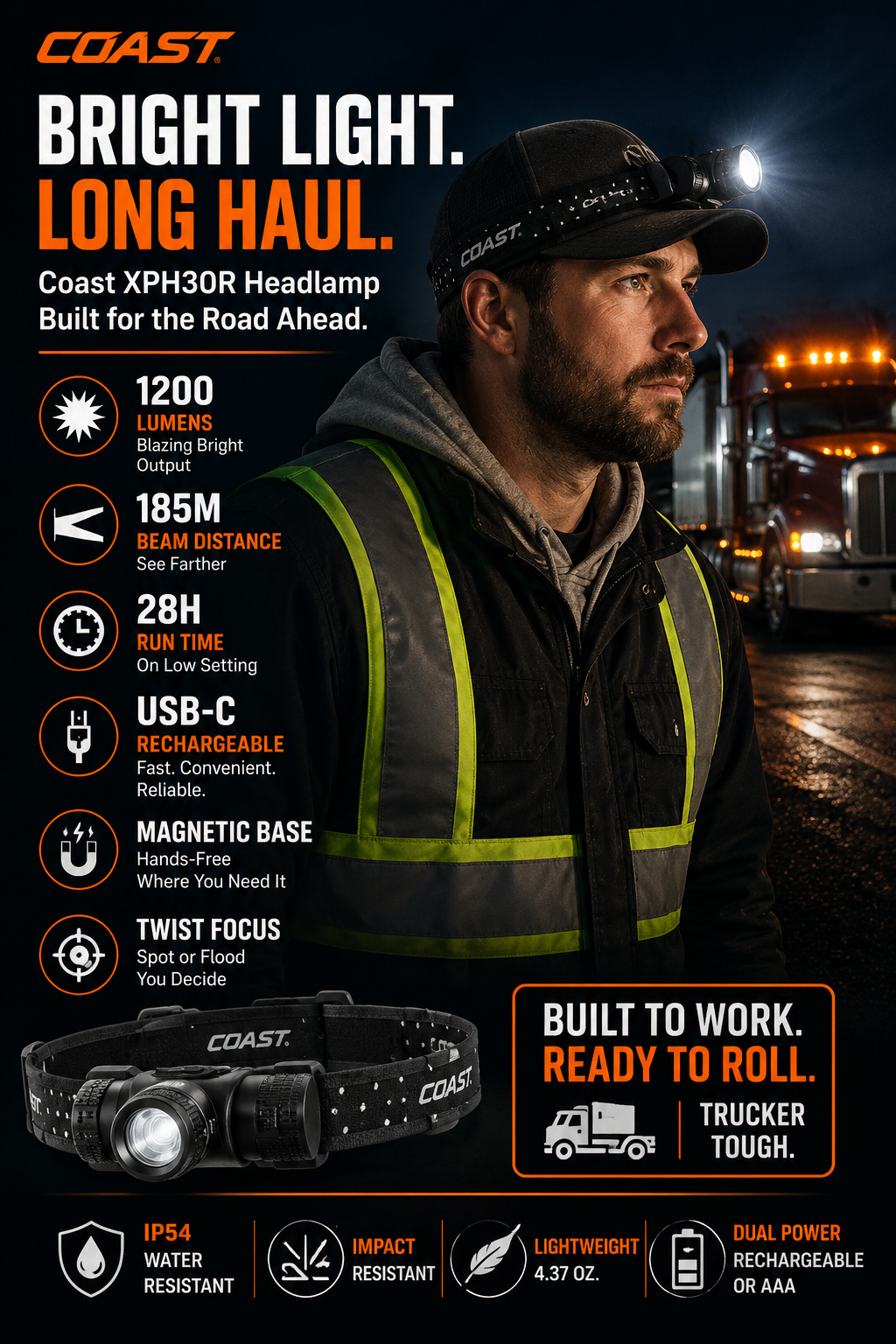
That’s why I keep the Coast XPH30R USB-C Rechargeable Dual Power Headlamp in my truck.
Having both hands free makes inspecting brake components, air lines, the fifth wheel, and trailer connections much easier before sunrise or after sunset.
It’s one of those tools I use far more often than I ever expected.
Why Experienced Drivers Rarely Skip Inspections
After enough years behind the wheel, you start realizing something.
Major breakdowns rarely happen without warning.
Usually there were small clues first.
A loose airline.
A worn tire.
A leaking glad hand.
A damaged brake chamber.
A missing mounting bolt.
The pre-trip inspection is your opportunity to catch those problems before they become expensive repairs or dangerous failures.
That’s why the best drivers don’t view inspections as a chore.
They view them as one of the most valuable parts of the job.
Emergency Situations Every Combination Vehicle Driver Should Know
One thing I’ve learned over the years is that emergencies rarely happen exactly the way you expect.
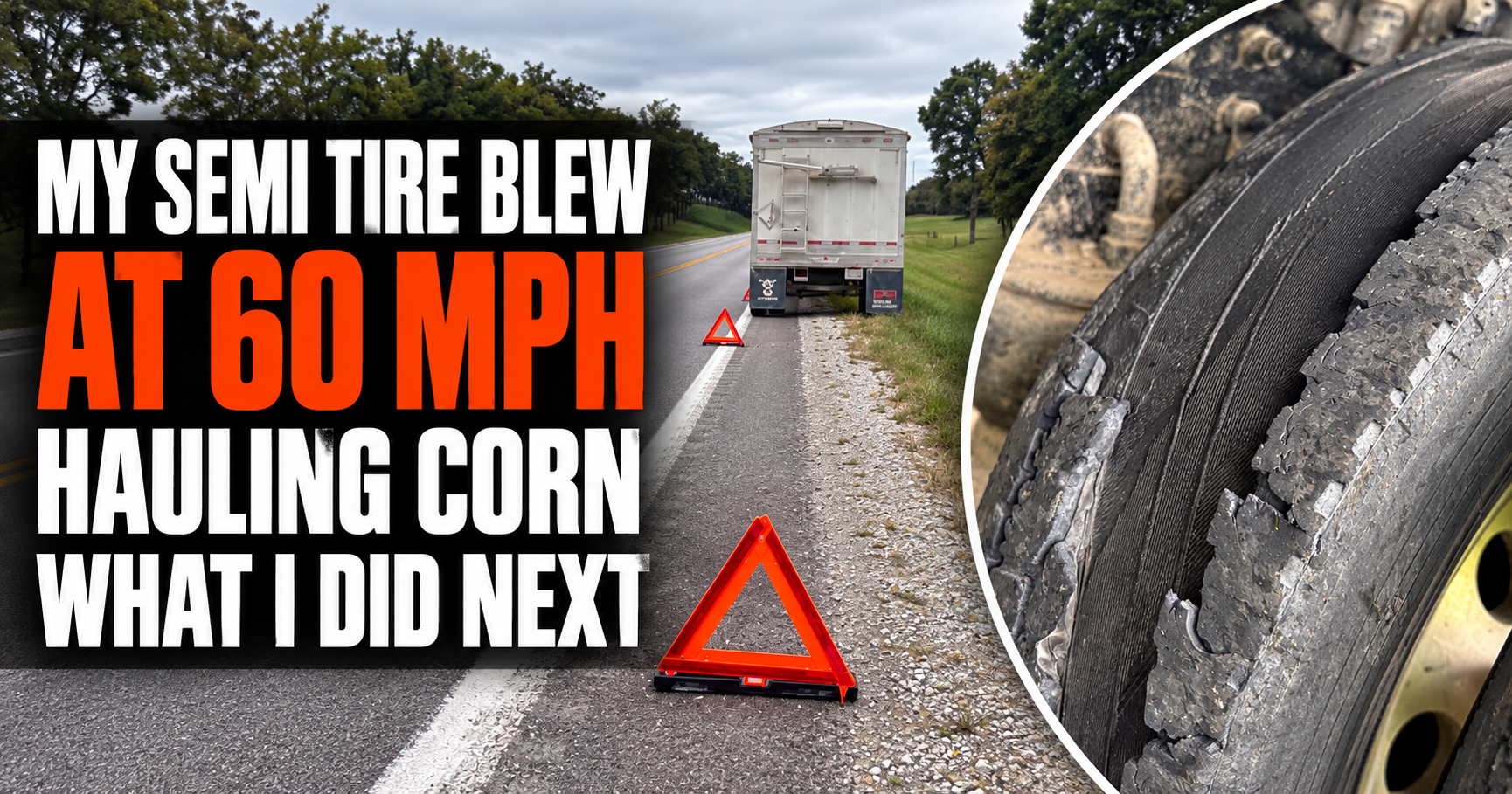
A tire blows.
A car suddenly cuts you off.
Traffic comes to a complete stop around a blind curve.
The drivers who handle these situations the best aren’t necessarily the most experienced.
They’re the ones who stayed calm and relied on good driving habits instead of panic.
Combination vehicles give you much less room for error than passenger cars, so knowing how to react can make all the difference.
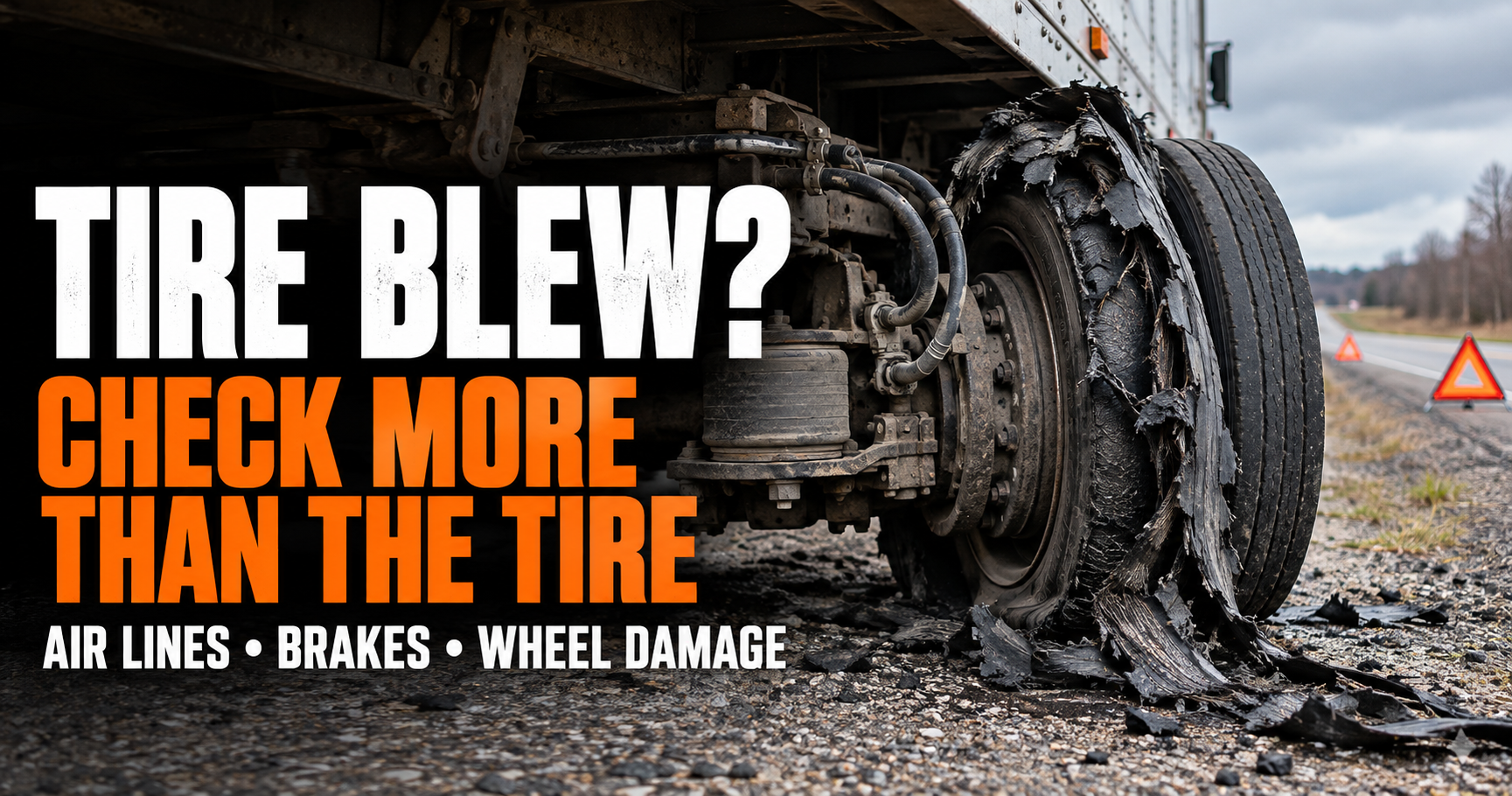
What to Do During a Tire Blowout
Few things get a new driver’s heart racing faster than hearing a tire explode.
A steer tire blowout can feel violent.
The truck may suddenly pull toward the damaged tire.
Your first instinct might be to slam on the brakes.
Don’t.
Instead:
- Grip the steering wheel firmly.
- Stay in your lane.
- Ease off the accelerator.
- Allow the truck to slow gradually.
- Move to a safe location once you’re in control.
Sudden braking or aggressive steering can make the situation much worse.
Recovering From a Skid
Commercial vehicles can skid for several reasons.
Wet pavement.
Ice.
Snow.
Loose gravel.
Overly aggressive braking.
If the drive wheels begin skidding, your first priority is regaining traction.
That usually means:
- Staying calm.
- Looking where you want the truck to go.
- Avoiding sudden steering movements.
- Avoiding panic braking.
Smooth inputs almost always produce better results than aggressive ones.
Our Free CDL Emergency Procedures, Skids & Breakdowns Practice Test covers many of these situations and explains the safest responses.
What If the Trailer Starts Jackknifing?
If you feel the trailer beginning to swing toward the tractor, the worst thing you can usually do is overreact.
Stay focused.
Keep your eyes looking ahead.
Avoid jerking the steering wheel.
As road conditions allow, reduce speed in a controlled manner while working to regain traction.
Preventing jackknifes always starts long before the emergency develops.
Safe speeds.
Proper following distance.
Smooth braking.
Those habits prevent far more jackknifes than any emergency maneuver ever will.
What If the Trailer Starts Swaying?
Trailer sway feels different than a jackknife.
Instead of folding toward the tractor, the trailer begins moving back and forth behind the truck.
This can happen because of:
- High winds.
- Improperly balanced cargo.
- Excessive speed.
- Sudden steering inputs.
If sway develops:
- Keep both hands on the wheel.
- Reduce speed gradually.
- Avoid abrupt steering corrections.
- Continue looking well down the road.
Trying to “fight” the trailer with aggressive steering usually makes the sway worse.
Driving Through Heavy Rain
Rain changes everything.
Stopping distances increase.
Visibility decreases.
Hydroplaning becomes possible.
Whenever heavy rain starts, I immediately begin increasing my following distance.
I also reduce speed well before I actually feel the road becoming slippery.
Professional drivers don’t wait for conditions to become dangerous before adjusting their driving.
They adjust early.
Winter Driving With a Combination Vehicle
Snow and ice demand patience.
Even the best tractor-trailer can’t overcome physics.
On slippery roads I always:
- Reduce speed.
- Increase following distance.
- Make very gradual steering movements.
- Brake much earlier.
- Avoid sudden lane changes.
Our Free CDL Weather, Winter & Mountain Driving Practice Test covers many of these situations in greater detail and is excellent practice before your permit exam.
Driving in Heavy Traffic
Urban traffic presents different challenges than open highways.
Instead of worrying about weather, you’re constantly watching:
- Cars merging.
- Motorcycles.
- Bicycles.
- Pedestrians.
- Delivery trucks.
- Traffic lights.
One habit that’s helped me throughout my career is looking as far ahead as possible.
The sooner I spot slowing traffic, the smoother I can adjust my speed.
That helps reduce unnecessary braking and gives drivers behind me more time to react.
Space Management Is Your Best Safety Tool
People often ask experienced truck drivers what skill matters most.
For me, it’s managing space.
I always want:
- Plenty of following distance.
- Space beside the truck when possible.
- Room behind me.
- An escape route if traffic suddenly stops.
Space buys you time.
Time allows you to make better decisions.
Don’t Let Other Drivers Rush You
One lesson every new CDL driver eventually learns is this:
Someone will always be in a hurry.
Cars may:
- Tailgate.
- Cut you off.
- Honk.
- Pass aggressively.
Don’t let them pressure you into driving faster than conditions allow.
You’re responsible for safely operating an 80,000-pound commercial vehicle.
The impatient driver behind you isn’t.
The Most Common Combination Vehicle Mistakes
After years of watching new drivers learn, I’ve noticed the same mistakes appear again and again.
Turning Too Soon
This almost always leads to the trailer cutting the corner.
Take your time and let the tractor move farther into the intersection before beginning the turn.
Following Too Closely
Tailgating removes your options.
Leave yourself enough space to react without panic braking.
Looking Only Straight Ahead
Professional drivers constantly scan mirrors.
A combination vehicle requires awareness of what’s happening beside and behind you just as much as what’s happening ahead.
Rushing Backing Maneuvers
Backing slowly almost always saves time.
Backing too fast usually creates mistakes that take even longer to fix.
Never hesitate to stop and Get Out And Look.
Skipping the Tug Test
This is one shortcut that’s never worth taking.
A proper tug test verifies your trailer is securely coupled before you enter traffic.
Combination Vehicle Questions You’ll See on the CDL Exam
If you’re preparing for your permit test, expect questions covering topics like:
- Proper coupling procedures.
- Uncoupling steps.
- Fifth wheel inspections.
- Kingpin inspections.
- Trailer air lines.
- Glad hands.
- Landing gear.
- Trailer brake testing.
- Off-tracking.
- Trailer swing.
- Jackknifing.
- Safe backing.
- Following distance.
- Weight transfer.
Our Free CDL Combination Vehicles Practice Test is one of the best ways to see these concepts in realistic exam-style questions before taking your actual test.
Build Your Confidence Before Test Day
Reading is important.
Practice is even better.
After working through this guide, I recommend taking multiple practice exams until the concepts start feeling natural instead of memorized.
Our CDL Master Question Bank PDF includes hundreds of realistic practice questions covering every major CDL subject.
If you’d rather follow a structured study schedule, the 21-Day CDL Permit Exam Mastery Workbook PDF walks you through exactly what to study each day so you can build confidence without feeling overwhelmed.
The more time you spend practicing now, the more comfortable you’ll feel when both your permit exam and your first day behind the wheel finally arrive.
Author: Mike Reynolds
Mike Reynolds spent more than 25 years hauling dry vans, refrigerated trailers, flatbeds, hopper bottoms, and specialized freight throughout North America. During his career, he trained new CDL drivers on coupling procedures, backing techniques, pre-trip inspections, and defensive driving, helping hundreds of drivers safely transition from the classroom to life on the open road.