
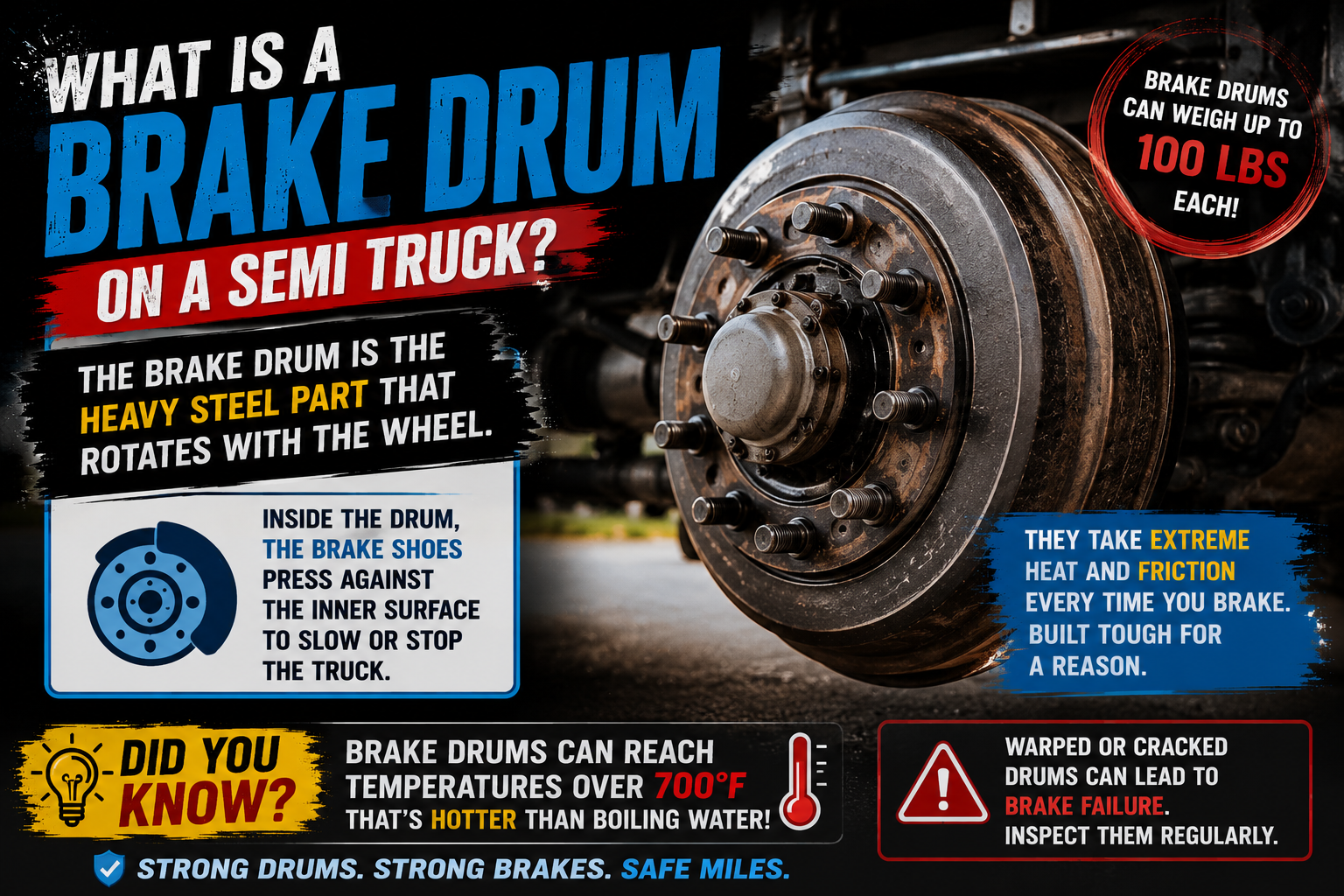
One of the easiest brake components to spot during a pre-trip inspection is the brake drum.
It’s also one of the easiest to overlook.
When I first started driving, I mostly paid attention to the tires and wheels because that’s what I could easily see. As I gained experience, I realized the brake drum deserves just as much attention because every stop you make depends on it working properly.
I’ve driven trucks equipped with drum brakes for most of my career, and they’ve proven themselves over millions of miles. Like every part of an air brake system, though, they only perform well if they’re inspected and maintained.
If you’re studying for your CDL or simply learning how commercial trucks work, understanding the brake drum will help make the rest of the brake system much easier to understand.
What Is a Brake Drum?
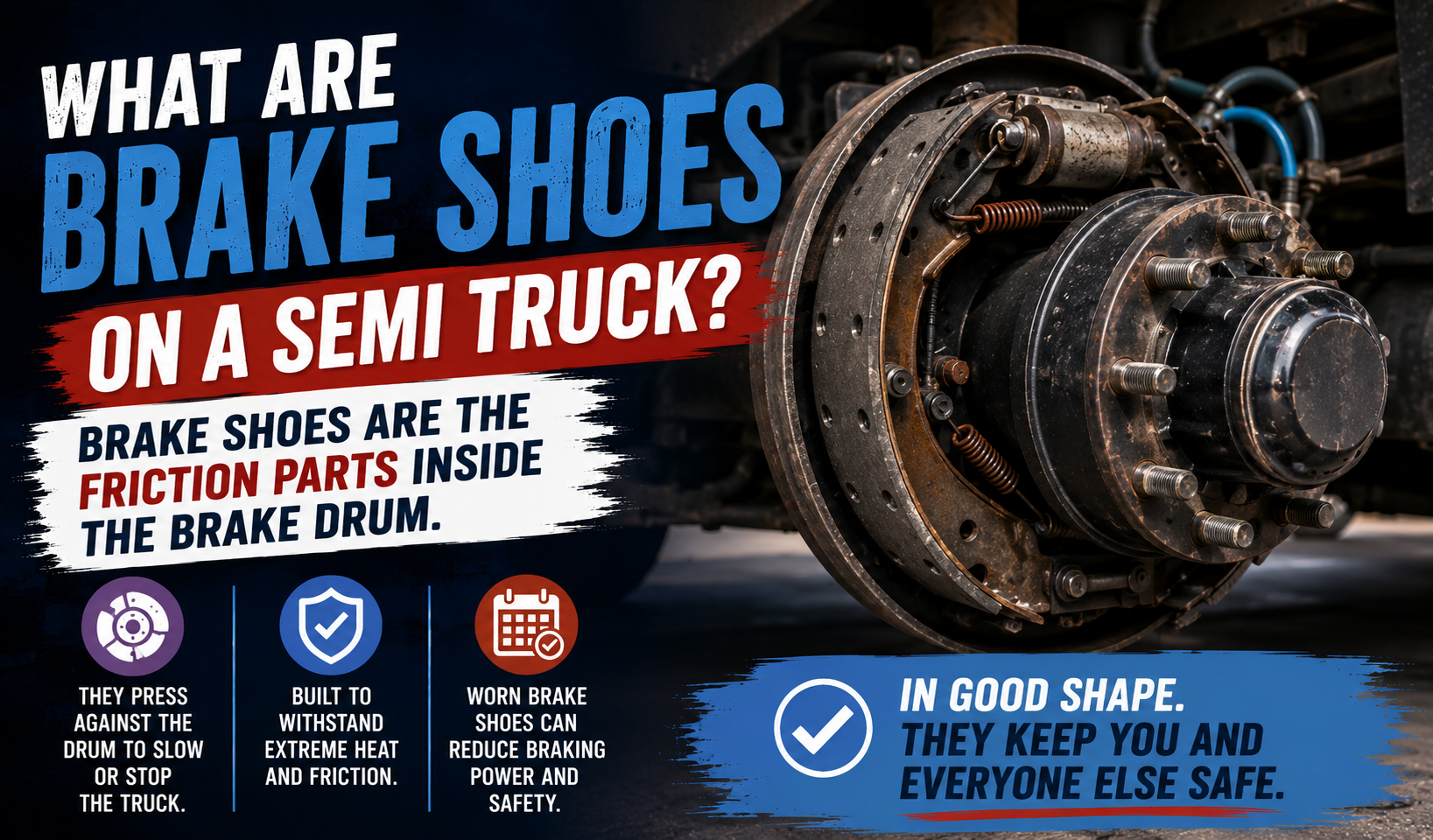
A brake drum is a heavy cast metal drum attached to the wheel hub. When the brakes are applied, the brake shoes press outward against the inside surface of the drum, creating friction that slows or stops the truck. The friction material pressing against the drum is examined more closely in What Are Brake Shoes on a Semi Truck?.
Unlike passenger vehicles that often use disc brakes, many commercial trucks still rely on heavy-duty drum brakes because they’re durable, dependable, and designed to handle extremely heavy loads.


Where Is the Brake Drum Located?
The brake drum sits directly behind each wheel equipped with drum brakes.
It’s mounted to the wheel hub and rotates anytime the wheel is turning.
Hidden inside the drum are several important brake components, including:
- Brake shoes
- S-cam
- Return springs
- Rollers
- Anchor pins
These parts work together every time you apply the brakes.

How Does a Brake Drum Work?
The process happens almost instantly.
Here’s what takes place when you step on the brake pedal:
- Compressed air enters the brake chamber.
- The pushrod extends.
- The slack adjuster rotates.
- The S-cam turns.
- The brake shoes spread apart.
- The brake shoes press against the inside of the brake drum.
- Friction slows the wheel and eventually the truck.
Everything has to work together correctly for safe braking.
If one component develops a problem, braking performance can suffer.
Why Are Brake Drums So Heavy?
One question I hear from new CDL drivers is why brake drums weigh so much.
The answer is heat.
Stopping an 80,000-pound truck creates tremendous heat.
Brake drums are built from heavy-duty materials because they need to absorb and dissipate that heat without cracking, warping, or failing.
That’s one reason commercial brake drums are much larger than the drums found on lighter vehicles.
How the Brake Drum Fits Into the Air Brake System
The brake drum doesn’t do anything by itself.
It depends on several other components working together.
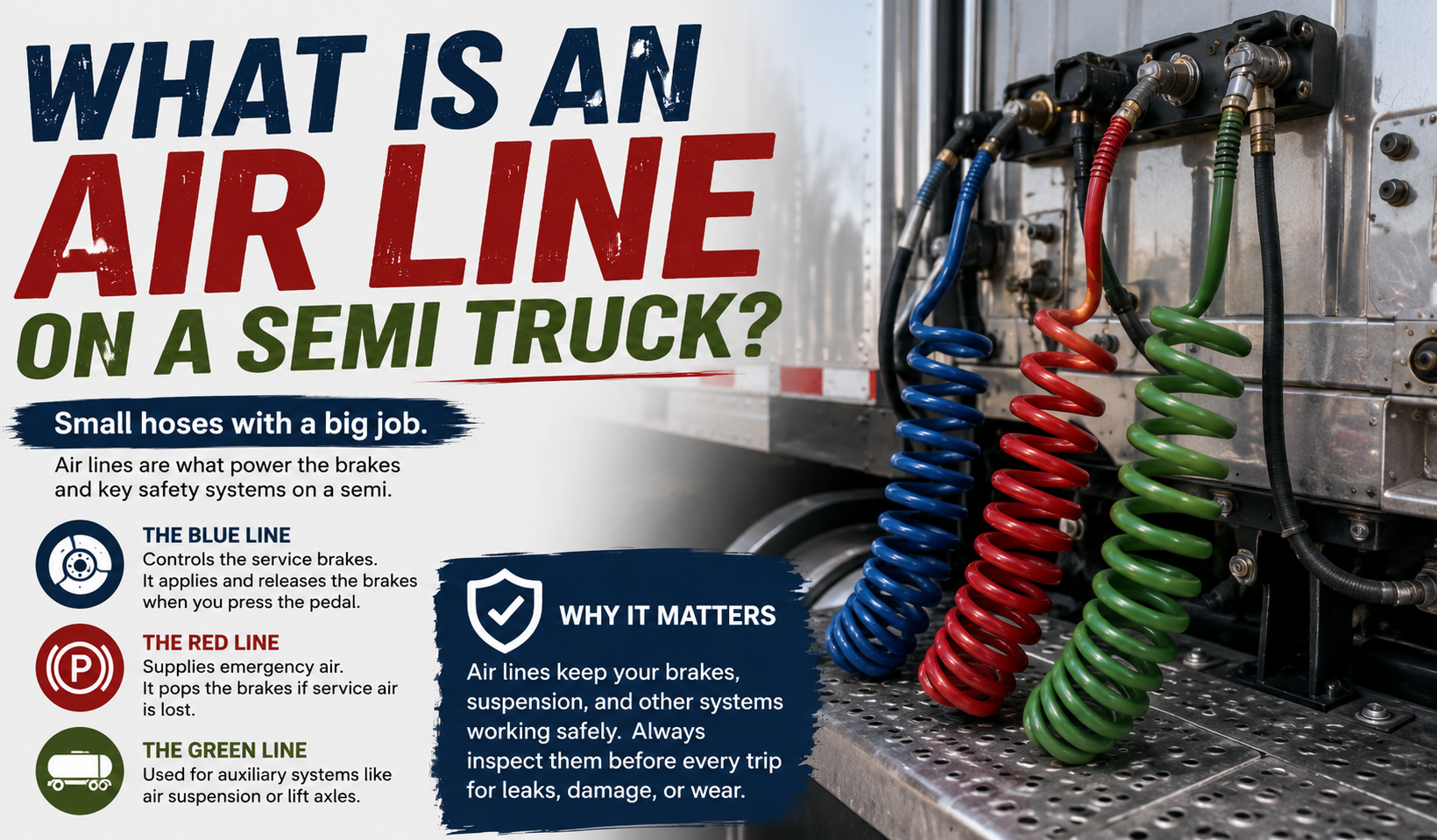
The brake chamber creates the force.
The pushrod transfers the movement.
The slack adjuster rotates.
The S-cam spreads the brake shoes.
Finally, the brake shoes press against the inside of the brake drum, creating the friction needed to slow the truck.
If you’re still learning these parts, these articles explain them in more detail:
- What Is a Brake Chamber on a Semi Truck?
- What Is a Pushrod on a Semi Truck?
- What Is a Slack Adjuster on a Semi Truck?
- What Is an S-Cam Brake? How Semi Truck Drum Brakes Work
Understanding how these components connect makes pre-trip inspections much easier.
Why Brake Drums Matter
I’ve always looked at the brake drum as the final destination for all the force created by the air brake system.
Without the drum, the brake shoes would have nothing to press against.
Brake drums help:
- Create stopping friction.
- Dissipate heat.
- Provide consistent braking.
- Support heavy commercial loads.
- Deliver reliable braking performance over long distances.
They’re one of the hardest-working parts on the truck.
What Can Go Wrong With a Brake Drum?
Brake drums are incredibly durable, but they’re not indestructible.
Some of the more common problems include:
- Heat cracks.
- Excessive wear.
- Grooves.
- Warping.
- Rust.
- Oil contamination.
- Out-of-round drums.
Most of these issues develop gradually and can be identified during routine inspections and scheduled maintenance.
Inspecting Brake Drums During a Pre-Trip
Every pre-trip inspection should include a careful look at the brake drums.
When I inspect mine, I check for:
- Visible cracks.
- Oil or grease contamination.
- Excessive rust.
- Missing hardware nearby.
- Signs of overheating.
- Damage from road debris.
If something doesn’t look right, I don’t ignore it.
Brake problems are never worth gambling on.
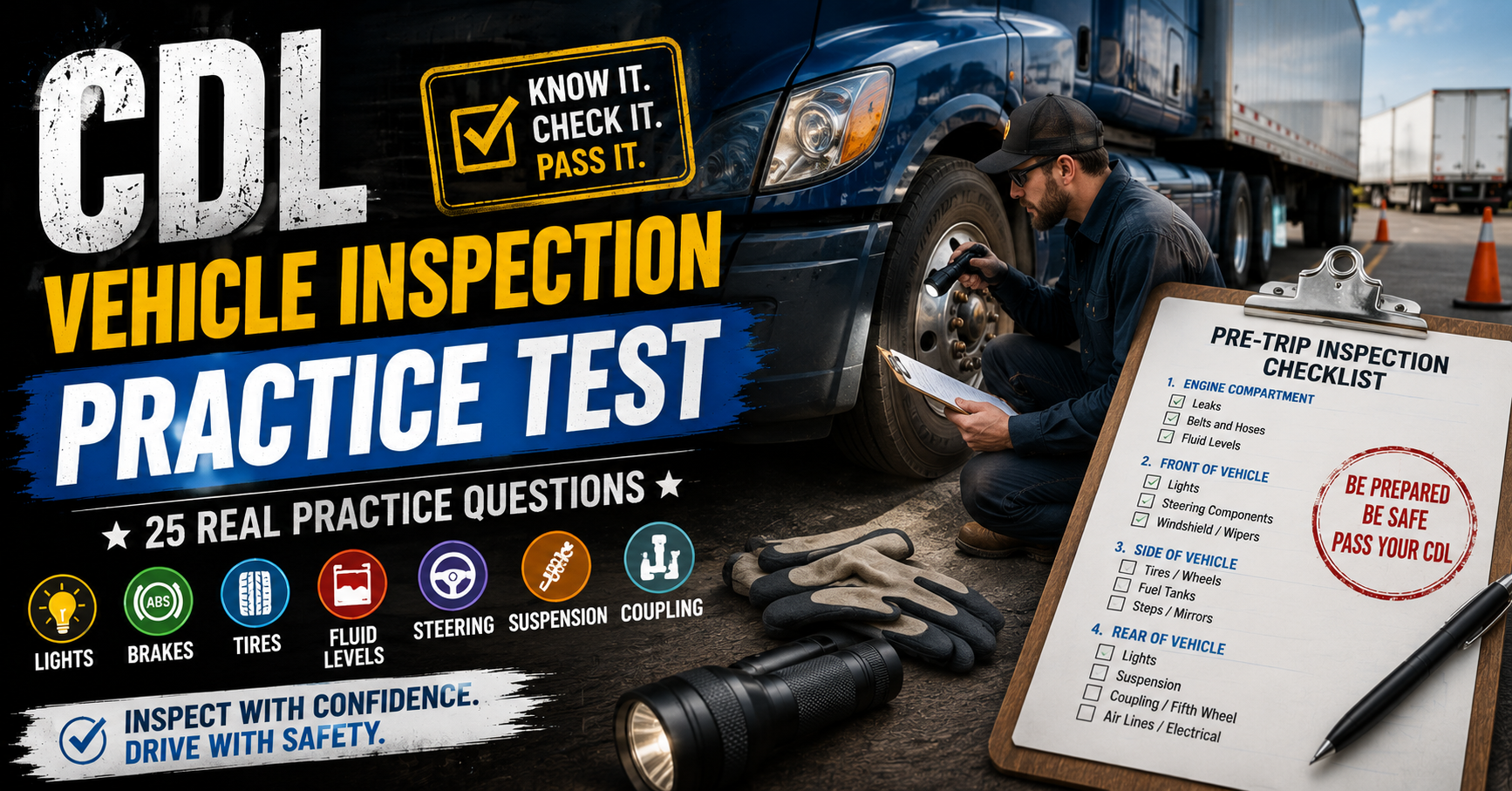
If you’re getting ready for your CDL skills test, our CDL Vehicle Inspection Practice Test is a great way to practice identifying brake components and inspection points before test day.



Common Mistakes New Drivers Make
I’ve watched plenty of new drivers assume that if the brakes feel okay, the drums must be fine.
That’s not always true.
Small cracks, contamination, or abnormal wear often develop long before braking performance noticeably changes.
Another mistake is confusing the brake drum with the wheel hub.
They’re separate components, even though they’re mounted together.
Knowing the difference makes conversations with mechanics much easier.
Where You’ll Hear This Term
Brake drums come up all the time in trucking.
You’ll hear mechanics mention them during brake jobs.
DOT inspectors look at them during roadside inspections.
Fleet maintenance technicians inspect them during preventive maintenance.
And every CDL instructor will expect you to recognize them during your pre-trip inspection.
Frequently Asked Questions
Does every semi truck have brake drums?
No.
Many newer commercial trucks now use air disc brakes on some or all axles.
However, drum brakes remain extremely common throughout the trucking industry.
How long do brake drums last?
That depends on driving conditions, maintenance, terrain, and load weight.
Many commercial brake drums last hundreds of thousands of miles before replacement becomes necessary.
Will I need to identify brake drums during my CDL test?
Yes.
Brake drums are commonly included in CDL pre-trip inspections, and you should know where they’re located and what you’re checking.

Our Free CDL Air Brakes Practice Test 1 and Free CDL Air Brakes Practice Test 2 are excellent study tools for reinforcing brake system terminology before your exam.
One Tool I Always Use During Brake Inspections
Brake drums sit behind the wheels, and they’re not always easy to inspect in low light.

That’s why I always keep the Coast XPH30R USB-C Rechargeable Dual Power Headlamp in my truck.
Having both hands free makes it much easier to inspect brake drums, brake chambers, slack adjusters, air lines, and the rest of the brake system before heading out.
My Advice After Millions of Miles
The brake drum isn’t flashy.
Most people never even notice it’s there.
But every safe stop you make depends on it doing its job.
I’ve learned that the best truck drivers don’t just know how to drive.
They understand how their equipment works.
Take the time to inspect your brake drums every day.
Learn what normal looks like.
Report problems before they become emergencies.
Those simple habits will make you a safer driver and help keep your truck on the road where it belongs.
Author: Kevin Lawson
Kevin Lawson spent nearly 30 years hauling refrigerated freight, flatbeds, and dry vans across North America. Working closely with fleet maintenance teams throughout his career taught him that understanding every component of the braking system is one of the best investments a professional driver can make.