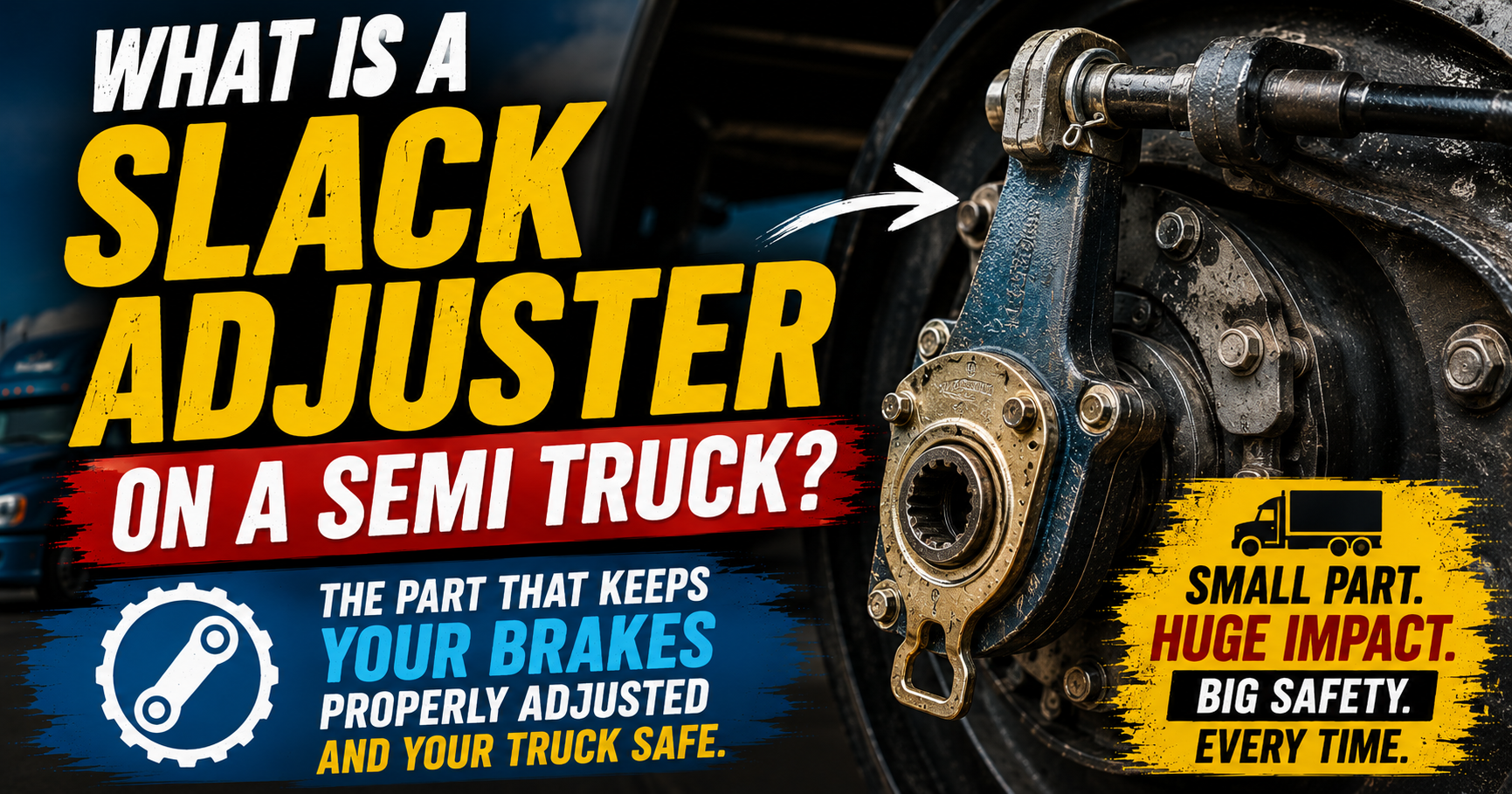
If you’ve started studying for your CDL, you’ve probably already heard the term slack adjuster.
It’s one of those parts that almost every new driver struggles to remember at first.
I know I did.
During my first few weeks of CDL school, it seemed like instructors mentioned slack adjusters every single day.
Then I started driving professionally, and I understood why.
They’re a critical part of your truck’s air brake system.
When your brakes are working correctly, chances are your slack adjusters are doing exactly what they’re supposed to do.
When they’re not, you could be dealing with reduced braking performance, failed inspections, or equipment that’s simply unsafe to drive.
After more than 25 years behind the wheel, I’ve learned that paying attention to your brake system is one of the smartest habits a truck driver can develop.
What Is a Slack Adjuster?
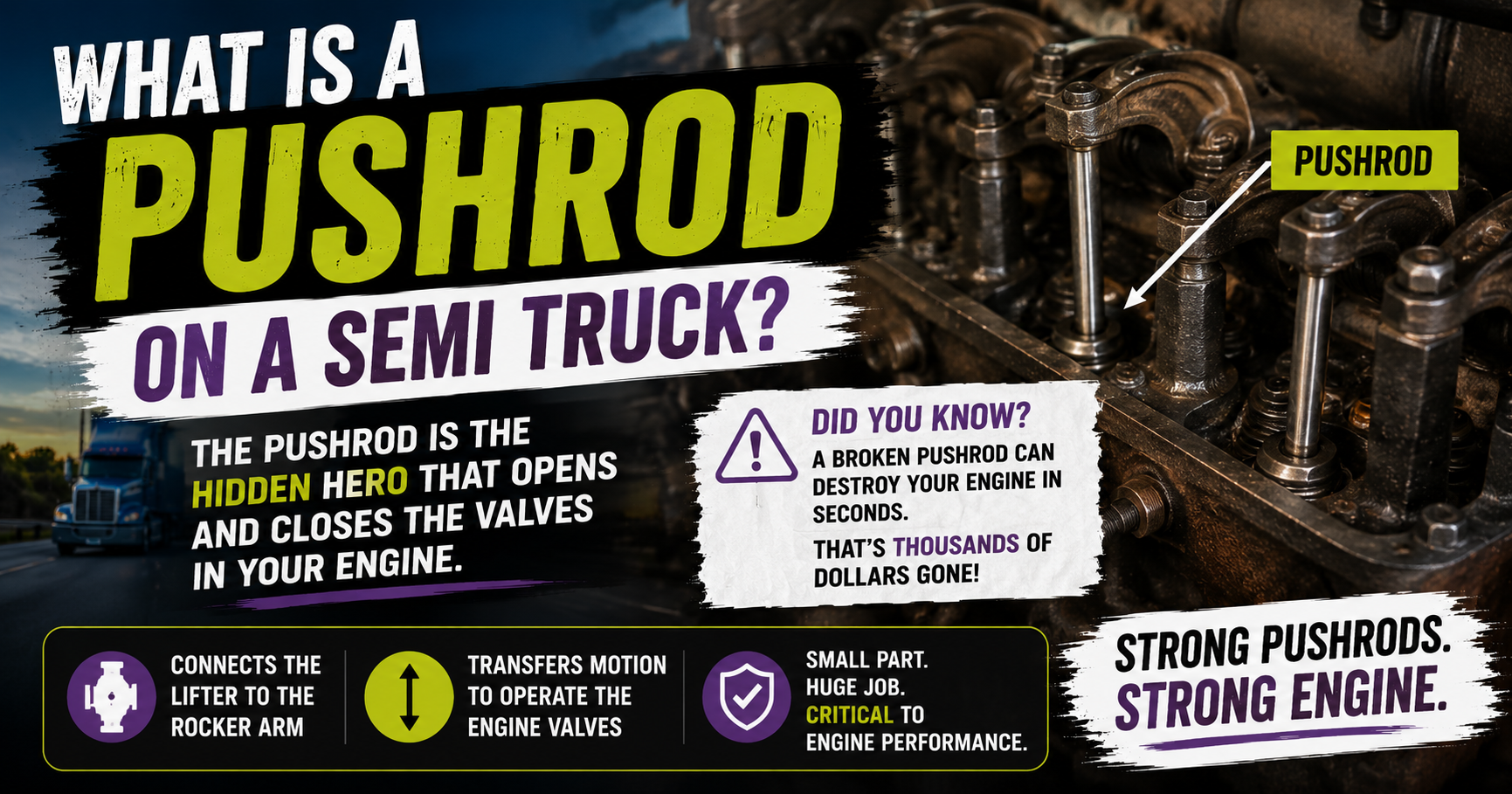
A slack adjuster is a mechanical component in an air brake system that transfers the force from the brake chamber to the brake shoes. It also helps maintain the correct amount of brake shoe travel as the brake linings wear over time. That force reaches the slack adjuster through the component covered in What Is a Pushrod on a Semi Truck?.
Simply put…
It helps make sure your brakes apply properly every time you press the brake pedal.
Without slack adjusters, your brakes would gradually become less effective as normal wear occurred.
Where Is the Slack Adjuster Located?
You’ll find a slack adjuster attached to the brake chamber near each wheel equipped with air brakes.
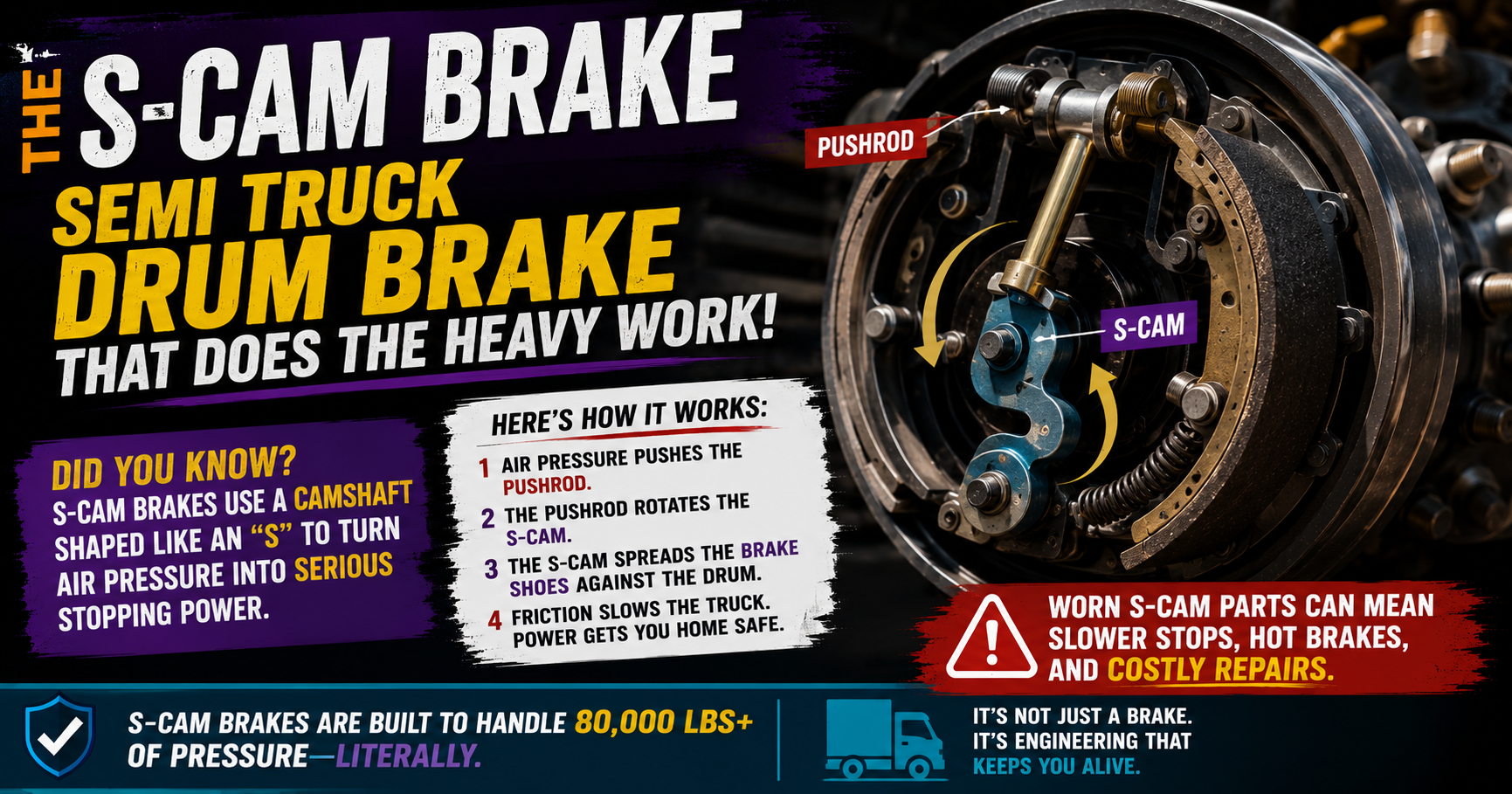
It’s connected between the brake chamber pushrod and the brake camshaft. That connection leads directly to the S-cam mechanism described in What Is an S-Cam Brake? How Semi Truck Drum Brakes Work.
When the driver presses the brake pedal, air pressure pushes the brake chamber pushrod outward.
The slack adjuster converts that straight-line movement into the rotating motion needed to apply the brakes.
You won’t usually notice it while driving, but it’s working every single time you slow the truck.


How Does a Slack Adjuster Work?
Here’s the process in simple terms.
When you press the brake pedal:
- Air pressure enters the brake chamber.
- The pushrod moves outward.
- The slack adjuster rotates.
- The brake cam turns.
- The brake shoes press against the brake drum.
- The truck slows down.
When everything is working properly, the movement is smooth, predictable, and consistent.
It’s a beautifully simple system that’s been proven over millions of commercial trucks.
Why Is It Called a Slack Adjuster?
The name actually describes its job.
As brake shoes wear, extra “slack,” or clearance, develops between the brake shoes and the brake drum.
The slack adjuster compensates for that wear so the brakes continue applying correctly.
Modern trucks almost always use automatic slack adjusters, which adjust themselves during normal operation. Older trucks often used manual slack adjusters that required routine adjustment by maintenance personnel.

Manual vs. Automatic Slack Adjusters
Years ago, manual slack adjusters were common.
Drivers or mechanics had to adjust them periodically as the brakes wore.
Today, nearly every highway tractor uses automatic slack adjusters.
That doesn’t mean they’re maintenance-free.
Automatic slack adjusters still require:
- Regular inspections.
- Proper lubrication.
- Correct installation.
- Routine maintenance.
One mistake I see is people assuming “automatic” means you never have to check them.
That’s definitely not the case.
Why Slack Adjusters Matter
I’ve hauled freight through mountains, heavy traffic, snowstorms, and every type of weather you can imagine.
One thing has remained constant.
Good brakes matter.
Slack adjusters help:
- Maintain proper brake stroke.
- Improve braking performance.
- Reduce uneven brake wear.
- Help prevent brake failures.
- Keep the truck DOT compliant.
- Improve overall safety.
When they’re functioning correctly, you rarely think about them.
That’s exactly how it should be.


How to Inspect a Slack Adjuster
Your slack adjusters are part of every proper pre-trip inspection.
When I’m checking mine, I look for:
- Cracks or damage.
- Loose mounting hardware.
- Bent pushrods.
- Excessive movement.
- Air leaks nearby.
- Missing cotter pins.
- Proper pushrod travel.
I never assume everything is fine just because the truck stopped well yesterday.
Brake systems deserve a fresh inspection every day.
If you’re preparing for your CDL skills test, spend some time working through our CDL Vehicle Inspection Practice Test. It covers slack adjusters along with many of the other brake components you’ll be expected to identify.
Common Problems With Slack Adjusters
Like any mechanical component, slack adjusters can develop problems over time.
Some of the more common issues include:
- Excessive pushrod travel.
- Worn bushings.
- Corrosion.
- Lack of lubrication.
- Improper adjustment.
- Damaged hardware.
Many of these issues develop gradually.
Routine inspections usually catch them long before they become dangerous.

Common Mistakes New Drivers Make
I’ve helped train quite a few new CDL drivers, and the same mistakes tend to appear over and over.
One mistake is confusing the slack adjuster with the brake chamber.
Another is assuming automatic slack adjusters never need attention.
I’ve also seen drivers skip checking pushrod travel during inspections because they weren’t completely sure what they were looking at.
The good news is that all of this becomes much easier once you’ve seen the system a few times.
Where You’ll Hear This Term
Even after you earn your CDL, you’ll hear “slack adjuster” regularly.
Mechanics talk about them.
DOT inspectors check them.
CDL instructors teach them.
Fleet managers expect drivers to inspect them.
If someone tells you there’s a brake issue, chances are the slack adjusters will be part of the conversation.
Understanding the term now will save you a lot of confusion later.
Frequently Asked Questions
Are slack adjusters on every semi truck?
Yes. Air-brake-equipped commercial trucks use slack adjusters as part of the braking system.
Can a driver adjust automatic slack adjusters?
Generally, no. If an automatic slack adjuster is out of adjustment, it usually indicates another issue that should be diagnosed and repaired rather than simply readjusting it.
Will I need to identify slack adjusters during my CDL test?
Absolutely.
Most CDL pre-trip inspections require you to identify the slack adjusters and explain what you’re checking.
Our Free CDL Air Brakes Practice Test 1 and Free CDL Air Brakes Practice Test 2 are both excellent ways to reinforce these concepts before exam day.
One Tool That Makes Brake Inspections Easier
Brake inspections often happen before daylight or after sunset.

That’s one reason I always carry the Coast XPH30R USB-C Rechargeable Dual Power Headlamp.
Having both hands free while checking slack adjusters, brake chambers, pushrods, and air lines makes inspections much easier and helps me avoid missing small problems.
My Advice After Years of Driving
If I could give one piece of advice to every new CDL driver, it would be this:
Never treat your brake inspection like a routine chore.
It’s one of the most important things you’ll do all day.
Your slack adjusters may not be the biggest or most exciting parts on the truck, but they’re a key part of the braking system that protects you and everyone else on the road.
Learn where they are.
Understand what they do.
Inspect them carefully every day.
Those simple habits will serve you well throughout your entire trucking career.
Author: Brian Cooper
Brian Cooper spent more than 24 years operating dump trucks, tractor-trailers, and vocational equipment while training new CDL drivers on air brake systems and vehicle inspections. He believes understanding the “why” behind every truck component helps drivers become safer, more confident professionals.