When I first crawled underneath a semi truck during CDL school, my instructor pointed at a shaft sticking through the brake assembly and asked, “What’s that?”
I honestly had no idea.
He smiled and said, “That’s the S-cam. Remember it because you’ll hear about it for the rest of your trucking career.”
He wasn’t kidding.
If you’ve ever driven or inspected a truck with drum brakes, you’ve been around S-cam brakes whether you realized it or not. They’re one of the most common brake systems found on heavy-duty commercial trucks across North America.
Even though air disc brakes have become more popular in recent years, millions of trucks on the road today still rely on the proven S-cam design.
What Is an S-Cam Brake?
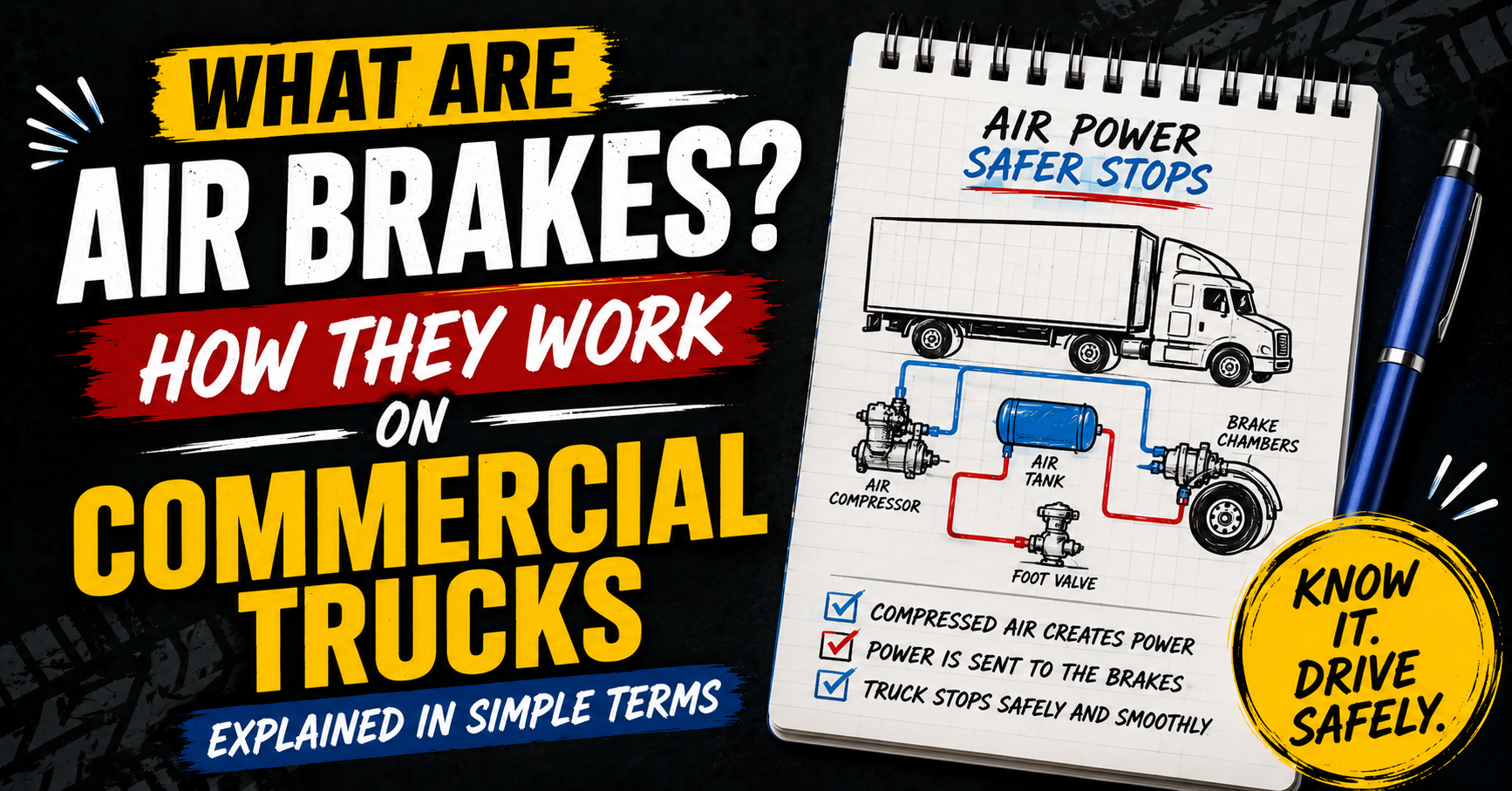
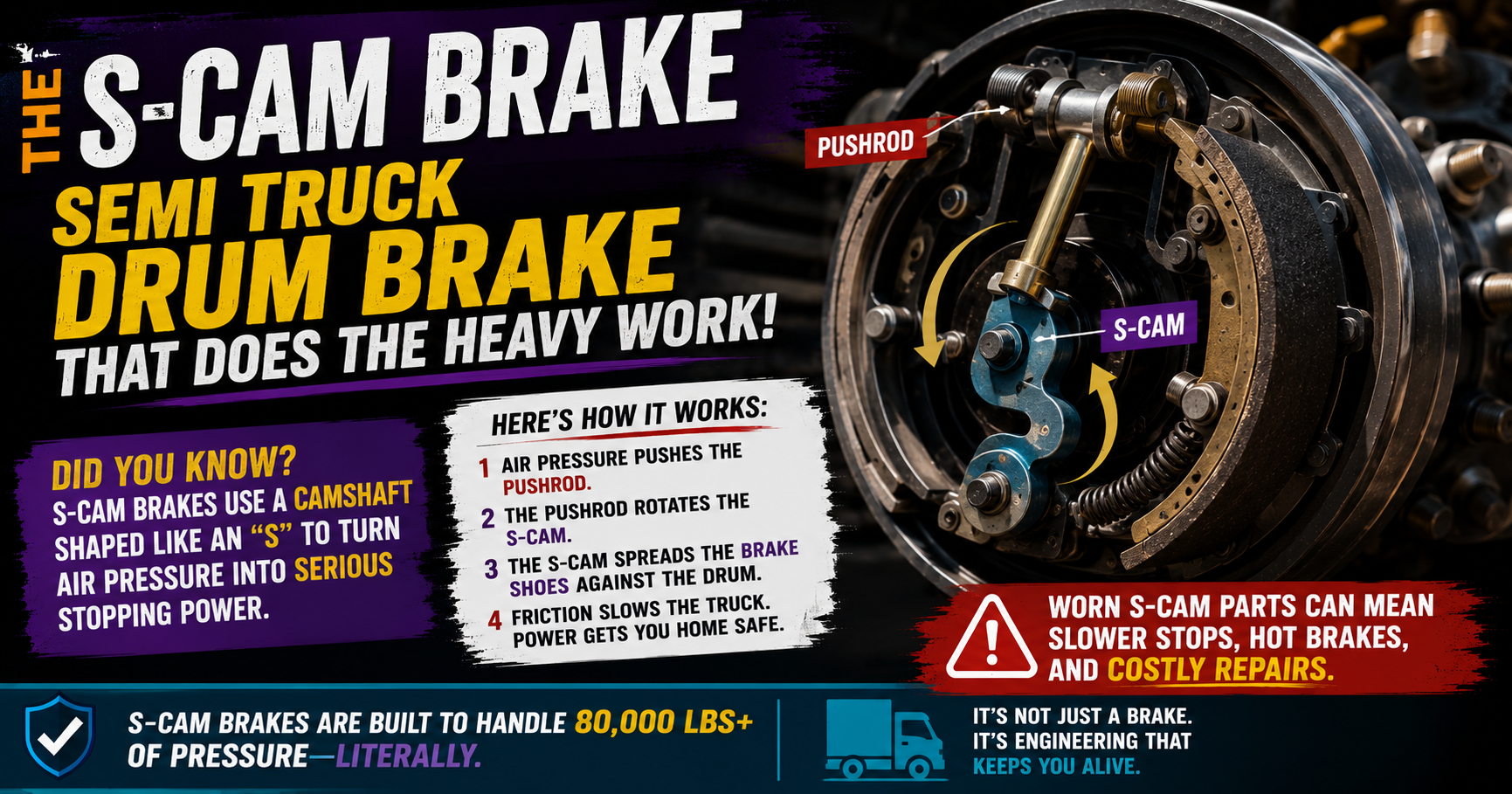
An S-cam brake is a type of heavy-duty drum brake that uses an S-shaped camshaft to push the brake shoes outward against the inside of the brake drum, creating the friction needed to slow or stop the truck. The S-cam is one part of the broader system described in What Are Air Brakes? How They Work on Commercial Trucks.
The name comes from the distinctive S-shaped end of the camshaft.
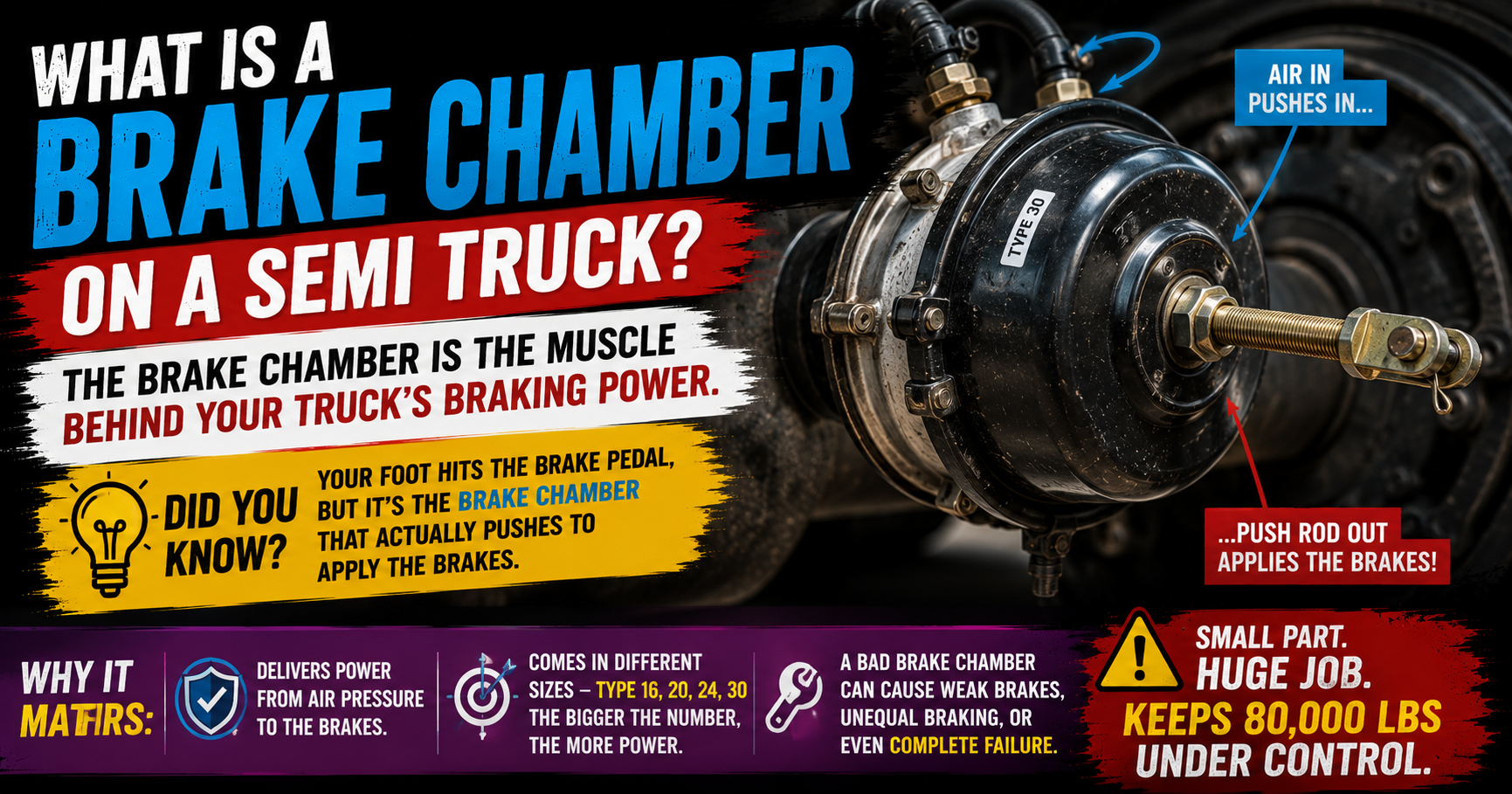
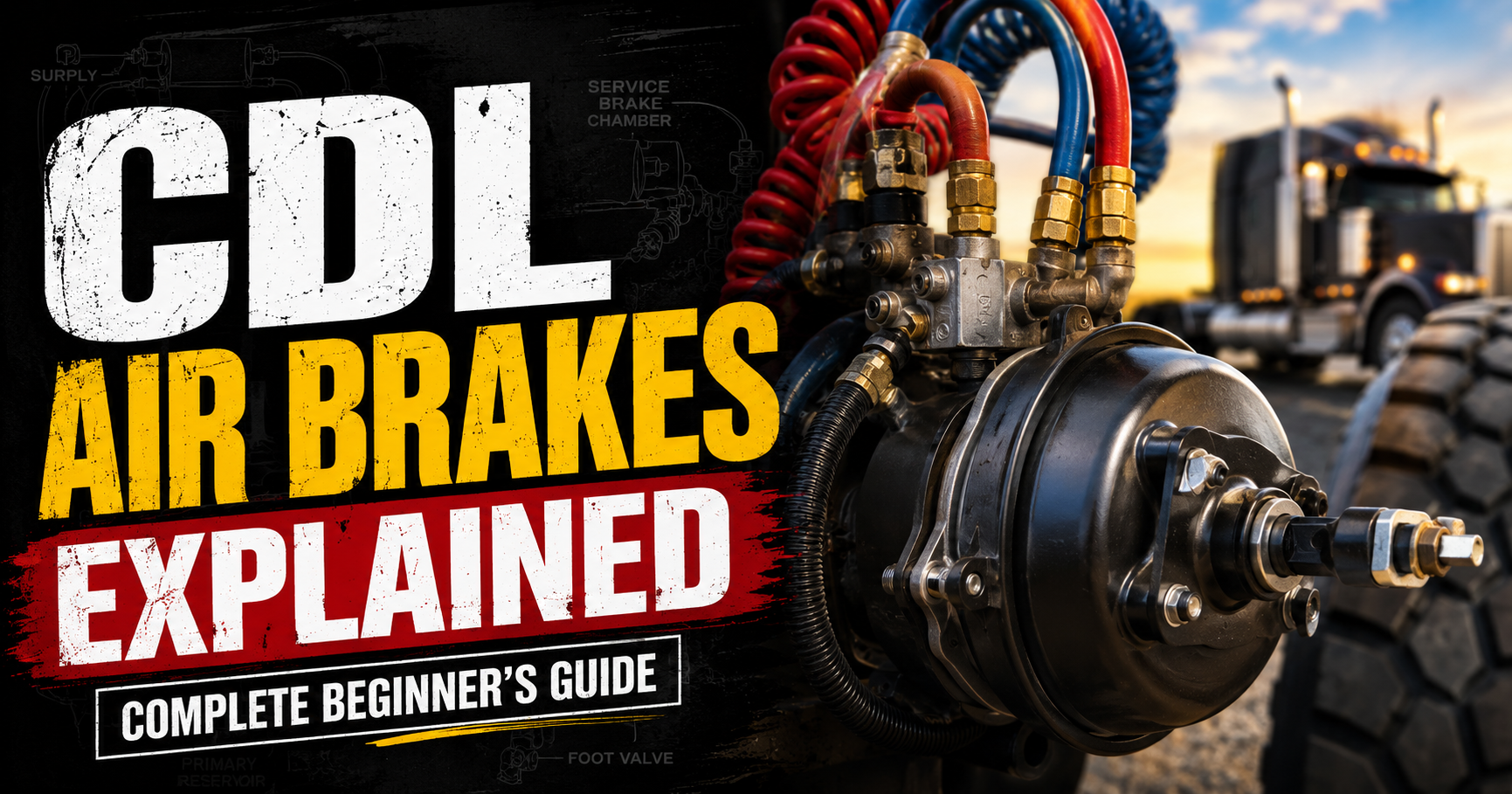
As that shaft rotates, the curved surfaces force the brake shoes apart. The air-powered force that starts this braking process comes from the What Is a Brake Chamber on a Semi Truck?.
Those brake shoes press firmly against the inside of the brake drum, creating the stopping power that slows the vehicle.
It’s a simple design that’s been trusted in commercial trucking for decades.
Why Is It Called an S-Cam?
Once you actually see one, the name makes perfect sense.
The end of the camshaft is shaped like the letter S.
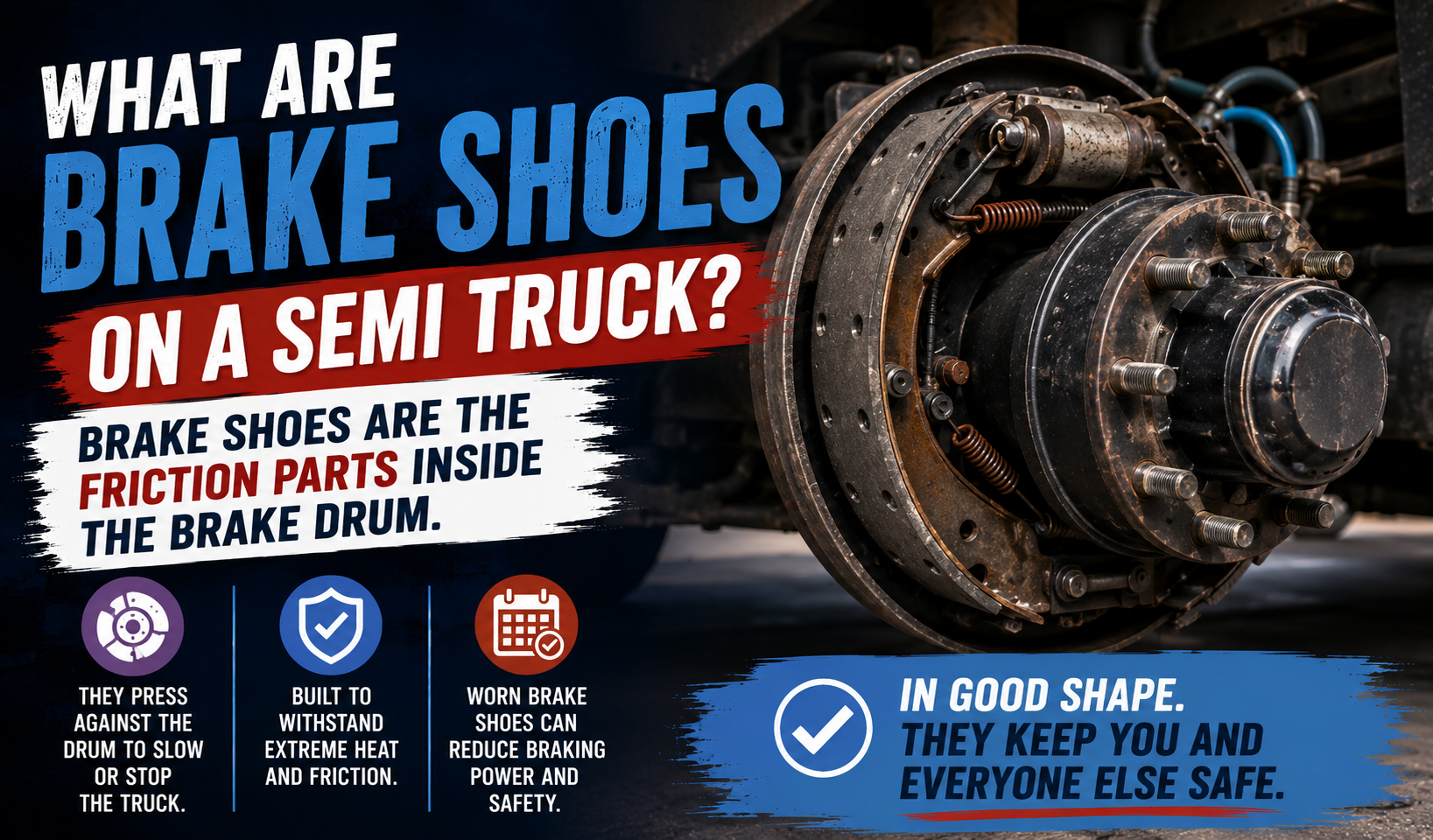
As it rotates, each curved side pushes against rollers attached to the brake shoes. The What Are Brake Shoes on a Semi Truck? article explains the components that receive this outward force and create friction.
That motion spreads the brake shoes apart until they contact the brake drum.
It’s an incredibly reliable design with relatively few moving parts, which is one reason it’s remained so popular in the trucking industry.


How Does an S-Cam Brake Work?
The entire braking process happens almost instantly.
Here’s what takes place every time you press the brake pedal:
- Compressed air enters the brake chamber.
- The brake chamber pushrod extends.
- The pushrod moves the slack adjuster.
- The slack adjuster rotates the S-cam.
- The S-shaped cam pushes the brake shoes outward.
- The brake shoes press against the brake drum.
- Friction slows the wheel and eventually the truck.
Every one of these components has to work together properly for safe braking.
What Parts Work With the S-Cam?
The S-cam doesn’t operate alone.
Several components work together to make the system function properly.
These include:
- Brake chamber
- Pushrod
- Slack adjuster
- S-cam shaft
- Brake shoes
- Brake drum
- Return springs
If even one of those parts develops a problem, braking performance can suffer.
That’s why a complete brake inspection is so important.

Why Are S-Cam Brakes So Popular?
Over the years I’ve hauled freight through mountains, heavy traffic, snowstorms, and construction zones.
One thing I’ve always appreciated about S-cam brakes is how dependable they are.
They’ve earned their reputation because they’re:
- Durable.
- Proven.
- Relatively simple to maintain.
- Designed for heavy loads.
- Well suited for commercial trucking.
There’s a reason they’re still found on a huge percentage of heavy-duty trucks today.
S-Cam Brakes vs. Air Disc Brakes
As newer trucks enter service, you’ll hear more discussions about air disc brakes.
Both systems work well.
The biggest difference is how they create braking force.
An S-cam system pushes brake shoes against the inside of a rotating drum.
An air disc brake squeezes brake pads against a rotor, much like many passenger vehicles.
Air disc brakes generally provide shorter stopping distances and better heat management, while S-cam brakes remain popular because of their long history, durability, and lower maintenance costs in many applications.

What Should You Inspect?
Whenever I perform a pre-trip inspection, I spend extra time looking at the brake system.
For trucks equipped with S-cam brakes, I check:
- Brake chambers.
- Slack adjusters.
- Pushrods.
- Brake drums.
- Air lines.
- Mounting hardware.
- Obvious damage.
- Air leaks.
I also pay attention to anything that looks loose, bent, or leaking.
Brake problems aren’t something to discover halfway down a mountain.
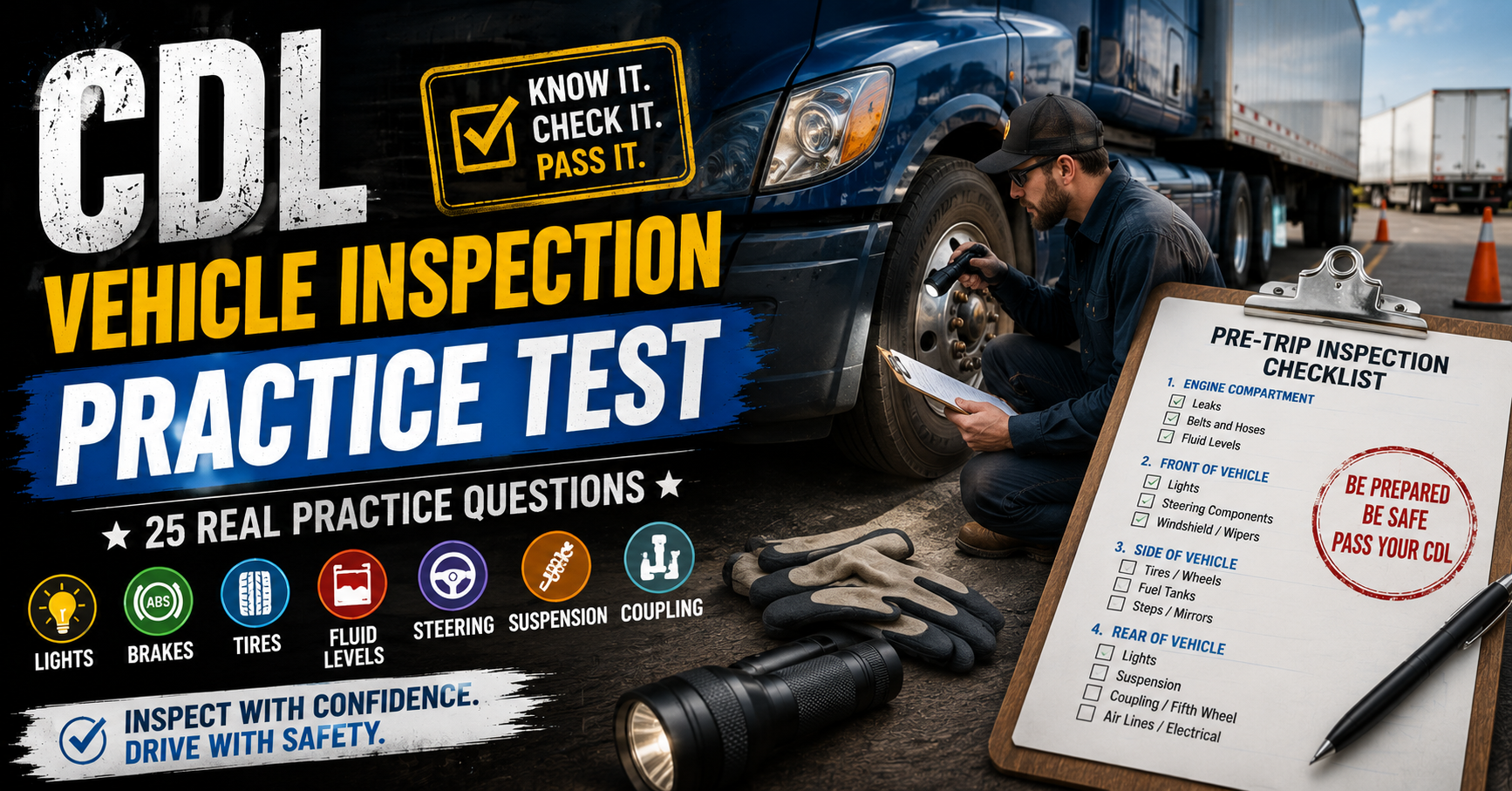
If you’re still learning pre-trip inspections, our CDL Vehicle Inspection Practice Test walks through many of the brake components you’ll need to identify during your CDL skills exam.
How the Slack Adjuster Fits In
One mistake I see from new CDL students is thinking the slack adjuster actually applies the brakes.
It doesn’t.
The slack adjuster simply transfers movement from the brake chamber to the S-cam.
The S-cam is the part that actually spreads the brake shoes against the drum.
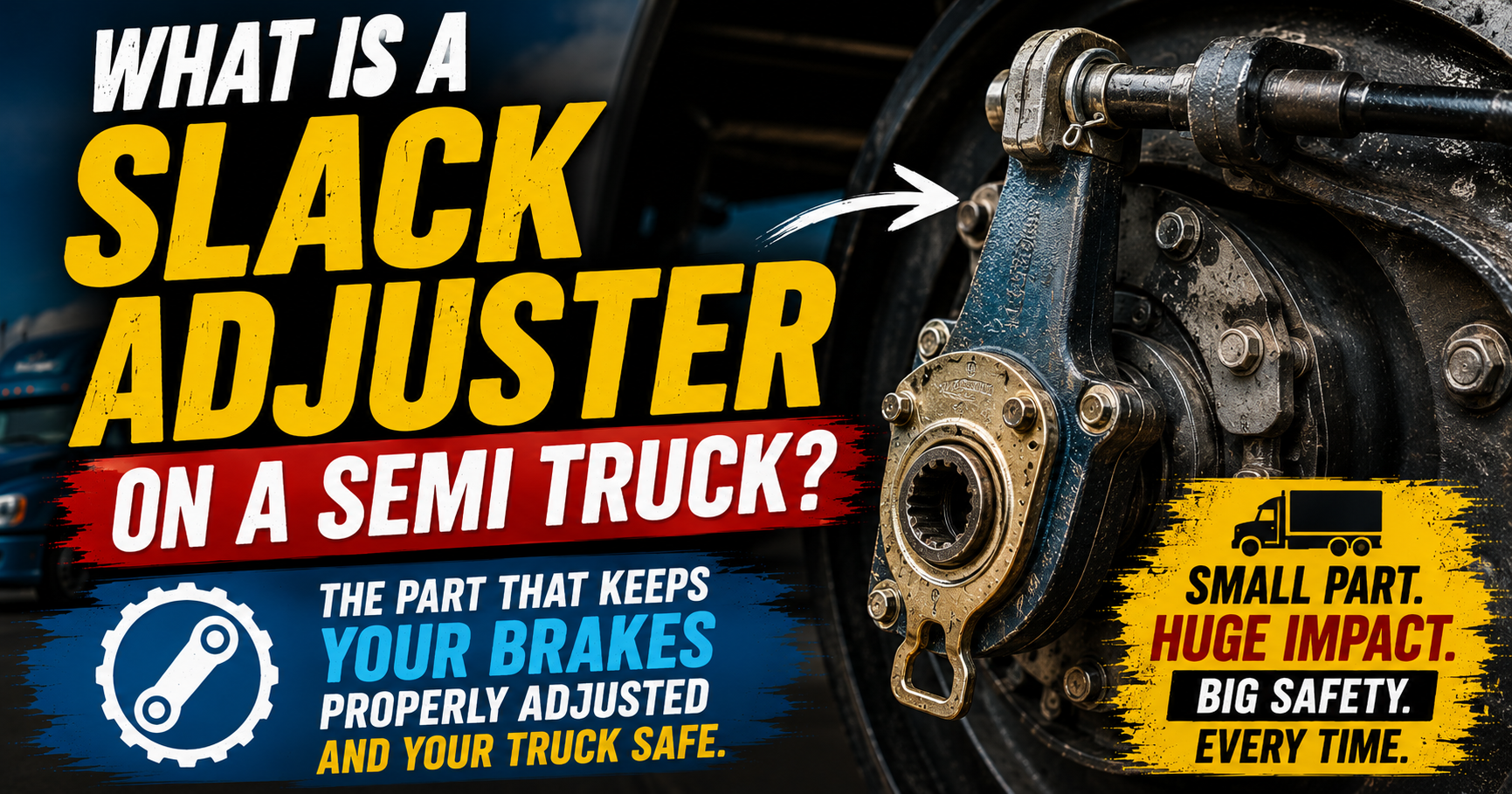
If you haven’t read it yet, our guide on What Is a Slack Adjuster on a Semi Truck? explains its job in much more detail.
Common Problems With S-Cam Brakes
Like any braking system, S-cam brakes wear over time.
Some of the more common issues include:
- Worn brake shoes.
- Worn bushings.
- Excessive brake stroke.
- Poor lubrication.
- Corrosion.
- Cracked brake drums.
- Damaged return springs.
Most of these issues develop gradually and can be found during routine inspections and preventive maintenance.
Common Myths About S-Cam Brakes
One myth I hear is that S-cam brakes are outdated and unsafe.
That simply isn’t true.
When they’re properly maintained, S-cam brakes remain an effective braking system used by fleets all across North America.
Another misconception is that automatic slack adjusters eliminate brake inspections.
They don’t.
Every brake component still needs to be inspected regularly.
Where You’ll Hear This Term
Even if you never become a mechanic, you’ll hear “S-cam” mentioned often.
Mechanics discuss them.
DOT inspectors inspect them.
Fleet maintenance departments service them.
CDL instructors teach them.
Understanding the term makes conversations about brake maintenance much easier to follow.
Frequently Asked Questions
Are S-cam brakes air brakes?
Yes.
Most S-cam systems on commercial trucks are part of an air brake system that uses compressed air to activate the brake chamber.
Do all semi trucks use S-cam brakes?
No.
Many newer trucks, especially on the steer axle, now use air disc brakes.
However, S-cam brakes are still extremely common throughout the trucking industry.
Will I need to know this for my CDL?
Absolutely.
Understanding how S-cam brakes work helps you understand brake chambers, slack adjusters, pushrods, and several other components you’ll identify during your CDL training.
Our Free CDL Air Brakes Practice Test 1 and Free CDL Air Brakes Practice Test 2 are excellent ways to reinforce everything you’ve learned about commercial air brake systems.
One Tool I Never Inspect Brakes Without
Brake inspections usually involve crawling underneath the truck, and that often happens before sunrise or after dark.
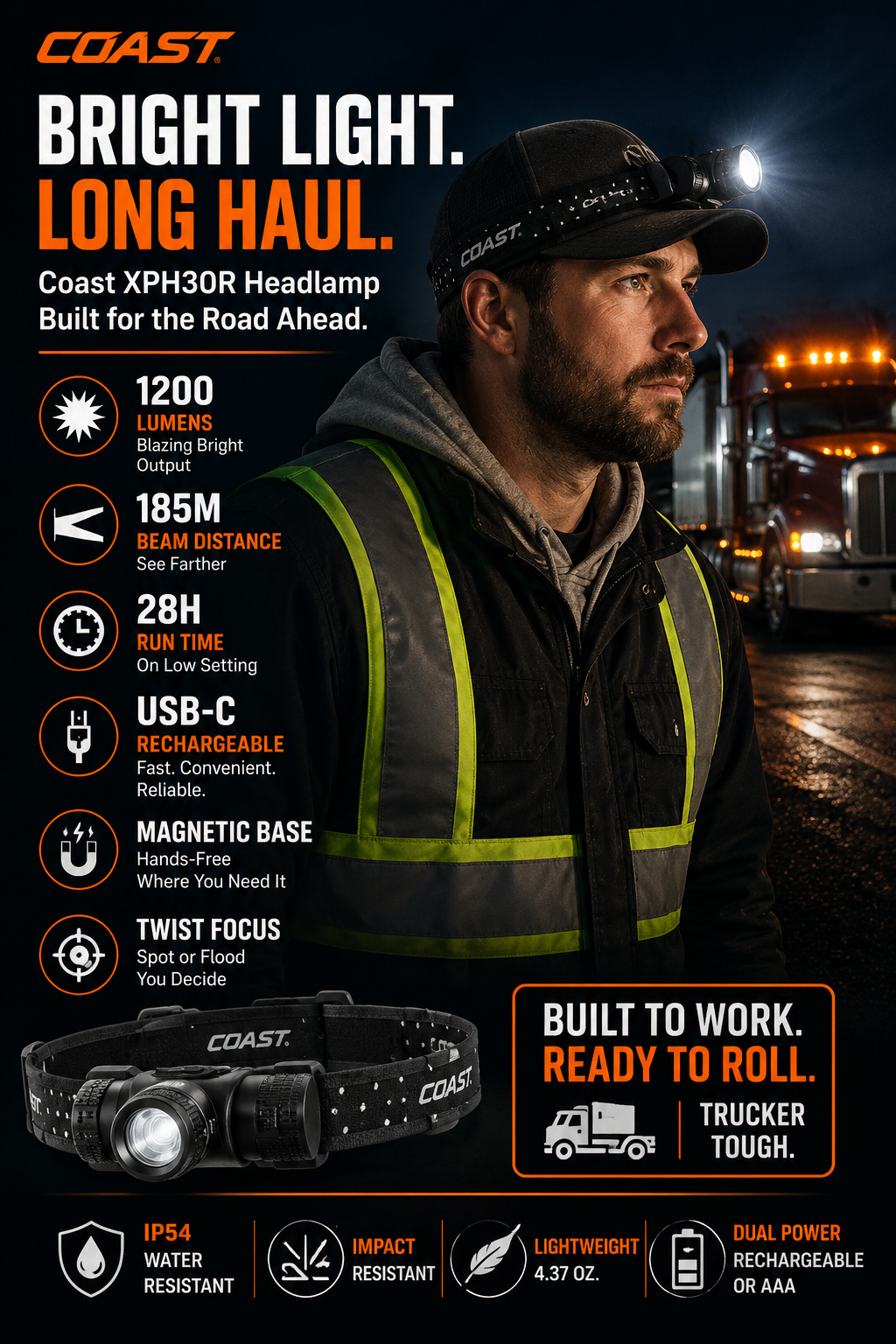
That’s why I always keep the Coast XPH30R USB-C Rechargeable Dual Power Headlamp in my truck.
Having both hands free while checking brake chambers, slack adjusters, S-cams, drums, and air lines makes the inspection faster, easier, and much safer.
My Advice After Millions of Miles
I’ve driven trucks equipped with S-cam brakes for most of my career.
They’ve safely carried me through mountain passes, crowded cities, snowstorms, and countless miles of interstate highways.
The reason they’ve earned such a strong reputation isn’t because they’re complicated.
It’s because they’re dependable.
Treat your brake system with respect.
Inspect it every day.
Report problems immediately.
Learn how each component works.
Understanding your S-cam brakes won’t just help you pass your CDL exam.
It’ll help you become the kind of professional driver who takes safety seriously every time you climb into the driver’s seat.
Author: Mike Reynolds
Mike Reynolds has spent more than 25 years operating tractor-trailers across North America, hauling everything from refrigerated freight to heavy equipment. Throughout his career, he’s worked closely with fleet maintenance technicians and trained new drivers on air brake systems, believing that understanding how your brakes work is one of the most important skills any commercial driver can develop.