If you’ve been following along with our air brake glossary, you’ve probably noticed something.
Every brake component depends on another one.
The brake chamber moves the pushrod.
The pushrod rotates the slack adjuster.
The slack adjuster turns the S-cam.
But what actually presses against the brake drum to slow an 80,000-pound truck?
That’s where the brake shoes come in.
I remember crawling underneath my truck during CDL school and trying to memorize every brake component for the pre-trip inspection. At first, everything looked like a collection of steel rods, springs, and round metal parts.
Once someone explained how all the pieces worked together, it finally clicked.
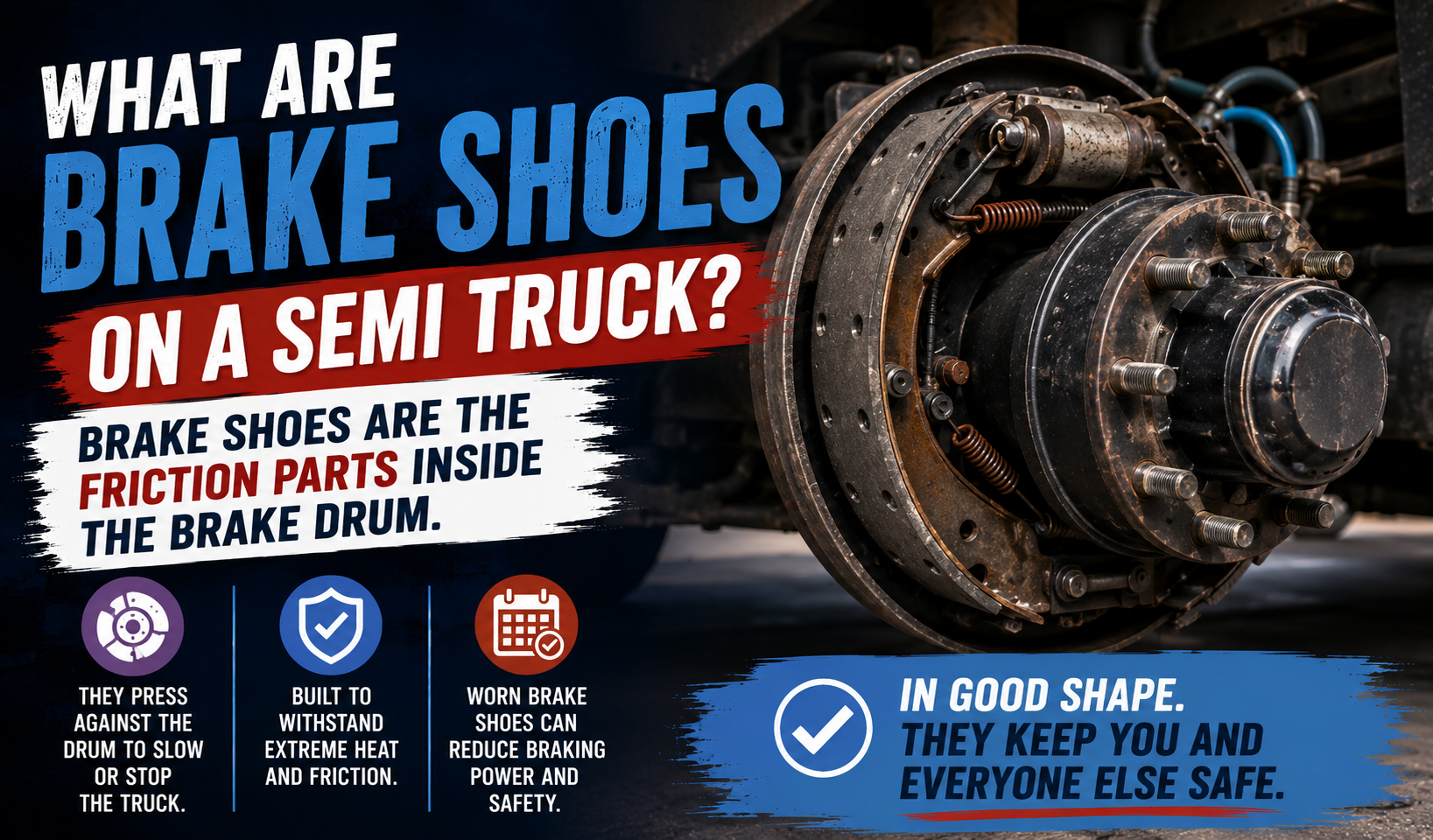
The brake shoes are the parts that actually create the friction needed to slow the truck. They’re doing hard work every single time you touch the brake pedal, even though most drivers never actually see them.
What Are Brake Shoes?
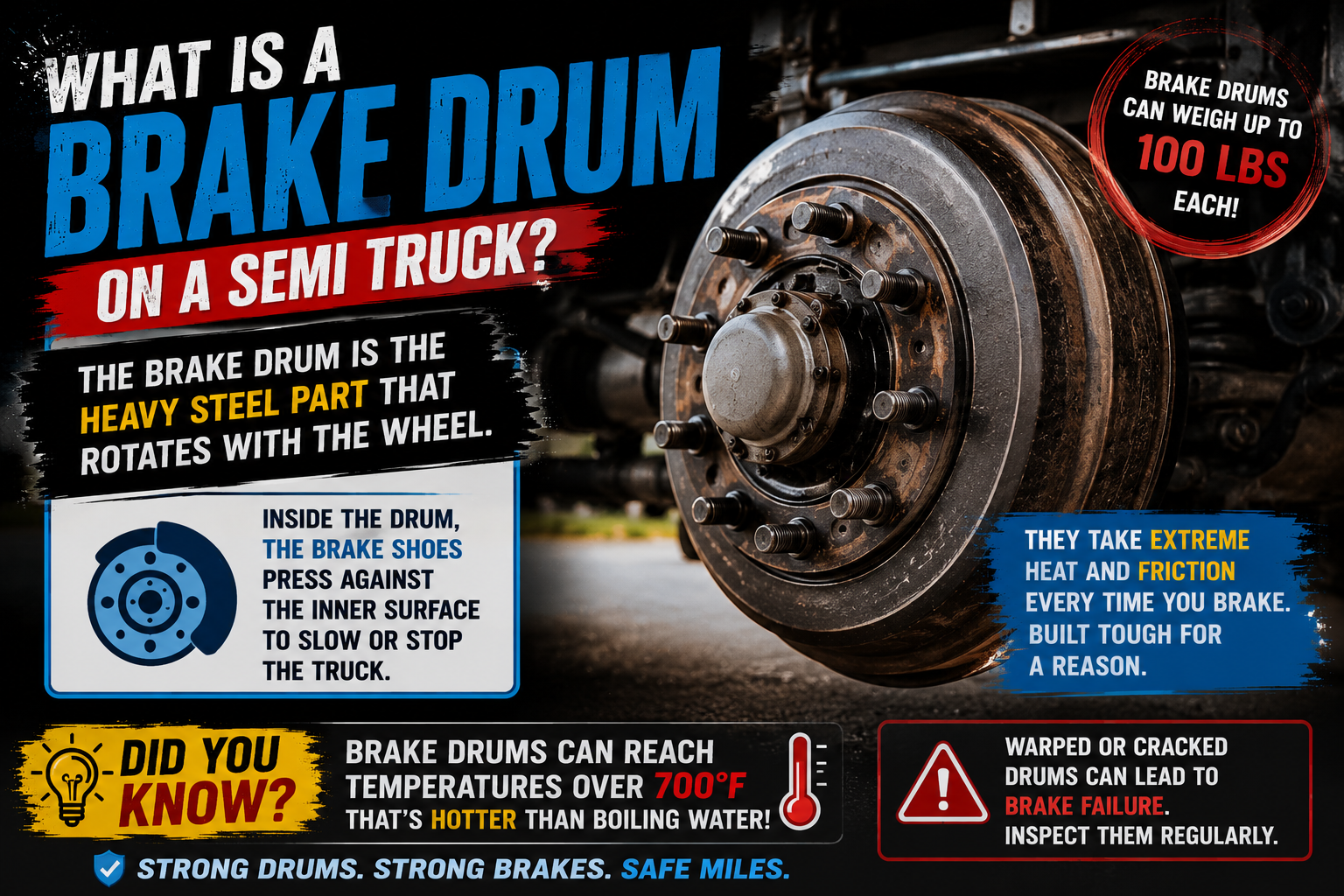
Brake shoes are curved metal components lined with friction material that press against the inside of the brake drum when the brakes are applied. The friction created between the brake shoe lining and the rotating brake drum slows or stops the vehicle. Because the shoes work against the drum’s inner surface, understanding that surrounding component adds useful context in What Is a Brake Drum on a Semi Truck?.
Without brake shoes, drum brakes simply wouldn’t work.
They’re one of the primary wear items in a commercial truck’s braking system.
Where Are Brake Shoes Located?
Brake shoes sit inside each brake drum.
Most drivers never actually see them because they’re hidden behind the brake drum itself.
Each brake assembly typically includes:
- Two brake shoes.
- Return springs.
- Rollers.
- An S-cam.
- Hold-down hardware.
- The brake drum.
When the brakes are released, the shoes sit slightly away from the drum.
When you press the brake pedal, they move outward and make contact with the drum.

How Do Brake Shoes Work?
The process starts the moment you step on the brake pedal.
Here’s what happens:
- Air pressure enters the brake chamber.
- The pushrod extends.
- The slack adjuster rotates.
- The S-cam turns.
- The S-cam pushes the brake shoes outward.
- The brake shoes press against the inside of the rotating brake drum.
- Friction slows the wheel and eventually the truck.
It all happens in less than a second.
Although the system contains several parts, they all work together in a very straightforward sequence.
Why Are They Called Brake Shoes?
The name comes from their curved shape.
Instead of looking like flat brake pads found on passenger cars, drum brake shoes have a curved design that matches the inside diameter of the brake drum.
Attached to each shoe is a friction lining made to withstand tremendous heat and pressure while providing consistent stopping power.

Brake Shoes vs. Brake Pads
One question I hear quite a bit from new CDL students is whether brake shoes and brake pads are the same thing.
They’re not.
Brake shoes are used inside drum brake systems.
Brake pads are used with disc brake systems.
Both create friction to stop the vehicle, but they do it in different ways.
Many newer commercial trucks now use air disc brakes on some axles, while millions of trucks still rely on traditional S-cam drum brakes.
How Brake Shoes Fit Into the Air Brake System
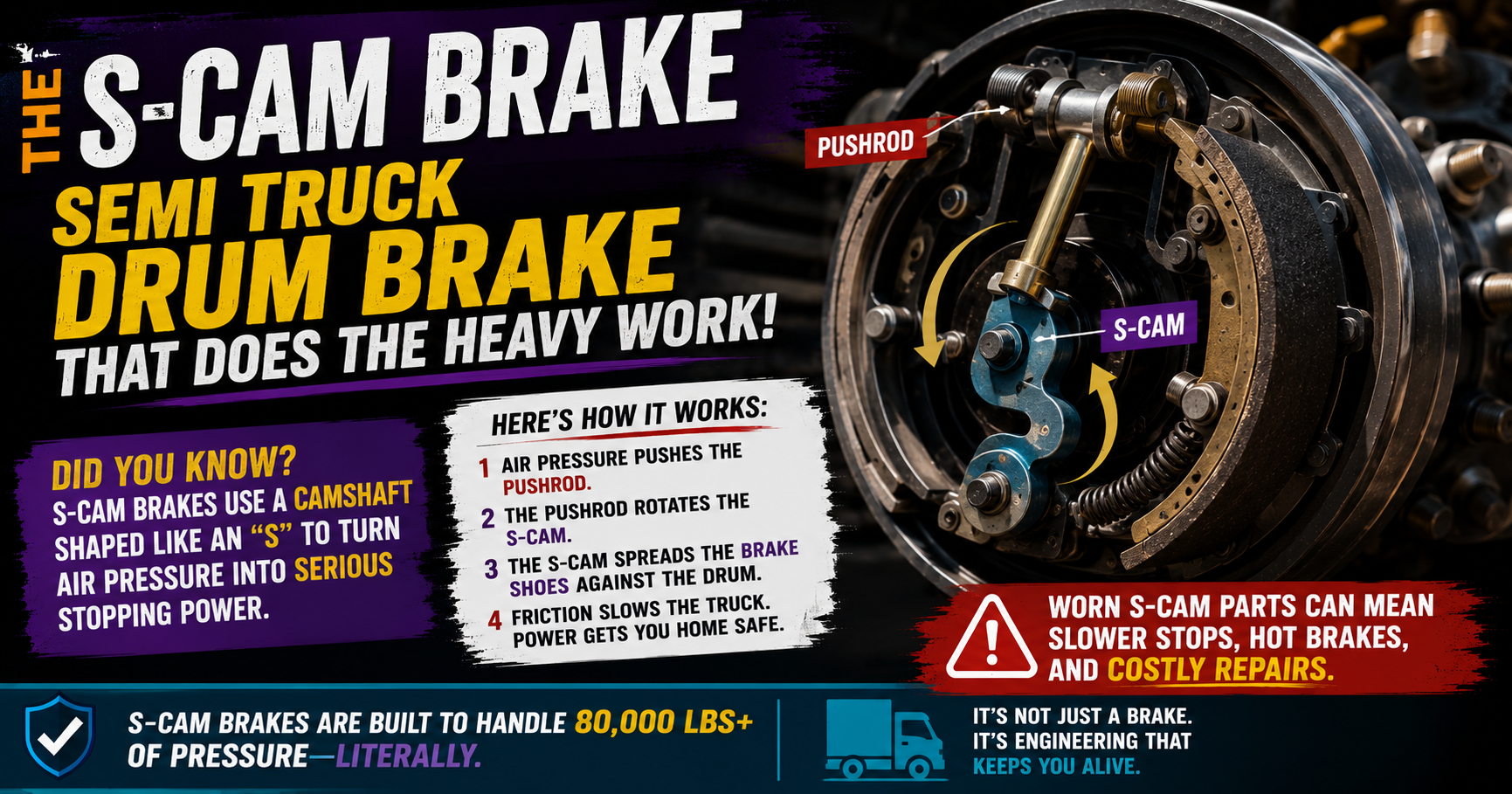
Brake shoes are only one piece of a much larger system. Understanding What Is an S-Cam Brake? How Semi Truck Drum Brakes Work explains how the shoes receive force and press against the drum.
Before the shoes ever touch the drum, several other components have already gone to work.
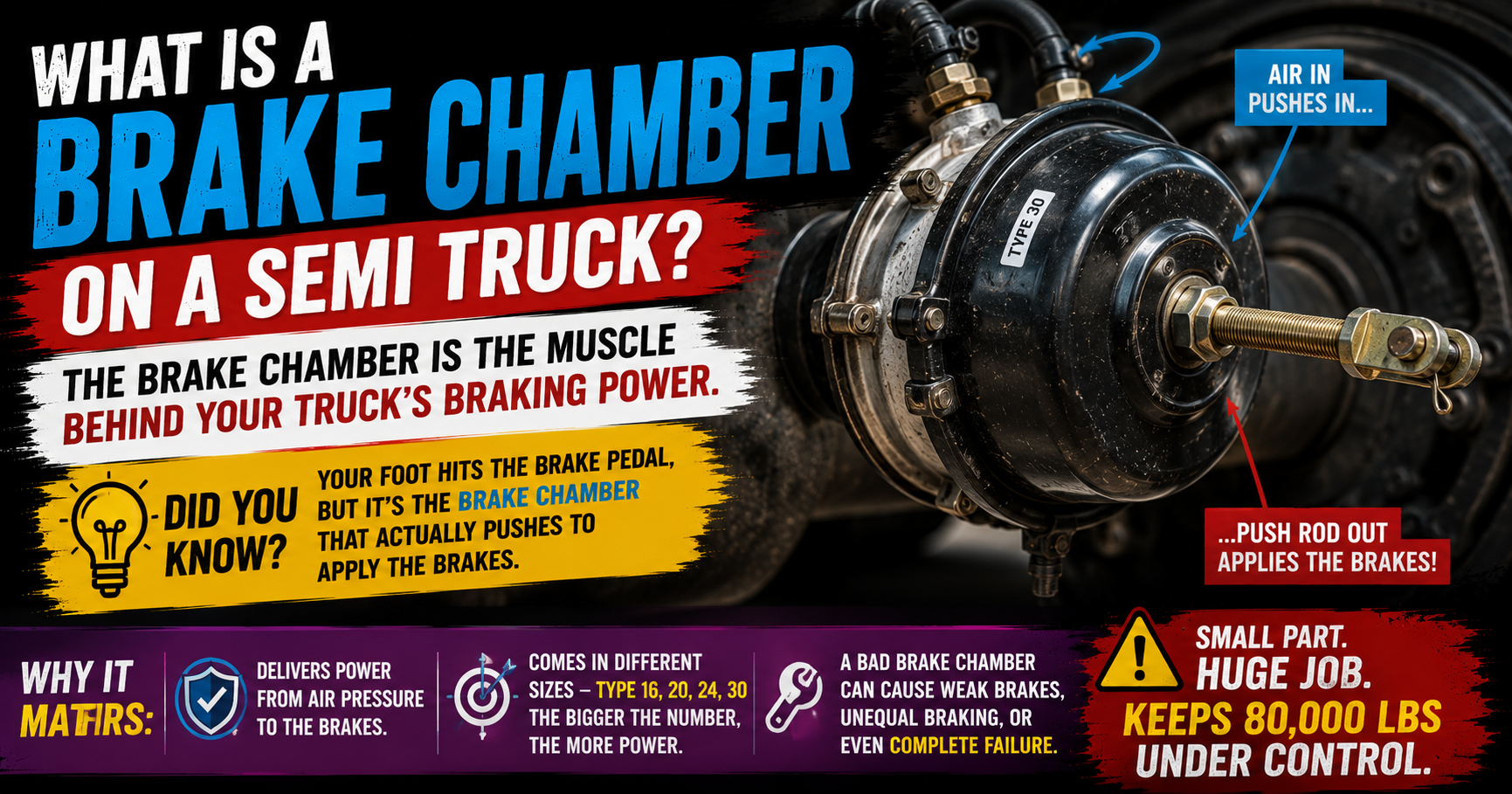
The brake chamber creates the force.
The pushrod transfers that force.
The slack adjuster rotates the camshaft.
The S-cam spreads the brake shoes.
Finally, the brake shoes press against the brake drum to slow the truck.
Understanding this entire sequence makes both CDL training and troubleshooting much easier.
Why Brake Shoes Wear Out
Every stop creates friction.
Every bit of friction creates heat.
Over thousands of miles, the friction material bonded to the brake shoes slowly wears away.
Several factors affect how quickly that happens, including:
- Load weight.
- Mountain driving.
- Stop-and-go traffic.
- Driver habits.
- Brake adjustment.
- Maintenance.
Drivers who ride their brakes constantly usually replace brake shoes much sooner than drivers who use proper braking techniques.
Signs Brake Shoes May Need Attention
I’ve learned over the years that trucks usually give you some warning before brake components wear out completely.
Some common signs include:
- Longer stopping distances.
- Uneven braking.
- Pulling during braking.
- Grinding noises.
- Excessive brake dust.
- Brake inspection failures.
Of course, routine maintenance often catches worn brake shoes long before the driver notices anything unusual.


Inspecting Brake Shoes
Because the brake shoes sit inside the drum, you can’t always inspect the entire friction surface during a normal walk-around.
Still, during my pre-trip I’m checking for:
- Damaged brake components.
- Cracked drums.
- Oil or grease contamination.
- Missing hardware.
- Proper adjustment.
- Air leaks nearby.
During scheduled maintenance, mechanics inspect brake shoe thickness and overall condition much more closely.
If you’re studying for your CDL, our CDL Vehicle Inspection Practice Test is a great way to become more comfortable identifying brake components before your skills exam.
Common Mistakes New Drivers Make
One mistake I see fairly often is assuming brake shoes last forever because they’re hidden inside the drum.
They don’t.
They’re wear items.
Another misconception is thinking the brake shoes actually move themselves.
They don’t.
Every bit of their movement comes from the brake chamber, pushrod, slack adjuster, and S-cam working together.
Once you understand that chain of events, the whole braking system becomes much easier to understand.
Where You’ll Hear This Term
Brake shoes come up regularly in conversations between drivers and mechanics.
You’ll hear them mentioned during:
- Annual inspections.
- DOT inspections.
- Brake jobs.
- Preventive maintenance.
- CDL training.
- Fleet safety inspections.
Even if you never replace a set yourself, knowing what brake shoes do helps you better understand how your truck stops safely.
Frequently Asked Questions
Do all semi trucks have brake shoes?
No.
Many newer trucks use air disc brakes, which use brake pads instead of brake shoes.
However, drum brakes with brake shoes are still extremely common throughout the commercial trucking industry.
How long do brake shoes last?
There’s no single answer.
Driving style, terrain, load weight, and maintenance all affect brake shoe life.
Some last well over 100,000 miles, while severe-duty trucks may require replacement much sooner.
Will I need to know about brake shoes for my CDL?
Yes.
You should understand how brake shoes fit into the overall air brake system and recognize where they are during your pre-trip inspection.
Our Free CDL Air Brakes Practice Test 1 and Free CDL Air Brakes Practice Test 2 are excellent resources for reviewing these concepts before exam day.
One Tool That Makes Brake Inspections Easier
Brake inspections aren’t always convenient.
Sometimes you’re checking equipment before daylight, during rain, or after a long day on the road.
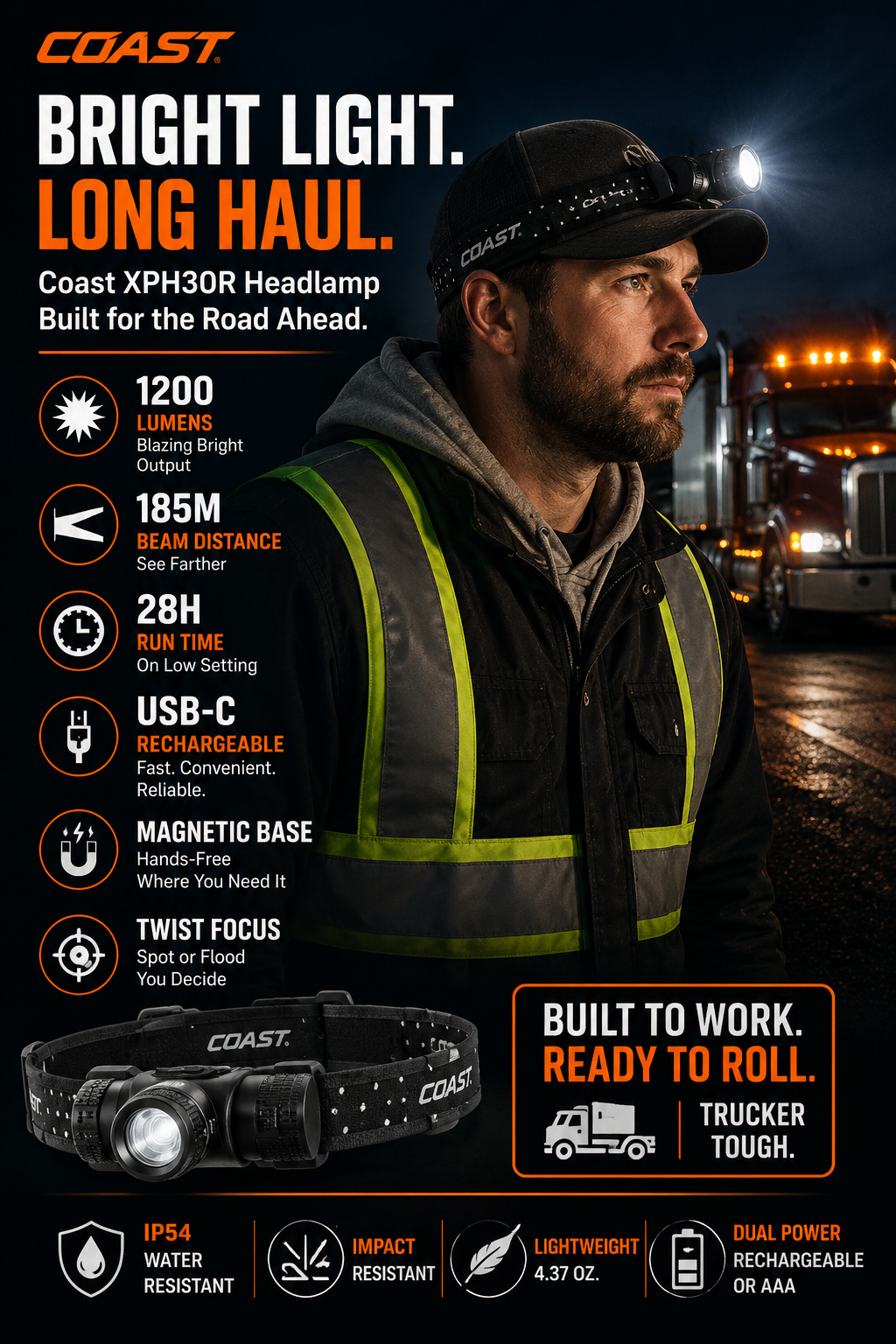
That’s why I always keep the Coast XPH30R USB-C Rechargeable Dual Power Headlamp in my truck.
It gives me both hands free while checking brake drums, slack adjusters, air lines, and the rest of the brake system, making inspections quicker and much more thorough.
My Advice After Years Behind the Wheel
I’ve learned that professional drivers don’t become safer because they memorize trucking terms.
They become safer because they understand what those parts actually do.
Brake shoes may never get much attention.
They’re hidden behind the wheel, covered in road grime, and rarely seen unless repairs are being made.
But every safe stop you make depends on them.
The more you understand how the entire brake system works together, the more confident you’ll become behind the wheel and during every pre-trip inspection.
Author: David Walker
David Walker has more than 22 years of experience as a professional truck driver and CDL instructor. Throughout his career, he’s trained hundreds of new drivers on air brake systems, pre-trip inspections, and defensive driving, always believing that understanding the equipment is just as important as learning how to operate it safely.