(function(){“use strict”;/* QUESTION BANK – replace only this array for future tests. */var Q=[
[“Your engine warning light comes on and the temperature gauge is climbing. What should you do first?”,”Find a safe place to pull over and investigate before serious damage occurs”,[“Keep driving until the next scheduled stop”,”Turn off all lights and continue”,”Speed up to increase airflow”],”A rising temperature or warning light may signal a cooling, oil, or mechanical problem. Pull over safely, set the brakes, and inspect before the vehicle fails in traffic.”],
[“If your vehicle begins to hydroplane, what is the safest first response?”,”Ease off the accelerator and avoid sudden steering or braking”,[“Brake hard immediately”,”Steer sharply toward the shoulder”,”Shift into reverse to slow down”],”Hydroplaning means the tires are riding on water instead of pavement. Smoothly reduce speed and keep the vehicle pointed straight until traction returns.”],
[“What is the main goal when recovering from a skid?”,”Regain traction while keeping the vehicle pointed where you want to go”,[“Lock the wheels to stop faster”,”Accelerate until the tires grab”,”Turn as sharply as possible”],”Skid recovery is about smooth control. Avoid panic braking, steer in the direction you want the vehicle to travel, and let the tires roll again.”],
[“What should you do if your drive wheels begin to spin on a slippery road?”,”Ease off the accelerator until the tires regain grip”,[“Press the accelerator harder”,”Apply the parking brake”,”Turn off the steering wheel lock”],”Spinning drive wheels have lost traction. Reducing power helps the tires reconnect with the road surface.”],
[“If the rear of your vehicle starts sliding left, which way should you steer?”,”Steer left, in the direction you want the vehicle to go”,[“Steer right, away from the skid”,”Hold the wheel perfectly straight no matter what”,”Release the steering wheel”],”In a rear-wheel skid, steer in the direction of the skid to bring the vehicle back in line, then correct smoothly so you do not oversteer.”],
[“What is a jackknife?”,”When a tractor and trailer fold toward each other during a skid”,[“When the trailer landing gear drops”,”When the fifth wheel slides backward”,”When the cargo shifts forward”],”A jackknife usually starts with lost traction and improper braking or steering. Smooth speed control and correct brake use help prevent it.”],
[“You have a tire blowout on the highway. What should you do first?”,”Hold the steering wheel firmly and keep the vehicle under control”,[“Brake as hard as possible”,”Immediately swerve onto the shoulder”,”Shift to park”],”A blowout can pull the vehicle suddenly. Grip the wheel, stay straight, ease off the accelerator, and slow gradually before leaving the roadway.”],
[“After a tire blowout, when should you move to the shoulder?”,”After the vehicle is stable and speed is reduced”,[“The instant you hear the tire fail”,”Only after driving several more miles”,”Before checking mirrors”],”The shoulder is safer only if you can reach it under control. Signal, check mirrors, and move over gradually.”],
[“What should you do if your headlights fail at night?”,”Try the dimmer switch, flashers, and signals, then get off the road safely”,[“Keep driving at normal speed”,”Follow another vehicle closely for light”,”Turn off all electrical switches and accelerate”],”You need to make yourself visible and stop safely. Do not continue at highway speed without proper lighting.”],
[“If your service brakes fail on a downgrade, what should you do?”,”Downshift if possible, use an escape ramp if available, and focus on steering control”,[“Pump the accelerator repeatedly”,”Turn the engine off immediately”,”Aim for the smallest object beside the road”],”Brake failure on a downgrade is an emergency. Use remaining control options, look for an escape ramp, and avoid actions that remove steering or air pressure.”],
[“Why should you not turn off the ignition while moving in an emergency?”,”It may lock steering or reduce control systems”,[“It makes the vehicle speed up”,”It applies trailer brakes only”,”It opens the cargo doors”],”Turning off the ignition can disable power steering or other systems. Keep control while slowing and stopping safely.”],
[“What is brake fade?”,”Loss of braking power from overheated brakes”,[“A loose steering wheel”,”A tire losing air slowly”,”A low battery condition”],”Too much braking, especially on long downgrades, can overheat brakes until they no longer slow the vehicle effectively.”],
[“Your brakes are smoking after a long downgrade. What should you do?”,”Stop in a safe place and let the brakes cool”,[“Pour cold water on hot brake drums”,”Keep driving to cool them faster”,”Apply the parking brake while moving fast”],”Smoking brakes are dangerously hot. Stop safely and allow cooling; sudden cooling or continued hard braking can cause damage or failure.”],
[“What should you do if you must stop on the shoulder because of a breakdown?”,”Park as far off the road as practical and turn on four-way flashers”,[“Stop partly in the lane so people see you”,”Turn off all lights to save battery”,”Stand behind the trailer”],”Move away from traffic, make the vehicle visible, and avoid standing where another vehicle could strike you.”],
[“When stopped on a roadway or shoulder, why are warning devices important?”,”They give approaching drivers time to see and avoid your vehicle”,[“They replace the need for flashers”,”They allow you to park in any lane”,”They repair electrical problems”],”Reflective triangles or other approved devices create advance warning so traffic can react before reaching your disabled vehicle.”],
[“Where should warning triangles be placed?”,”In locations that warn traffic from the directions where vehicles may approach”,[“Only directly under the bumper”,”Only inside the cab window”,”Randomly wherever there is space”],”Placement depends on road type, hills, curves, and traffic direction. The purpose is early warning, not decoration.”],
[“What should you do if your vehicle catches fire?”,”Stop safely, shut off the engine, evacuate, and call for help”,[“Open the hood fully right away”,”Keep driving until the fire goes out”,”Use water on every type of fire”],”Your first job is life safety. Stop, get people away, notify emergency services, and use an extinguisher only if it is safe and appropriate.”],
[“Why should you be careful opening the hood during an engine fire?”,”Extra oxygen can make the fire flare up”,[“It will release the parking brake”,”It will drain the fuel tanks”,”It will lock the doors”],”Opening a compartment can feed the fire. If using an extinguisher, apply through openings when possible and stay clear of flare-ups.”],
[“Which extinguisher approach is safest if a small fire can be fought?”,”Stand upwind, keep an escape route, and aim at the base of the fire”,[“Stand in smoke for better aim”,”Aim only at the top of the flames”,”Turn your back after spraying”],”Firefighting is only reasonable for small fires when you can stay safe. Aim at the fuel source and never let fire block your exit.”],
[“What should you do after being involved in a crash?”,”Protect the scene, check for injuries, notify authorities, and avoid creating more danger”,[“Leave immediately if your truck still runs”,”Move injured people unless absolutely necessary”,”Argue fault before calling for help”],”After a crash, prevent secondary crashes, call for medical and police help, and give accurate information.”],
[“If cargo spills onto the roadway, what is the priority?”,”Warn traffic and contact emergency help if needed”,[“Try to reload cargo in the traffic lane”,”Ignore it if the truck can still move”,”Sweep it into the next lane”],”Spilled cargo can cause crashes. Secure the area, warn approaching traffic, and follow company and emergency procedures.”],
[“What should you do if an oncoming vehicle drifts into your lane?”,”Slow down, move right if safe, and avoid a head-on crash”,[“Steer left into oncoming traffic”,”Speed up to beat it”,”Turn off your headlights”],”Reducing speed lowers impact risk and moving right gives space. Sound the horn if useful, but keep control first.”],
[“If you must leave the pavement, what should you avoid?”,”Jerking the wheel sharply back onto the road”,[“Slowing before reentering”,”Checking mirrors”,”Holding the wheel firmly”],”A sharp return can cause rollover or loss of control. Slow down, align the vehicle, and return when safe.”],
[“What is the safest response when an animal appears on the road?”,”Brake firmly while staying in your lane if possible”,[“Swerve sharply without checking traffic”,”Accelerate toward the animal”,”Turn off headlights”],”A violent swerve in a heavy vehicle can cause a rollover or collision. Controlled braking is usually safer than sudden steering.”],
[“Why is calm decision-making critical in emergencies?”,”Panic actions often make loss of control worse”,[“Emergencies require no judgment”,”The largest vehicle always has the right of way”,”Hard steering fixes most problems”],”Most CDL emergency procedures rely on smooth control, visibility, communication, and choosing the least dangerous option available.”]
],S={q:[],i:0,s:0},$=function(x){return document.getElementById(x)},E={quiz:$(‘quiz’),results:$(‘results’),reviewScreen:$(‘reviewScreen’),qcount:$(‘qcount’),score:$(‘score’),progress:$(‘progress’),bar:$(‘bar’),question:$(‘question’),answers:$(‘answers’),feedback:$(‘feedback’),prev:$(‘prev’),next:$(‘next’),review:$(‘review’),reviewList:$(‘reviewList’)};function sh(a){a=a.slice();for(var i=a.length-1;i;i–){var j=Math.floor(Math.random()*(i+1)),t=a[i];a[i]=a[j];a[j]=t}return a}function esc(s){var d=document.createElement(‘div’);d.textContent=s;return d.innerHTML}function top(){$(‘tr-cdl-app’).scrollIntoView({behavior:’smooth’,block:’start’})}function start(){S.q=sh(Q).map(function(x){return{t:x[0],a:sh([{t:x[1],ok:true}].concat(x[2].map(function(w){return{t:w,ok:false}}))),e:x[3],p:null}});S.i=0;S.s=0;E.quiz.hidden=false;E.results.hidden=true;E.reviewScreen.hidden=true;render();top()}function render(){var q=S.q[S.i],done=q.p!==null,n=S.q.filter(function(x){return x.p!==null}).length;E.qcount.textContent=’Question ‘+(S.i+1)+’ of ‘+S.q.length;E.score.textContent=S.s;E.bar.style.width=n/S.q.length*100+’%’;E.progress.setAttribute(‘aria-valuenow’,n);E.question.textContent=q.t;E.answers.innerHTML=”;q.a.forEach(function(a,i){var b=document.createElement(‘button’);b.type=’button’;b.className=’answer’+(done&&a.ok?’ good’:”)+(done&&i===q.p&&!a.ok?’ bad’:”);b.textContent=a.t;b.disabled=done;b.onclick=function(){pick(i)};E.answers.appendChild(b)});E.prev.disabled=S.i===0;E.next.disabled=!done;E.next.textContent=S.i===S.q.length-1?’View Results’:’Next Question’;if(done)feed(q);else E.feedback.hidden=true}function pick(i){var q=S.q[S.i];if(q.p!==null)return;q.p=i;if(q.a[i].ok)S.s++;render()}function feed(q){var a=q.a[q.p],c=q.a.filter(function(x){return x.ok})[0];E.feedback.className=’feedback ‘+(a.ok?’good’:’bad’);E.feedback.innerHTML=’‘+(a.ok?’ Correct!’:’ Incorrect’)+’‘+(!a.ok?’
Correct answer: ‘+esc(c.t)+’
Why yours is incorrect: It does not correctly apply the CDL safety principles in this scenario.
‘:”)+’
Explanation: ‘+esc(q.e)+’
‘;E.feedback.hidden=false}function finish(){var n=S.q.length,b=n-S.s,p=Math.round(S.s/n*100);E.quiz.hidden=true;E.reviewScreen.hidden=true;E.results.hidden=false;$(‘percent’).textContent=p+’%’;$(‘final’).textContent=S.s+’/’+n;$(‘correct’).textContent=S.s;$(‘incorrect’).textContent=b;$(‘message’).textContent=p>=90?’Outstanding! You have a strong grasp of combination-vehicle fundamentals.’:p>=80?’Great job! Review the missed Combination Vehicles questions.’:p>=70?’Good progress. Keep practicing this section.’:’More Combination Vehicles review is recommended before testing.’;E.review.disabled=!b;top()}function review(){E.reviewList.innerHTML=”;S.q.filter(function(q){return!q.a[q.p].ok}).forEach(function(q,i){var c=q.a.filter(function(a){return a.ok})[0],d=document.createElement(‘article’);d.className=’review-item’;d.innerHTML=’
Every commercial driver hopes they never experience a tire blowout, vehicle fire, brake failure, or serious skid. Unfortunately, emergencies can happen to even the safest and most experienced truck drivers. The difference between a close call and a serious crash often comes down to knowing how to react calmly and correctly.
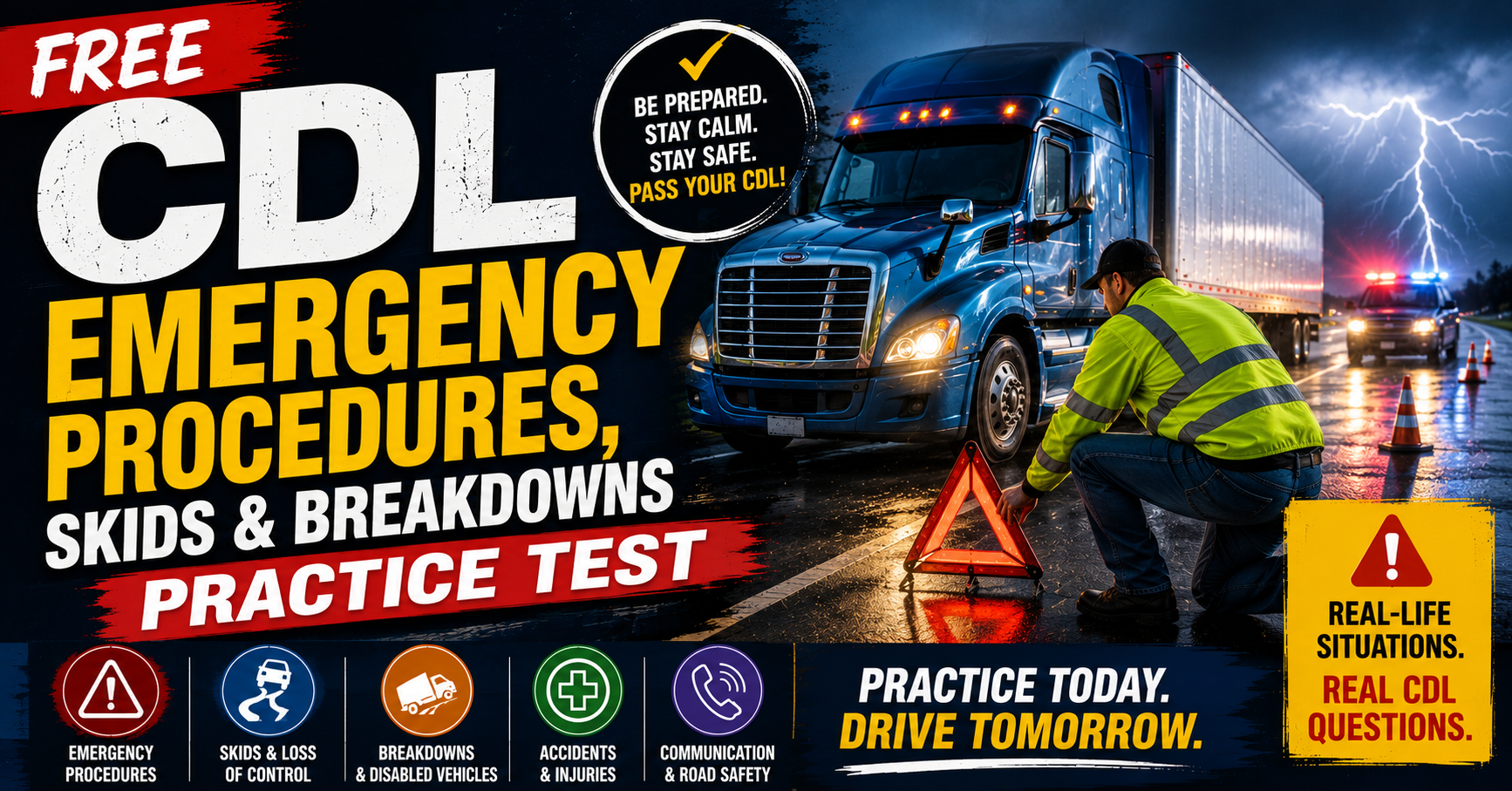
Our Free CDL Emergency Procedures, Skids & Breakdowns Practice Test helps prepare you for those unexpected situations with 25 realistic multiple-choice questions covering emergency driving techniques, tire blowouts, skids, vehicle fires, roadside breakdowns, accidents, and emergency vehicle control. Every question includes a detailed explanation so you understand why the correct response is the safest one.
If you’re beginning your CDL preparation, you’ll build a stronger understanding of commercial driving by first completing our Free CDL General Knowledge Practice Test #1 before moving into advanced emergency situations.
No driver can predict when an emergency will happen.
A front tire could fail without warning.
A vehicle ahead may stop suddenly.
A mechanical problem could develop hundreds of miles from the nearest repair shop.
Professional truck drivers prepare for emergencies before they ever occur.
Understanding how to respond quickly and safely helps reduce panic while giving you the best chance of protecting yourself, your cargo, and everyone around you.
What You’ll Learn on This Practice Test
This CDL practice test covers many emergency situations found in commercial driving and commonly discussed in CDL manuals.
Topics include:
Tire blowouts
Steering control
Skid recovery
Emergency braking
Vehicle fires
Brake failure
Roadside breakdowns
Warning devices
Crash procedures
Engine overheating
Electrical failures
Escape ramps
Every question focuses on helping you develop safe decision-making skills instead of memorizing answers.
One of the biggest mistakes inexperienced drivers make is allowing panic to take control.
When something unexpected happens, many people instinctively slam on the brakes or jerk the steering wheel.
Those reactions often make the situation worse.
Professional drivers focus first on maintaining control of the vehicle.
Once control has been established, they can safely slow down, signal other motorists, and move to a secure location.
Remaining calm is one of the most valuable emergency response skills you’ll ever develop.
How to Handle a Tire Blowout
Few situations get a driver’s attention faster than a sudden tire failure.
A steering tire blowout can cause the truck to pull sharply to one side.
Your first priority should always be maintaining directional control.
Avoid:
Slamming on the brakes.
Jerking the steering wheel.
Making sudden lane changes.
Overcorrecting.
Instead, maintain a firm grip on the steering wheel, allow the vehicle to slow gradually, and move safely off the roadway once the truck is under control.
Smoke, unusual odors, overheating, or visible flames should never be ignored.
If you suspect a fire:
Stop in a safe location.
Turn off the engine.
Move everyone away from the vehicle.
Contact emergency services.
Use a properly rated fire extinguisher only if the fire is small and it’s safe to do so.
Protecting human life is always more important than saving the vehicle or cargo.
Roadside Breakdowns Can Be Dangerous
A mechanical breakdown creates risks long after the truck stops moving.
Passing traffic may not immediately recognize that your vehicle is disabled.
Drivers should activate their four-way flashers as soon as possible and properly place warning devices according to CDL regulations.
Moving the vehicle as far away from traffic as safely possible greatly reduces the risk of a secondary collision.
Every commercial driver should know where emergency equipment is stored before beginning a trip.
Emergency Steering Versus Emergency Braking
Not every emergency should be handled the same way.
Sometimes braking is the safest response.
Other situations may require steering around an obstacle instead.
The correct decision depends on:
Traffic conditions.
Available escape routes.
Vehicle speed.
Road surface.
Cargo weight.
Visibility.
Professional drivers constantly scan ahead so they already know where a safe escape path may exist if an emergency develops.
Preparing Before an Emergency Happens
The best emergency response begins long before something goes wrong.
Professional drivers prepare themselves by:
Performing complete pre-trip inspections.
Maintaining safe following distances.
Watching traffic well ahead.
Monitoring weather conditions.
Keeping emergency equipment in good condition.
Planning escape routes while driving.
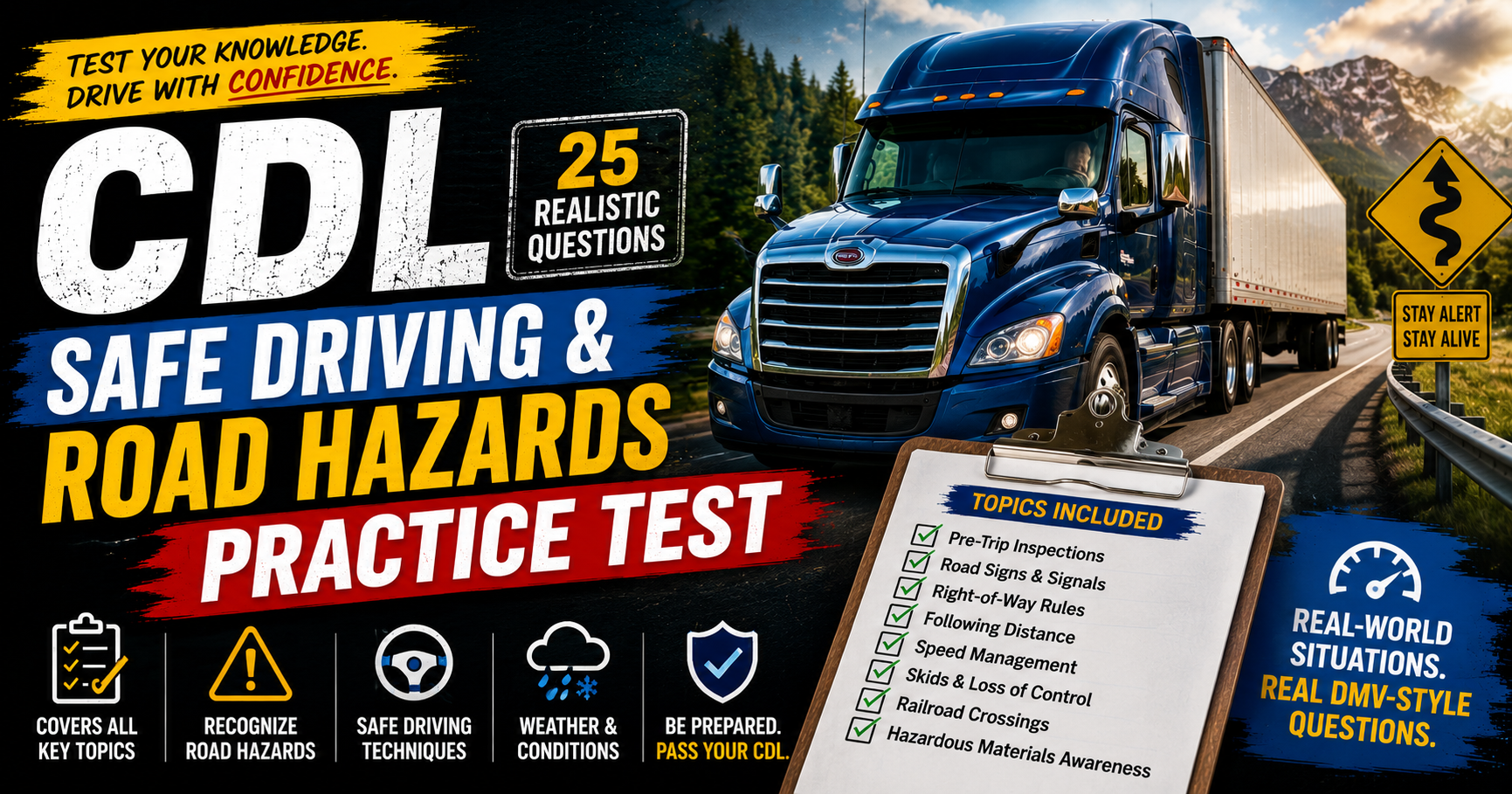
Continue strengthening your defensive driving skills by taking our CDL Safe Driving & Road Hazards Practice Test. Many emergency situations can be avoided entirely through proper hazard recognition and defensive driving techniques.
Brake Failure Requires Quick Thinking
Brake failure is one of the most serious emergencies a commercial driver can experience.
Fortunately, complete brake failure is uncommon when vehicles are properly maintained and inspected. Still, every CDL driver should understand what to do if braking ability is suddenly reduced.
If your brakes begin failing:
Stay calm.
Downshift if possible.
Use engine braking to help slow the vehicle.
Warn other motorists with your lights and horn if necessary.
Look for a safe escape route or runaway truck ramp if you’re on a downgrade.
Never wait until your speed becomes uncontrollable before taking action.
Planning ahead gives you more options and increases your chances of bringing the vehicle to a safe stop.
Safe Procedures After a Breakdown
Once your truck has stopped safely, your responsibility isn’t over.
Protecting yourself and other motorists becomes the next priority.
Whenever possible:
Pull completely off the roadway.
Turn on your four-way flashers immediately.
Set the parking brake.
Place reflective warning triangles according to regulations.
Remain alert to passing traffic.
Many serious crashes occur when disabled vehicles are struck by approaching traffic that didn’t recognize the hazard in time.
Proper warning devices provide other drivers with valuable time to slow down or change lanes safely.
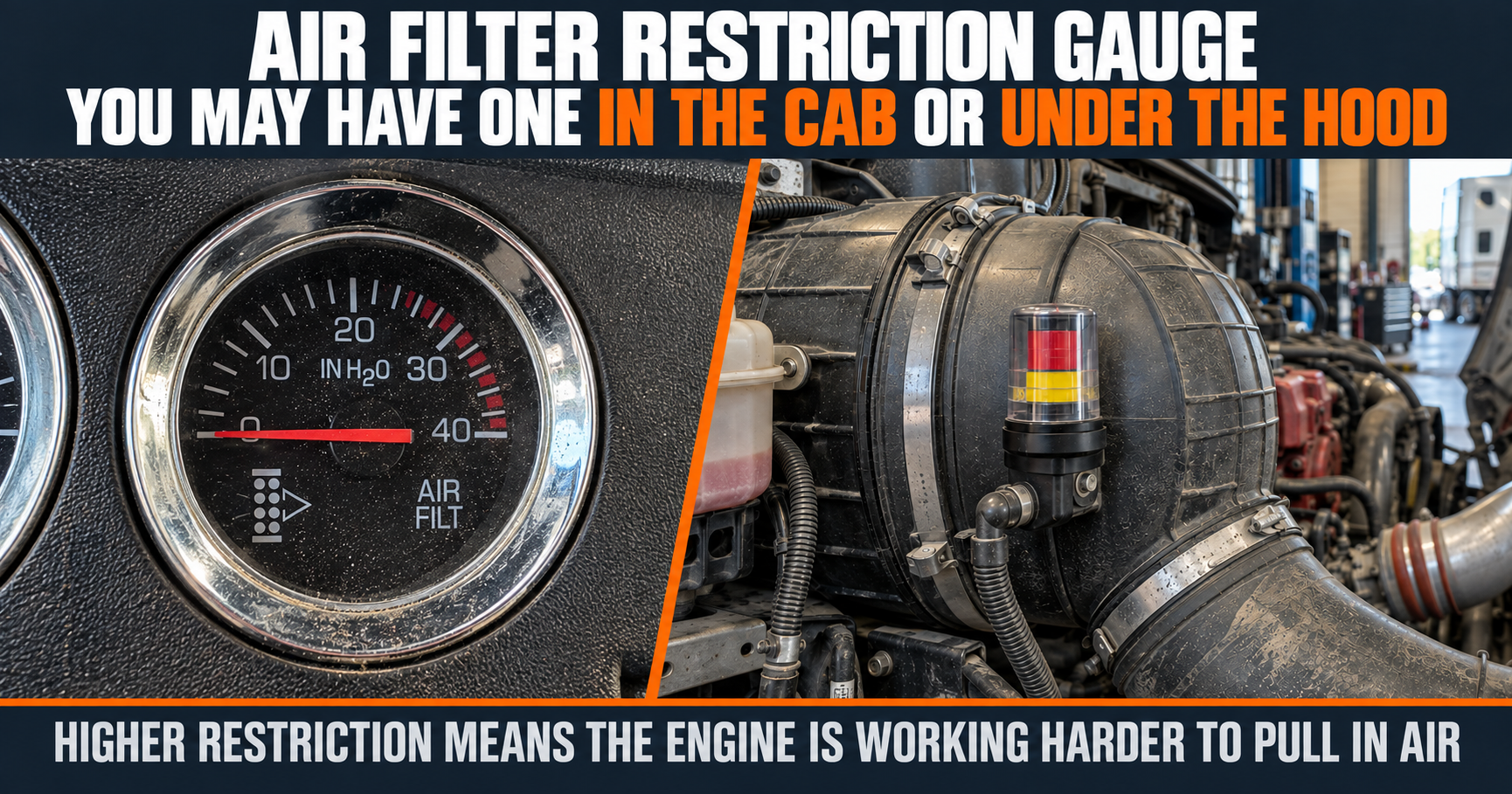
Engine Overheating Should Never Be Ignored
Commercial engines generate tremendous amounts of heat, especially when climbing long grades or hauling heavy loads during hot weather.
If your temperature gauge begins climbing unusually high:
Reduce engine strain if possible.
Find a safe place to stop.
Allow the engine to cool naturally.
Never remove a hot radiator cap while the system remains pressurized.
Opening a hot cooling system too soon can result in serious burns from escaping steam and coolant.
Routine inspections of coolant levels, belts, hoses, and cooling components greatly reduce the chance of overheating during a trip.
Electrical Problems Can Quickly Become Fires
Burning insulation, smoke, flickering lights, or unusual electrical odors should always be taken seriously.
Electrical problems often worsen rapidly.
If you suspect an electrical issue:
Pull over safely.
Shut the engine off when appropriate.
Inspect only if it can be done safely.
Use a properly rated fire extinguisher if a small electrical fire develops.
Contact emergency assistance if the situation continues to worsen.
Ignoring early warning signs can allow a minor wiring problem to develop into a major vehicle fire.
What to Do After a Crash
Even careful drivers may eventually become involved in a collision.
After an accident, your priorities should always be:
Protect yourself.
Protect others.
Call emergency services.
Secure the vehicle if possible.
Provide assistance within your level of training.
Avoid moving injured people unless they’re facing immediate danger, such as fire or another life-threatening hazard.
Remaining calm allows you to think clearly while helping emergency responders manage the situation safely.
Emergency Equipment Every CDL Driver Should Know
Every commercial vehicle should have required emergency equipment that’s easy to access when needed.
Drivers should know the location and proper use of items such as:
Fire extinguishers.
Reflective warning triangles.
Spare fuses when required.
Flashlights.
Emergency contact information.
First aid supplies if provided by the carrier.
Knowing where this equipment is located before an emergency occurs saves valuable time when every second matters.
Common Emergency Mistakes New CDL Drivers Make
Many emergency situations become worse because of panic or poor decisions.
Some of the most common mistakes include:
Braking too aggressively after a front tire blowout.
Overcorrecting during a skid.
Driving farther after noticing smoke or fire.
Forgetting to activate emergency flashers.
Placing warning triangles incorrectly.
Waiting too long to use a runaway truck ramp.
Ignoring unusual mechanical sounds.
Failing to inspect the vehicle after striking road debris.
Understanding these common mistakes helps you avoid repeating them during your own trucking career.
Frequently Asked Questions
How many questions are on this CDL Emergency Procedures Practice Test?
This practice test includes 25 multiple-choice questions covering tire blowouts, skids, vehicle fires, roadside breakdowns, crashes, brake failure, emergency steering, and other CDL emergency situations.
Are emergency procedures covered on the CDL General Knowledge exam?
Yes. Emergency procedures are an important part of CDL training because every commercial driver must know how to respond safely when unexpected situations occur on the road.
What should I do during a front tire blowout?
Maintain a firm grip on the steering wheel, keep the vehicle traveling straight, avoid sudden braking, and gradually slow down before moving safely off the roadway.
Why is overcorrecting during a skid dangerous?
Overcorrecting can cause the vehicle to skid in the opposite direction, making it much harder to regain control. Smooth steering corrections are much safer.
When should I use a runaway truck ramp?
If your brakes fail or you lose control of your speed while descending a mountain grade, use a runaway truck ramp as soon as it’s safe to do so. Waiting too long can make the situation much more dangerous.
What is the best way to prepare for emergencies?
The best preparation includes performing complete pre-trip inspections, maintaining safe following distances, monitoring traffic conditions, keeping emergency equipment in good condition, and practicing defensive driving every day.
Continue Building Your CDL Knowledge
Every professional truck driver will eventually face unexpected situations on the road. While you can’t prevent every emergency, you can prepare yourself to respond safely and confidently.
Continue working through our growing collection of free CDL practice tests to strengthen your understanding of vehicle inspections, braking, weather, cargo securement, defensive driving, and other essential commercial driving topics. Every practice test builds knowledge that can help you pass your CDL permit exam while preparing you for real-world situations you’ll encounter throughout your trucking career.