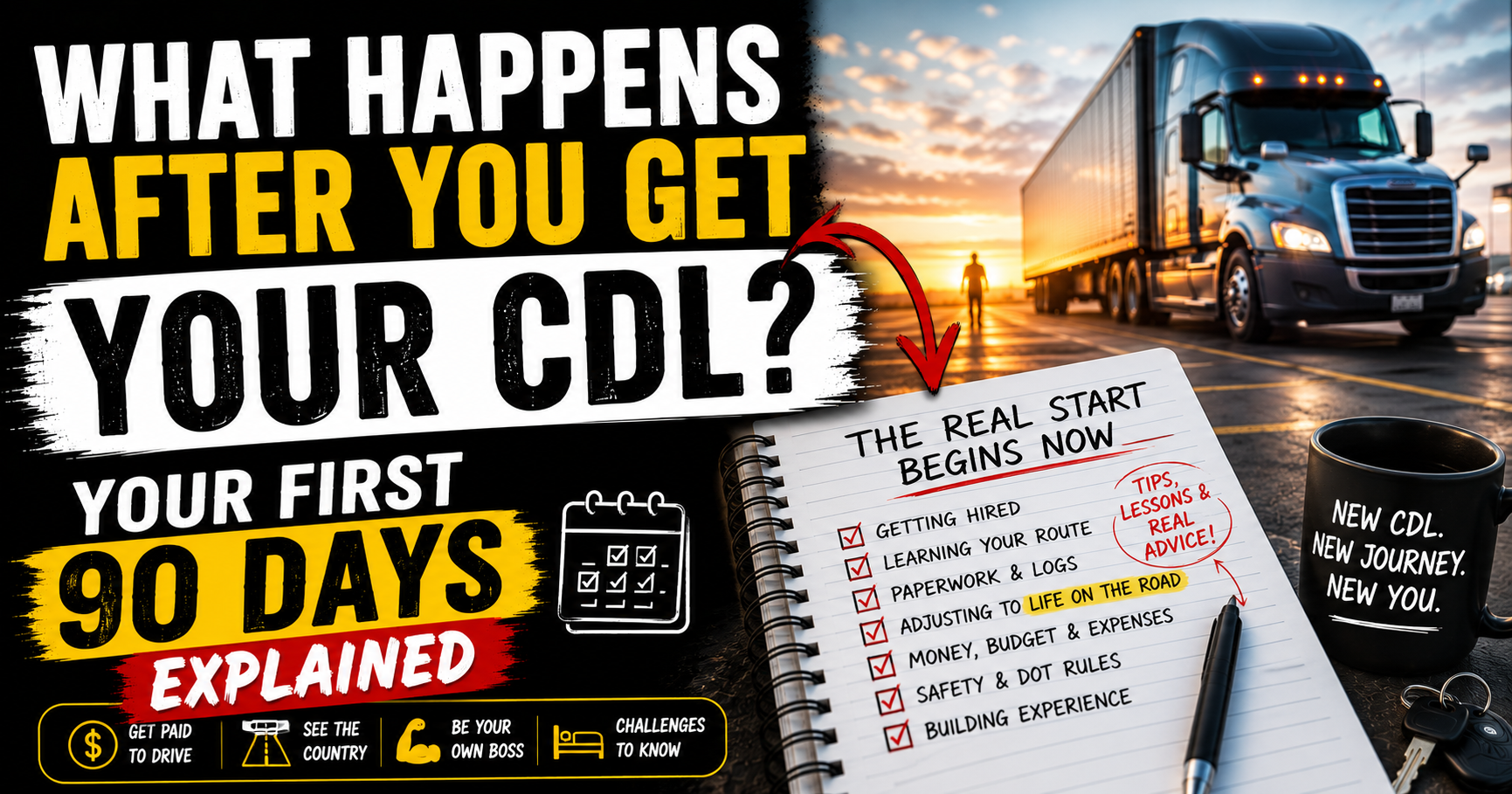
Passing your CDL skills test is one of the biggest milestones in becoming a truck driver. For readers still working toward that milestone, the licensing steps before testing explains what comes before the skills test.
Walking out with that temporary license in your hand feels incredible.
For weeks or even months, your entire focus has been on one goal.
Pass the permit.
Learn the pre-trip inspection.
Practice backing.
Pass the road test.
Then it finally happens.
You earn your CDL.
For about five minutes, it feels like you’ve reached the finish line.
Then a new question pops into your head.
“Now what?”
I remember wondering the exact same thing.
Getting your CDL doesn’t mean you’re suddenly finished learning.
In many ways, it’s actually the beginning of your trucking career.
Your first ninety days will probably teach you more than all of CDL school combined.
If you’re getting ready to start that journey, here’s what you can realistically expect.
If you haven’t taken your skills test yet, I’d recommend reading I Passed My CDL Test Today and Here’s What I Learned first. It’s a great look at what test day actually feels like while everything is still fresh.
The Job Search Usually Starts Immediately
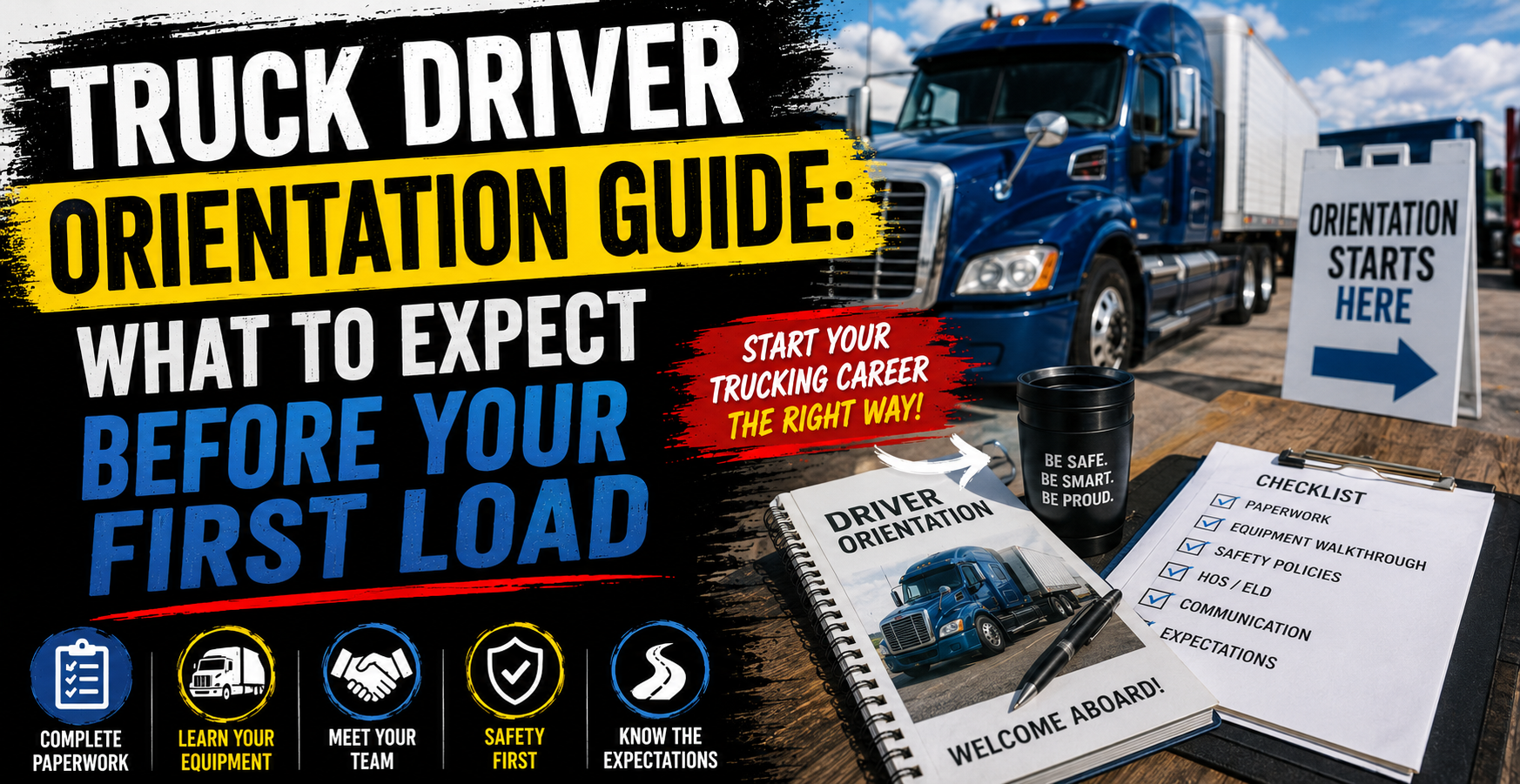
Some students already have a job lined up before graduation. For those graduates moving directly into a job, Truck Driver Orientation Guide: What to Expect Before Your First Load explains what typically happens before the first load.
Others begin applying as soon as they receive their CDL.
Either way, don’t be surprised if things move quickly.
Many companies actively hire recent CDL graduates.
During interviews you’ll probably discuss:
- Your CDL endorsements.
- Driving record.
- Work history.
- Training school.
- Availability.
- Whether you’re willing to drive OTR, regional, or local routes.
Remember…
You’re interviewing the company just as much as they’re interviewing you.
Ask questions.
Learn about home time.
Find out how training works.
Understand the pay structure.
The first company isn’t always the best company.
You’ll Complete More Paperwork Than You Expect
Just when you think you’re finally done filling out forms…
You’ll probably fill out even more.
Expect paperwork covering:
- Employment documents.
- Tax forms.
- Direct deposit.
- Safety policies.
- Company procedures.
- Benefits.
- Emergency contacts.
- Driver agreements.
It isn’t exciting.
But it’s all part of starting a professional driving career.
Orientation Is Different Than CDL School
This surprised me.
Company orientation isn’t another version of CDL school.
Instead, it’s where you learn how that specific company operates.
You’ll likely cover topics like:
- Safety expectations.
- Hours of Service.
- Electronic logging devices.
- Fuel cards.
- Communication procedures.
- Accident reporting.
- Company equipment.
- Customer expectations.
Every company has its own systems.
Orientation helps you understand them before you ever haul your first load.
You’ll Meet Your Driver Trainer
For many new drivers, this is the moment that feels the most real.
You’re finally meeting the person who’ll help bridge the gap between CDL school and the real world.
Don’t worry about impressing them.
Your trainer already knows you’re new.
They’re not expecting perfection.
They’re looking for someone who’s willing to listen, ask questions, and improve every day.
When I started my first trucking job, I realized how much easier everything became once I stopped trying to prove myself and simply focused on learning. I shared more about that experience in I Started My First Truck Driving Job Today, and looking back, that mindset made all the difference.
The First Few Days Can Feel Overwhelming
There’s no sugarcoating it.
Your brain is going to be full.
Every day you’ll learn something new.
Maybe several new things.
You’ll hear terms you’ve never heard before.
You’ll use company equipment for the first time.
You’ll start building routines.
At the end of each day, you’ll probably feel mentally exhausted.
That’s completely normal.
You’re learning an entirely new profession.
Orientation Is Only the Beginning
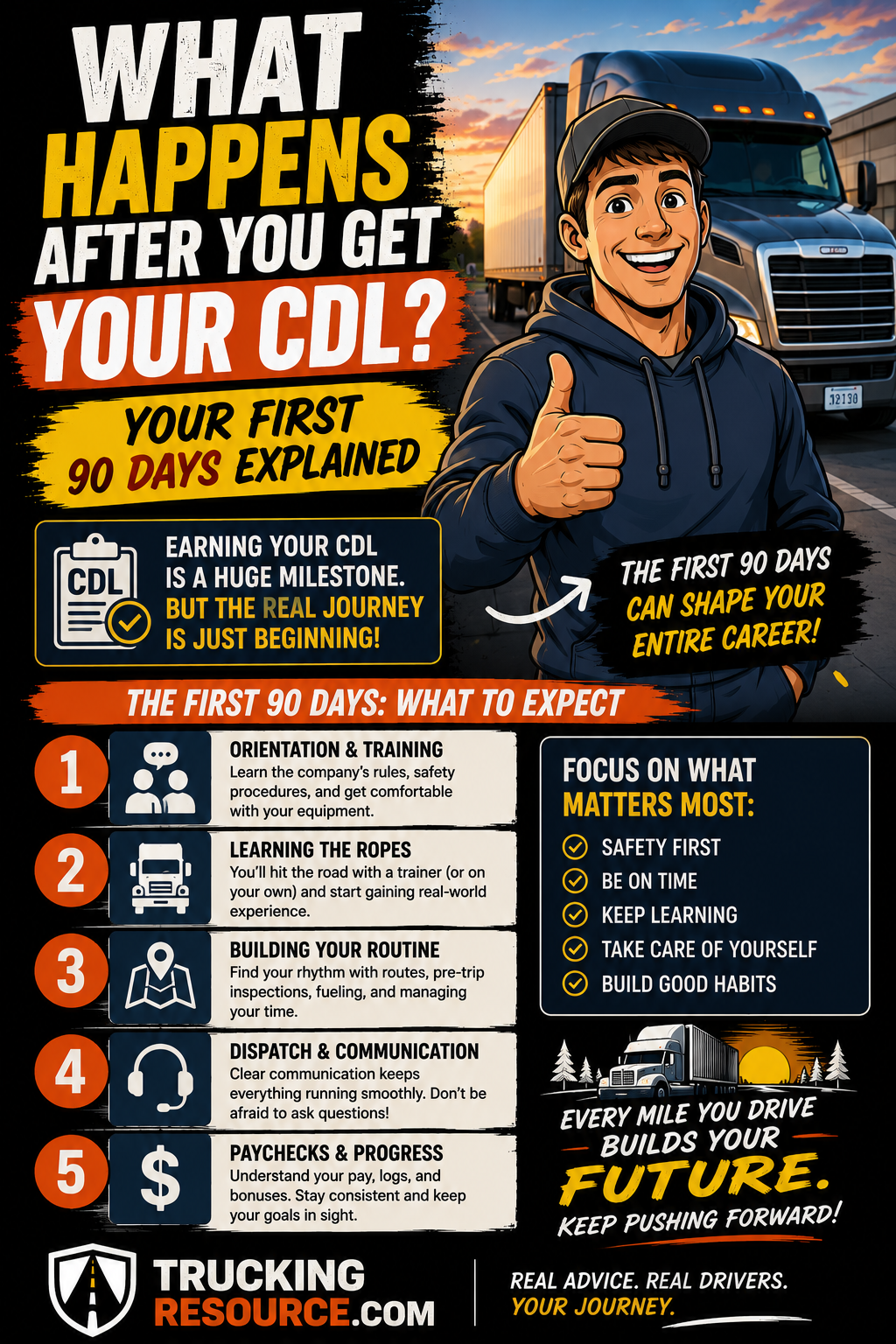
It’s easy to think that once company orientation ends, you’ll immediately be assigned your own truck and start hauling freight alone. In reality, orientation is just the first step. Most new CDL graduates spend the next several weeks working alongside a driver trainer, learning company procedures, practicing backing, planning trips, and gaining real-world experience before they’re ready to drive solo.
If you’re curious about exactly what happens after those classroom sessions end, take a look at What Happens After Truck Driver Orientation. It walks through what your first days with a trainer are typically like and explains how the transition from orientation to life on the road usually works.
Your Trainer Is Watching More Than Your Driving
One thing I didn’t realize was that trainers aren’t only paying attention to how well you steer the truck.
They’re watching things like:
- Your attitude.
- Whether you ask questions.
- How seriously you take safety.
- Time management.
- Communication.
- Willingness to learn.
Driving skills improve with practice.
A good attitude is something you bring with you every morning.
The Real Learning Begins
CDL school teaches you how to earn a license.
Your first company teaches you how to build a career.
You’ll quickly discover there are dozens of things nobody could fully teach in a classroom.
That’s exactly why your first weeks are so valuable.
If you’ve ever wondered why so many rookie drivers say they learned more during training than they did in school, read Things CDL School Didn’t Prepare Me For. It covers many of the real-world lessons that only make sense once you’re out on the road.
Your Trainer Will Correct the Little Things
One of the biggest surprises during my first few weeks was how often my trainer corrected small habits.
Not because I was doing something dangerous.
Because he wanted me to build good habits before bad ones became permanent.
Sometimes he’d remind me to:
- Look farther down the road.
- Check my mirrors more often.
- Slow down a little sooner.
- Plan lane changes earlier.
- Think farther ahead.
At first I felt like I was making constant mistakes.
Looking back, I realize he was simply helping me become a safer driver.
Those little corrections added up quickly.
You’ll Probably Wonder If You’re Ready
Almost every new driver goes through this.
After a week or two, you might start wondering:
“Am I actually ready to do this by myself?”
I know I did.
The funny thing is, most experienced drivers I’ve talked to admitted they felt exactly the same way.
Confidence doesn’t suddenly appear one morning.
It builds one trip at a time.
One successful delivery.
One good backing maneuver.
One problem solved without needing help.
If you’re nervous, that’s actually a good sign.
It means you’re taking the responsibility seriously.
Your First Solo Truck Feels Different
Eventually your trainer climbs out.
Hands you the keys.
Wishes you good luck.
Then suddenly…
It’s just you.
That moment is exciting.
And honestly, a little intimidating.
For the first time, every decision belongs to you.
Where you’ll fuel.
How you’ll plan your day.
How you’ll back into the dock.
How you’ll handle unexpected problems.
It’s also the moment when you begin realizing just how much you’ve learned during training.
Your First Paycheck Might Surprise You
One thing I wasn’t prepared for was how different a trucking paycheck can look compared to hourly jobs.
Depending on your company, you may see things like:
- Mileage pay.
- Training pay.
- Per diem.
- Bonuses.
- Detention pay.
- Layover pay.
The exact details vary from company to company, so don’t panic if your first check doesn’t look exactly how you imagined.
Take time to understand how your company calculates pay.
If something doesn’t make sense, ask payroll or your dispatcher.
It’s much easier to understand everything early than spend months wondering.
The First 30 Days Are About Building Habits
During your first month, don’t worry about being the fastest driver.
Focus on becoming the safest.
This is the perfect time to develop habits that you’ll hopefully keep for your entire career.
Habits like:
- Performing complete pre-trip inspections.
- Planning your route before leaving.
- Checking weather forecasts.
- Keeping paperwork organized.
- Cleaning your truck daily.
- Leaving plenty of following distance.
The routines you build now will eventually become automatic.
By 60 Days, Things Start Feeling Familiar
Somewhere around the second month, I noticed something interesting.
The things that felt overwhelming during my first week had become normal.
Fueling.
Using the ELD.
Talking with dispatch.
Backing into customers.
Managing my clock.
None of those things felt easy on day one.
By sixty days, they were simply part of my daily routine.
That’s one of the best parts about trucking.
The more experience you gain, the more comfortable you become.
By 90 Days, You’re Finally Finding Your Rhythm
Nobody becomes an expert in three months.
But ninety days is often enough time to feel like you’re no longer just surviving each day.
You’re starting to anticipate problems before they happen.
You’re planning ahead instead of reacting.
You’re developing routines that make your day smoother.
Most importantly, you’re beginning to trust yourself.
That confidence comes from experience, not perfection.
Don’t Compare Yourself to Drivers With 20 Years of Experience
This is probably the biggest mistake I made early on.
I’d watch veteran drivers back perfectly into impossible-looking docks.
They made everything seem effortless.
Then I’d look at myself and feel discouraged.
Eventually one experienced driver laughed and said,
“You’re comparing your Day 30 to my Year 20.”
He was right.
Every experienced driver started exactly where you are.
The only person you should compare yourself to is the driver you were yesterday.
Your Learning Doesn’t Stop After Training
One thing I’ve noticed is that every experienced driver still seems to be learning.
They find better routes.
Smarter routines.
New ways to organize their truck.
Safer habits.
That’s encouraging.
It reminds me that trucking isn’t about reaching a point where you know everything.
It’s about getting a little better every day.
Looking for a Complete First-Year Roadmap?
Your first ninety days are only one part of becoming a professional truck driver. After orientation and training, you’ll continue learning new skills, building confidence, choosing the right type of trucking job, and developing habits that will stay with you throughout your career.
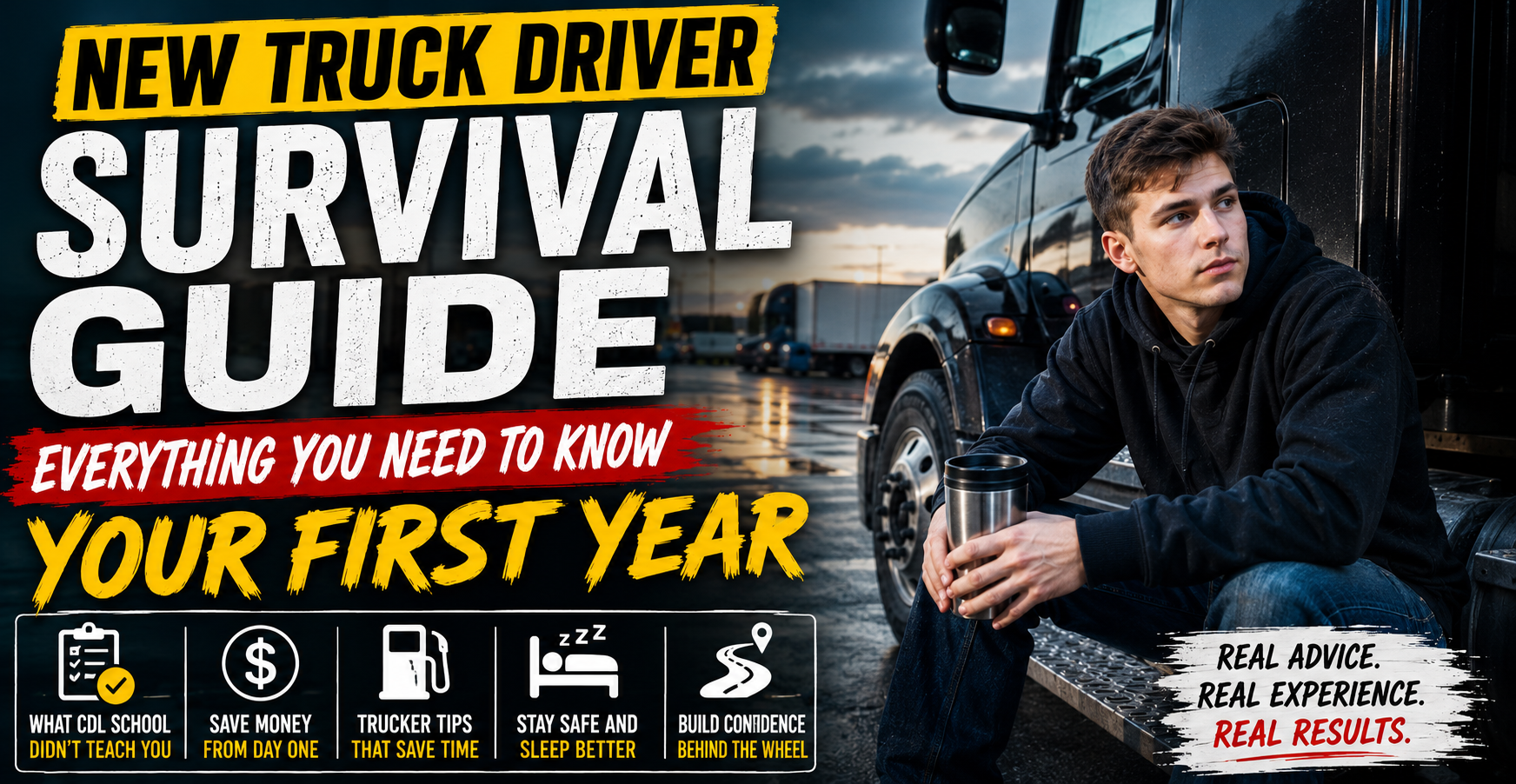
If you’re looking for one place that ties everything together, take a look at New Truck Driver Survival Guide Everything You Need to Know Your First Year. It walks through the entire first-year journey, from earning your CDL to becoming a confident driver on your own.
The First 90 Days Go Faster Than You Think
When you’re standing in CDL school, ninety days feels like forever.
Looking back now…
It went by incredibly fast.
There were stressful moments.
There were exciting moments.
There were days I questioned myself.
There were days I couldn’t stop smiling.
Every one of those experiences made me a better driver.
If you’re about to earn your CDL, enjoy the journey.
You don’t have to have everything figured out during your first week.
Or your first month.
Or even your first ninety days.
Just keep showing up.
Keep asking questions.
Keep learning.
One day you’ll realize you’re giving advice to the next rookie who’s just beginning the same journey.
Author: Ryan Mitchell
Ryan Mitchell spent more than 16 years driving dry van and refrigerated freight before moving into driver mentoring and safety training. He enjoys helping new CDL holders understand what to expect after graduation so they can begin their trucking careers with realistic expectations, solid habits, and the confidence to keep learning every mile of the way.