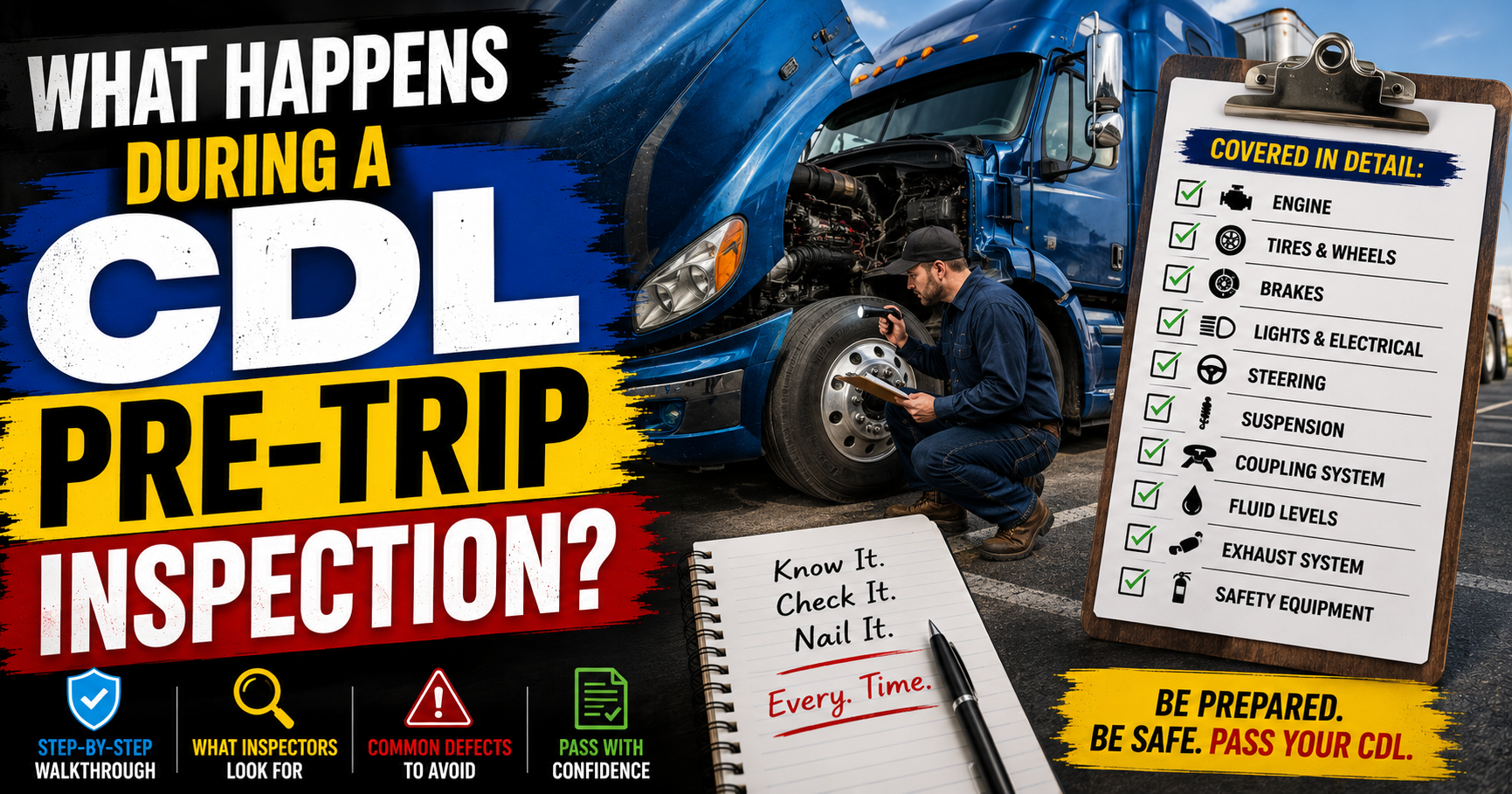
Ask almost any truck driver what the most stressful part of getting their CDL was, and you’ll probably hear one answer more than any other.
The pre-trip inspection.
Before I ever took my CDL skills test, I’d heard stories from other students about forgetting parts, getting nervous halfway through the inspection, or completely blanking on something they had practiced dozens of times.
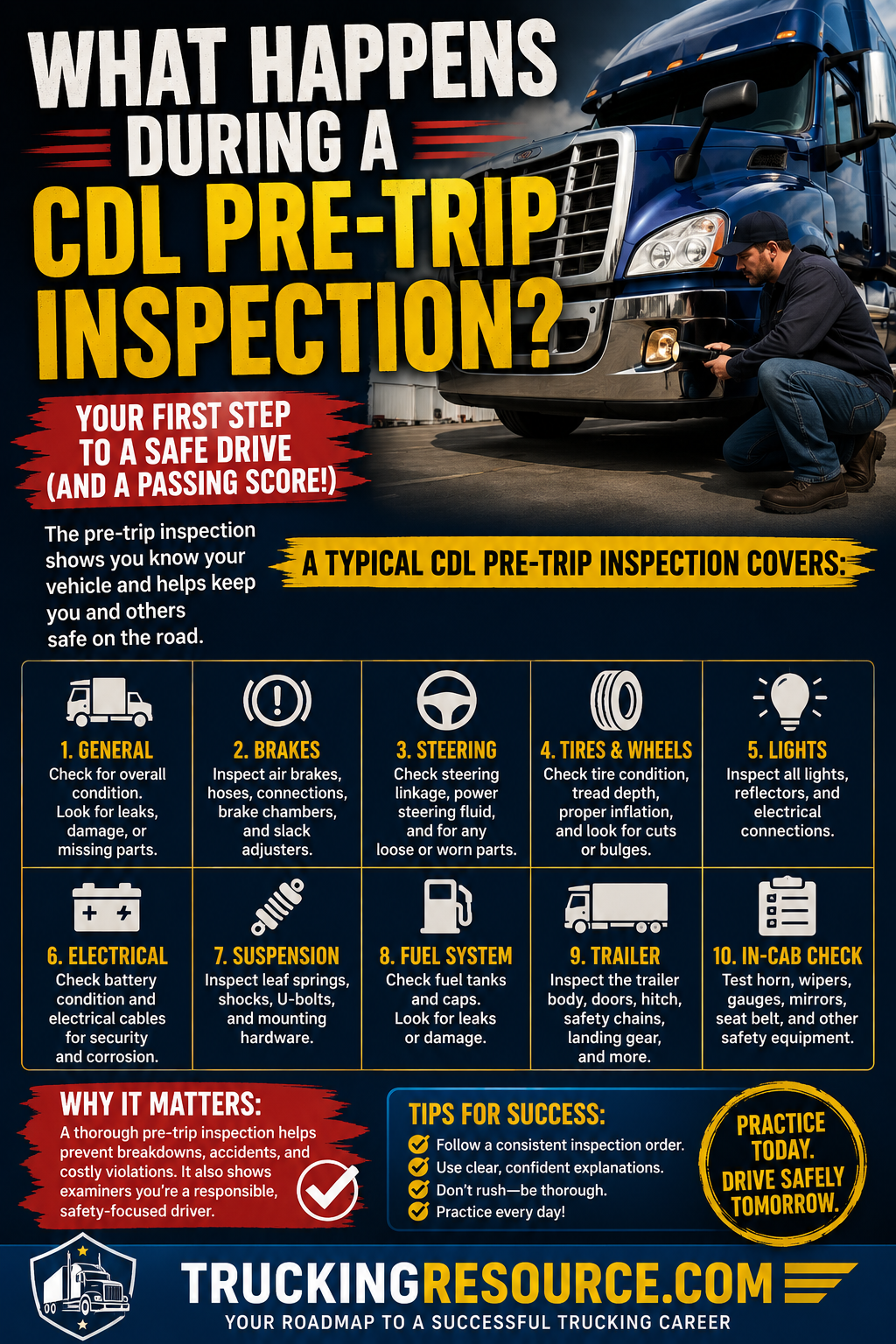
When test day finally arrived, I realized something.
The inspection wasn’t nearly as scary as everyone made it sound.
The key wasn’t having a perfect memory.
The key was understanding what I was looking at and being able to explain it clearly.
That’s exactly what the examiner wants to see.
They’re not trying to trick you.
They’re making sure you can safely inspect a commercial vehicle before taking it onto public roads.
In this guide, I’ll walk you through what happens during a CDL pre-trip inspection, what examiners expect, common mistakes I see students make, and how you can prepare with confidence.
If you’re still working toward your Commercial Learner’s Permit, it’s worth reading What Is a CDL Permit? Everything You Need to Know first so you understand where the pre-trip inspection fits into the overall CDL process.
What Is a CDL Pre-Trip Inspection?
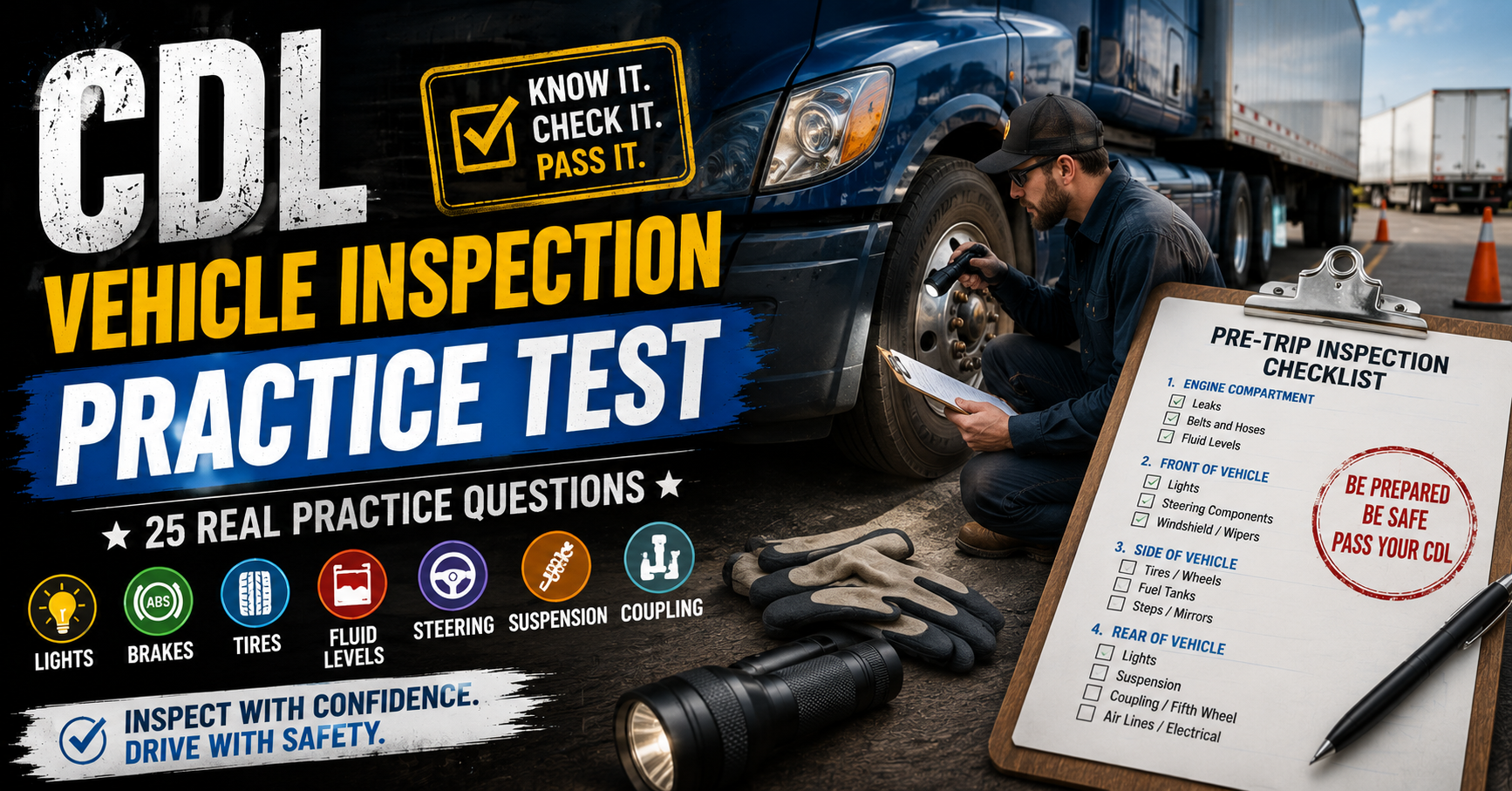
A CDL pre-trip inspection is the first part of your CDL skills test. After learning what the skills test involves, reinforce your knowledge with CDL Vehicle Inspection Practice Test.
Before you ever back the truck or drive on public roads, you’ll be asked to demonstrate that you know how to inspect a commercial vehicle for safety. A detailed CDL Pre-Trip Inspection Checklist (Complete Guide) can help you organize the components and safety checks you need to demonstrate.
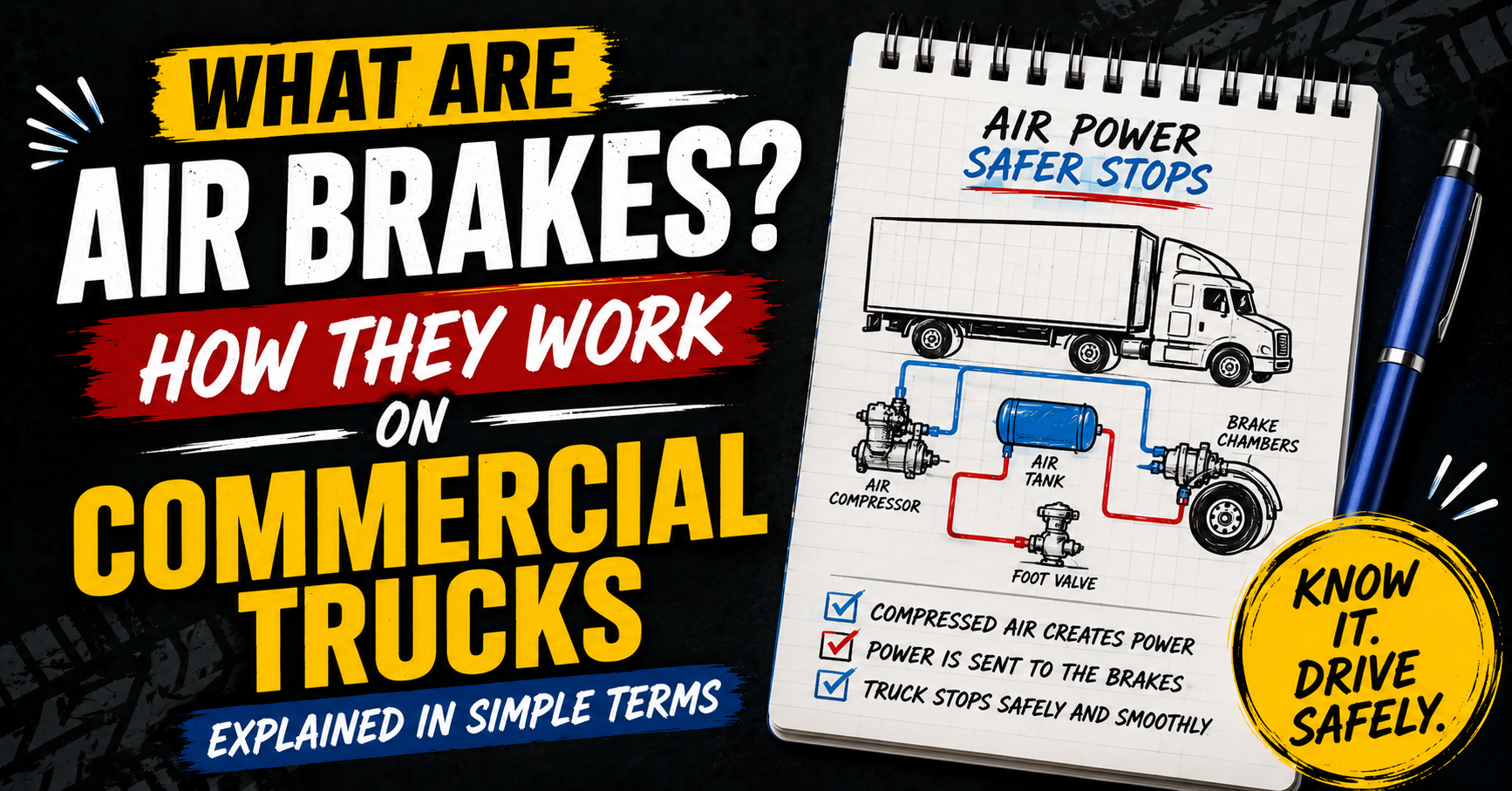
You’ll identify major components, explain what you’re checking, and describe why each item matters. A clear explanation of those braking components appears in What Are Air Brakes? How They Work on Commercial Trucks.
In other words, you’re proving that you know how to determine whether the truck is safe to operate.
This isn’t something you’ll only do for your CDL exam.
Professional truck drivers perform pre-trip inspections every working day because catching a problem before leaving the yard is much better than discovering it halfway through a trip.
Why Is the Pre-Trip Inspection So Important?
Commercial trucks are incredibly reliable when they’re properly maintained.
But even the best equipment develops problems from time to time.
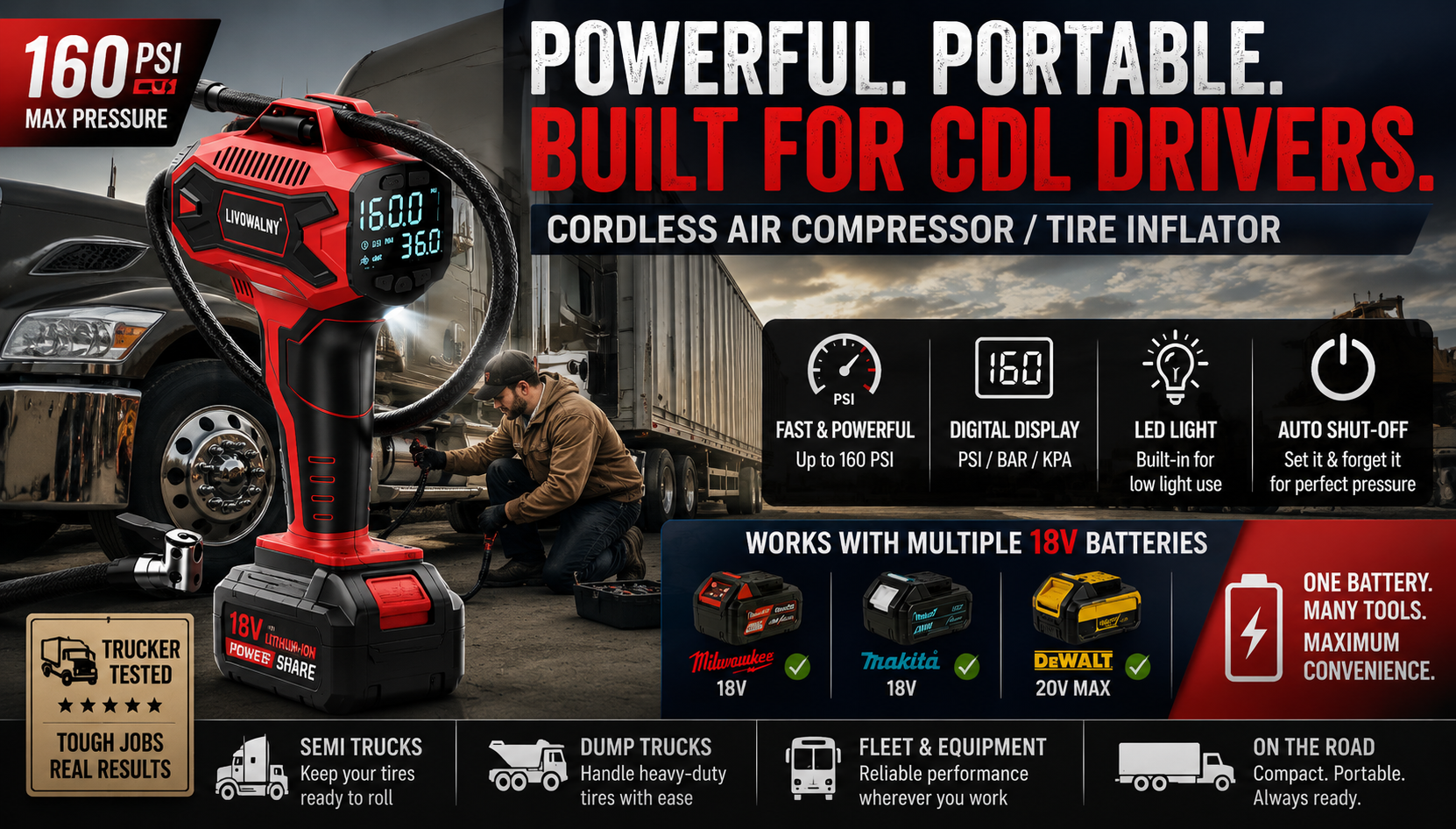
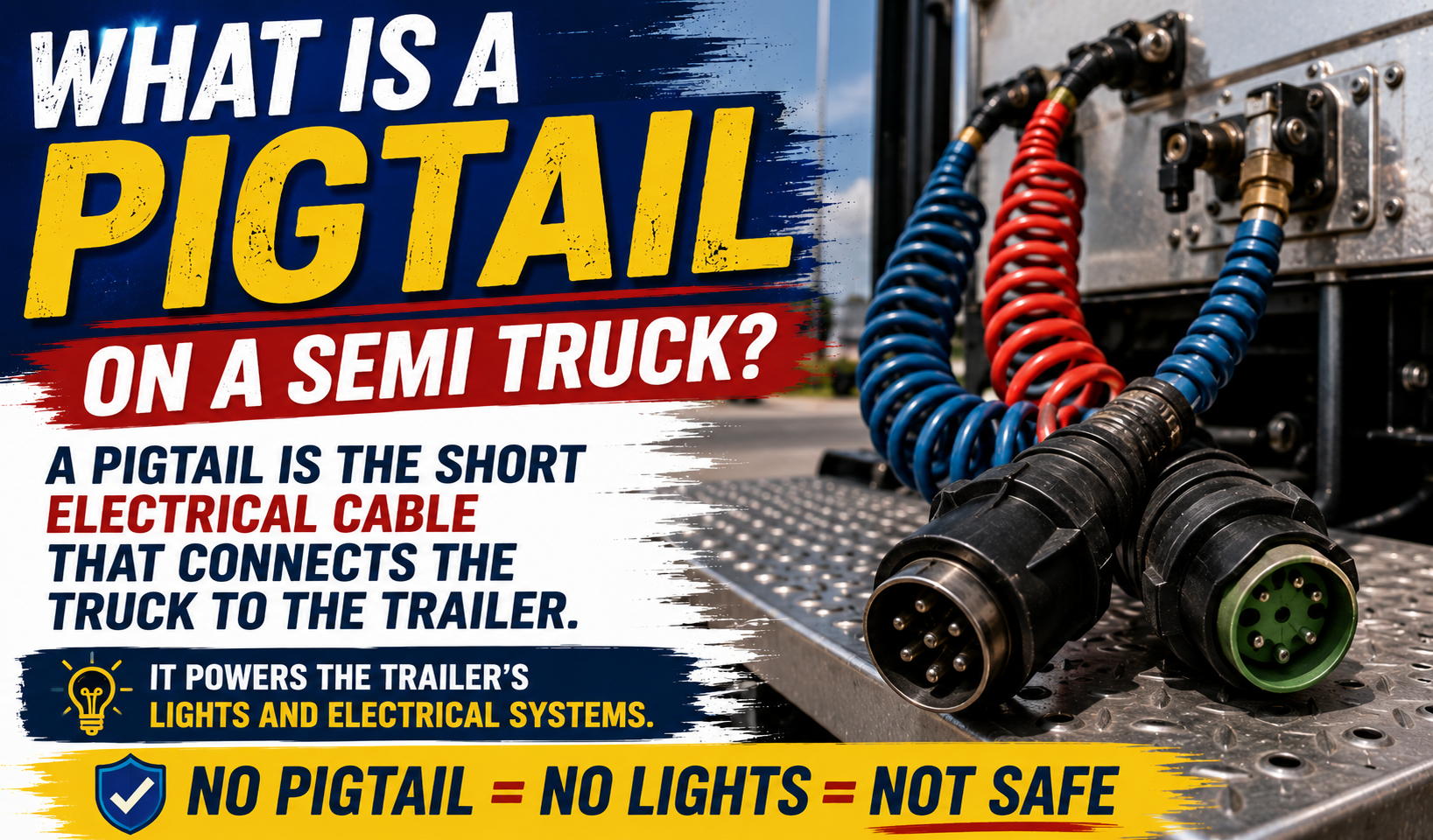
A loose airline, low tire pressure, broken light, or damaged brake component might seem like a small issue until you’re traveling down the highway with a fully loaded trailer. A portable tire inflator can be useful for addressing low tire pressure identified during a routine check.
That’s why pre-trip inspections are such an important part of the trucking industry.
They’re designed to identify problems before they become dangerous.
I’ve found plenty of issues during routine inspections over the years.
Most were simple fixes that took only a few minutes.
Had they gone unnoticed, though, they could have turned into expensive breakdowns or serious safety hazards later in the day.

What Does the Examiner Look For?
One thing that surprises many students is that the examiner isn’t expecting you to perform mechanical repairs.
They’re evaluating whether you know how to inspect the vehicle properly.
That means you’ll be expected to identify important components and explain what you’re checking.
For example, you may be asked to inspect areas such as:
- The engine compartment
- Steering components
- Suspension parts
- Brake system
- Tires and wheels
- Lights and reflectors
- Fuel system
- Coupling devices
- Emergency equipment
- Air brake components
More importantly, you’ll explain what you’re looking for.
Instead of simply pointing at a hose, you’ll explain that you’re checking for leaks, cracks, excessive wear, or loose connections.
Understanding the purpose behind each inspection point makes the entire process much easier to remember.
Do You Have to Memorize Everything?
This is probably the biggest concern new CDL students have.
The answer is yes…and no.
You do need to know the inspection well enough to successfully complete your CDL skills test.
But I don’t recommend trying to memorize a giant script word for word.
I’ve watched students freeze because they forgot one sentence they’d memorized.
The students who usually perform the best are the ones who understand what each part actually does.
When you know the purpose of a steering linkage or brake chamber, it’s much easier to explain what you’re checking than if you’re simply repeating words from memory.
One resource I often recommend while studying is the CDL Study Guide: Complete Review + Real DMV-Style Questions and Detailed Answer Explanations. Along with helping prepare for the written exams, it reinforces many of the safety concepts you’ll encounter during your CDL training, making it easier to understand why each inspection item matters instead of just memorizing a checklist.
The Inspection Usually Follows a Pattern
Every state has slightly different testing procedures, but most students quickly discover that successful inspections follow a logical pattern.
Instead of randomly pointing at parts of the truck, you’ll move through the vehicle in an organized order.
Many instructors teach students to start at the front of the truck and work their way around the vehicle before finishing inside the cab.
Developing a routine is one of the best ways to stay organized on test day.
If you inspect the truck in the same order every time you practice, you’re much less likely to forget something when you’re standing in front of the examiner.
The Engine Compartment
For many students, the engine compartment feels intimidating at first.
There are hoses, belts, reservoirs, wiring, and dozens of components that may all look similar if you’ve never worked around commercial trucks.
Don’t let that discourage you.
You don’t have to become a diesel mechanic overnight.
Instead, focus on learning what each major component is called and what you’re checking for.
In most cases, that means looking for signs of:
- Leaks
- Cracks
- Frayed belts
- Loose mounting hardware
- Missing parts
- Proper fluid levels
- Excessive wear
Once you understand those basic inspection principles, you’ll notice that many parts of the truck are inspected in very similar ways.


Practice Out Loud
One of the best study habits I ever developed was saying everything out loud while practicing.
Reading silently is helpful.
Actually speaking the inspection is even better.
The first few times, you’ll probably feel awkward.
That’s completely normal.
After a week or two, you’ll begin noticing that the words come much more naturally.
Remember, that’s exactly what you’ll be doing during your CDL skills test.
Speaking confidently while pointing to each component is excellent practice for the real exam.
The Steering System
As you continue through the inspection, you’ll spend time checking the steering system.
This is one of the most important safety systems on the truck, so the examiner wants to know that you understand what you’re looking at.
You’ll typically inspect several steering components and explain that you’re checking for things like:
- Cracks
- Bends
- Loose or missing hardware
- Leaks where applicable
- Excessive wear
- Secure mounting
You don’t need to sound like a diesel engineer.
Speak clearly, point to the part you’re discussing, and explain what you’re inspecting.
If you’ve practiced enough, it will begin to feel like a conversation instead of a speech.
Suspension and Brake Components
The suspension and brake systems are another major part of the pre-trip inspection.
As you’re working around the truck, you’ll inspect components that help support the vehicle’s weight and allow it to stop safely.
You’ll often be looking for common issues such as:
- Broken or cracked parts
- Loose mounting hardware
- Air leaks
- Excessive wear
- Missing components
- Proper adjustment where applicable
One thing I always tell students is this:
Don’t rush.
Moving slowly and thoroughly is almost always better than trying to impress the examiner by racing through the inspection.
Tires, Wheels, and Lug Nuts
Every commercial driver knows that tires deserve attention before every trip.
During your inspection, you’ll typically check that the tires appear to be properly inflated and free from obvious damage.
You’ll also inspect the wheels themselves, making sure there aren’t visible cracks or damage.
The lug nuts should appear secure without obvious signs of looseness.
Even if you’ve inspected these parts a hundred times during training, continue treating every practice session like it’s the real test.
Building that habit now will serve you well throughout your trucking career.
Lights and Reflectors
Lighting is another area that many students underestimate.
Commercial trucks rely on numerous lights to communicate with other drivers, especially during nighttime driving or poor weather. The poor-weather CDL practice questions also reinforce how visibility and changing conditions affect safe commercial driving.
As part of your inspection, you’ll verify that lights and reflectors are clean, properly mounted, and functioning as expected.
While you’re learning inspection procedures, it’s also a good idea to keep reviewing for the written exam. If you haven’t already, our guide on How to Pass Your CDL General Knowledge Test the First Time includes study strategies that can help you prepare for the knowledge portion of earning your CDL.
Inside the Cab
Once you’ve completed the outside portion of the inspection, you’ll usually move into the cab.
Here you’ll demonstrate that you know how to inspect important controls and safety equipment before driving.
Depending on your state’s testing procedures, this may include checking items such as:
- Seat belt
- Mirrors
- Horn
- Windshield wipers
- Heater and defroster
- Gauges
- Warning lights
- Fire extinguisher
- Reflective triangles
- Air brake checks if applicable
The exact sequence may vary, but the goal is always the same.
Show the examiner that you understand how to verify the truck is ready to operate safely.
The Air Brake Check
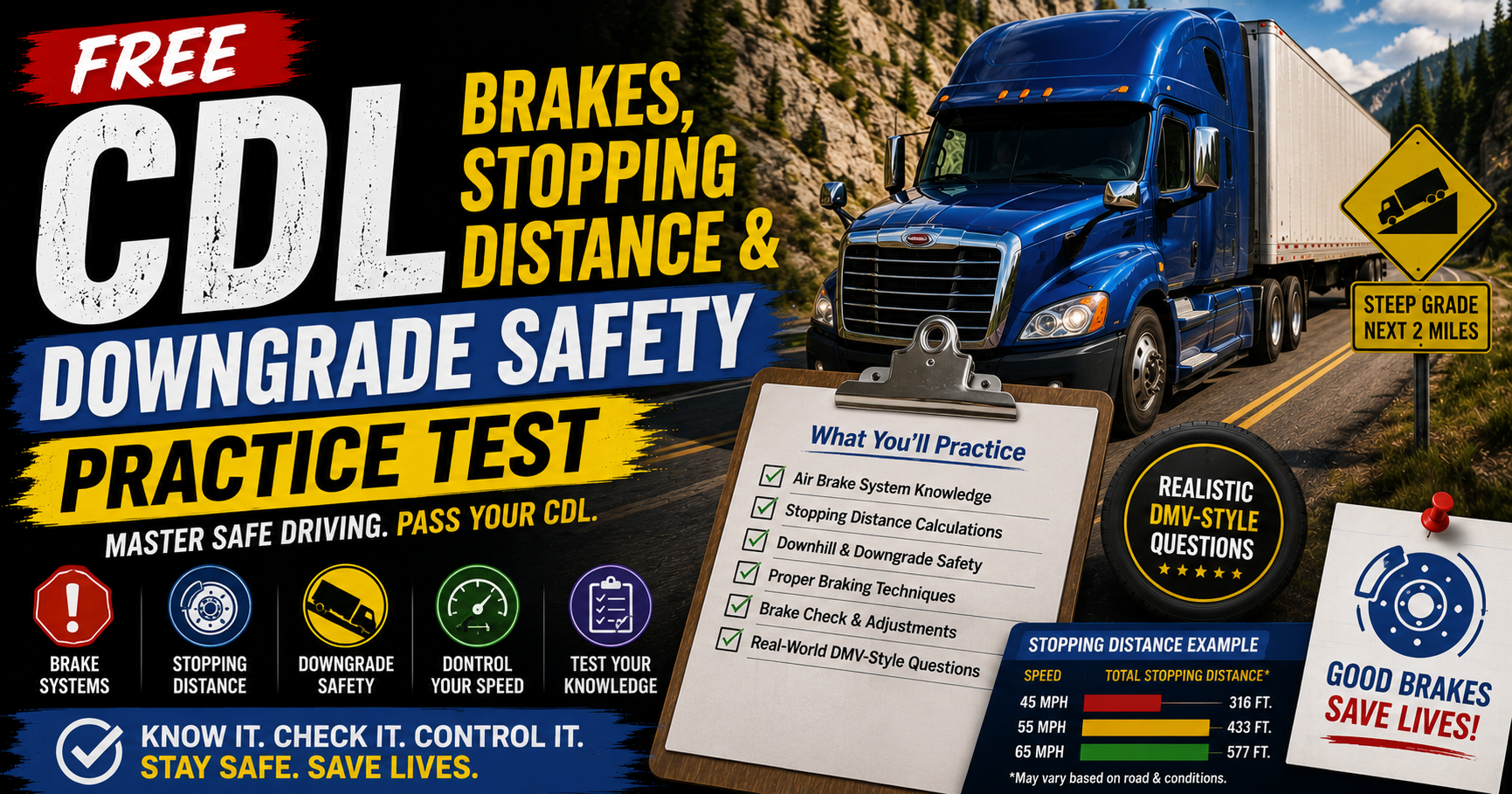
If you’re testing in a vehicle equipped with air brakes, you’ll also perform an air brake inspection. You can reinforce that air-brake knowledge with CDL braking practice questions covering braking safety and stopping distance.
This is an area where students often become nervous because there are several steps involved.
The good news is that every step becomes much easier with repetition.
Instead of trying to memorize the entire procedure the night before your exam, practice it exactly the same way every time.
Eventually it becomes second nature.
We’ll be publishing a complete guide dedicated to the CDL air brake test, since it’s one of the most important skills every commercial driver needs to master.
The Biggest Mistakes I See Students Make
After watching plenty of new drivers prepare for their CDL, I’ve noticed several common mistakes.
The good news is that every one of them can be avoided.
The first is trying to memorize a script without understanding what the parts actually do.
The second is rushing.
The third is not practicing out loud.
And finally, many students simply don’t practice often enough.
The drivers who perform the best usually aren’t the ones with the best memory.
They’re the ones who have repeated the inspection so many times that it becomes part of their routine.
My Advice Before Test Day
If your CDL skills test is coming up, remember that the examiner wants to see that you can safely inspect a commercial vehicle.
They aren’t expecting perfection.
They understand you’re a new driver.
Slow down.
Take a deep breath.
Follow the same routine you’ve practiced during training.
If you make a small mistake, don’t panic.
Stay focused and continue the inspection.
Confidence comes from preparation, not luck.
One thing that helped many of my students was combining hands-on practice with study time at home. Along with your state’s CDL manual, I recommend the CDL Study Guide: Complete Review + Real DMV-Style Questions and Detailed Answer Explanations because it reinforces many of the safety principles you’ll use during your pre-trip inspection while also helping you prepare for the written exam.
Whether you’re just beginning CDL school or getting ready for your skills test, practicing your inspection a little every day will pay off. Before long, you’ll stop trying to remember a checklist and start understanding the truck in front of you.
Be Careful of These Mistakes on Test Day
Knowing what you’re supposed to inspect is only half the preparation. Test-day nerves can make students rush through an inspection they’ve practiced successfully dozens of times, skip something they normally remember, or repeat memorized phrases without actually explaining the condition they’re checking.
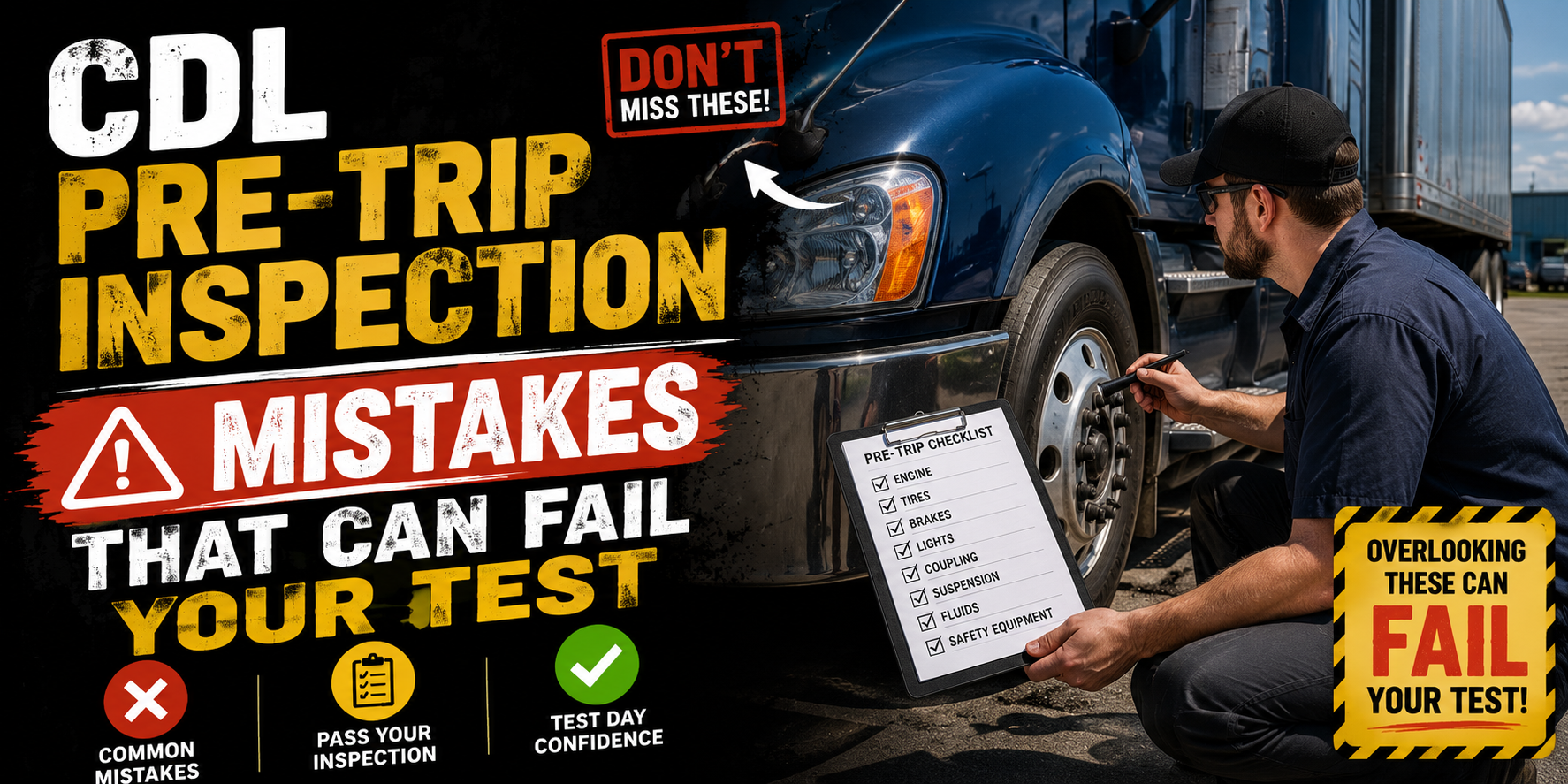
I’ve put together a separate guide covering the CDL pre-trip inspection mistakes that can hurt or potentially fail your test. Pay particular attention to the sections on air-brake procedures, tires and wheels, steering, suspension, and coupling equipment because these aren’t just test vocabulary. They’re systems that directly affect whether a commercial vehicle is safe to operate.
A consistent routine is one of your best defenses against forgetting something. Practice the same general inspection flow repeatedly so nerves don’t cause you to completely change your approach on test day.
Author: David Walker
David Walker is a former CDL instructor with more than 22 years of experience helping students prepare for CDL permit exams, pre-trip inspections, and CDL skills testing. Throughout his career, he has trained hundreds of future commercial drivers and believes the best way to succeed is through consistent practice, hands-on learning, and understanding the “why” behind every inspection step.