When I was in CDL school, it seemed like every pre-trip inspection came back to one part of the brake system.
“The brake chamber.”
The instructor would point underneath the truck and ask us to identify it.
At first, all I saw was a round metal can bolted near the axle.
It didn’t look all that important.
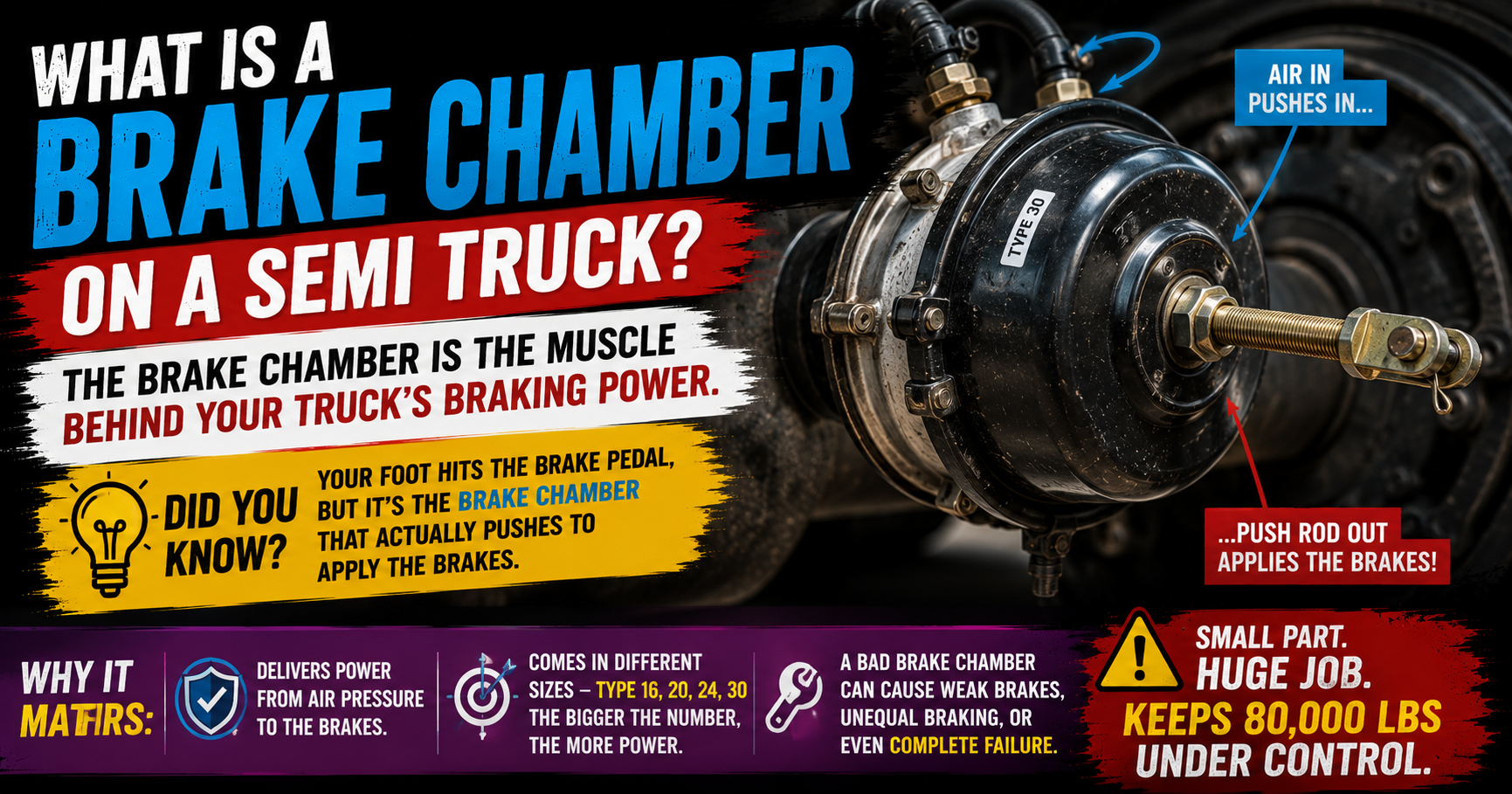
Then I learned that every time I pressed the brake pedal, that little metal can was responsible for turning compressed air into the force that actually slowed an 80,000-pound truck.
Needless to say, I started paying a lot more attention to it.
After more than two decades behind the wheel, I still spend extra time checking my brake chambers during every pre-trip inspection.
What Is a Brake Chamber?
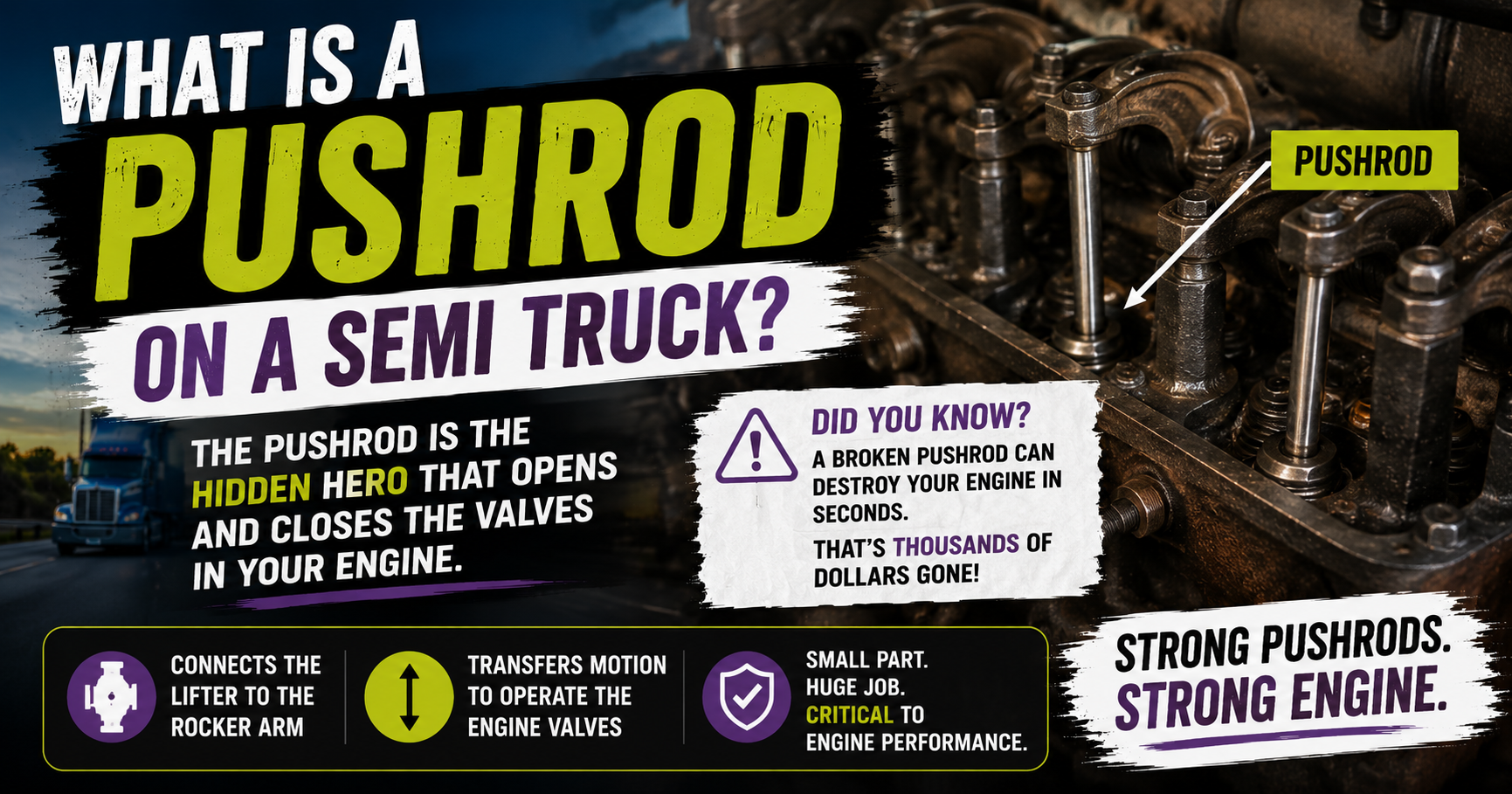
A brake chamber is an air-powered device that converts compressed air into mechanical force to apply a truck’s brakes. Inside the chamber, air pressure pushes against a flexible diaphragm, moving a pushrod that ultimately activates the braking system. The component that carries this movement out of the chamber is explained in What Is a Pushrod on a Semi Truck?.
Without brake chambers, your air brake system couldn’t stop the truck.
They’re one of the most important safety components on any commercial vehicle.


Where Are Brake Chambers Located?
Brake chambers are mounted near each wheel equipped with air brakes.
On most semi trucks you’ll find them attached near the axle behind the wheels.
They’re connected to:
- Air lines
- Pushrods
- Slack adjusters
- Brake hardware
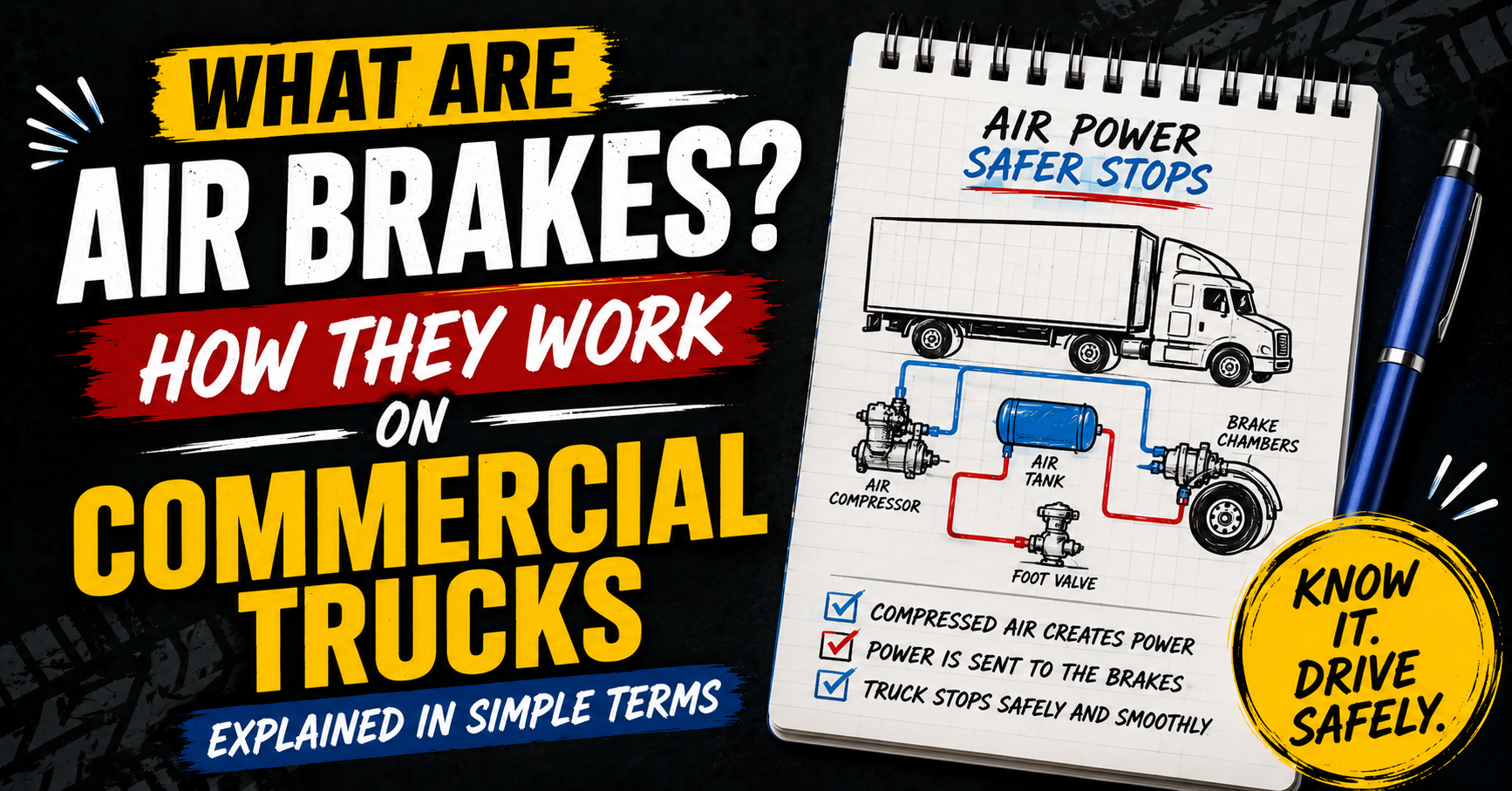
Every time you apply the brakes, those components work together to slow the truck safely. The broader explanation of What Are Air Brakes? How They Work on Commercial Trucks shows how the chamber fits into the complete system.


How Does a Brake Chamber Work?
The process happens in just a fraction of a second.
When you press the brake pedal:
- Compressed air flows into the brake chamber.
- Air pressure pushes against a rubber diaphragm.
- The diaphragm pushes the pushrod outward.
- The pushrod moves the slack adjuster.
- The slack adjuster rotates the brake camshaft.
- The brake shoes press against the brake drum.
- The truck begins slowing down.
Although several parts are involved, the basic concept is surprisingly simple.
Air pressure becomes braking force.
The Two Main Types of Brake Chambers
Not every brake chamber performs exactly the same job.
Service Brake Chambers
A service brake chamber is used during normal driving.
Every time you press the brake pedal, compressed air enters the chamber and applies the brakes.
When you release the pedal, the air exits and an internal spring returns everything to its normal position.
Spring Brake Chambers
Many drive axles use combination spring brake chambers, often called piggyback chambers.
These perform two different jobs.
They provide normal service braking.
They also function as your parking brake and emergency brake if the truck loses air pressure. Powerful internal springs automatically apply the brakes when sufficient air pressure is no longer available.


How Brake Chambers Work With Slack Adjusters
A brake chamber doesn’t work by itself.
As the pushrod extends from the chamber, it moves the slack adjuster.
The slack adjuster then rotates the brake camshaft, causing the brake shoes to contact the brake drum.
Without the slack adjuster, the brake chamber couldn’t transfer its force properly.
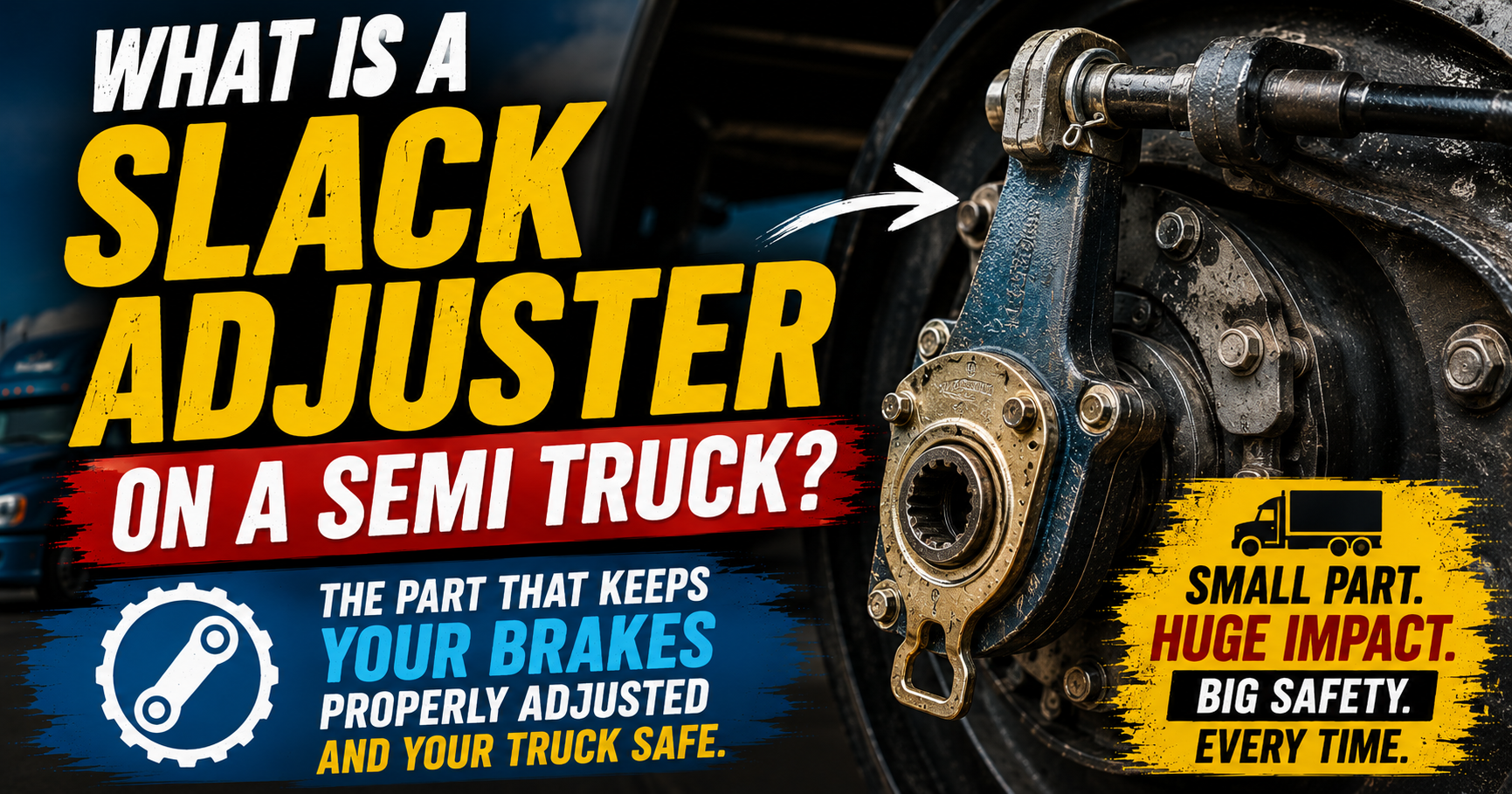
If you haven’t already, our guide explaining What Is a Slack Adjuster on a Semi Truck? walks through that part of the braking system in detail.
Why Brake Chambers Are So Important
I’ve hauled freight through mountains, city traffic, blizzards, and pouring rain.
One thing has always remained true.
Good brakes save lives.
Brake chambers help:
- Apply the brakes consistently.
- Convert air pressure into stopping power.
- Support emergency braking.
- Operate the parking brake.
- Maintain safe braking performance.
- Help keep trucks DOT compliant.
They’re one of those components you hope you never have to think about because they’re quietly doing their job every mile.
What Happens When a Brake Chamber Fails?
Fortunately, complete failures aren’t common when equipment is maintained properly.
Still, problems can happen.
Some warning signs include:
- Air leaks.
- Longer stopping distances.
- Uneven braking.
- Pulling during braking.
- Damaged pushrods.
- Visible dents or corrosion.
- Low air pressure warnings.
If something doesn’t feel right, don’t ignore it.
Brake problems rarely fix themselves.
Inspecting Brake Chambers During a Pre-Trip
Checking the brake chambers is something I never rush.
During my inspection I look for:
- Secure mounting.
- Air leaks.
- Damaged housing.
- Cracks.
- Excessive corrosion.
- Bent pushrods.
- Proper pushrod movement.
- Loose air lines.
I’m also checking the surrounding brake components while I’m underneath the truck.
If you’re preparing for your CDL skills test, our CDL Vehicle Inspection Practice Test covers many of these inspection points and is a great way to prepare before test day.

Common Mistakes New Drivers Make
I’ve watched plenty of CDL students make the same mistakes.
One is confusing the brake chamber with the slack adjuster.
Another is thinking the brake chamber actually creates air pressure.
It doesn’t.
The air compressor produces the compressed air.
The brake chamber simply converts that air pressure into mechanical movement.
I’ve also seen drivers ignore small air leaks because the truck still “seems to stop fine.”
That’s never a gamble worth taking.
Where You’ll Hear This Term
Even after earning your CDL, you’ll hear mechanics and inspectors mention brake chambers regularly.
You’ll hear the term during:
- DOT inspections.
- Preventive maintenance.
- Brake repairs.
- CDL training.
- Pre-trip inspections.
- Air brake diagnostics.
It’s one of the core pieces of trucking vocabulary every professional driver should know.
Frequently Asked Questions
Does every semi truck have brake chambers?
Yes.
Any truck equipped with an air brake system uses brake chambers to apply the brakes.
Can you drive with a leaking brake chamber?
No.
Air leaks reduce braking performance and should be repaired immediately before operating the truck.
Are brake chambers difficult to inspect?
Not once you know what you’re looking for.
Most inspections involve checking for leaks, damage, secure mounting, and proper pushrod movement.
Will Brake Chambers Be on the CDL Exam?
Absolutely.
Brake chambers are one of the most commonly discussed components during CDL air brake training.
You should understand:
- What they do.
- Where they’re located.
- How they work.
- The difference between service and spring brake chambers.
- What to inspect during a pre-trip.
Our Free CDL Air Brakes Practice Test 1 and Free CDL Air Brakes Practice Test 2 are excellent ways to reinforce these concepts before your written exam.
One Tool That Makes Brake Inspections Easier
Brake chambers are tucked underneath the truck, and many inspections happen before sunrise or after dark.
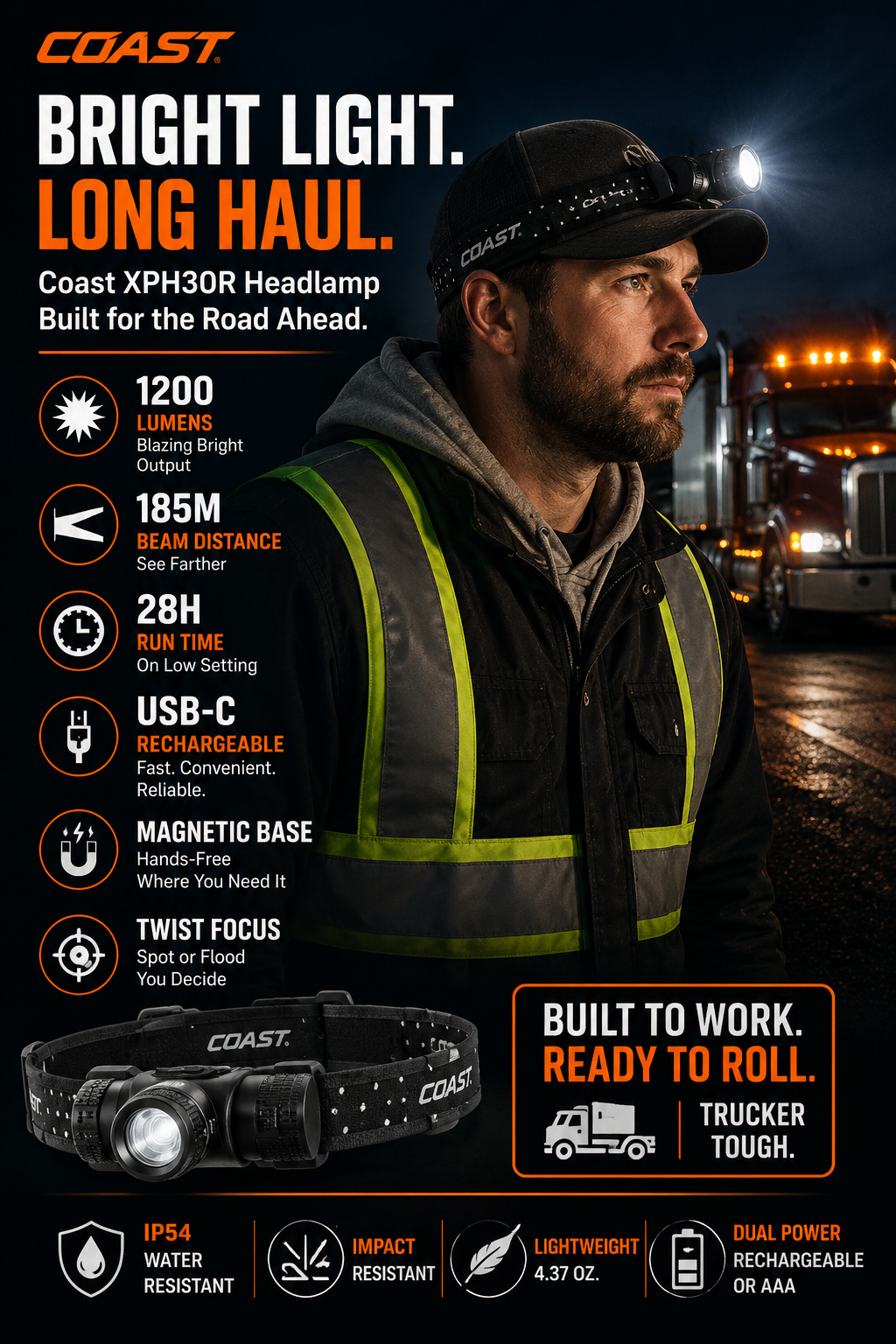
That’s why I always keep the Coast XPH30R USB-C Rechargeable Dual Power Headlamp in my cab.
Having both hands free while inspecting brake chambers, pushrods, slack adjusters, and air lines makes the job much easier and helps ensure I don’t miss anything important.
My Advice After Millions of Safe Miles
Over the years, I’ve learned something simple.
Never get comfortable when it comes to brakes.
A truck can have a clean cab, shiny paint, and a strong engine, but none of that matters if it can’t stop safely.
That’s why I treat every brake inspection the same way, whether I’m hauling across town or across the country.
Brake chambers aren’t flashy.
Most people never notice them.
But every time you step on the brake pedal, they’re quietly doing one of the most important jobs on the truck.
Take care of them, inspect them carefully, and they’ll help take care of you for many miles to come.
Author: David Walker
David Walker spent more than 22 years as a CDL instructor and commercial driver, teaching new drivers how air brake systems work and how to perform thorough pre-trip inspections. His hands-on approach has helped hundreds of CDL students understand the brake components they’ll rely on every day behind the wheel.