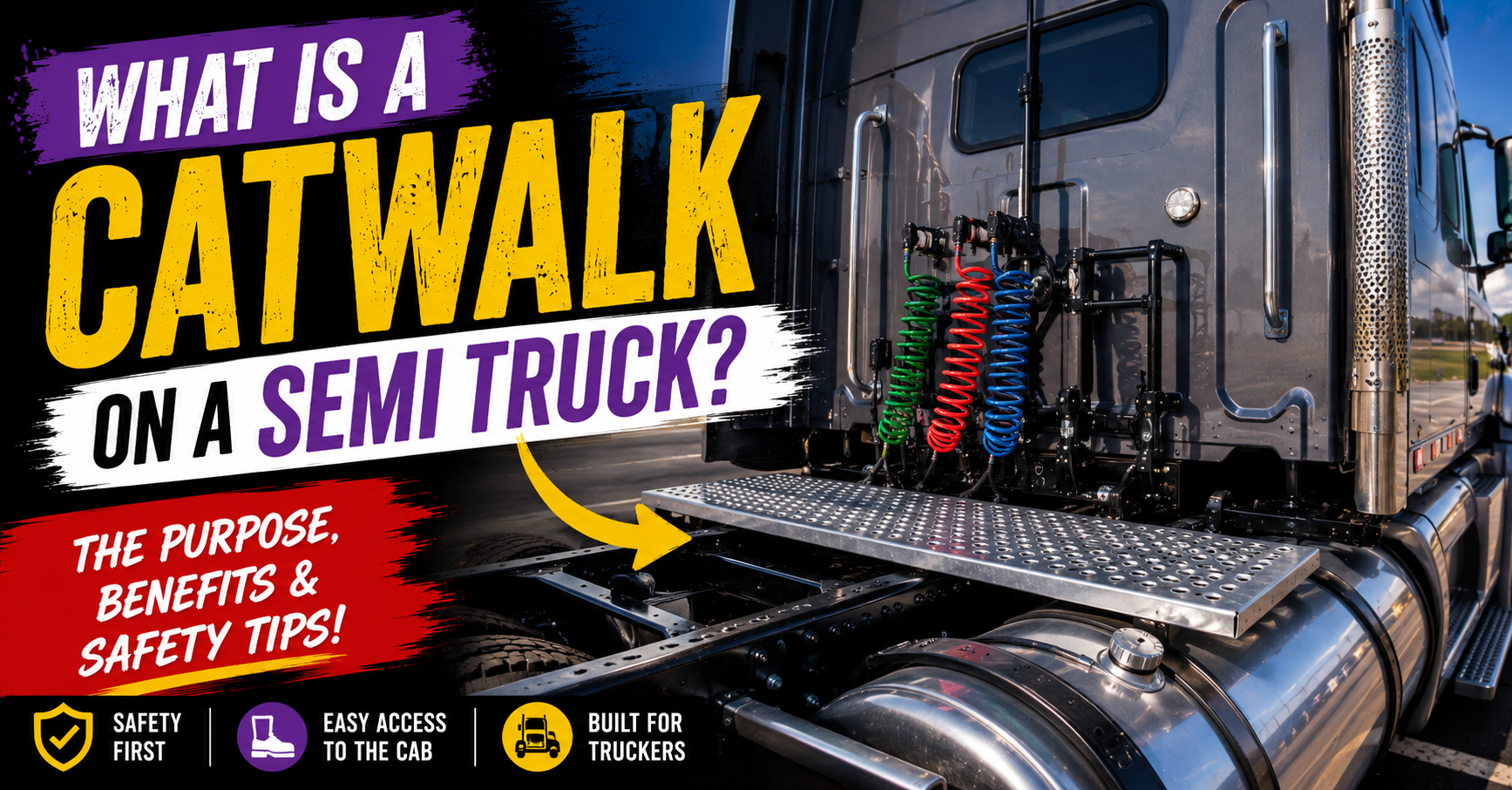
One of the first things I noticed after climbing behind the cab of a semi truck was the aluminum platform sitting between the cab and the fifth wheel.
At first, I figured it was just there to stand on.
After a few weeks on the road, I realized I was using it several times a day.
Whether I was connecting air lines, plugging in the electrical pigtail, checking the fifth wheel, or inspecting the back of the tractor, that platform made the job much easier.
Truck drivers call it the catwalk, and once you start hauling trailers, you’ll quickly understand why it’s one of the most useful parts of the tractor.
What Is a Catwalk on a Semi Truck?
A catwalk is the metal platform mounted directly behind the cab of a truck tractor. It provides a stable place for drivers to stand while connecting trailers, inspecting equipment, and accessing components such as the air lines, electrical pigtail, and fifth wheel.
Most catwalks are made from aluminum or steel and feature a textured, non-slip surface to help provide better footing in wet or icy conditions.
Why Is It Called a Catwalk?
The name comes from its purpose.
It’s a narrow platform designed for walking.
Just like elevated catwalks used in factories or industrial buildings, the truck’s catwalk gives drivers a safe place to move around while working behind the cab.
After a while, you’ll hear the word so often you won’t even think about it.
What Is the Catwalk Used For?
Most drivers use the catwalk several times every day.
Some of the most common reasons include:
- Connecting trailer air lines.
- Plugging in the electrical pigtail.
- Inspecting the fifth wheel.
- Looking at the locking jaws.
- Checking airlines and wiring.
- Cleaning snow or ice from behind the cab.
- Performing pre-trip inspections.
Without the catwalk, many of these tasks would require awkward climbing or reaching.
Where Is the Catwalk Located?
The catwalk sits directly behind the cab and in front of the fifth wheel.
If you look behind most highway tractors, you’ll usually see:
- The catwalk platform.
- Air lines.
- The electrical pigtail.
- Air and electrical mounting brackets.
- The fifth wheel just behind it.
Everything is positioned so the driver can easily reach it while coupling and uncoupling trailers.

The Catwalk Makes Trailer Hookups Safer
Whenever I hook up to a trailer, I almost always step onto the catwalk.
It gives me a much better angle for connecting everything correctly.
From there I can easily:
- Connect the red and blue air lines.
- Plug in the electrical pigtail.
- Inspect the fifth wheel.
- Verify the locking mechanism.
- Check for damaged hoses or wiring.
Having stable footing makes every one of those jobs easier.
If you’re still learning the coupling process, these articles explain the components you’ll work with every day:
- What Is a Pigtail on a Semi Truck?
- What Is an Air Line on a Semi Truck?
- Understanding the Fifth Wheel on a Semi Truck
Learning how these parts work together makes trailer hookups much easier.
Is It Safe to Stand on the Catwalk?
Yes, provided you’re careful.
Like anything in trucking, it’s all about paying attention.
I’ve learned to watch for:
- Rain.
- Snow.
- Ice.
- Grease.
- Mud.
- Loose equipment.
A slippery catwalk can lead to a painful fall if you’re in a hurry.
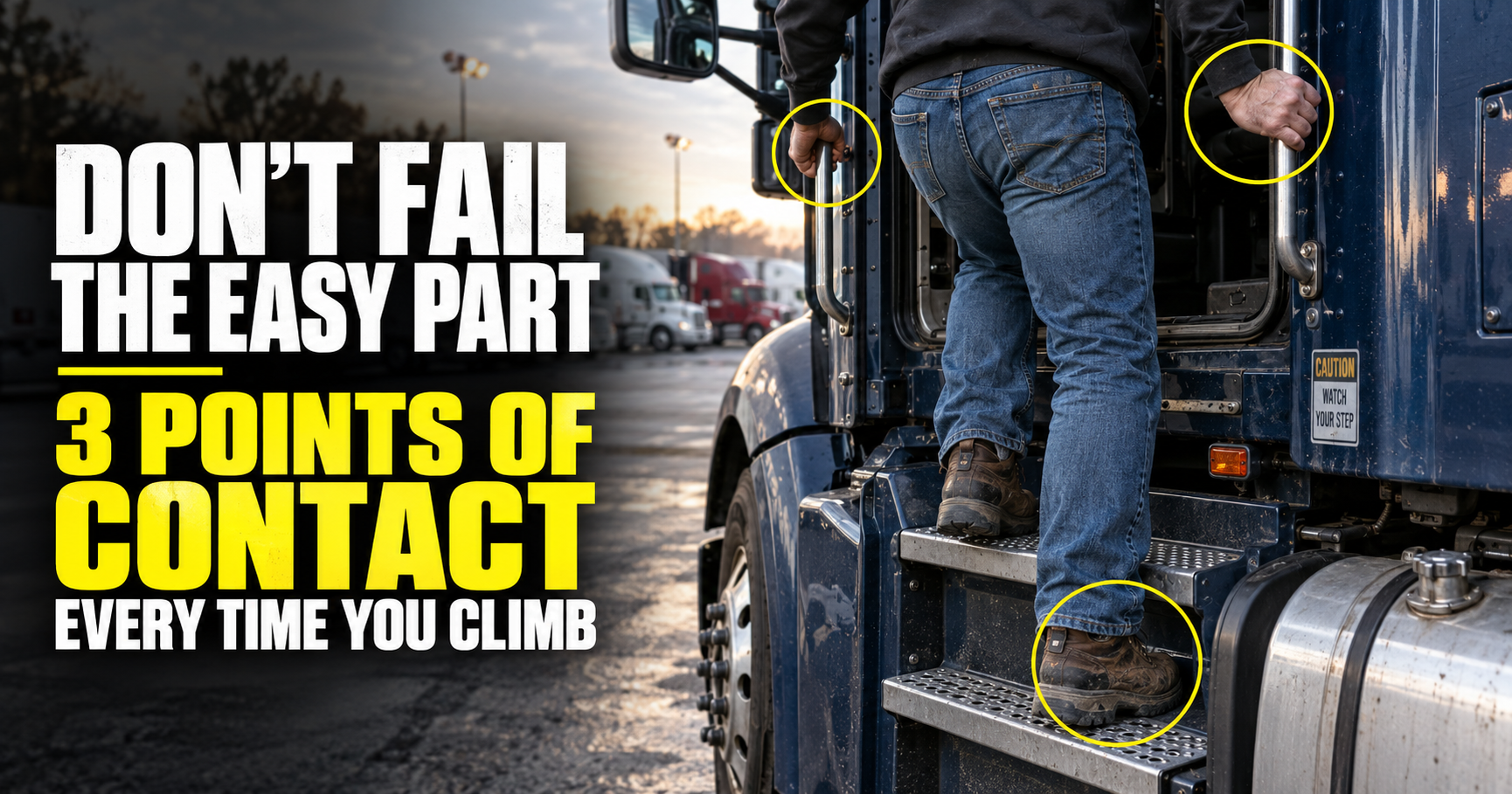
That’s one reason I always keep three points of contact whenever I’m climbing onto or off the truck.
Common Catwalk Materials
Most manufacturers build catwalks from materials that provide strength without adding unnecessary weight.
The most common are:
- Aluminum.
- Steel.
- Diamond plate aluminum.
- Non-slip textured metal.
Some fleet trucks also include catwalk storage boxes or tool mounting systems behind the cab.
How I Inspect the Catwalk
The catwalk itself doesn’t require much maintenance, but I still include it in my daily walk-around.
I’m checking for:
- Loose mounting bolts.
- Bent metal.
- Excessive grease.
- Oil spills.
- Ice buildup.
- Broken brackets.
- Anything that could become a slipping hazard.
While I’m standing there, I also inspect the hoses and wiring behind the cab.
It’s an easy habit to develop.
Common Mistakes New Drivers Make
I’ve watched plenty of new drivers rush across the catwalk without paying attention.
Most close calls happen because someone steps on grease or ice.
Another mistake is using the catwalk to store loose items.
I’ve seen gloves, tools, chains, and even drink bottles left behind the cab.
Anything loose back there can shift, fall off, or create a tripping hazard.
Keeping the area clean makes every trailer hookup easier.
Where You’ll Hear This Term
The word “catwalk” comes up constantly in trucking.
Mechanics use it.
Drivers use it.
Fleet managers mention it.
You’ll hear instructions like:
“Check behind the catwalk.”
“The airline rubbed against the catwalk.”
“Clean the grease off the catwalk.”
It quickly becomes part of your everyday trucking vocabulary.
Frequently Asked Questions
Does every semi truck have a catwalk?
Most highway tractors do.
Some vocational trucks and specialized equipment may use different layouts depending on their intended purpose.
Can you stand on the catwalk?
Yes.
That’s exactly what it’s designed for.
Just make sure it’s clean and free of grease, oil, snow, or ice before stepping onto it.
Is the catwalk part of the CDL pre-trip inspection?
While you may not be required to specifically identify the catwalk itself, you’ll spend plenty of time standing on it while inspecting the fifth wheel, air lines, and electrical connections during your pre-trip.
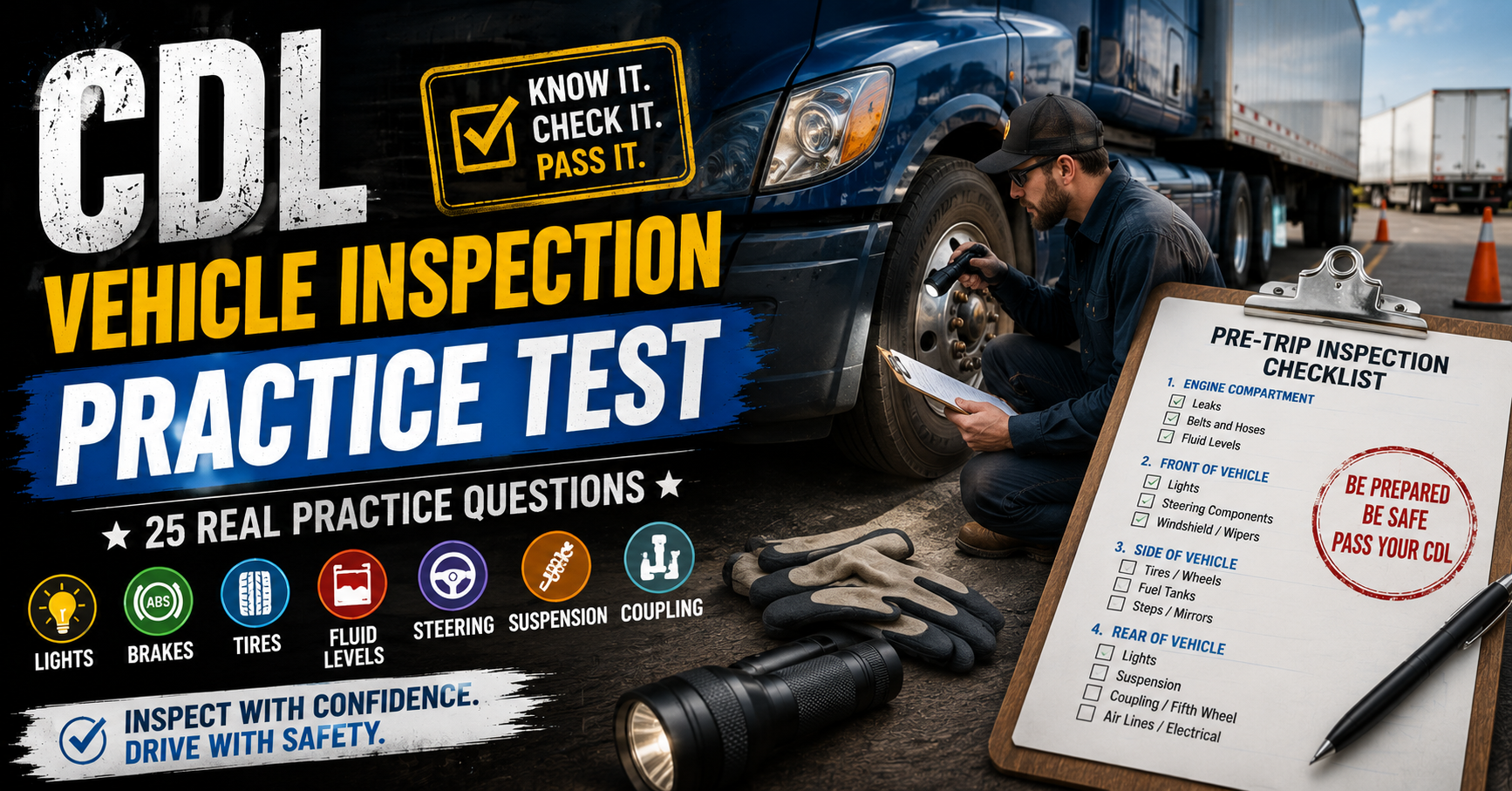
Our CDL Vehicle Inspection Practice Test is an excellent way to become familiar with the inspection process before taking your CDL skills exam.
One Tool I Never Climb Up There Without
Many trailer hookups happen before daylight or late at night.
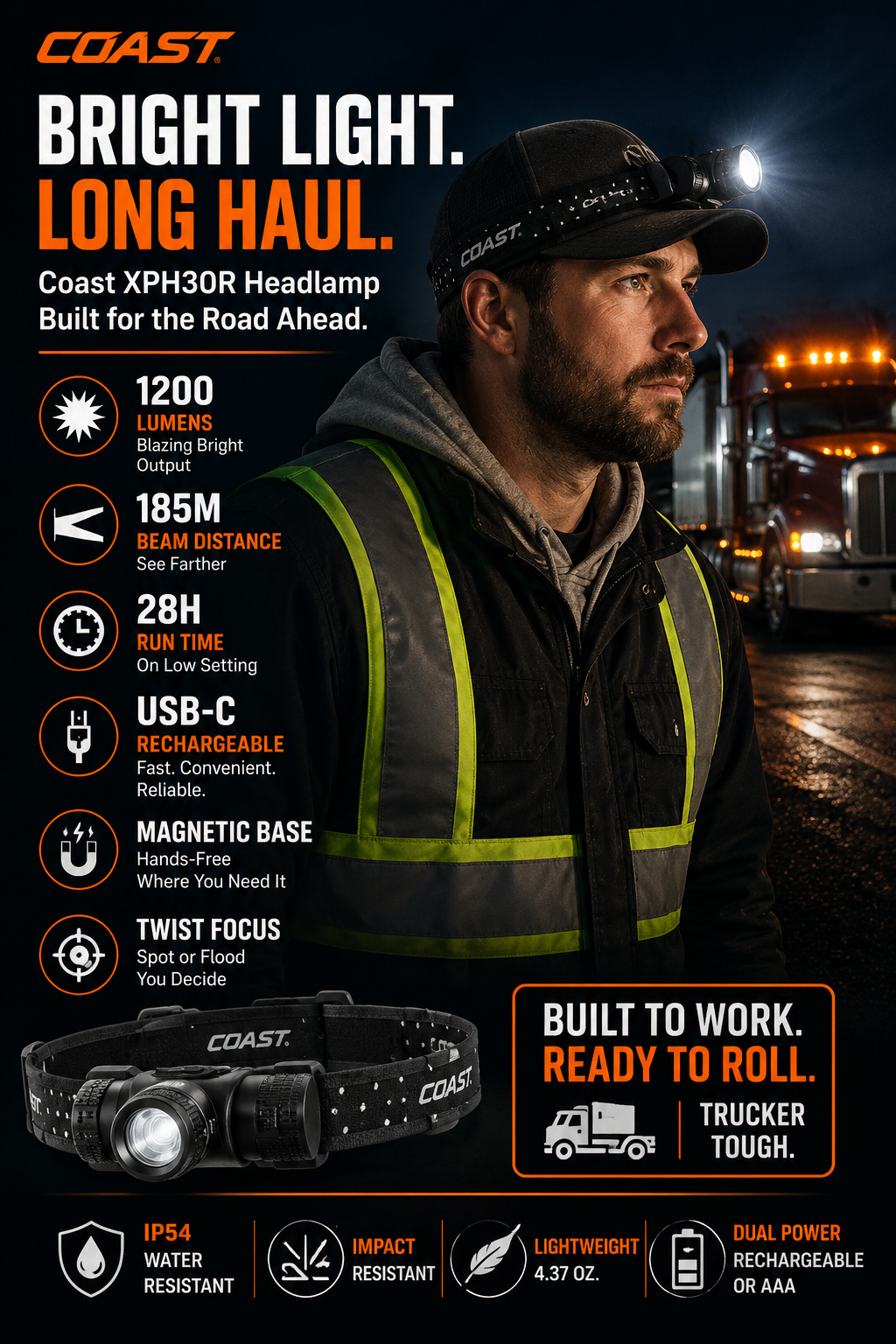
That’s why I always keep the Coast XPH30R USB-C Rechargeable Dual Power Headlamp close by.
It lets me keep both hands free while checking the fifth wheel, air lines, pigtail, and locking jaws, making it much easier to spot worn hoses or loose connections before heading down the road.
My Advice After Years Behind the Wheel
The catwalk isn’t a complicated piece of equipment.
It’s just a platform.
But over the years I’ve realized how often I depend on it.
Every trailer hookup.
Every uncoupling.
Every pre-trip inspection.
Every time I check my airlines or electrical connections.
It’s there helping me work safely.
Take care of it.
Keep it clean.
Use it instead of stretching or climbing where you shouldn’t.
Sometimes the simplest parts of a truck end up being the ones you appreciate the most after a few million miles.
Author: Mike Reynolds
Mike Reynolds spent more than 25 years hauling dry vans, refrigerated trailers, and flatbeds across North America. During his career, he trained new CDL drivers on trailer coupling, pre-trip inspections, and safe work habits around commercial equipment, believing that small daily routines are what build long, accident-free careers.