
One of the biggest questions I asked after getting my CDL had nothing to do with shifting, backing, or inspections.
It was much simpler than that.
“When will this stop feeling so overwhelming?”
During my first few weeks, it seemed like every day brought something I’d never experienced before.
A tight truck stop.
Heavy city traffic.
Strong crosswinds.
A customer I’d never visited.
A dock that looked impossible to back into.
Some days I felt like I was finally getting the hang of things.
The next day, something completely different would humble me again.
If you’re wondering when driving a semi finally starts to feel normal, you’re asking the same question almost every new truck driver asks.
The answer is different for everyone, but there are some common milestones most drivers experience during their first year.
If you’ve recently earned your CDL, I’d recommend reading What Happens After You Get Your CDL? Your First 90 Days Explained first. It helps explain what those first few months usually look like before confidence starts to build.
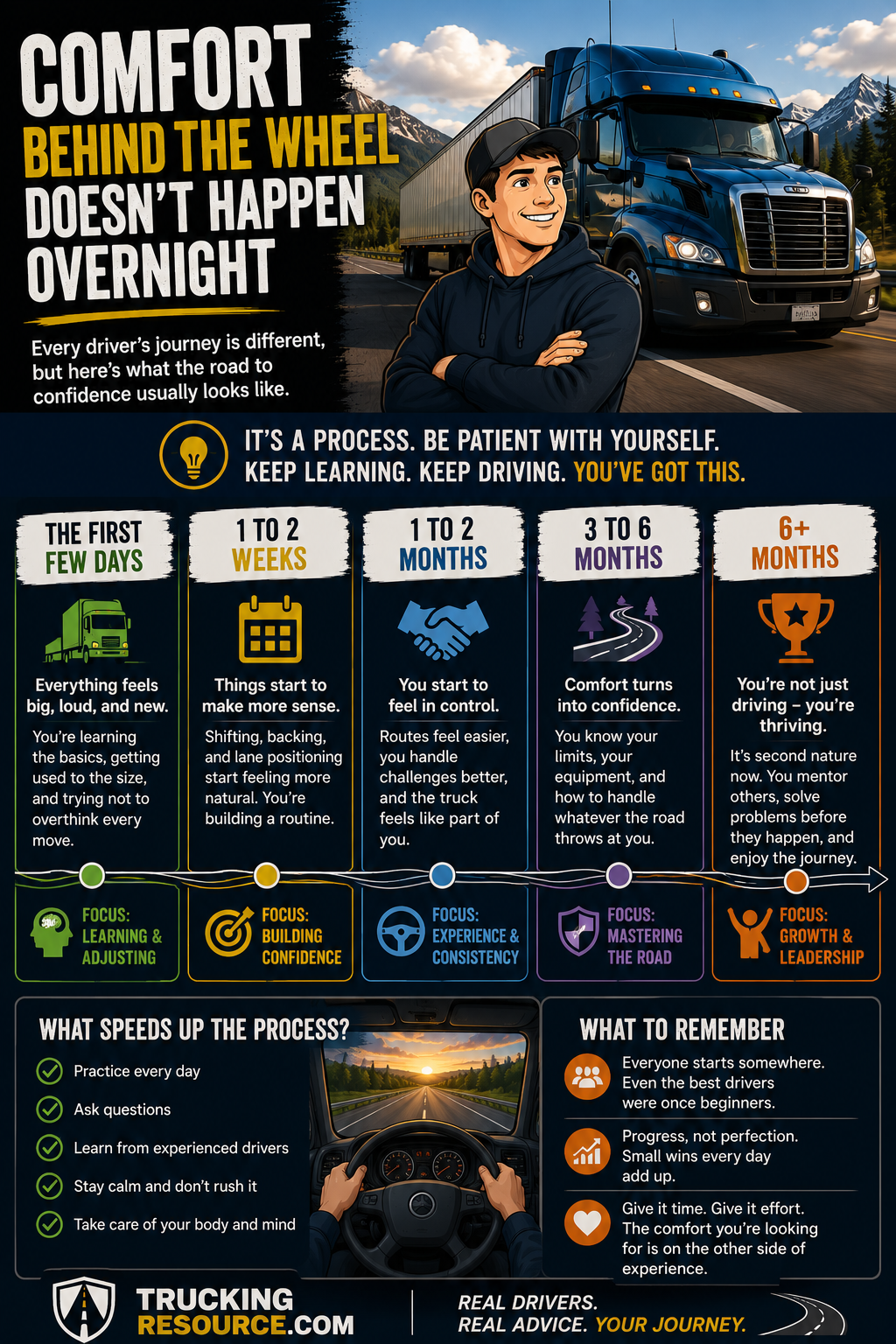
The First Week Feels Like Drinking From a Fire Hose
Almost nothing feels automatic.
You’re thinking about everything.
Mirror checks.
Following distance.
Lane position.
Signs.
Traffic.
Turns.
Bridges.
Your electronic logging device.
Your paperwork.
It feels like your brain never gets a break.
That’s completely normal.
You’re learning to operate an 80,000-pound vehicle while also adapting to an entirely new career.
Nobody expects the first week to feel easy.
The First Month Is Mostly About Survival
I don’t mean survival in a dangerous way.
I mean mental survival.
You’re constantly asking yourself questions like:
“Did I set up that turn correctly?”
“Am I parked straight enough?”
“Did I miss a sign?”
“Should I have taken that exit?”
Everything requires your full attention.
At the end of the day, you’re often more mentally tired than physically tired.
That doesn’t mean you’re doing poorly.
It means you’re learning.
Around 30 Days, Small Things Start Feeling Easier
One month in, you’ll probably notice something encouraging.
Tasks that once felt stressful now require much less thought.
Fueling.
Logging into your ELD.
Planning fuel stops.
Talking with dispatch.
Hooking and unhooking trailers.
Performing pre-trip inspections.
You’re still learning, but you’re beginning to develop routines.
Those routines reduce stress more than most new drivers realize.
Backing Still Feels Difficult
If I’m being honest…
Backing is usually the last thing that starts feeling comfortable.
Forward driving improves fairly quickly because you do it all day.
Backing?
You might only perform a few difficult backs each day.
That means progress comes more slowly.
Don’t judge yourself by watching experienced drivers.
Some of them have backed into thousands of loading docks.
You’re still building that experience.
Every successful back teaches you something for the next one.

Around 90 Days, Confidence Starts Replacing Fear
This is one of the biggest turning points.
You’re still cautious.
You still make mistakes.
But you’re no longer questioning every decision.
Instead of wondering whether you belong in trucking, you’re starting to think like a professional driver.
Problems that would have ruined your entire day during your first week now become minor inconveniences.
That’s real progress.
It’s also why those first ninety days are so important.
They’re where good habits begin to replace nervousness.
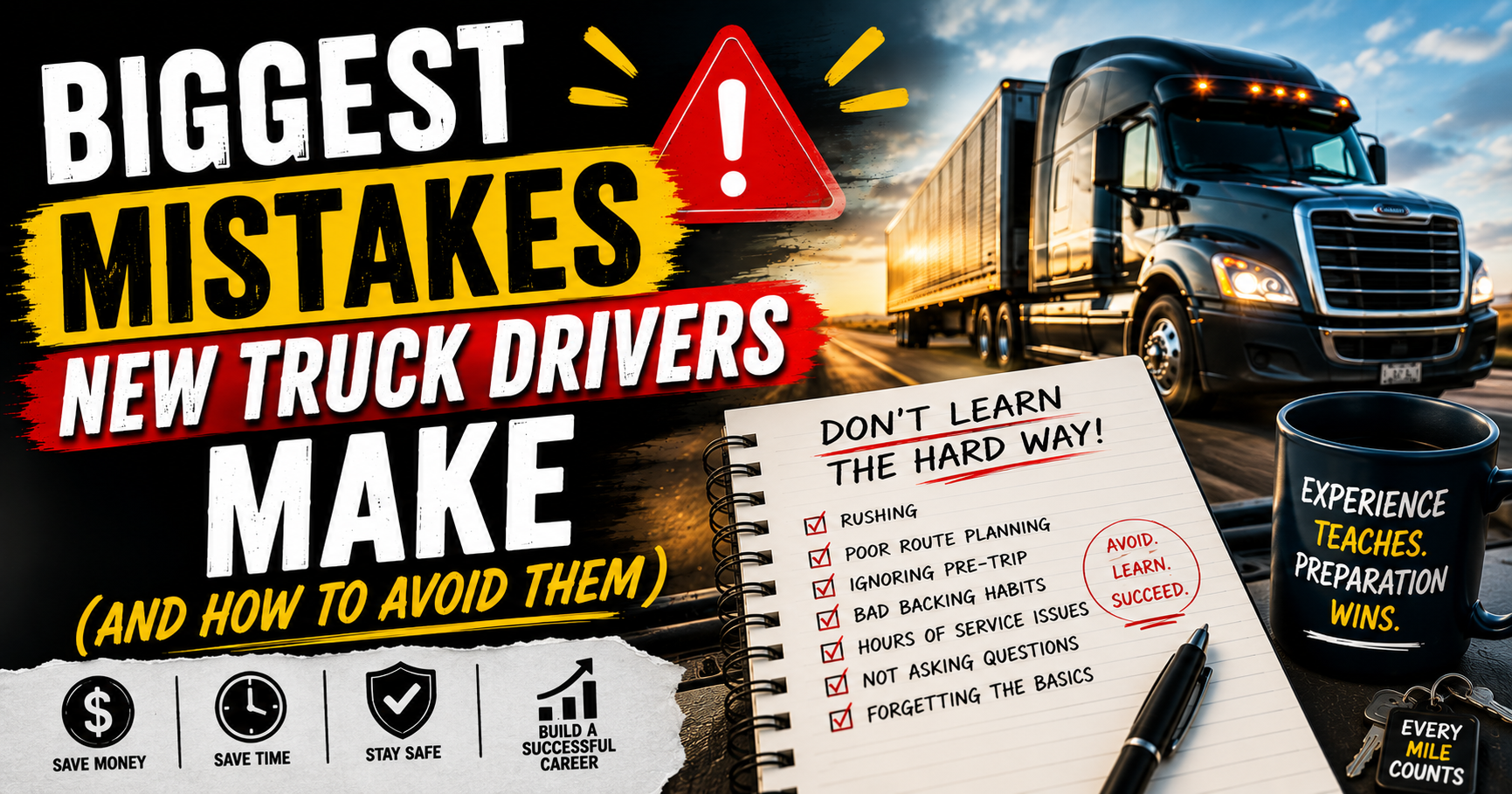
Many of the mistakes that slow new drivers down during this period are completely avoidable. If you haven’t already, take a look at Biggest Mistakes New Truck Drivers Make and How to Avoid Them so you can learn from drivers who’ve already been through those early challenges.
Around Six Months, You’re Thinking Farther Ahead
By the time you’ve been driving for about six months, you’ll probably notice a change in the way you think.
Instead of reacting to situations, you’re starting to anticipate them.
You spot traffic slowing long before you reach it.
You recognize exits where congestion is common.
You naturally leave yourself more space in heavy traffic.
You begin planning lane changes earlier instead of making them at the last second.
None of these habits happen overnight.
They’re built through repetition.
That’s one of the biggest differences between a new driver and an experienced one.
Experience teaches you to think several minutes ahead instead of several seconds ahead.

Around One Year, Driving Starts Feeling Natural
Most drivers I’ve talked to say their first year was the biggest turning point.
That’s not because they suddenly became experts.
It’s because many of the basic tasks no longer require constant concentration.
You’re no longer thinking through every shift, every mirror check, or every turn.
Those things become habits.
Instead, your attention shifts toward reading traffic, managing your day, and making smarter decisions.
You’ll still encounter situations you’ve never seen before.
Construction zones.
Extreme weather.
Unusual customer locations.
Unexpected detours.
But you trust yourself to figure them out.
That’s confidence.
And confidence comes from experience.
Some Days Will Still Humble You
Here’s something that surprised me.
Even experienced drivers have days where nothing seems to go according to plan.
You miss an exit.
A customer changes your dock.
Traffic backs up for miles.
The weather turns ugly.
A truck stop fills up earlier than expected.
Those things don’t stop happening after your first year.
The difference is how you react to them.
Experienced drivers don’t panic.
They adjust.
That’s a skill you’ll develop over time.

Don’t Chase Perfection
One mistake I made early on was expecting every day to go perfectly.
If I struggled with one difficult back, I felt like I had failed.
Looking back, that wasn’t realistic.
Professional truck drivers aren’t perfect.
They’re consistent.
They make safe decisions.
They learn from mistakes.
They avoid making the same mistake twice.
That’s a much better goal than expecting perfection every day.
Everyone Learns at a Different Pace
It’s easy to compare yourself to other drivers.
Maybe another rookie seems more confident.
Maybe someone from your CDL class is already backing into tight docks without much trouble.
Don’t let that discourage you.
Everyone brings different experiences to trucking.
Some people grew up hauling farm equipment.
Others spent years driving delivery trucks.
Some have natural confidence behind the wheel.
Others need more time.
None of that determines what kind of driver you’ll become five years from now.
Stay focused on your own progress.
The Little Wins Matter More Than You Think
During your first year, don’t wait for one huge moment where you suddenly feel like you’ve “made it.”
Confidence usually comes from dozens of small victories.
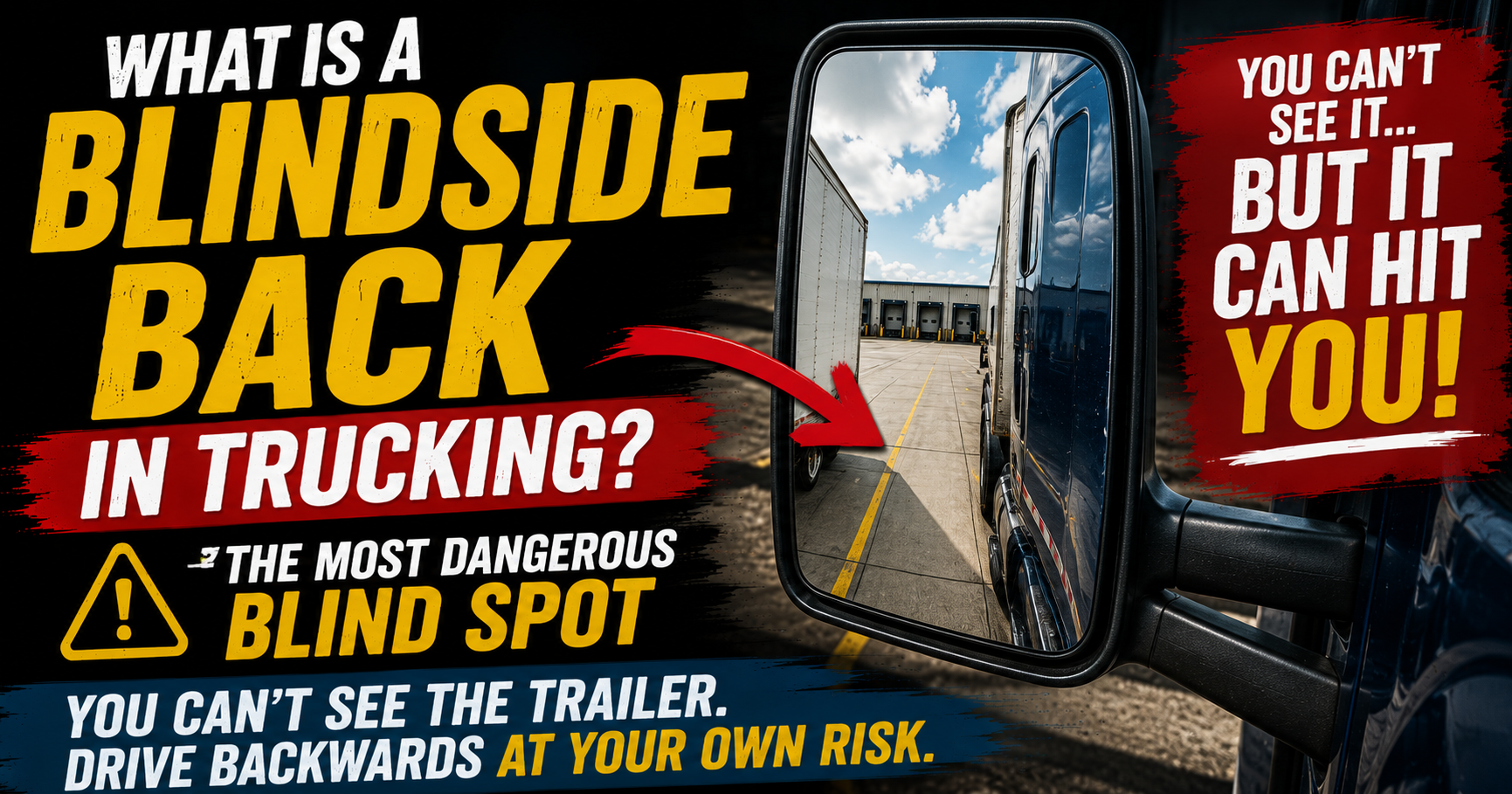
The first time you back into a dock without pulling forward. That milestone becomes even more meaningful when you learn how to manage a passenger-side dock approach with limited visibility.
The first time you handle a busy city without feeling overwhelmed.
The first time you chain up in winter.
The first time you solve a problem without calling your trainer or dispatcher.
Those moments may seem small, but together they build the confidence every professional driver eventually develops.
The Best Thing You Can Do Is Keep Learning
One thing I’ve noticed is that the drivers who enjoy this career the most never stop improving.
They ask questions.
They listen to experienced drivers.
They stay open to better ways of doing things.
They understand there’s always something new to learn.
That attitude will take you much farther than trying to prove you already know everything.
Confidence Is Only Part of Your First Year
Feeling comfortable behind the wheel is one of the biggest milestones for any new truck driver, but it’s far from the only challenge you’ll face. Learning how to plan trips, work with dispatch, choose the right trucking job, and build healthy routines all play a role in becoming a successful professional driver. The broader transition into trucking is covered in what new truck drivers should expect.

For a complete guide that covers every stage of your first year, read New Truck Driver Survival Guide Everything You Need to Know Your First Year. It connects all of the major topics every rookie should understand as they build experience.
So, When Will You Feel Comfortable?
If you’re hoping for an exact answer, I wish I could give you one.
The truth is, every driver is different.
For many people, the first month feels overwhelming.
By three months, daily tasks become much easier.
Around six months, confidence starts replacing uncertainty.
By the end of the first year, most drivers feel like trucking has become a normal part of their life instead of something they’re constantly worried about.
Don’t rush the process.
Every mile you drive teaches you something.
Every challenge makes you a little better.
One day you’ll look back at your first week behind the wheel and realize just how much you’ve grown.

If you’re still deciding what kind of driving job fits your goals, OTR vs Regional vs Local Truck Driving Which One Is Right for You can help you understand how different trucking jobs shape your first year and the experience you gain along the way.
Author: Brandon Cole
Brandon Cole has spent more than 15 years driving dry van, refrigerated, and dedicated freight throughout the Midwest and Southeast. He enjoys mentoring new drivers and helping them understand that confidence behind the wheel isn’t something you’re born with, but something that’s earned one safe mile at a time.