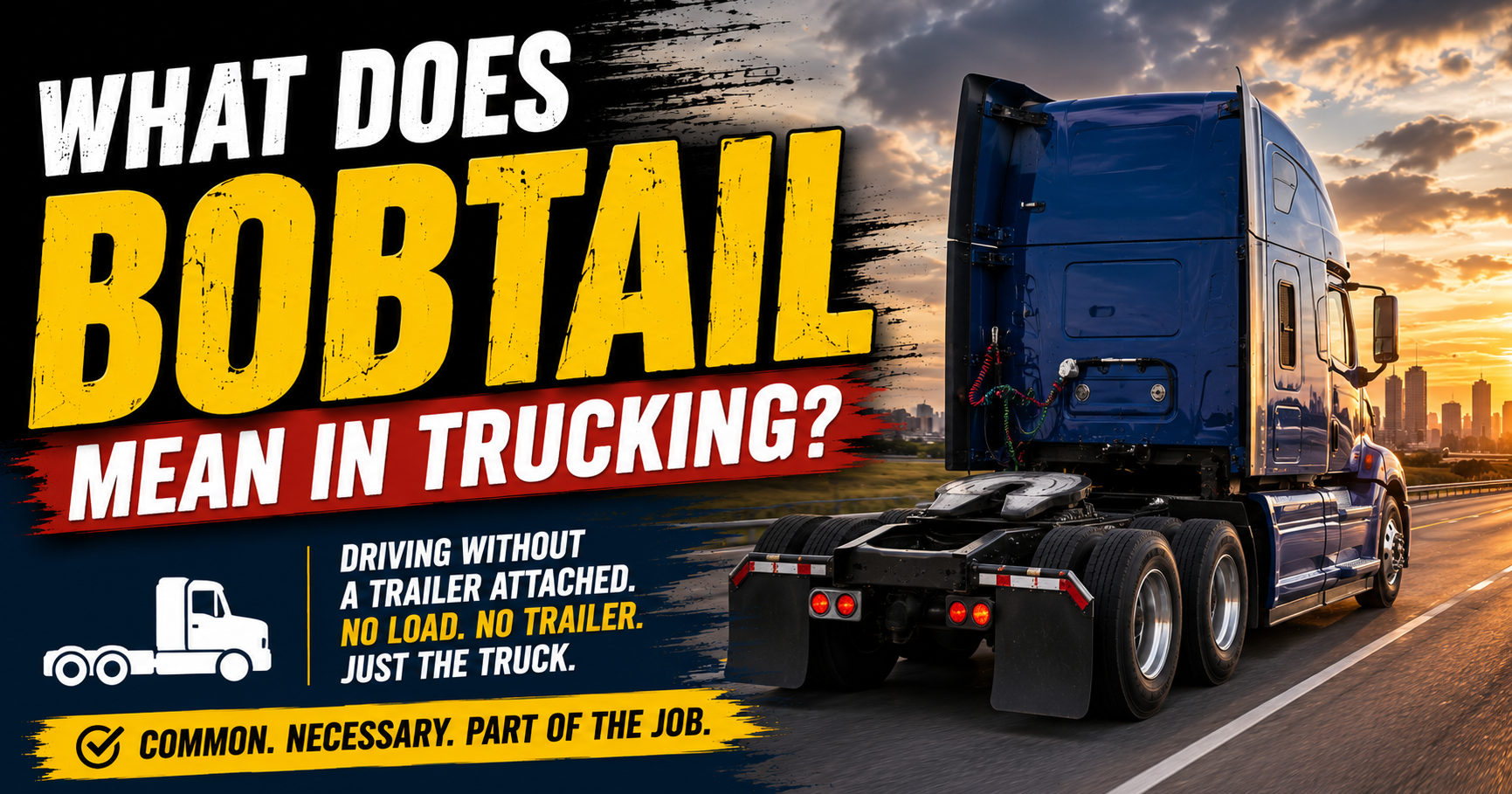
“Careful, you’re bobtailing.”
That was one of the first pieces of advice another driver gave me years ago.
At the time, I had no clue what he meant.
I figured driving a tractor without a trailer would be easier. After all, the truck was shorter, lighter, and seemed much more maneuverable.
I quickly learned that I couldn’t have been more wrong.
Bobtailing changes how a truck handles in ways that surprise almost every new driver. In many situations, a bobtail tractor can actually be more difficult to control than one pulling a loaded trailer.
Understanding what bobtail means isn’t just important for passing your CDL exam. It’s something every professional driver should understand before climbing behind the wheel.
What Does Bobtail Mean?
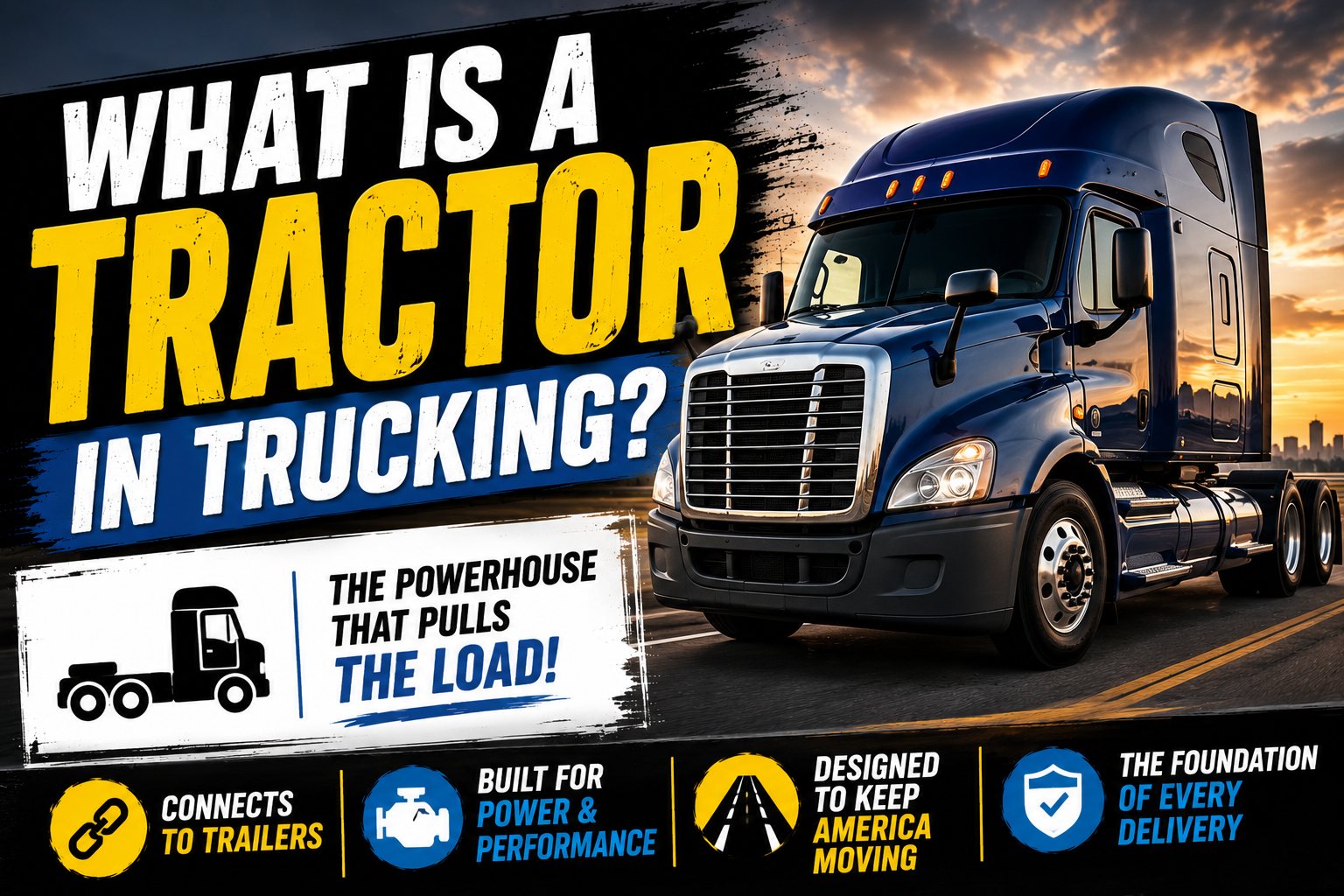
In trucking, bobtail means operating a semi-truck without a trailer attached. In other words, you’re driving only the tractor. Understanding What Is a Tractor in Trucking? makes the bobtail configuration easier to identify.
Bobtailing usually happens when a driver:
- Delivers a trailer.
- Travels to pick up another trailer.
- Returns to the terminal.
- Moves the tractor around a truck yard.
- Takes the tractor in for maintenance.
Although the truck isn’t pulling freight, it still weighs many thousands of pounds and handles much differently than most people expect.
Why Is It Called Bobtail?
The name comes from the appearance of the truck.
Without a trailer attached, the tractor looks much shorter, almost like it has a “cut-off” or shortened tail.
Over time, drivers began calling this configuration a bobtail, and the name has remained part of trucking vocabulary for generations.
Today you’ll hear drivers use phrases like:
- “I’m bobtailing back to the yard.”
- “I’ll be bobtail after this delivery.”
- “The shop wants the truck brought in bobtail.”
Why Do Truck Drivers Bobtail?
Most trucking companies actually try to avoid bobtailing whenever possible because a truck isn’t generating revenue while traveling without a trailer.
Still, there are plenty of situations where it’s necessary.
Some of the most common include:
- Picking up a loaded trailer.
- Dropping off a trailer for repairs.
- Driving to a maintenance shop.
- Returning to the terminal.
- Repositioning equipment.
- Heading home after delivering a load.
It’s simply part of the job.
Why Is Bobtailing More Dangerous?
This surprises almost every new CDL student.
Without a trailer attached, the truck actually becomes less stable.
That’s because tractor-trailers are engineered to operate with weight distributed across both the tractor and trailer.
Remove the trailer, and that balance changes dramatically.
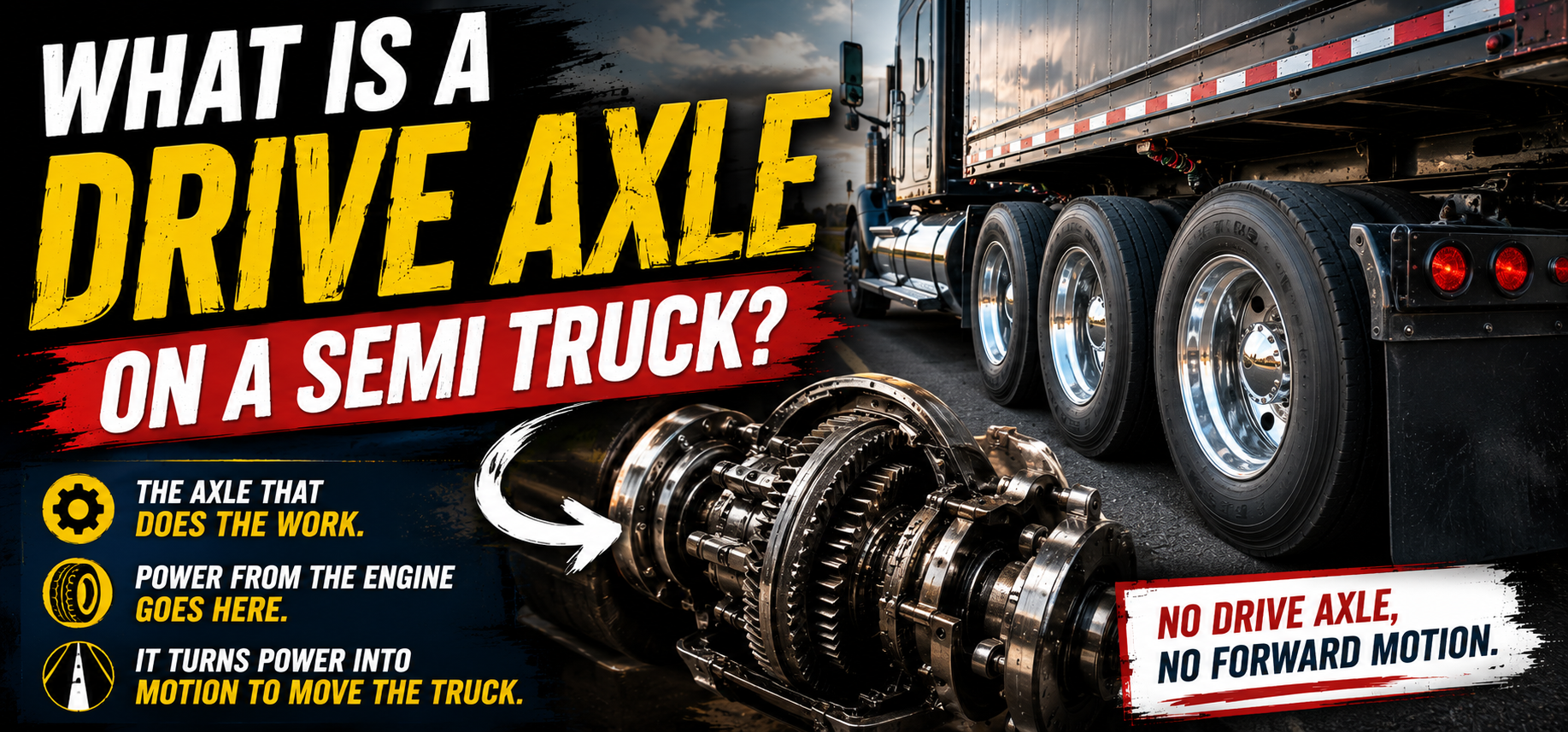
The drive axles lose much of the weight that normally helps them grip the pavement. A clearer understanding of What Is a Drive Axle on a Semi Truck? helps explain why bobtailing can reduce traction.
That affects braking, steering, and overall vehicle control.
How Bobtailing Changes the Way a Truck Handles
The first time I drove bobtail, I noticed the difference almost immediately.
The truck felt lighter.
It accelerated faster.
It bounced more over rough pavement.
Stopping distances felt different.
Turns required a little more attention.
It’s something every driver gets used to with experience, but it’s definitely not the same as pulling a loaded trailer.
That’s why experienced drivers remind new drivers not to become overconfident just because the trailer is gone.
Bobtail vs. Deadhead
These two terms get mixed up all the time.
They’re not the same thing.
Bobtail means you’re driving the tractor without any trailer attached.
Deadhead means you’re pulling an empty trailer.
You’re still operating a combination vehicle while deadheading, but there’s simply no cargo inside the trailer.
Understanding that difference is important because you’ll hear both terms used regularly throughout the trucking industry.
We’ll cover deadheading in much more detail in its own glossary article.
Tips for Driving Safely While Bobtailing
Whenever I’m bobtailing, I remind myself that the truck isn’t going to behave exactly like it did with a trailer attached.
A few habits have always helped me stay safe:
- Leave extra following distance.
- Brake earlier than normal.
- Slow down before entering curves.
- Avoid sudden steering inputs.
- Drive smoothly in wet or icy weather.
- Remember the tractor is lighter than usual.
Those simple adjustments make a noticeable difference.
If you’re looking to sharpen your defensive driving skills, our Free CDL Safe Driving & Road Hazards Practice Test is a great way to reinforce many of the situations you’ll encounter both on the CDL exam and on the road.
Bobtailing in Bad Weather
Rain, snow, and ice make bobtailing even more challenging.
Since the tractor has less weight over the drive axles, traction decreases more quickly on slippery roads.
That’s one reason I always slow down well before conditions become dangerous.
No delivery is worth taking unnecessary risks.
If winter weather is part of your route, our Free CDL Weather, Winter & Mountain Driving Practice Test covers many of the driving situations you’ll face during the written exam.
Will Bobtailing Be on the CDL Test?
Yes.
Bobtailing is commonly discussed during CDL training because it affects safe vehicle operation.
You should understand:
- What bobtail means.
- Why it changes handling.
- Why stopping distances change.
- How it differs from deadheading.
- Why extra caution is needed.
Those concepts often appear in the General Knowledge section of the CDL exam.
If you’re preparing for your permit test, our 21-Day CDL Permit Exam Mastery Workbook PDF is an excellent resource for building a consistent study routine while reviewing important topics like this one.
My Advice After Years of Bobtailing
Every truck driver spends time bobtailing.
It’s simply part of the job.
The mistake many new drivers make is assuming the truck will be easier to drive because there’s no trailer behind them.
Experience teaches you otherwise.
A bobtail tractor responds differently.
It brakes differently.
It turns differently.
It deserves the same level of attention and respect as a fully loaded tractor-trailer.
Once you understand how the truck behaves without a trailer, you’ll become a smoother, safer, and more confident commercial driver.
If you’re interested in learning more trucking terms like this one, be sure to explore our growing Trucking Glossary where we explain the words and equipment every CDL driver should know.
Author: Kevin Lawson
Kevin Lawson spent nearly three decades as a commercial truck driver and fleet maintenance manager, operating everything from dry vans and flatbeds to heavy equipment trailers. He enjoys helping new CDL drivers understand the real-world trucking terms and safety habits that aren’t always fully explained in the CDL manual.