If you’ve ever watched a semi truck hook up to a trailer, you’ve seen one of the most important pieces of equipment on the entire truck.
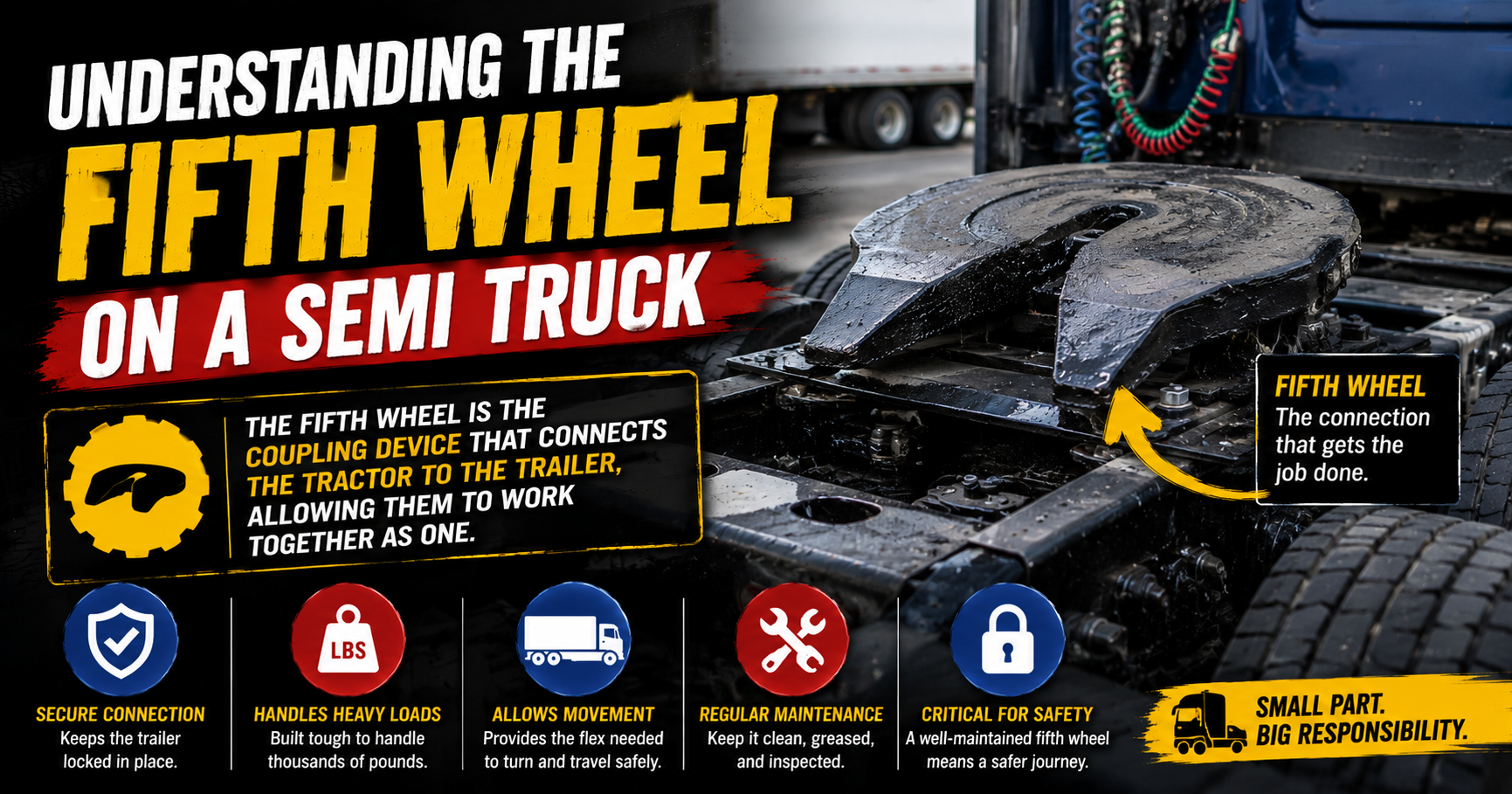
It’s called the fifth wheel.
When I first started driving, I thought it was simply a big steel plate that connected the truck to the trailer. After thousands of hookups over the years, I learned it’s much more than that.
The fifth wheel is what allows a tractor and trailer to become one unit while still giving the trailer enough freedom to pivot through turns. Without it, modern trucking simply wouldn’t exist the way we know it today.
If you’re studying for your CDL or just trying to understand how semi trucks work, learning about the fifth wheel is essential.
What Is a Fifth Wheel?
A fifth wheel is the large steel coupling device mounted on the rear of a truck tractor.
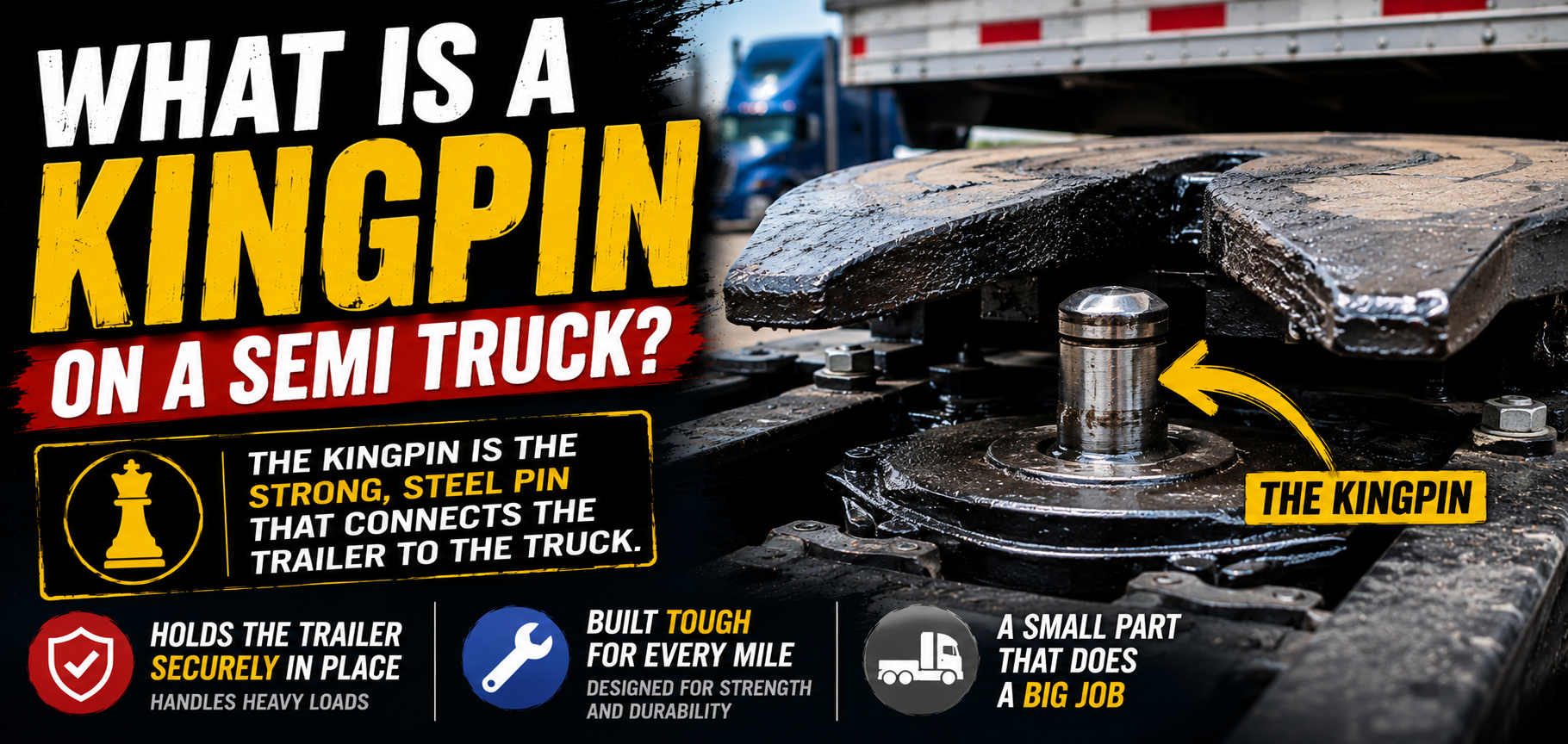
Its job is to connect the tractor to a semi-trailer by locking onto the trailer’s kingpin. Once connected, the fifth wheel supports the front of the trailer while allowing it to pivot smoothly during turns. The trailer-mounted component secured by the fifth wheel is the What Is a Kingpin on a Semi Truck?.
Every time you see a semi truck hauling a trailer down the highway, the fifth wheel is doing an incredible amount of work.
It supports thousands of pounds of weight while allowing the tractor and trailer to move independently when turning corners.
Why Is It Called a Fifth Wheel?
This is one of those questions almost every new driver asks.
The name actually dates back long before diesel trucks existed.
Early wagons and horse-drawn carriages used a pivoting wheel-like mechanism that allowed the front axle to turn. When trucking adopted a similar design for connecting trailers, the name “fifth wheel” stuck and has been used ever since.
Today it isn’t literally a wheel anymore, but the name remains part of trucking vocabulary.
How Does a Fifth Wheel Work?
The process is surprisingly simple once you’ve seen it a few times.
As the tractor backs under the trailer, the trailer’s kingpin slides into the opening of the fifth wheel.
Inside the fifth wheel are locking jaws that automatically close around the kingpin.
Once the jaws lock securely, the trailer becomes attached to the tractor.
Air lines and electrical cables are then connected, allowing the brakes, lights, and other trailer systems to function properly.
If you’re planning to drive tractor-trailers, understanding this process is just as important as learning to shift gears.
Our guide explaining GCWR and why it matters also helps new drivers understand how combination vehicles work together.
What Parts Make Up a Fifth Wheel?
Although it looks like one large piece of steel, a fifth wheel has several important components working together.
These include:
- Mounting plate
- Locking jaws
- Release handle
- Pivot mechanism
- Grease plate
- Mounting brackets
Each part has a specific job, and every one should be inspected regularly.
If even one component becomes damaged or worn excessively, it can affect the safety of the entire combination vehicle.

The Fifth Wheel and the Kingpin Work Together
One of the biggest misconceptions among new CDL students is thinking the fifth wheel connects directly to the trailer.
Technically, it connects to the trailer’s kingpin.
The kingpin is the heavy steel pin underneath the front of the trailer.
When you back under the trailer, the kingpin slides into the fifth wheel where locking jaws secure it in place.
Without both parts working together properly, the trailer cannot be safely attached.
We’ll dive much deeper into kingpins in a separate glossary article because they deserve their own detailed explanation.
Why Greasing the Fifth Wheel Matters
One thing you’ll notice on almost every working fifth wheel is grease.
Lots of it.
That grease serves an important purpose.
As the trailer pivots during turns, tremendous friction develops between the trailer and the fifth wheel.
Proper lubrication helps:
- Reduce friction.
- Prevent excessive wear.
- Make steering smoother.
- Extend component life.
- Reduce unnecessary stress on the coupling.
I’ve seen drivers complain about getting grease on their clothes during inspections, but I’d much rather deal with dirty gloves than a damaged fifth wheel. A pair of leather work gloves can also make hands-on coupling and inspection work more manageable.
Inspecting the Fifth Wheel
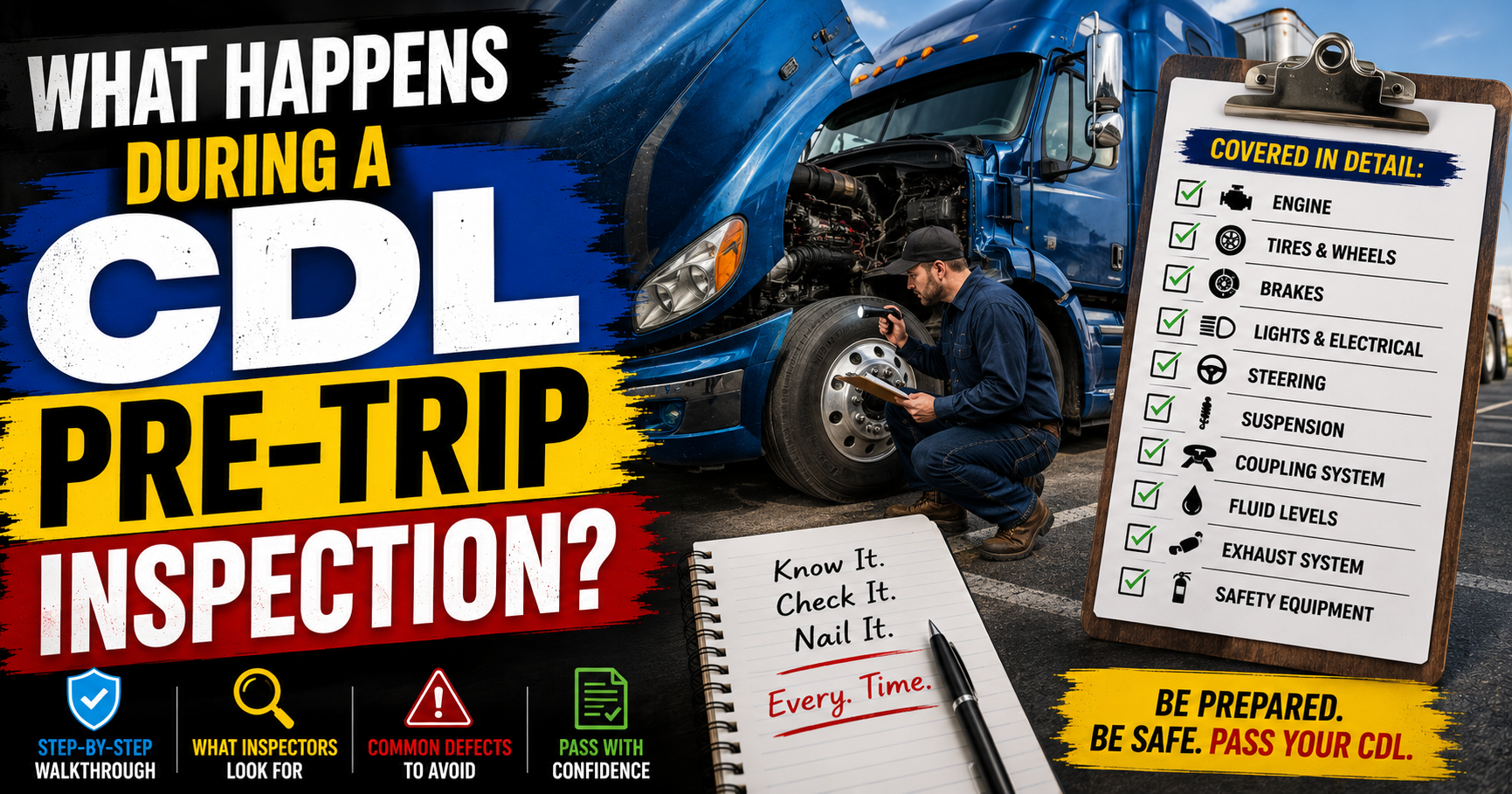
A good pre-trip inspection includes checking the fifth wheel every day. A complete CDL pre-trip walkthrough can show how this fifth-wheel check fits alongside the other safety items you need to inspect.
Things I always look for include:
- Cracks in the mounting plate.
- Loose mounting bolts.
- Proper lubrication.
- Damaged locking jaws.
- Bent release handle.
- Excessive wear.
- Proper trailer seating.
Taking a few extra minutes during your inspection can prevent major problems later.
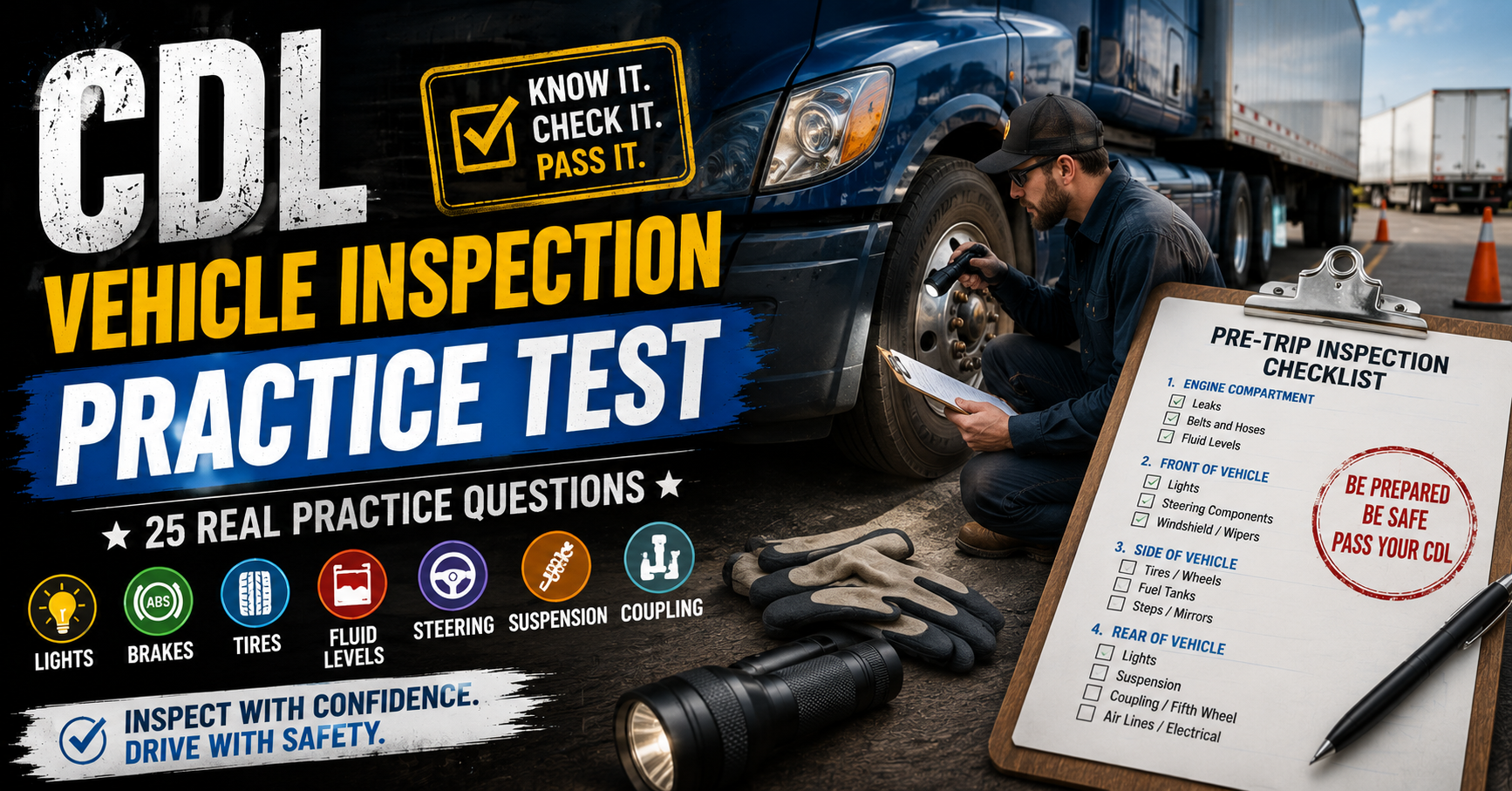
If you’re studying for your CDL skills test, our CDL Vehicle Inspection Practice Test is a great way to review the inspection points you’ll be expected to know.
Common Fifth Wheel Mistakes New Drivers Make
Almost every experienced truck driver has watched someone make at least one of these mistakes.
The biggest one is performing an improper hookup.
If the trailer is too high, the tractor can slide underneath without locking correctly.
If it’s too low, damage can occur during coupling.
Another common mistake is skipping the tug test.
After coupling, I always gently pull forward against the trailer brakes to confirm the jaws are fully locked.
It only takes a few seconds and provides valuable peace of mind.
I’ve also seen drivers forget to visually inspect the locking jaws before leaving the yard.
That’s never a shortcut worth taking.
Can a Fifth Wheel Fail?
Like any mechanical component, it can.
Fortunately, failures are rare when equipment is maintained properly.
Problems usually develop because of:
- Poor maintenance.
- Excessive wear.
- Lack of lubrication.
- Improper coupling.
- Damaged locking jaws.
- Driver error.
That’s why inspections are so important.
Most serious problems give warning signs long before they become dangerous.
Will You Need to Know the Fifth Wheel for Your CDL Test?
Absolutely.
The fifth wheel appears throughout CDL training.
You’ll encounter it during:
- Vehicle inspections.
- Combination vehicle training.
- Coupling procedures.
- Written exams.
- Skills testing.
Understanding how it works will help you both on your CDL exam and during your first weeks on the job.
Once you’ve reviewed this topic, I recommend taking our Free CDL Combination Vehicles Practice Test to reinforce what you’ve learned before test day.
My Advice After Thousands of Trailer Hookups
I’ve probably connected and disconnected trailers thousands of times over the years.
Even after all that experience, I still follow the same routine every single time.
I never assume the trailer is coupled correctly.
I always perform a visual inspection.
I always do a tug test.
I always check my airlines and electrical connections.
Those habits become second nature after a while, and they’re habits that can prevent expensive damage or even serious accidents.
The fifth wheel may seem like just another piece of steel sitting behind the cab, but it’s one of the hardest-working components on the entire truck.
Understanding how it works, inspecting it carefully, and treating it with respect will make you a safer and more confident commercial driver.
Author: Mike Reynolds
Mike Reynolds has spent more than 25 years hauling freight across the United States in dry vans, flatbeds, refrigerated trailers, and other combination vehicles. Throughout his career, he’s performed thousands of trailer hookups and believes that proper coupling procedures and daily inspections are some of the most important habits any professional truck driver can develop.