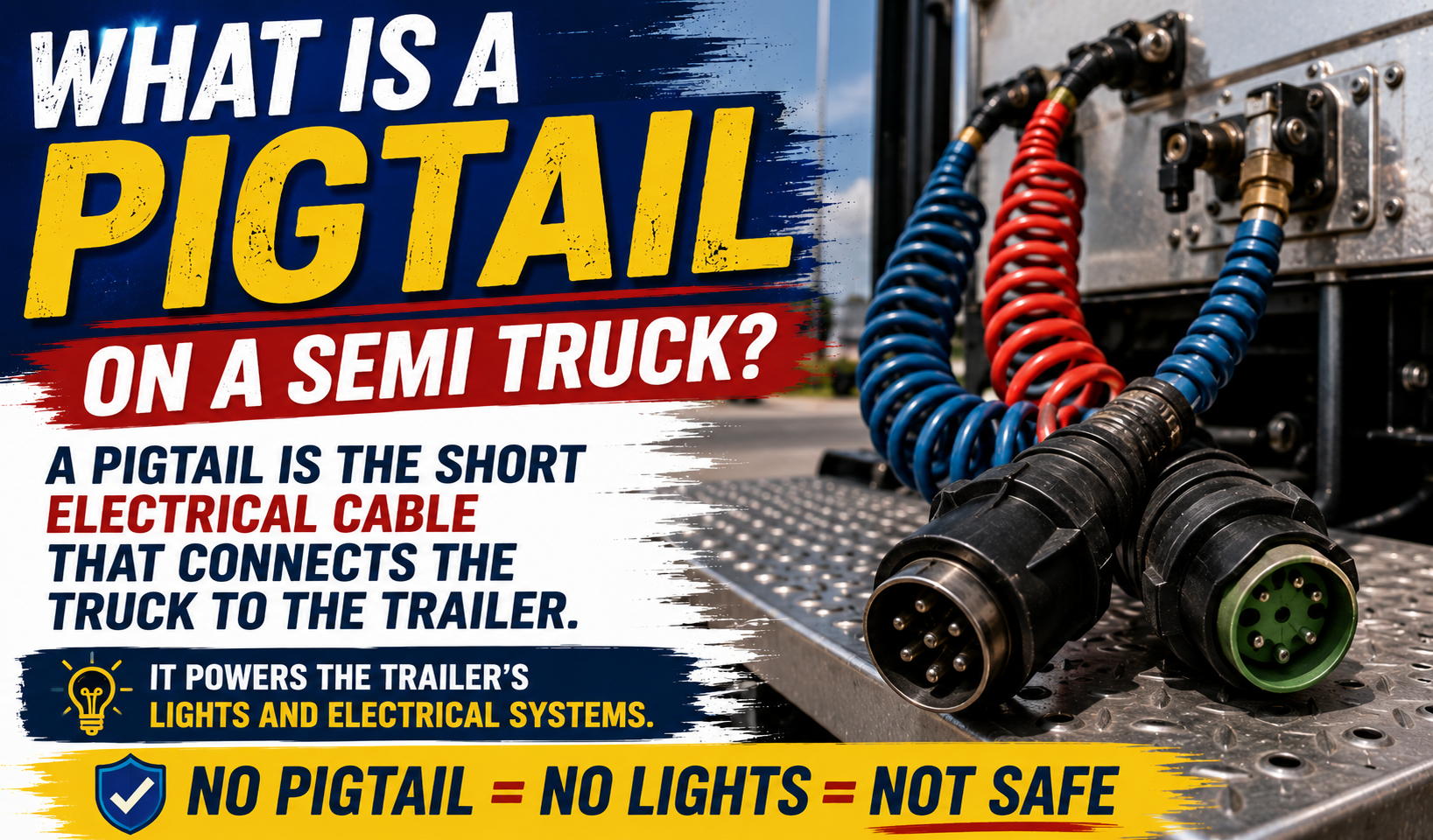
The first time someone told me to “plug in the pigtail,” I looked around wondering what they were talking about.
I’d heard of air lines.
I’d heard of glad hands.
But a pigtail?
It turns out they weren’t talking about anything complicated at all.
They were referring to the large electrical cable that connects the tractor to the trailer.
It’s a simple piece of equipment, but if it isn’t connected correctly, your trailer lights, turn signals, brake lights, ABS warning system, and several other important electrical functions simply won’t work. Checking these electrical connections is one part of a complete CDL Pre-Trip Inspection Checklist (Complete Guide).
I’ve hooked up thousands of trailers over the years, and checking the pigtail has become second nature. It’s one of those things that only takes a few seconds but can save you from major headaches later. The What Is a Catwalk on a Semi Truck? explains the platform that helps drivers safely reach the pigtail and other connections behind the cab.
What Is a Pigtail on a Semi Truck?
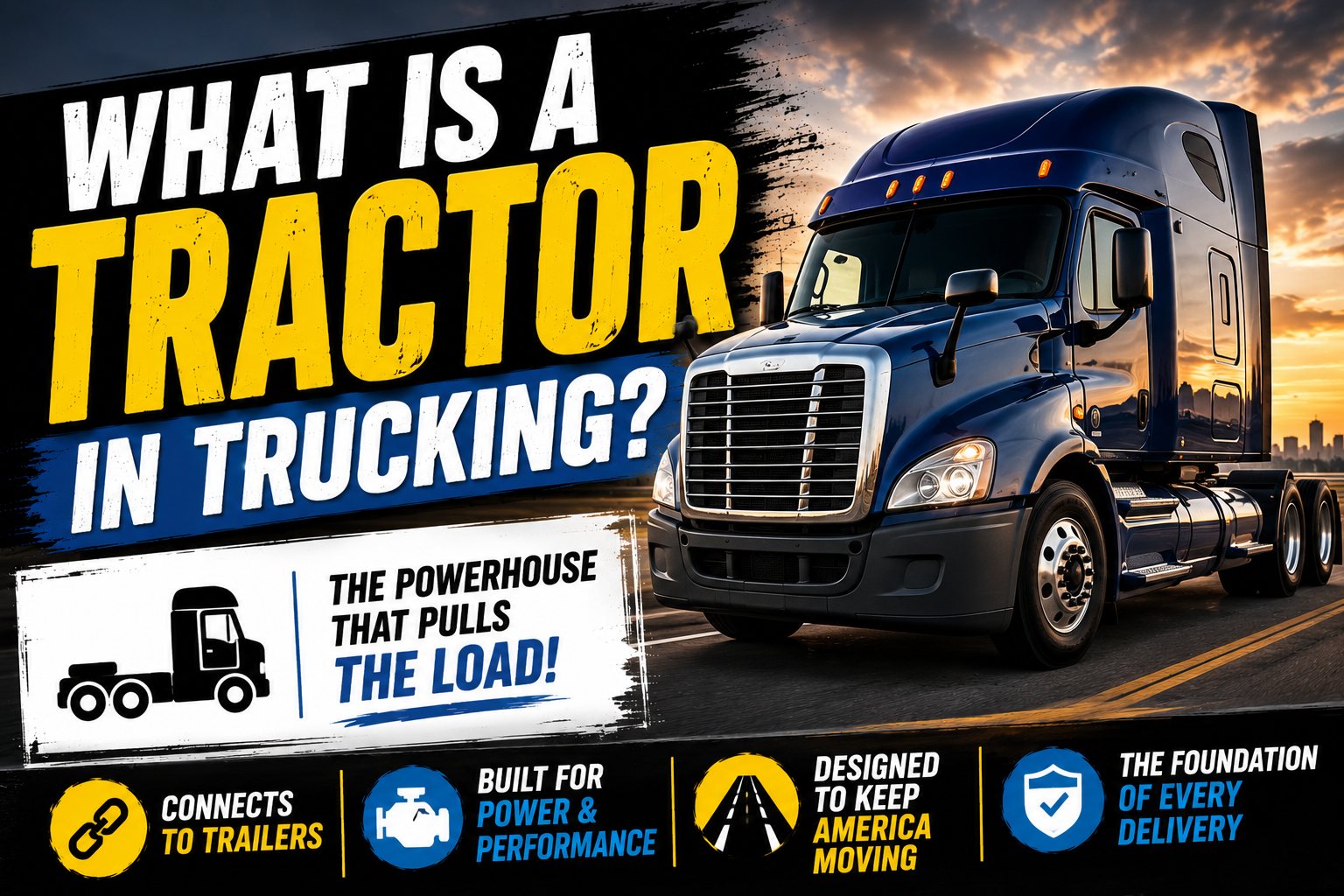
A pigtail is the heavy-duty electrical cable that connects a truck tractor to a semi-trailer. It carries electrical power and communication signals between the tractor and trailer so critical systems like brake lights, turn signals, marker lights, clearance lights, reverse lights, and the trailer ABS system can operate correctly. (phillipsind.com) The other side of this connection is the powered What Is a Tractor in Trucking? that supplies the electrical connection.
Some drivers call it the electrical cord or seven-way cable, but “pigtail” is probably the term you’ll hear most often around truck yards and loading docks.

Why Is It Called a Pigtail?
The nickname comes from its appearance.
The electrical cord is usually coiled, allowing it to stretch when the truck turns and contract when the tractor and trailer straighten out.
From a distance, that spiral shape looks a little like a pig’s tail.
The name stuck years ago, and today nearly every truck driver knows exactly what you mean when you mention the pigtail.

What Does the Pigtail Do?
Without the pigtail, the trailer is basically disconnected from the truck electrically.
That means several important systems stop working.
The pigtail supplies power for:
- Brake lights.
- Turn signals.
- Tail lights.
- Clearance lights.
- Side marker lights.
- Reverse lights on equipped trailers.
- Trailer ABS communication.
- Other trailer electrical functions.
Without those systems, the trailer isn’t safe or legal to operate on public roads.
Where Is the Pigtail Connected?
The pigtail plugs into a round electrical socket mounted on the back of the tractor.
The opposite end plugs into a matching socket on the front of the trailer.
Most North American tractors and trailers use a standard seven-pin electrical connector, making it easy to connect different tractors and trailers together.
When you’re coupling a trailer, connecting the pigtail is one of the final steps before testing your lights.
How the Pigtail Works With Other Trailer Connections
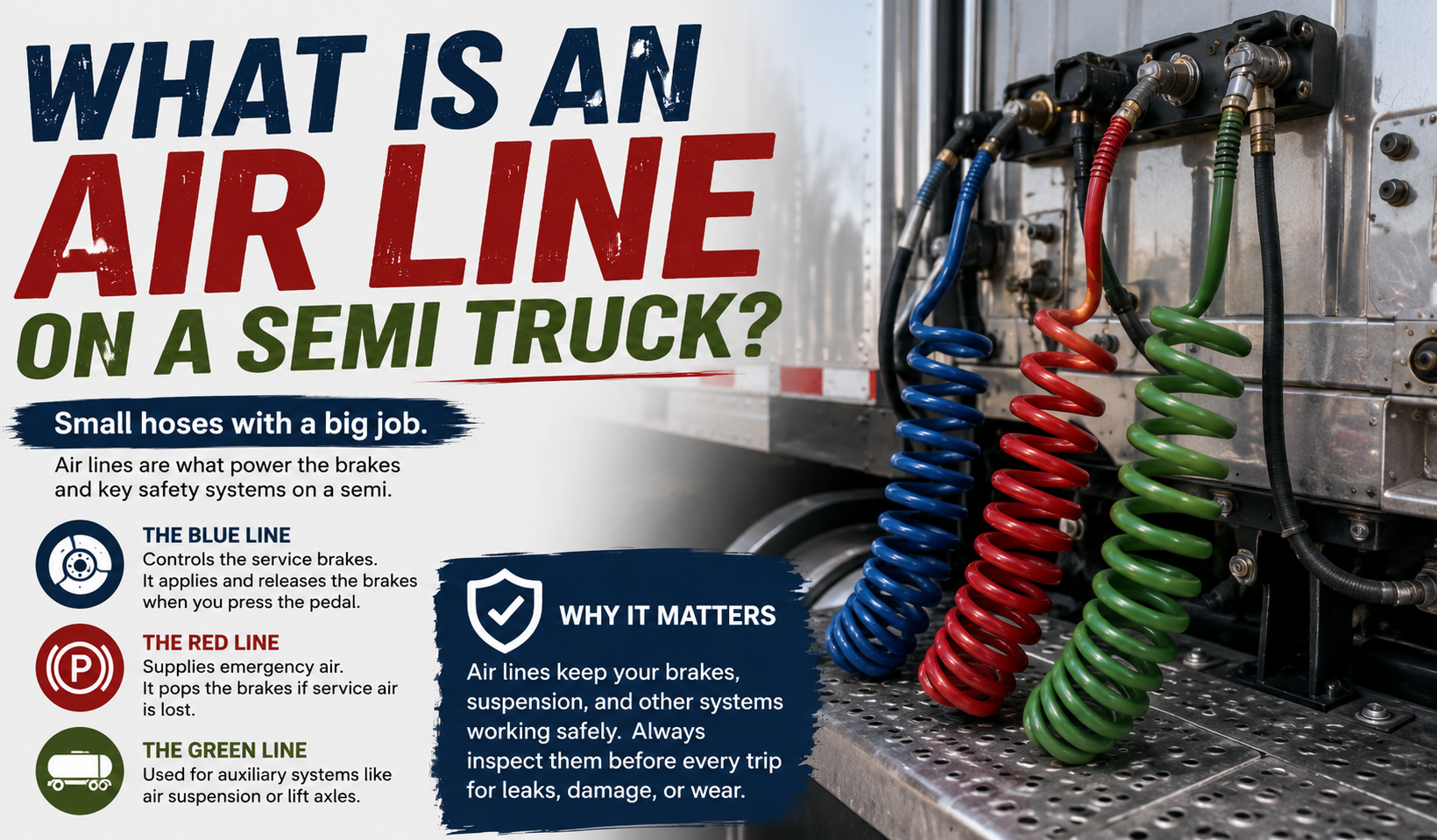
When coupling a trailer, three major connections have to be made. The air lines are the second essential connection, carrying compressed air that allows the trailer brakes to operate; see What Is an Air Line on a Semi Truck? for a closer explanation.
First, the trailer is secured mechanically using the fifth wheel and kingpin.
Next, the air lines are connected so the braking system can operate.
Finally, the pigtail supplies electrical power to the trailer.
Each connection is just as important as the others.
If one is missing, the trailer isn’t ready for the road.
If you’re still learning how trailers connect to tractors, these guides explain the other major components:
- Understanding the Fifth Wheel on a Semi Truck
- What Is a Kingpin on a Semi Truck?
- What Are Glad Hands on a Semi Truck?
Understanding all three systems together makes trailer hookups much easier to learn.
What Happens If the Pigtail Isn’t Connected?
This is something every new driver should experience in the yard rather than on the highway.
Without the electrical connection:
- Brake lights won’t work.
- Turn signals won’t work.
- Trailer marker lights won’t work.
- Clearance lights won’t work.
- The trailer ABS warning system may not function correctly.
- Other electrical accessories won’t receive power.
Besides creating a serious safety hazard, you’ll almost certainly fail a roadside inspection if your required trailer lighting isn’t working properly.
Common Problems With Pigtails
Fortunately, pigtails are fairly simple.
Still, they aren’t indestructible.
Over the years I’ve seen problems caused by:
- Broken wires.
- Damaged plugs.
- Corrosion inside the connector.
- Torn insulation.
- Loose electrical pins.
- Improper routing.
- Cable rubbing on the catwalk or frame.
Most of these issues are easy to spot during a careful pre-trip inspection.
How I Inspect the Pigtail
Whenever I hook up a trailer, I make it a habit to inspect the electrical cord before pulling away.
I check for:
- Cracked insulation.
- Cuts or exposed wiring.
- Bent connector pins.
- Corrosion.
- Secure connections.
- Proper routing.
- Enough slack for turns.
- No rubbing against sharp edges.
Once everything is connected, I always verify that every trailer light works before leaving.
That quick inspection has saved me more than once over the years.
If you’re practicing for your CDL, our CDL Vehicle Inspection Practice Test includes many of the components you’ll inspect during your coupling procedure.
Common Mistakes New Drivers Make
I’ve watched plenty of new drivers make the same mistakes.
Sometimes they connect the pigtail but forget to test the lights.
Other times the cord gets routed incorrectly and rubs against the catwalk or frame until the insulation wears through.
I’ve also seen drivers stretch the cord too tightly, leaving very little slack during turns.
None of these mistakes are difficult to avoid once you know what to watch for.
Where You’ll Hear This Term
“Pigtail” is one of those words you’ll hear almost immediately after starting your trucking career.
Drivers mention it during trailer hookups.
Mechanics inspect it during repairs.
DOT officers look at it during inspections.
Dispatchers may even ask whether you’ve checked your pigtail if trailer lights stop working.
It’s a simple term, but it’s one you’ll hear throughout your career.
Frequently Asked Questions
Is a pigtail the same thing as the air lines?
No.
The pigtail carries electrical power.
The air lines carry compressed air for the trailer brake system.
They’re completely different systems, although they’re connected at roughly the same location behind the tractor.
Why is the pigtail coiled?
The coiled design allows it to stretch during turns while helping prevent excess cable from dragging on the catwalk or roadway.
Can you drive if the pigtail isn’t plugged in?
No.
Without the electrical connection, required lighting and other trailer electrical systems won’t function correctly, making the combination unsafe and generally illegal to operate.
Will the Pigtail Be Covered on the CDL Exam?
Very likely.
You should understand:
- What it is.
- What it does.
- Where it connects.
- Why it’s important.
- What to inspect during your pre-trip.
Questions about trailer coupling and inspections are common during CDL training.
Our CDL Master Question Bank PDF and CDL Permit Test Simulator: 125-Question Master Practice Exam are both excellent resources for practicing these concepts before your exam.
One Tool That Makes Electrical Inspections Easier
Many trailer hookups happen before sunrise or after dark, especially during the winter months.

That’s one reason I always keep the Coast XPH30R USB-C Rechargeable Dual Power Headlamp within easy reach.
Having both hands free makes it much easier to inspect electrical connectors, air lines, trailer sockets, and the back of the tractor without juggling a flashlight.
My Advice After Thousands of Trailer Hookups
The pigtail isn’t the most expensive part on a semi truck.
It isn’t the biggest either.
But every time you hook to a trailer, it’s one of the last things standing between you and a safe trip.
I’ve made it a habit to never assume it’s okay just because it’s plugged in.
I inspect it.
I test the lights.
I make sure it’s routed correctly.
Those extra few minutes have helped me avoid breakdowns, DOT violations, and frustrated phone calls from customers wondering why their trailer lights weren’t working.
Sometimes the smallest parts on the truck make the biggest difference.
Author: Kevin Lawson
Kevin Lawson spent nearly 30 years hauling refrigerated freight, dry vans, and flatbeds across the United States. Throughout his career, he trained new drivers on trailer coupling, pre-trip inspections, and defensive driving, believing that mastering the basics is what separates a good truck driver from a great one.