The first time I heard a mechanic tell another driver, “I think your differential is going bad,” I honestly wasn’t sure what part of the truck he was talking about.
I knew it had something to do with the rear axle, but I couldn’t have explained what it actually did.
After spending years driving and talking with mechanics, I realized the differential is one of the most important parts of the entire drivetrain. Most drivers rarely think about it until something goes wrong, but it’s working every single second your truck is moving.
Without a differential, making even a simple right-hand turn would put tremendous stress on your tires, axles, and drivetrain.
If you’re studying for your CDL or simply trying to understand how commercial trucks work, this is one trucking term that’s worth learning.
What Is a Differential?
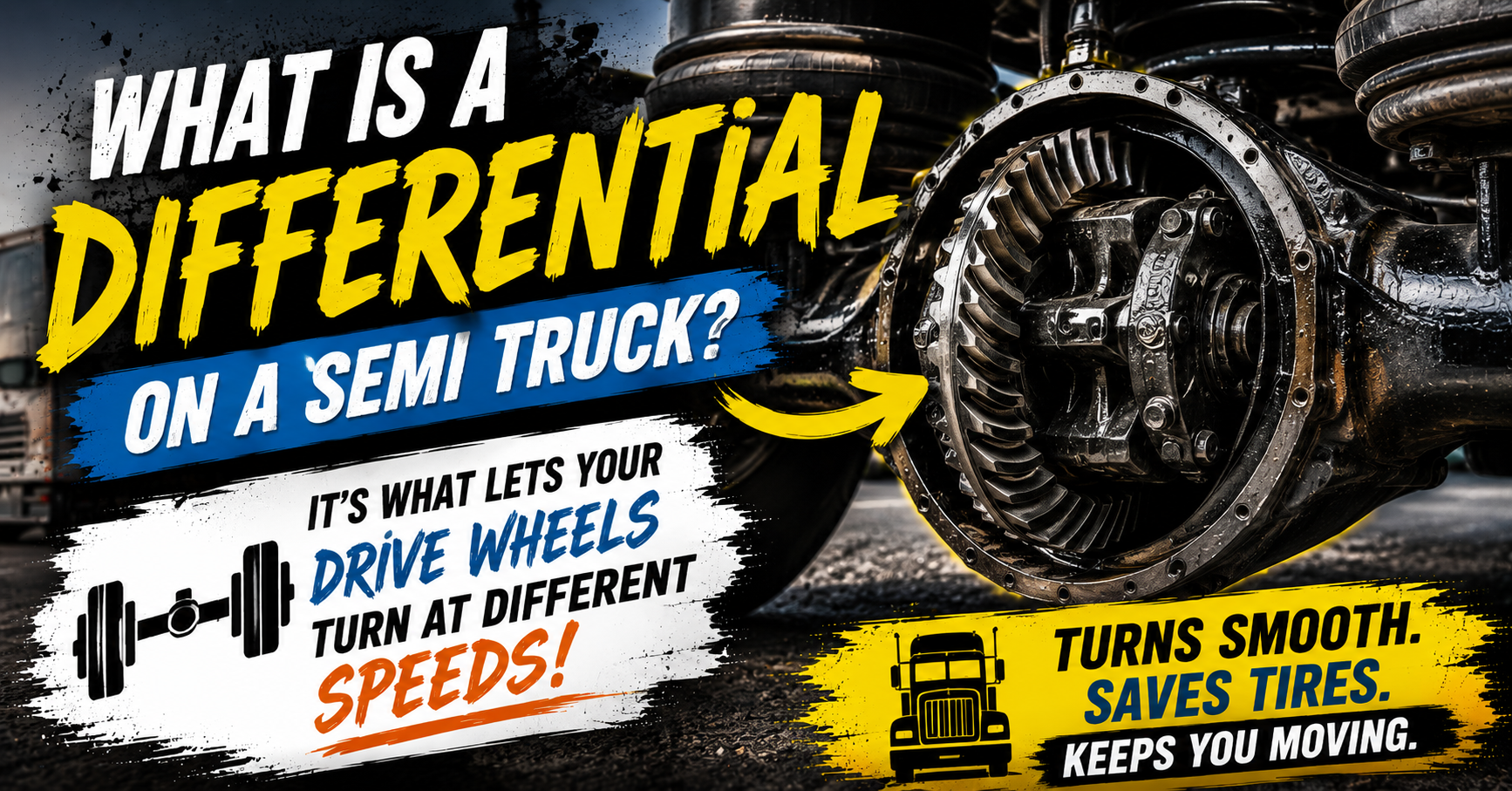
A differential is a gear assembly that transfers power from the driveshaft to the drive wheels while allowing the left and right wheels to rotate at different speeds during turns.
That may sound complicated, but the idea is actually pretty simple.
Whenever a truck goes around a corner, the outside tire has to travel farther than the inside tire.
Since one tire travels a longer distance, it also needs to rotate faster.
The differential makes that possible.
Without it, both wheels would try to spin at exactly the same speed, causing tire scrub, drivetrain stress, and poor handling.

Where Is the Differential Located?
On most highway tractors, you’ll find the differential mounted in the center of each drive axle.
If your truck has tandem drive axles, you’ll typically have a differential inside each axle housing.
The differential connects directly to the driveshaft and sends power outward to both axle shafts.
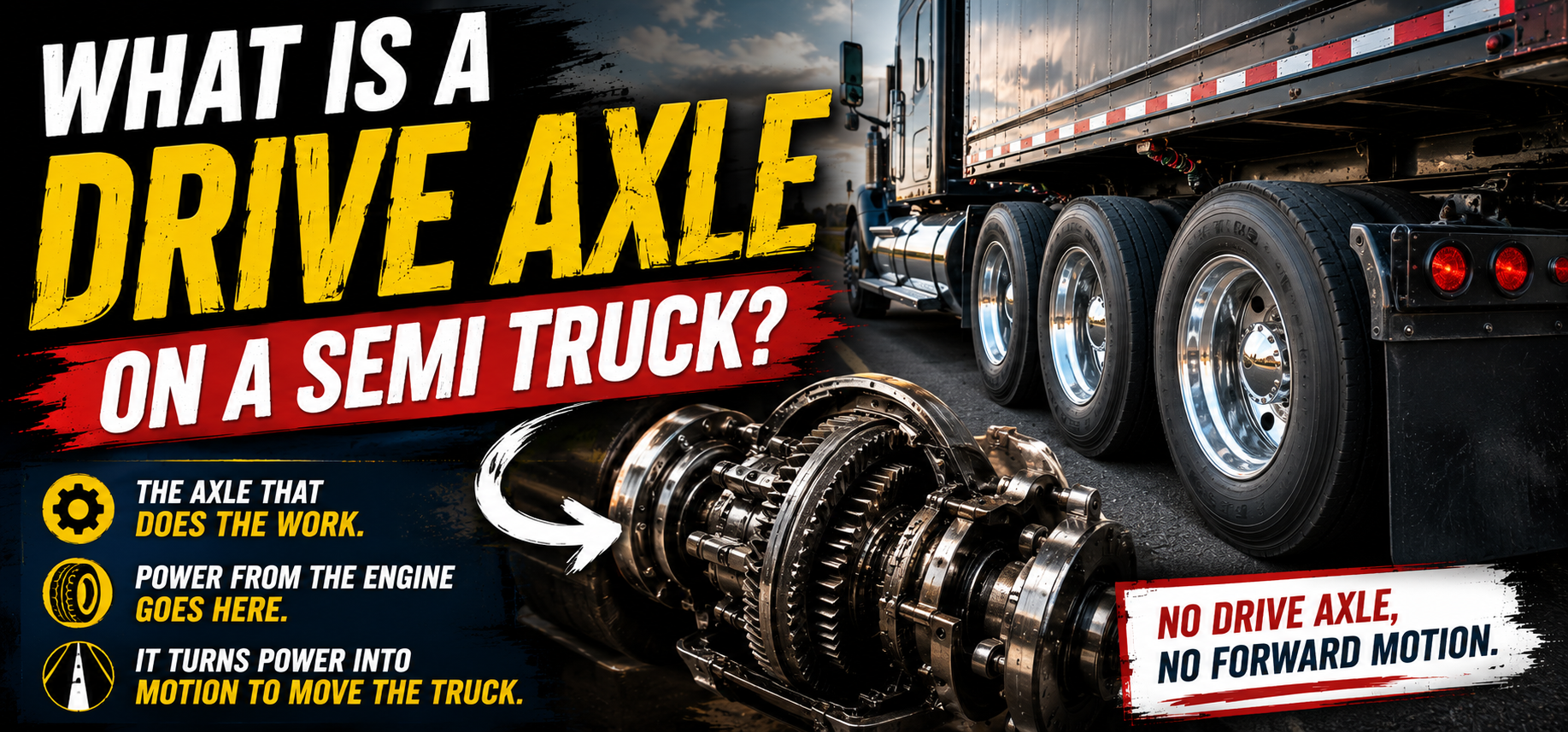
If you’re still learning the basic layout of a commercial truck, our guide explaining what a drive axle is on a semi truck helps show where the differential fits into the overall drivetrain.
How Does a Differential Work?
Engine power travels through several major components before reaching the pavement.
The path looks something like this:
- Engine
- Transmission
- Driveshaft
- Differential
- Axle shafts
- Drive wheels
Inside the differential are precision gears that split engine power between the left and right wheels.
When you’re driving straight, both wheels rotate at nearly the same speed.
When you enter a curve, the differential automatically allows the outside wheel to rotate faster than the inside wheel.
The driver doesn’t have to do anything.
The gears handle it automatically.
Why Is a Differential So Important?
I’ve driven trucks over millions of highway miles, and it’s easy to forget the differential is constantly working.
Every turn you make depends on it.
The differential helps:
- Deliver engine power to the drive wheels.
- Allow smooth turning.
- Reduce tire wear.
- Protect axle components.
- Improve handling.
- Reduce stress on the drivetrain.
Without it, trucks would be much harder to drive and significantly more expensive to maintain.

What Happens If a Differential Fails?
Fortunately, complete failures aren’t common when trucks are properly maintained.
However, worn differentials can cause noticeable problems.
Some warning signs include:
- Whining noises.
- Clunking sounds.
- Vibrations.
- Gear oil leaks.
- Uneven tire wear.
- Difficulty during turns.
I’ve learned over the years that unusual noises should never be ignored.
A small repair today is usually much cheaper than replacing an entire differential later.
Differential vs. Drive Axle
People often use these terms interchangeably, but they’re not the same thing.
The drive axle is the entire powered axle assembly.
The differential is one component located inside that axle.
Think of the differential as the heart of the drive axle.
It receives power from the driveshaft and distributes it to both wheels.
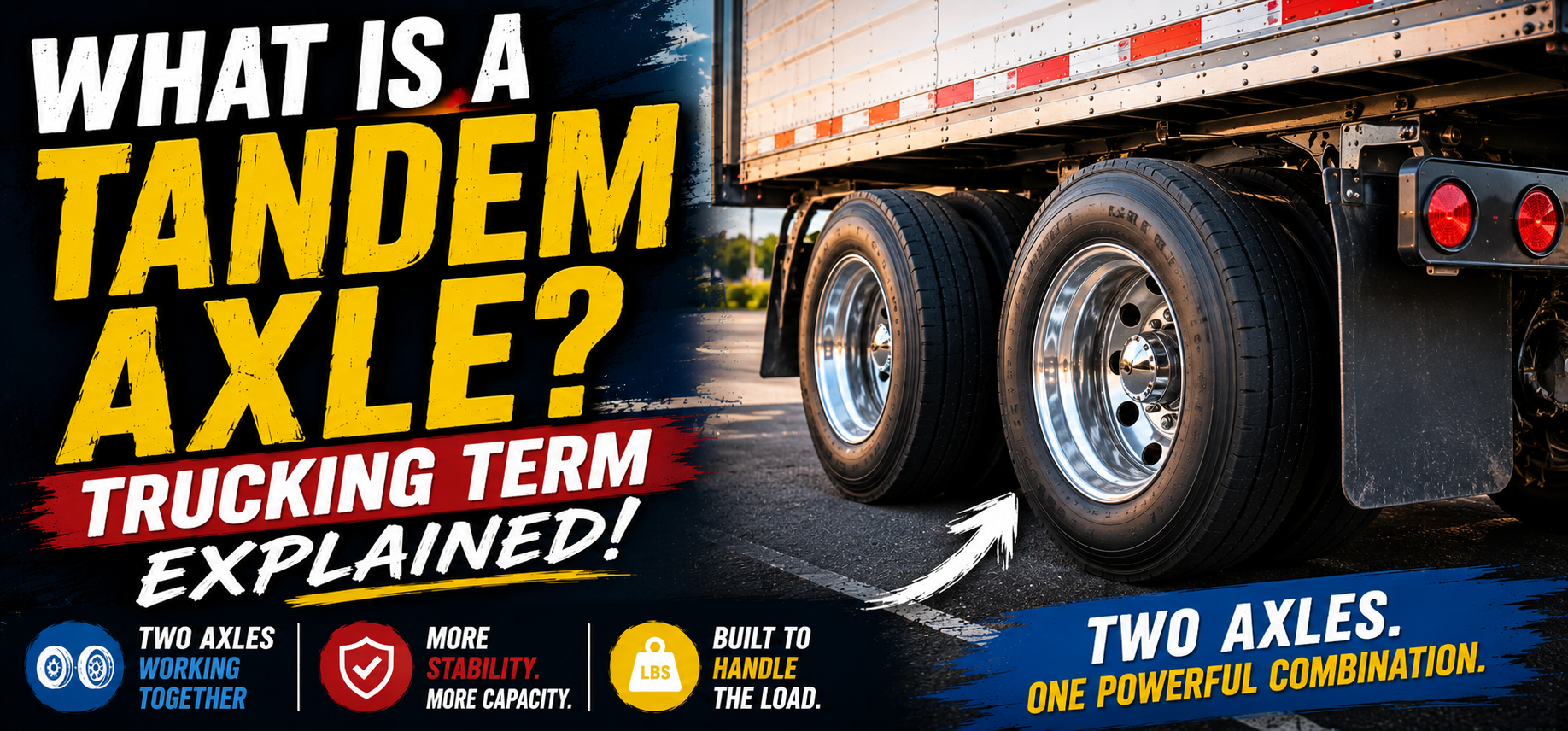
If you haven’t already, I recommend reading our guide on what a tandem axle is because understanding axle layouts makes the differential much easier to understand.
Do Semi Trucks Have More Than One Differential?
Many do.
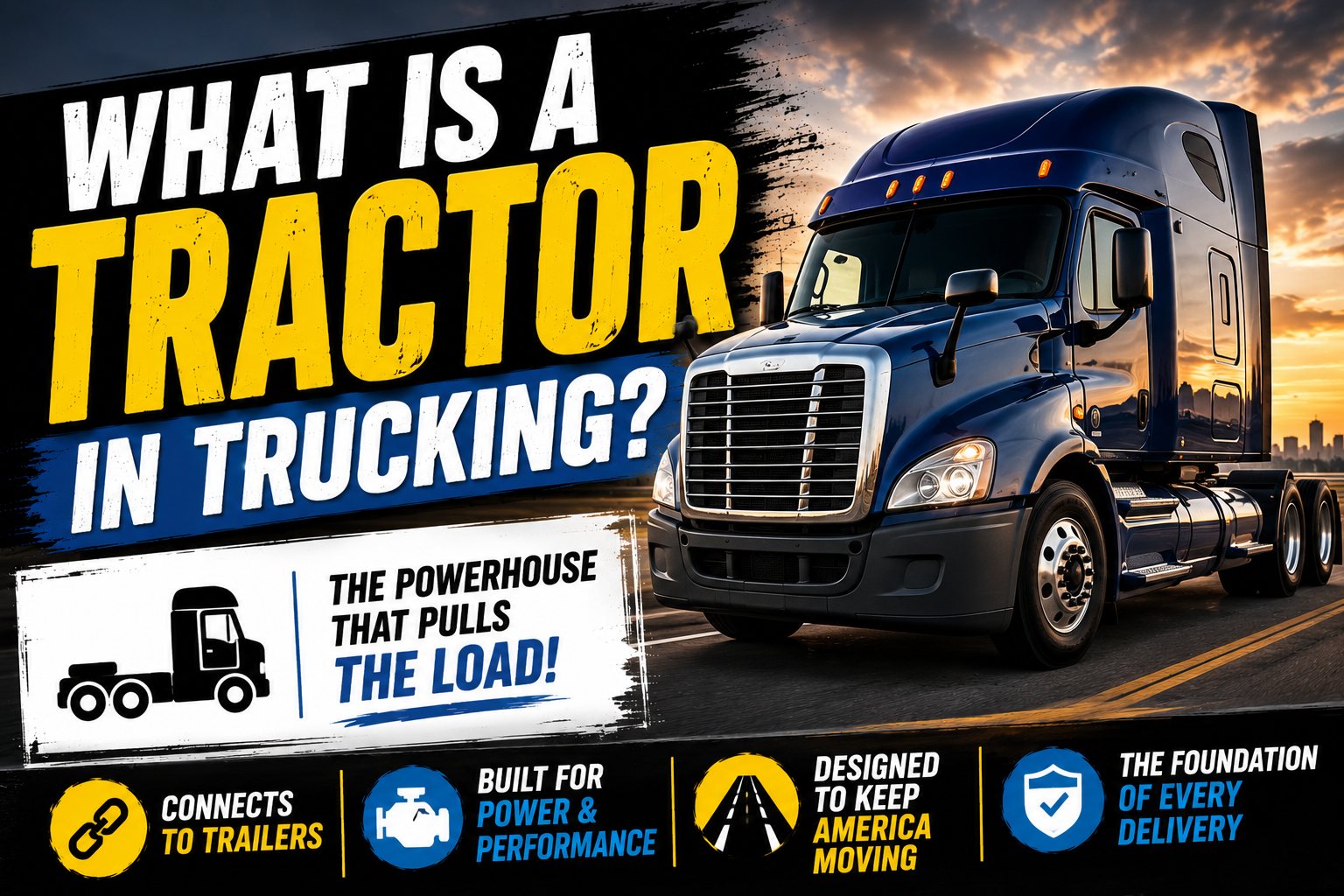
Most Class A highway tractors use tandem drive axles. A concise overview of highway tractor design helps explain where tandem drive axles fit within the complete powered unit.
That means there are usually two drive axles and a differential inside each one. Understanding bobtail tractor handling helps explain why removing the trailer can change traction and vehicle control.
Some heavy-haul trucks may have even more powered axles depending on their intended use.
The exact configuration depends on the truck and the type of work it’s performs.
Differential Maintenance
One thing I’ve always appreciated about experienced fleet mechanics is that they never wait for problems to become obvious.
Differentials require periodic maintenance, including checking the gear oil and inspecting for leaks. For hands-on maintenance work, a 247-piece DEWALT tool set may be useful when checking drivetrain components.
Ignoring maintenance can lead to excessive gear wear and very expensive repairs.
Routine inspections help catch problems before they leave you sitting on the shoulder waiting for a tow truck.

What Should You Check During a Pre-Trip Inspection?
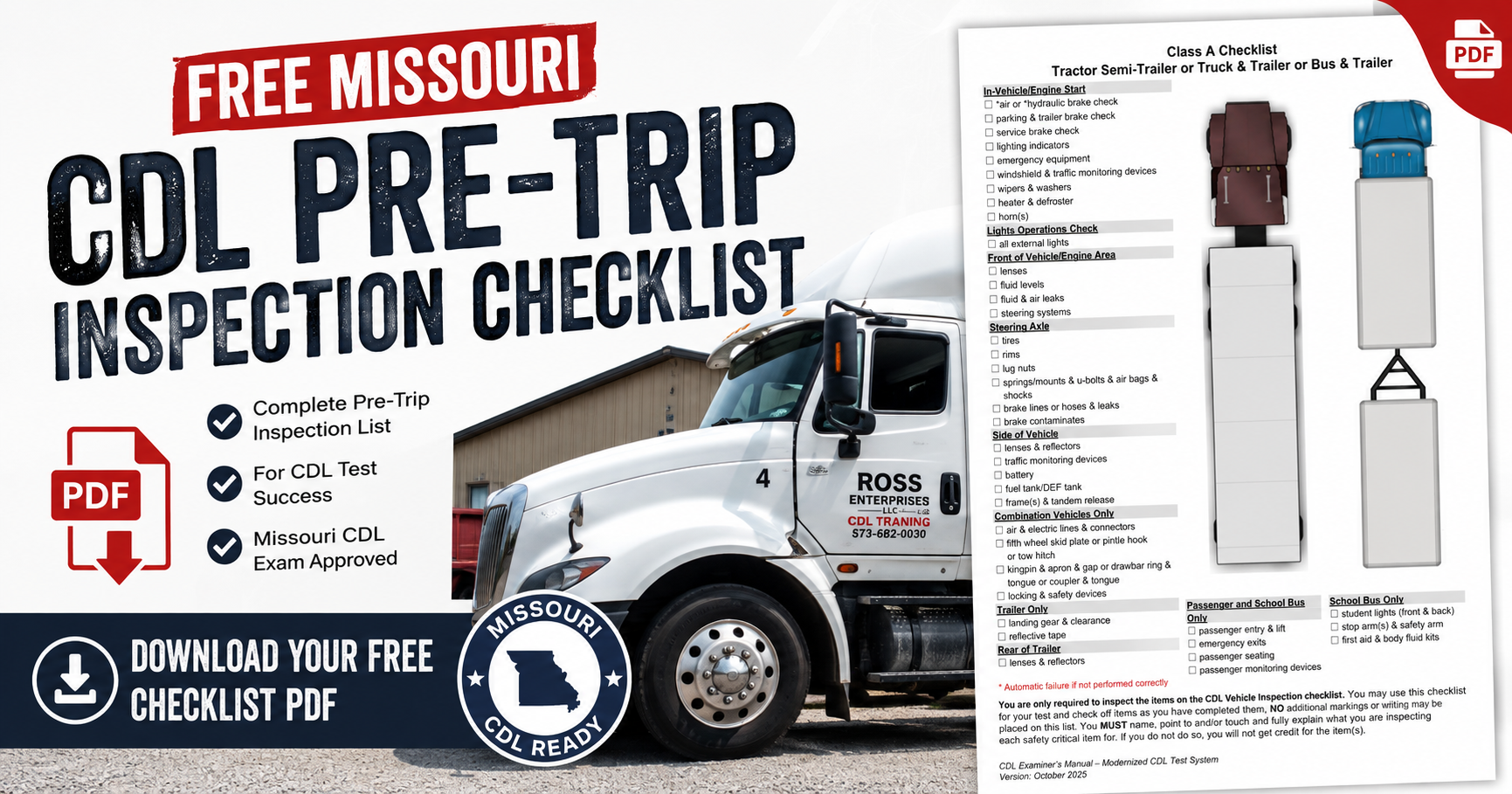
You won’t open the differential during your daily inspection, but you should still look for signs of trouble.
When inspecting the drive axle area, I always watch for:
- Gear oil leaks.
- Damaged axle housing.
- Loose hardware.
- Unusual noises.
- Fluid dripping around axle seals.
These quick visual checks only take a few moments but can reveal problems before they become major repairs.
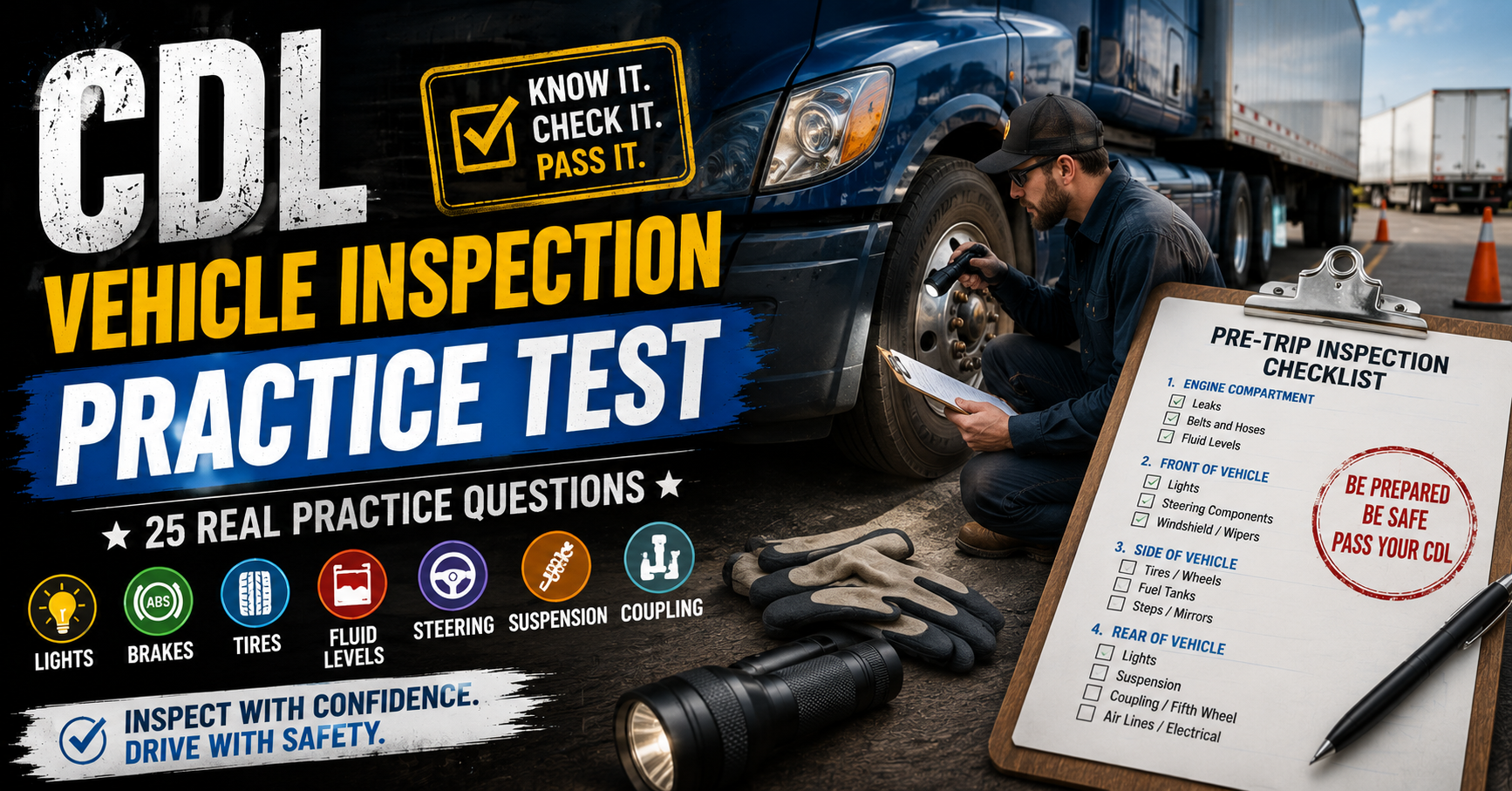
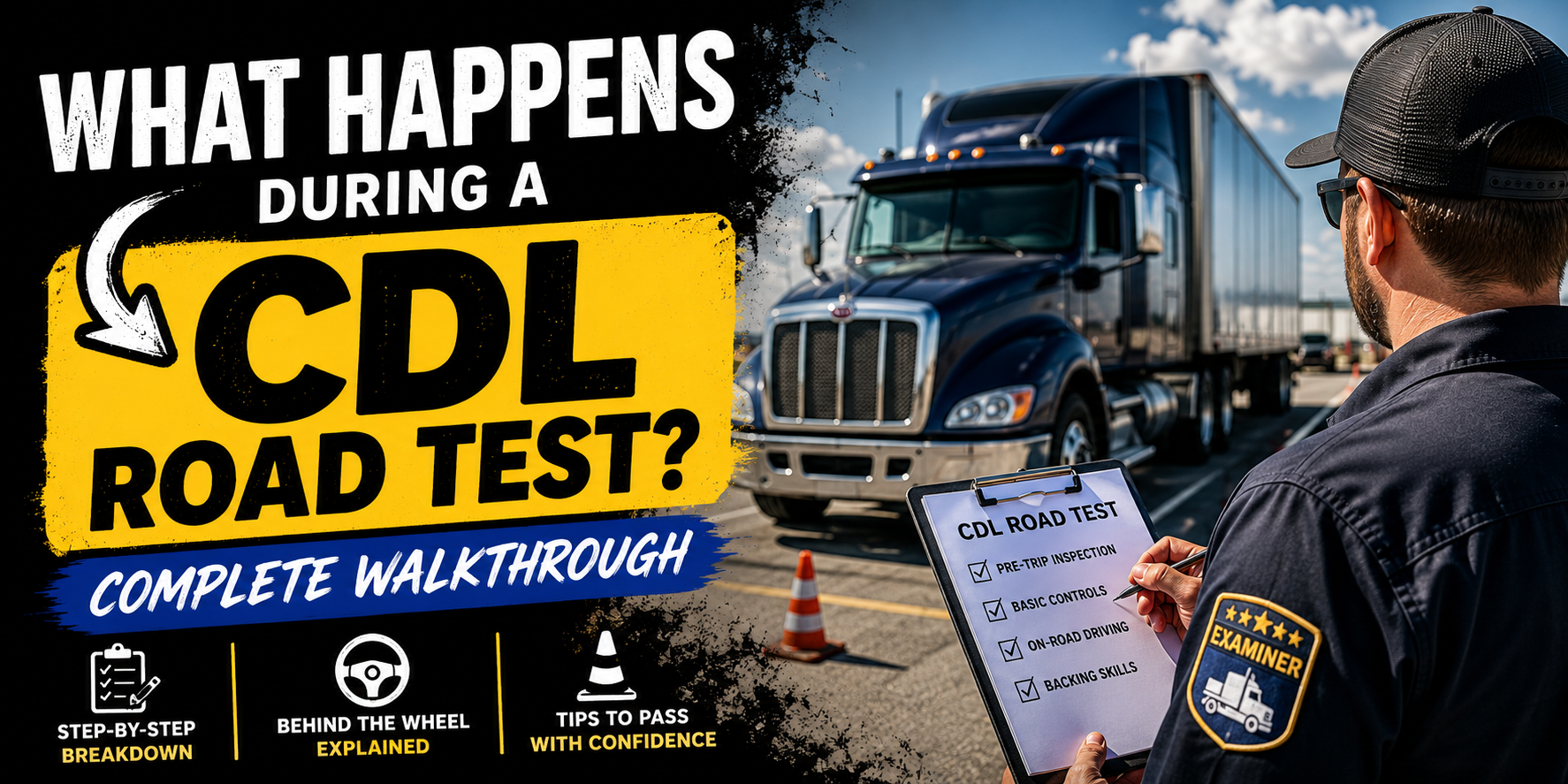
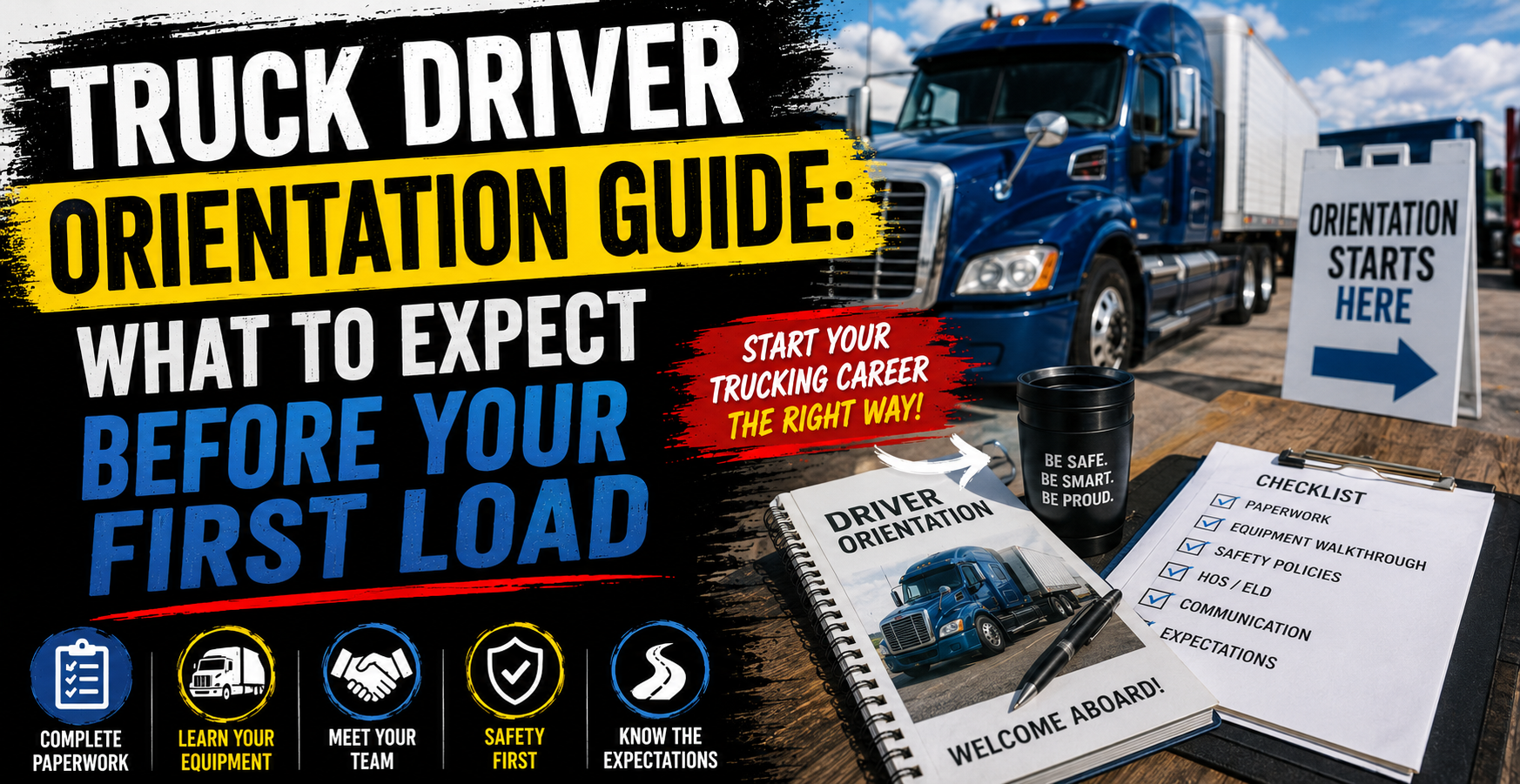
If you’re preparing for your CDL skills test, spend some time with our CDL Vehicle Inspection Practice Test to become more comfortable identifying major drivetrain components.
Common Misconceptions About Differentials
One misconception I hear from new drivers is that the differential somehow makes the truck more powerful.
It doesn’t create horsepower.
Its job is simply to deliver engine power efficiently while allowing both wheels to rotate at different speeds.
Another misunderstanding is thinking differentials only matter on slippery roads.
In reality, they’re working every single time the truck moves, even during a simple turn into a truck stop.
Will You Need to Know This for the CDL Exam?
You probably won’t be asked to explain the internal gears inside a differential.
However, understanding the drivetrain and being able to identify major truck components will absolutely help during CDL training and pre-trip inspections.
The better you understand how your truck works, the easier it becomes to identify potential problems before they become expensive repairs.
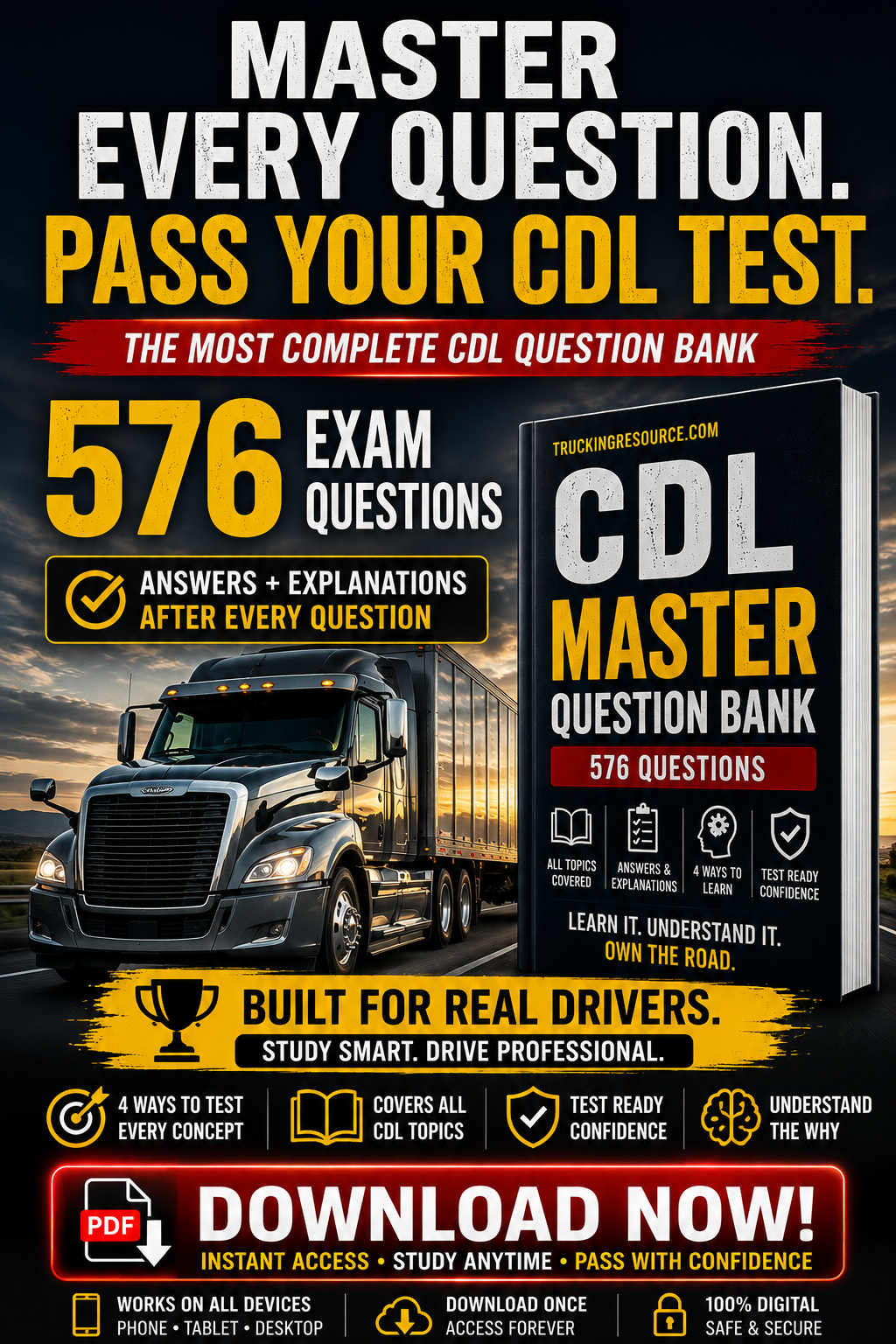
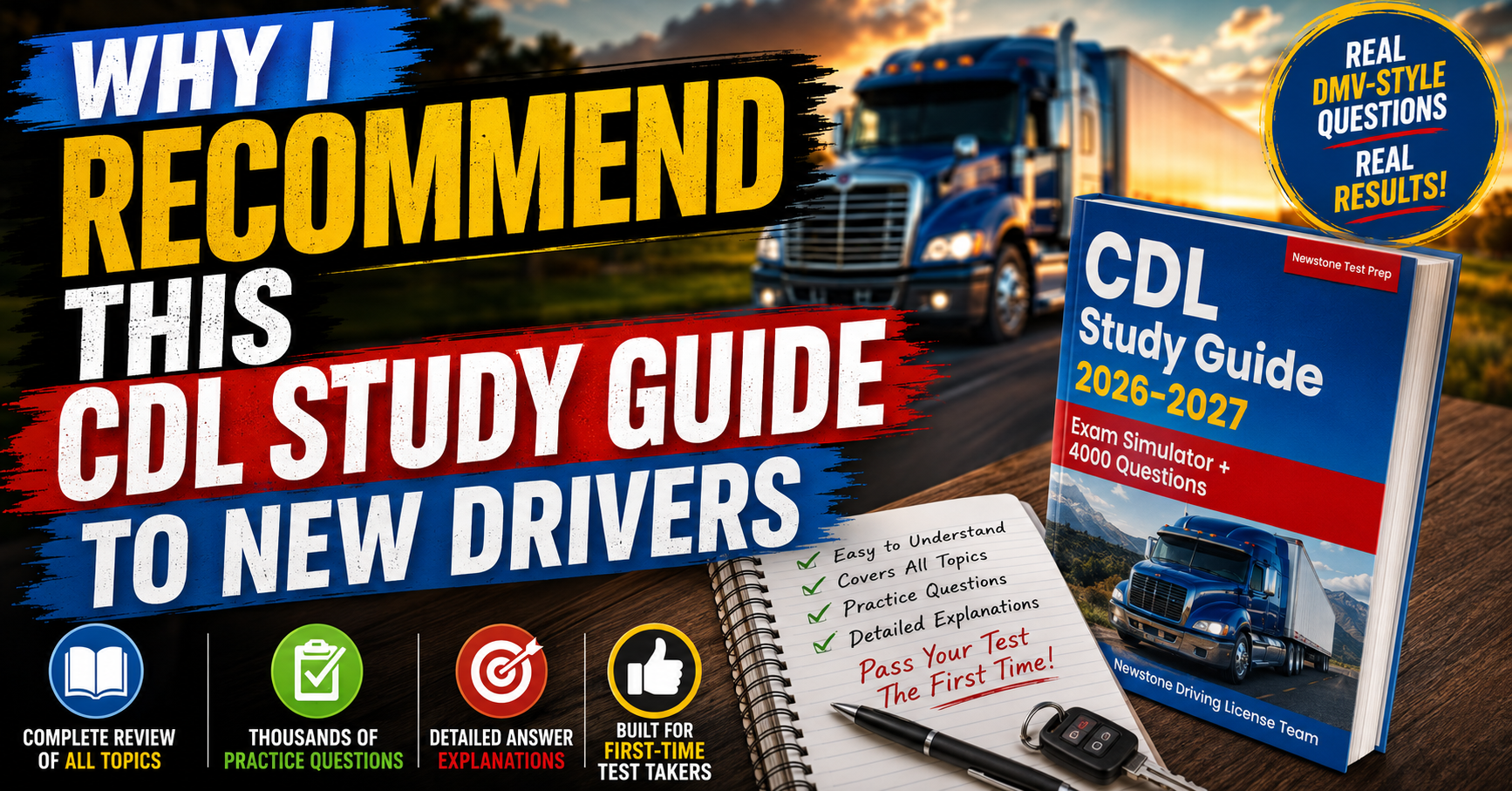
Our CDL Master Question Bank PDF is a great resource for reviewing hundreds of practice questions covering commercial vehicle systems, inspections, and CDL concepts before exam day.
One Tool That Makes Under-Truck Inspections Easier
Any time I’m looking underneath the drive axles or checking for leaks around the differential housing, I like having both hands free.
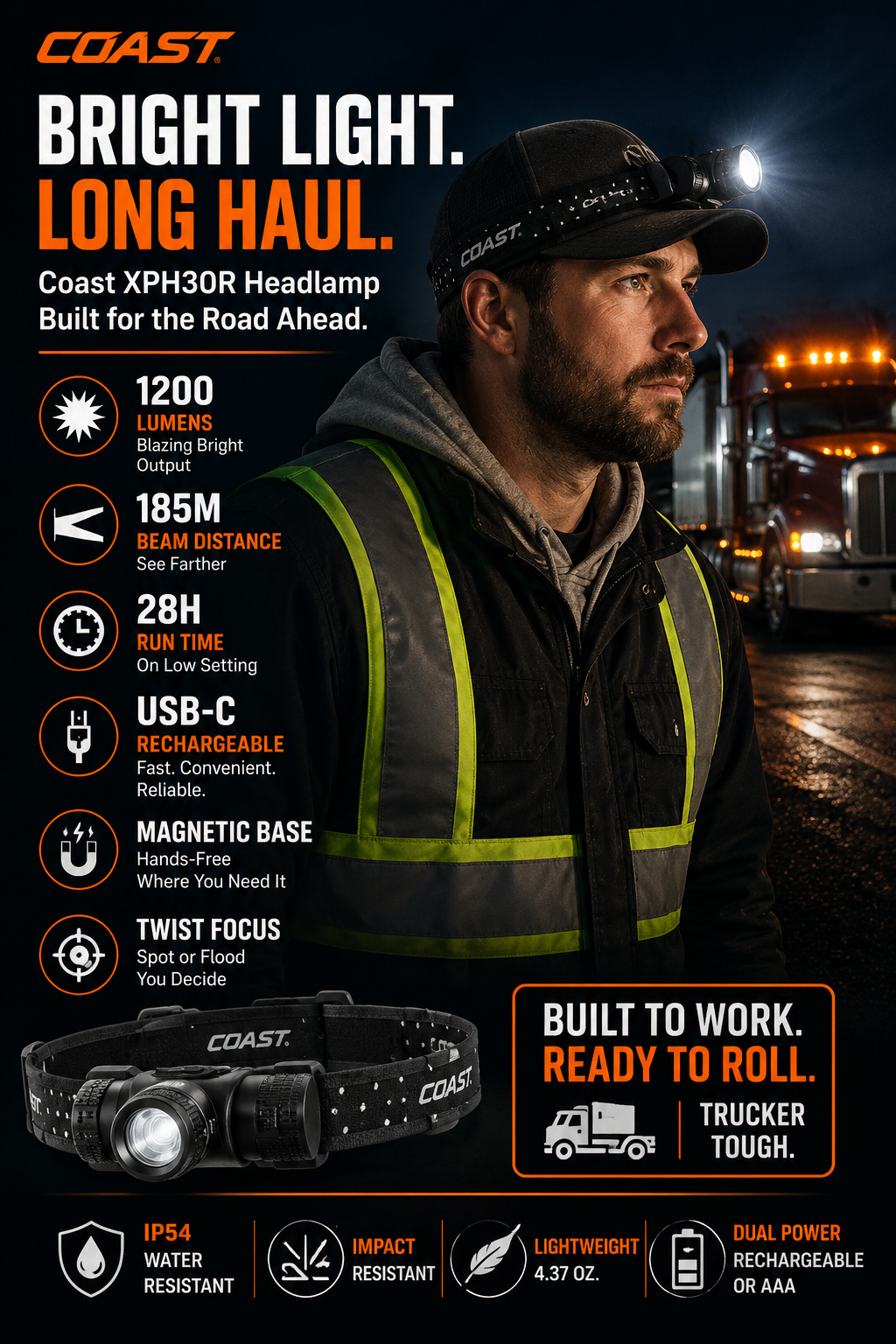
That’s why I always keep the Coast XPH30R USB-C Rechargeable Dual Power Headlamp in my truck. It’s one of those tools you don’t appreciate until you’re trying to inspect the underside of a truck before daylight.
My Advice After Years on the Road
The differential isn’t something most truck drivers think about every day.
That’s probably a good thing.
When it’s maintained properly, it quietly does its job mile after mile without drawing any attention.
But understanding what it does makes you a better driver.
It helps you recognize problems sooner, communicate better with mechanics, and appreciate how much engineering goes into every commercial truck.
Like so many parts of a semi, the differential isn’t flashy, but it’s absolutely essential to getting freight delivered safely across America.
Author: Kevin Lawson
Kevin Lawson spent more than 28 years operating commercial trucks and working alongside fleet maintenance technicians to keep equipment running safely. His experience hauling refrigerated freight, flatbeds, and heavy equipment has given him a deep appreciation for the drivetrain components that keep America’s trucks moving every day.