One of the first things I learned when hooking up a trailer was that there were three connections I absolutely couldn’t forget.
The fifth wheel.
The electrical pigtail.
And the air lines.
Miss one of them, and you’re not going anywhere.
I still remember an old driver telling me, “The lights help other people see you. The air lines help you stop.”
That stuck with me.
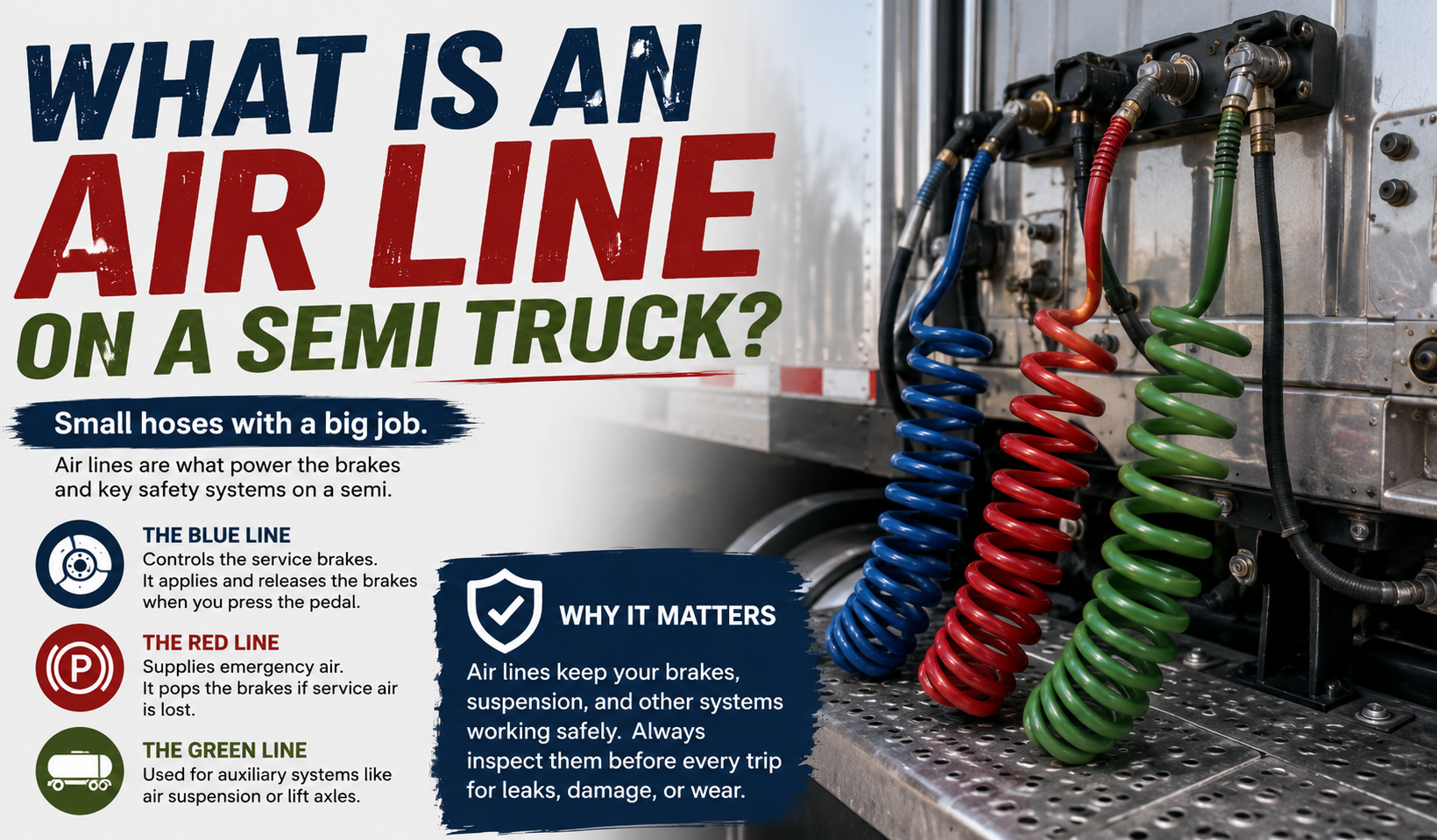
Air lines may look like nothing more than a pair of flexible hoses hanging behind the tractor, but they’re responsible for carrying compressed air that allows the trailer brakes to work. Without them, hauling a loaded trailer would be impossible.
What Is an Air Line?
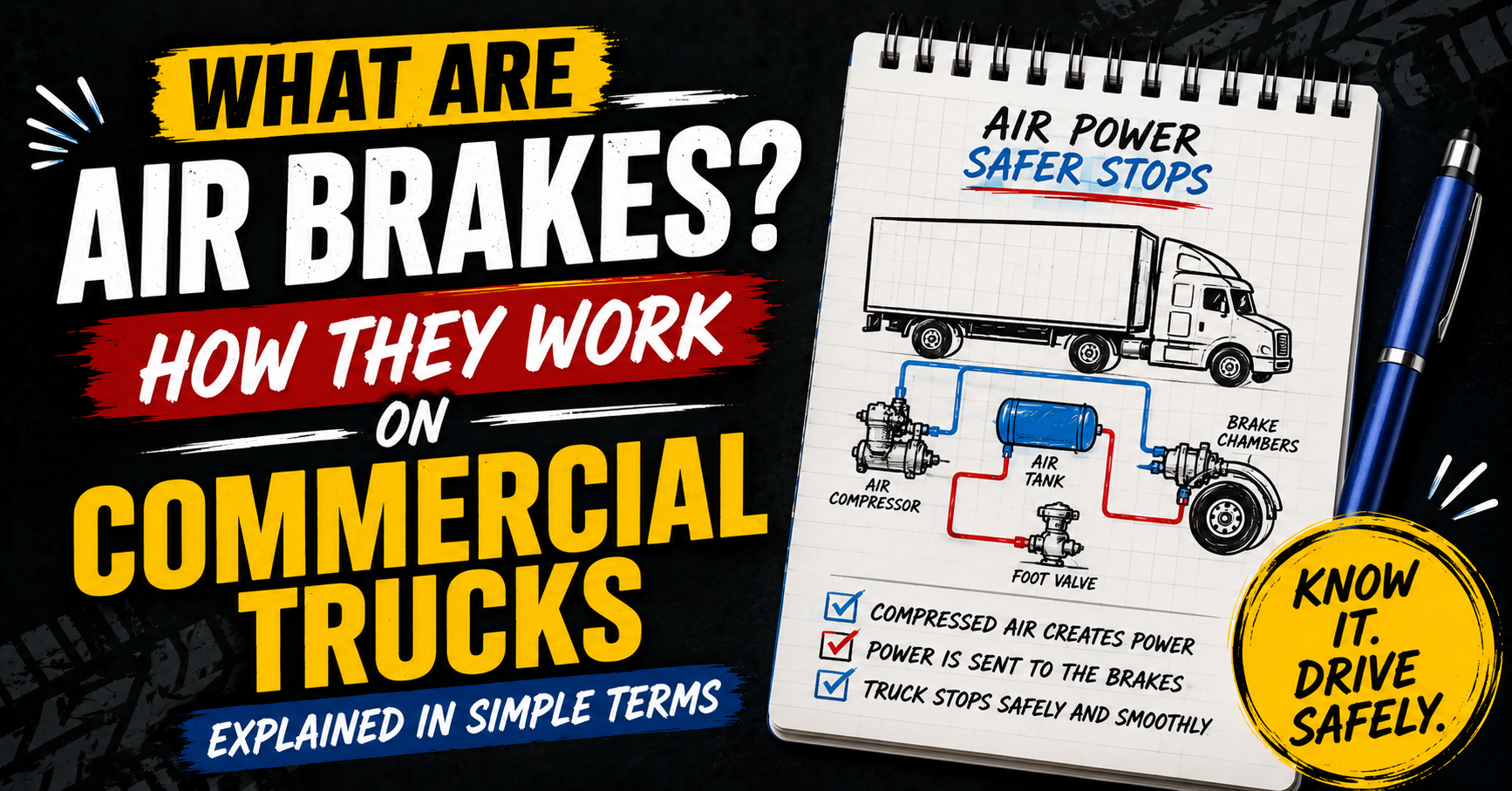
An air line is a heavy-duty hose that carries compressed air between the tractor and the trailer. These air lines allow the trailer’s air brake system to operate by supplying air pressure for both normal braking and the trailer’s emergency braking system. Understanding What Are Air Brakes? How They Work on Commercial Trucks makes it easier to see why these hoses are essential during every hookup.
Every combination vehicle that uses air brakes depends on these hoses every mile it travels.
Why Are There Two Air Lines?
One question I hear from new CDL students all the time is:
“Why are there two hoses instead of one?”
Each hose has a completely different job.
The Supply (Emergency) Air Line
The red air line is commonly called the supply line or emergency line.
Its primary job is to keep the trailer’s air tanks filled with compressed air and release the trailer’s spring brakes while you’re driving. If this line loses pressure, the trailer’s emergency brakes are designed to apply automatically.
The Service Air Line
The blue air line is called the service line.
Whenever you press the brake pedal, this line carries air pressure from the tractor to the trailer so the trailer brakes apply at the same time as the tractor brakes.
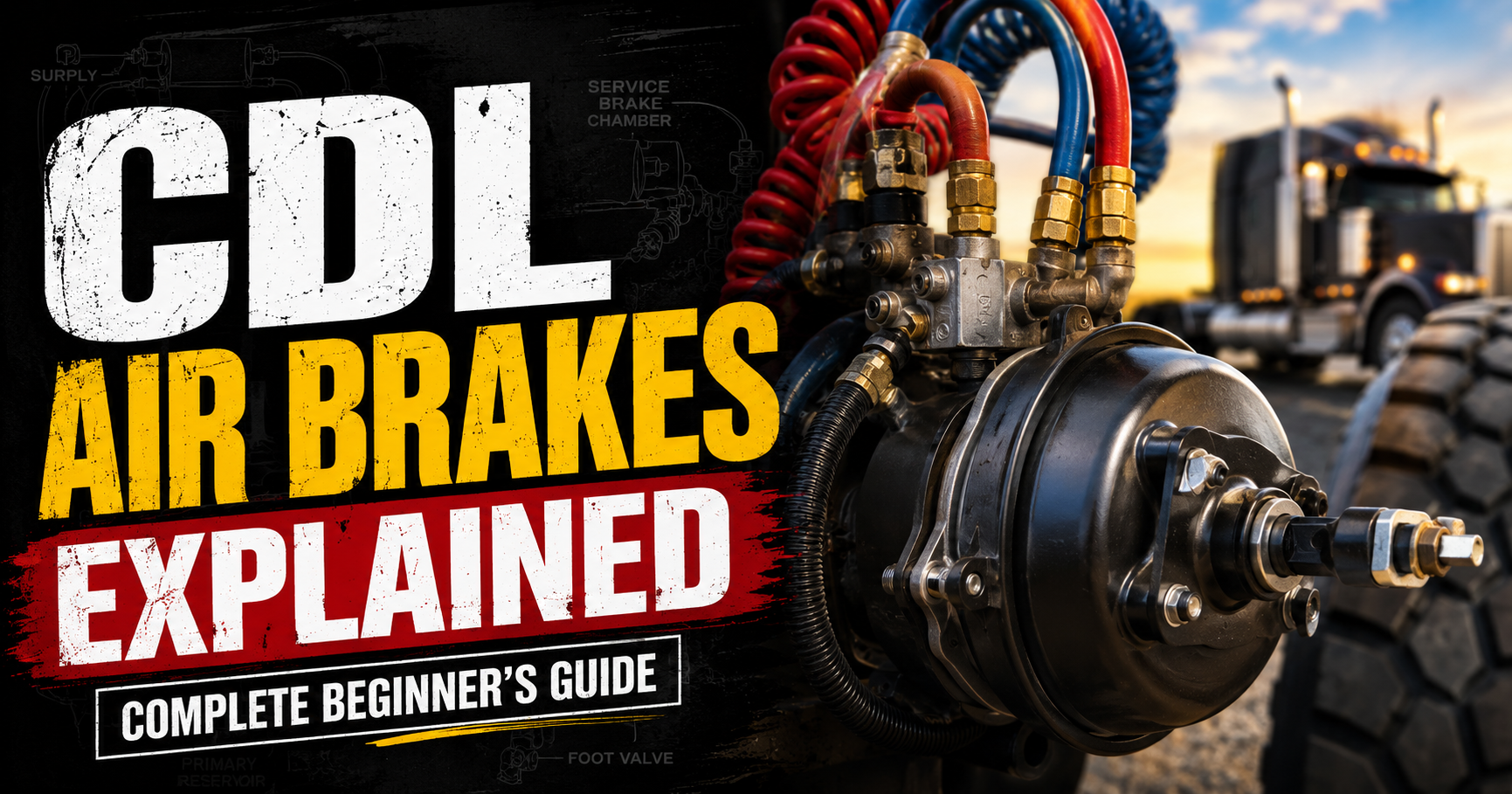
Together, these two hoses allow the entire combination vehicle to stop as one unit. The broader system behind these connections is covered in CDL Air Brakes Explained: Complete Beginner’s Guide, including how pressure supports braking and emergency operation.
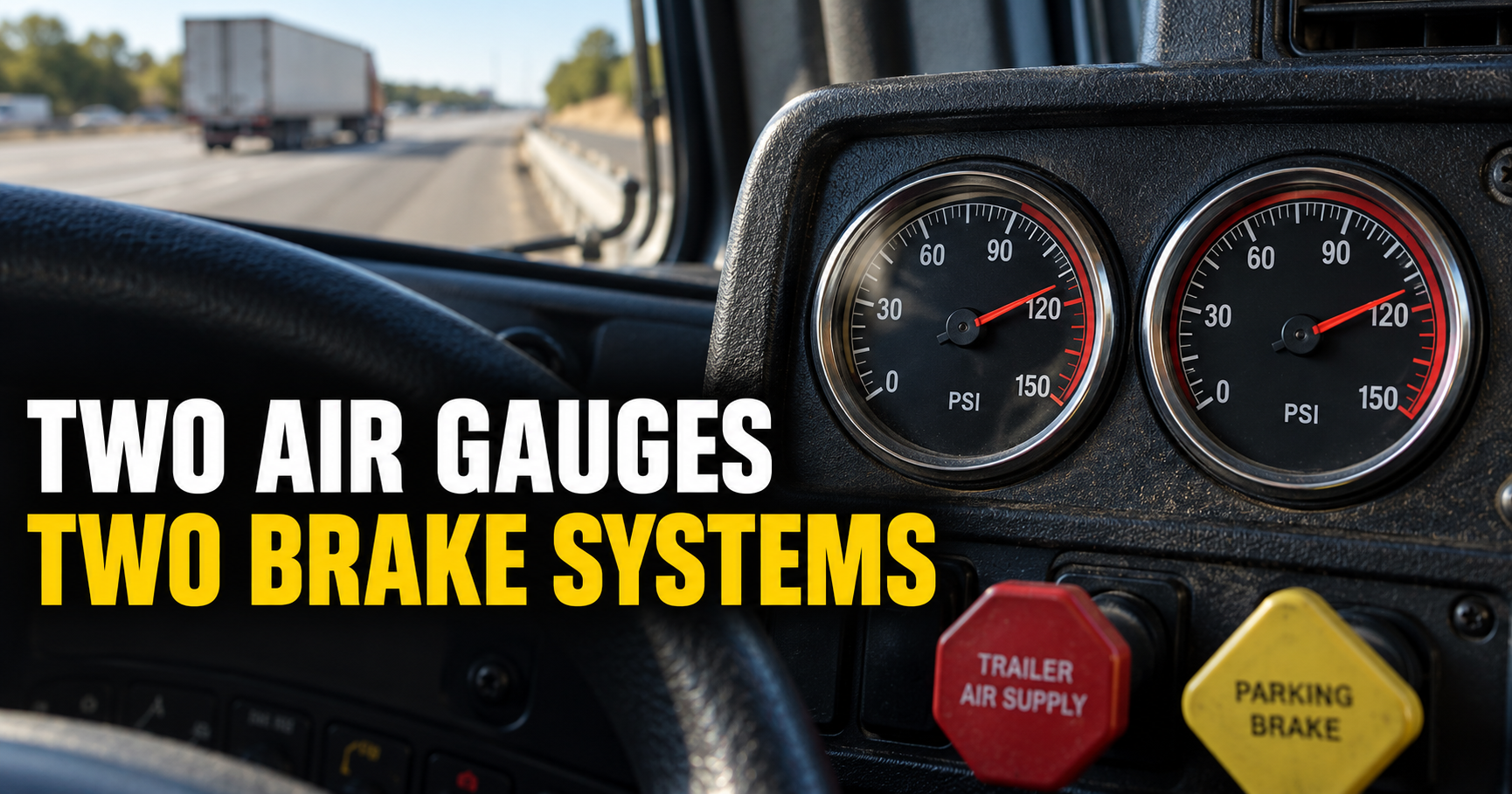
How Do Air Lines Work?
The process happens almost instantly.
Here’s what takes place every time you press the brake pedal.
- The truck’s air compressor builds air pressure.
- Air is stored inside the air tanks.
- You press the brake pedal.
- Air pressure travels through the blue service line.
- The trailer brake chambers receive that air.
- The trailer brakes apply.
Meanwhile, the red supply line continues keeping the trailer’s air reservoirs charged and the spring brakes released while you’re driving.
What Are Glad Hands?
The air lines don’t simply screw together.
Instead, they connect using special couplers called glad hands.
These connectors create an airtight seal while allowing trailers to be connected and disconnected quickly.
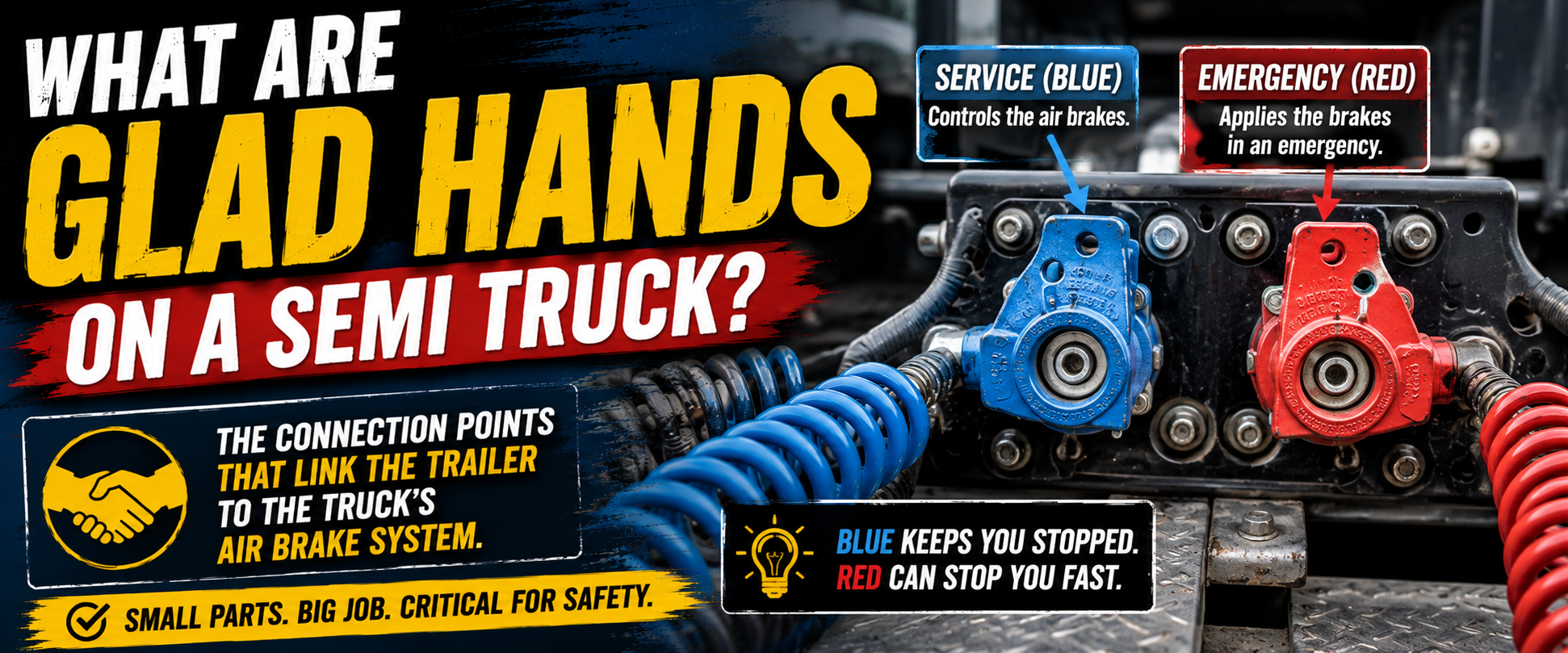
If you’d like to understand those connectors better, check out our guide on What Are Glad Hands on a Semi Truck?.
Understanding how the hoses and glad hands work together makes trailer hookups much easier.
Air Lines Are Only Part of the Coupling Process
Whenever I hook to a trailer, I mentally go through the same checklist.
First, I secure the trailer mechanically using the fifth wheel and kingpin.
Next, I connect the red and blue air lines.
Finally, I plug in the electrical cord, which many drivers simply call the pigtail.
Those three systems work together every time you pull a trailer.
If you’re still learning the complete coupling process, these articles are worth reading:
- Understanding the Fifth Wheel on a Semi Truck
- What Is a Kingpin on a Semi Truck?
- What Is a Pigtail on a Semi Truck?
Once you understand how these parts work together, trailer hookups become much less intimidating.
What Happens If an Air Line Fails?
Air brake systems are designed with safety in mind.
If the emergency supply line loses pressure because of a broken hose or trailer separation, the trailer’s spring brakes automatically apply to help prevent the trailer from rolling away uncontrolled.
That’s one of the biggest advantages of commercial air brake systems.
Instead of failing with no brakes at all, they’re designed to fail in the safest way possible.
Common Problems With Air Lines
Even though air lines are built for heavy-duty use, they’re still exposed to weather, vibration, dirt, and constant movement.
Some of the problems I’ve seen over the years include:
- Air leaks.
- Cracked hoses.
- Worn rubber.
- Damaged glad hands.
- Loose fittings.
- Chafing against the catwalk.
- Twisted or kinked hoses.
- Improper routing after coupling.
Fortunately, most of these issues are easy to spot during a careful pre-trip inspection.
How I Inspect My Air Lines
Every single time I hook up a trailer, I spend a few extra moments checking the air lines.
I’m looking for:
- Cracks.
- Dry rot.
- Air leaks.
- Proper glad hand seals.
- Secure connections.
- Enough slack during turns.
- No rubbing against sharp edges.
- No tangles with the electrical pigtail.
Once everything is connected, I perform a brake check before pulling away.
Those few extra minutes can prevent major problems later.
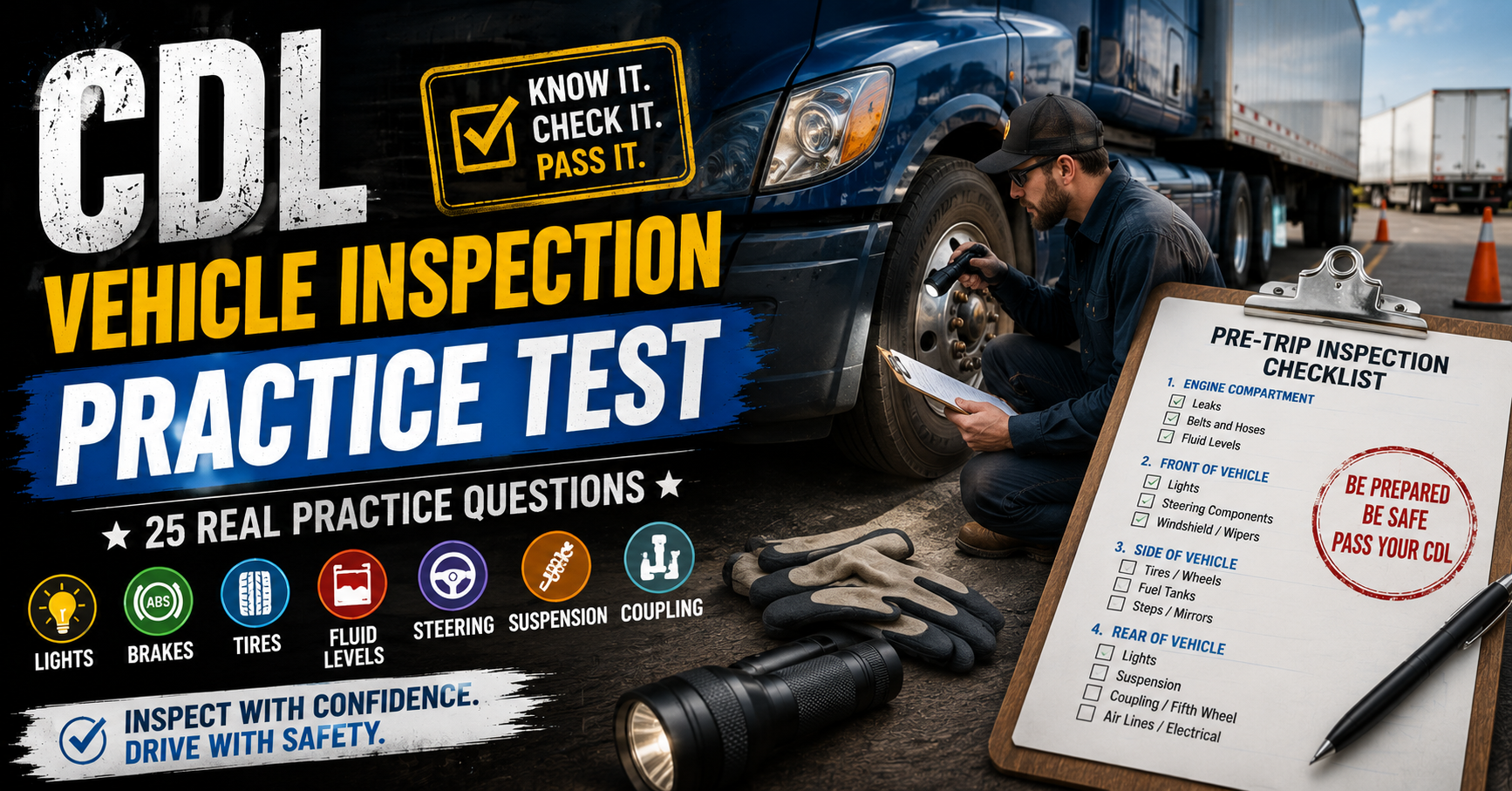
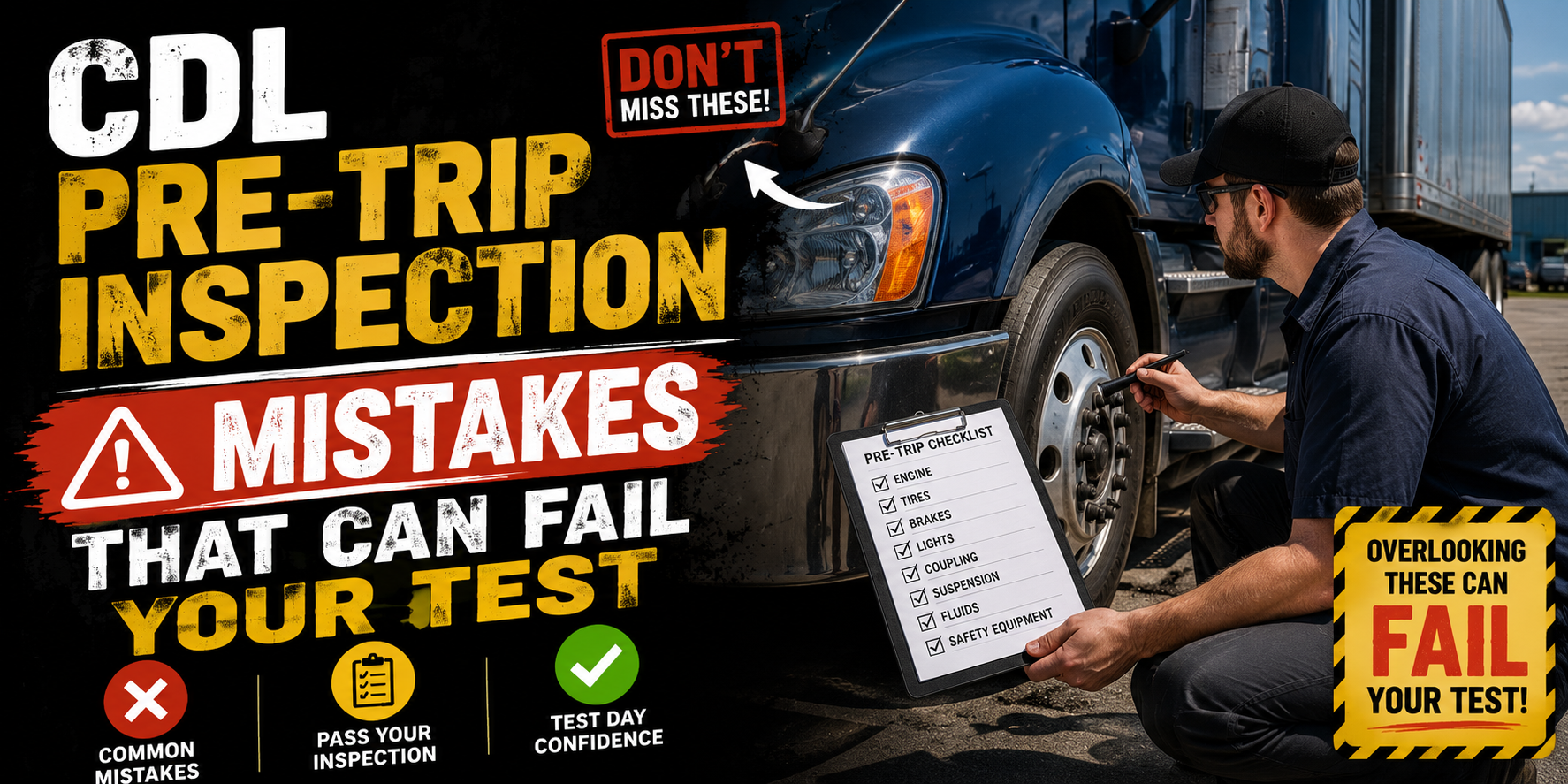
If you’re preparing for your CDL, our CDL Vehicle Inspection Practice Test walks through many of the inspection items you’ll be expected to identify during your skills exam.
Common Mistakes New Drivers Make
I’ve helped quite a few new drivers over the years, and I tend to see the same mistakes.
Some accidentally cross the service and emergency lines.
Others forget to inspect the rubber seals inside the glad hands.
I’ve also seen drivers leave the hoses hanging too low, allowing them to rub against the catwalk or even drag on the ground.
None of these mistakes are difficult to avoid once you develop a consistent routine.
Where You’ll Hear This Term
“Air lines” is one of those terms you’ll hear almost every day in trucking.
Mechanics talk about them.
CDL instructors teach them.
DOT inspectors examine them.
Drivers mention them every time they hook or unhook a trailer.
Learning this term early makes the rest of the air brake system much easier to understand.
Frequently Asked Questions
Can you drive with only one air line connected?
No.
Both the service line and the emergency supply line are required for the trailer brake system to function correctly.
Why are the air lines different colors?
The colors help drivers avoid connecting the wrong hose.
Red identifies the emergency (supply) line.
Blue identifies the service line.
Do air lines wear out?
Yes.
Like any rubber hose, air lines eventually wear from age, weather, vibration, and repeated use.
Routine inspections help catch problems before they become dangerous.
Will Air Lines Be Covered on the CDL Exam?
Absolutely.
You’ll almost certainly be expected to understand:
- The difference between the red and blue air lines.
- What each one does.
- How they’re connected.
- What to inspect during a pre-trip.
- Why damaged hoses should never be ignored.
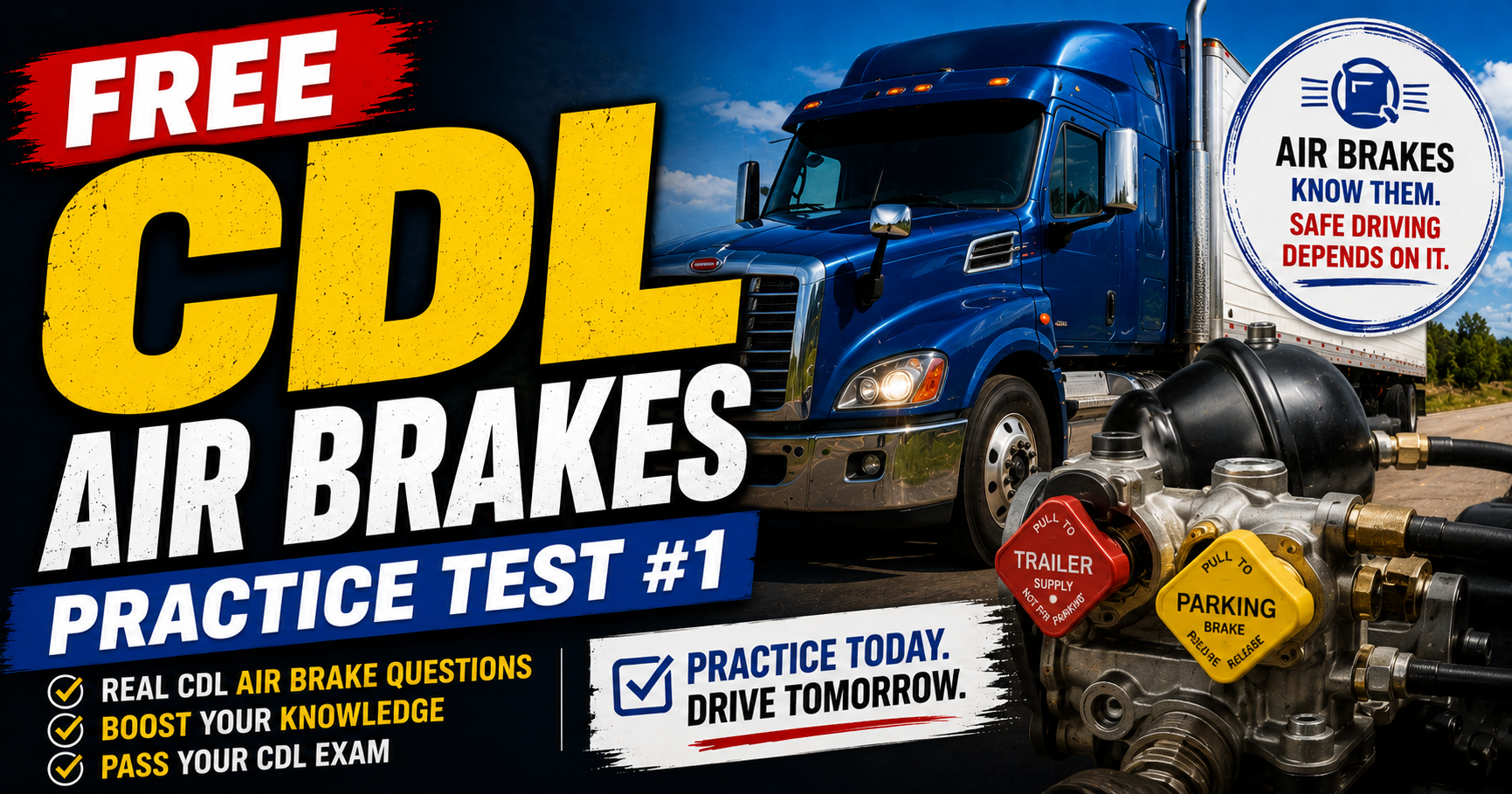
Our Free CDL Air Brakes Practice Test 1 and Free CDL Air Brakes Practice Test 2 are excellent resources for reinforcing these concepts before your written exam.
One Tool I Never Hook a Trailer Without
Many trailer hookups happen long before sunrise or after dark.
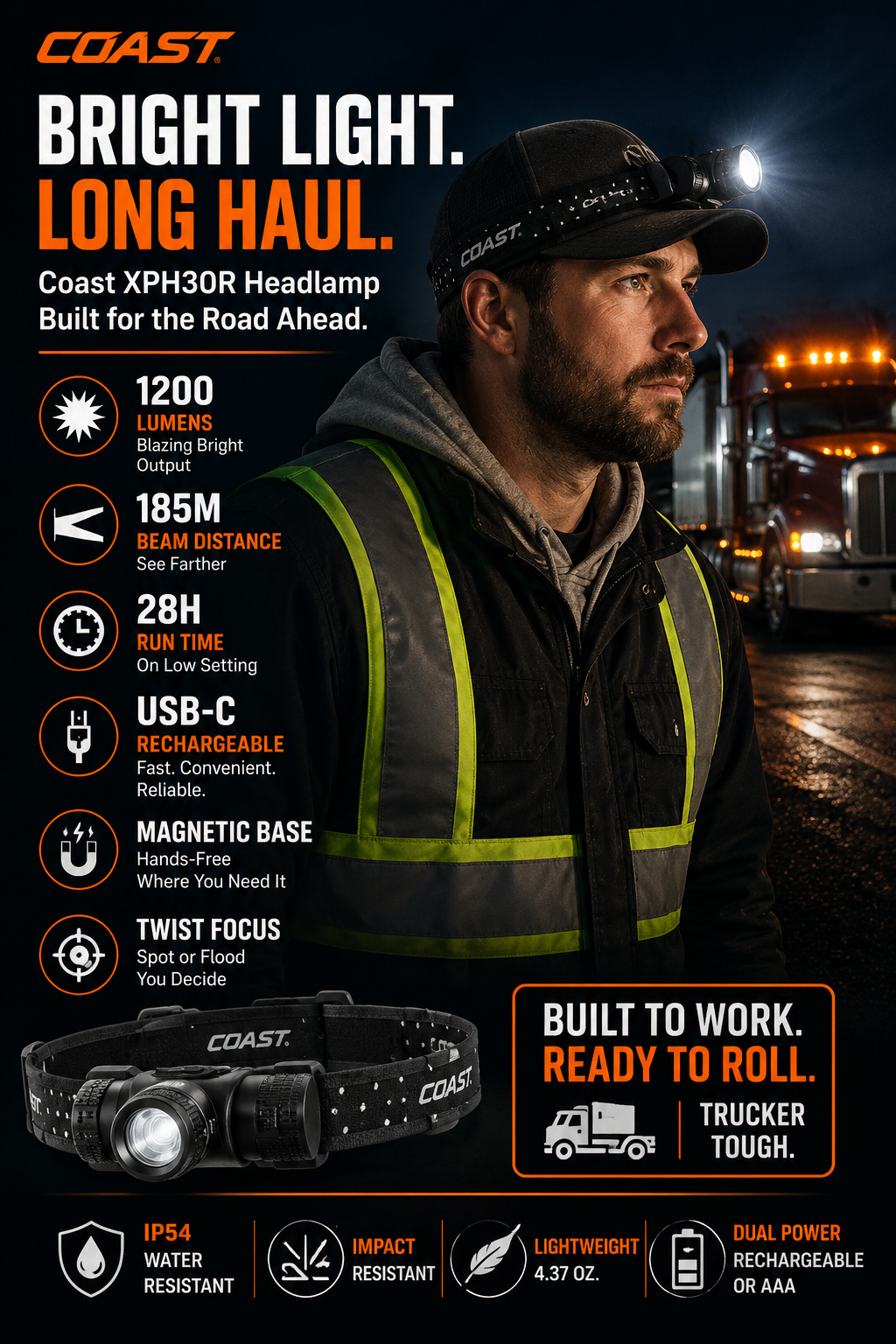
That’s one reason I always keep the Coast XPH30R USB-C Rechargeable Dual Power Headlamp in my truck.
Having both hands free makes it much easier to inspect air lines, glad hands, electrical connections, and the back of the tractor while making sure everything is connected correctly.
My Advice After Thousands of Trailer Hookups
I’ve connected and disconnected more trailers than I could ever count.
Even after all these years, my routine hasn’t changed.
I never assume the air lines are okay because they were yesterday.
I inspect them.
I listen for leaks.
I check the seals.
I make sure they’re routed correctly.
It’s one of those habits that only takes a minute, but it can prevent breakdowns, failed DOT inspections, and dangerous brake problems down the road.
In trucking, the smallest routines often become the biggest reasons you make it home safely.
Author: Mike Reynolds
Mike Reynolds has more than 25 years of experience hauling dry vans, refrigerated trailers, and flatbeds across the United States. Throughout his career, he has trained new CDL drivers on trailer coupling, air brake systems, and pre-trip inspections, believing that consistency and attention to detail are what build safe, professional drivers.