If I could only give one piece of advice to someone getting ready for their CDL permit test, it would be this:
Don’t try to memorize the answers.
Understand why they’re correct.
I’ve talked to plenty of people who failed their CDL permit test the first time because they spent hours memorizing practice questions instead of actually learning the material.
The CDL General Knowledge exam isn’t designed to trick you.
It’s designed to make sure you understand how to safely operate a commercial vehicle before you’re allowed behind the wheel.
Once you understand the concepts, the questions become much easier. These How to Pass Your CDL General Knowledge Test the First Time can help you turn that understanding into a first-time passing strategy.
That’s exactly what this guide is designed to help you do.
Instead of reading the CDL manual over and over, we’ll break the entire General Knowledge section into simple, easy-to-understand lessons that actually make sense.
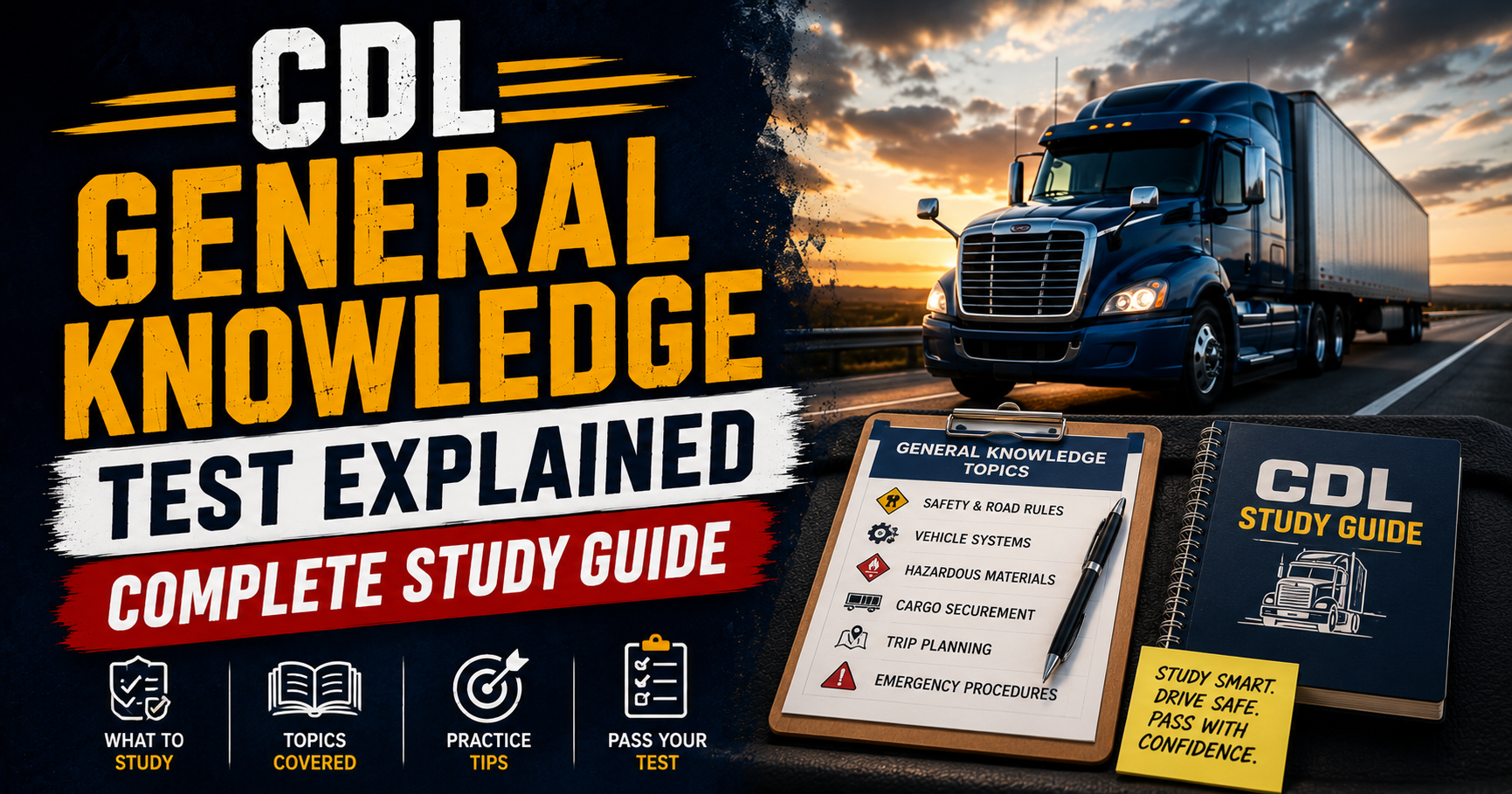
After reading this guide, I recommend testing yourself with our Free CDL General Knowledge Practice Test #1, Practice Test #2, Practice Test #3, and our challenging CDL General Knowledge Challenge Practice Test.
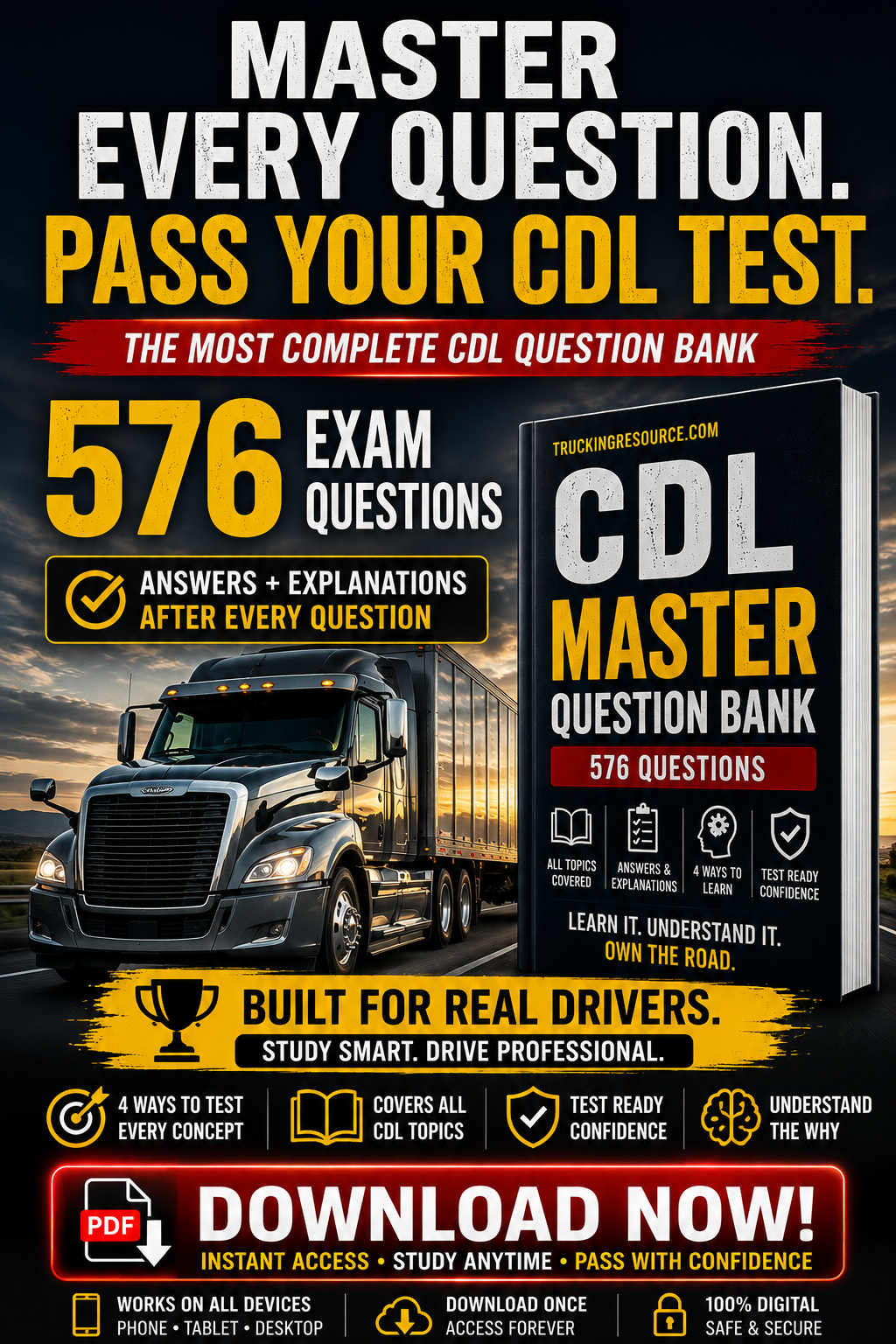
If you’re serious about passing the first time, our CDL Master Question Bank PDF and 21-Day CDL Permit Exam Mastery Workbook PDF give you hundreds of additional questions and a step-by-step study plan.
What Is the CDL General Knowledge Test?
The General Knowledge test is the foundation of your Commercial Driver’s License. Once you understand the exam's role, the step-by-step process in How to Get a CDL: Step-by-Step Guide for New Drivers can help you see where the test fits into earning your license.
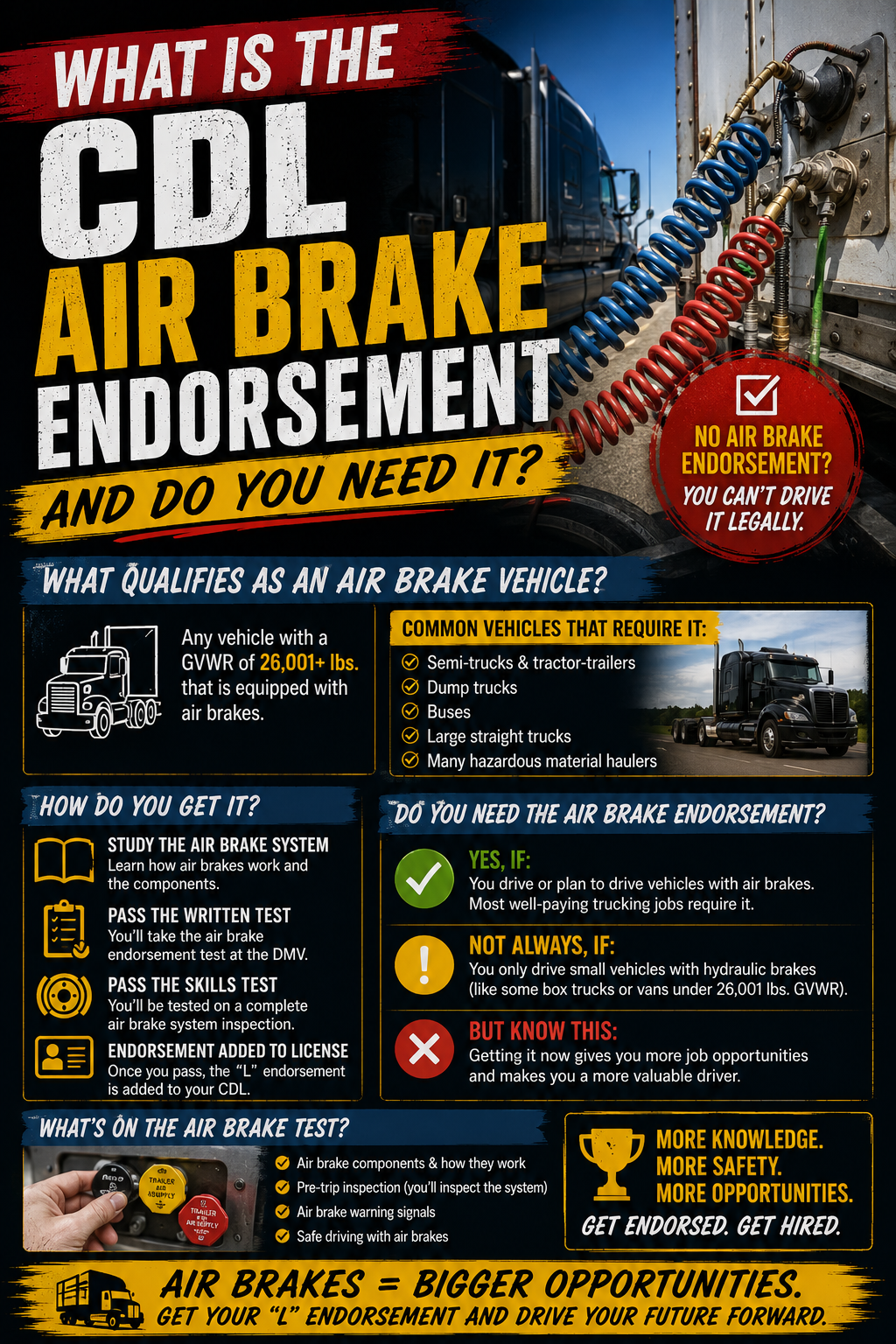
Before you worry about air brakes, combination vehicles, tanker endorsements, or hazardous materials, you must first prove that you understand the basic knowledge required to safely operate a commercial vehicle. Once the general foundation is in place, review the What Is the CDL Air Brake Endorsement and Do You Need It? before preparing for specialized air-brake questions.
Almost every future truck driver starts here.
The General Knowledge exam covers topics like:
- Vehicle inspection
- Basic vehicle control
- Safe driving
- Space management
- Speed management
- Night driving
- Mountain driving
- Emergency situations
- Railroad crossings
- Distracted driving
- Fatigue
- Vehicle systems
- Cargo awareness
- Accident prevention
Think of it as learning the language of trucking.
Everything else builds on this foundation.
Why the General Knowledge Test Is So Important
Many new students assume the hardest part of getting a CDL is learning to drive.
Honestly, I don’t think that’s true.
The hardest part is learning how professional drivers think.
Safe truck driving isn’t about having fast reflexes.
It’s about recognizing dangerous situations long before they become emergencies.
That’s exactly what the General Knowledge exam is testing.
Every question is really asking:
“Can this person safely share the road with everyone else?”
Once I started thinking about it that way, the questions made a lot more sense.
How Many Questions Are on the General Knowledge Test?
The exact number varies slightly by state, but most states use 50 multiple-choice questions, and you’ll generally need a score of 80% or higher to pass.
That means missing too many questions can quickly turn into a failed exam.
The good news is that the questions cover the same core concepts found in every CDL manual.
That’s why practicing is so important.
Our 125-Question CDL Permit Test Simulator is one of the closest ways to experience the length and feel of the real permit exam before test day.
The Biggest Mistake I See CDL Students Make
Almost everyone starts studying the wrong way.
They open the CDL manual.
Read ten pages.
Immediately jump into practice tests.
Memorize the answers.
Then they wonder why they keep getting different questions wrong.
The better approach is simple.
Learn the concept first.
Then answer questions about it.
You’ll remember the information much longer, and you’ll perform better during your road training too.

Understanding the Different Sections of the General Knowledge Test
One thing that surprises a lot of new CDL students is just how much material the General Knowledge test covers.
It isn’t one single topic.
Instead, it’s a collection of skills and knowledge that every professional truck driver uses every day.
Once you break it into smaller sections, it becomes much easier to study.
Instead of trying to memorize an entire CDL manual, you can focus on one subject at a time.
That’s exactly how I recommend preparing.
Vehicle Inspection
If there’s one subject I encourage every student to spend extra time on, it’s vehicle inspections.
A proper pre-trip inspection isn’t just something you’ll do during your CDL skills test.
It’s something you’ll perform before every trip throughout your driving career.
A good inspection helps you identify problems before they become dangerous or expensive.
You’ll learn how to inspect:
- Tires
- Wheels
- Suspension
- Steering
- Lights
- Brakes
- Air lines
- Coupling devices
- Windshield
- Mirrors
- Emergency equipment
Many General Knowledge questions come directly from inspection procedures, which is why it’s one of the first topics I recommend studying.
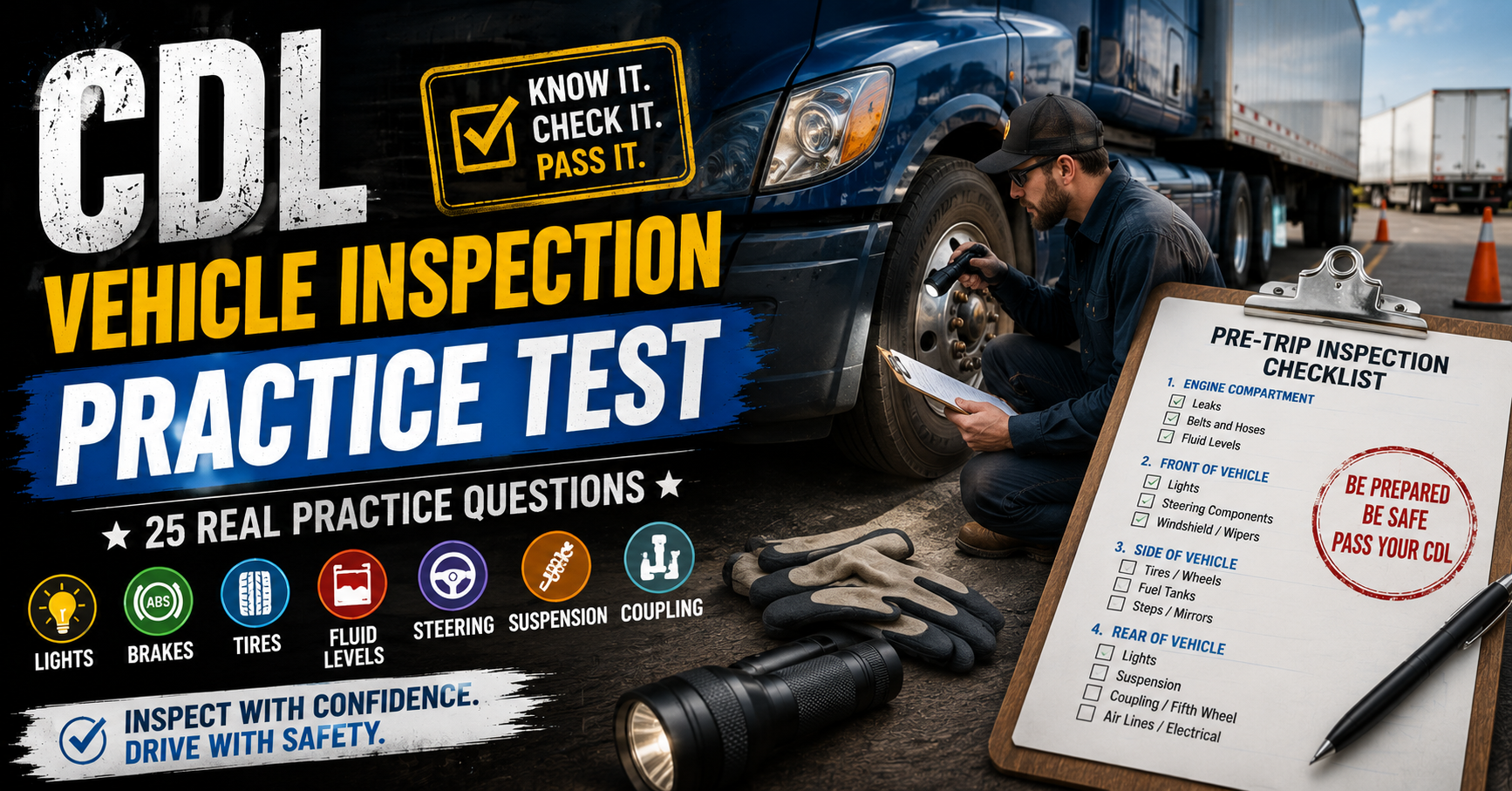
Our CDL Vehicle Inspection Practice Test is a great way to practice identifying vehicle components before taking your permit exam.
Basic Vehicle Control
Driving a commercial vehicle requires much more planning than driving a passenger car.
Everything happens a little differently.
The truck is:
- Longer.
- Heavier.
- Wider.
- Slower to accelerate.
- Slower to stop.
Because of that, professional drivers constantly think ahead.
You’ll learn how to:
- Steer smoothly.
- Control speed.
- Position your vehicle.
- Back safely.
- Make wide turns.
- Handle large intersections.
These skills become the foundation for everything else you’ll learn during CDL school.
Seeing Hazards Before They Become Problems
One habit separates experienced truck drivers from everyone else.
They’re constantly scanning.
Instead of staring directly in front of the truck, they’re watching traffic hundreds of feet ahead while checking mirrors every few seconds.
That gives them time to react calmly instead of making sudden steering or braking movements.
Good drivers don’t simply react to hazards.
They spot them early enough that they rarely become emergencies.
Space Management
One of the biggest differences between professional drivers and everyday motorists is how they manage space.
Commercial vehicles simply need more room.
More room to stop.
More room to turn.
More room to merge.
More room to change lanes.
When I drive, I’m constantly thinking about creating space around my truck.
That means maintaining a safe following distance, avoiding unnecessary lane changes, and leaving myself an escape route whenever possible.
The more space you have, the more options you have.
Speed Management
Speed affects almost everything.
It changes:
- Stopping distance.
- Turning ability.
- Fuel economy.
- Tire wear.
- Vehicle stability.
Driving even five or ten miles per hour faster than conditions allow can dramatically increase the distance required to stop a fully loaded tractor-trailer.
Professional drivers adjust their speed for:
- Traffic.
- Rain.
- Snow.
- Ice.
- Curves.
- Construction zones.
- Heavy winds.
Driving safely isn’t about driving fast.
It’s about driving at the right speed for the conditions.
Following Distance
This topic appears throughout the CDL manual because it’s one of the easiest ways to prevent crashes.
Following too closely removes your ability to react gradually.
Instead of braking smoothly, you’re forced into panic braking.
I always remind new drivers that following distance isn’t wasted space.
It’s your emergency cushion.
The more room you leave, the more time you have to make good decisions.
Mirror Usage
Your mirrors become your second set of eyes.
Unlike passenger cars, commercial trucks have significant blind spots.
That’s why experienced drivers develop a habit of checking their mirrors every few seconds.
During your CDL training, you’ll learn to monitor:
- Traffic beside the truck.
- Traffic behind the trailer.
- Tire condition.
- Trailer tracking.
- Lane position.
Good mirror habits become automatic with practice.
Safe Lane Changes
Changing lanes in a commercial vehicle requires patience.
Instead of darting into the next lane, professional drivers:
- Check mirrors.
- Signal early.
- Check mirrors again.
- Begin a gradual lane change.
- Continue monitoring mirrors until fully established in the new lane.
The trailer always deserves as much attention as the tractor.
Turning a Commercial Vehicle
Turns are another area where new drivers often struggle.
Remember:
The trailer doesn’t follow the tractor.
It cuts the corner.
That’s why you’ll learn about:
- Wide turns.
- Off-tracking.
- Trailer swing.
- Proper lane positioning.
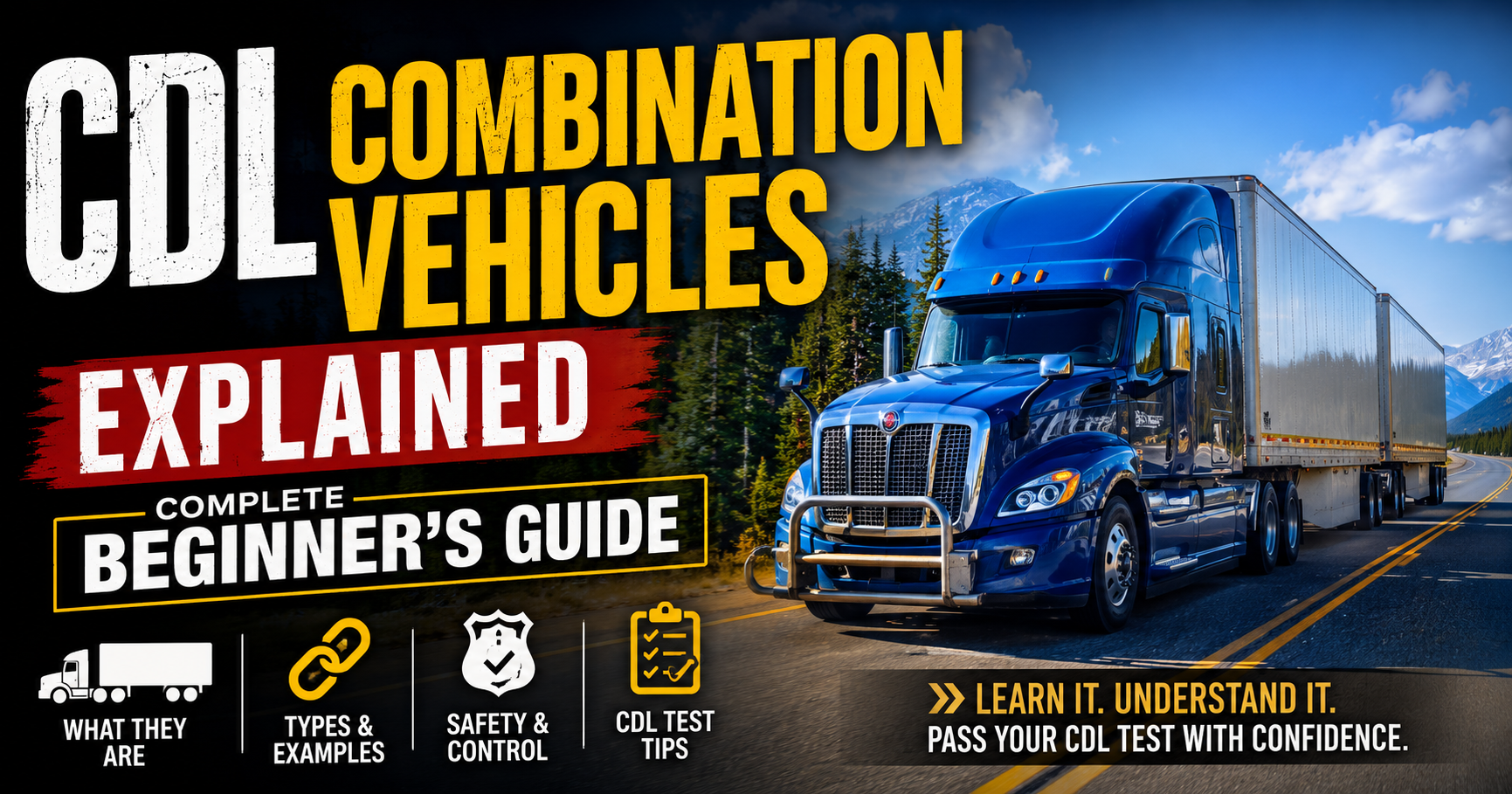
Our complete CDL Combination Vehicles Explained: Complete Beginner’s Guide covers these topics in much greater detail if you’re preparing for that endorsement as well.
Railroad Crossings
Commercial vehicles require extra caution at railroad crossings.
Some vehicles must stop.
Others don’t.
Regardless of your vehicle type, you should always:
- Slow down.
- Look both directions.
- Listen for trains.
- Make sure there’s enough room to completely clear the tracks.
Never begin crossing if traffic ahead prevents you from fully clearing the crossing.
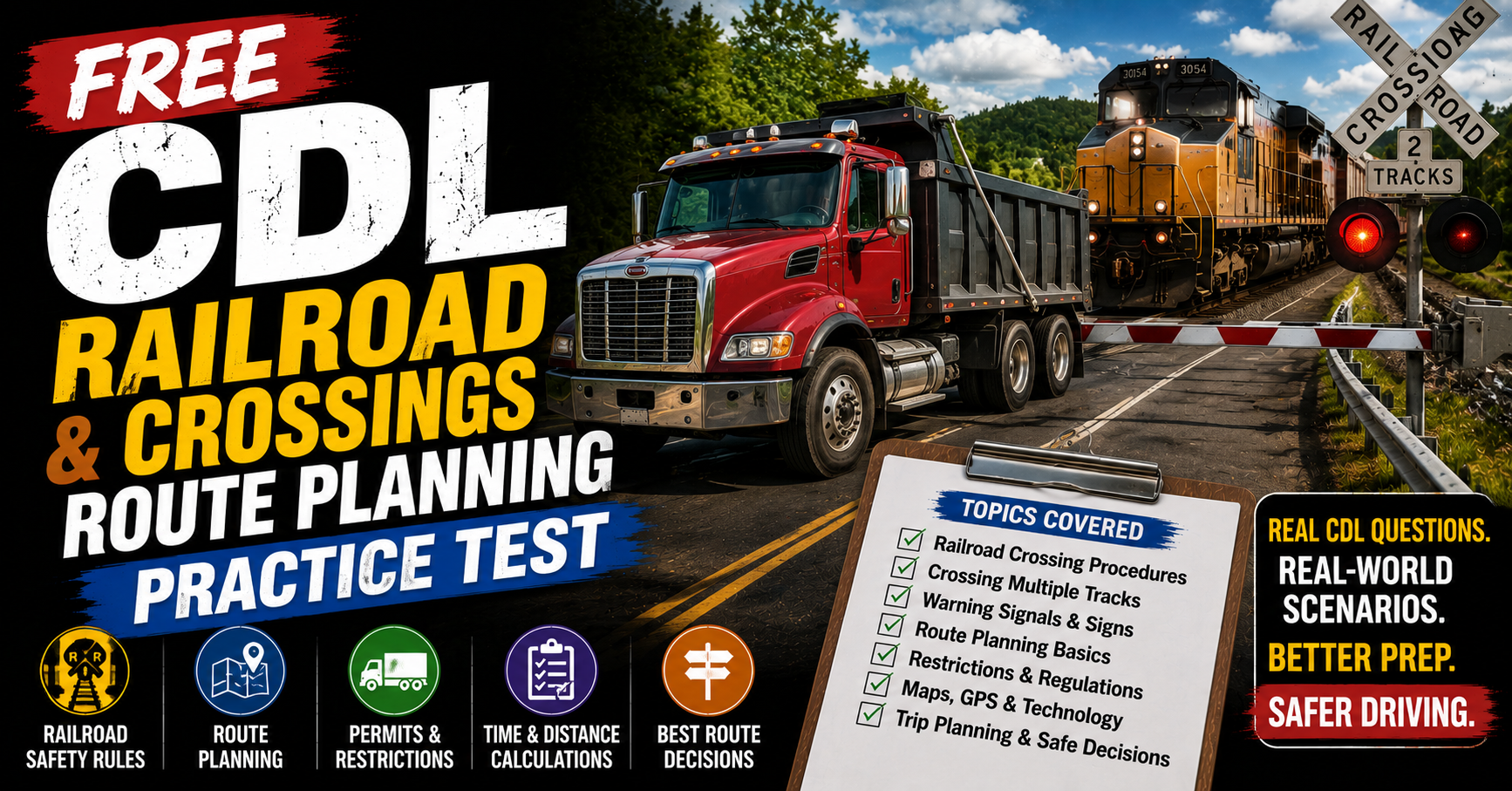
Our Free CDL Railroad Crossings & Route Planning Practice Test covers many of the questions you’ll likely encounter on your permit exam.
Night Driving
Driving after dark changes everything.
Visibility decreases.
Depth perception changes.
Glare from headlights becomes a factor.
Fatigue also becomes much more noticeable.
Safe night driving means slowing down enough that you can stop within the distance illuminated by your headlights.
It’s one of the simplest concepts on the exam, yet one of the most important in real-world driving.
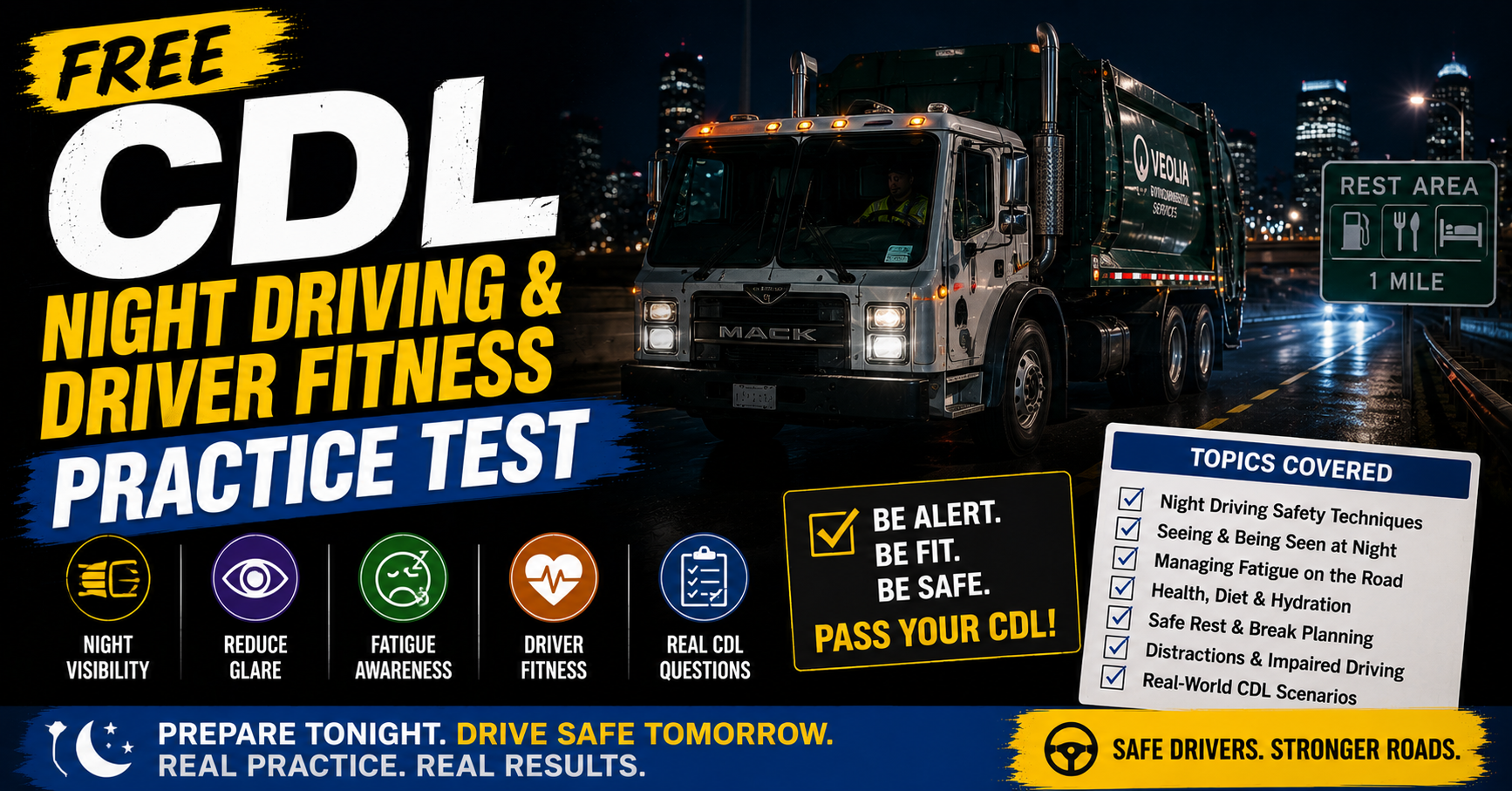
Our Free CDL Night Driving & Driver Fitness Practice Test is a great resource for reinforcing these concepts before test day.
Why Understanding Beats Memorization
One thing I’ve noticed over the years is that students who understand the material usually perform much better than students who simply memorize answers.
For example, if you understand why trucks require more following distance, you’ll answer dozens of different questions correctly without memorizing each one individually.
The same is true for:
- Speed management.
- Turning.
- Hazard awareness.
- Vehicle inspections.
- Emergency procedures.
Focus on learning the concepts.
The correct answers will often become obvious.
Driving in Bad Weather
Weather is one of the few things every truck driver deals with, no matter where they live.
You can have the best equipment, plenty of experience, and a well-maintained truck, but you still can’t control rain, snow, ice, fog, or high winds.
That’s why the CDL General Knowledge test spends so much time covering weather-related driving.
The safest drivers don’t try to fight bad weather.
They adjust to it.
That usually means slowing down, increasing following distance, turning on your lights when appropriate, and giving yourself extra time to react.
If conditions become unsafe, the smartest decision is sometimes finding a safe place to stop until they improve.
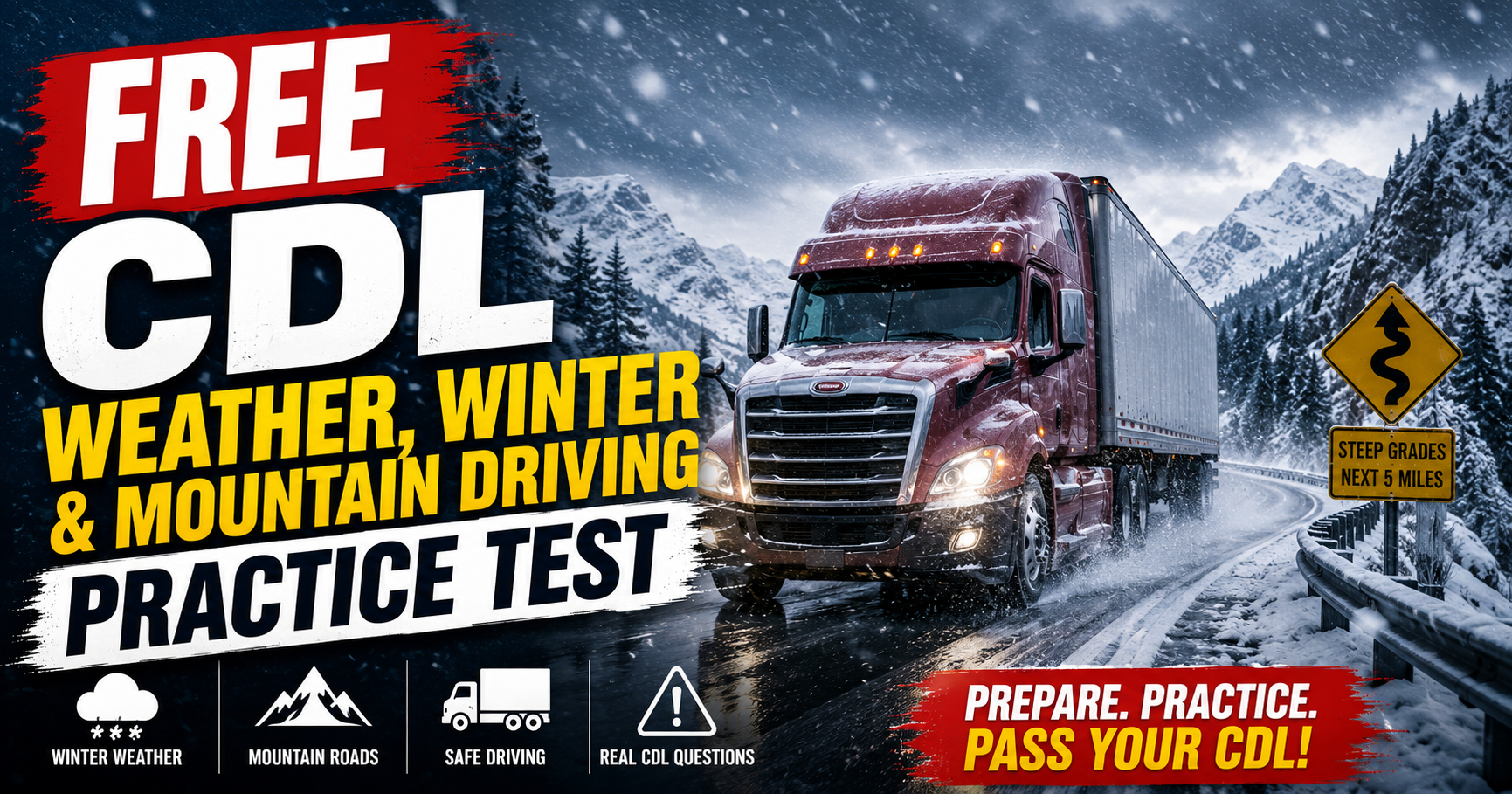
Our Free CDL Weather, Winter & Mountain Driving Practice Test covers many of the weather-related questions you’ll see on the permit exam.
Mountain Driving
Driving through mountains is very different than driving across flat highways.
Many new drivers assume going uphill is the difficult part.
In reality, going downhill demands much more attention.
Long downhill grades generate tremendous heat in your brakes if they’re used incorrectly.
That’s why professional drivers:
- Slow down before the hill.
- Select the proper gear before beginning the descent.
- Use the engine brake whenever appropriate.
- Avoid riding the brakes continuously.
- Make firm, controlled brake applications when necessary.
Planning ahead is the key.
If you’re driving too fast before reaching the hill, you’ve already made your first mistake.
Air Brakes
Even though air brakes have their own endorsement in many situations, you’ll still encounter basic air brake concepts while studying for your CDL.
Understanding the fundamentals will make the endorsement much easier later.
Our complete CDL Air Brakes Explained: Complete Beginner’s Guide explains every major component of the system, including compressors, governors, reservoirs, brake chambers, slack adjusters, S-cams, spring brakes, and inspection procedures.
If you plan on driving most commercial trucks, I strongly recommend becoming comfortable with air brakes early in your training.
Distracted Driving
One moment of distraction can change your life forever.
Commercial drivers have a tremendous responsibility every time they climb behind the wheel.
Looking away from the road for only a few seconds can mean traveling hundreds of feet without seeing what’s happening ahead.
Common distractions include:
- Cell phones.
- GPS adjustments.
- Eating.
- Drinking.
- Looking for paperwork.
- Reaching for items in the cab.
Professional drivers learn to eliminate distractions before putting the truck in gear.
The safest habit is simple.
If something needs your attention, pull over somewhere safe first.
Driver Fatigue
Fatigue is one of the most underestimated dangers in trucking.
Unlike mechanical problems, you can’t always see it coming.
Reaction times slow.
Concentration decreases.
Decision-making suffers.
Many drivers don’t even realize how tired they’ve become until it’s affecting their driving.
That’s why getting enough sleep before driving is one of the most important safety decisions you’ll ever make.
If you find yourself struggling to stay alert, don’t try to “push through it.”
Find a safe place to stop and rest.
No load is worth risking your life or someone else’s.
Alcohol, Drugs, and Prescription Medications
Commercial drivers are held to much higher standards than most motorists.
Federal regulations regarding alcohol and controlled substances are strict for good reason.
Even some over-the-counter or prescription medications can affect alertness, reaction time, or judgment.
Always understand how any medication may affect your ability to drive before getting behind the wheel.
When in doubt, ask your healthcare provider or employer.
Driving safely begins long before the engine starts.
Sharing the Road With Other Drivers
One thing you’ll quickly notice is that many motorists don’t understand how commercial trucks operate.
They may:
- Cut in front of you.
- Linger in your blind spots.
- Pass on the right unexpectedly.
- Brake suddenly.
- Merge without enough space.
Instead of becoming frustrated, I remind myself that my job is to anticipate those mistakes.
Professional drivers expect other drivers to make poor decisions.
Planning for them helps prevent accidents.
Emergency Situations
The CDL General Knowledge exam also covers how drivers should respond during emergencies.
Some situations include:
- Tire blowouts.
- Brake failures.
- Engine fires.
- Vehicle fires.
- Skids.
- Breakdowns.
- Emergency stops.
The goal isn’t memorizing dozens of emergency procedures.
It’s understanding one basic principle.
Stay calm.
Most accidents become worse because drivers panic and overreact.
Smooth steering, controlled braking, and keeping your eyes focused where you want the truck to go are almost always better than sudden movements.
Our Free CDL Emergency Procedures, Skids & Breakdowns Practice Test is excellent practice for these types of questions.
Cargo Basics
Even if you’re not responsible for loading your trailer, you’re still responsible for making sure your load is safe before driving away.
Improperly loaded cargo can:
- Shift during turns.
- Affect steering.
- Increase stopping distance.
- Cause rollovers.
- Damage equipment.
Understanding basic weight distribution and cargo securement is part of becoming a safe commercial driver.
Our Free CDL Cargo Loading, Weight Distribution & Securement Practice Test covers these important concepts in much greater detail.
Common Reasons People Fail the General Knowledge Test
Over the years, I’ve heard the same stories from students who didn’t pass on their first attempt.
Most failures come down to one of a handful of mistakes.
They Didn’t Study Enough
Many people underestimate the amount of information covered on the General Knowledge exam.
Reading the manual once usually isn’t enough.
They Memorized Instead of Learning
Practice questions are incredibly helpful.
But they work best after you’ve learned the material.
If you only memorize answers, a slightly different question can quickly throw you off.
They Skipped Practice Tests
Practice tests help you identify weak areas before the real exam.
That’s much better than discovering those weaknesses at the DMV.
They Rushed Through the Exam
Read every question carefully.
Many CDL questions include one or two important words that completely change the correct answer.
Taking an extra few seconds is almost always worth it.
Build Confidence Before Test Day
The best way to reduce test anxiety is preparation.
The more familiar you become with the material, the more confident you’ll feel when you sit down for the actual exam.
That’s why I recommend working through all of our practice resources instead of relying on just one.
Start with:
- Free CDL General Knowledge Practice Test #1
- Free CDL General Knowledge Practice Test #2
- Free CDL General Knowledge Practice Test #3
- CDL General Knowledge Challenge Practice Test
- 125-Question CDL Permit Test Simulator
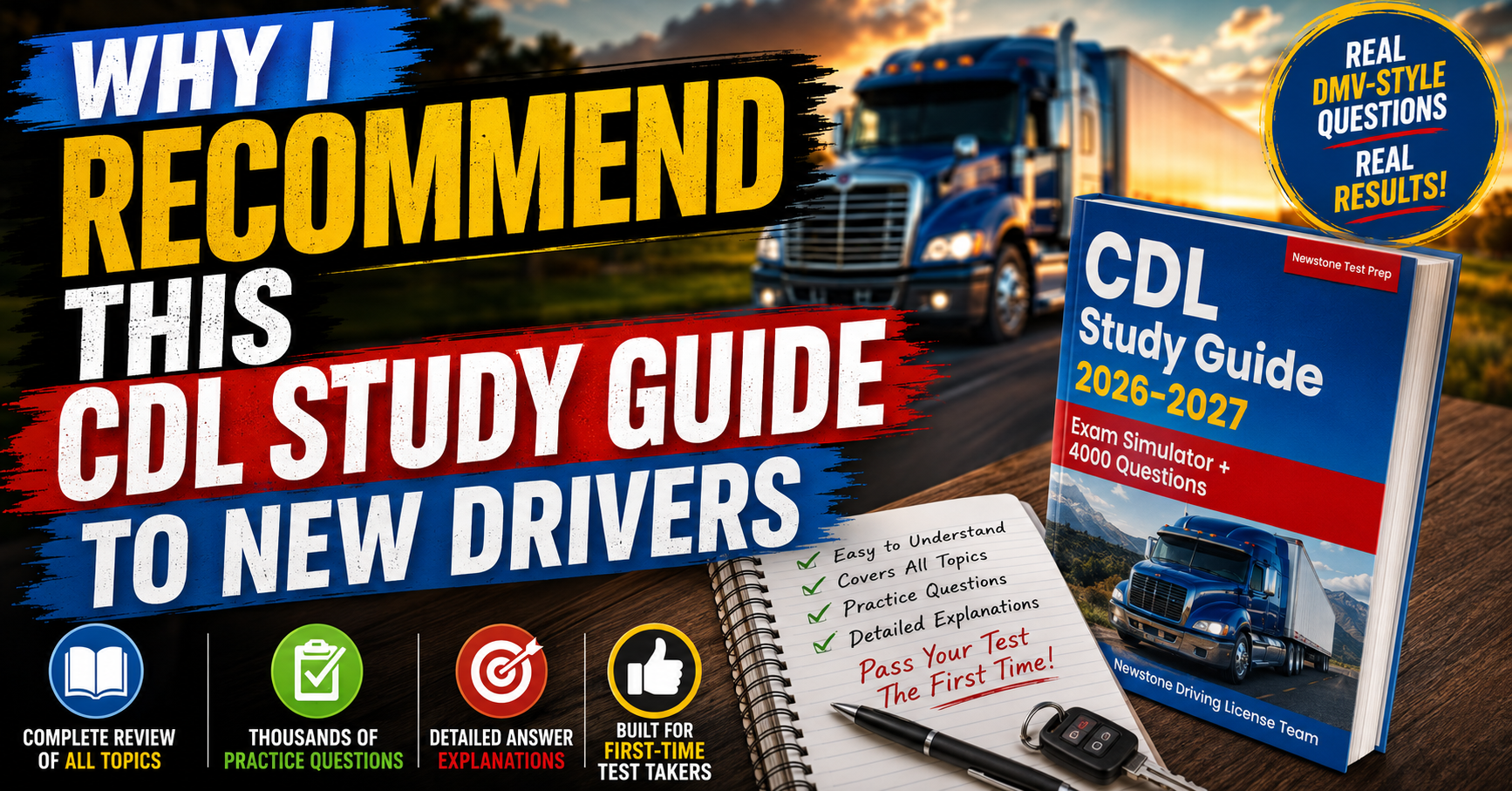
Then reinforce what you’ve learned with the CDL General Knowledge Study Guide PDF, the CDL Master Question Bank PDF, and the 21-Day CDL Permit Exam Mastery Workbook PDF.
By the time you finish those resources, you’ll have answered hundreds of realistic CDL questions and built a much stronger understanding of the material than simply reading the manual once.
Frequently Asked Questions About the CDL General Knowledge Test
Is the CDL General Knowledge test hard?
It can be if you walk into the DMV without preparing.
The questions aren’t designed to trick you, but they do expect you to understand how commercial vehicles operate safely.
If you spend time learning the concepts instead of simply memorizing answers, you’ll probably find the test much easier than you expected.
How many questions can I miss?
The exact number varies by state because some states use slightly different versions of the exam.
Most states require a score of at least 80% to pass.
That means every question matters.
Missing several questions in one topic can quickly put you below the passing score.
How long should I study?
Everyone learns at a different pace.
Some people study for several days.
Others spend two or three weeks reviewing the material.
I usually recommend studying a little each day instead of trying to cram everything into one long session the night before your exam.
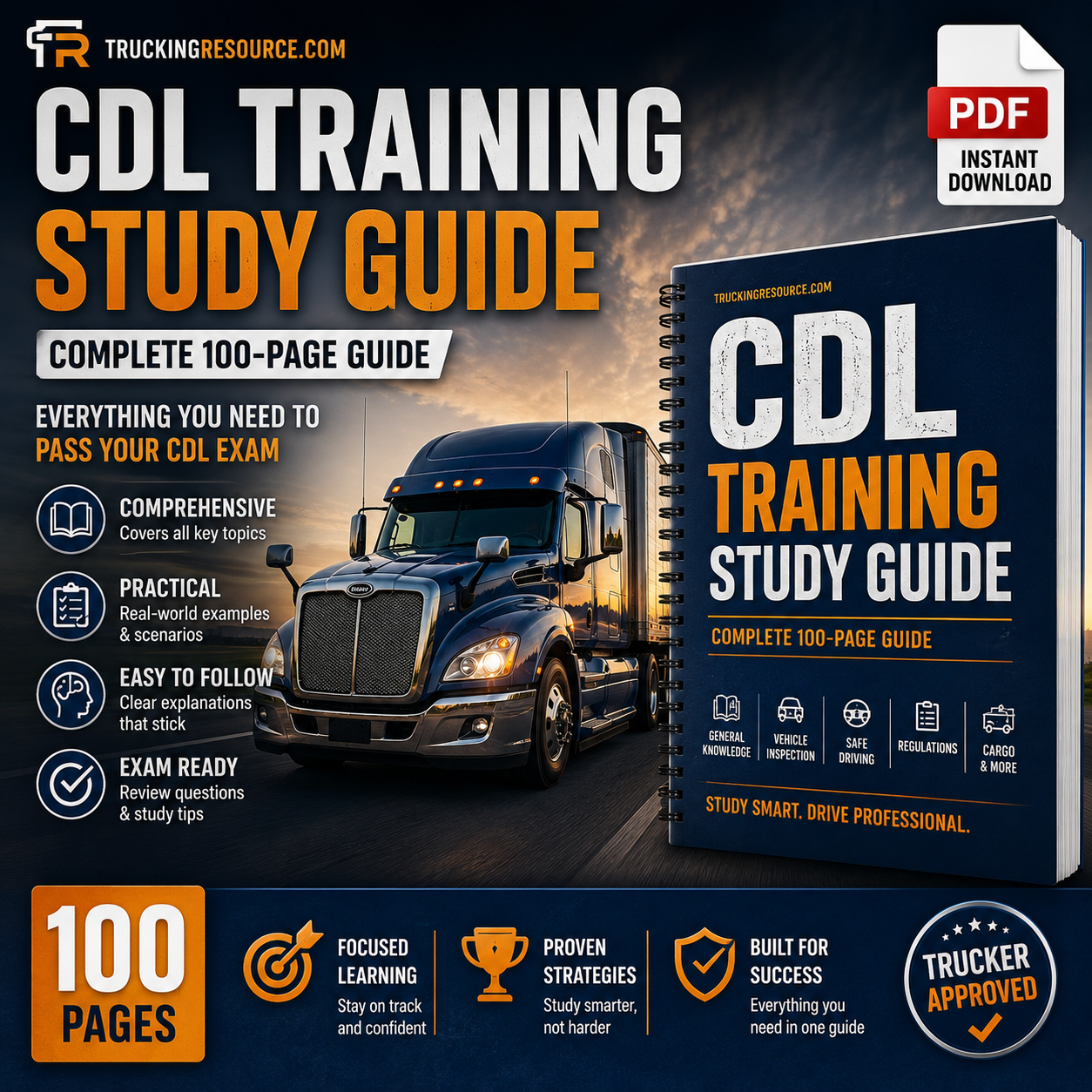
That’s one reason we created the 21-Day CDL Permit Exam Mastery Workbook PDF. It breaks your studying into manageable daily lessons instead of expecting you to learn everything at once.
Should I read the CDL manual?
Absolutely.
Your state’s CDL manual is still one of the best resources available because it’s the foundation for the permit exam.
However, manuals aren’t always the easiest reading.
That’s why I like combining the manual with study guides and practice tests that explain the material in plain English.
The manual tells you what you need to know.
Good study resources help explain why it matters.
Are practice tests enough by themselves?
Practice tests are extremely helpful, but they work best after you’ve learned the material.
If you’re only memorizing answers from practice exams, a slightly different question on the real test can catch you off guard.
Instead, use practice tests to reinforce what you’ve already learned.
That approach builds confidence instead of just memorization.
My Favorite Study Plan for New CDL Students
If someone asked me how to prepare for the CDL General Knowledge test from scratch, this is the plan I’d recommend.
Step 1: Learn the Basics
Start by reading through this guide.
Don’t worry about remembering every detail.
Instead, focus on understanding the major concepts like vehicle inspections, space management, stopping distance, weather, emergencies, and defensive driving.
Building that foundation makes everything else easier.
Step 2: Read Your State CDL Manual
Next, read your state’s CDL manual.
Because you’ve already learned the basic concepts, the manual will make much more sense than if you had started there first.
You’ll recognize many of the topics instead of seeing them for the first time.
Step 3: Take Practice Tests
Now it’s time to start answering questions.
Begin with our practice tests:
- Free CDL General Knowledge Practice Test #1
- Free CDL General Knowledge Practice Test #2
- Free CDL General Knowledge Practice Test #3
- CDL General Knowledge Challenge Practice Test
Don’t get discouraged if you miss questions.
Each incorrect answer simply shows you what to study next.
Step 4: Simulate the Real Exam
Once you’re consistently scoring well on individual practice tests, challenge yourself with our 125-Question CDL Permit Test Simulator.
This longer exam helps prepare you for sitting through a full-length test without losing focus.
Many students tell me this is the closest experience they’ve had to taking the real permit exam.
Step 5: Fill in the Gaps
Everyone has strengths and weaknesses.
Maybe you’re great with vehicle inspections but struggle with mountain driving.
Maybe emergency procedures are easy, but railroad crossings keep tripping you up.
Go back and review the sections where you’re missing questions instead of studying everything equally.
Targeted studying is much more effective.
One Study Resource I Recommend to Almost Everyone
Over the years I’ve learned that students succeed when they have plenty of quality practice questions.
That’s exactly why we created the CDL Master Question Bank PDF.
Instead of seeing the same handful of questions repeatedly, you’ll work through hundreds of realistic CDL-style questions covering every major General Knowledge topic.
The goal isn’t simply passing your permit exam.
It’s walking into the DMV already feeling confident because you’ve seen so many similar questions during your preparation.
Your CDL Journey Doesn’t End With the Permit Test
Passing the General Knowledge exam is a huge milestone, but it’s really just the beginning.
After earning your permit, you’ll continue learning through:
- Behind-the-wheel training.
- Pre-trip inspections.
- Backing practice.
- Road driving.
- Air brakes.
- Combination vehicles.
- Defensive driving.
The knowledge you build now will make every one of those steps easier.
That’s why I encourage new drivers to focus on understanding the material instead of rushing to get through it.
A strong foundation today will make you a safer, more confident driver for years to come.
Author: Jason Mercer
Jason Mercer spent more than 20 years driving commercial trucks throughout the United States, hauling dry van, refrigerated, flatbed, and specialized freight. Throughout his career, he mentored new CDL drivers, helped prepare students for their permit exams, and emphasized practical, real-world knowledge that goes far beyond simply memorizing answers for a test.