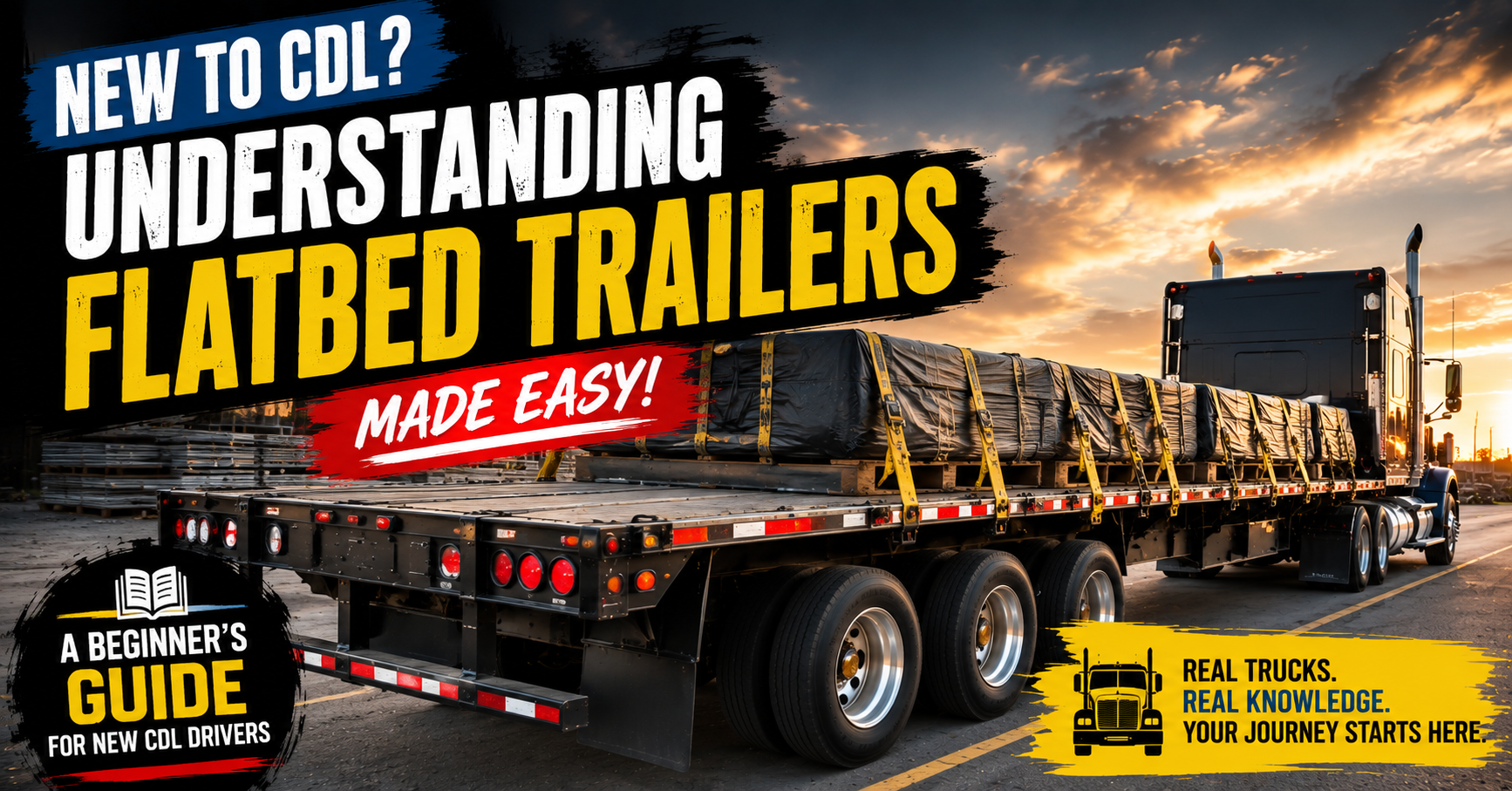
If you’ve ever driven past a semi hauling steel beams, lumber, giant tractors, or construction equipment, chances are you were looking at a flatbed trailer.
The first time I pulled one, I quickly learned it was a completely different world from hauling a dry van.
There are no walls.
No roof.
No trailer doors.
Everything you haul is exposed to the weather and completely visible to everyone driving by.
That means securing the load becomes just as important as driving the truck.
Flatbed trucking isn’t difficult, but it does require a different skill set than hauling enclosed freight.
What Is a Flatbed Trailer?
A flatbed trailer is an open-deck semi-trailer with no sides or roof. It allows freight to be loaded from the sides, rear, or above, making it ideal for oversized, heavy, or unusually shaped cargo that won’t fit inside an enclosed trailer. (fmcsa.dot.gov)
Because there aren’t any walls in the way, forklifts and cranes can load cargo from virtually any direction.
That’s one reason flatbeds are so popular in construction, manufacturing, and agriculture.
Why Is It Called a Flatbed?
The name couldn’t be much simpler.
Instead of having enclosed walls like a dry van, the trailer consists of one large, flat loading deck.
That open platform allows freight to be loaded and unloaded quickly, even when the cargo is extremely large.
What Does a Flatbed Trailer Haul?
One thing I’ve always liked about flatbed trucking is the variety.
You never know what you’ll be hauling next.
Common flatbed freight includes:
- Lumber.
- Steel beams.
- Pipes.
- Machinery.
- Farm equipment.
- Construction materials.
- Concrete products.
- Large generators.
- Building supplies.
- Industrial equipment.
Many of these loads simply wouldn’t fit inside a dry van.
Why Companies Use Flatbeds
There are plenty of reasons shippers choose flatbeds.
Some of the biggest advantages include:
- Easy side loading.
- Crane access.
- No height restrictions from a trailer roof.
- Ability to haul oversized freight.
- Flexible loading options.
- Faster loading for many cargo types.
If the freight can’t fit through trailer doors, a flatbed is often the answer.
Flatbed vs. Dry Van
This is one of the biggest differences new drivers notice.
A dry van completely encloses the freight, protecting it from weather and theft.
A flatbed leaves the cargo exposed, which means the driver must secure it properly using chains, straps, binders, edge protectors, and sometimes tarps.
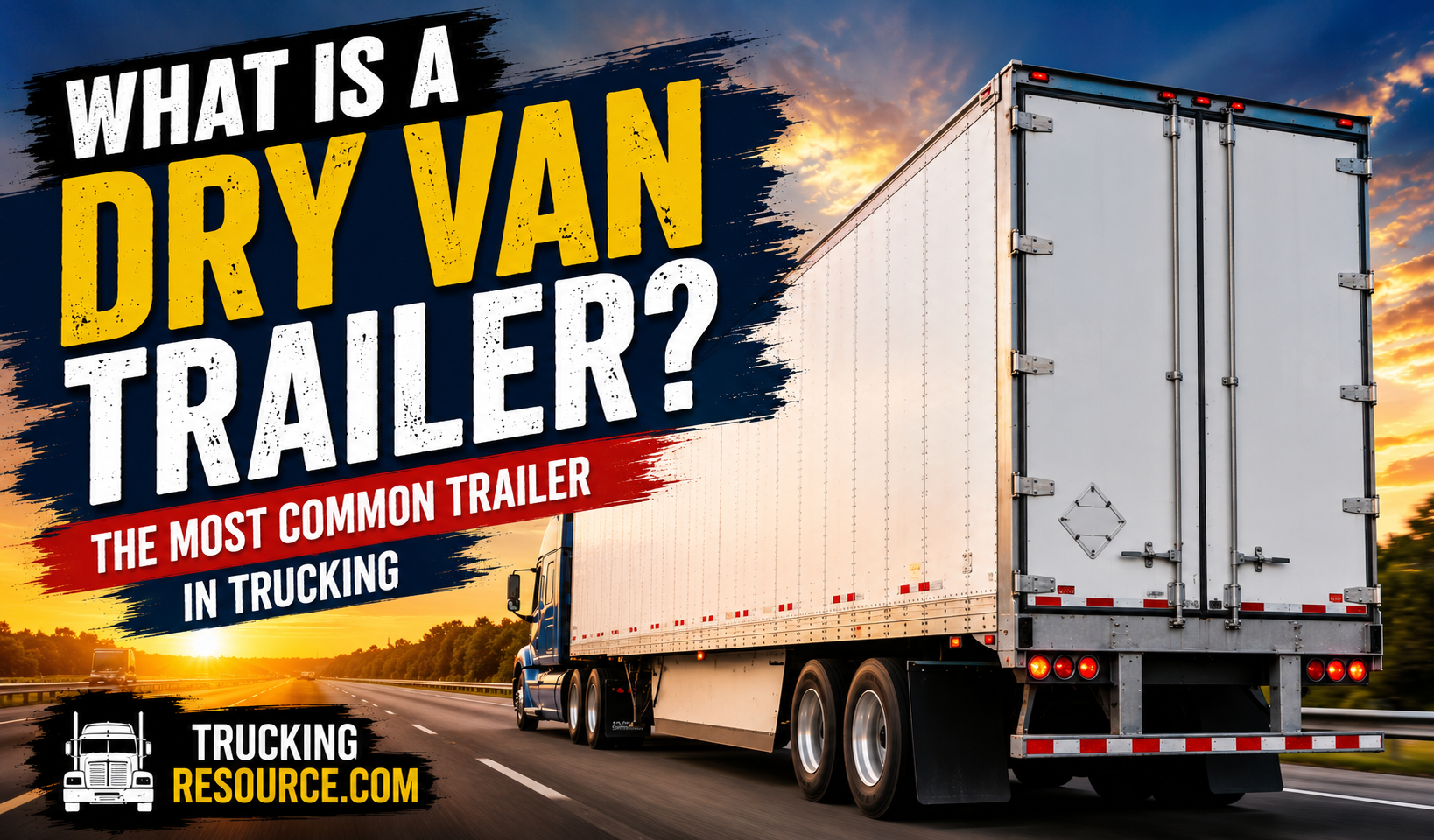
If you haven’t already, our guide on What Is a Dry Van Trailer? The Most Common Trailer in Trucking explains why enclosed trailers remain the most common type of trailer on American highways.
Securing a Flatbed Load
This is where flatbed hauling becomes very different.
Instead of simply closing trailer doors, drivers must properly secure every load.
Depending on what’s being hauled, that may include:
- Ratchet straps.
- Chains.
- Load binders.
- Edge protectors.
- Tarps.
- Corner protectors.
- Dunnage.
Improperly secured cargo can shift during braking or cornering, creating an extremely dangerous situation.
That’s why cargo securement is such a major part of flatbed trucking.
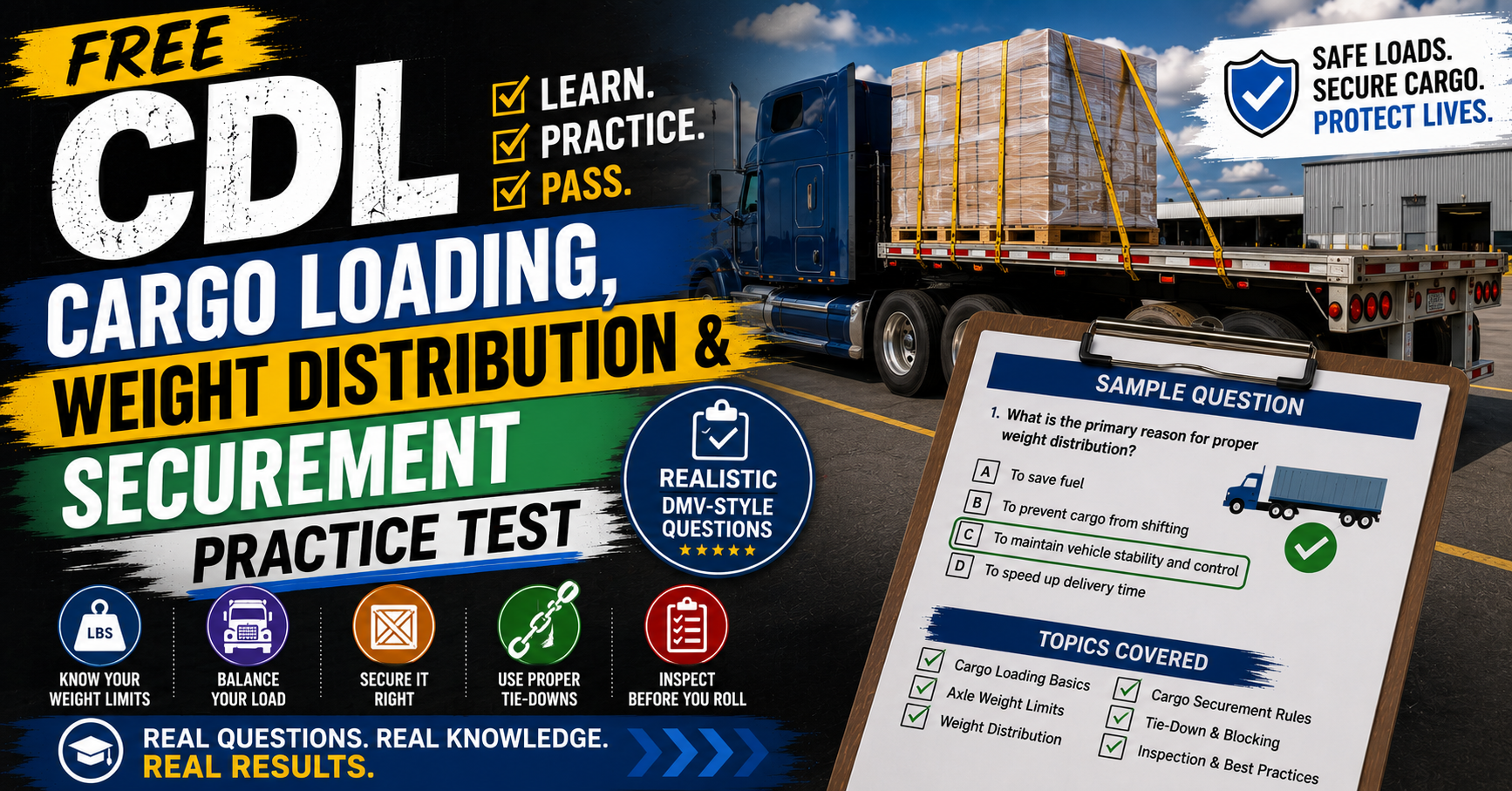
If you’re studying for your CDL, our Free CDL Cargo Loading, Weight Distribution & Securement Practice Test is one of the best ways to strengthen your understanding of these important safety concepts.
Are Flatbed Drivers Paid More?
Often, yes.
Flatbed drivers frequently earn higher pay because the job involves additional work beyond simply driving.
Loading, securing cargo, climbing on trailers, installing tarps, and checking securement throughout the trip all require extra time and effort.
Pay varies by company, experience, and freight type, but many drivers choose flatbeds because of the earning potential.
How I Inspect a Flatbed Trailer
Before every trip, I perform a complete walk-around.
I’m checking:
- Tires.
- Wheels.
- Lights.
- Air lines.
- Electrical pigtail.
- ABS light.
- Trailer frame.
- Deck condition.
- Rub rails.
- Stake pockets.
- Winches.
- Cargo securement equipment.
If the trailer is already loaded, I also inspect every strap, chain, binder, and tarp before leaving.
Common Mistakes New Flatbed Drivers Make
I’ve seen plenty of new drivers focus almost entirely on driving.
Driving is only part of the job.
Some common mistakes include:
- Not rechecking securement after driving.
- Using damaged straps.
- Forgetting edge protectors.
- Improper chain tension.
- Inadequate tarp securement.
- Rushing the loading process.
Most of these mistakes can be avoided by slowing down and following a consistent routine.
Where You’ll Hear This Term
Flatbeds are one of the most recognizable trailer types in trucking.
You’ll hear the term from:
- Dispatchers.
- Freight brokers.
- Construction companies.
- CDL instructors.
- Equipment dealers.
- Other truck drivers.
It’s one of the first trailer types most commercial drivers learn.
Frequently Asked Questions
Can flatbeds haul oversized loads?
Yes.
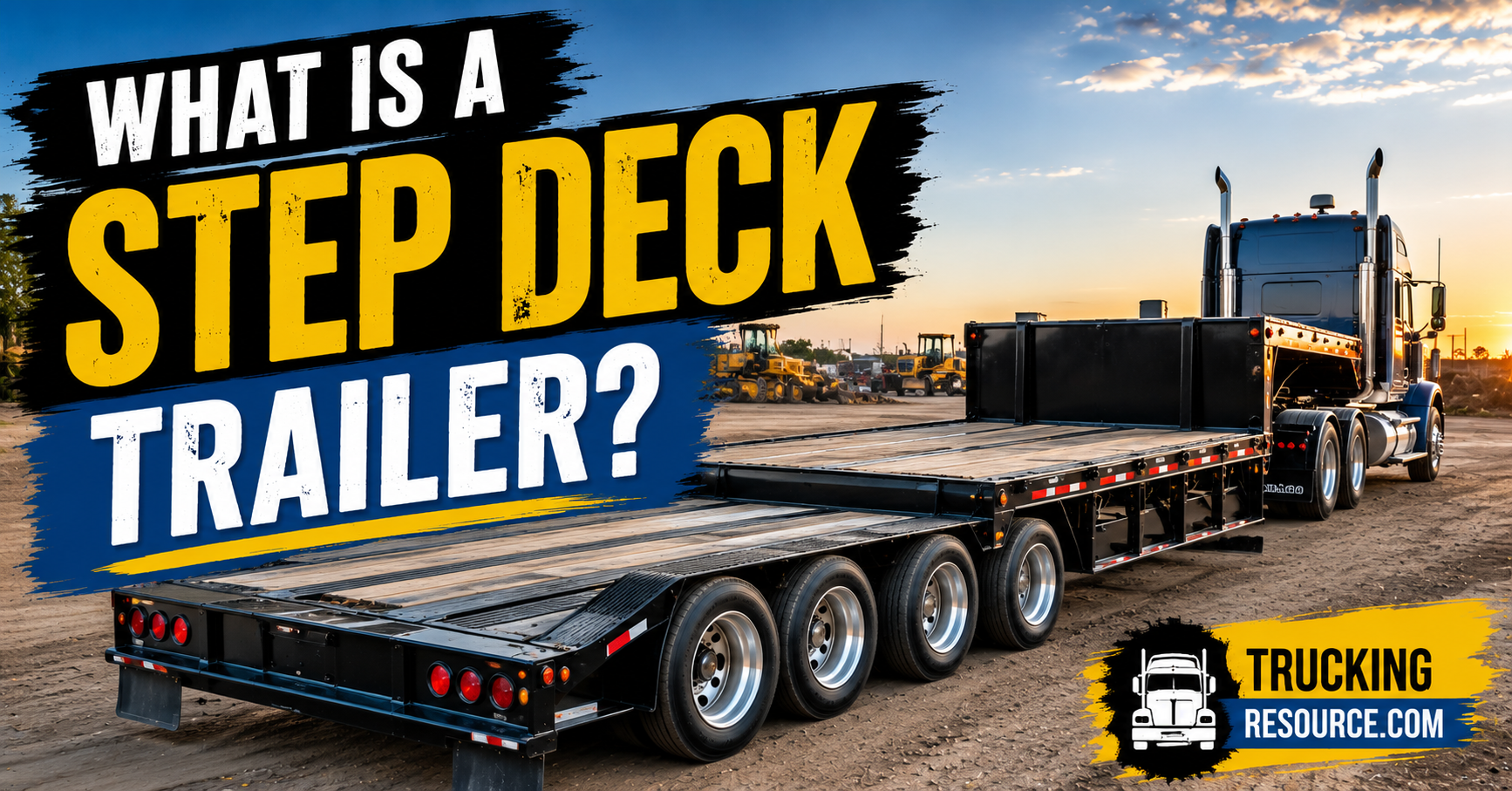
Many oversized or unusually shaped loads are transported on flatbeds because they can be loaded from the top or sides. When a load is too tall for a standard flatbed, step deck trailers can provide additional vertical clearance while keeping the freight accessible.
Some oversized loads may require permits or escort vehicles depending on their dimensions.
Do flatbed loads always need tarps?
No.
Some freight can safely travel uncovered.
Other loads, especially weather-sensitive products, require tarps to protect them during transport.
Is flatbed trucking good for beginners?
Absolutely.
Many new CDL drivers start in flatbed trucking.
Just be prepared for more physical work than you’ll usually encounter hauling dry vans.
Will Flatbeds Be Covered on the CDL Exam?
Very likely.
Even if you don’t plan to haul flatbeds, you should understand basic cargo securement principles and safe loading practices.
Those topics appear throughout CDL training.
Our CDL Master Question Bank PDF and Free CDL Cargo Loading, Weight Distribution & Securement Practice Test are excellent study resources that reinforce these concepts before exam day.
One Piece of Equipment I Never Leave Home Without
Flatbed work often starts before sunrise and doesn’t always end before dark.
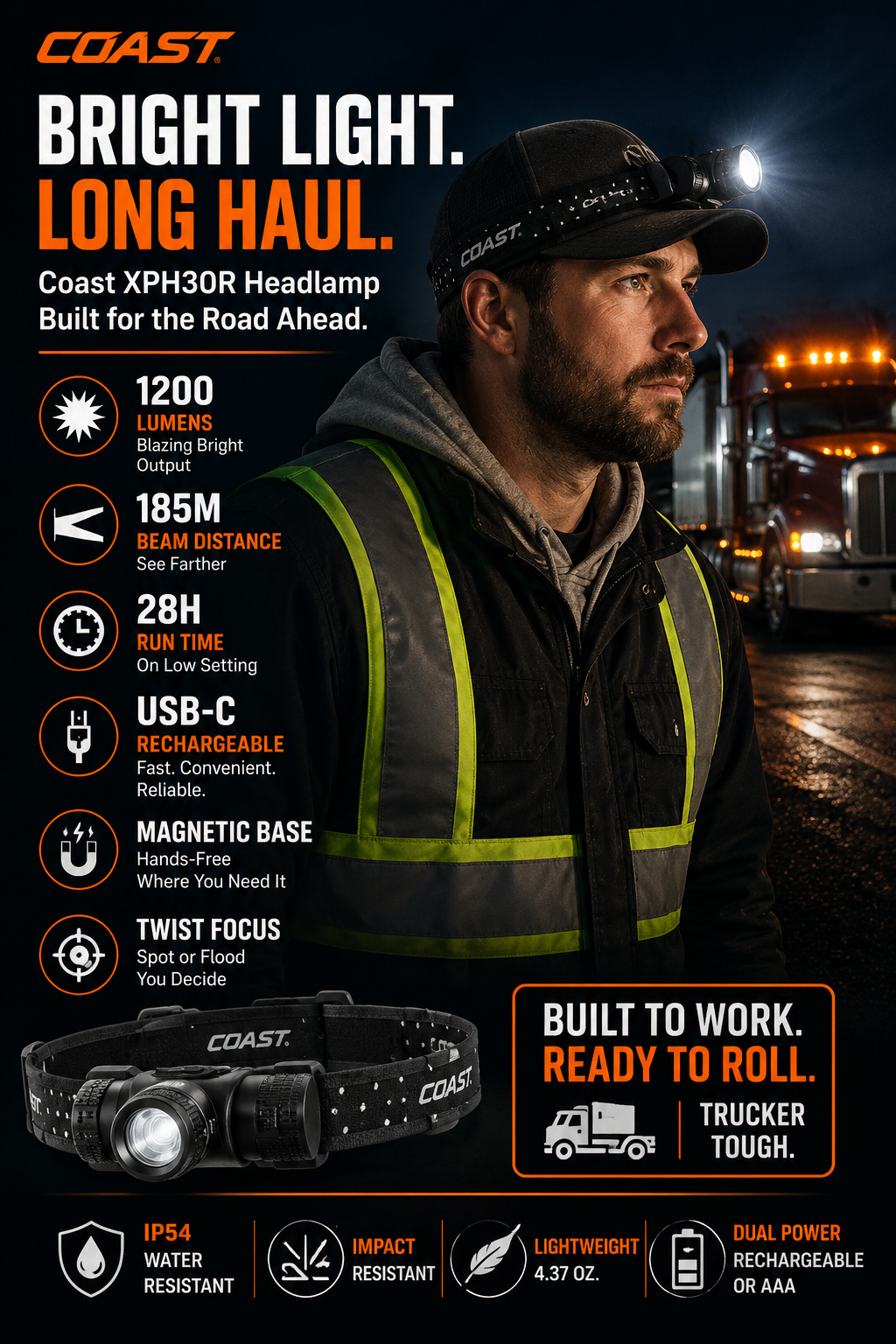
Whether I’m checking chains, tightening binders, or inspecting straps after a fuel stop, I always carry the Coast XPH30R USB-C Rechargeable Dual Power Headlamp.
Having both hands free makes inspecting cargo securement much easier, especially during early morning or nighttime inspections.
My Advice After Hauling Flatbeds
Flatbed trucking taught me to slow down.
Not while driving.
While preparing.
The extra time you spend checking chains, straps, tarps, and securement is never wasted.
Once the truck starts moving, your cargo depends on the work you did before you pulled out of the yard.
That’s something every good flatbed driver understands.
Driving gets the freight down the road.
Proper cargo securement gets it there safely.
Author: Mike Reynolds
Mike Reynolds spent more than 25 years hauling flatbeds, dry vans, refrigerated trailers, and heavy equipment across North America. Throughout his career, he trained new CDL drivers on cargo securement, trailer inspections, and defensive driving, believing that preparation before leaving the yard is one of the most important parts of every successful trip.