(function(){“use strict”;/* QUESTION BANK – replace only this array for future tests. */var Q=[
[“What does the air compressor governor do?”,”Controls when the compressor pumps air into the tanks”,[“Controls only the brake lights”,”Applies the spring brakes during turns”,”Measures tire pressure”],”The governor cuts the compressor in and out so the system maintains proper operating pressure without overpressurizing the tanks.”],
[“What is compressor cut-in pressure?”,”The pressure where the governor tells the compressor to start building air again”,[“The pressure where all brakes lock”,”The pressure inside the tires”,”The pressure needed to open the fuel cap”],”Cut-in is the lower pressure point where the compressor resumes pumping air after pressure has dropped.”],
[“What is compressor cut-out pressure?”,”The pressure where the governor stops the compressor from pumping”,[“The pressure where the engine shuts off”,”The pressure where parking brakes release automatically”,”The pressure in the steering system”],”Cut-out is the upper pressure point. Once reached, the governor unloads the compressor so pressure does not keep rising.”],
[“Why must air tanks be drained?”,”To remove moisture and oil that can damage or freeze the system”,[“To make the truck lighter before fueling”,”To release the parking brakes”,”To improve radio reception”],”Compressed air contains moisture. If it collects in tanks and lines, it can corrode parts or freeze in cold weather.”],
[“What does the low air pressure warning tell you?”,”Air pressure has dropped to an unsafe level”,[“The trailer is overloaded”,”The engine oil is hot”,”The tire tread is low”],”A warning buzzer, light, or wig-wag means pressure is too low for safe braking. Stop safely before pressure drops further.”],
[“What should you do if the low air warning comes on while driving?”,”Stop safely as soon as possible”,[“Speed up to refill the tanks faster”,”Ignore it if the brakes still feel normal”,”Pump the brakes repeatedly”],”Low air can lead to spring brake application and loss of service braking. Pull over safely and find the problem.”],
[“What are spring brakes used for?”,”Parking and emergency braking when air pressure is lost”,[“Normal steering assist”,”Cooling the brake drums”,”Operating windshield wipers”],”Spring brakes are held off by air pressure. If pressure is removed or lost, powerful springs apply the brakes.”],
[“Why should you avoid fanning the brakes unnecessarily?”,”It wastes air pressure quickly”,[“It adds oil to the tanks”,”It releases the parking brakes”,”It raises the trailer height”],”Each brake application uses air. Repeated pumping can reduce pressure faster than the compressor can replace it.”],
[“What is brake lag?”,”The short delay between pressing the pedal and full brake application”,[“A broken brake light”,”A tire sliding sideways”,”A delay in shifting gears”],”Air takes time to travel through lines and apply the brakes. At speed, even a short delay adds distance.”],
[“Why do air brakes need more following distance than many drivers expect?”,”Brake lag and heavy vehicle weight increase stopping distance”,[“Air brakes do not work below 45 mph”,”The horn must sound before braking”,”Trailers cannot brake”],”A CDL driver must allow for perception time, reaction time, brake lag, and the distance needed to stop a heavy vehicle.”],
[“What is the purpose of an alcohol evaporator, if equipped?”,”Helps reduce freezing in air lines”,[“Makes brakes stronger on dry roads”,”Cleans the windshield”,”Lubricates tires”],”Some systems use alcohol vapor to help prevent ice in air lines, but tanks still need proper draining and maintenance.”],
[“What does the air pressure gauge show?”,”The amount of air pressure available in the brake system”,[“Engine coolant level”,”Cargo weight”,”Fuel pressure only”],”The gauge helps the driver monitor whether enough air is available for safe service-brake operation.”],
[“During an air brake leak test, what are you checking?”,”Whether the system loses air faster than allowed”,[“Whether the horn is loud enough”,”Whether the fifth wheel is greased”,”Whether the fuel cap is tight”],”Excessive air loss indicates leaks that can reduce braking power or cause emergency brake application.”],
[“Why should the brake pedal be held during a leak test?”,”To check for leaks while the service brakes are applied”,[“To charge the battery”,”To lower the landing gear”,”To turn on ABS”],”Holding firm pressure shows whether air escapes from service-brake circuits under application.”],
[“What can happen if air pressure drops very low?”,”Spring brakes may apply automatically”,[“The accelerator may stick open”,”The steering wheel may detach”,”The headlights may reverse”],”Spring brakes are designed to apply when air pressure is insufficient to hold them released.”],
[“Why should parking brakes not be applied when brakes are extremely hot?”,”Hot drums can be damaged or the brakes may stick”,[“It will drain the fuel tank”,”It will unlock the cab doors”,”It will erase trip data”],”If brakes are overheated, applying spring brakes hard against hot drums can cause damage or make brakes stick as they cool.”],
[“What is the safest way to control speed on a long downgrade?”,”Use the proper gear and controlled braking before speed gets too high”,[“Coast in neutral and brake at the bottom”,”Ride the brakes lightly the whole way”,”Turn off the engine to slow down”],”Choose a low gear before descending and use brakes in a controlled way so they do not overheat and fade.”],
[“What is controlled braking?”,”Applying brakes firmly enough to slow without locking the wheels”,[“Pumping the brakes constantly”,”Using only the parking brake”,”Braking with the engine turned off”],”Controlled braking keeps wheels rolling and preserves steering while reducing speed.”],
[“What is stab braking?”,”Braking fully until wheels lock, releasing, then reapplying after wheels roll”,[“Holding light pressure forever”,”Using the trailer hand valve only”,”Braking by downshifting into reverse”],”Stab braking is an older non-ABS technique. With ABS, brake firmly and let ABS manage wheel lock.”],
[“How should you brake with ABS during an emergency stop?”,”Apply firm, steady pressure and keep steering”,[“Pump the pedal rapidly”,”Release the pedal when ABS activates”,”Use only the trailer hand valve”],”ABS helps prevent wheel lock. Firm pressure lets the system work while you continue steering.”],
[“What does ABS help prevent?”,”Wheel lockup during hard braking”,[“All rollovers”,”Every jackknife”,”Low air pressure”],”ABS helps maintain steering control during hard braking, but it does not shorten every stop or overcome bad driving choices.”],
[“Why does ABS not replace safe following distance?”,”It cannot remove reaction time, brake lag, or vehicle weight”,[“ABS only works while parked”,”ABS disables service brakes”,”ABS makes trailers invisible”],”ABS is a control aid, not magic. Heavy vehicles still need space to stop safely.”],
[“What should you do if the ABS warning light stays on?”,”Have the system checked, but remember normal brakes may still work”,[“Assume the truck has no brakes at all”,”Cut the air lines”,”Drive faster to reset it”],”A steady ABS warning means the anti-lock feature may not be working. Service brakes may still operate, but the issue needs repair.”],
[“Why inspect slack adjusters and brake components?”,”Excessive slack or damaged parts can reduce braking power”,[“They control the radio antenna”,”They keep cargo doors closed”,”They set tire pressure”],”Brake adjustment and component condition directly affect stopping ability. Defects must be repaired before operation.”],
[“What should a driver do before moving a vehicle with air brakes?”,”Build full air pressure and confirm brakes and warnings work properly”,[“Release brakes before air builds”,”Drive until pressure rises on its own”,”Ignore gauges if the engine starts”],”A proper air brake check confirms pressure build-up, warnings, leak rate, and brake operation before the vehicle enters traffic.”]
],S={q:[],i:0,s:0},$=function(x){return document.getElementById(x)},E={quiz:$(‘quiz’),results:$(‘results’),reviewScreen:$(‘reviewScreen’),qcount:$(‘qcount’),score:$(‘score’),progress:$(‘progress’),bar:$(‘bar’),question:$(‘question’),answers:$(‘answers’),feedback:$(‘feedback’),prev:$(‘prev’),next:$(‘next’),review:$(‘review’),reviewList:$(‘reviewList’)};function sh(a){a=a.slice();for(var i=a.length-1;i;i–){var j=Math.floor(Math.random()*(i+1)),t=a[i];a[i]=a[j];a[j]=t}return a}function esc(s){var d=document.createElement(‘div’);d.textContent=s;return d.innerHTML}function top(){$(‘tr-cdl-app’).scrollIntoView({behavior:’smooth’,block:’start’})}function start(){S.q=sh(Q).map(function(x){return{t:x[0],a:sh([{t:x[1],ok:true}].concat(x[2].map(function(w){return{t:w,ok:false}}))),e:x[3],p:null}});S.i=0;S.s=0;E.quiz.hidden=false;E.results.hidden=true;E.reviewScreen.hidden=true;render();top()}function render(){var q=S.q[S.i],done=q.p!==null,n=S.q.filter(function(x){return x.p!==null}).length;E.qcount.textContent=’Question ‘+(S.i+1)+’ of ‘+S.q.length;E.score.textContent=S.s;E.bar.style.width=n/S.q.length*100+’%’;E.progress.setAttribute(‘aria-valuenow’,n);E.question.textContent=q.t;E.answers.innerHTML=”;q.a.forEach(function(a,i){var b=document.createElement(‘button’);b.type=’button’;b.className=’answer’+(done&&a.ok?’ good’:”)+(done&&i===q.p&&!a.ok?’ bad’:”);b.textContent=a.t;b.disabled=done;b.onclick=function(){pick(i)};E.answers.appendChild(b)});E.prev.disabled=S.i===0;E.next.disabled=!done;E.next.textContent=S.i===S.q.length-1?’View Results’:’Next Question’;if(done)feed(q);else E.feedback.hidden=true}function pick(i){var q=S.q[S.i];if(q.p!==null)return;q.p=i;if(q.a[i].ok)S.s++;render()}function feed(q){var a=q.a[q.p],c=q.a.filter(function(x){return x.ok})[0];E.feedback.className=’feedback ‘+(a.ok?’good’:’bad’);E.feedback.innerHTML=’‘+(a.ok?’ Correct!’:’ Incorrect’)+’‘+(!a.ok?’
Correct answer: ‘+esc(c.t)+’
Why yours is incorrect: It does not correctly apply the CDL safety principles in this scenario.
‘:”)+’
Explanation: ‘+esc(q.e)+’
‘;E.feedback.hidden=false}function finish(){var n=S.q.length,b=n-S.s,p=Math.round(S.s/n*100);E.quiz.hidden=true;E.reviewScreen.hidden=true;E.results.hidden=false;$(‘percent’).textContent=p+’%’;$(‘final’).textContent=S.s+’/’+n;$(‘correct’).textContent=S.s;$(‘incorrect’).textContent=b;$(‘message’).textContent=p>=90?’Outstanding! You have a strong grasp of combination-vehicle fundamentals.’:p>=80?’Great job! Review the missed Combination Vehicles questions.’:p>=70?’Good progress. Keep practicing this section.’:’More Combination Vehicles review is recommended before testing.’;E.review.disabled=!b;top()}function review(){E.reviewList.innerHTML=”;S.q.filter(function(q){return!q.a[q.p].ok}).forEach(function(q,i){var c=q.a.filter(function(a){return a.ok})[0],d=document.createElement(‘article’);d.className=’review-item’;d.innerHTML=’
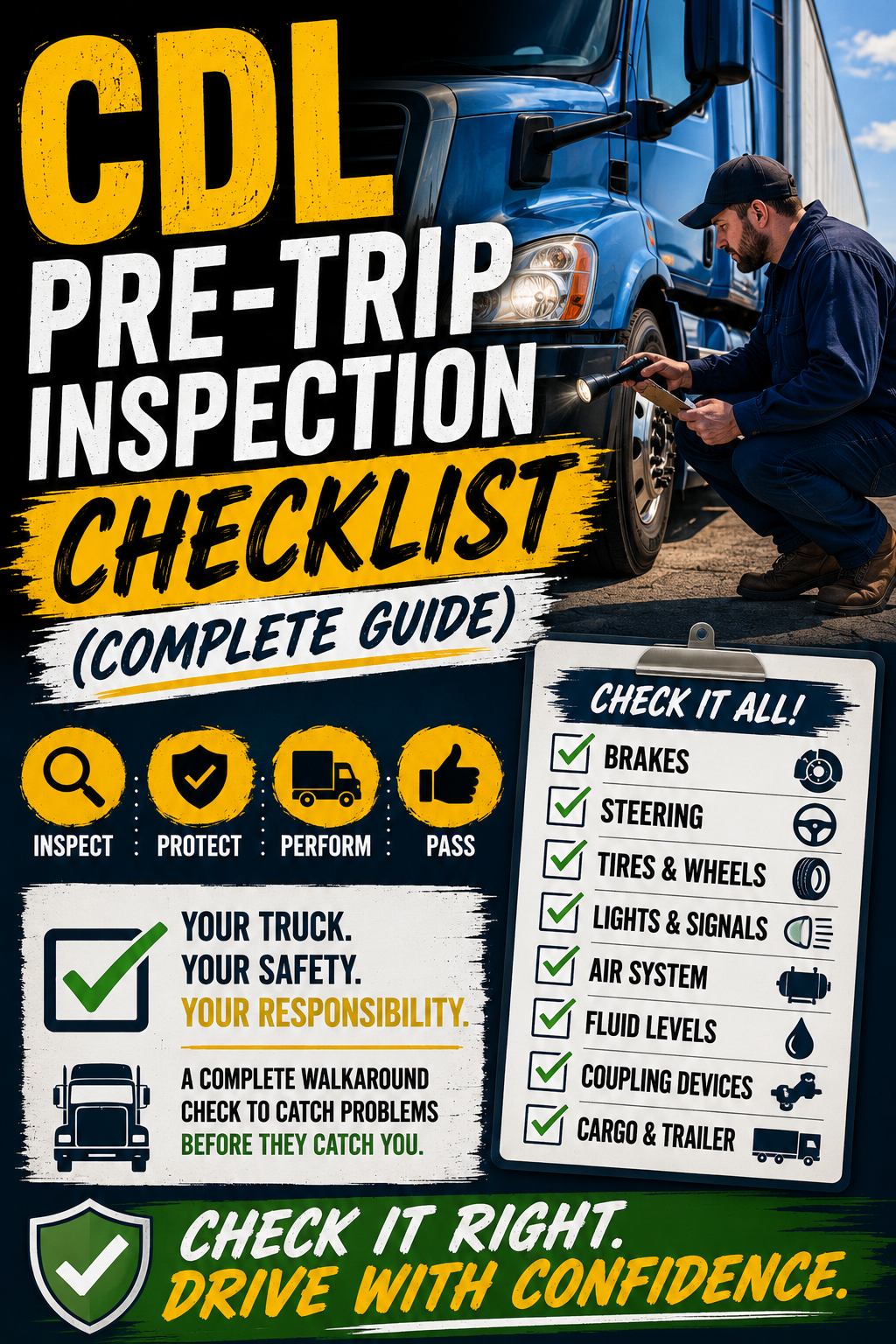
Understanding the basics of an air brake system is only the beginning of passing your CDL Air Brakes knowledge exam. Drivers must also know how to properly inspect the system, recognize warning signs, identify leaks, test safety devices, and verify that every major component is working correctly before heading out on the road. Use the CDL Pre-Trip Inspection Checklist (Complete Guide) to review how these air-brake inspection skills fit into a complete vehicle check.
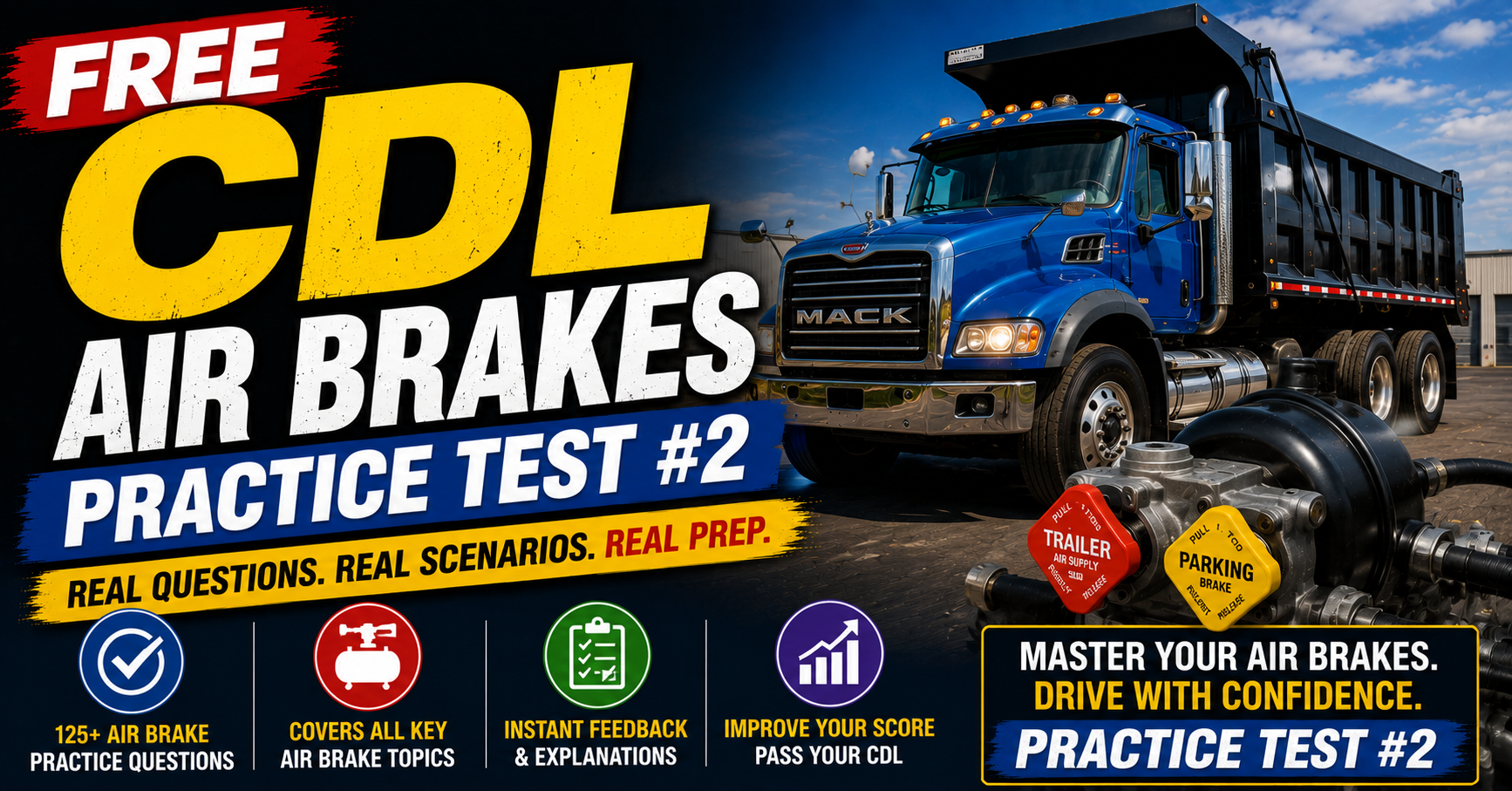
Our Free CDL Air Brakes Practice Test #2 includes 25 realistic multiple-choice questions covering air brake inspections, leak tests, governors, brake chambers, slack adjusters, warning devices, spring brakes, and other important safety checks. Every question includes a detailed explanation to help you understand the correct answer and become a safer commercial driver.
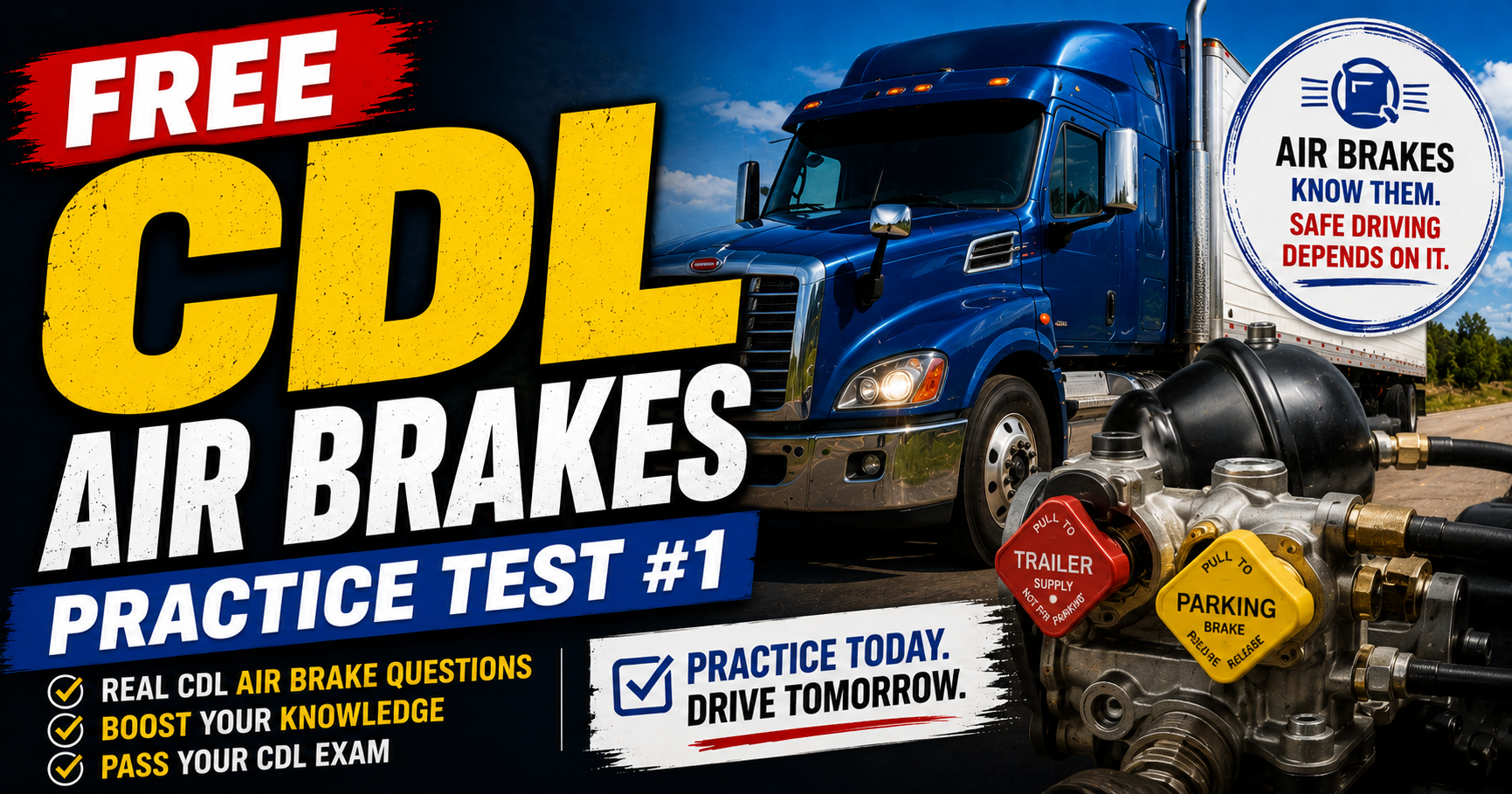
If you haven’t completed it yet, start with our Free CDL Air Brakes Practice Test #1 to build a solid understanding of how commercial air brake systems operate before moving into more advanced inspections and testing procedures.
Commercial trucks depend on properly functioning air brakes every mile they travel.
A small air leak or worn component may not seem serious during an inspection, but it can quickly become a major safety hazard once the vehicle is traveling at highway speeds.
That’s why professional drivers perform careful inspections before every trip.
Routine inspections help identify:
Air leaks.
Damaged hoses.
Loose brake chambers.
Worn slack adjusters.
Low air pressure.
Faulty warning devices.
Brake system defects.
Finding problems before leaving the yard is always safer than discovering them on the road.
What You’ll Learn on This Practice Test
This practice test focuses on inspection procedures commonly covered on CDL Air Brakes knowledge exams.
Topics include:
Static leakage tests.
Applied leakage tests.
Air compressors.
Governors.
Air pressure buildup.
Brake chambers.
Slack adjusters.
Spring brake tests.
Parking brake checks.
Low-air warnings.
Safety valves.
Air system inspections.
These are the same concepts you’ll use during your written exam and throughout your trucking career.
Air lines constantly flex as the truck travels over bumps, turns corners, and connects to trailers.
Because of this movement, hoses should be inspected for:
Cracks.
Abrasion.
Bulges.
Loose fittings.
Air leaks.
Contact with moving parts.
Even small hose damage can eventually develop into significant air loss if left unrepaired.
Brake Chambers Must Remain Secure
Brake chambers convert compressed air into the mechanical force needed to apply the brakes.
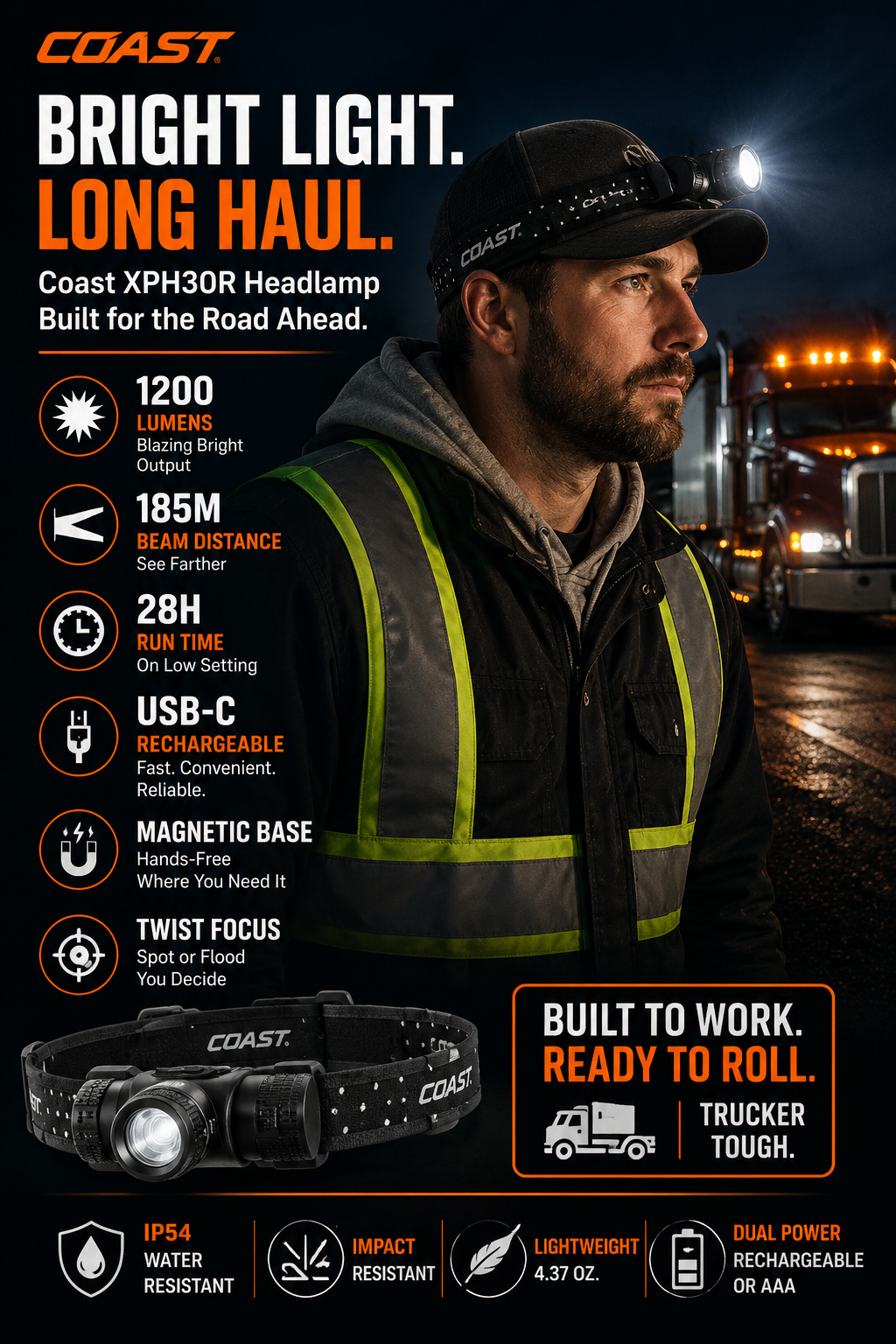
Drivers should inspect each chamber for: A rechargeable inspection headlamp can help illuminate brake chambers and other components when an inspection area is poorly lit.
Secure mounting.
Visible damage.
Air leaks.
Cracks.
Loose hardware.
Damaged brake chambers reduce braking performance and should always be repaired before the vehicle returns to service.
Slack adjusters play an important role in maintaining proper brake adjustment.
Automatic slack adjusters normally keep the braking system properly adjusted during everyday operation.
If automatic slack adjusters repeatedly require manual adjustment, it often indicates another mechanical problem that should be inspected by qualified maintenance personnel.
Knowing how slack adjusters function helps drivers recognize potential brake issues before they become dangerous.
Static Air Leak Tests
One of the most important inspection procedures is the static leakage test.
During this test, drivers verify that the air brake system does not lose excessive pressure while the engine is off and the brakes are released.
Excessive air loss may indicate:
Damaged hoses.
Loose fittings.
Faulty valves.
Brake chamber leaks.
Air line damage.
Understanding acceptable leakage limits is an important part of passing the CDL Air Brakes knowledge exam.
Applied Air Leak Tests
The applied leakage test is similar to the static test but places the brake system under additional pressure by holding the service brake pedal.
This test helps identify leaks that may only appear while the braking system is actively being used.
Drivers should allow pressure to stabilize before measuring leakage.
Abnormal pressure loss indicates repairs are needed before the vehicle should be operated.
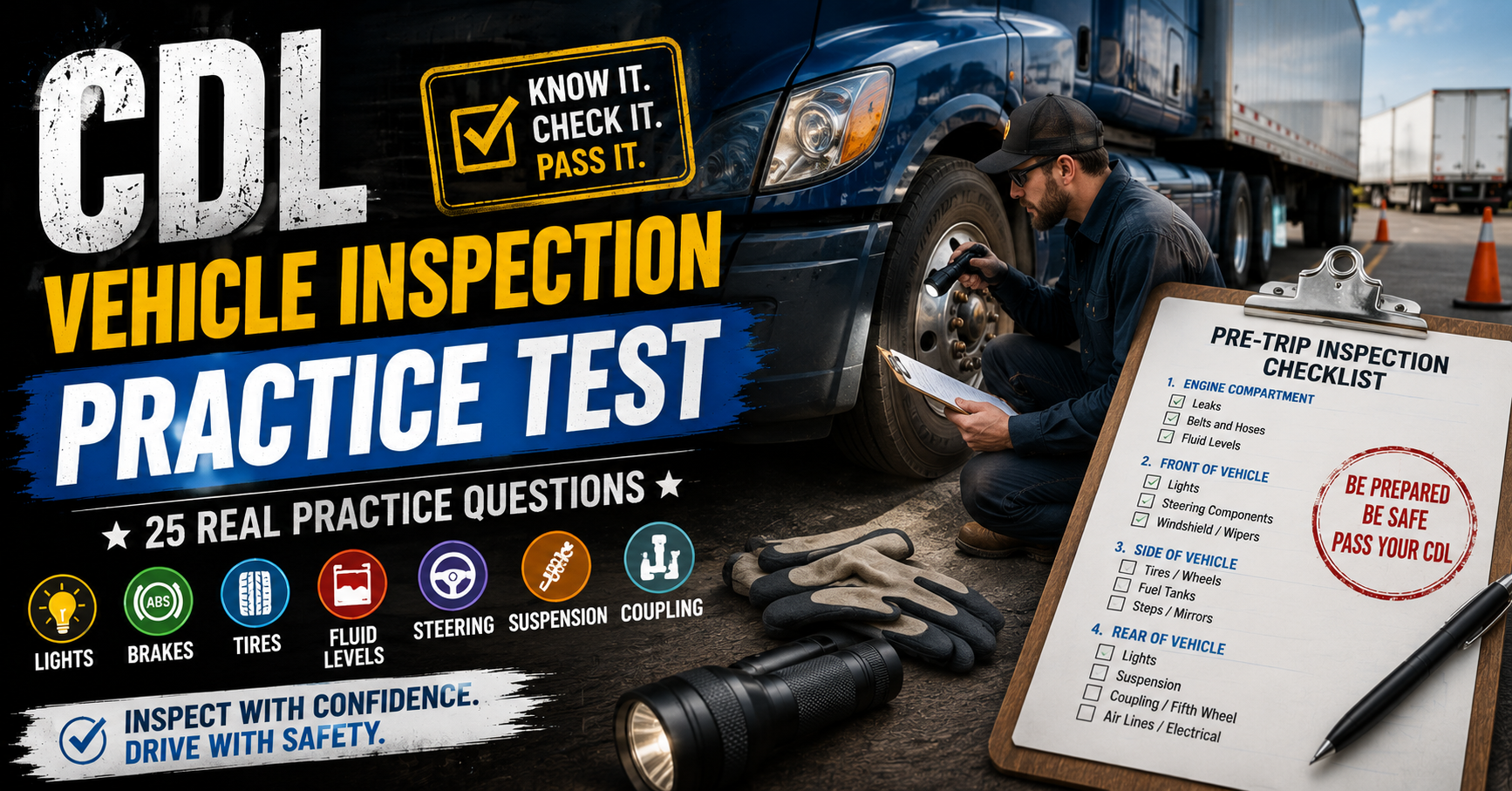
Continue strengthening your inspection skills with our CDL Vehicle Inspection Practice Test. Many of the same inspection habits you learn there apply directly to performing complete air brake inspections.
Test Low-Air Warning Devices
Every commercial vehicle equipped with air brakes includes warning devices that alert the driver if air pressure becomes dangerously low.
These warning systems may include:
Audible buzzers.
Warning lights.
Both visual and audible alerts.
During your inspection, you’ll verify these warnings activate before air pressure drops too low.
Never ignore a low-air warning while driving.
It may indicate a serious air leak, compressor problem, or other brake system failure that requires immediate attention.
Verify Spring Brake Operation
Spring brakes provide an important backup safety feature if air pressure falls to a critically low level.
As pressure decreases during inspection, the parking brake control should eventually pop out and the spring brakes should automatically apply.
This test confirms that the emergency braking system will function if sufficient air pressure is lost during normal driving.
If the spring brakes fail to apply properly, the vehicle should not be driven until repairs have been completed.
Test the Parking Brake
The parking brake should always be tested before beginning a trip.
A simple holding test verifies that the parking brake can prevent the vehicle from moving when engaged.
Drivers typically:
Set the parking brake.
Place the transmission in a low gear.
Apply light engine power.
Confirm the vehicle does not move.
This quick test helps identify parking brake problems before they create dangerous situations.
Check Service Brake Performance
Once adequate air pressure has been restored, drivers should perform a service brake check.
Move the vehicle slowly in a safe area and apply the brakes firmly.
Watch for signs such as:
Pulling to one side.
Delayed braking.
Weak stopping power.
Unusual pedal feel.
Strange noises.
Vibration.
Even small changes in braking performance deserve immediate attention.
Professional drivers never assume braking problems will improve on their own.
Understanding Governor Cut-In and Cut-Out
The governor automatically controls compressor operation.
Two important terms every CDL student should know are:
Cut-in pressure
Cut-out pressure
Cut-out pressure is the point where the governor tells the compressor to stop building air because the reservoirs have reached their normal operating range.
Cut-in pressure is the lower pressure where the governor tells the compressor to begin building pressure again.
Understanding these terms helps explain how the air brake system continuously maintains safe operating pressure while driving.
Slow Air Pressure Buildup Can Signal Trouble
After starting the engine, air pressure should build steadily.
If pressure increases unusually slowly, it could indicate:
Compressor wear.
Air leaks.
Loose drive belts.
Restricted air flow.
Mechanical failure.
Drivers should never ignore slow pressure buildup because insufficient air pressure can reduce braking performance and eventually activate low-air warnings.
Common Air Brake Inspection Mistakes
Many CDL students lose points because they overlook important inspection steps.
Some of the most common mistakes include:
Forgetting to chock the wheels.
Skipping leak tests.
Ignoring damaged hoses.
Misunderstanding governor operation.
Forgetting to test low-air warnings.
Failing to verify spring brake operation.
Overlooking brake chamber damage.
Not recognizing slow pressure buildup.
Learning these inspection procedures thoroughly makes both the written exam and future pre-trip inspections much easier.
Frequently Asked Questions
How many questions are on this CDL Air Brakes Practice Test #2?
This practice test contains 25 multiple-choice questions covering inspections, governors, brake chambers, leak tests, spring brakes, parking brakes, and other Air Brakes topics commonly found on CDL knowledge exams.
What is a static leakage test?
A static leakage test checks how much air pressure the system loses while the engine is off and the service brakes are released. Excessive pressure loss usually indicates an air leak that requires repair.
Why is an applied leakage test performed?
An applied leakage test checks for leaks while the service brakes are fully applied. Some leaks only appear when the brake system is under pressure during braking.
What does governor cut-out mean?
Governor cut-out is the pressure where the governor tells the air compressor to stop pumping because the air system has reached its normal operating pressure.
Why should wheel chocks be used during inspections?
Wheel chocks help prevent unintended vehicle movement whenever parking brakes must be released during inspection procedures.
Why is slow air pressure buildup a concern?
Slow pressure buildup may indicate compressor problems, leaks, or mechanical issues that could prevent the braking system from maintaining enough air pressure for safe operation.
Continue Building Your CDL Knowledge
Proper air brake inspections are one of the most important responsibilities every commercial driver has before beginning a trip. Knowing how to recognize leaks, test safety devices, inspect brake components, and verify proper air pressure helps prevent breakdowns while keeping you and everyone else on the road safer.
After completing this practice test, continue building your knowledge with our growing collection of free CDL practice tests covering General Knowledge, vehicle inspections, braking, cargo securement, emergency procedures, weather driving, railroad crossings, and other essential CDL topics. Every quiz you complete strengthens the skills you’ll use throughout your commercial driving career.
Planning Beyond Your CDL Test
Preparing for your CDL exam is important, but it’s only the beginning of your trucking career. Once you pass, you’ll move into CDL school, company orientation, driver training, and eventually your first solo loads.