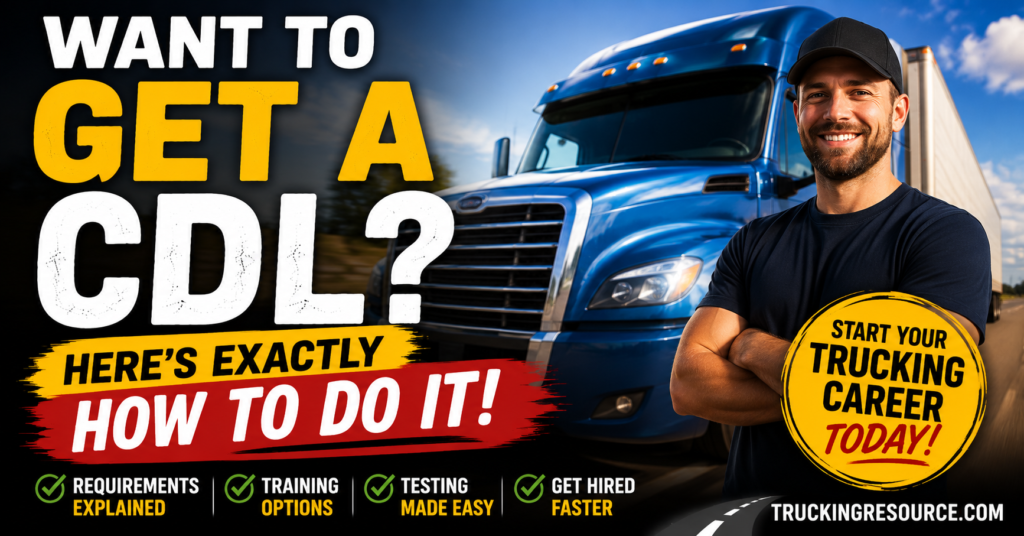
If you’ve been thinking about becoming a truck driver, you’re probably wondering where to even begin.
I remember feeling the same way.
Everyone kept throwing around terms like CDL permit, DOT physical, ELDT, endorsements, and skills tests. At first, it felt like there were a hundred different steps before I could ever sit behind the wheel of a truck.
The good news is that getting your Commercial Driver’s License isn’t nearly as overwhelming once you understand the process. If you take it one step at a time, you’ll know exactly what needs to happen next.
Whether your goal is driving a semi across the country, hauling gravel in a dump truck, or driving a school bus close to home, every commercial driver starts with the same basic process.
In this guide, I’ll walk you through each step, explain what to expect, share a few lessons I’ve learned over the years, and point out mistakes that trip up many first-time CDL applicants.
If you’re still deciding which license you actually need, start with our guide explaining Class A vs Class B vs Class C CDL: What’s the Difference?. Choosing the right CDL class before you begin can save you both time and money.
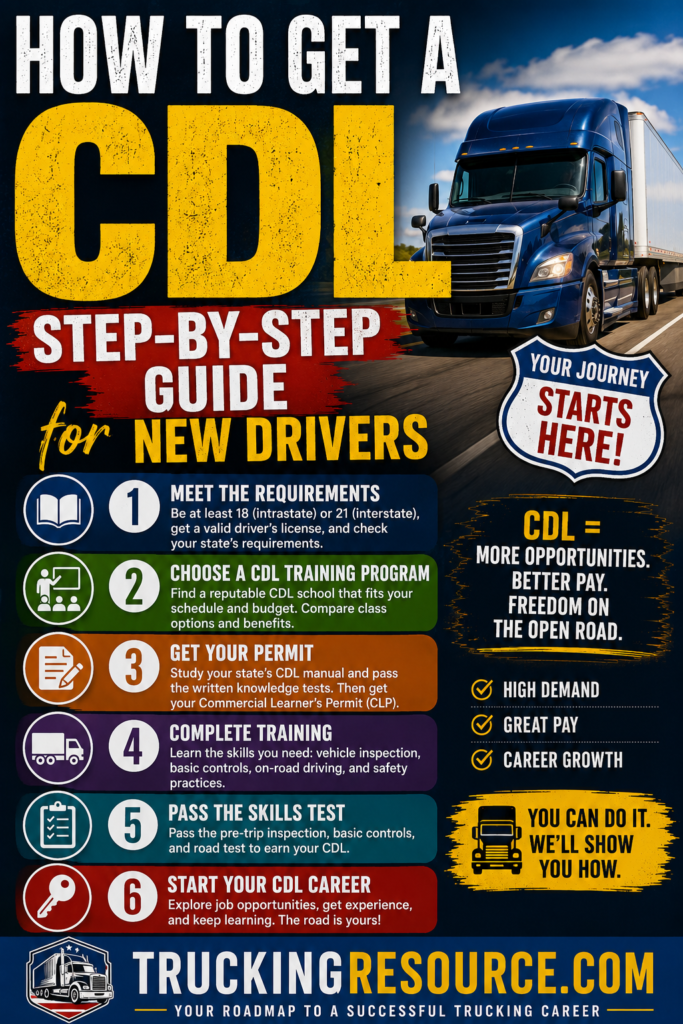
Step 1: Decide Which CDL You Need
Before you spend a dime on training or schedule a medical exam, figure out what type of commercial vehicle you actually want to drive.
This is one of the biggest mistakes I see people make.
Some enroll in a Class B program because it’s shorter, only to realize a few months later they really wanted to drive tractor trailers. Now they’re paying for additional training they could have avoided.
Ask yourself questions like:
- Do I want to drive a semi?
- Would I rather stay local?
- Am I interested in construction work?
- Do I want to haul freight?
- Would I rather drive passengers?
If you’re planning to drive a tractor trailer, you’ll almost certainly need a Class A CDL.
If you’re planning to operate vehicles like dump trucks, concrete mixers, garbage trucks, or large straight trucks, a Class B CDL may be all you need.
The right choice depends on your long-term career goals, not just the first job you hope to land.
Step 2: Make Sure You Meet the Basic Requirements
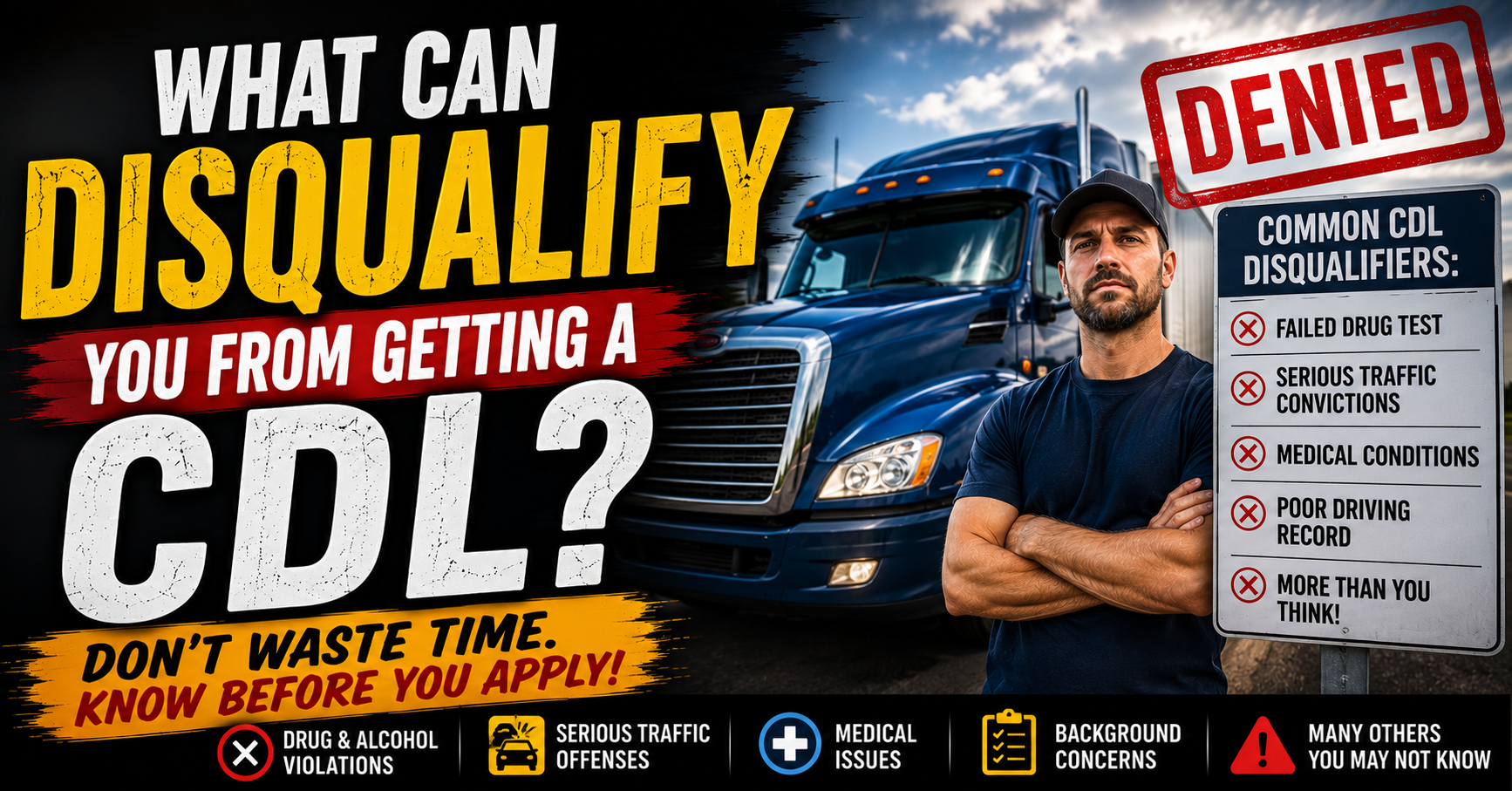
Before your state will issue a CDL, you’ll need to meet several basic requirements. Before moving ahead, review What Disqualifies You From Getting a CDL? so you can identify potential eligibility issues early.
Although some rules vary slightly by state, most applicants must:
- Meet the minimum age requirement
- Have a valid driver’s license
- Pass a DOT medical examination
- Provide proof of identity and residency
- Have a clean enough driving record to qualify
- Meet federal and state CDL eligibility requirements
If you plan to drive across state lines, federal law generally requires drivers to be at least 21 years old.
Some states allow drivers as young as 18 to obtain a CDL for intrastate driving, meaning you’ll only drive within your home state.
Age rules are something many new drivers overlook until they’re already researching schools.
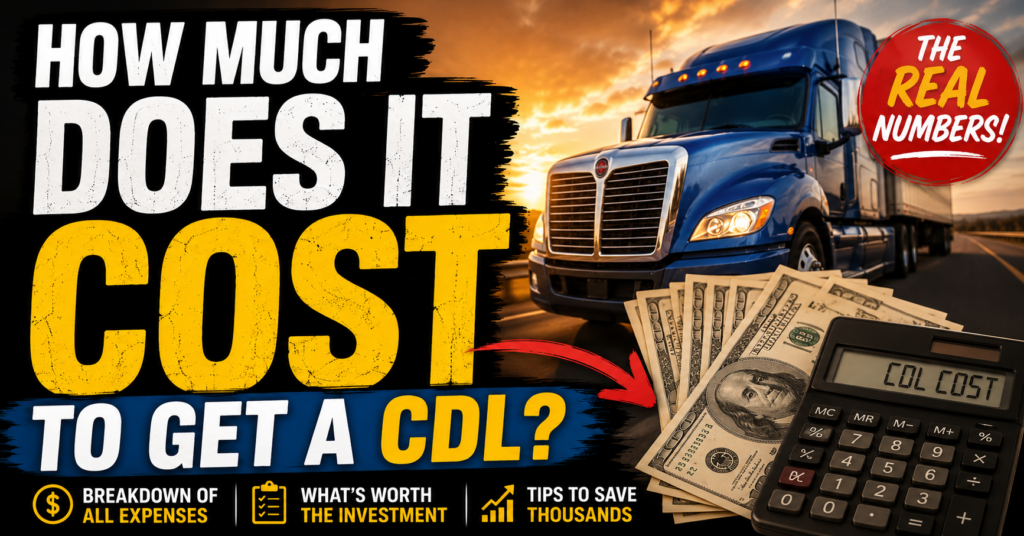
Before you start filling out applications or comparing CDL schools, it’s also smart to understand what your training is likely to cost. Tuition, permit fees, medical exams, and testing costs can vary quite a bit depending on where you live and how you choose to earn your CDL. Our guide on how much it costs to get a CDL breaks down the most common expenses so you can build a realistic budget before getting started.
Step 3: Pass Your DOT Medical Exam
One of the first appointments you’ll schedule is your DOT physical.
This isn’t meant to scare anyone. In fact, most healthy people pass without much trouble.
The purpose of the exam is to make sure you’re physically capable of safely operating a commercial vehicle.
During your medical exam, the certified examiner will typically check your:
- Vision
- Hearing
- Blood pressure
- General physical health
- Medical history
- Medications
- Overall fitness to drive commercially
If everything checks out, you’ll receive your Medical Examiner’s Certificate.
Don’t skip this step.
Many CDL schools require you to have your medical certificate before training even begins.
We’ll have a complete guide covering the DOT medical exam soon, including what to bring, common reasons drivers fail, and how to prepare.
Step 4: Study for Your CDL Permit
This is where your trucking career really starts. The next milestone is understanding the requirements and limitations explained in our What Is a CDL Permit? Everything You Need to Know.
Before you’re allowed to practice driving a commercial vehicle, you’ll need to earn your Commercial Learner’s Permit, often called a CLP.
Think of it like getting your learner’s permit when you first learned to drive a car.
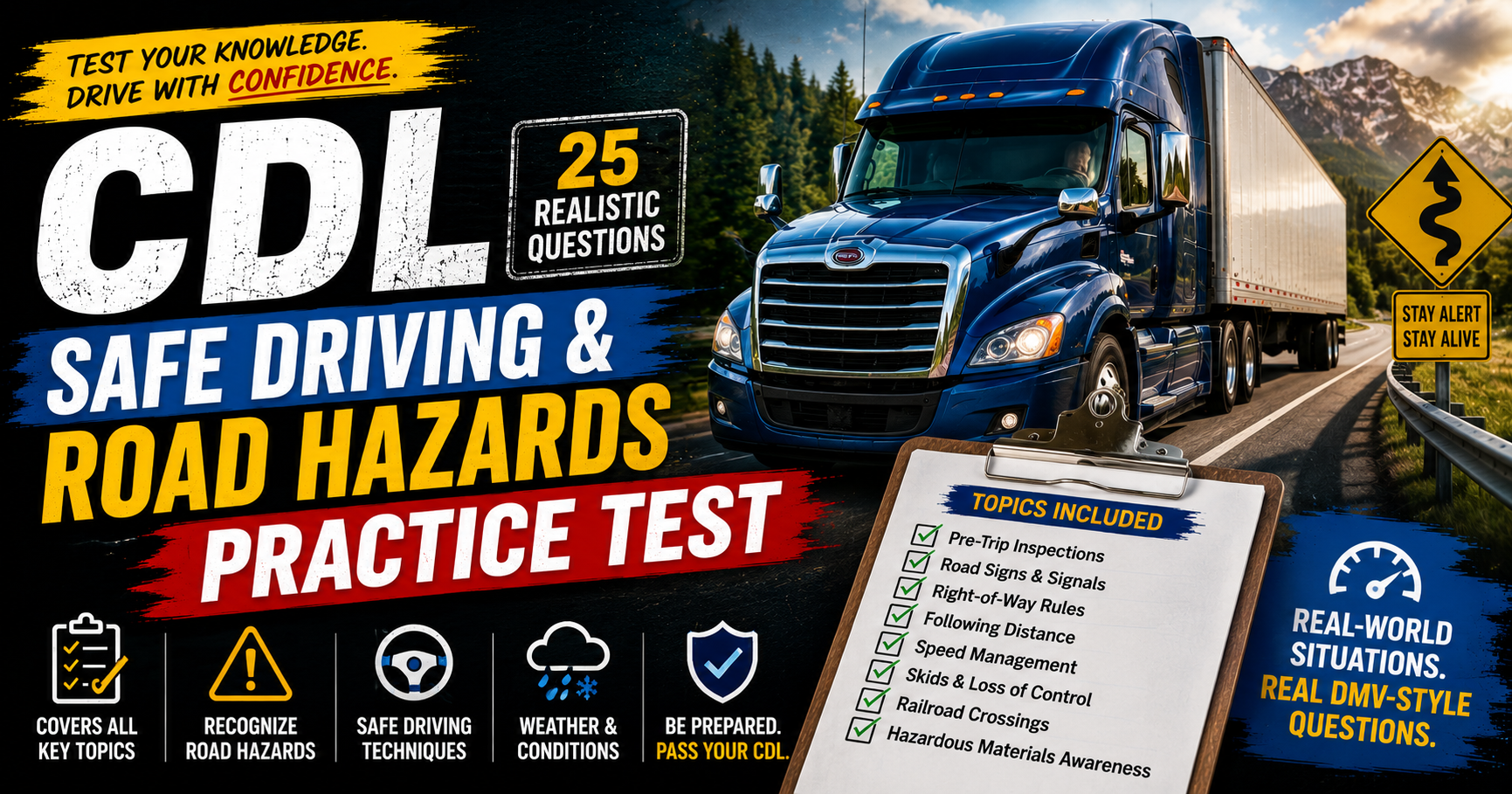
You’ll study your state’s CDL manual and take written knowledge tests covering topics such as:
- General knowledge
- Air brakes, if required
- Combination vehicles for Class A applicants
- Additional endorsement tests if needed
Don’t underestimate these exams.
I’ve met plenty of people who assumed they could walk in without studying and pass.
Most of them were back a week later after spending time with the CDL manual.
Take your time.
Study a little each day instead of trying to memorize everything the night before.
You’ll retain far more information, and it’ll help once you’re actually behind the wheel.
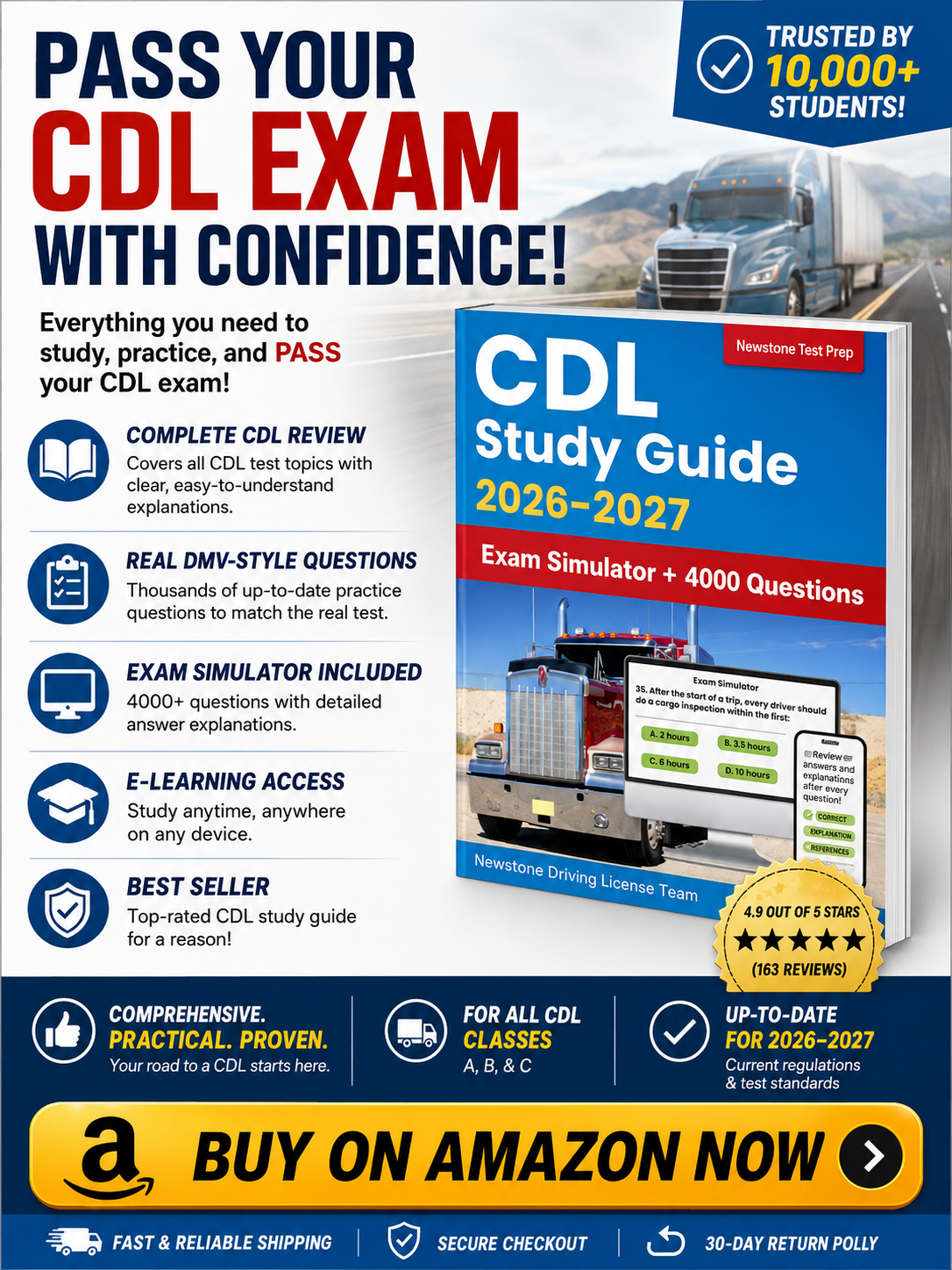
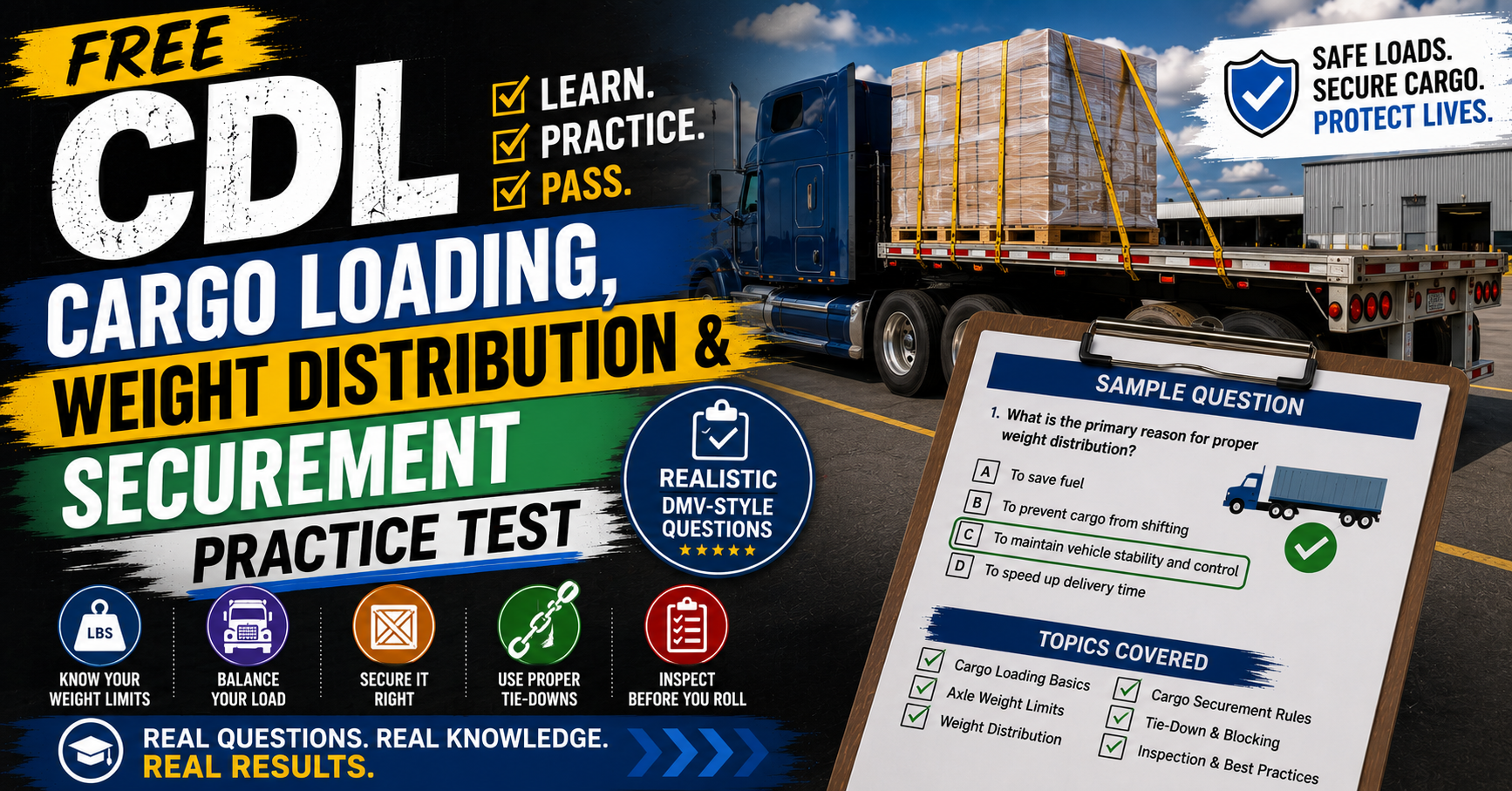
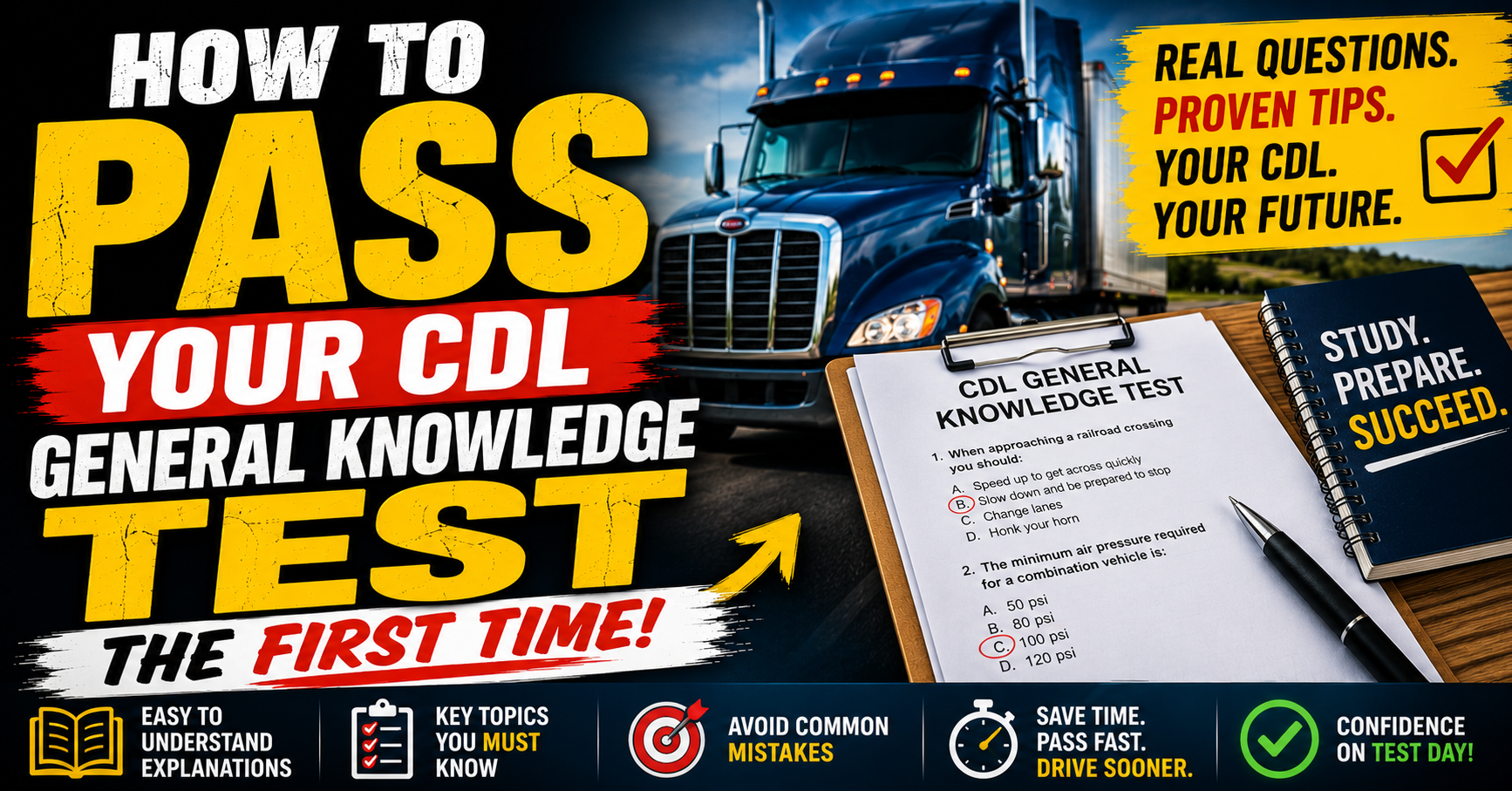
As you’re studying for your permit exam, having more than just the CDL manual can make a big difference. I often recommend the CDL Study Guide: Complete Review + Real DMV-Style Questions and Detailed Answer Explanations because it includes realistic DMV-style practice questions, detailed answer explanations, and online study tools. It’s one of my favorite resources for reinforcing what you’ve learned before test day.

Step 5: Complete Entry-Level Driver Training (ELDT)
One of the biggest changes to CDL licensing in recent years is the Entry-Level Driver Training requirement.
If you’re getting your first Class A or Class B CDL, upgrading from a Class B to a Class A, or applying for certain endorsements, you’ll generally need to complete training through an approved provider listed in the FMCSA’s Training Provider Registry.
This training includes both classroom instruction and behind-the-wheel practice.
A quality CDL school won’t just teach you how to pass the test.
It’ll teach you how to safely control a commercial vehicle in real-world situations.
That’s a huge difference.
I’ve known drivers who passed their CDL test but still felt nervous their first week on the job because they’d focused only on passing instead of actually learning how to drive.
Choose a school that prepares you for your career, not just your exam.
Step 6: Spend Time Behind the Wheel
No amount of reading can replace seat time.
This is where you’ll begin learning skills that every professional driver uses every day.
You’ll practice things like:
- Pre-trip inspections
- Coupling and uncoupling trailers
- Straight-line backing
- Offset backing
- Parallel parking
- Alley dock backing
- Lane positioning
- Turning safely
- Shifting, if applicable
- Highway driving
- City driving
When I first started driving combination vehicles, backing into tight spaces was easily the hardest part.
Nobody becomes an expert overnight.
The more time you spend practicing, the more natural everything becomes.
Even after decades behind the wheel, I still believe confidence comes from repetition.
That’s why experienced instructors encourage students to practice every chance they get instead of rushing toward test day.
Step 7: Schedule Your CDL Skills Test
Once you’ve completed your training and your instructor believes you’re ready, it’s time to schedule your CDL skills test.
This is the day you’ve been working toward.
The skills test is usually divided into three parts.
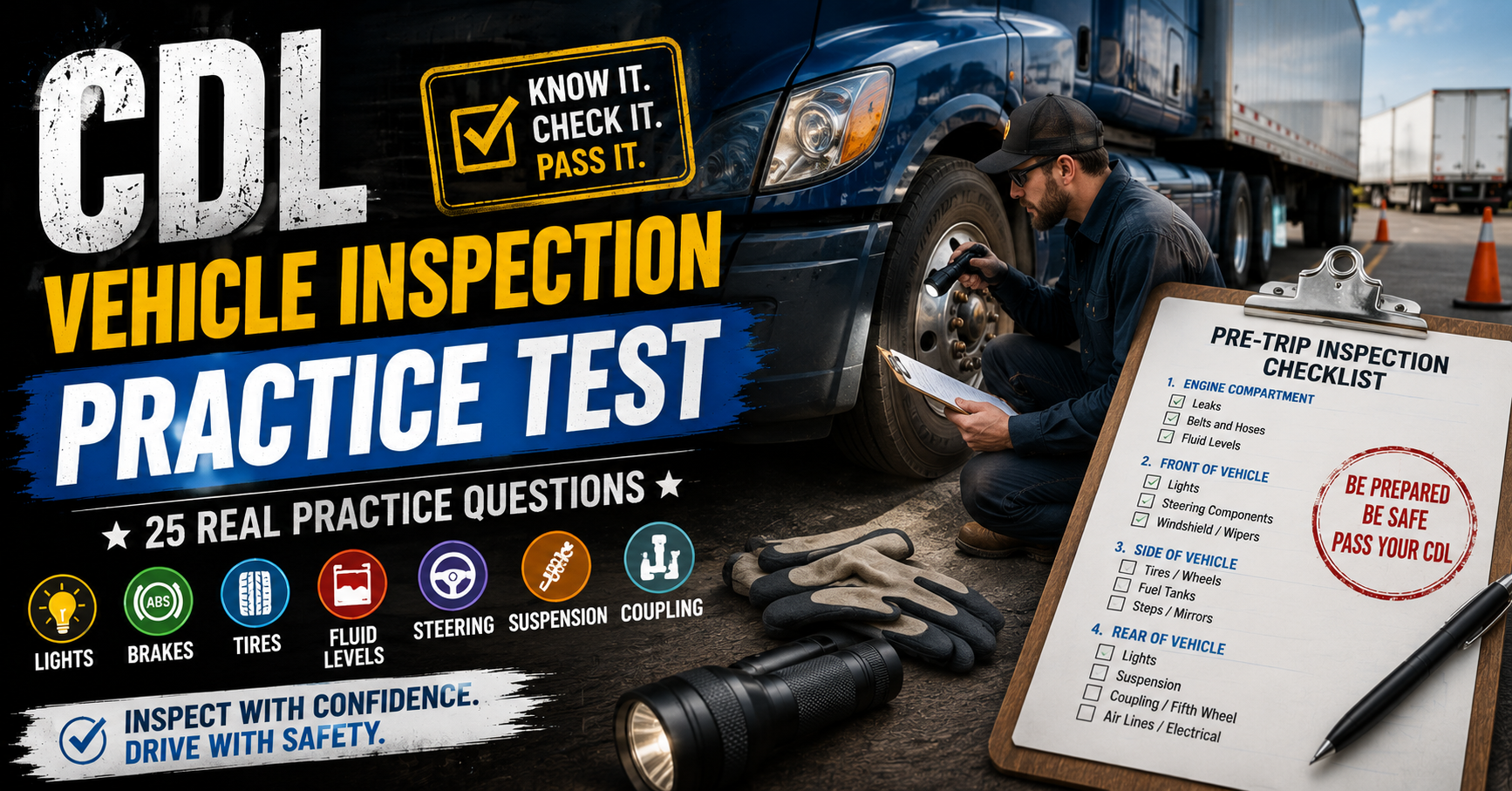
Vehicle Inspection
The first part is your pre-trip inspection.
This isn’t just about memorizing parts. The examiner wants to know that you understand what you’re inspecting and why it matters.
You’ll be expected to identify major components and explain what you’re checking.
Depending on the vehicle, this may include:
- Engine compartment
- Steering system
- Suspension
- Brake components
- Tires and wheels
- Lights and reflectors
- Fuel system
- Coupling devices
- Emergency equipment
- Air brake system
One piece of advice I always give new drivers is this:
Don’t rush.
Speak clearly, point directly at the part you’re describing, and stay calm. It’s better to move steadily than to hurry and accidentally skip something.
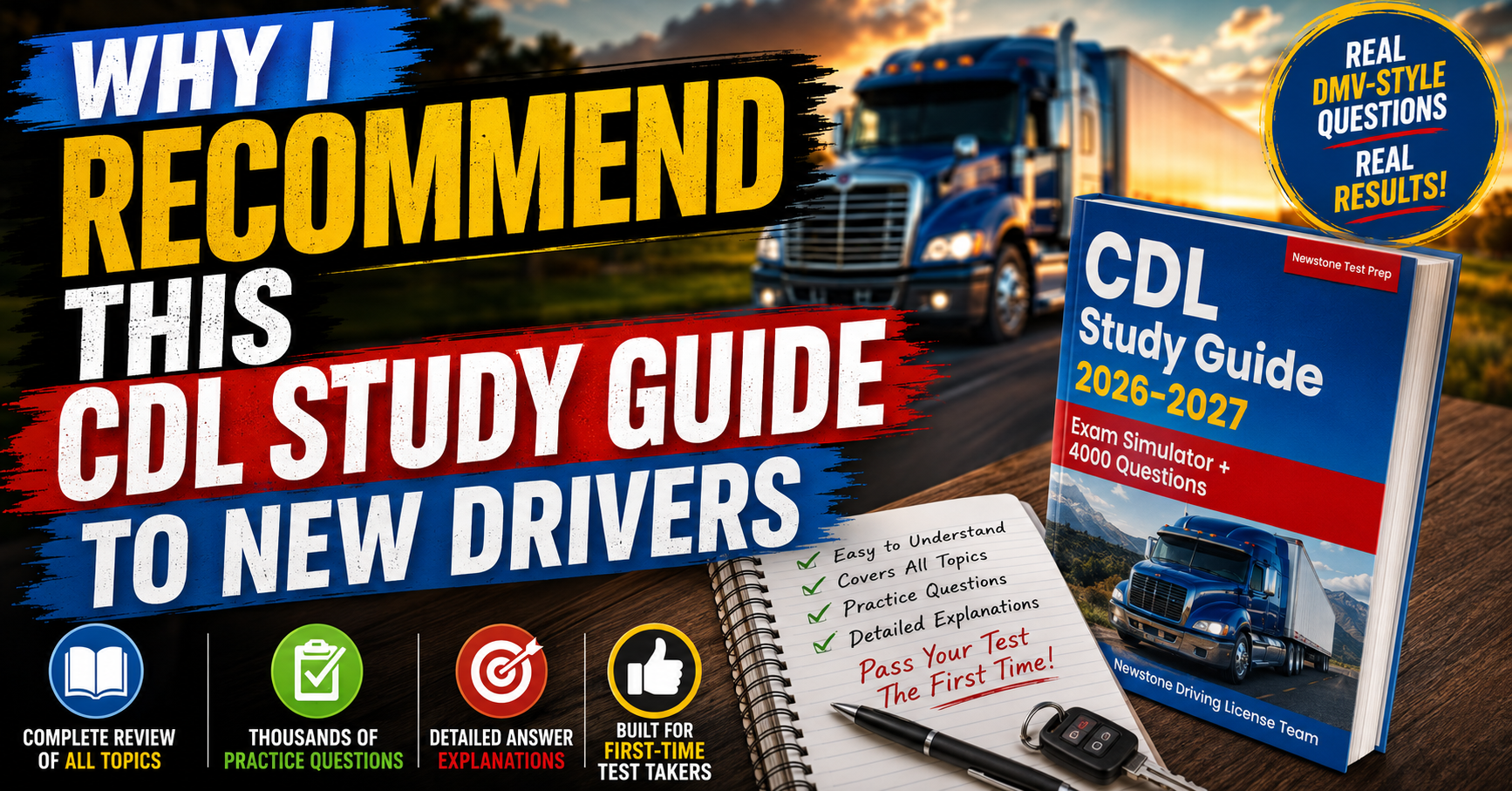
One resource I recommend keeping beside your CDL manual is our recommended CDL study guide. It includes realistic practice questions and detailed explanations that can help reinforce what you’re learning.
Basic Vehicle Control
Next comes the backing portion.
For many students, this is the most stressful part of the test.
You’ll demonstrate several backing maneuvers while staying within the boundaries set up by the examiner.
Depending on your state, these exercises may include:
- Straight-line backing
- Offset backing
- Alley dock backing
- Parallel parking
When I was learning, I thought backing was impossible.
Then one day something just clicked.
After enough practice, you stop thinking about every tiny steering correction and begin feeling how the trailer responds.
That’s why practice matters so much. Confidence comes from repetition.
Road Test
The final portion is the actual driving test.
You’ll leave the testing site and drive on public roads while the examiner evaluates your ability to safely operate the vehicle.
During the road test, they’re watching things like:
- Proper lane positioning
- Mirror usage
- Speed control
- Railroad crossings
- Turns
- Intersections
- Traffic awareness
- Following distance
- Smooth braking
- Overall safety
Remember, the examiner isn’t expecting perfection.
They’re looking for someone who can safely operate a commercial vehicle and make good decisions.
Know What to Expect Before Your CDL Road Test
Passing the written tests and getting your Commercial Learner’s Permit are only part of earning a CDL. The hands-on testing is where you have to show that you can take what you’ve learned and safely apply it around an actual commercial vehicle.
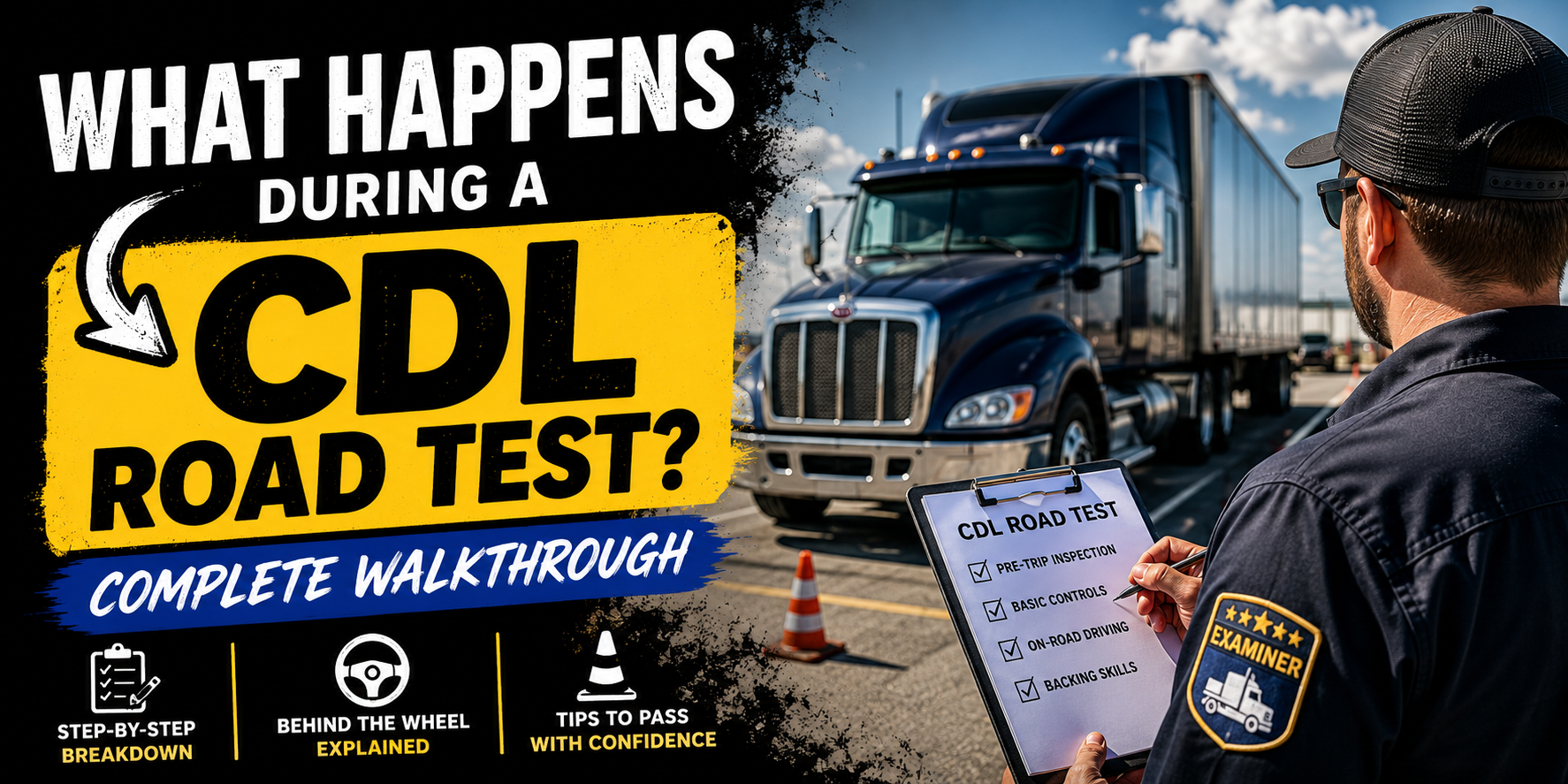
If you’re getting close to that stage, read our complete walkthrough of what happens during a CDL road test before test day. It covers vehicle inspection, basic vehicle control and backing, the on-road portion, what the examiner is watching, common mistakes, and why one small error doesn’t necessarily mean you’ve failed.
Knowing how the process generally unfolds can take away some of the uncertainty and help you focus your practice on the skills you’ll actually need to demonstrate.
Step 8: Receive Your CDL
After successfully passing all three parts of your skills test, you’ll complete the paperwork required by your state.
Once everything is processed, you’ll officially receive your Commercial Driver’s License.
Congratulations!
At that point, you’re legally qualified to begin applying for commercial driving jobs that match your license class and endorsements.
For many drivers, this is the beginning of a career that can last decades.
Should You Attend CDL School?
People ask me this all the time.
Technically, there are situations where employers provide training or you may qualify through other approved programs.
However, for most new drivers, attending a reputable CDL school is still the best path.
A good school doesn’t just prepare you for the exam.
It teaches you how to:
- Control a commercial vehicle safely
- Handle difficult backing situations
- Understand DOT regulations
- Perform proper inspections
- Build safe driving habits from day one
Those skills become incredibly valuable once you’re working on your own.
How Long Does It Take to Get a CDL?
The amount of time it takes depends on several factors, including the type of CDL you’re pursuing, your training schedule, and how quickly you complete each requirement.
You’ll also need to allow time for:
- Studying for your CDL permit
- Completing your DOT medical exam
- Finishing required training
- Practicing behind the wheel
- Scheduling and passing your CDL skills test
Some students finish the process fairly quickly, while others take longer depending on work schedules and testing availability.
The important thing is not to rush. The goal isn’t simply to earn your CDL, but to become a safe and confident commercial driver.
How Much Does It Cost to Get a CDL?
The total cost can vary quite a bit depending on where you live and which CDL school you attend.
Typical expenses may include:
- DOT physical
- CDL permit fees
- CDL school tuition
- Skills test fees
- License fees
- Endorsement testing, if needed
Some trucking companies also offer paid CDL training or tuition reimbursement programs in exchange for working for them after graduation.
Before choosing any program, make sure you understand exactly what’s included and whether there are any employment commitments afterward.
Common Mistakes New CDL Students Make
I’ve watched plenty of new drivers begin their careers over the years, and many of the mistakes they make are completely avoidable.
Choosing the Wrong CDL
One of the biggest mistakes is enrolling in the wrong training program.
Before signing up for school, make sure you understand the differences between the three CDL classes.
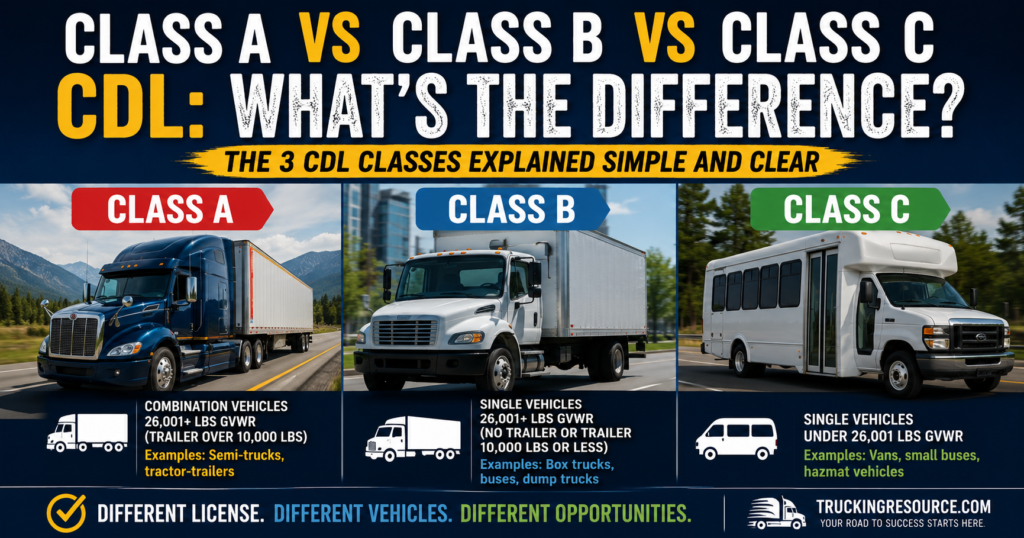
If you haven’t already, take a few minutes to read our guide on Class A vs Class B vs Class C CDL: What’s the Difference?. It can save you from spending time and money earning a license that doesn’t match the type of driving you really want to do.
Trying to Memorize Everything
Don’t focus only on passing the written tests.
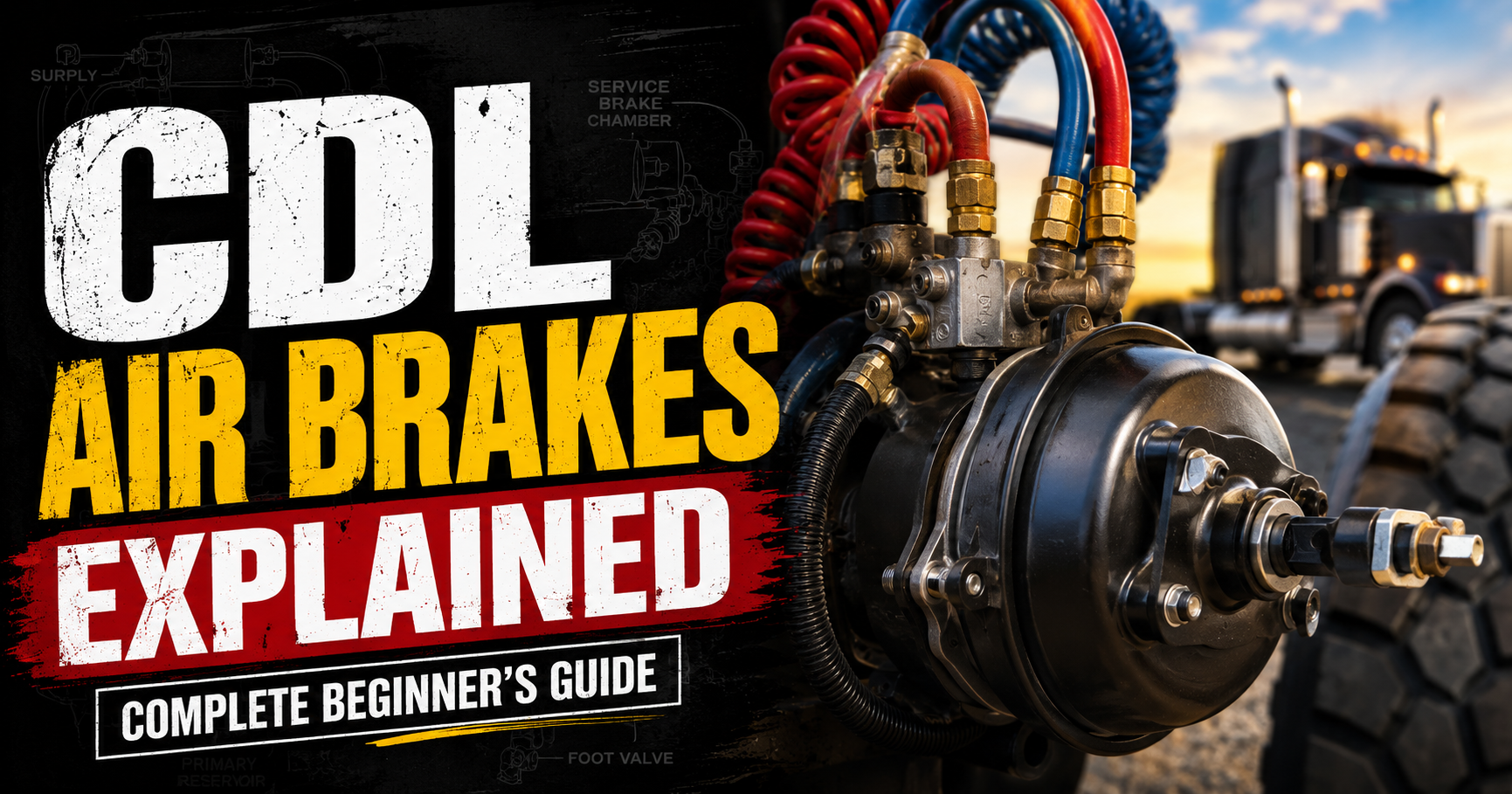
Learn why inspections matter, how air brakes work, and what your responsibilities are as a commercial driver.
The knowledge you gain during training will help keep both you and everyone else on the road safer.
Not Getting Enough Practice
Backing a trailer doesn’t become easy overnight.
The more time you spend practicing, the more comfortable you’ll feel during your skills test and later on the job.
Every experienced driver was a beginner once.
Is Getting a CDL Worth It?
In my opinion, absolutely.
Driving commercially has allowed me to build a career doing something I genuinely enjoy.
I’ve hauled freight through busy cities, quiet farming communities, mountain passes, and just about everywhere in between.
There are certainly long days and challenging moments, but there are also opportunities that many other careers simply can’t offer.
Whether you’re looking for a stable local job or dreaming about driving across the country, earning your CDL can open doors to a wide variety of careers.
As Trucking Resource continues to grow, we’ll keep adding practical guides to help you become a safer, more knowledgeable commercial driver. In the meantime, you can browse all of our trucking content on our Trucking Topics page.
Your CDL Is Just the Beginning
Getting your CDL opens the door to a completely new career, but earning the license is only the first step. Orientation, driver training, choosing your first trucking job, avoiding rookie mistakes, and building confidence behind the wheel are all part of becoming a successful professional driver.
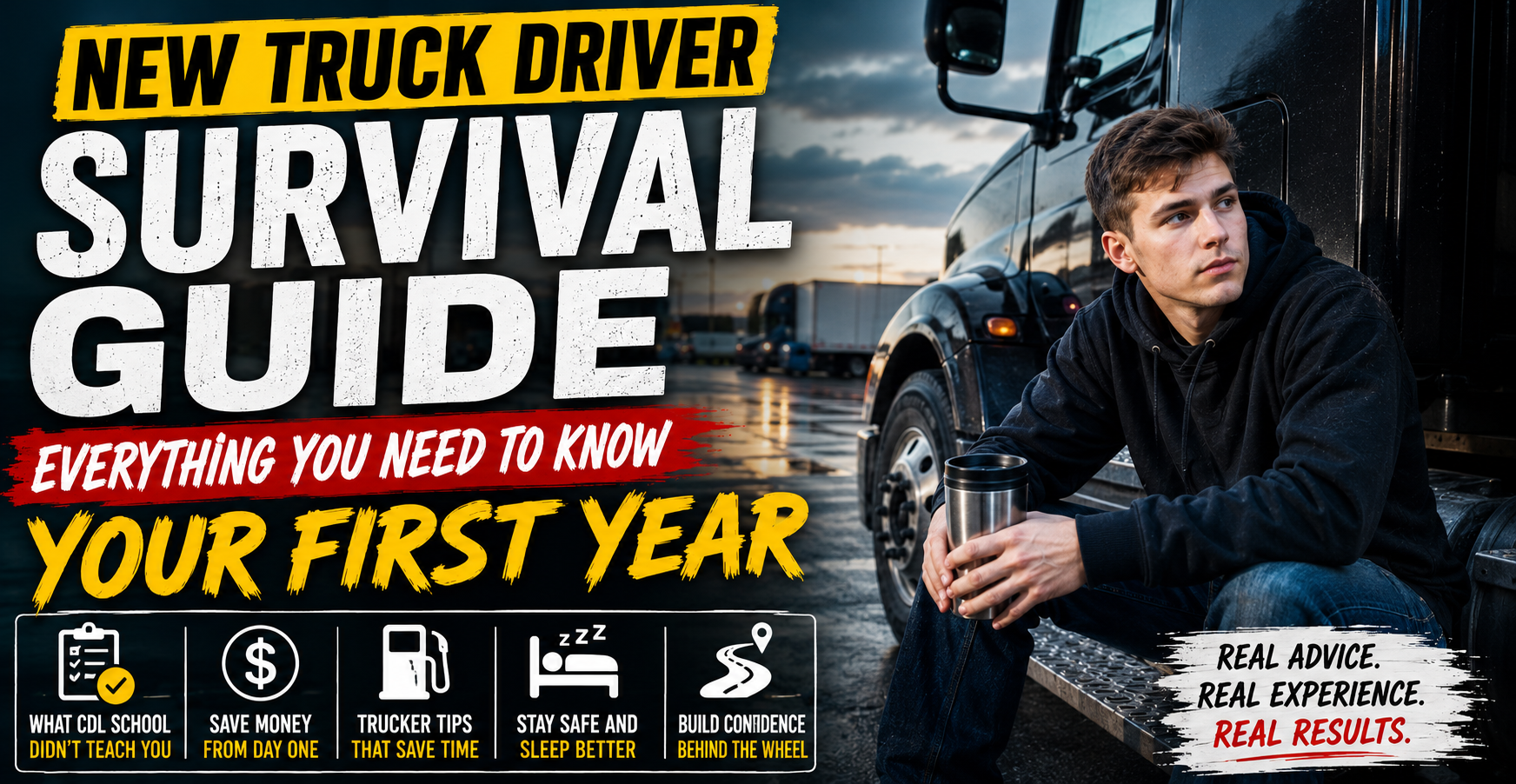
To see how all those pieces fit together, read New Truck Driver Survival Guide Everything You Need to Know Your First Year. It’s designed to help new drivers understand what happens after they earn their CDL.
Author
David Walker
David Walker is a former CDL instructor with more than 22 years of experience helping new drivers earn their Commercial Driver’s Licenses. Throughout his career, he’s trained hundreds of students on pre-trip inspections, backing maneuvers, air brake systems, and CDL skills testing. His goal is to simplify the licensing process and help future truck drivers start their careers with confidence.