When I was studying for my CDL permit, I quickly realized something.
The hardest questions weren’t the ones with difficult words.
They were the ones that sounded like more than one answer could be right.
That’s because the CDL General Knowledge test isn’t really testing your memory.
It’s testing whether you think like a safe commercial driver.
If you understand why an answer is correct, you’ll usually have no trouble recognizing it, even if the question is worded differently than the practice test you studied the night before.
That’s exactly what we’re going to do in this guide.
Instead of simply giving you a list of questions and answers, I’ll explain the thinking behind each one so you’ll be prepared for whatever version appears on your actual permit exam.
After reading through these examples, I recommend taking our Free CDL General Knowledge Practice Test #1, Practice Test #2, Practice Test #3, and the more difficult CDL General Knowledge Challenge Practice Test to see how well you’ve mastered the material.
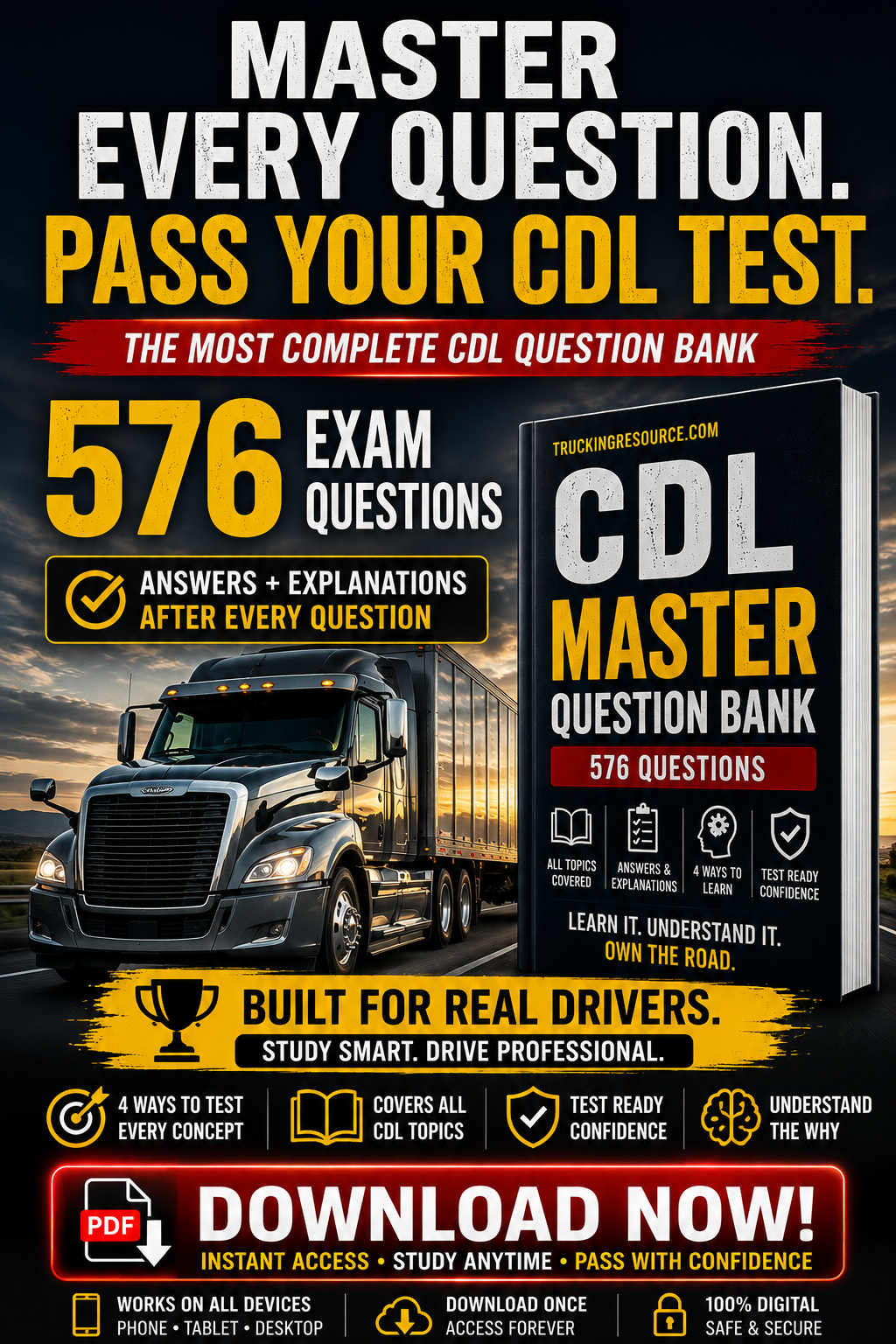
If you’re looking for even more realistic practice, our CDL Master Question Bank PDF includes hundreds of additional questions, and the 21-Day CDL Permit Exam Mastery Workbook PDF provides a step-by-step study plan leading up to your exam.
Why the CDL General Knowledge Test Feels So Difficult
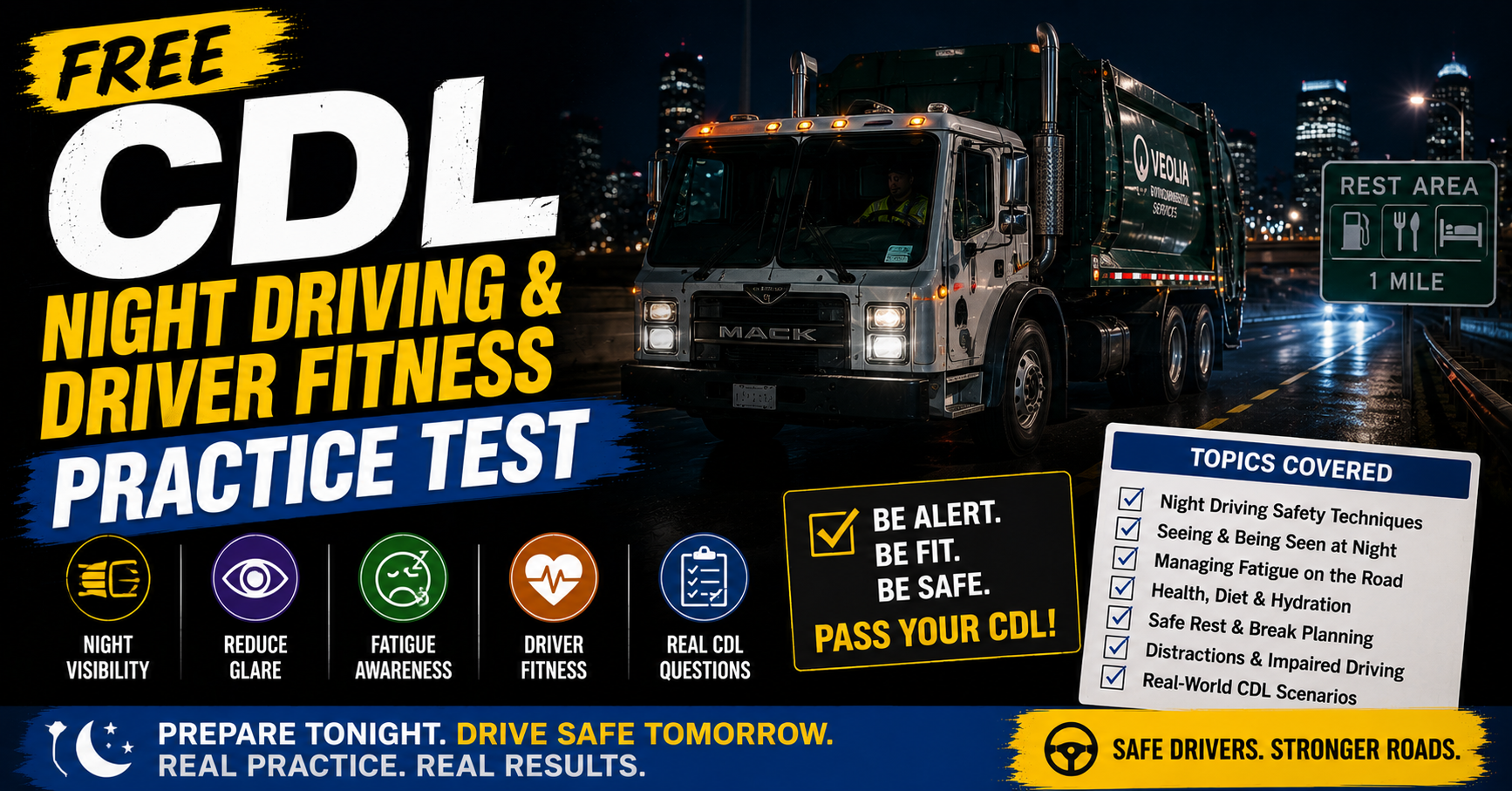
Many students tell me they expected the CDL permit exam to be mostly about truck parts. The exam also covers practical safety topics such as fatigue, visibility, and distracted driving, which are addressed in the Free CDL Night Driving & Driver Fitness Practice Test.
Then they open the CDL manual and discover questions about weather, fatigue, railroad crossings, following distance, mountain driving, emergency situations, inspections, cargo, distracted driving, and dozens of other topics.
It feels overwhelming because the test covers nearly every situation you’ll eventually face as a professional driver.
The good news is that almost every question follows one basic principle.
Which answer is the safest?
Once you start thinking that way, many questions become much easier.
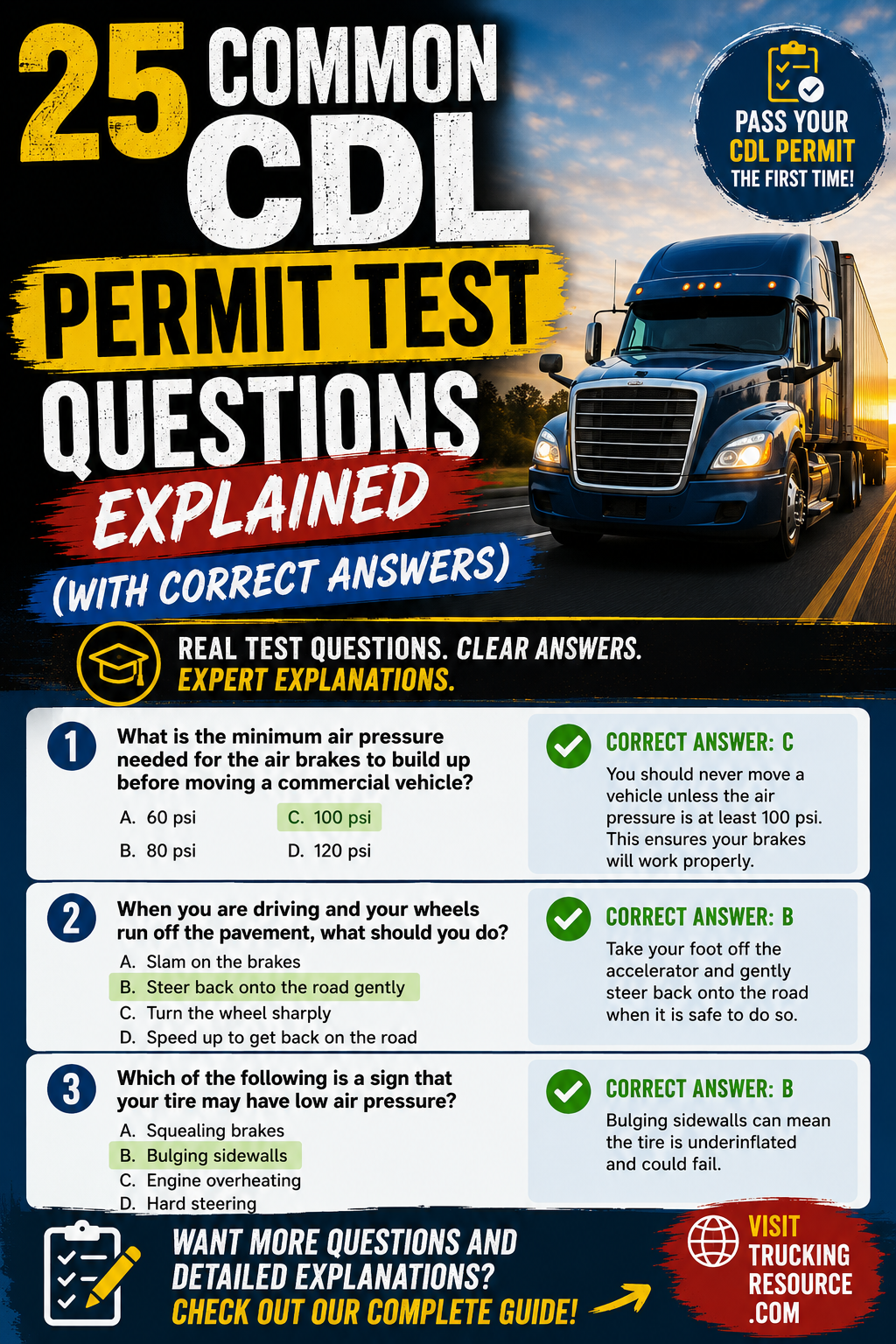
Memorizing Answers Isn’t Enough
One mistake I see over and over is students trying to memorize hundreds of practice questions.
That works until the DMV asks the same question a different way.
Instead, try understanding the concept.
For example, if you understand why trucks need more following distance than passenger cars, you’ll correctly answer dozens of different questions without memorizing every one individually.
That’s exactly how professional drivers think.
Question 1
Why should you always perform a pre-trip inspection before driving?
Correct Answer:
To identify safety problems before they become dangerous on the road.
Why this answer is correct
The purpose of a pre-trip inspection isn’t to satisfy a regulation.
It’s to prevent breakdowns and accidents.
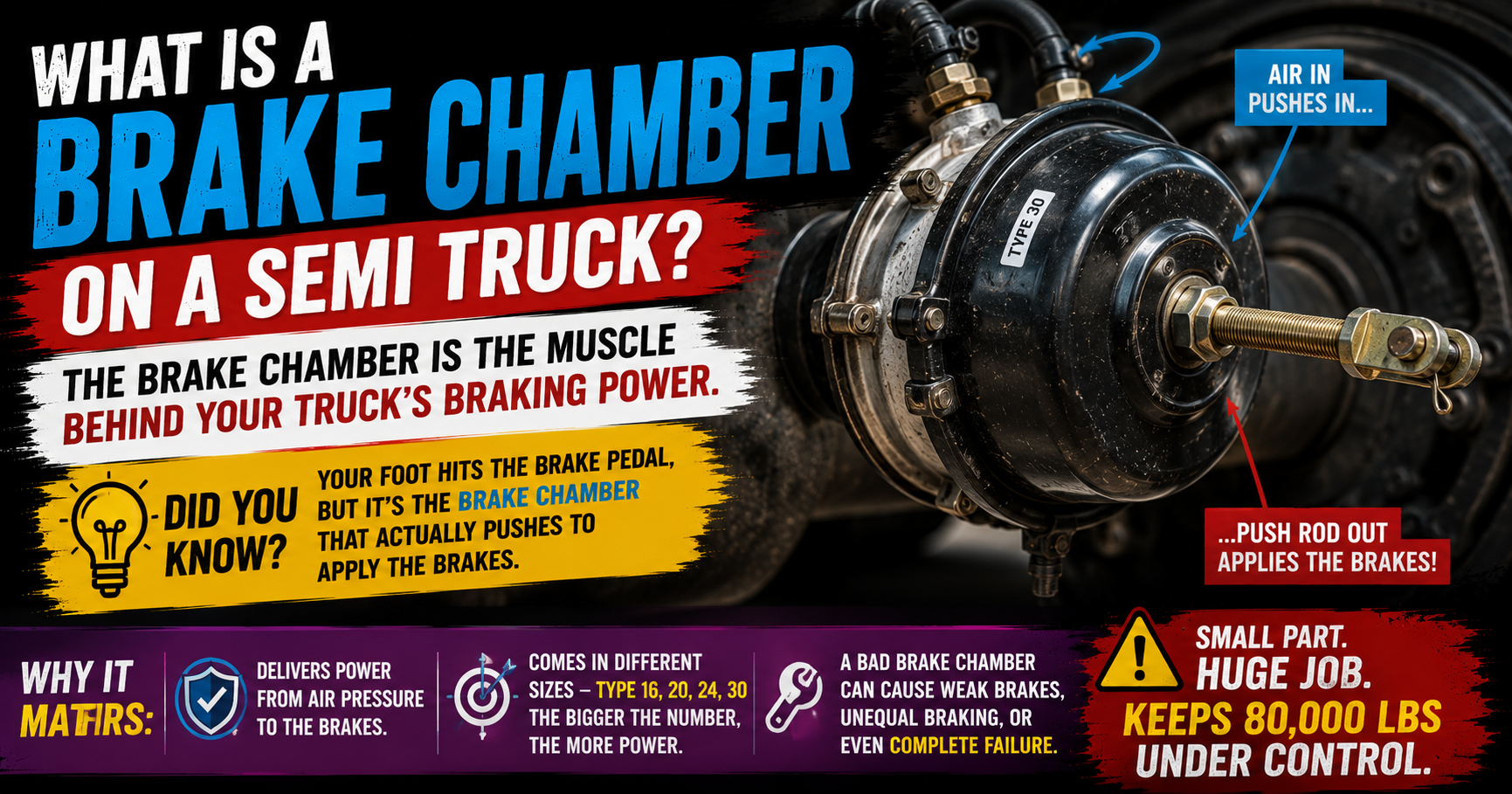
A loose airline, damaged tire, leaking brake chamber, or broken light might seem minor in the parking lot.
At highway speeds, those same problems can become major safety hazards.
Professional drivers inspect their trucks because catching small problems early usually prevents much larger ones later.
If vehicle inspections are still confusing, our CDL Vehicle Inspection Practice Test is an excellent place to strengthen this area before your permit exam.
Question 2
Where should your eyes be focused most of the time while driving?
Correct Answer:
Far ahead of your vehicle.
Why this answer is correct
New drivers often watch only the vehicle directly in front of them.
Experienced drivers scan much farther down the road.
Looking well ahead allows you to recognize slowing traffic, construction zones, merging vehicles, or road hazards long before you reach them.
That extra time lets you make smooth steering and braking decisions instead of sudden emergency maneuvers.
Question 3
How much following distance should you leave behind the vehicle ahead?
Correct Answer:
At least one second for every 10 feet of vehicle length, adding an extra second when traveling above 40 MPH.
Why this answer is correct
Commercial vehicles need much more distance to stop than passenger cars.
Following too closely removes your ability to react gradually.
More space gives you more options.
That’s why safe drivers view following distance as protection, not wasted road space.
Question 4
What makes up your total stopping distance?
Correct Answer:
Perception distance, reaction distance, and braking distance.
Why this answer is correct
Many students think stopping distance begins when they press the brake pedal.
Actually, your truck continues moving while your brain recognizes the danger and while your foot moves toward the brake pedal.
Only then do the brakes begin slowing the vehicle.
Understanding these three stages explains why distractions are so dangerous.
Even looking away for a couple of seconds dramatically increases total stopping distance.
Question 5
When should you check your mirrors while driving?
Correct Answer:
Frequently, every few seconds, and before changing speed or direction.
Why this answer is correct
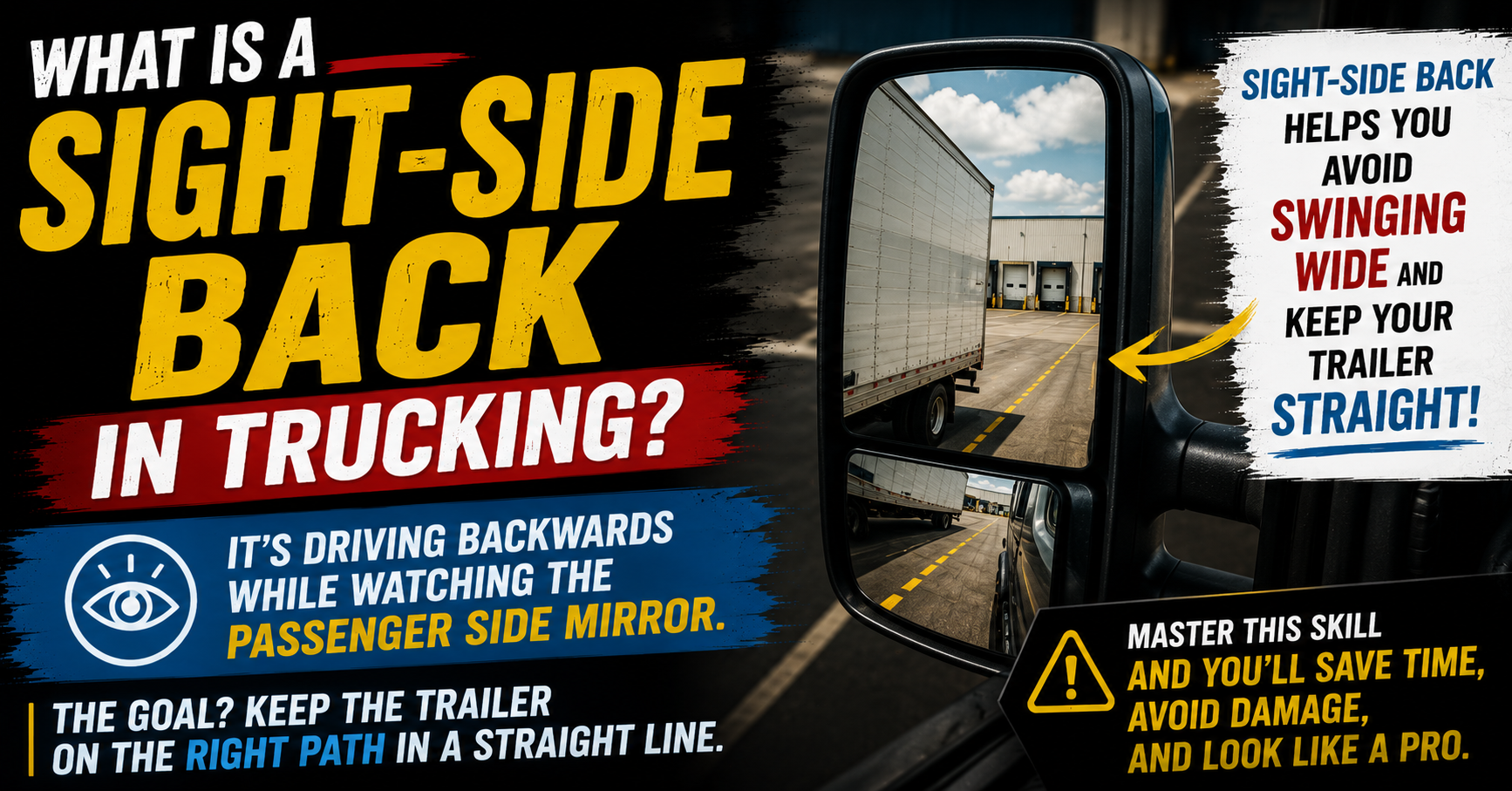
Commercial trucks have much larger blind spots than passenger vehicles. If you only check your mirrors when you’re getting ready to change lanes, you’ve probably missed important information.
Professional drivers develop the habit of scanning their mirrors every few seconds. They’re constantly checking traffic, watching how their trailer is tracking, and making sure no vehicles are lingering in blind spots.
Mirror checks become second nature with experience, and they help prevent countless accidents every year.
Question 6
What’s the safest way to let other drivers know what you’re planning to do?
Correct Answer:
Use your turn signals early and communicate your intentions clearly.
Why this answer is correct
Good truck drivers don’t surprise anyone.
Whether you’re slowing down, changing lanes, turning, or pulling onto the shoulder, you should communicate your intentions as early as possible.
Your:
- Turn signals
- Brake lights
- Headlights
- Horn (when appropriate)
all help other drivers understand what you’re about to do.
Predictable drivers are safer drivers.
Question 7
Should you always drive the posted speed limit?
Correct Answer:
No. You should drive at a speed that’s safe for current road, traffic, and weather conditions.
Why this answer is correct
This question tricks a lot of students.
The speed limit tells you the maximum speed under ideal conditions.
That doesn’t always mean it’s safe.
If you’re driving through:
- Heavy rain
- Snow
- Fog
- Construction zones
- Heavy traffic
- Sharp curves
you’ll often need to drive below the posted limit.
Professional drivers adjust their speed based on conditions, not just the number on the sign.
Question 8
What’s one of the biggest mistakes drivers make when going downhill?
Correct Answer:
Riding the brakes continuously.
Why this answer is correct
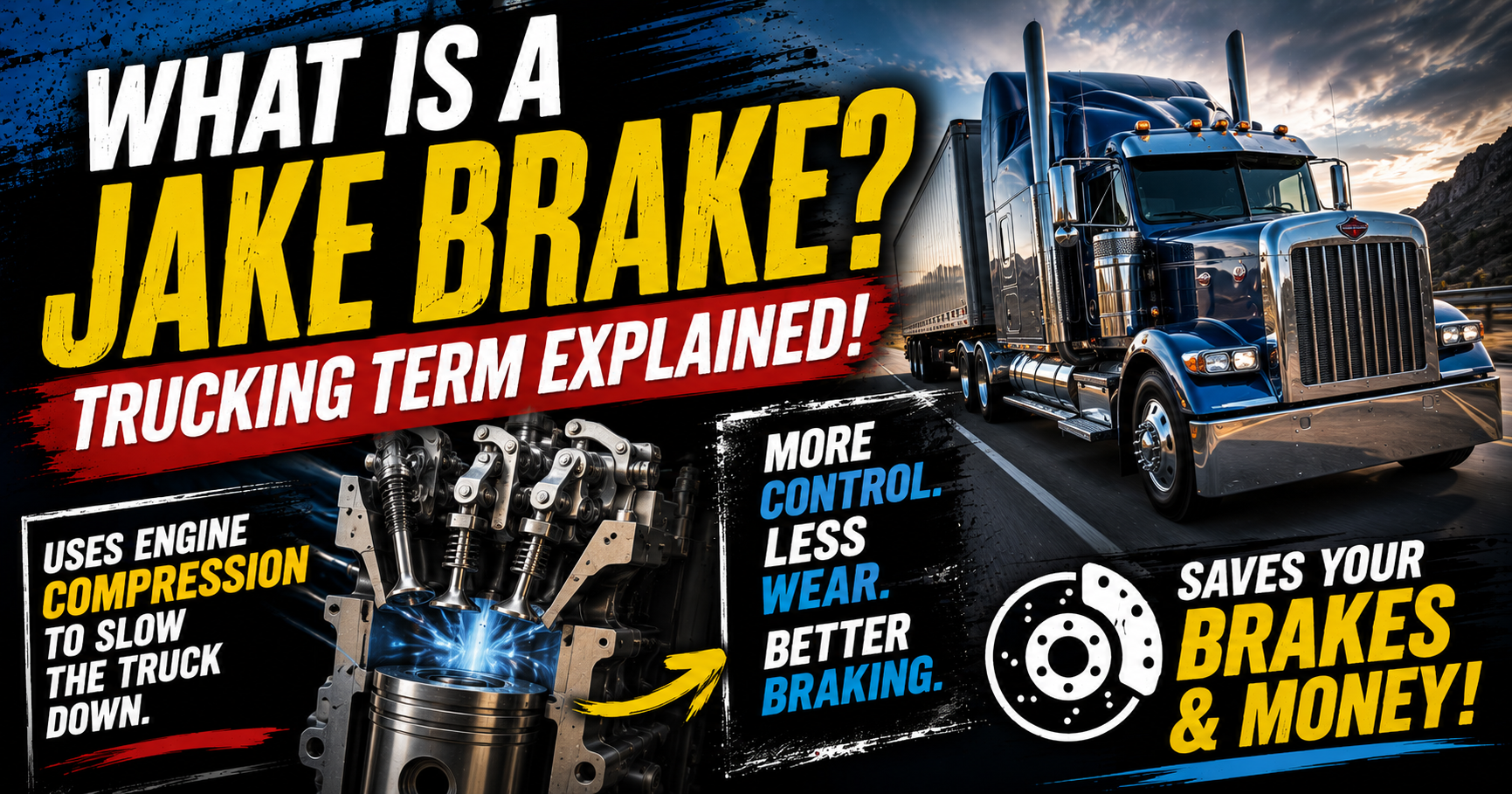
Using the brakes constantly creates tremendous heat.
Eventually, the brakes become less effective, a condition known as brake fade.
Instead, professional drivers:
- Slow down before reaching the hill.
- Select the proper gear.
- Use the engine brake whenever appropriate.
- Apply the brakes firmly when needed, then release them so they can cool.
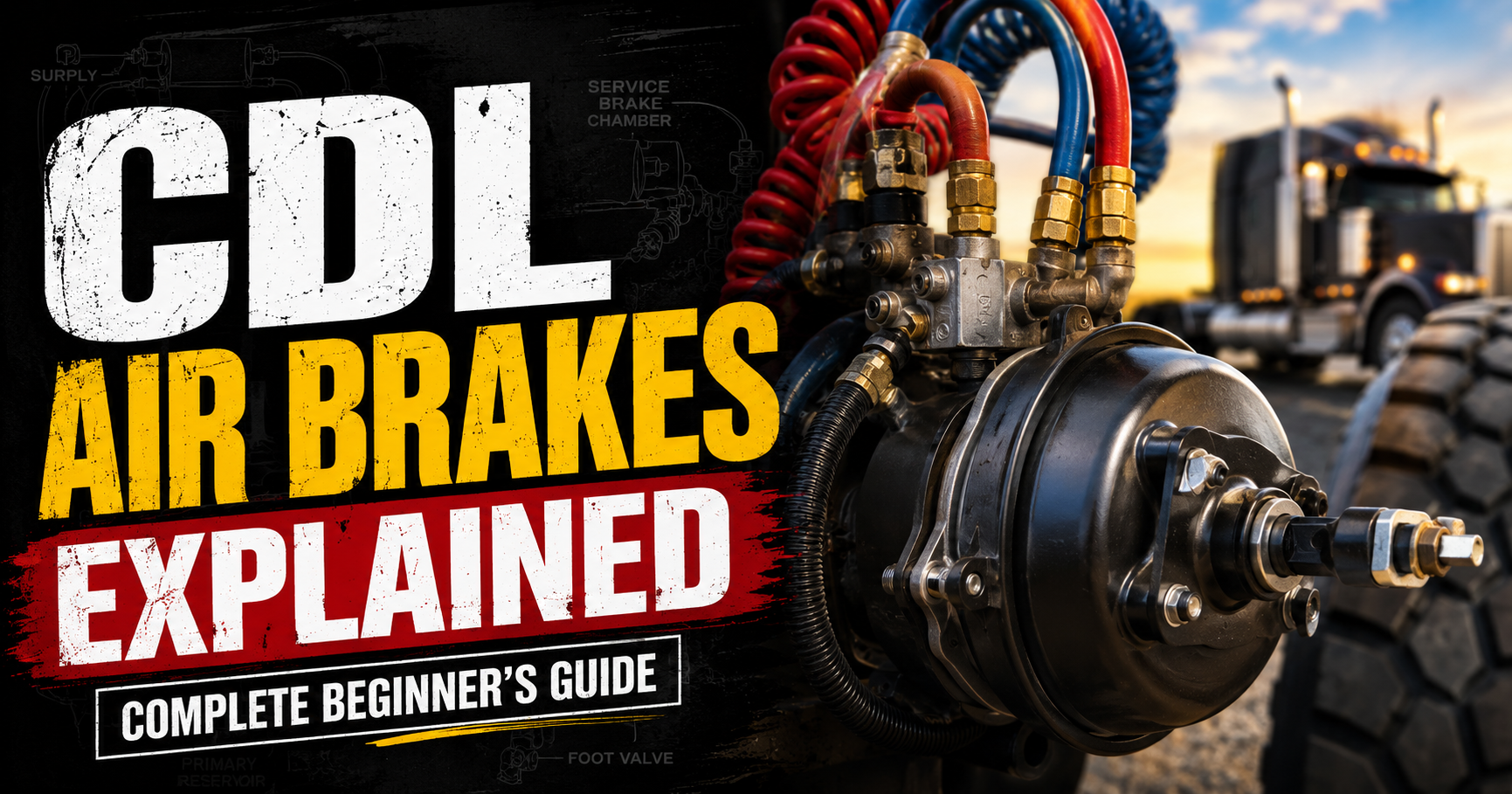
If you’d like a complete explanation of air brakes and downhill braking techniques, our CDL Air Brakes Explained: Complete Beginner’s Guide covers everything in much greater detail.
Question 9
Before crossing railroad tracks, what should you always do?
Correct Answer:
Slow down, look both directions, and make sure you can completely clear the crossing.
Why this answer is correct
Commercial vehicles require extra caution around railroad crossings because of their size and weight.
One of the biggest mistakes drivers make is entering a crossing without enough room to clear the tracks.
If traffic stops on the other side, you could become trapped.
Never enter a railroad crossing unless you’re certain you can completely cross it.
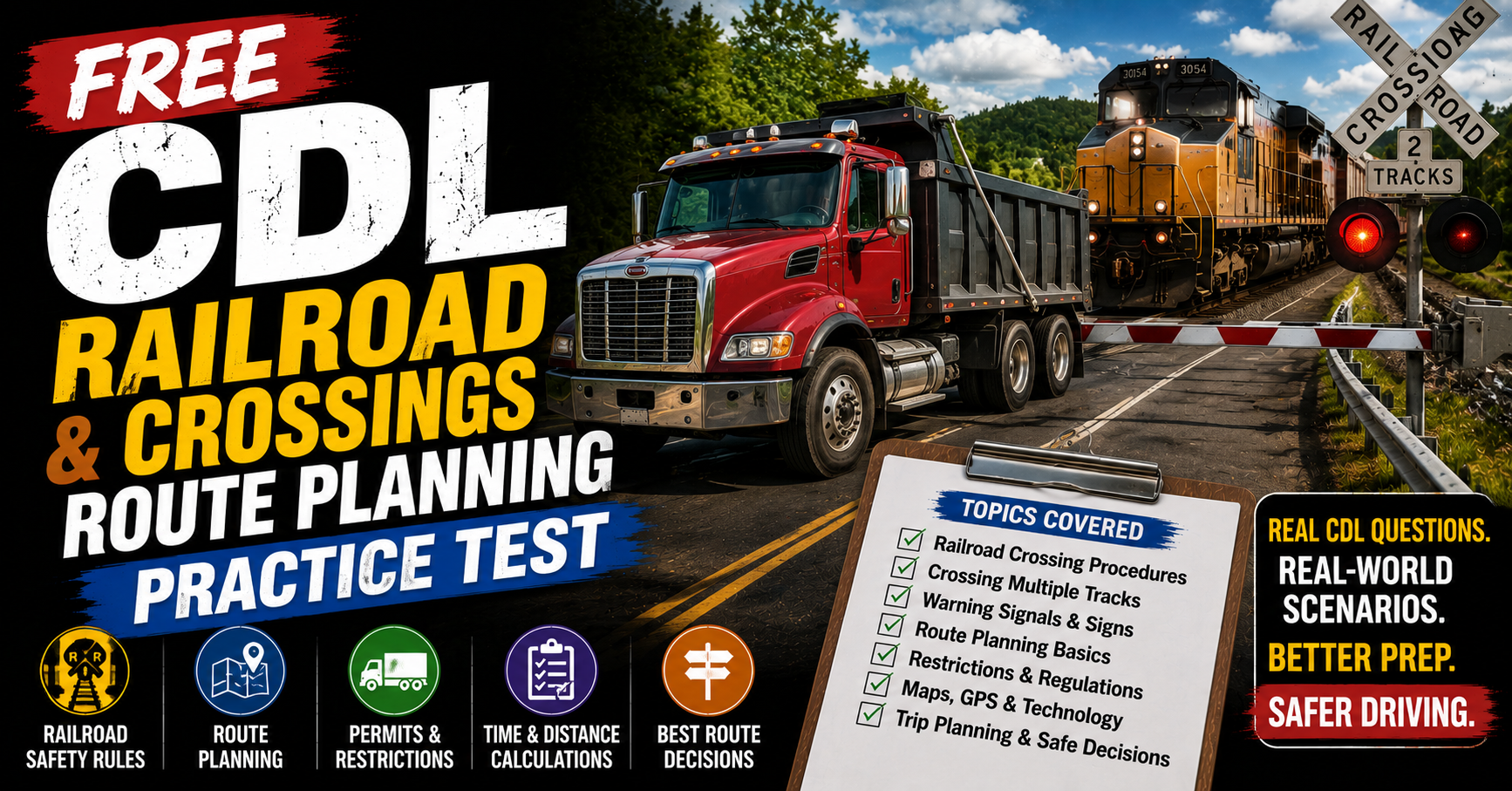
Our Free CDL Railroad Crossings & Route Planning Practice Test provides additional practice on this important topic.
Question 10
If a steer tire suddenly blows out, what’s your first priority?
Correct Answer:
Maintain control of the vehicle.
Why this answer is correct
The loud bang can be startling.
Your natural reaction may be to slam on the brakes.
That’s usually the wrong choice.
Instead:
- Hold the steering wheel firmly.
- Stay in your lane.
- Ease off the accelerator.
- Slow down gradually.
- Pull over only after you’ve regained control.
Staying calm almost always produces a better outcome than making sudden steering or braking movements.
Question 11
What’s one of the first warning signs of driver fatigue?
Correct Answer:
Difficulty concentrating and frequent yawning.
Why this answer is correct
Fatigue doesn’t usually happen all at once.
It builds gradually.
Some common warning signs include:
- Frequent yawning.
- Heavy eyelids.
- Missing traffic signs.
- Drifting within your lane.
- Trouble remembering the last few miles.
If you notice these symptoms, don’t try to fight through them.
The safest decision is finding a safe place to stop and rest.
Question 12
Does drinking coffee eliminate fatigue?
Correct Answer:
No.
Why this answer is correct
Coffee may temporarily help you feel more alert.
It doesn’t replace sleep.
Many new drivers mistakenly believe another cup of coffee will solve the problem.
Real fatigue only improves when your body gets adequate rest.
Professional drivers know when it’s time to stop instead of trying to push through exhaustion.
Question 13
Why is using your phone while driving so dangerous?
Correct Answer:
It takes your eyes, hands, or mind away from driving.
Why this answer is correct
Many students assume distracted driving only means texting.
In reality, distractions include:
- Looking at GPS.
- Eating.
- Reaching for objects.
- Reading paperwork.
- Adjusting the radio.
- Using a phone.
Even glancing away from the road for just a few seconds can mean traveling hundreds of feet without seeing what’s happening ahead.
Question 14
When should you reduce your speed because of weather?
Correct Answer:
Any time road or visibility conditions become less than ideal.
Why this answer is correct
Professional drivers don’t wait until conditions become dangerous.
They slow down early.
Rain, snow, fog, ice, and strong winds all reduce your safety margin.
Adjusting your speed before problems develop is one of the easiest ways to avoid crashes.
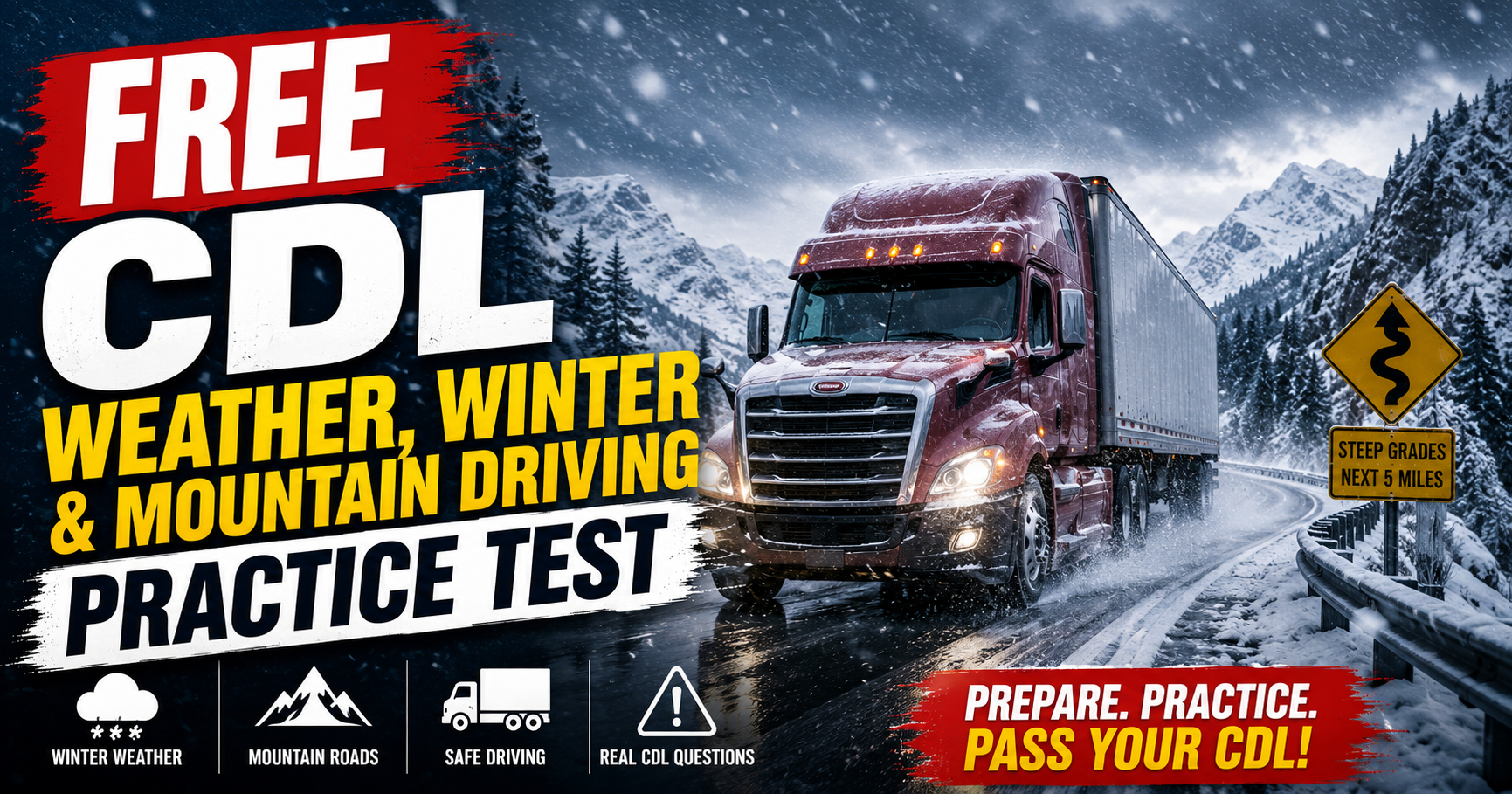
If weather driving is an area you struggle with, our Free CDL Weather, Winter & Mountain Driving Practice Test is excellent preparation before your permit exam.
Question 15
Why do commercial trucks roll over in curves?
Correct Answer:
They’re usually traveling too fast for the curve.
Why this answer is correct
Rollovers rarely happen because the truck “just tipped over.”
Most occur because the driver entered the curve carrying too much speed.
The safest habit is slowing before entering the curve.
Once you’re in the curve, sudden braking or steering can make the situation worse.
Smooth, controlled driving greatly reduces rollover risk.
Question 16
What should you do before backing into an area if you’re unsure about your clearance?
Correct Answer:
Get Out And Look (GOAL).
Why this answer is correct
Backing accidents are among the most common preventable crashes involving commercial vehicles.
Even experienced drivers can’t see everything from the driver’s seat.
That’s why you’ll hear professional truck drivers repeat one simple phrase over and over:
GOAL…Get Out And Look.
If you’re unsure about:
- Low clearance
- Pedestrians
- Poles
- Curbs
- Other vehicles
- Loading docks
Stop the truck and look.
Nobody has ever been criticized for getting out too many times.
Plenty of drivers wish they had gotten out one more time.
Question 17
If another driver is acting aggressively, what’s the safest response?
Correct Answer:
Stay calm and create more space.
Why this answer is correct
Road rage is something every truck driver encounters eventually.
Someone may:
- Cut you off.
- Tailgate.
- Honk.
- Flash their headlights.
- Make rude gestures.
Don’t engage.
Remember, you’re driving a commercial vehicle that may weigh up to 80,000 pounds.
The safest response is increasing your following distance, avoiding eye contact or confrontation, and allowing the aggressive driver to move on.
Professional drivers don’t win arguments on the highway.
They avoid them.
Question 18
Why is proper cargo distribution important?
Correct Answer:
Because uneven weight affects steering, braking, and vehicle stability.
Why this answer is correct
Where the weight is placed matters almost as much as how much weight you’re hauling.
Improper weight distribution can:
- Reduce steering control.
- Increase stopping distance.
- Make the truck unstable.
- Increase rollover risk.
- Overload individual axles.
Even if someone else loaded the trailer, you’re still responsible for making sure the load appears safe before driving away.
If you’d like more practice on this topic, our Free CDL Cargo Loading, Weight Distribution & Securement Practice Test explains these concepts in much greater detail.
Question 19
What separates professional truck drivers from average drivers?
Correct Answer:
They constantly plan ahead.
Why this answer is correct
Professional drivers rarely focus only on what’s directly in front of them.
Instead, they’re asking themselves questions like:
- What if traffic suddenly stops?
- Where is my escape route?
- Is that car about to merge?
- Will I need to slow down for this hill?
- What’s happening several vehicles ahead?
Planning ahead gives you time.
Time gives you options.
And options prevent accidents.
Question 20
What’s the safest way to enter a sharp curve?
Correct Answer:
Slow down before entering the curve.
Why this answer is correct
Many students think they can simply brake while turning.
That’s risky in a commercial vehicle.
Heavy trucks are much more stable when speed is reduced before entering the curve.
Once you’re already turning, sudden braking or steering can increase the chance of losing control.
The safest approach is simple:
Slow down first.
Turn second.
Accelerate gently after exiting the curve.
Question 21
Why should you avoid driving in another vehicle’s blind spot?
Correct Answer:
Because the other driver may not be able to see you.
Why this answer is correct
Every vehicle has blind spots.
Commercial trucks have especially large ones.
If another driver can’t see you, they may change lanes without realizing you’re there.
The safest habit is either passing promptly or staying far enough behind that you’re clearly visible in their mirrors.
Likewise, remember that your own truck has large blind spots too.
That’s why frequent mirror checks are such an important part of professional driving.
Question 22
Why should you always wear your seat belt in a commercial vehicle?
Correct Answer:
Because it helps protect you and keeps you in position to control the vehicle.
Why this answer is correct
Some people think a large truck offers enough protection on its own.
It doesn’t.
Your seat belt helps keep you behind the steering wheel where you can continue controlling the truck during an emergency.
It also greatly reduces your risk of serious injury during a crash or rollover.
Buckling up should become automatic before every trip.
Question 23
What should you do if you aren’t sure it’s safe to continue driving?
Correct Answer:
Slow down or stop somewhere safe until conditions improve.
Why this answer is correct
One of the hardest lessons for new drivers is realizing that there’s nothing wrong with stopping.
Professional drivers don’t continue driving simply because they feel pressured by traffic, dispatch, or delivery schedules.
If visibility becomes too poor…
If roads become icy…
If you’re becoming too tired…
If your truck develops a mechanical problem…
The safest decision may be pulling over until conditions improve.
Good judgment is one of the most valuable skills a truck driver can have.
Question 24
What’s the most effective way to prepare for the CDL General Knowledge test?
Correct Answer:
Understand the concepts first, then reinforce them with practice questions.
Why this answer is correct
Students who only memorize answers often struggle when questions are worded differently on the real exam.
Students who understand the material usually recognize the correct answer regardless of how it’s phrased.
That’s why I always recommend learning the concepts before taking dozens of practice tests.
You’ll remember the information much longer, and it’ll help you once you’re actually behind the wheel.
Question 25
What’s the most important goal of the CDL General Knowledge test?
Correct Answer:
To make sure drivers understand how to operate commercial vehicles safely.
Why this answer is correct
This is probably the biggest takeaway from the entire exam.
The CDL General Knowledge test isn’t trying to trick you.
It isn’t trying to make you memorize random facts.
It’s making sure you understand the knowledge needed to safely operate a commercial vehicle and share the road with everyone else.
Every question ultimately comes back to one idea:
What is the safest decision?
If you approach each question with that mindset, you’ll find many answers become much more obvious.
Quick CDL General Knowledge Review
Before you head to the DMV, make sure you’re comfortable with these core concepts:
- Perform a thorough pre-trip inspection before every trip.
- Look far ahead instead of focusing only on the vehicle in front of you.
- Maintain plenty of following distance.
- Check your mirrors frequently.
- Adjust your speed for weather, traffic, and road conditions.
- Slow down before curves and downhill grades.
- Stay calm during emergencies.
- Never drive while distracted or fatigued.
- Understand how cargo affects vehicle stability.
- Think several steps ahead like a professional driver.
If those ideas make sense to you, you’re already thinking more like a commercial driver.
Before You Take Your Permit Test
Confidence comes from preparation.
Don’t rely on just one practice test and assume you’re ready.
Instead, work through multiple resources until the concepts feel natural.
I recommend completing all of these before your exam:
- Free CDL General Knowledge Practice Test #1
- Free CDL General Knowledge Practice Test #2
- Free CDL General Knowledge Practice Test #3
- CDL General Knowledge Challenge Practice Test
- 125-Question CDL Permit Test Simulator
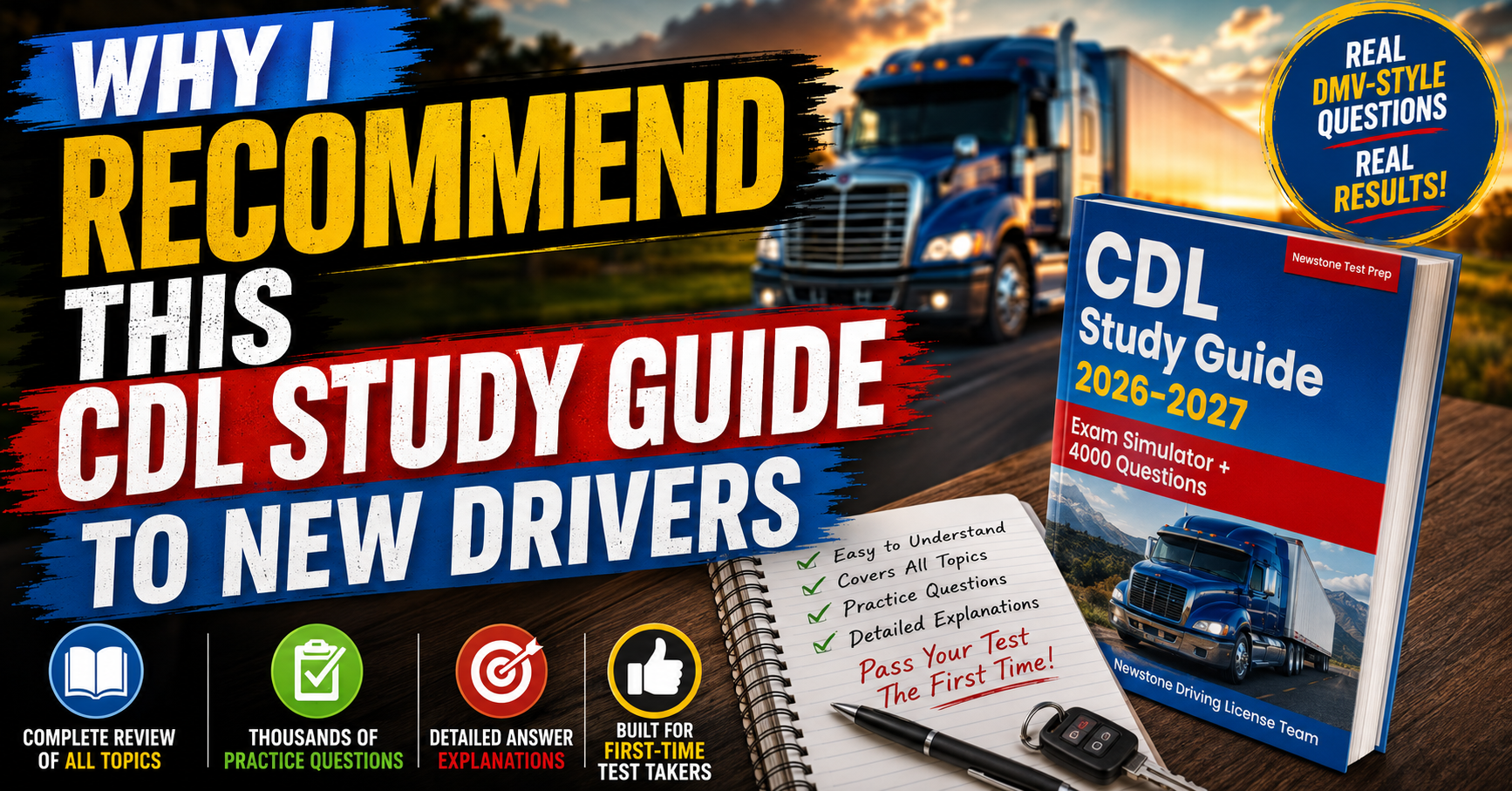
For even more preparation, the CDL General Knowledge Study Guide PDF walks through the material in an easy-to-follow format, while the CDL Master Question Bank PDF and 21-Day CDL Permit Exam Mastery Workbook PDFprovide hundreds of additional questions and a structured study plan to help you walk into the DMV prepared instead of hoping for the best.
Planning Beyond Your CDL Test
Preparing for your CDL exam is important, but it’s only the beginning of your trucking career. Once you pass, you’ll move into CDL school, company orientation, driver training, and eventually your first solo loads.
If you’re curious about everything that comes after passing your exams, New Truck Driver Survival Guide Everything You Need to Know Your First Year is a great next read.
Author: Brian Cooper
Brian Cooper spent more than 25 years driving commercial trucks across the United States, hauling everything from refrigerated freight and dry vans to flatbeds and specialized loads. Throughout his career, he mentored new CDL drivers and believes the best way to pass the permit exam is to understand the “why” behind each answer, not simply memorize practice questions.