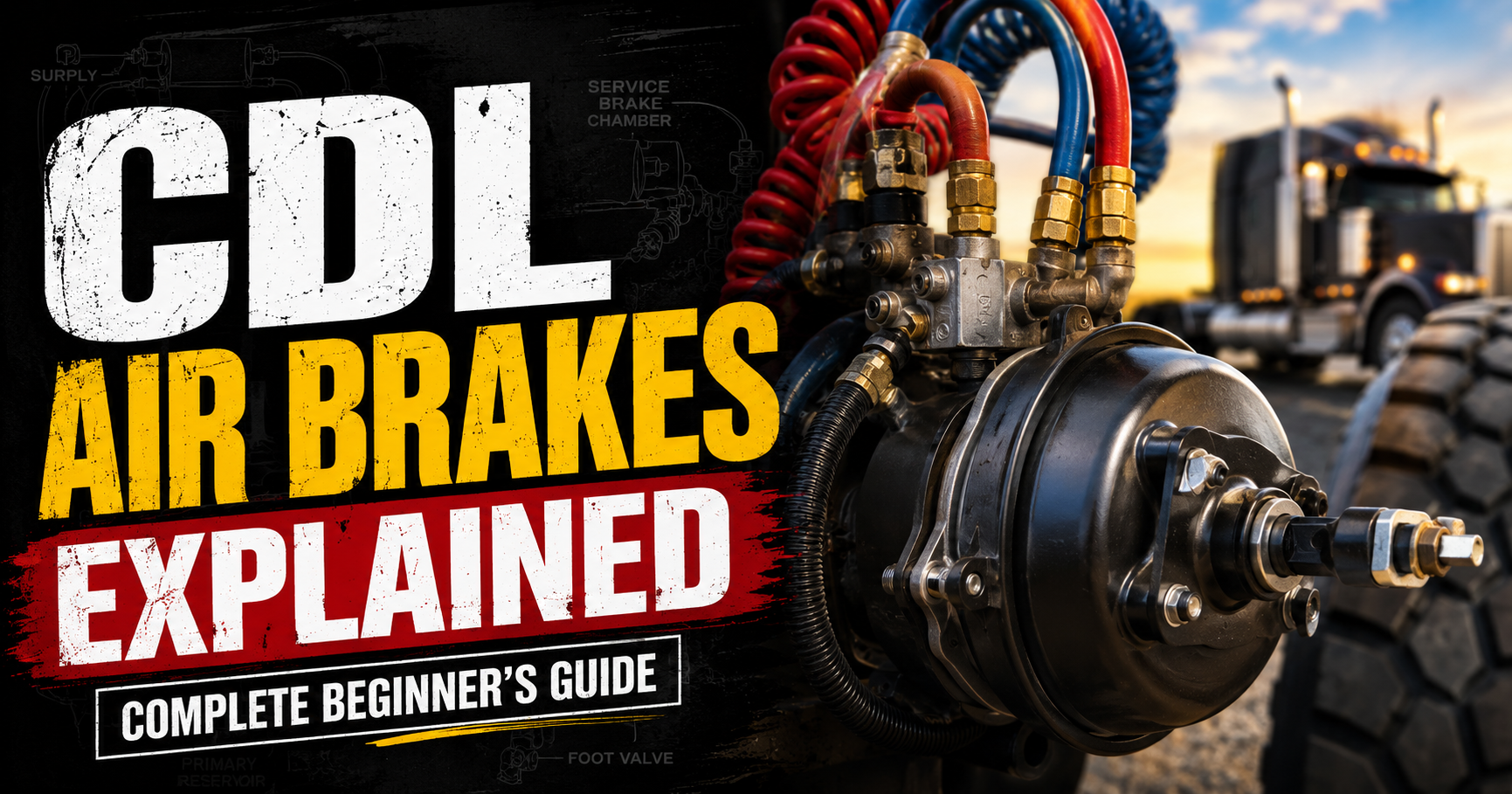
If you’re preparing for your CDL permit test, you’ve probably already discovered one thing.
Air brakes are one of the most confusing topics in the entire CDL manual.
There are compressors, governors, reservoirs, brake chambers, slack adjusters, spring brakes, low-air warnings, leak tests, emergency braking procedures, and pre-trip inspections to learn. At first, it feels overwhelming.
The good news is that air brakes aren’t actually difficult once you understand how the entire system works together. Build that foundation with What Are Air Brakes? How They Work on Commercial Trucks, which breaks the system down from its basic operating principle.
Instead of memorizing random facts, this guide explains everything in plain English so you’ll understand why each part exists and how the entire system works from the moment you start the engine until the truck comes to a complete stop.
If you’re studying for your air brakes endorsement, I also recommend taking our Free CDL Air Brakes Practice Test #1and Free CDL Air Brakes Practice Test #2 after reading this guide. They’re designed to reinforce the concepts you’ll learn here with realistic CDL-style questions.
For students who want even more practice, our CDL Master Question Bank PDF contains hundreds of additional practice questions, and the 21-Day CDL Permit Exam Mastery Workbook PDF walks you through a structured study plan leading up to test day.
What Are Air Brakes?
Most passenger cars use hydraulic brakes.
Commercial trucks use compressed air.
Instead of brake fluid transferring pressure to each wheel, an air brake system stores compressed air inside large tanks. Every time you press the brake pedal, compressed air travels through the brake system and applies the brakes.
That simple difference is why they’re called air brakes.
One of the biggest advantages of air brakes is that they’re designed with multiple safety features. If something goes wrong, the system provides warnings and uses spring brakes to help bring the vehicle to a stop rather than simply losing braking ability.
Why Do Semi Trucks Use Air Brakes Instead of Hydraulic Brakes?
Large commercial vehicles weigh far more than passenger vehicles.
A fully loaded tractor-trailer can legally weigh up to 80,000 pounds on many U.S. highways.
Stopping that much weight requires a braking system capable of producing tremendous force repeatedly without overheating or losing effectiveness.
Air brakes offer several advantages:
- They generate powerful braking force.
- Compressed air is readily available while the engine runs.
- Small air leaks don’t automatically result in total brake failure.
- Spring brakes provide an emergency backup system.
- Air brakes are extremely durable under heavy commercial use.
These advantages have made air brakes the industry standard for heavy commercial vehicles.
How an Air Brake System Works
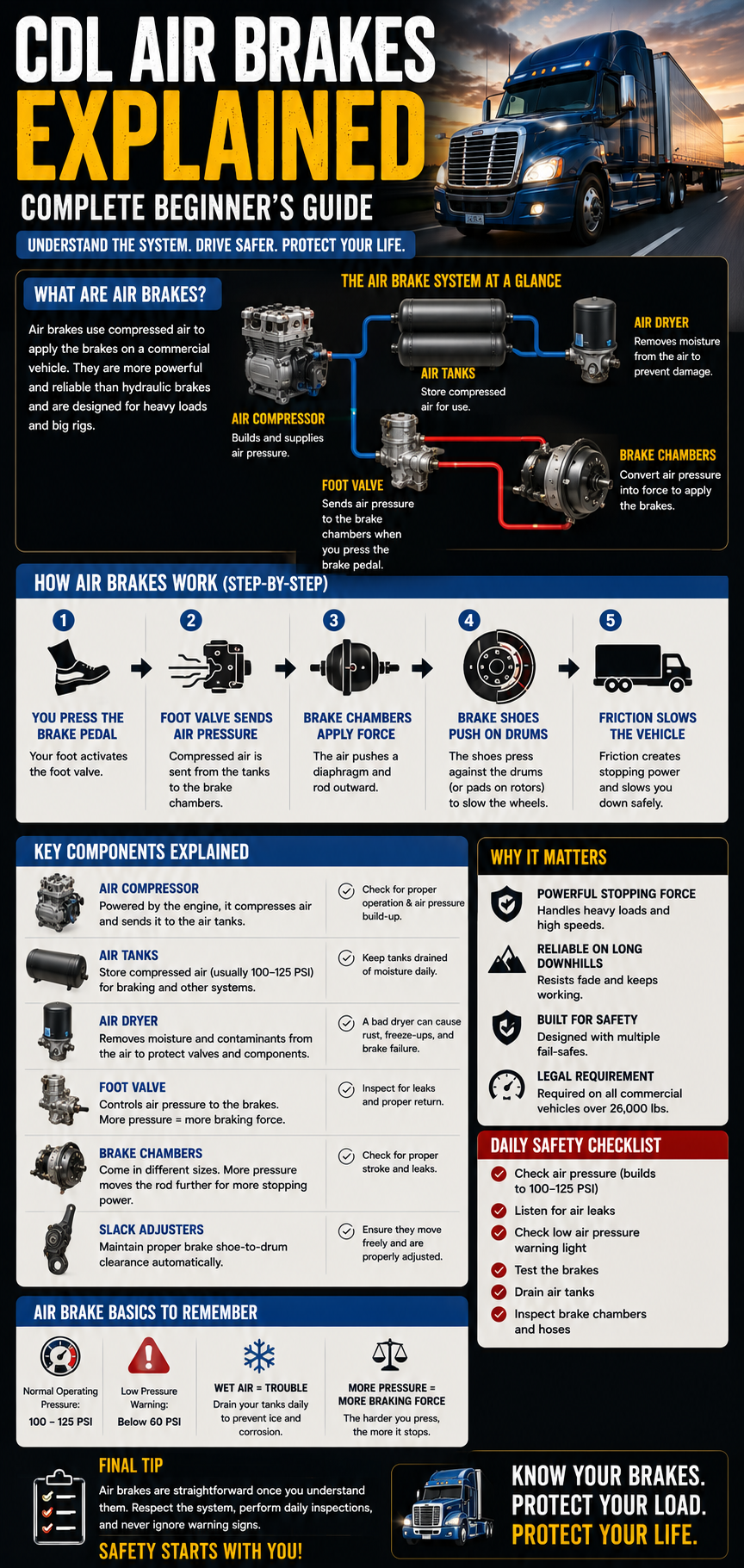
The easiest way to picture the system is to imagine it as a giant air-powered machine that’s constantly charging itself.
Here’s the basic process.
The engine powers an air compressor.
The compressor fills large air tanks called reservoirs.
Once enough pressure builds, the governor temporarily stops the compressor.
When you step on the brake pedal, compressed air flows through valves to the brake chambers.
The brake chambers push the pushrods, which rotate the slack adjusters.
The slack adjusters rotate the S-cams, forcing the brake shoes against the brake drums.
Friction slows the wheels.
The entire process happens in fractions of a second.
Once you understand this sequence, every other part of the air brake system starts making much more sense.
Understanding Every Major Air Brake Component
One mistake many CDL students make is trying to memorize dozens of parts individually.
Instead, think of each component as having one specific job.
Everything works together.
Air Compressor
The air compressor is the heart of the entire system.
Its job is simple.
It compresses outside air and sends it into the air system while the engine runs.
Without it, your air tanks would eventually run empty.
Governor
The governor acts like an automatic switch.
When pressure reaches roughly 120 to 125 PSI, it tells the compressor to stop pumping.
As pressure drops to around 100 PSI, it tells the compressor to begin building pressure again.
This entire process happens automatically while you drive.
Air Dryer
Compressed air naturally contains moisture.
If water enters the brake system, it can freeze during cold weather, causing serious problems.
The air dryer removes much of that moisture before it reaches the storage tanks.
It’s one of the most overlooked but important parts of the system.
Air Reservoirs
Air reservoirs are simply storage tanks.
Think of them as large batteries that store braking power until you need it.
Most commercial vehicles use multiple reservoirs so there’s a reserve supply of air available.
Air Lines Carry the Air
The compressed air travels through a network of hoses and lines.
These lines connect every major component of the braking system together.
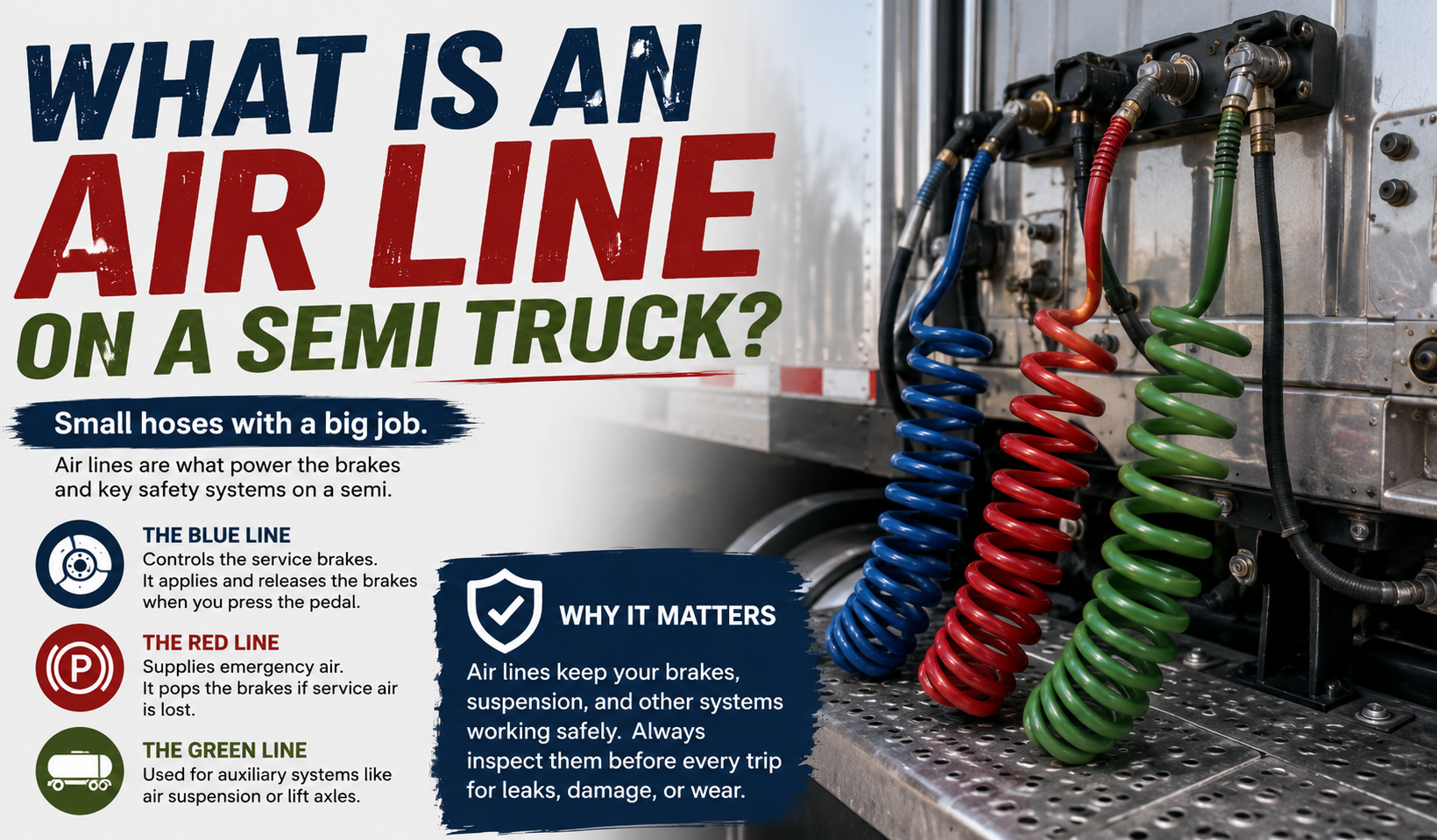
If you’d like a closer look at these hoses, our guide on What Is an Air Line on a Semi Truck? explains their purpose in much greater detail.
Brake Chambers Create the Force
Air pressure alone doesn’t stop a truck.
It has to push against something.
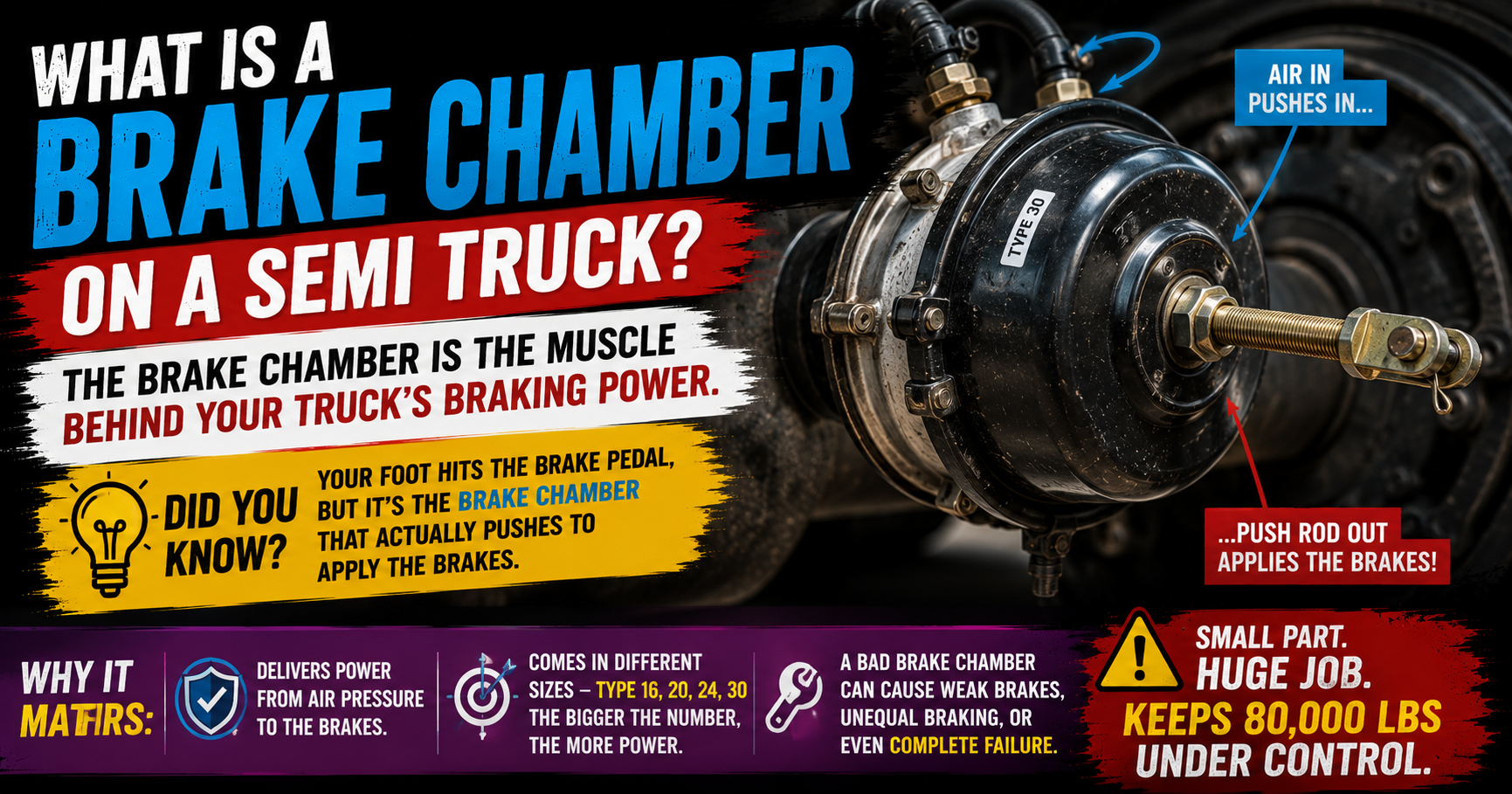
That’s the job of the brake chamber.
When compressed air enters the chamber, it pushes against a flexible diaphragm.
That movement begins the entire braking process at each wheel.
The Brake Chamber
Once compressed air leaves the air lines, it enters one of the most important components in the entire system: the brake chamber.
The brake chamber converts air pressure into mechanical force.
Inside the chamber is a heavy-duty rubber diaphragm. When compressed air enters, it pushes against that diaphragm, which moves a metal rod called the pushrod.
That simple movement starts everything else.
Without the brake chamber, the air pressure stored in your tanks wouldn’t actually do anything.
If you’d like a more detailed explanation of how these work, our guide on What Is a Brake Chamber on a Semi Truck?breaks down every part of the assembly.
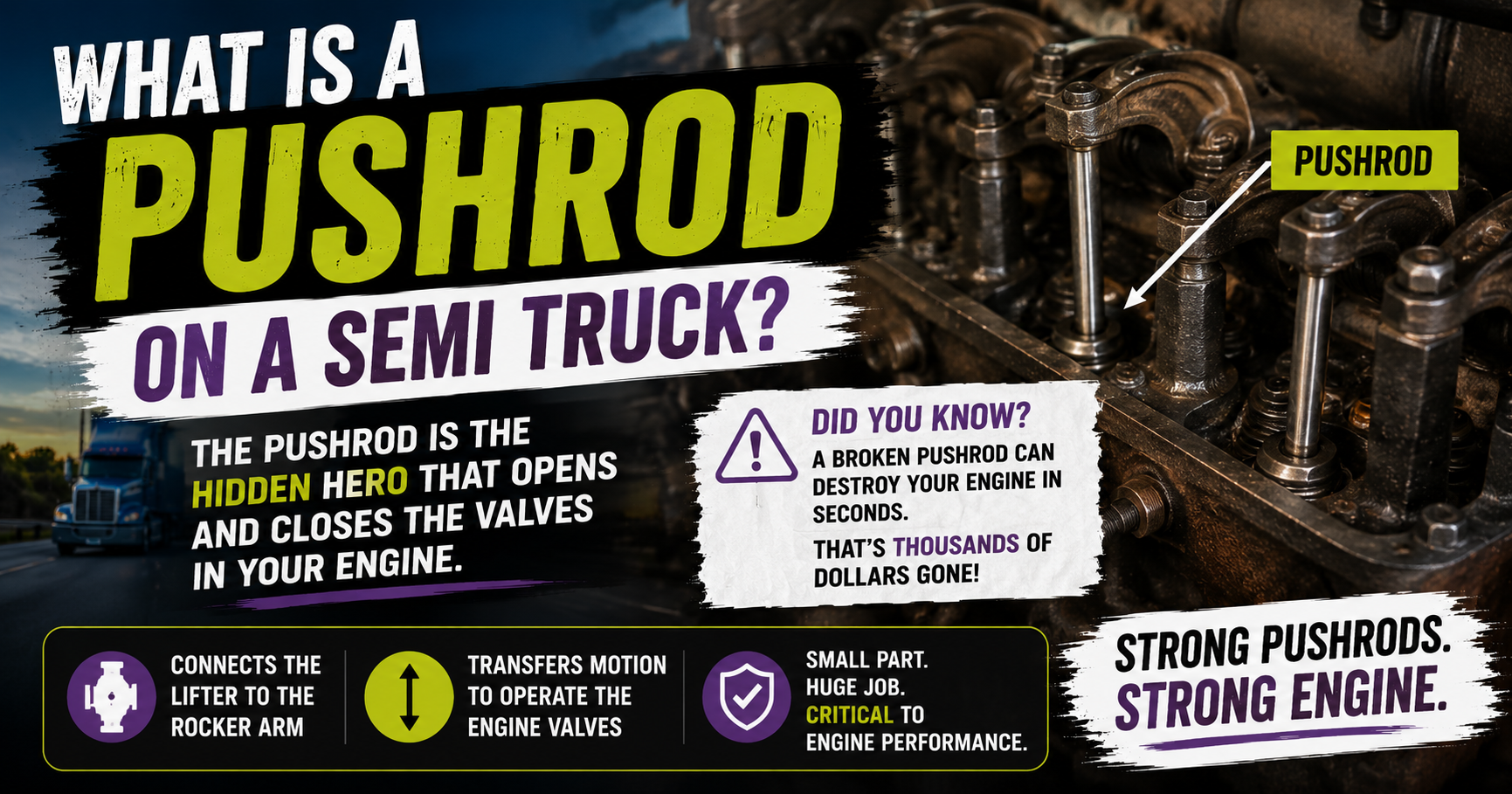
Pushrods Transfer the Force
The pushrod is exactly what its name suggests.
It pushes.
As the brake chamber fills with compressed air, the diaphragm forces the pushrod outward.
That movement is what rotates the slack adjuster and eventually applies the brakes.
The pushrod may look like a simple steel rod, but it’s one of the easiest components to inspect during your CDL pre-trip because excessive travel often indicates brake problems.
Our What Is a Pushrod on a Semi Truck? article explains why inspectors pay so much attention to pushrod travel.

Slack Adjusters
The next stop in the system is the slack adjuster.
This component converts the straight-line movement of the pushrod into rotational movement.
Think of it as a lever.
As the pushrod moves outward, the slack adjuster rotates.
That rotation turns the S-cam inside the brake assembly.
Slack adjusters also compensate for normal brake shoe wear over time. Most modern trucks use automatic slack adjusters, but they still need to be inspected regularly to ensure they’re working properly. Automatic doesn’t mean maintenance-free.
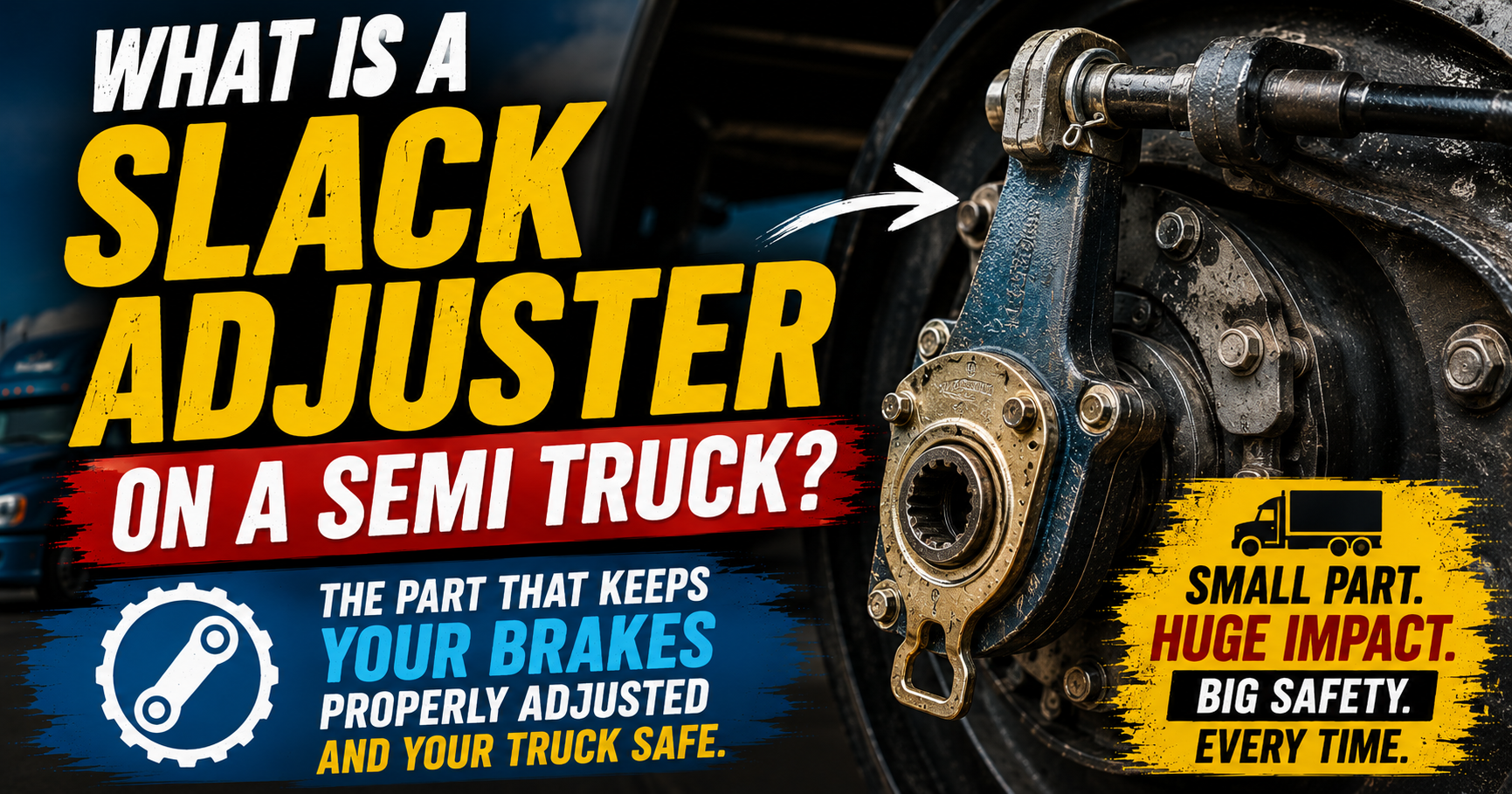
If you haven’t already, our complete guide to What Is a Slack Adjuster on a Semi Truck? explains why these components are so important during inspections.
S-Cams
The S-cam is where everything finally comes together.
As the slack adjuster rotates, it turns the S-cam shaft.
The oddly shaped cam pushes outward on both brake shoes at the same time.
That movement forces the brake shoes against the inside of the brake drum.
The harder you press the brake pedal, the more air pressure enters the brake chamber.
More air pressure means greater pushrod movement.
Greater pushrod movement creates more rotation at the S-cam.
More rotation applies more braking force.
It’s a beautifully simple mechanical system that’s been used successfully on heavy trucks for decades.
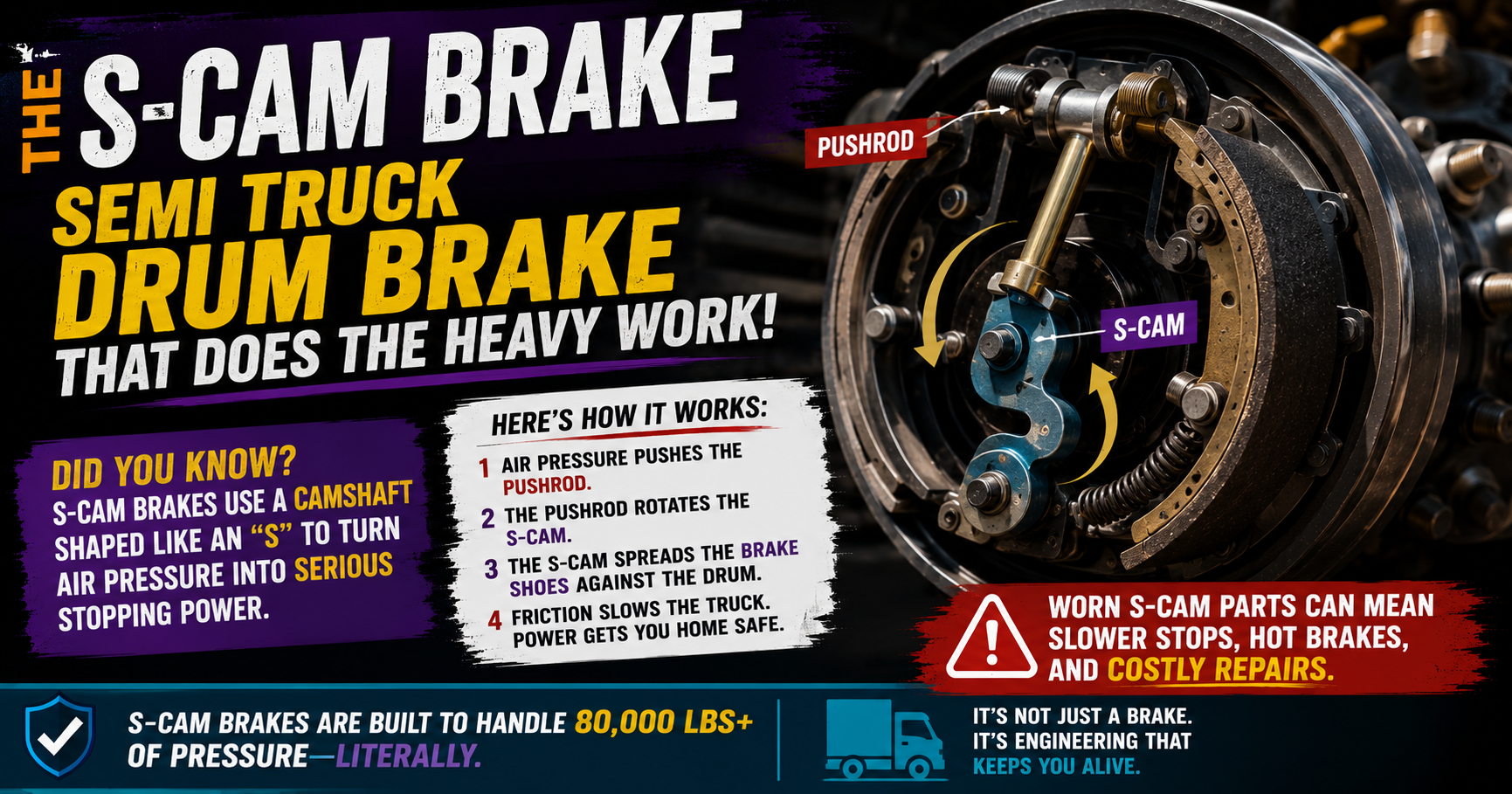
If you’re curious why it’s called an S-cam, our guide on What Is an S-Cam Brake? explains how the uniquely shaped cam creates braking force.
Brake Shoes and Brake Drums
Once the S-cam rotates, it presses the brake shoes against the inside of the brake drum.
This is where the truck actually begins slowing down.
The brake shoes are lined with high-friction material designed to withstand tremendous heat.
The brake drum rotates with the wheel.
When the shoes press against the inside of the drum, friction converts the truck’s motion into heat energy.
That’s what slows the truck.
Over time, both the shoes and drums wear down and eventually need replacement.
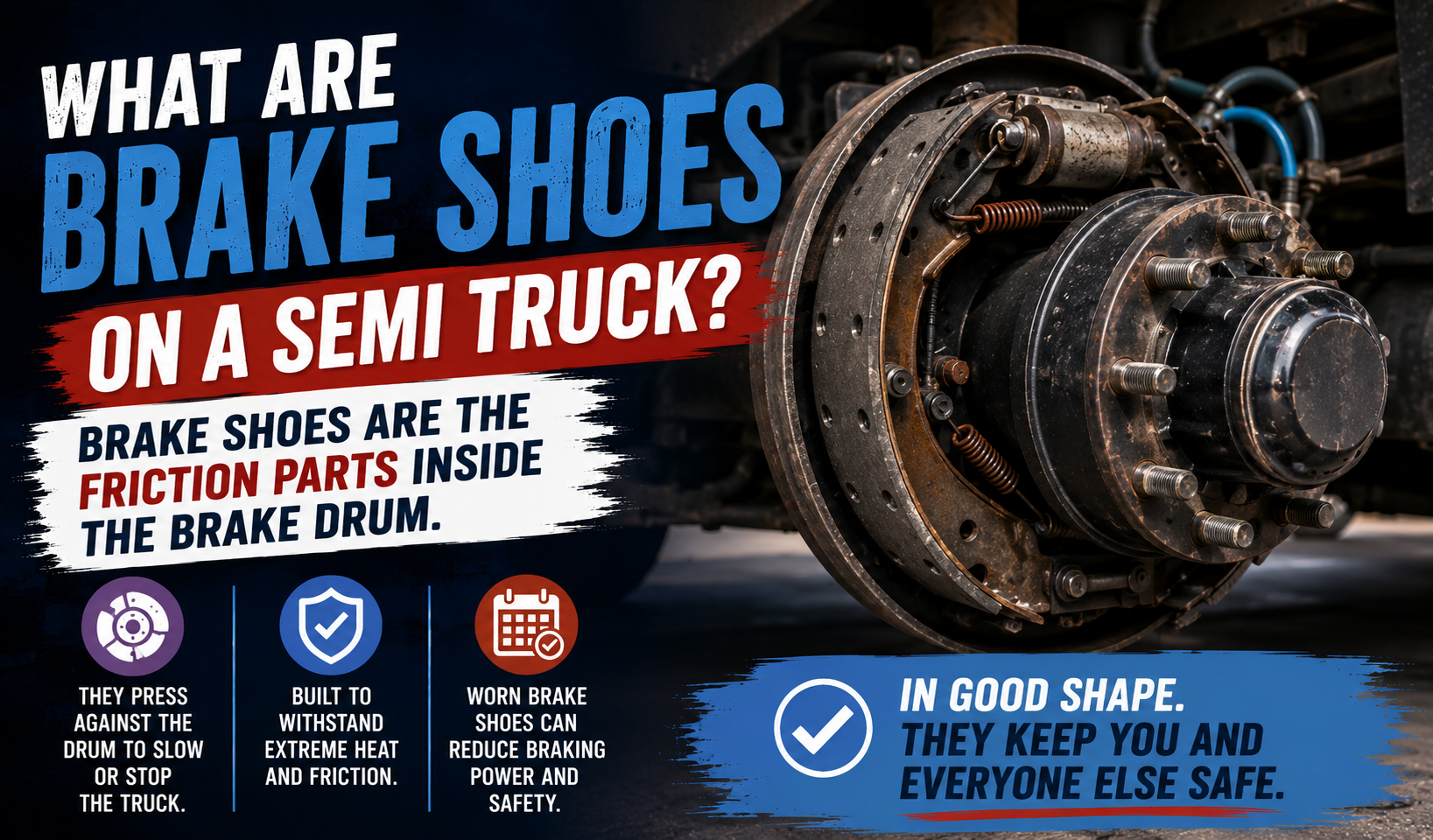
You can learn more in our guides to What Are Brake Shoes on a Semi Truck? and What Is a Brake Drum on a Semi Truck?.
Understanding Dual Air Brake Systems
Most modern commercial trucks don’t rely on just one air system.
Instead, they use a dual air brake system.
This means there are two separate air systems operating together.
Typically, one system controls one set of brakes while the other controls another.
If one circuit develops a problem, the second circuit still provides braking ability.
That’s a major reason commercial air brakes are considered so safe.
You’ll usually notice this setup by the two air pressure gauges on the dashboard.
During your pre-trip inspection, you’ll verify that both systems build pressure properly and stay within their normal operating ranges.
Spring Brakes Are Your Emergency Backup
One thing that surprises new CDL students is that air doesn’t actually apply the parking brakes.
It releases them.
Heavy-duty spring brakes contain an extremely powerful spring that’s constantly trying to apply the brakes.
Compressed air pushes against that spring while you’re driving, keeping the parking brakes released.
When air pressure drops too low or you pull the yellow parking brake knob, the air is released.
The powerful spring expands and automatically applies the brakes.
This design is incredibly important.
If the truck completely lost air pressure, the spring brakes would eventually apply automatically instead of leaving the truck with no brakes at all.
That’s one of the biggest safety differences between air brakes and hydraulic brakes.
Why Low Air Pressure Is So Dangerous
Your truck needs adequate air pressure before you can drive safely.
If pressure continues dropping, several things begin happening.
First, the low-air warning activates.
On most commercial vehicles, this warning must come on before pressure falls below approximately 60 PSI.
If pressure continues falling, the spring brakes begin applying automatically.
This protects the driver, but it’s also extremely dangerous if it happens while traveling at highway speeds.
That’s why professional drivers constantly monitor their air gauges instead of ignoring them.
Running low on air is never something you should “hope gets better.”
It’s a problem that requires immediate attention.
Never Drive Away Without Full Air Pressure
One mistake new drivers sometimes make is becoming impatient while waiting for air pressure to build.
Don’t do it.
Always allow the system to reach normal operating pressure before moving the vehicle.
Driving away with partially charged air tanks reduces the amount of reserve braking power available and can create dangerous situations if repeated brake applications become necessary shortly after leaving.
Develop the habit now.
Start the engine.
Monitor both gauges.
Wait until the system reaches normal operating pressure.
Then begin your trip.
It only takes a few extra minutes and could prevent a serious accident.
Understanding Brake Lag
One concept that catches nearly every new CDL student by surprise is something called brake lag.
If you’ve only driven passenger vehicles, you’re probably used to pressing the brake pedal and feeling the brakes respond almost immediately.
Air brakes work a little differently.
When you press the brake pedal, compressed air has to travel through valves and air lines before it reaches each brake chamber. That process happens very quickly, but it isn’t instantaneous.
This slight delay is known as brake lag.
It’s only a fraction of a second, but when you’re driving an 80,000-pound tractor-trailer at highway speeds, even a small delay matters.
That’s one reason professional truck drivers always leave more following distance than passenger vehicles.
Why Semi Trucks Need More Distance to Stop
Many people assume air brakes are weaker because trucks require longer stopping distances.
The opposite is actually true.
Air brakes are incredibly powerful.
The reason trucks need more distance is because of physics.
A fully loaded tractor-trailer weighs many times more than a passenger car.
More weight means more momentum.
More momentum requires more distance to stop.
Three things make up your total stopping distance:
Perception Distance
This is the distance your truck travels while your brain recognizes that something is happening.
For example, you notice traffic suddenly slowing ahead.
Before your foot even begins moving toward the brake pedal, you’ve already traveled a significant distance.
Reaction Distance
Now your foot moves from the accelerator to the brake pedal.
Your truck continues moving during this entire process.
Braking Distance
Finally, the brakes begin slowing the truck.
This is where brake lag, vehicle weight, road conditions, and speed all come into play.
Add all three together, and you get your total stopping distance.
This is why tailgating is one of the most dangerous habits a commercial driver can develop.
Brake Fade Explained
Brake fade is another topic you’ll almost certainly see on your CDL exam.
It’s also something every professional driver needs to understand before heading into the mountains.
Brake fade happens when the braking system becomes too hot.
As heat builds, the brakes become less effective.
In extreme situations, pressing the brake pedal harder doesn’t produce much additional braking force.
That’s obviously dangerous on long downhill grades.
Heat is the enemy.
Every time your brakes slow the truck, they convert motion into heat.
On flat highways, they usually have plenty of time to cool.
On long mountain descents, they may never get that opportunity.
Eventually, the brakes can overheat.
That’s brake fade.
The best way to prevent it is by using proper downhill driving techniques rather than relying on the service brakes the entire way down the hill.
The Jake Brake Is Your Best Friend in the Mountains
One of the best tools for controlling speed on long downhill grades isn’t actually part of the air brake system.
It’s the engine brake, commonly called the Jake Brake.
Instead of relying entirely on friction brakes, the Jake Brake helps slow the truck using engine compression.
That dramatically reduces brake temperatures.
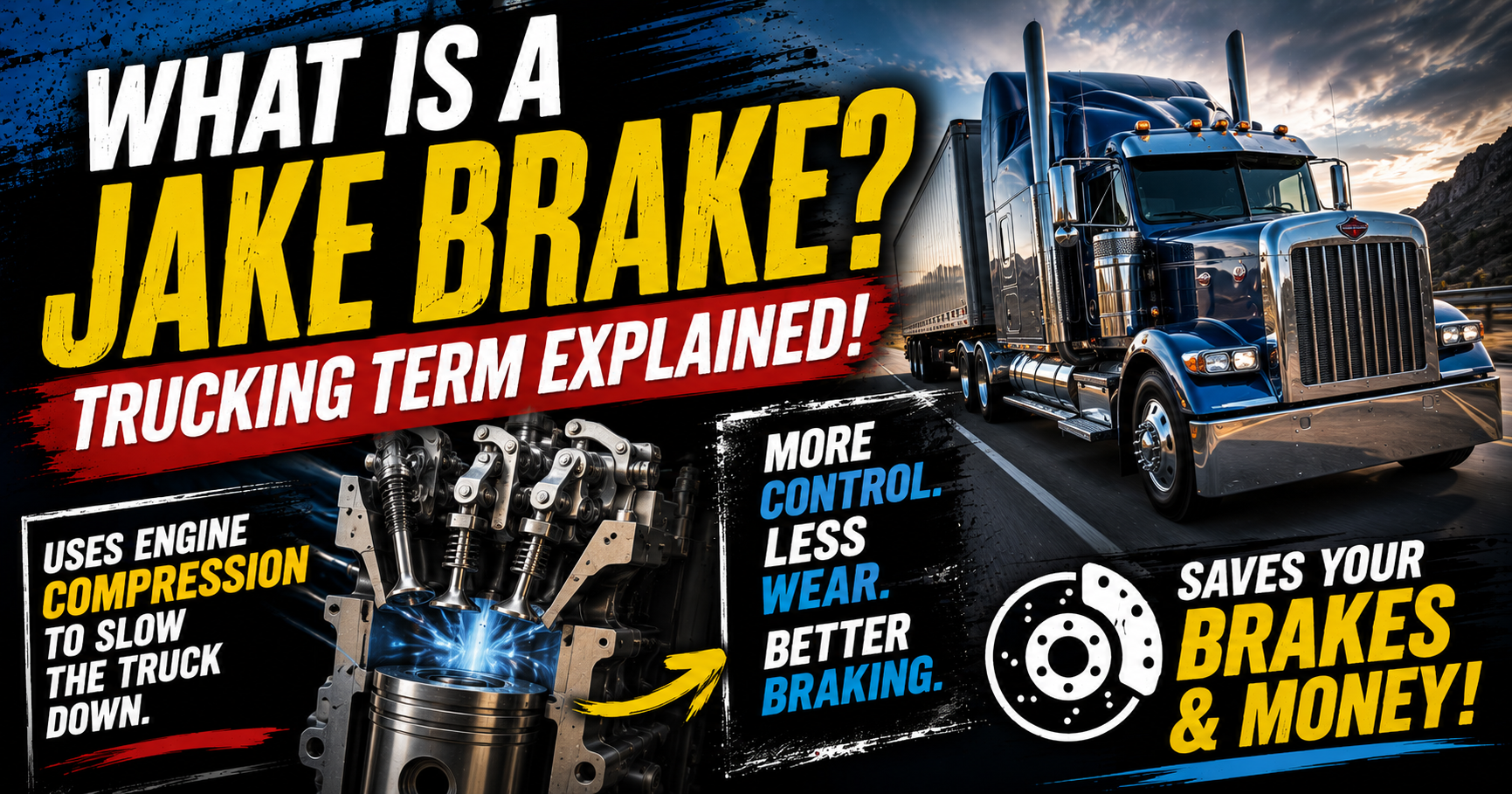
If you aren’t familiar with engine brakes, our guide on What Is a Jake Brake? Trucking Term Explained explains exactly how they work and why experienced drivers depend on them.
Proper Downhill Braking Technique
One of the biggest mistakes new drivers make is riding the brakes all the way down a mountain.
That creates tremendous heat.
Instead, CDL training teaches drivers to:
- Select a safe gear before starting downhill.
- Use the engine brake whenever possible.
- Allow the engine to help control speed.
- Use firm, controlled brake applications when necessary.
- Release the brakes between applications so they have time to cool.
This technique helps prevent overheating while maintaining better control of the vehicle.
Anti-Lock Braking Systems (ABS)
Most modern commercial trucks are equipped with Anti-Lock Braking Systems, commonly known as ABS.
ABS doesn’t help the truck stop faster.
Its purpose is maintaining steering control during hard braking.
If a wheel begins locking up, the ABS computer rapidly reduces and reapplies braking pressure to that wheel.
This helps prevent skidding while allowing the driver to continue steering around hazards.
When you first start the truck, you’ll usually see the ABS warning light illuminate briefly.
That’s part of the normal system check.
If the light stays on after startup, however, the ABS needs attention.
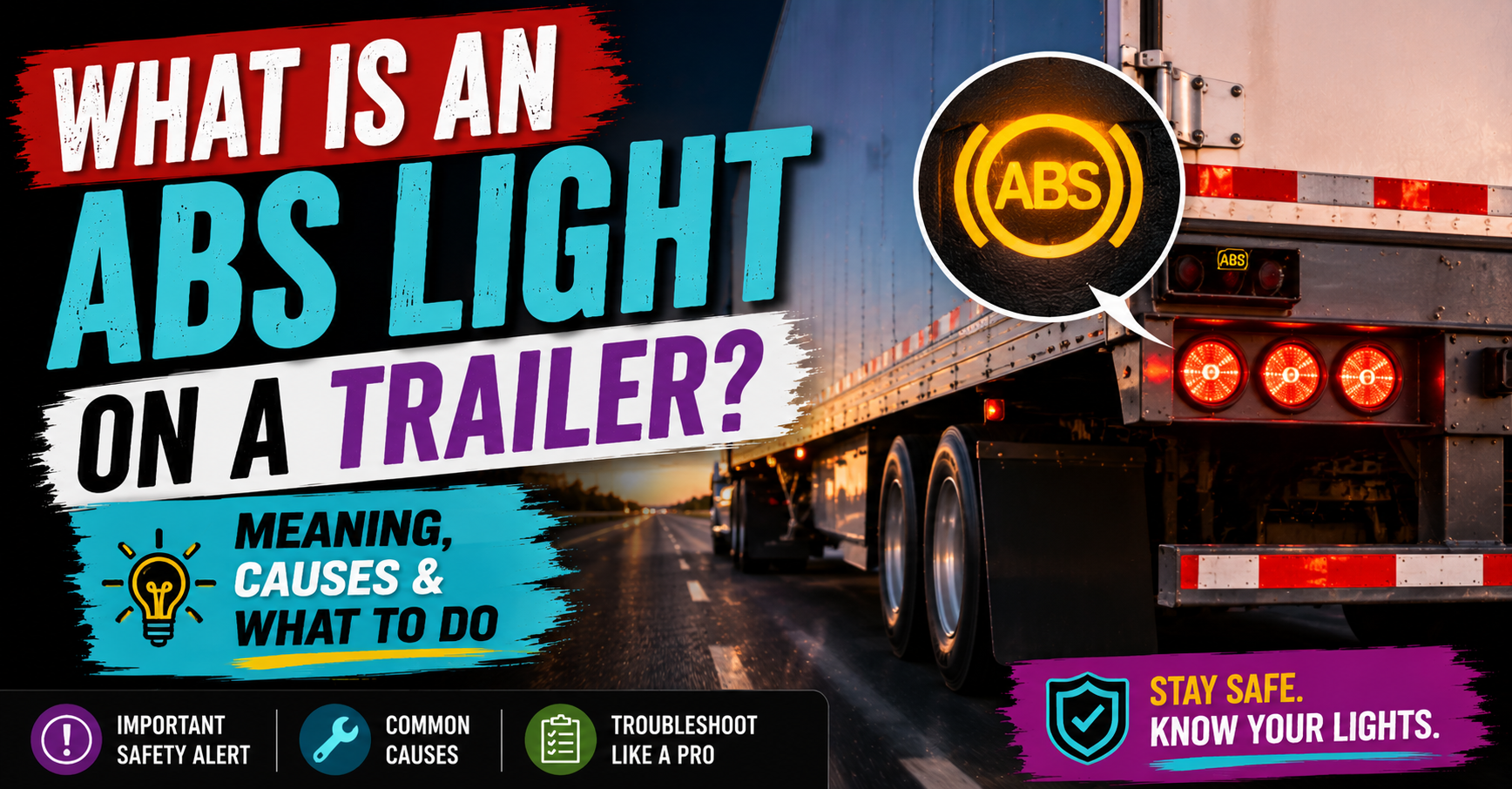
Our article What Is an ABS Light on a Trailer? explains what that warning light means and why you shouldn’t ignore it.
What Happens If Air Pressure Is Lost?
This is one of the most important safety features built into commercial trucks.
As air pressure drops, the truck gives you multiple warnings.
First, the low-air warning activates.
If pressure continues falling, the spring brakes begin applying automatically.
Eventually, if pressure becomes extremely low, the spring brakes can bring the vehicle to a stop.
This is why drivers should never continue driving after noticing low air pressure.
The warning isn’t just an inconvenience.
It’s telling you the system is losing the air it needs to operate safely.
Air Brake Inspections Save Lives
Every professional CDL driver performs a pre-trip inspection before heading down the road.
The air brake system deserves extra attention because it’s one of the most critical safety systems on the truck.
During every inspection, I look for obvious problems before even starting the engine.
I’m checking for:
- Damaged air hoses.
- Air leaks.
- Loose fittings.
- Missing hardware.
- Worn brake components.
- Broken mounting brackets.
- Damaged brake chambers.
- Proper pushrod movement.
Many of these items can be spotted long before they become major mechanical failures.
A Few Tools That Make Inspections Easier
Good inspections start with having the right equipment.
One tool I always recommend keeping in the truck is the Coast XPH30R USB-C Rechargeable Headlamp. It keeps both hands free while inspecting brake chambers, air lines, slack adjusters, and suspension components before daylight or after dark.
I also like carrying the Big Rig Defense Tire Thumper. While it’s primarily used for quickly checking tires during walk-arounds, it’s another handy tool that encourages drivers to perform more complete inspections every time they stop.
The more often you inspect your truck, the more likely you are to catch small problems before they become expensive or dangerous repairs.
How to Perform an Air Brake Leakage Test
One of the most important parts of your CDL skills test is demonstrating that you know how to check the air brake system for leaks.
This isn’t just something you’ll do to pass your exam.
Professional drivers perform these tests because even a small air leak can eventually become a major safety problem.
Although every truck is a little different, the basic procedure remains the same.
Step 1: Build Full Air Pressure
Start the engine and allow the compressor to build air pressure until both air gauges reach their normal operating range.
Most systems finish building pressure around 120 to 125 PSI.
Never perform your tests until the system is fully charged.
Step 2: Shut Off the Engine
Once the air system is completely charged, shut off the engine.
Turn the ignition back on if necessary so your gauges remain active.
Now you’re testing how well the system holds air without the compressor replacing lost pressure.
Step 3: Release the Parking Brakes
Push in both the yellow and red parking brake valves.
This releases the spring brakes and allows you to accurately test the service brake system.
Remember to chock the wheels if you’re performing this procedure outside of a CDL testing environment.
Step 4: Watch for Air Loss
With your foot off the brake pedal, observe the gauges.
A properly functioning system should lose very little air while sitting still.
Excessive pressure loss usually indicates an air leak somewhere in the system.
Step 5: Perform the Applied Pressure Test
Next, firmly press and hold the brake pedal.
Continue watching the gauges.
The system should still lose only a limited amount of air while the brakes remain applied.
If pressure continues dropping rapidly, the truck likely has a leak that needs to be repaired before it’s safe to drive.
Testing the Low Air Warning
The low air warning is one of your truck’s most important safety features.
To test it, you’ll slowly fan the brake pedal.
Each application releases a little more air from the system.
Eventually, the warning light, buzzer, or both should activate.
Federal standards require this warning to activate before pressure falls below approximately 60 PSI.
If the warning doesn’t activate properly, the vehicle shouldn’t be operated until it’s repaired.
Testing the Spring Brakes
Continue fanning the brake pedal after the low-air warning activates.
As pressure continues dropping, you’ll eventually hear the familiar “pop” as the parking brake control automatically moves outward.
That’s the spring brakes applying themselves.
This normally occurs somewhere between 20 and 45 PSI, depending on the vehicle.
This automatic application is designed to stop the vehicle if air pressure becomes dangerously low.
The Air Brake Portion of the CDL Pre-Trip Inspection
During your CDL skills test, the examiner isn’t looking for someone who memorized a script.
They’re looking for someone who understands what they’re inspecting.
When I inspect an air brake system, I mentally divide it into sections.
Under the Hood
I start by looking at:
- Air compressor
- Compressor mounting
- Drive belt (if equipped)
- Air lines
- Air dryer
I’m checking for loose mounting hardware, excessive wear, leaks, cracks, and obvious damage.
Along the Frame
Next I inspect:
- Air tanks
- Drain valves
- Air lines
- Mounting brackets
- Fittings
Any damaged or leaking air line deserves immediate attention.
Our guide on What Is an Air Line on a Semi Truck? explains why these hoses are so important.
At Each Wheel
Finally, I inspect every brake assembly.
I’m looking at:
- Brake chambers
- Pushrods
- Slack adjusters
- Brake drums
- Brake shoes
By understanding what each component does, your inspection becomes much easier than trying to memorize a checklist.
Common Air Brake Mistakes New CDL Drivers Make
Every experienced truck driver remembers being new.
Most of us made a few mistakes while learning.
Some of the most common include:
Memorizing Instead of Understanding
Students often try to memorize hundreds of facts.
It’s much easier to understand how the system works.
Once you know how compressed air travels through the system, many CDL questions become common sense.
Ignoring Air Gauges
Your dashboard gauges constantly tell you how healthy your air system is.
Professional drivers glance at them regularly instead of waiting for a warning light.
Riding the Brakes
Keeping steady pressure on the brakes during long downhill grades creates enormous heat.
Brake fade can develop surprisingly quickly.
Use the engine brake whenever appropriate and make firm, controlled brake applications instead of dragging the brakes continuously.
Skipping Daily Inspections
Air brake problems rarely appear overnight.
Most start as small leaks or worn components.
Finding them during your pre-trip inspection is much better than discovering them on the interstate.
Frequently Asked Questions
Are air brakes difficult to learn?
Not once you understand how everything works together.
Most students find air brakes much easier after they stop trying to memorize individual parts and instead focus on the overall process.
Why do commercial trucks use compressed air instead of brake fluid?
Compressed air provides powerful, reliable braking for heavy vehicles and includes important safety features like low-air warnings and spring brakes that aren’t possible with a typical hydraulic braking system.
Will I lose my brakes if the truck runs out of air?
Not immediately.
As air pressure drops, you’ll receive warning signals.
If pressure continues falling, the spring brakes automatically begin applying to help stop the vehicle safely.
Do all CDL drivers need the air brakes endorsement?
No.
Only drivers operating commercial vehicles equipped with air brakes need to pass the air brakes knowledge test and remove the air brake restriction from their CDL.
Practice Is the Key to Passing the Air Brakes Test
Reading about air brakes is a great first step.
The next step is testing what you’ve learned.
That’s why I always encourage new CDL students to take multiple practice exams before scheduling their permit test.
Our Free CDL Air Brakes Practice Test #1 and Free CDL Air Brakes Practice Test #2 closely follow the types of questions you’ll see on the real exam.
If you’re serious about passing on your first attempt, the CDL Master Question Bank PDF provides hundreds of additional practice questions, while the 21-Day CDL Permit Exam Mastery Workbook PDF gives you a structured study plan that keeps you on track from day one.
The more you practice, the more confident you’ll feel when test day arrives.
Building Confidence Beyond the Classroom
Understanding air brakes is essential for passing your CDL exams and becoming a safe driver, but it’s only one part of your first year in trucking. Every new driver also learns how to manage real-world traffic, work with dispatch, plan trips, and build confidence behind the wheel.
If you’re preparing for a career in trucking, New Truck Driver Survival Guide Everything You Need to Know Your First Year explains how everything fits together after you earn your CDL.
Author: Brian Cooper
Brian Cooper spent more than 24 years driving commercial trucks throughout the Midwest, hauling everything from dump trailers and flatbeds to refrigerated and dry van freight. During his career, he trained new CDL drivers on air brake systems, pre-trip inspections, and defensive driving, helping hundreds of drivers build the knowledge and confidence needed for safe careers behind the wheel.