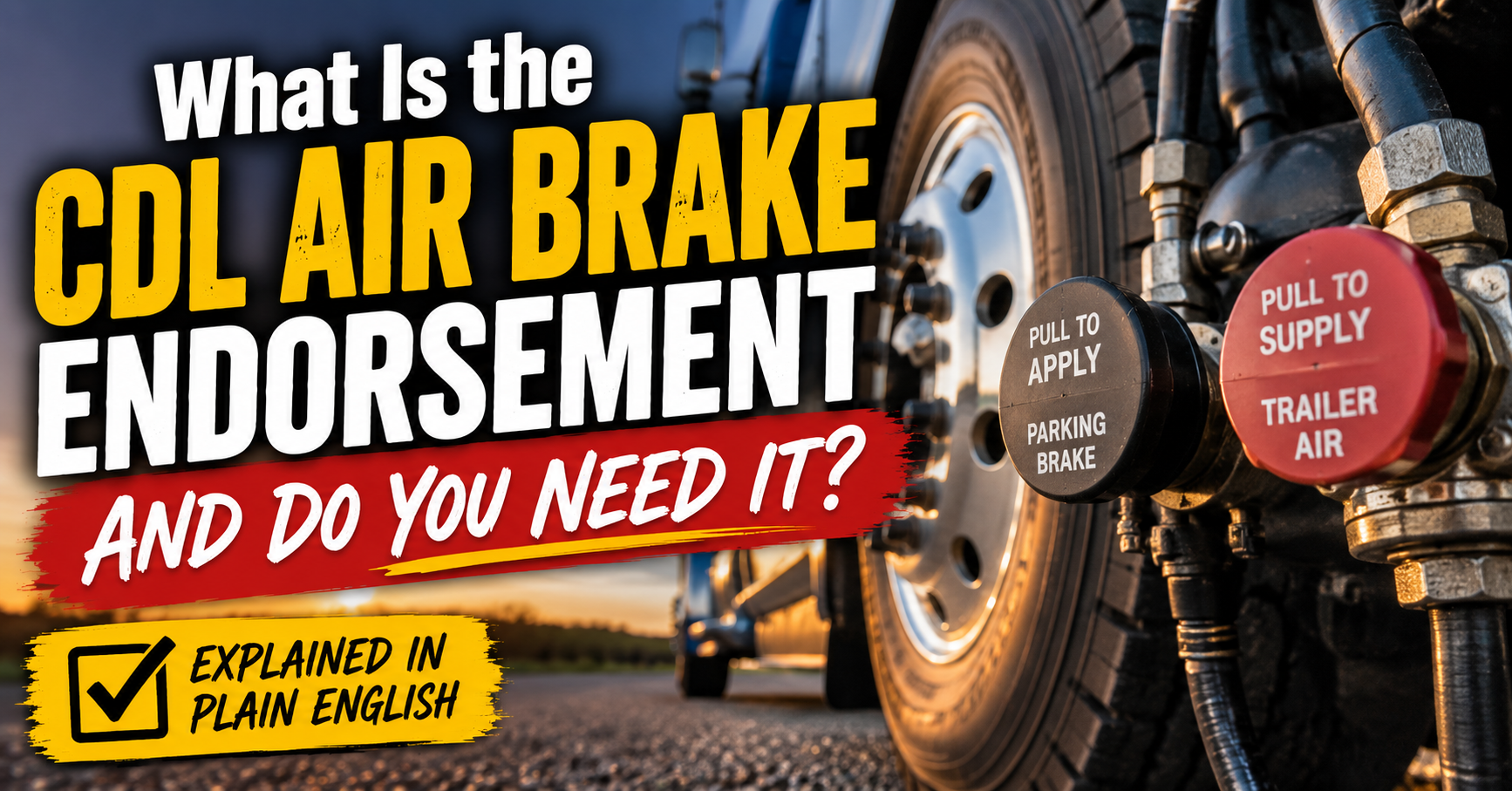
If you’ve been studying for your CDL, you’ve probably heard someone mention the “air brake endorsement.”
Here’s the first thing you should know.
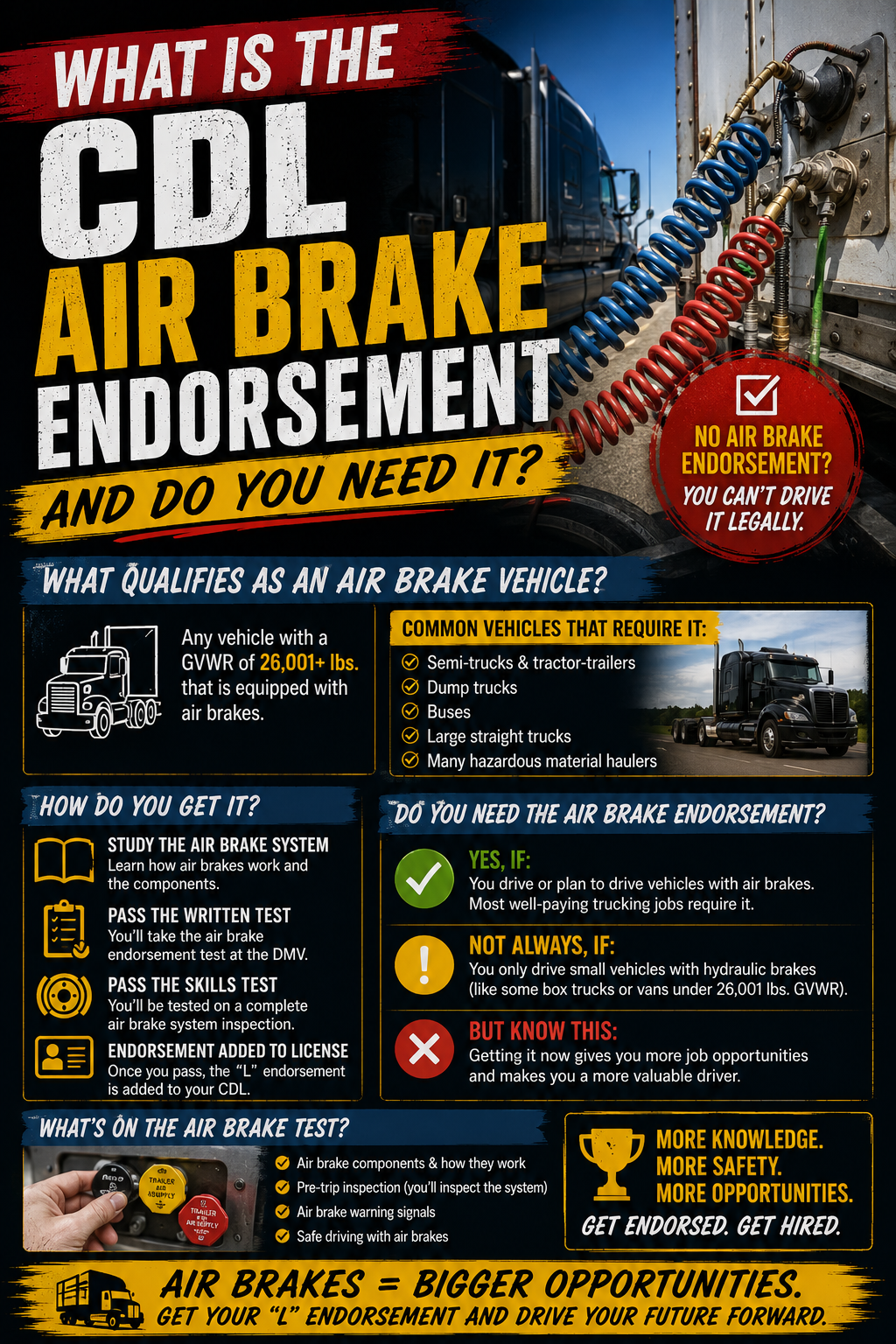
Despite what many people call it, an air brake endorsement isn’t technically an endorsement at all.
I can’t tell you how many times I’ve heard new drivers ask where they sign up for the air brake endorsement. I wondered the same thing years ago.
The reality is a little different.
Instead of adding a special privilege to your CDL like a Tanker or Hazmat endorsement, passing the air brake knowledge and skills requirements allows you to operate commercial vehicles equipped with air brakes without receiving an air brake restriction on your license. Understanding What Are Air Brakes? How They Work on Commercial Trucks can make the air brake qualification requirements easier to study and apply during your CDL training.
It may sound like a small difference, but it’s an important one.
If you’re planning to drive most Class A tractor-trailers or many Class B commercial vehicles, understanding air brakes is absolutely essential. Before preparing for the qualification requirements, use CDL Air Brakes Explained: Complete Beginner’s Guide to understand the system you may need to operate.
In this guide, I’ll explain what the air brake qualification is, who needs it, what happens if you don’t pass it, and how you can prepare for the exam with confidence.
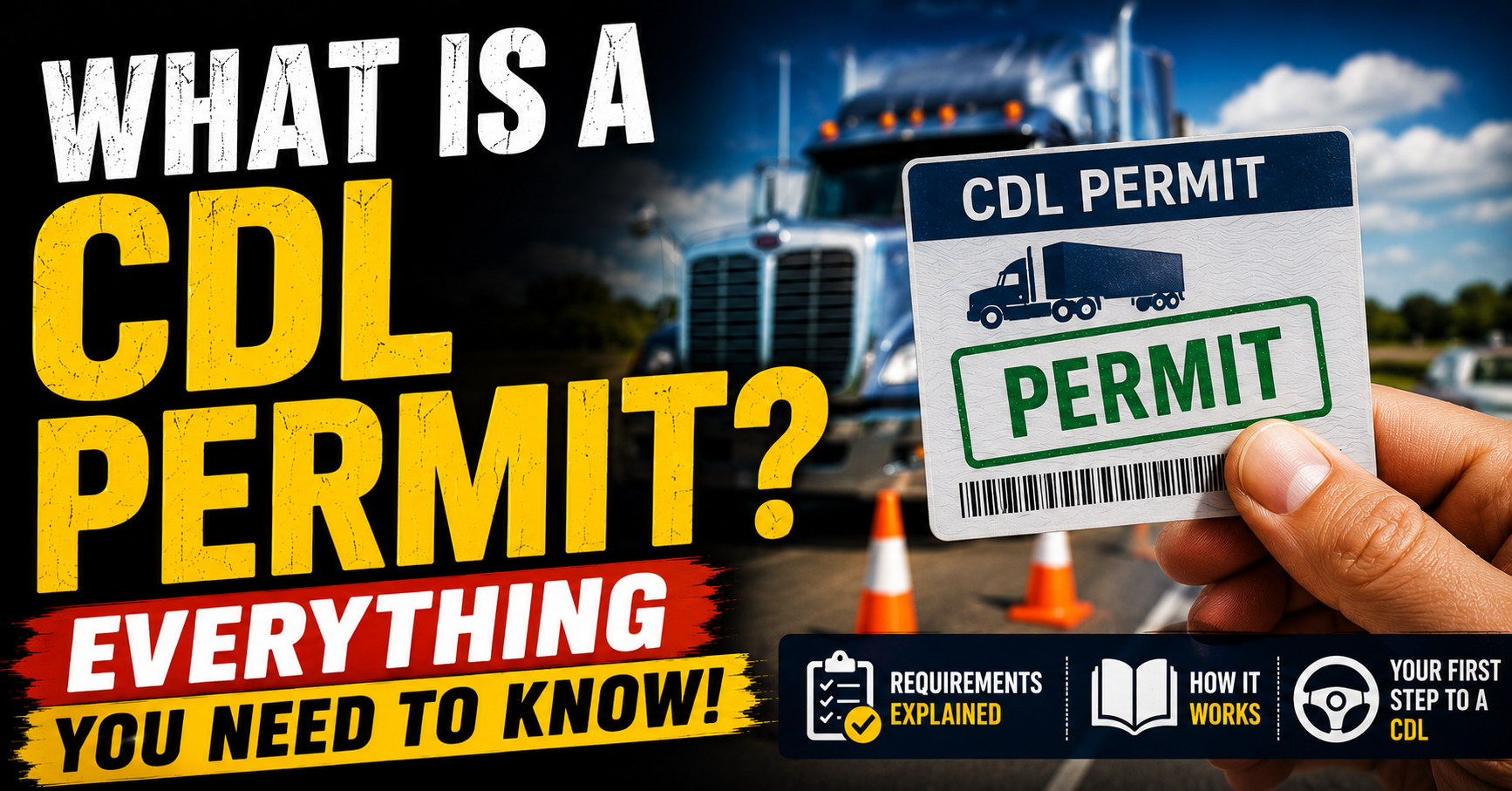
If you’re still working toward your CDL, our guide on how to get a CDL step by step explains where the air brake test fits into the overall licensing process.
Is the Air Brake Endorsement Really an Endorsement?
Not exactly.
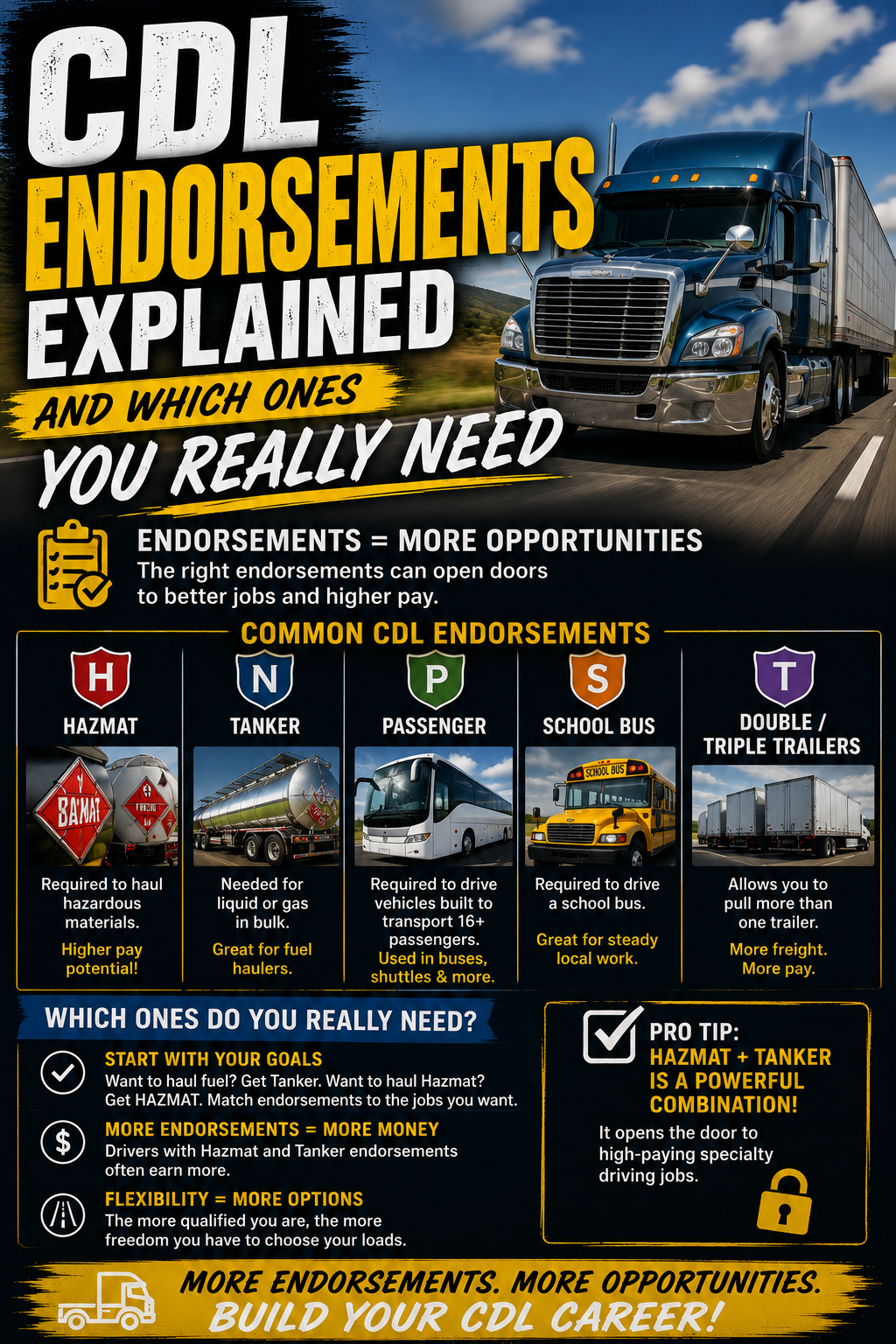
Federal CDL endorsements include things like: To distinguish these qualifications from air-brake requirements, compare them with the guide to CDL Endorsements Explained and Which Ones You Really Need.
- Tank Vehicles
- Hazardous Materials
- Passenger
- School Bus
- Doubles and Triples
Air brakes work differently.
Instead of adding a new privilege to your CDL, passing the required knowledge and skills tests keeps your license from receiving an air brake restriction.
If you don’t pass those requirements, you’ll still be able to earn a CDL in many cases, but you won’t be allowed to operate commercial vehicles equipped with air brakes.
For most future tractor-trailer drivers, that’s a major limitation.
Who Needs the Air Brake Qualification?
If your goal is driving a traditional semi truck, there’s a very good chance you’ll need to qualify on air brakes.
Most commercial trucks on the road today use air brake systems because they’re reliable, powerful, and designed to safely stop extremely heavy vehicles.
You’ll also find air brakes on many:
- Tractor-trailers
- Dump trucks
- Cement mixers
- Garbage trucks
- Motor coaches
- Transit buses
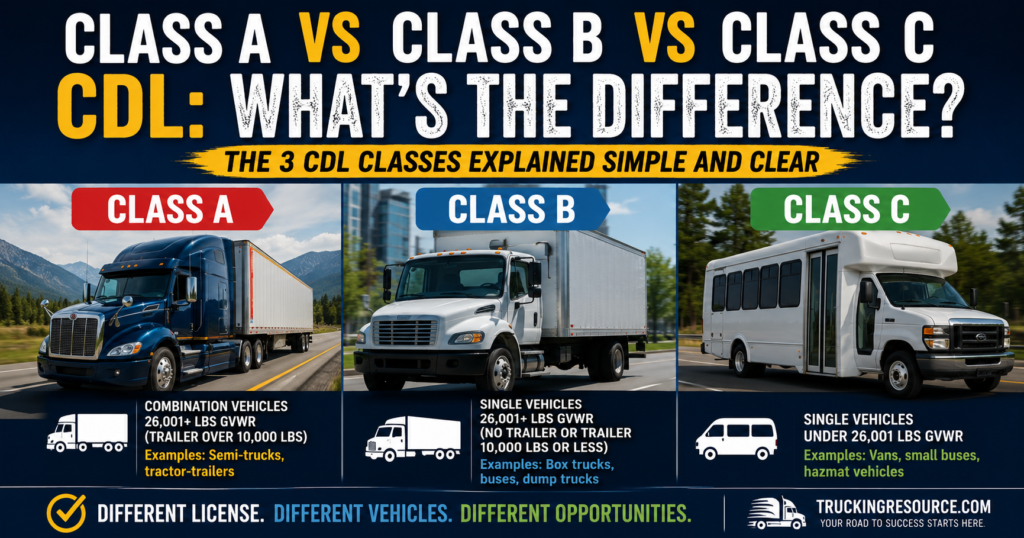
Before choosing your CDL training program, it’s a good idea to understand which type of license fits your career goals. Our guide on Class A vs Class B vs Class C CDL explains which vehicles require each CDL class.


What Happens If You Get an Air Brake Restriction?
An air brake restriction limits the commercial vehicles you’re legally allowed to drive.
That means you may not qualify for many trucking jobs that involve vehicles equipped with air brakes.
I’ve seen drivers discover this the hard way after applying for jobs.
They had their CDL in hand, but because of the restriction, they weren’t eligible for positions they really wanted.
Removing that restriction later usually means additional testing.
That’s why I always recommend learning the material thoroughly the first time.
What Will You Learn?
Air brakes are different from the hydraulic brakes found on most passenger vehicles.
During your CDL training, you’ll learn about topics such as:
- Air compressors
- Air tanks
- Brake chambers
- Slack adjusters
- Spring brakes
- Air pressure gauges
- Low air pressure warning devices
- Dual air brake systems
- Proper brake testing procedures
At first, some of these terms may seem unfamiliar.
Don’t worry.
Once you understand how each component works together, the entire system starts making much more sense.

The Air Brake Knowledge Test
Before you ever perform an air brake inspection, you’ll need to pass the written knowledge exam.
The test covers both how the system works and how to safely inspect it before driving.
One mistake I see students make is trying to memorize answers instead of understanding the concepts.
When you actually understand how air moves through the braking system and why each safety check matters, the questions become much easier to answer.
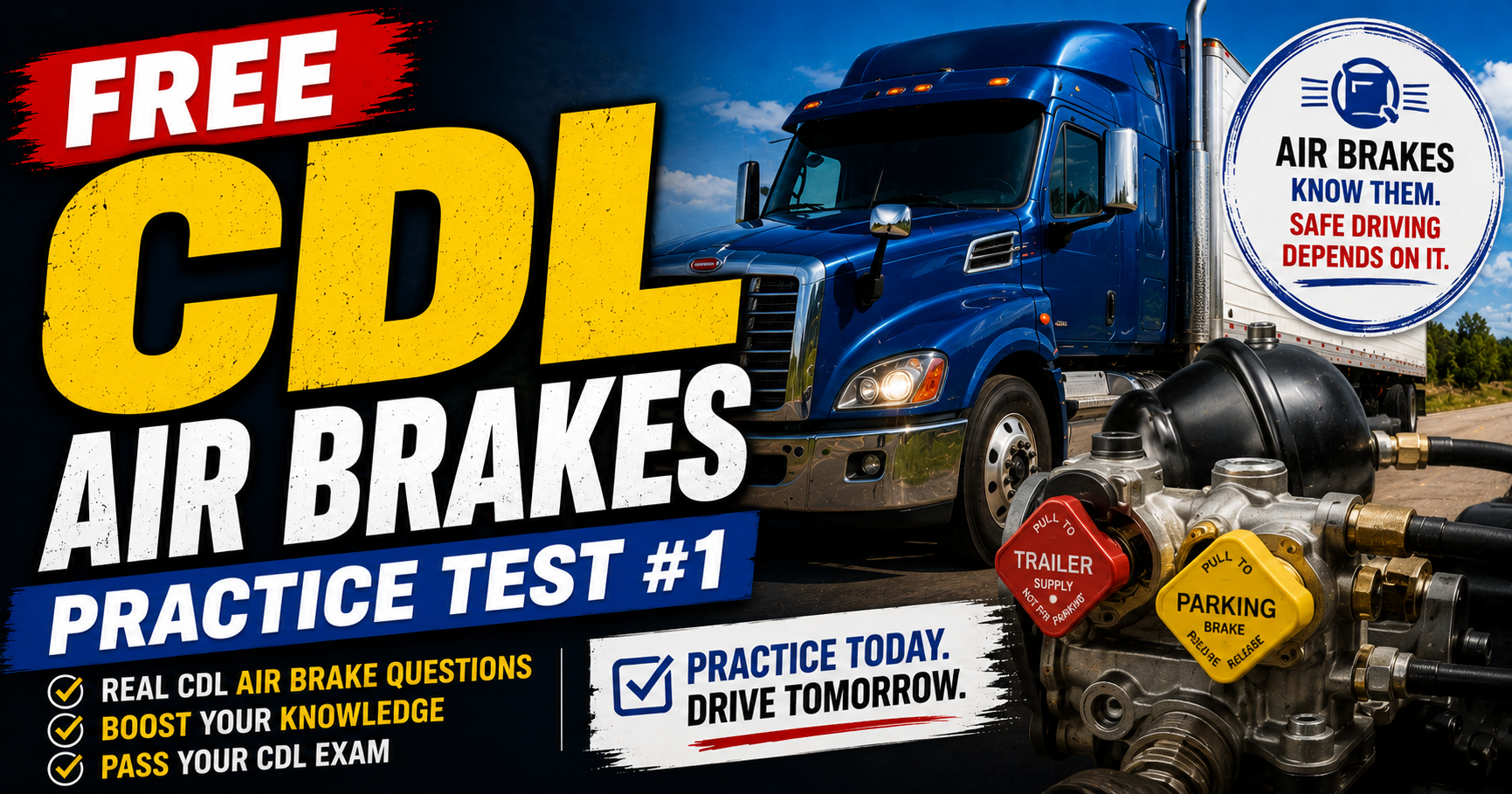
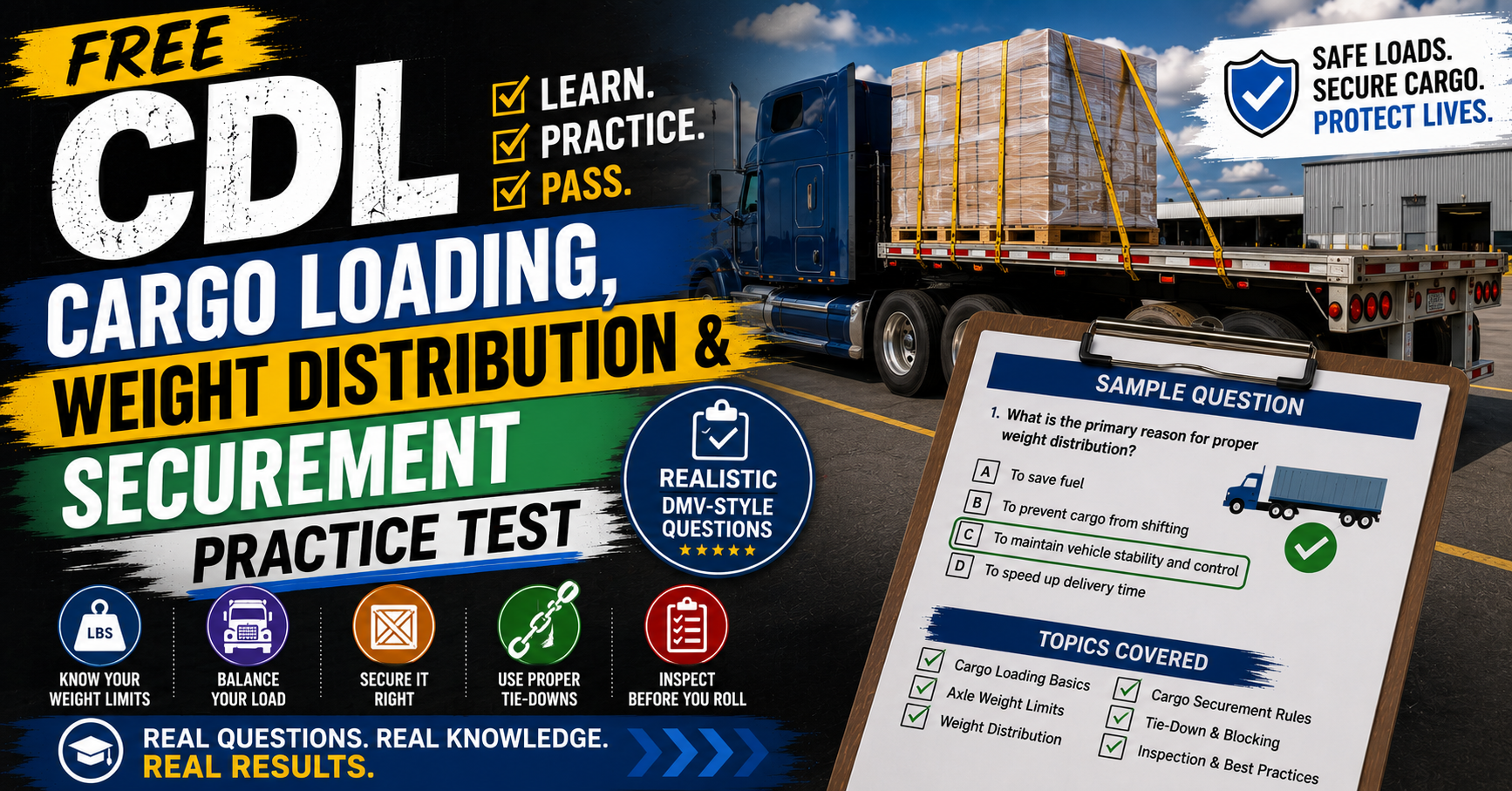
After you’ve studied the material, I recommend taking our Free CDL Air Brakes Practice Test #1. It’s a great way to identify areas that need a little more review before your exam.
The Air Brake Inspection Test
Passing the written exam is only part of the process.
During your CDL skills test, you’ll also need to demonstrate that you know how to inspect an air brake system properly.
Depending on your state and the type of vehicle you’re testing in, you’ll typically be asked to perform several checks before driving.
These commonly include:
- Air pressure build-up test
- Air leakage test
- Low air pressure warning device check
- Spring brake activation test
- Service brake test
The examiner isn’t looking for someone who can simply repeat a memorized script.
They want to know that you understand what each test is checking and why it’s important.
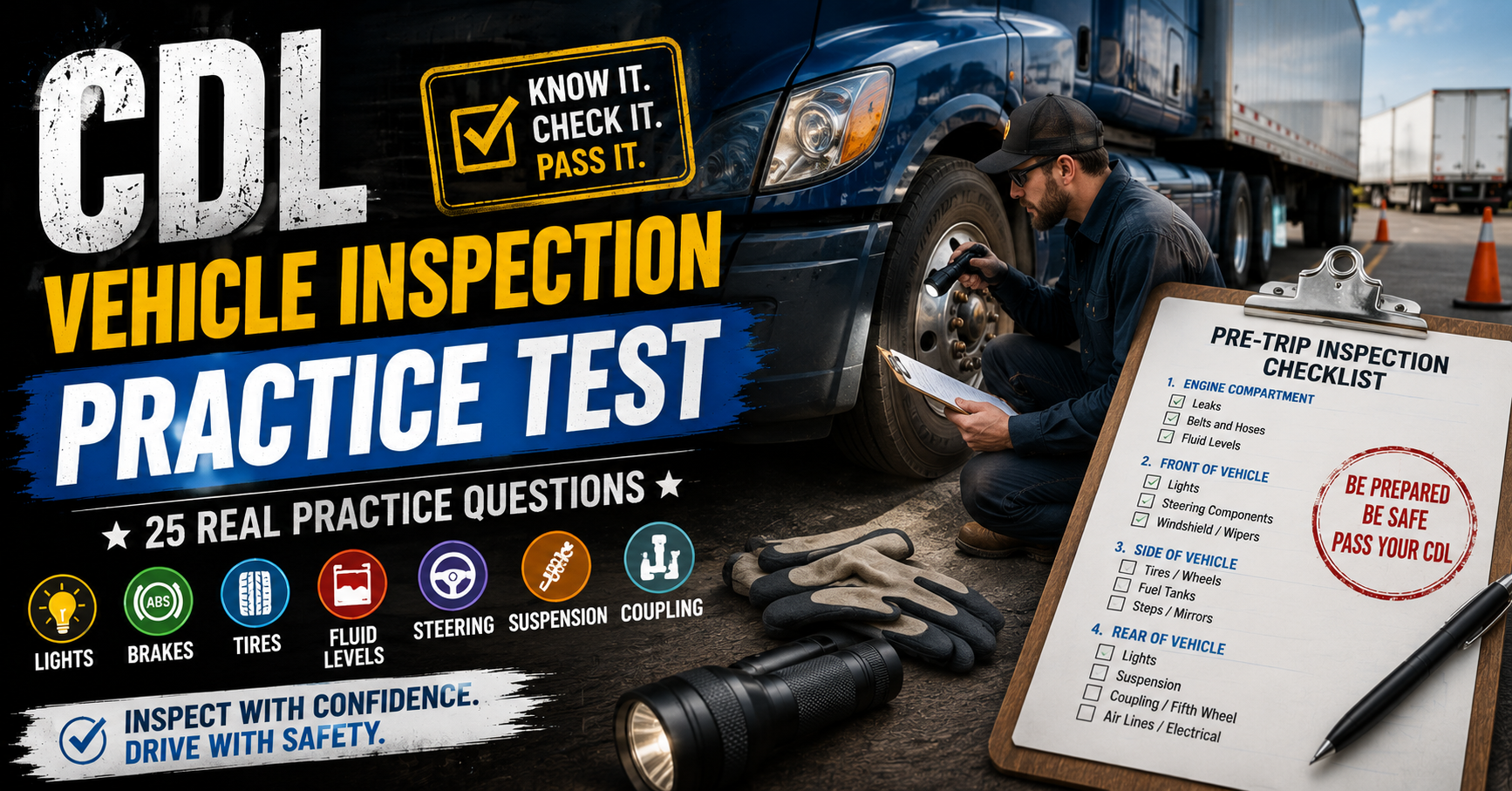
If you struggle with vehicle inspections in general, I’d recommend taking our CDL Vehicle Inspection Practice Test. It covers many of the inspection concepts you’ll use during your CDL skills test.
How Difficult Is the Air Brake Test?
Most students build it up in their minds to be harder than it actually is.
The air brake system has more components than the braking system on a passenger car, so there is certainly more to learn.
But if you study consistently instead of trying to cram everything into one evening, you’ll usually find that the concepts begin fitting together naturally.
The biggest challenge isn’t understanding one part.
It’s remembering how all the parts work together to safely stop a commercial vehicle.
That’s why I always encourage students to study a little every day rather than trying to memorize dozens of facts at once.
Common Mistakes Students Make
After years of working with new CDL drivers, I’ve noticed several mistakes that come up again and again.
Memorizing Instead of Learning
Some students focus only on remembering answers.
That approach may work for a few questions, but it usually falls apart once the wording changes.
Understanding the system is far more valuable than memorizing a list.
Skipping Practice Tests
Practice tests are one of the easiest ways to discover weak areas before your actual exam.
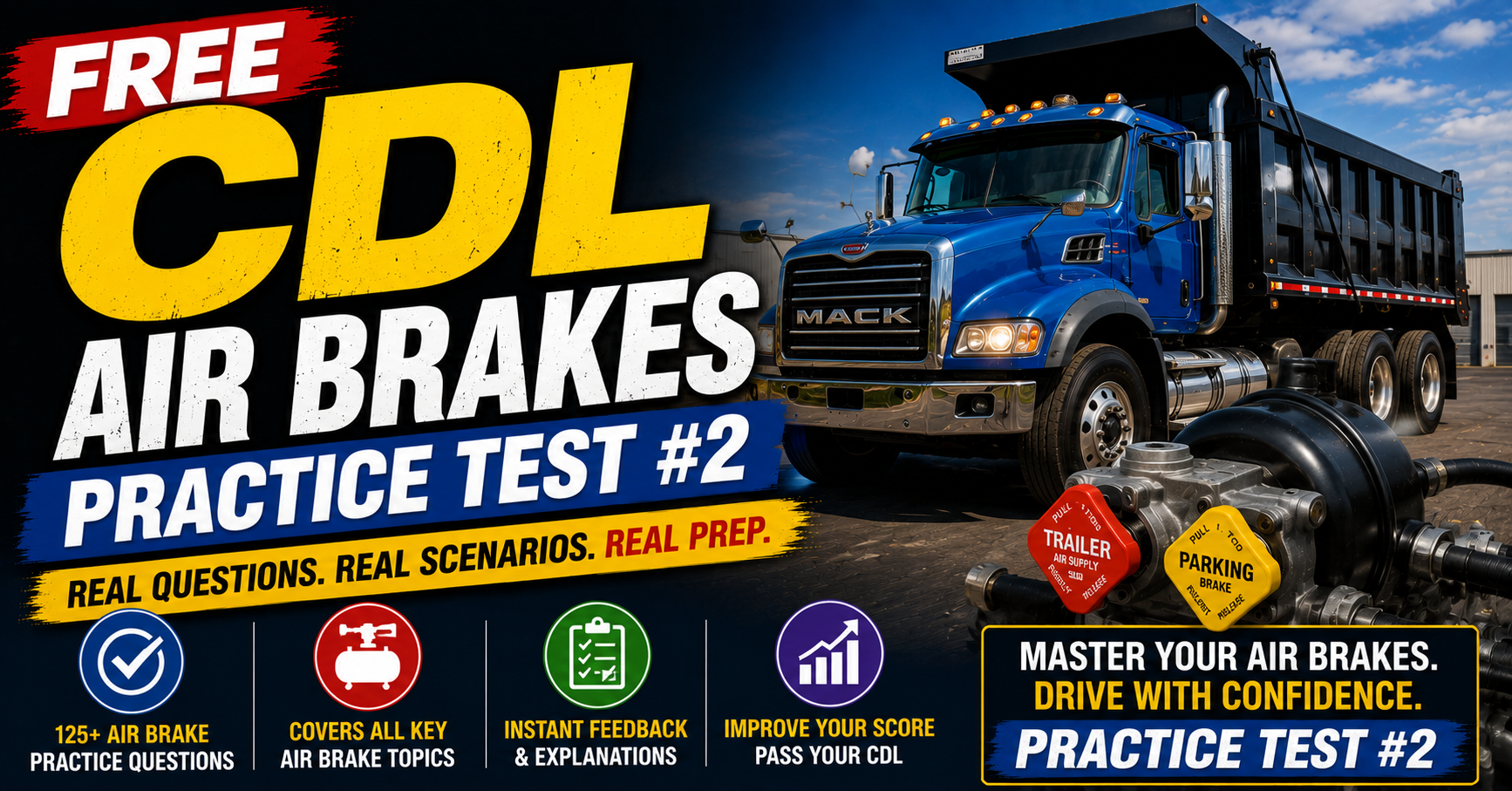
After you’ve completed your initial studying, move on to our Free CDL Air Brakes Practice Test #2 to challenge yourself with another set of realistic questions.
Rushing the Inspection
I’ve watched students perform a perfect air brake inspection during practice, then rush through it on test day because they were nervous.
Take your time.
Speak clearly, follow the proper order, and don’t let nerves cause you to skip an important step.
Tips That Helped Me Learn Air Brakes
Looking back, there are a few things that made learning air brakes much easier.
The first was breaking the system into smaller pieces.
Instead of trying to understand everything at once, I focused on one component at a time.
Once I understood what the compressor did, I moved on to the tanks.
Then I learned about brake chambers, slack adjusters, and the warning devices.
Before long, the entire system started making sense.
Another thing that helped was seeing the components in person instead of only reading about them.
Standing beside a truck and identifying each part made everything much easier to remember than looking at pictures in a manual.
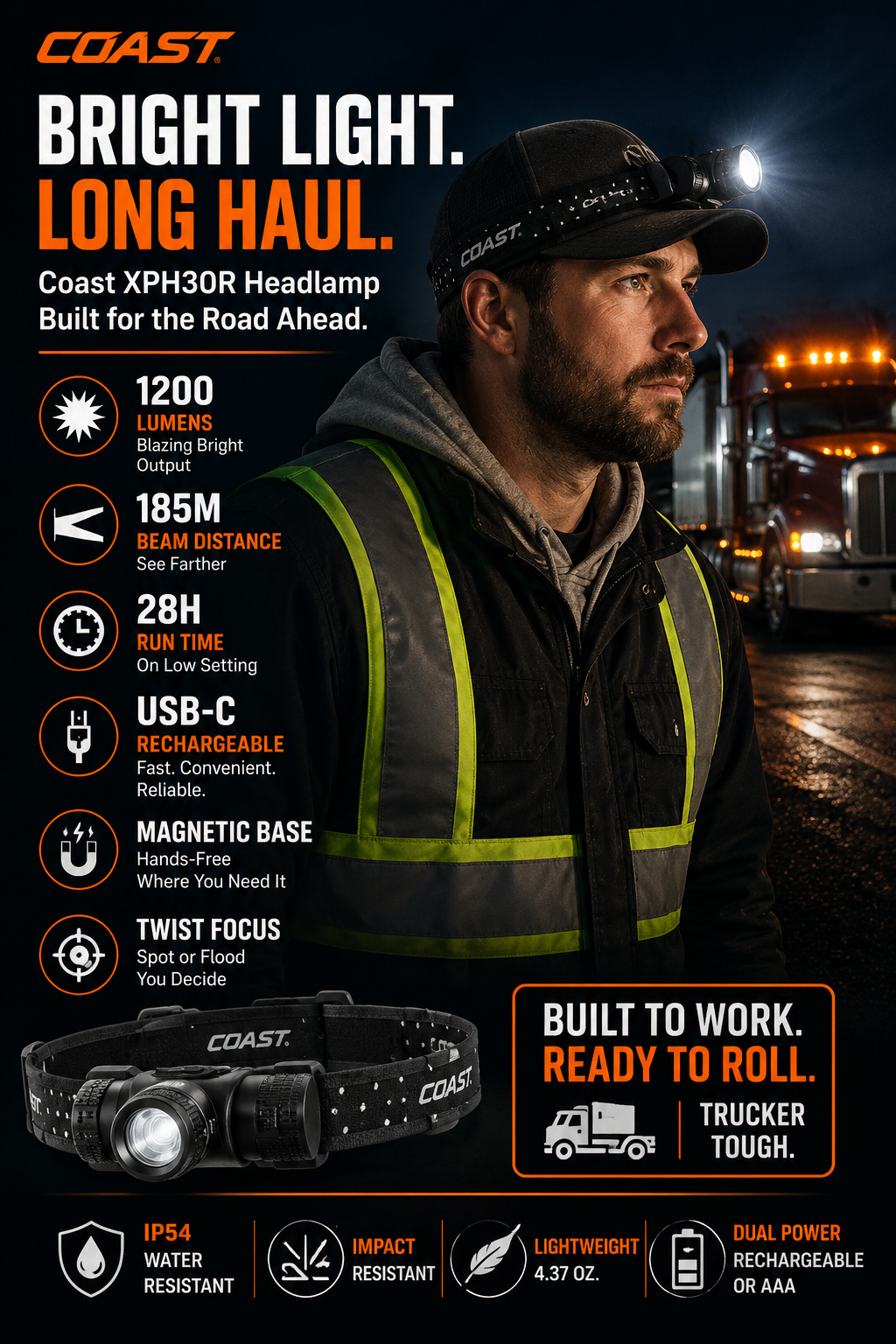
If you’re practicing pre-trip inspections early in the morning, after sunset, or inside a dimly lit shop, having a reliable headlamp makes it much easier to see brake chambers, air lines, and other components underneath the truck. The Coast XPH30R USB-C Rechargeable Headlamp is one of my favorite tools because it keeps both hands free while inspecting hard-to-see areas.
Is the Air Brake Qualification Worth It?
Without question.
If your goal is driving a tractor-trailer or most heavy commercial vehicles, it’s one of the most important parts of your CDL training.
Trying to avoid it simply limits the number of jobs you’ll qualify for later.
Even if your first job doesn’t require air brakes, having the qualification already on your CDL gives you more flexibility if your career changes down the road.
It’s always easier to have more opportunities than fewer.
My Advice Before Taking the Air Brake Test
Don’t let the name scare you.
Every experienced truck driver had to learn this system at some point.
Take your time, understand how the components work together, and practice until you feel comfortable performing the inspection without rushing.
One resource I often recommend to new drivers is our CDL Master Question Bank PDF. Working through hundreds of realistic practice questions is a great way to reinforce what you’ve learned before taking the written exam.
You can also explore our Trucking Topics page for more guides covering CDL training, endorsements, vehicle inspections, and life as a professional truck driver.
Author: David Walker
David Walker is a former CDL instructor with more than 22 years of experience helping students earn their Commercial Driver’s Licenses. He has trained hundreds of future commercial drivers on air brake systems, pre-trip inspections, and CDL skills testing. His goal is to make complex trucking topics easier to understand through practical, real-world instruction.