Before I started hauling grain during harvest, I assumed the process was pretty simple.
The combine harvested the corn.
The truck hauled it to a grain bin.
The corn stayed there until it was sold.
That was the end of the story.
Then one day I helped move dried corn from one grain bin into several other storage bins around the farm.
At first, I honestly wondered why we were doing it.
The corn had already been harvested.
It had already been dried.
Why move it again?
After seeing the process firsthand, I realized there’s a lot more happening behind the scenes than most people ever realize.
If you’ve watched a truck being loaded from one grain bin only to dump that same corn into another grain bin, there’s usually a very good reason for it.
Grain Storage Is Constantly Changing
One thing I’ve learned since spending time around grain handling is that grain bins aren’t permanent parking spots.
They’re part of a working storage system.
Farmers are constantly making decisions based on:
- Available storage space.
- Grain moisture.
- Marketing plans.
- Upcoming harvest.
- Equipment needs.
- Feed requirements.
Sometimes that means moving grain from one bin to another before it’s ever sold.
To someone driving past the farm, it might look unnecessary.
To the farmer, it can make perfect sense.


Making Room for the Next Harvest
One of the biggest reasons grain gets moved is simple.
Space.
Harvest eventually comes around again.
If a farm still has corn stored from the previous season, that grain may need to be consolidated into fewer bins so empty bins are ready for the next crop.
Instead of building more storage, farmers often make better use of the storage they already have.
That can mean moving thousands of bushels from several partially filled bins into one larger bin.
Once those smaller bins are empty, they’re ready for the next harvest.

Grain Doesn’t Always Stay in the First Bin
Another thing that surprised me was learning that the first grain bin isn’t always the grain’s final destination.
Depending on the operation, grain may be moved because:
- Another bin has better aeration.
- Another bin is closer to the loading area.
- Different moisture levels need to be separated.
- One bin needs to be emptied for cleaning or maintenance.
- Grain is being prepared for shipment.
Every farm is a little different.
The reason depends on how that particular operation manages its grain.
Today’s Job Was Moving Dried Corn
The job I helped with wasn’t taking corn from the field.
The corn had already been harvested and dried.
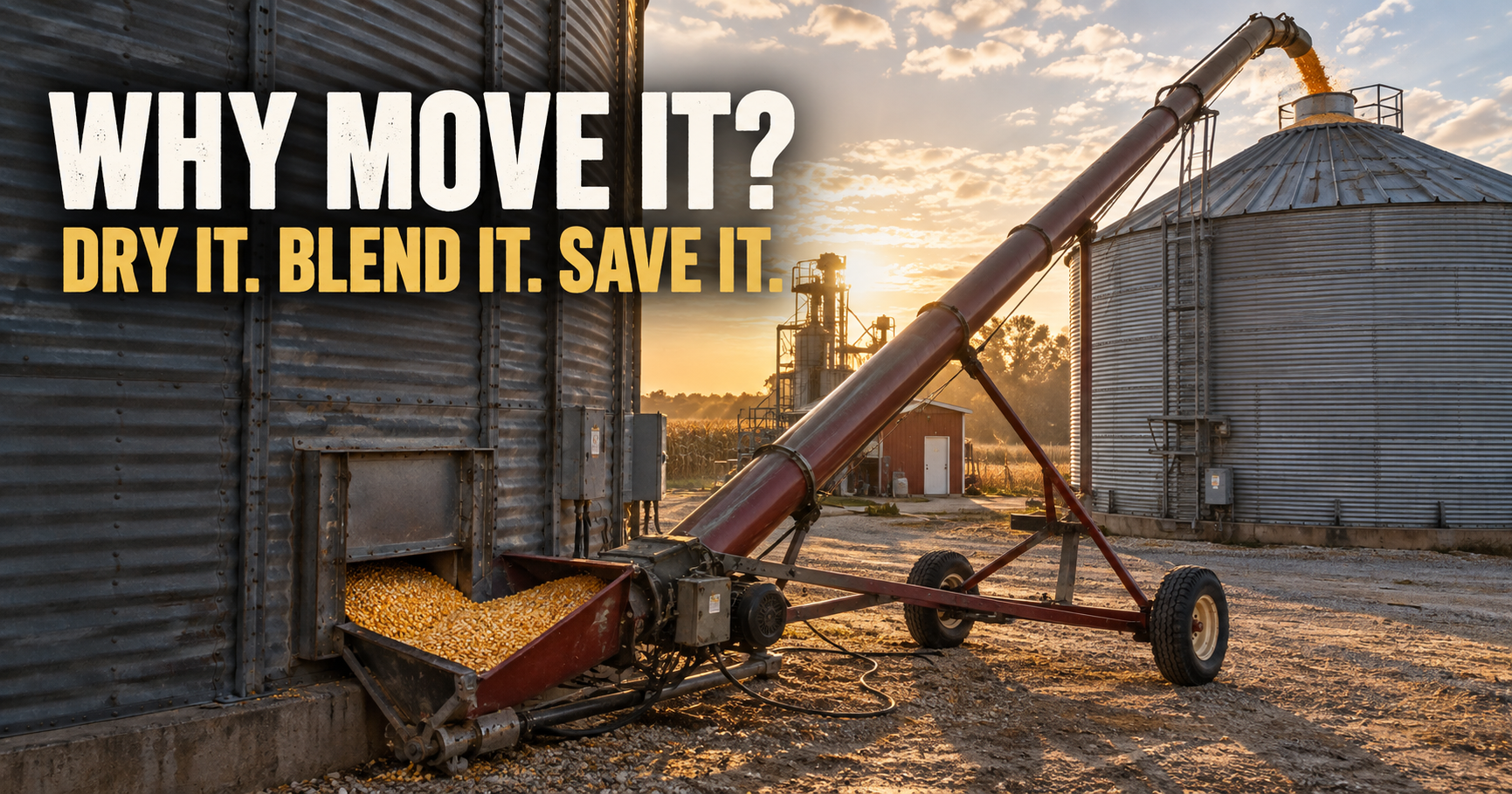
We were loading it out of a large storage bin using a PTO-powered grain auger.
The auger carried the corn into the dump truck.
From there, the truck hauled the corn a short distance to another grain bin where it was unloaded into another auger that lifted it back into storage.
If you’ve never seen it happen, it almost looks like you’re undoing yesterday’s work.
In reality, you’re simply moving grain to a better location within the farm’s storage system.


Grain Augers Make the Entire Process Possible
If you’ve never watched grain being moved between bins, the auger is probably the most interesting piece of equipment.
A grain auger is basically a large screw inside a long tube.
As the screw turns, it carries the grain from one end to the other.
In our case, a tractor powered the auger using its Power Take-Off (PTO).
The tractor’s PTO shaft transferred power directly to the auger, allowing thousands of pounds of corn to move steadily from the storage bin into the waiting dump truck.
Once the truck reached the next bin, another auger carried the grain back up into storage.
It’s a surprisingly simple system, but it’s incredibly efficient.
Why We Used a Dump Truck Instead of a Semi
One question people might have after watching the video is why we were using a dump truck instead of a hopper-bottom trailer.
The answer is that every farm has its own equipment and its own way of doing things.
For this job, the dump truck worked well because we were making short trips around the farm between storage bins.
The truck could back into position, raise the bed, and unload directly into the receiving hopper feeding the auger.
For longer highway hauls, hopper-bottom trailers are often the better choice because they’re designed specifically for transporting grain.
But for short on-farm moves like this, a dump truck can be an excellent tool.
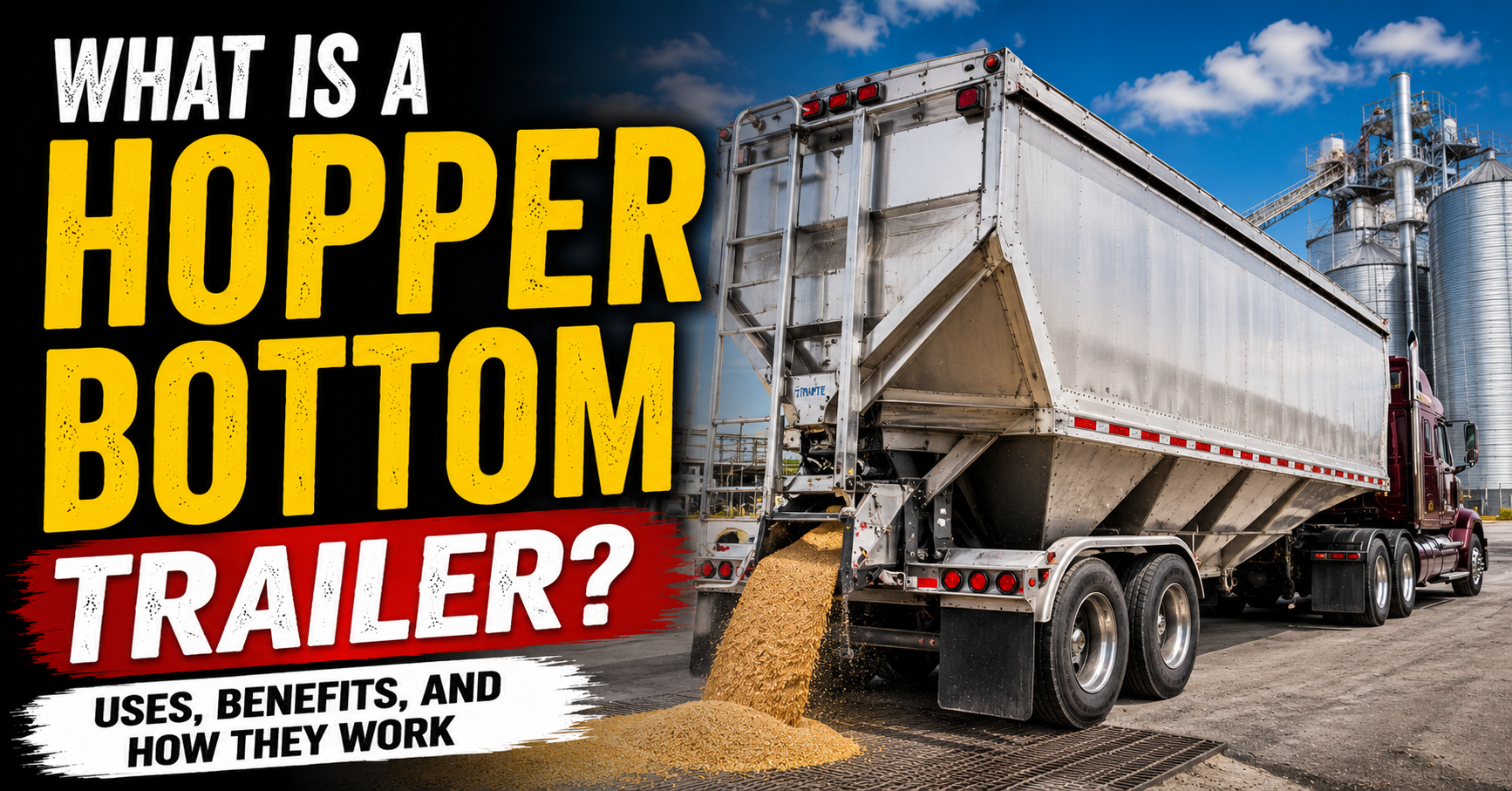
If you’re curious about the differences, I explain hopper trailers in What Is a Hopper Bottom Trailer? and when they’re commonly used.
Why Not Just Leave the Corn Where It Is?
At first, I wondered exactly that.
If the corn is already in a grain bin, why spend time, fuel, and labor moving it?
After learning more, the answer became much more obvious.
Sometimes moving grain today saves much more time later.
For example, consolidating grain into fewer bins can:
- Free up empty storage before harvest.
- Make future loading faster.
- Improve how the farm organizes different grain lots.
- Prepare grain for sale.
- Make maintenance on empty bins possible.
From the outside it might look like extra work.
From the farm’s perspective, it’s often part of an organized storage plan.
Watching the Entire System Come Together
One thing I’ve enjoyed since starting this trucking job is finally seeing how all the pieces fit together.
Before, I only saw individual machines.
A combine.
A tractor.
A grain truck.
A grain bin.
Now I understand they’re all connected.
The combine harvests.
The grain cart keeps the combine moving.
The truck hauls the grain.
The augers move it.
The bins store it.
Sometimes the grain moves again before it’s ever sold.
It’s all one continuous system designed to protect the crop and keep harvest moving efficiently.


Safety Around Grain Augers
One thing that quickly becomes obvious around grain handling equipment is that augers deserve respect.
That spinning screw inside the tube is incredibly powerful.
Loose clothing, hands, feet, or tools should never be placed near moving augers or exposed PTO shafts.
Many injuries happen because someone tries to clear a blockage or service equipment before it’s completely shut down.
If an auger needs attention, it should be shut off, the PTO disengaged, and the equipment allowed to stop completely before anyone gets close.
Grain handling equipment saves an incredible amount of labor, but only when it’s operated safely.
Frequently Asked Questions
Why would a farmer move corn from one grain bin to another?
There are several reasons. The farmer may be consolidating grain to free up storage, organizing grain by quality or moisture, preparing bins for the next harvest, getting ready to market the grain, or emptying a bin for cleaning or maintenance.
Why use a dump truck instead of a hopper trailer?
For short trips around the farm, a dump truck can be very efficient. It loads quickly, dumps directly into a receiving hopper, and works well when grain is simply being moved between nearby storage bins.
What powers a grain auger?
Many portable grain augers are powered by a tractor’s Power Take-Off (PTO). The PTO transfers engine power through a driveshaft, allowing the auger to move grain from one location to another.
Is moving grain between bins common?
Yes. Depending on the farm’s storage needs, grain may be moved several times before it’s eventually sold or shipped. It’s a normal part of grain management on many operations.
There’s More to Grain Storage Than Most People Ever See
Before this job, I assumed once corn went into a grain bin, it stayed there until someone bought it.
Now I know that isn’t always the case.
Sometimes moving grain between bins is one of the smartest things a farm can do.
It creates storage space.
Improves organization.
Prepares grain for marketing.
And helps the entire operation run more efficiently.
Watching that process firsthand gave me a much better appreciation for everything that happens after harvest, and it’s another reminder that getting the crop out of the field is only one step in a much bigger journey.
Author: Jake Harrison
Jake Harrison is a commercial transportation writer for TruckingResource.com who specializes in commercial trucking, agricultural transportation, CDL training, and equipment. He works with the TruckingResource.com editorial team to create practical, in-depth guides that explain both trucking and the real-world systems that keep American agriculture moving.