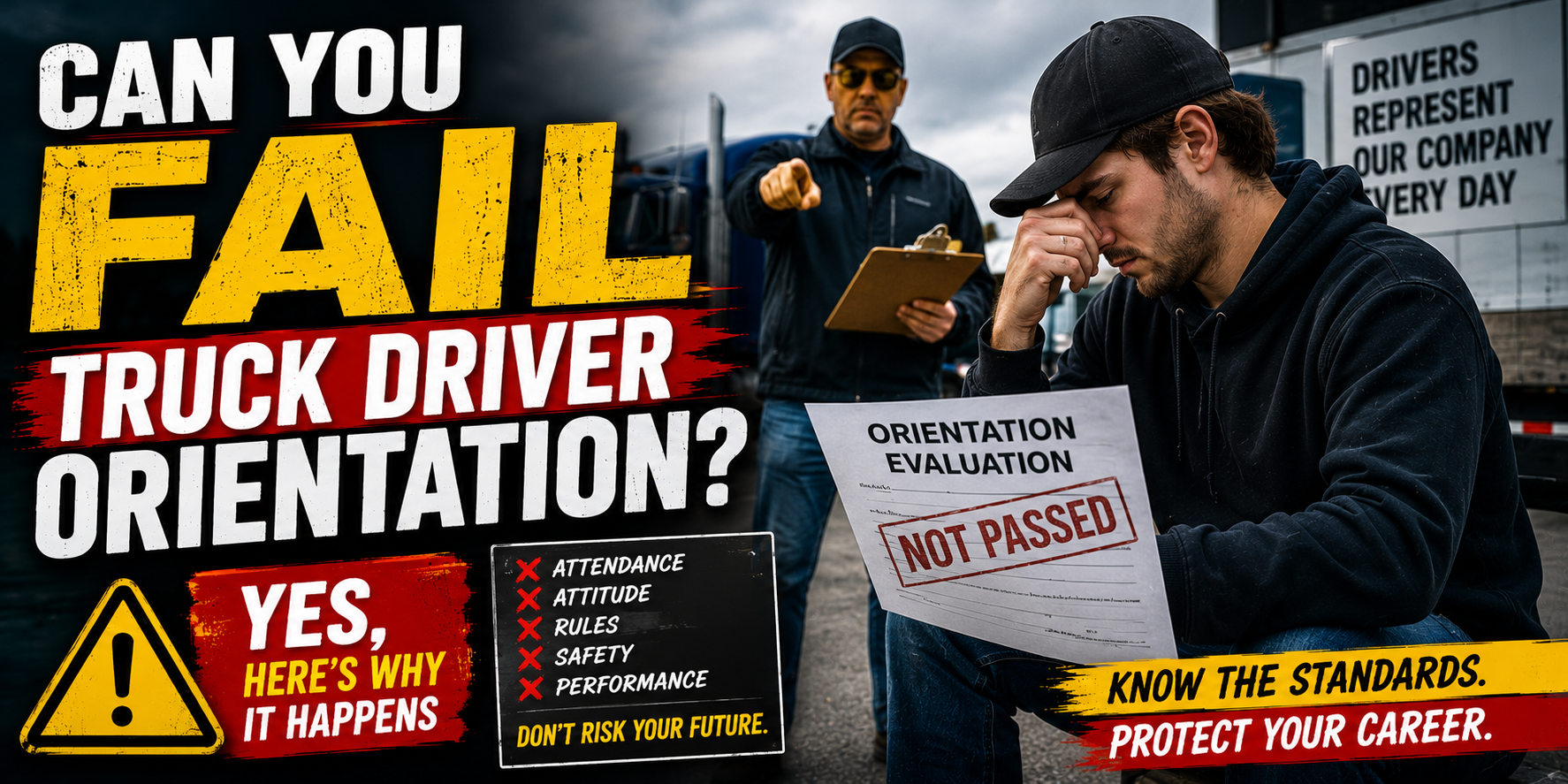
After accepting a trucking job, it’s normal to wonder whether orientation is just a formality or if there’s actually a chance you could be sent home.
The short answer is yes, you can fail truck driver orientation.
That doesn’t mean you should panic.
Most drivers who arrive prepared, act professionally, and meet the company’s hiring requirements complete orientation without any problems. One practical part of arriving prepared is knowing what to bring to orientation before leaving home.
When someone doesn’t make it through orientation, it’s usually because of something that could have been avoided.
Understanding what companies are looking for can help you show up with confidence and avoid the mistakes that derail some new hires.
If you’re still getting ready for orientation, our Truck Driver Orientation Guide: What to Expect Before Your First Load explains what the entire process looks like from the day you leave home until you’re assigned your first load.
Orientation Is Still Part of the Hiring Process
One mistake some new drivers make is assuming they’ve officially been hired the moment they accept the job offer.
In reality, orientation is often the final stage of the hiring process.
The company may still need to:
- Verify your paperwork
- Complete background checks
- Confirm your driving history
- Review your employment records
- Complete drug and alcohol testing
- Verify your DOT medical qualification
- Evaluate your driving skills
Until those steps are complete, the company may still decide not to move forward if something doesn’t meet its hiring standards. Experienced drivers on trucking forums consistently report that background issues, failed drug tests, and medical qualification problems are among the most common reasons drivers are dismissed during orientation.
The Most Common Reason Drivers Don’t Finish Orientation
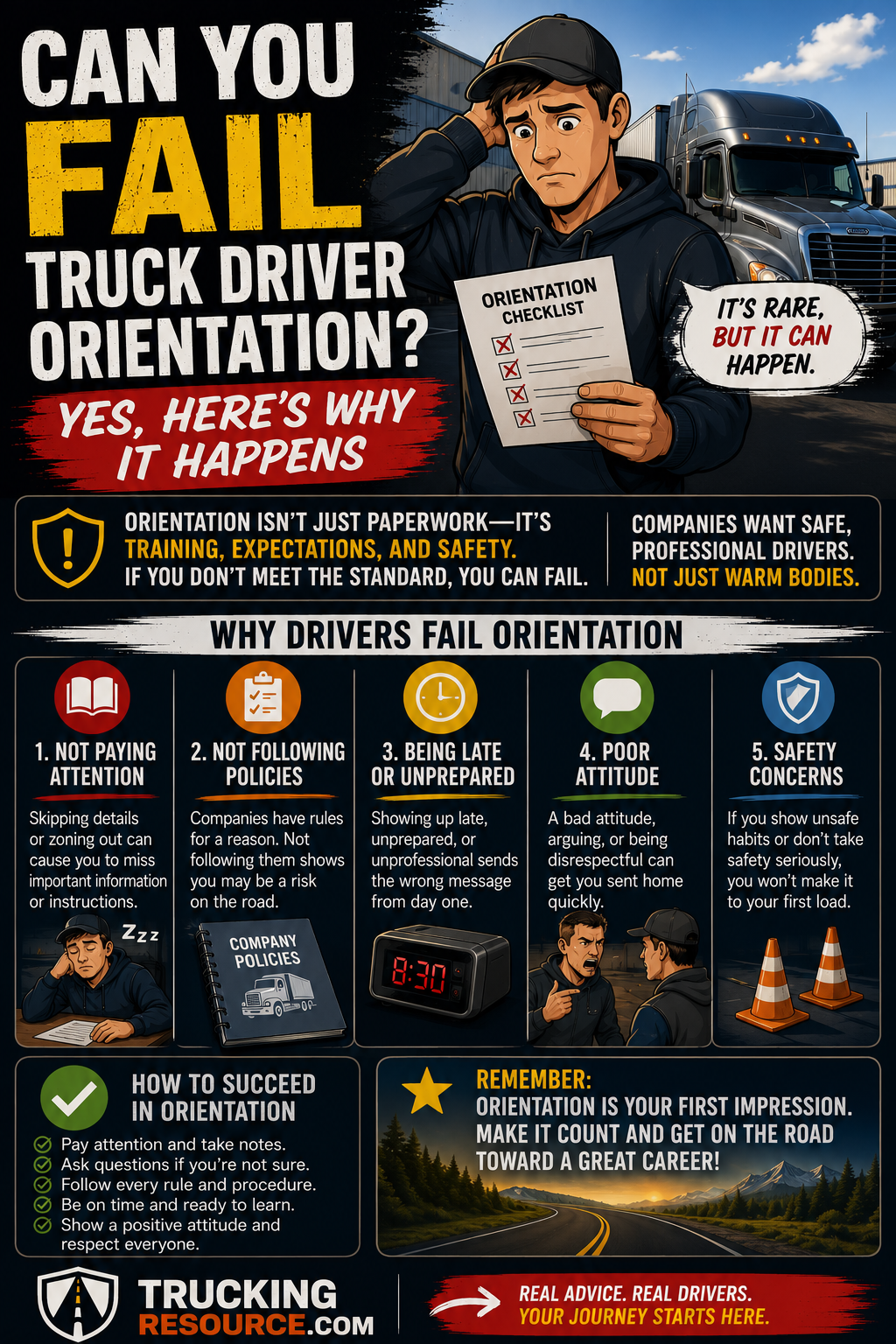
The biggest reason drivers are sent home isn’t poor driving.
It’s discovering information that should have been resolved before orientation.
Examples include:
- A failed drug test
- An undisclosed accident
- A suspended license
- A failed background check
- Missing or incorrect paperwork
- Problems with the DOT physical
Most companies spend a lot of money recruiting new drivers. They generally want qualified applicants to succeed, but they also have safety and insurance standards they must meet.
Failing a Road Evaluation
Not every trucking company gives a driving test during orientation, but many do.
The purpose usually isn’t to make the test harder than your CDL exam.
Instead, instructors want to verify that you can safely operate their equipment.
Common mistakes during company road tests include:
- Rolling through stop signs
- Speeding
- Forgetting your seat belt
- Poor mirror usage
- Hitting a curb
- Unsafe turns
- Backing errors
- Failing to use three points of contact when entering or exiting the truck
These are often the same types of safety violations that would have caused problems during your CDL skills test.
Professional Behavior Matters More Than You Think
Orientation isn’t only about driving.
Instructors are also evaluating whether you’ll represent the company professionally.
That means they pay attention to things like:
- Showing up on time
- Paying attention during class
- Following instructions
- Respecting instructors and other drivers
- Using your phone appropriately
- Treating hotel staff professionally
A poor attitude or repeated unprofessional behavior can leave a bad impression, even if your driving skills are solid. Experienced drivers frequently advise new hires that being late, sleeping during class, excessive phone use, and disrespectful behavior can quickly put your position at risk.
Medical or Physical Qualification Problems
Another reason drivers sometimes don’t complete orientation has nothing to do with their driving ability.
If there’s an issue with your DOT medical certification or a medical condition that wasn’t properly documented, the company may not be able to place you behind the wheel until everything is resolved. Individual medical and hiring situations require qualified advice, and the site's general disclaimer clarifies how to use the guidance provided here.
For example, problems can arise if:
- Your medical certificate has expired.
- Required paperwork is missing.
- Your prescription information doesn’t match what was reported.
- A medical condition requires additional documentation.
These situations don’t always mean you’ve permanently lost the job, but they can delay your start date until the necessary paperwork is completed.
Failing to Follow Company Policies
Every trucking company has its own rules.
Orientation is when they teach those policies and expect drivers to follow them immediately.
Drivers sometimes get into trouble because they:
- Skip required meetings.
- Ignore safety instructions.
- Leave the hotel without permission when transportation is scheduled.
- Miss shuttle departure times.
- Refuse required training activities.
- Violate company conduct policies.
Even something that seems minor can create concerns if it shows you’re unwilling to follow instructions.
Companies are looking for dependable drivers who can be trusted to represent them professionally.
Does Failing Orientation Mean Your Trucking Career Is Over?
Absolutely not.
Being released from one company’s orientation doesn’t automatically end your trucking career.
Every carrier has different hiring standards.
Some companies may decide you aren’t the right fit, while another company may gladly hire you after you’ve addressed the issue that prevented you from completing orientation.
The important thing is understanding why you didn’t finish.
If the problem was paperwork, fix it.
If it was a driving evaluation, spend more time practicing before applying elsewhere.
If it was an attitude or attendance issue, use it as a learning experience.
One setback doesn’t define your future as a truck driver.
How to Greatly Increase Your Chances of Success
Fortunately, most orientation failures are preventable.
You can dramatically improve your odds by doing a few simple things.
- Arrive early every day.
- Bring every required document.
- Read all instructions from your recruiter.
- Dress appropriately.
- Stay off your phone during class.
- Ask questions if you’re unsure about something.
- Follow every safety rule.
- Be respectful to instructors, dispatchers, hotel staff, and other drivers.
- Stay well rested throughout the week.
None of these require exceptional driving skills.
They’re simply habits that demonstrate professionalism and reliability.
Don’t Let Rumors Make You Nervous
If you’ve spent time reading trucking forums or watching videos online, you’ve probably come across stories about drivers being sent home from orientation.
While those situations do happen, they often leave out important context.
Many of the stories involve drivers who:
- Didn’t disclose important information during the hiring process.
- Failed required drug testing.
- Couldn’t meet company insurance requirements.
- Repeatedly ignored instructions.
- Chose to leave on their own after deciding the company wasn’t a good fit.

For the average new driver who arrives prepared, pays attention, and maintains a professional attitude, orientation is far more likely to be a learning experience than a test you’re expected to fail. For a personal look at that learning experience, read about my first day as a driver.
Frequently Asked Questions


Can I fail orientation even if I already have my CDL?
Yes.
Having a CDL proves you’ve met your state’s licensing requirements, but each trucking company still has its own hiring standards, safety policies, and onboarding process.

Will one mistake cause me to fail orientation?
Usually not.
Most instructors understand that new drivers are nervous and may make small mistakes.
They’re generally looking at your overall attitude, willingness to learn, and ability to follow directions rather than expecting perfection.
Can I retake the road evaluation?
Some companies allow drivers to repeat a road or backing evaluation if the mistakes were minor.
Others may require you to reapply later.
It depends on the carrier’s policies.
What if I realize the company isn’t right for me?
That’s okay.
Orientation also gives you a chance to evaluate the company.
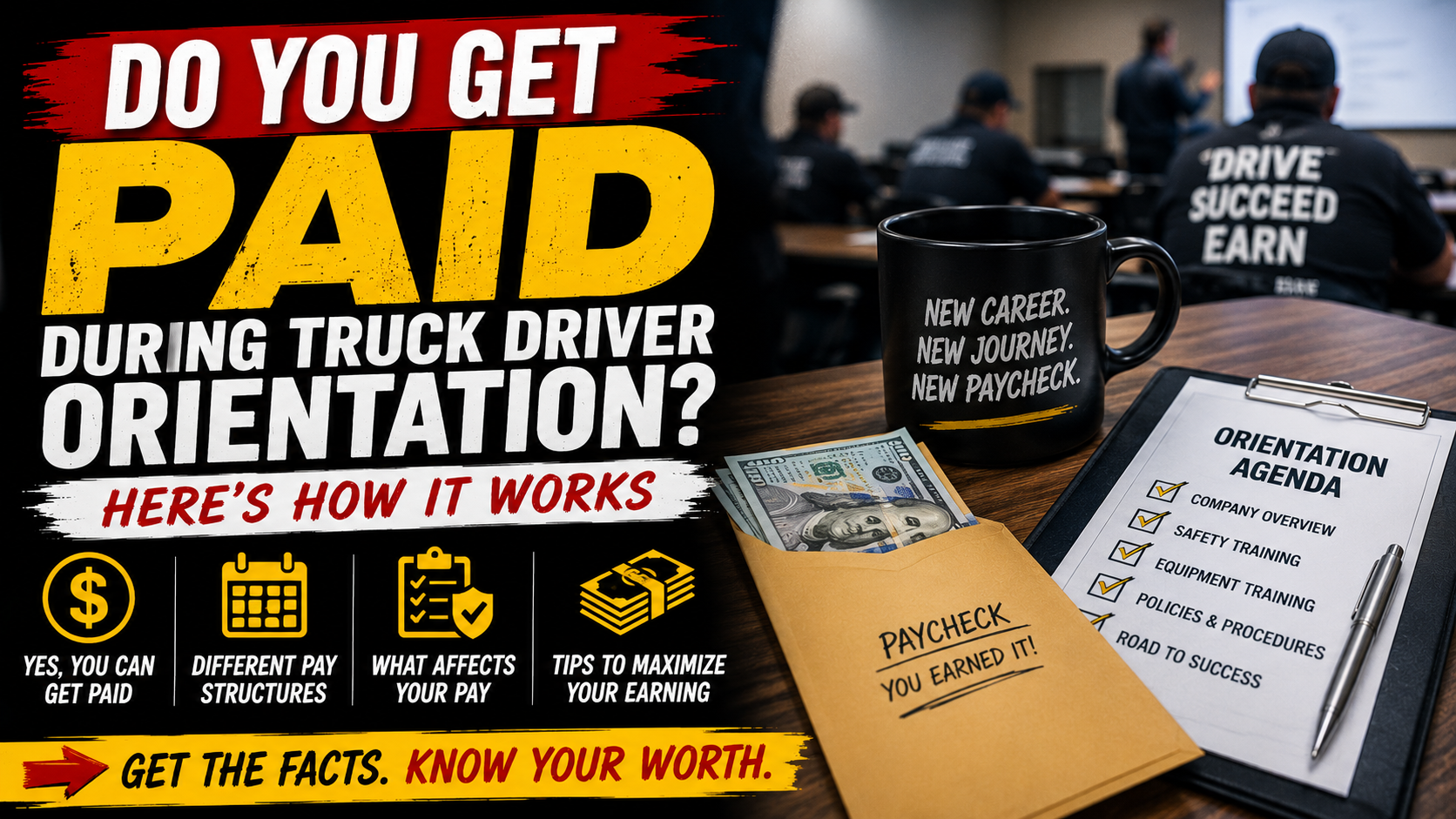
If the equipment, pay, policies, or safety culture aren’t what you expected, you can decide whether it’s the right place to build your career. Checking orientation payment policies ahead of time gives you another important detail to evaluate before committing to a carrier.
Just remember that leaving voluntarily may affect any orientation pay or travel reimbursement the company offered.
Do experienced drivers ever fail orientation?
Yes.
Experience doesn’t guarantee success.
Even veteran drivers can be sent home because of failed drug tests, paperwork problems, poor attitudes, unsafe driving during evaluations, or issues meeting company hiring standards.
Can I attend orientation again with another company?
In many cases, yes.
As long as you still meet CDL, medical, and hiring requirements, another trucking company may be willing to hire you.
Just be honest about your previous experience and be prepared to explain what happened if asked.
Orientation Is Designed to Help You Succeed
It’s easy to worry about failing truck driver orientation, especially if this is your first job after earning your CDL.
The reality is that most companies aren’t looking for reasons to send drivers home. They’ve invested time and money recruiting you, arranging your travel, and preparing for your arrival.
Show up prepared, stay engaged, follow instructions, and demonstrate that you’re willing to learn.
Do those things, and you’ll likely discover that orientation is less about trying to “pass” and more about preparing you for a safe, successful career behind the wheel.
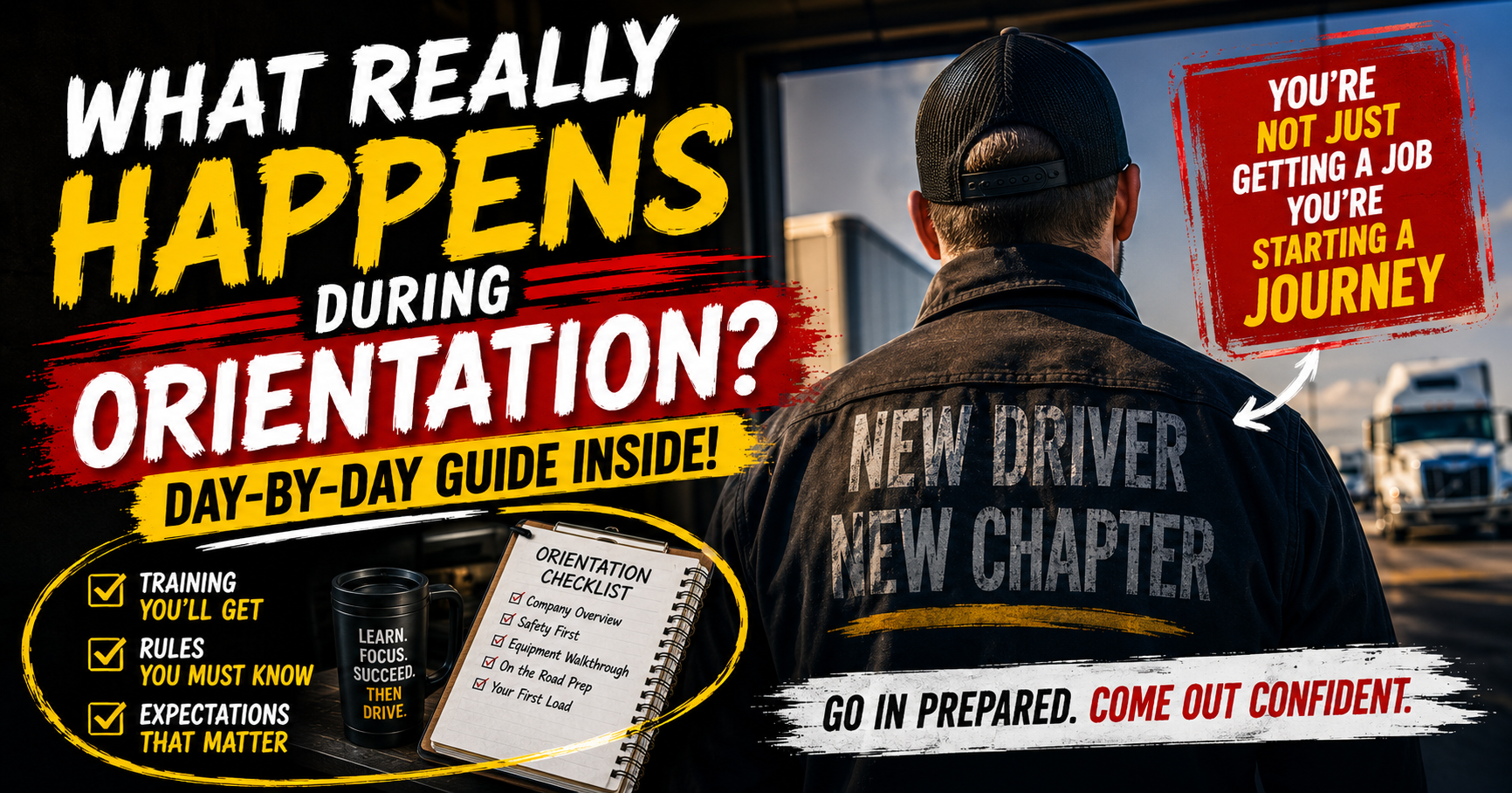
If you’re still getting ready for your first week, our What Happens During Truck Driver Orientation? A Day-by-Day Guide walks you through what to expect from the moment orientation begins.
You should also read Questions to Ask During Truck Driver Orientation to learn which questions can help you better understand company policies, pay, equipment, and life on the road before you receive your first load.
Author: Mason Carter
Mason Carter has spent more than 15 years driving regional and over-the-road freight while mentoring new CDL graduates. He enjoys helping new drivers start their careers with realistic expectations, practical advice, and a strong focus on safety and professionalism.