Before I started hauling grain during harvest, I never gave much thought to what happened after a truck reached a grain bin.
I figured the driver simply dumped the corn into the bin somehow.
Then I actually watched it happen.
The truck backed into position.
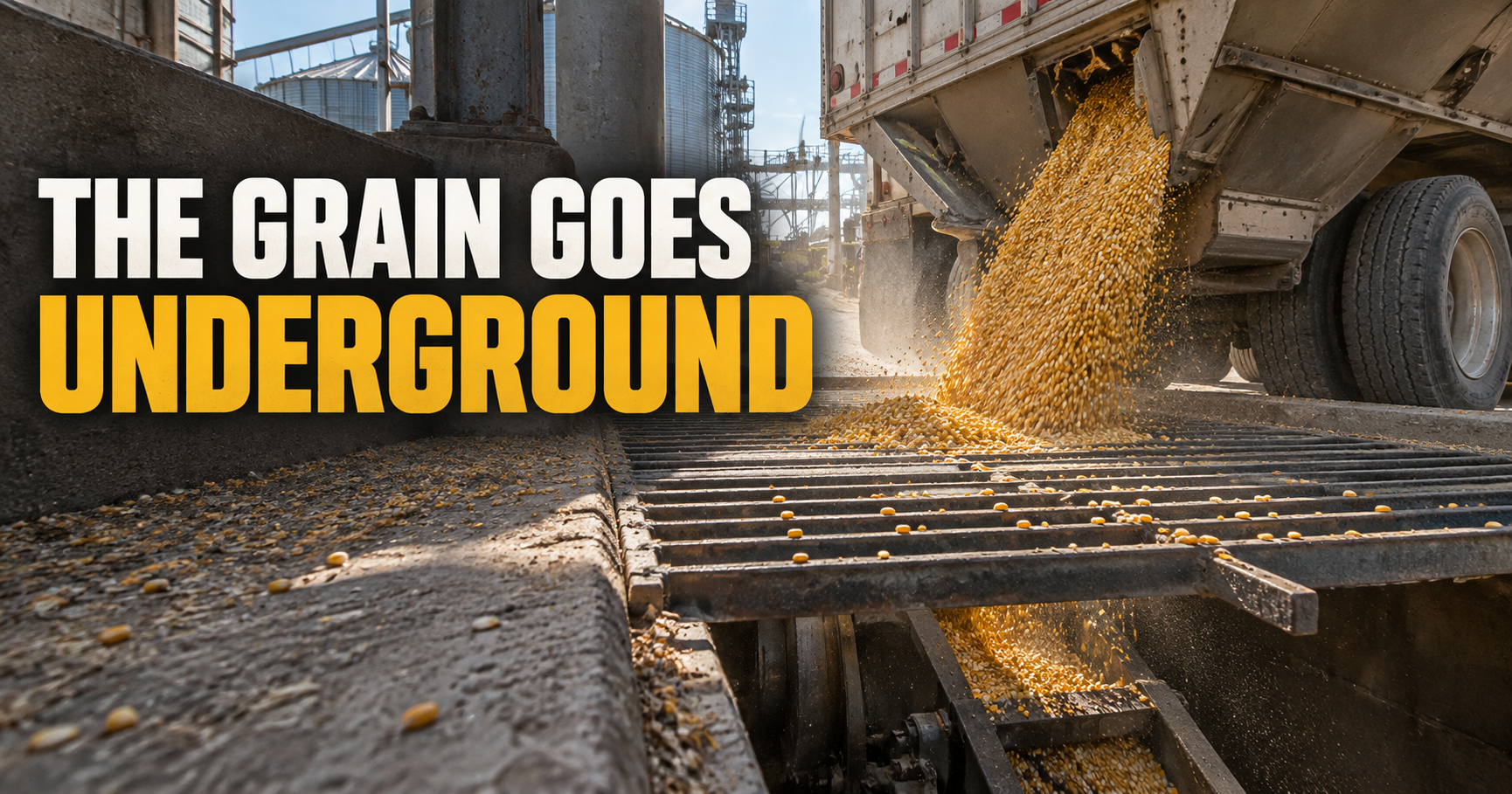
The grain flowed into what looked like a large grate in the ground.
Within seconds, the corn disappeared underground before eventually ending up in the top of another grain bin.
That grated opening is called a grain receiving pit, and it’s one of the most important parts of a farm’s grain handling system.
Without it, unloading trucks quickly and safely would be much more difficult.
What Is a Grain Receiving Pit?
A grain receiving pit is an opening where grain is unloaded from trucks, trailers, grain carts, or other equipment before being moved into the rest of the grain handling system.
Most receiving pits are built below ground.
Heavy steel grates cover the opening so trucks can safely drive over them while allowing grain to fall through into the hopper below.
Once the grain enters the pit, conveyors, drag chains, bucket elevators, or augers move it to dryers, storage bins, or other destinations. Receiving pits are commonly used as the first stage of commercial and on-farm grain handling systems because they allow fast unloading and continuous movement into storage.


Why Not Dump Grain Directly Into the Bin?
That’s exactly what I wondered.
It would seem simpler.
The problem is that most grain bins fill from the top.
A truck can’t simply back up to the side of a 60-foot-tall grain bin and dump grain into it.
Instead, the grain first falls into the receiving pit.
From there, the handling system lifts it to the top of the bin where gravity takes over and fills the storage bin evenly.
That makes unloading much faster while allowing trucks to stay safely on the ground.

The Receiving Pit Is Only the Beginning
The receiving pit doesn’t actually store grain.
Its job is simply to receive it.
Think of it as the starting point for the entire handling system.
Once grain falls through the grate, it immediately begins moving again.
Depending on the farm, the grain may travel through:
- A horizontal conveyor.
- A drag conveyor.
- A grain auger.
- A bucket elevator.
- A grain dryer.
- A storage bin.
The exact route depends on how the farm’s grain handling system is designed.
Why Receiving Pits Make Harvest Faster
Imagine trying to unload a truck one bucket at a time.
Harvest would never finish.
Receiving pits allow thousands of pounds of grain to unload rapidly while the conveying equipment underneath keeps moving the grain toward storage.
As soon as one truck leaves, the next one can often pull into position.
That keeps combines harvesting instead of waiting on trucks.
Modern grain handling systems are designed around receiving capacity because bottlenecks at unloading can slow the entire harvest operation.

What’s Underneath the Receiving Pit?
Once the grain falls through the steel grate, it doesn’t simply pile up underground.
Instead, it’s immediately picked up by whatever conveying system the farm uses.
Depending on the operation, that might be:
- A horizontal grain auger.
- A drag conveyor.
- A belt conveyor.
- A bucket elevator.
Each one has the same goal.
Keep the grain moving.
The receiving pit is designed to be a transfer point, not a storage area.
As long as everything is working correctly, grain spends very little time inside the pit before continuing on to the next piece of equipment.
Dump Trucks and Hopper Trailers Both Use Receiving Pits
One thing I found interesting is that the receiving pit doesn’t really care what type of truck brought the grain.
A hopper-bottom trailer unloads by opening the hopper gates underneath the trailer.
A dump truck unloads by raising the bed and allowing gravity to slide the grain out the rear.
Either way, the grain ends up in exactly the same place.
The receiving pit.
From there, the farm’s handling system takes over.
Watching both types of trucks unload into the same pit helped me realize that the receiving pit is really the center of the entire unloading operation.
Why the Grate Is So Large
The first time I saw one, I wondered why the grate covered such a large area.
Now it makes sense.
Truck drivers aren’t trying to dump grain into a coffee can.
They’re unloading thousands of pounds of corn.
The large grate gives drivers some room for positioning while making sure nearly all of the grain falls directly into the receiving pit instead of onto the ground.
It also supports the tremendous weight of loaded trucks driving across it while still allowing grain to pass through.
What Happens If Grain Comes In Faster Than It Can Leave?
That’s actually something I wondered after watching unloads.
The answer depends on the capacity of the system.
Most farms size their conveyors, augers, and elevators to keep up with the amount of grain being unloaded.
If grain enters the receiving pit faster than it can be moved away, the pit can begin filling.
That’s one reason operators pay attention to unloading speed and make sure the handling equipment is running properly before trucks begin unloading.
Everything has to work together.

Receiving Pits Deserve Respect
One thing that’s obvious once you stand beside one is that this isn’t an area to fool around.
The grate may look solid, but underneath are powerful moving conveyors or augers.
Many receiving pits are also deep enough that falling into one could result in serious injury.
That’s why people working around grain handling equipment stay aware of where they’re walking and keep hands, feet, and loose objects away from moving equipment below the grate.
Good housekeeping is also important.
Corn spilled around the pit can create slipping hazards while unloading multiple trucks throughout the day.
Frequently Asked Questions
Can trucks drive directly over a grain receiving pit?
Yes.
Receiving pits are covered by heavy-duty steel grates designed to support loaded grain trucks while allowing grain to fall into the pit below.
Does the grain stay in the receiving pit?
No.
The receiving pit is simply the first stop.
Conveyors, augers, or bucket elevators move the grain almost immediately toward dryers or storage bins.
Can both dump trucks and hopper-bottom trailers use the same receiving pit?
Yes.
Although they unload differently, both types of trucks commonly discharge grain into receiving pits before the handling system moves it into storage.
Why don’t farmers just unload beside the grain bin?
Because grain bins are normally filled from the top.
The receiving pit allows grain to be unloaded safely at ground level before lifting it into the top of the storage bin using augers or bucket elevators.
The Receiving Pit Is the Hub of the Entire Grain System
Before I started hauling grain, I barely noticed the steel grate sitting beside a grain bin.
Now I know it’s one of the busiest places on the farm.
Every load passes through it.
Every bushel begins its trip into storage there.
Whether the grain arrived in a dump truck, hopper-bottom trailer, or grain cart, the receiving pit quietly keeps the entire grain handling system moving.
It’s one of those pieces of equipment that most people never think about, yet without it, unloading grain during harvest would be much slower, less efficient, and far more difficult.
Author: Jake Harrison
Jake Harrison is a commercial transportation writer for TruckingResource.com who specializes in commercial trucking, agricultural transportation, CDL training, and equipment. He works with the TruckingResource.com editorial team to create detailed, beginner-friendly guides that explain the equipment and systems that keep farms and the trucking industry moving.