
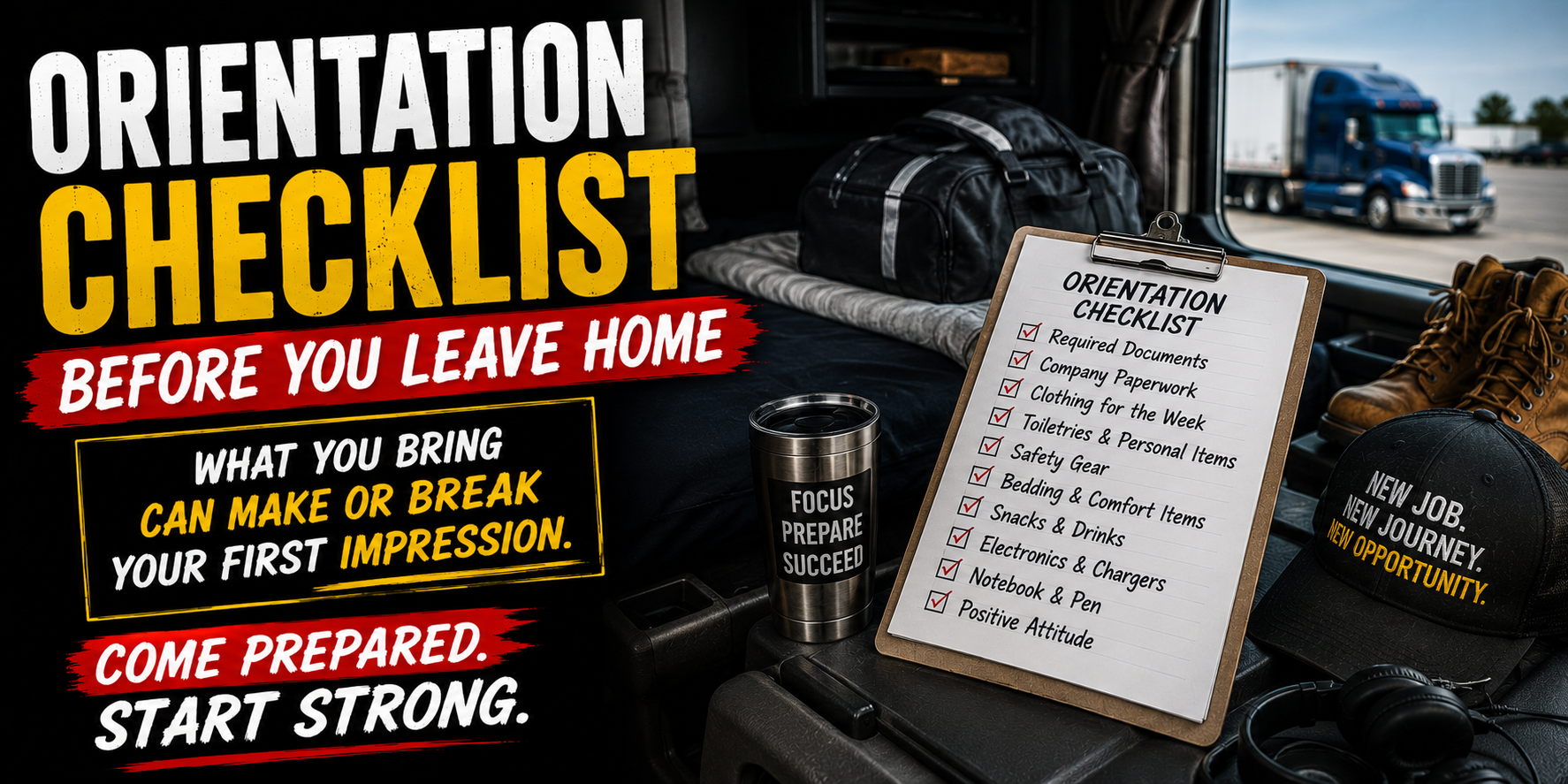
Getting ready for truck driver orientation can feel overwhelming.
You’ve accepted the job, packed your bags, and probably read through a stack of emails from your recruiter.
Now you’re wondering if you’ve forgotten something.
That’s exactly why I put together this checklist.
Instead of trying to remember dozens of little details at the last minute, you can quickly work through this guide before walking out the door.
A few minutes of preparation today can save you a lot of stress once you arrive at orientation.
If you’re still wondering what orientation is actually like, start with our Truck Driver Orientation Guide: What to Expect Before Your First Load. Then come back here and use this checklist before you travel.
Confirm Your Travel Details
Before you even think about packing, make sure you know exactly how you’re getting there.
Double-check:
- Your orientation start date
- Arrival time
- Hotel information
- Flight, bus, or rental car details
- Shuttle instructions
- Parking information if you’re driving yourself
- Your recruiter’s phone number
If something doesn’t look right, call your recruiter before you leave home instead of hoping it’ll work itself out.
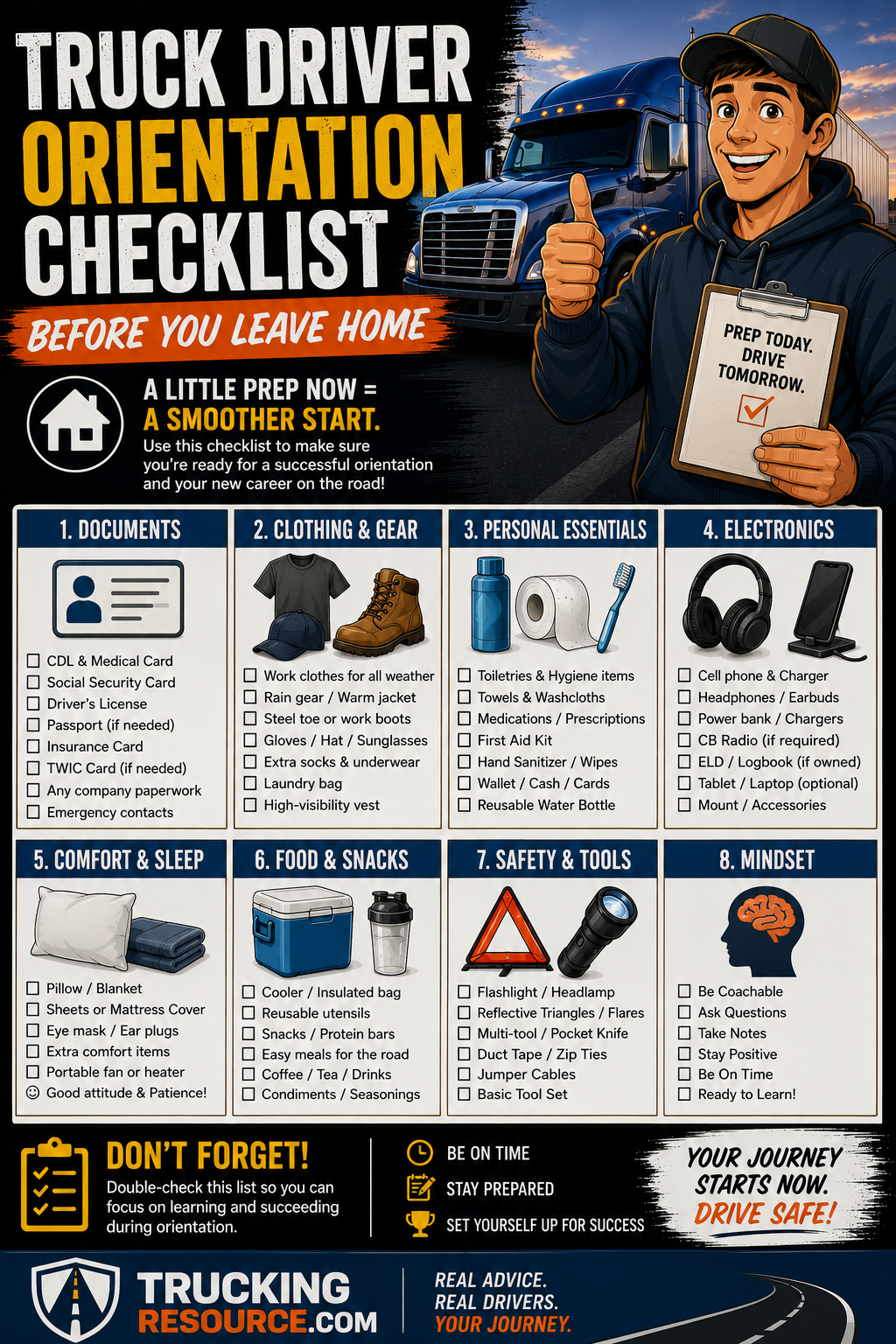
Gather Every Required Document
This is the one step you don’t want to rush.
Put all of your important paperwork into one folder so it’s easy to find on your first morning.
Your folder should usually include:
- Commercial Driver’s License (CDL)
- Medical Examiner’s Certificate
- Social Security card
- Direct deposit information
- Any onboarding paperwork
- TWIC card if required
- Prescription information if requested
Having everything organized makes check-in much smoother.
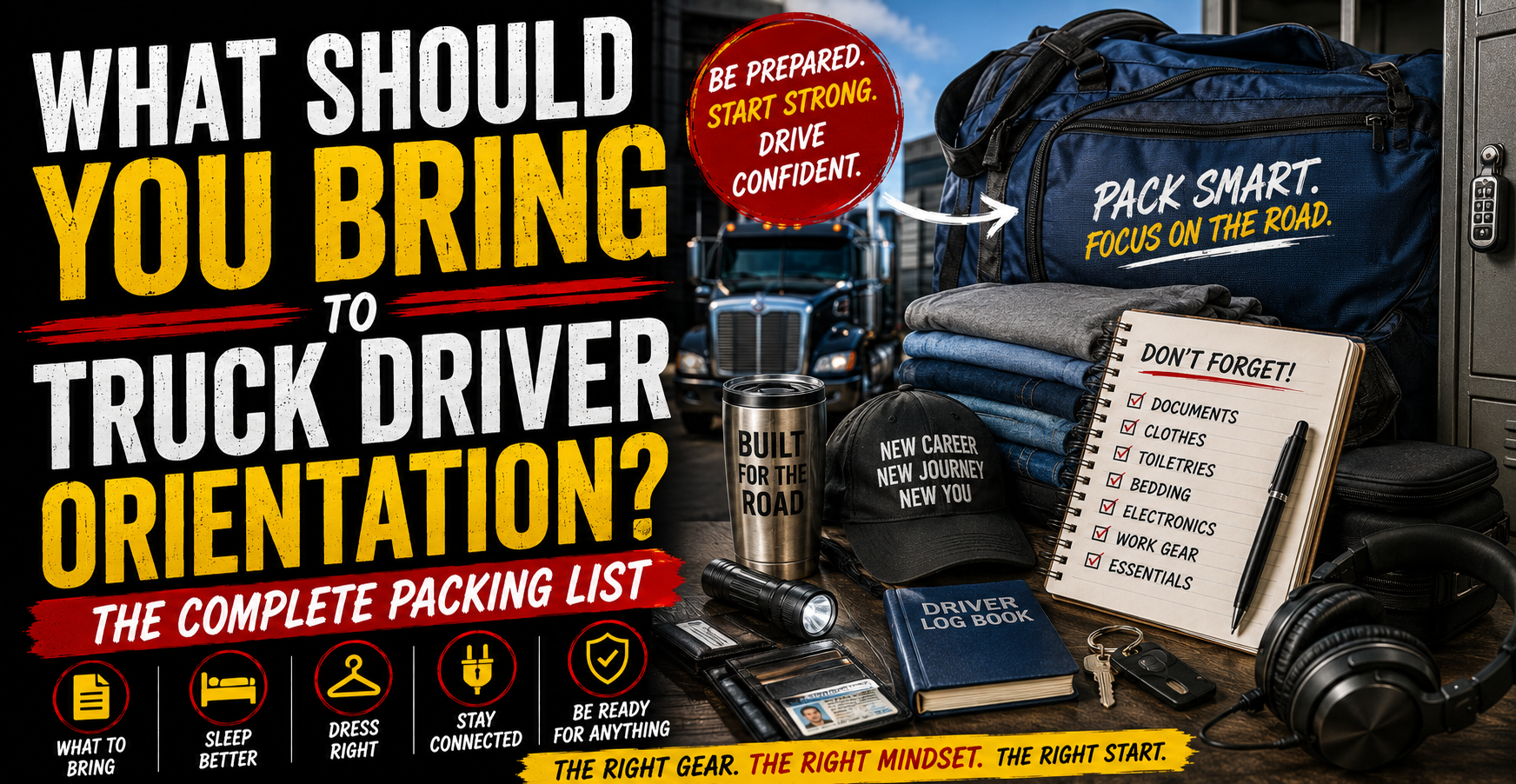
If you need a more detailed packing guide, our What Should You Bring to Truck Driver Orientation? covers everything from clothing to toiletries and work gear.
Pack Clothing for More Than Orientation
One mistake many first-time drivers make is packing only enough clothes for orientation.
In reality, many companies send new drivers directly to a trainer after orientation ends.
Plan for at least a week.
Pack:
- Comfortable shirts
- Jeans or work pants
- Work boots
- Socks and underwear
- Hoodie or light jacket
- Rain gear if needed
- Comfortable clothes for evenings
It’s much easier to bring a few extra clothes than to realize you don’t have enough once you’re on the road.
Charge Every Electronic Device
The night before you leave, plug everything in.
Make sure you have:
- Phone
- Charger
- Charging cable
- Portable battery pack
- Headphones
A dead phone can make travel much more difficult than it needs to be.

Pack Personal Items
Don’t overlook the basics.
Bring:
- Toothbrush
- Toothpaste
- Shampoo
- Soap
- Deodorant
- Razor
- Prescription medications
- Glasses or contacts if needed
If you’ll be heading straight to a trainer afterward, consider bringing flip-flops for truck stop showers and a laundry bag as well.
Review Every Email From Your Recruiter One Last Time
Before you head out the door, spend five minutes reading through every email or text your recruiter has sent you.
It’s easy to overlook an important detail when you’re excited about starting a new job.
Pay close attention to things like:
- Orientation start time
- Hotel check-in instructions
- Dress code
- Parking directions
- Travel reimbursement procedures
- Documents you’ll need to bring
- Contact phone numbers
If anything seems unclear, don’t guess. Call your recruiter before you leave home.


Prepare for Your First Morning
Your first impression starts before you even walk into the orientation classroom.
The night before, lay everything out so your morning is as stress-free as possible.
That includes:
- Clothes for the next day
- Work boots
- Your paperwork folder
- Wallet and keys
- Phone and charger
- Breakfast plans if the hotel doesn’t provide one
Set more than one alarm if you need to.
Showing up 15 to 20 minutes early is much better than rushing through the door right on time.
Take Care of Things at Home Before You Leave
If you’ll be away for several weeks with a driver trainer, spend a little time preparing your home before you leave.
Simple tasks now can give you one less thing to worry about later.
Consider:
- Paying upcoming bills
- Letting family know your travel plans
- Arranging care for pets
- Taking out the trash
- Emptying the refrigerator of anything that will spoil
- Making sure someone can collect your mail if needed
Knowing everything is taken care of at home makes it easier to focus on your new career.


Your Final Orientation Checklist
Before locking your front door, make sure you can answer yes to each of these questions.
Travel
- I know where I’m going.
- I know when orientation starts.
- I have my hotel information.
- I have my recruiter’s phone number.
Documents
- My CDL is packed.
- My medical certificate is packed.
- My Social Security card is packed.
- My banking information is ready.
- All requested paperwork is in one folder.
Clothing
- I packed enough clothes for at least a week.
- I packed work boots.
- I packed a jacket or hoodie.
Personal Items
- Toiletries are packed.
- Prescription medications are packed.
- Phone charger is packed.
- Notebook and pen are packed.
Mindset
- I plan to arrive early.
- I’m ready to ask questions.
- I’m prepared to learn.
- I’m ready to make a good first impression.
If you can check off everything above, you’re in great shape for orientation.
Frequently Asked Questions
Should I call my recruiter before I leave?
If you have any questions about travel, paperwork, or arrival instructions, yes.
Otherwise, there’s usually no need unless your recruiter specifically asked you to check in before traveling.
How early should I arrive at orientation?
Plan to arrive at least 15 to 20 minutes early on your first morning.
Unexpected traffic, parking delays, or finding the correct building can take longer than expected.
Should I print my travel information?
It’s a good idea.

Even though most information is stored on your phone, having a printed copy of hotel confirmations, travel details, and important phone numbers can be helpful if your phone battery dies or you lose cell service. Before traveling, review paid orientation expectations so you understand which orientation expenses and payments your carrier may cover.
What if I realize I forgot something?
Don’t panic.
If it’s something minor like toothpaste or a phone charger, you can usually purchase a replacement nearby.
If it’s an important document or your CDL, contact your recruiter immediately and explain the situation.
Should I bring cash?
A small amount of cash is helpful for vending machines, tips, or unexpected expenses, but a debit or credit card will usually be sufficient for most situations.
A Little Preparation Goes a Long Way
Truck driver orientation is the beginning of your professional driving career.

Walking in prepared helps you feel more confident, makes a strong first impression, and allows you to focus on learning instead of worrying about what you forgot at home. See how those preparations carried into starting my first trucking job.
Use this checklist a day or two before you leave, double-check your paperwork, and give yourself plenty of time to travel without feeling rushed.
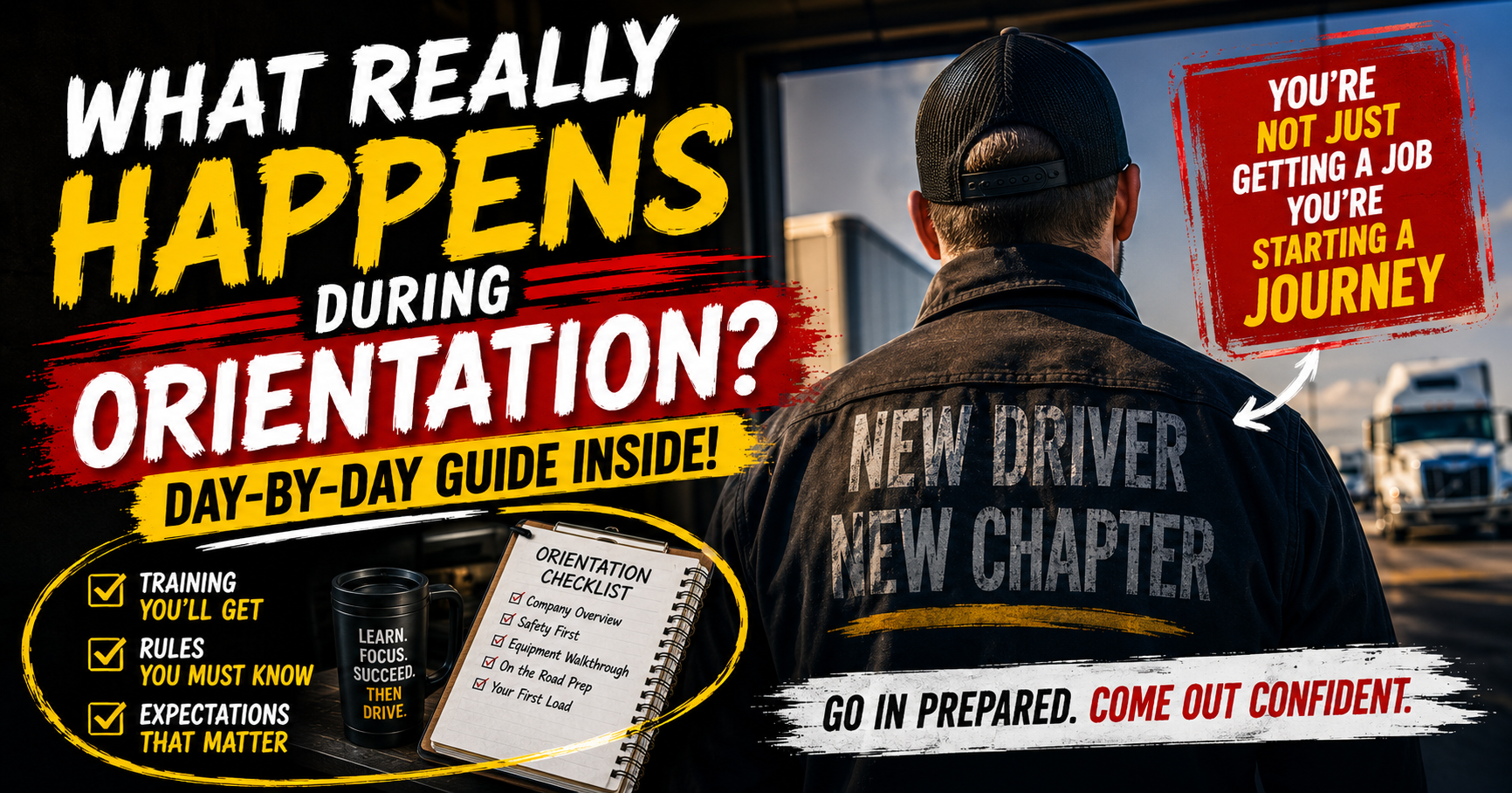
If you’re wondering what actually happens once orientation begins, our What Happens During Truck Driver Orientation? A Day-by-Day Guide explains what you can expect from your first morning through your final day.
After orientation wraps up, continue with What Happens After Truck Driver Orientation? Your First Days on the Road to learn what comes next as you meet your trainer, start hauling freight, and work toward becoming a solo driver.
Author: Mason Carter
Mason Carter has spent more than 15 years driving regional and over-the-road freight while mentoring new CDL graduates. He enjoys helping new drivers build confidence by sharing practical advice that makes the transition from CDL school to life on the road much smoother.