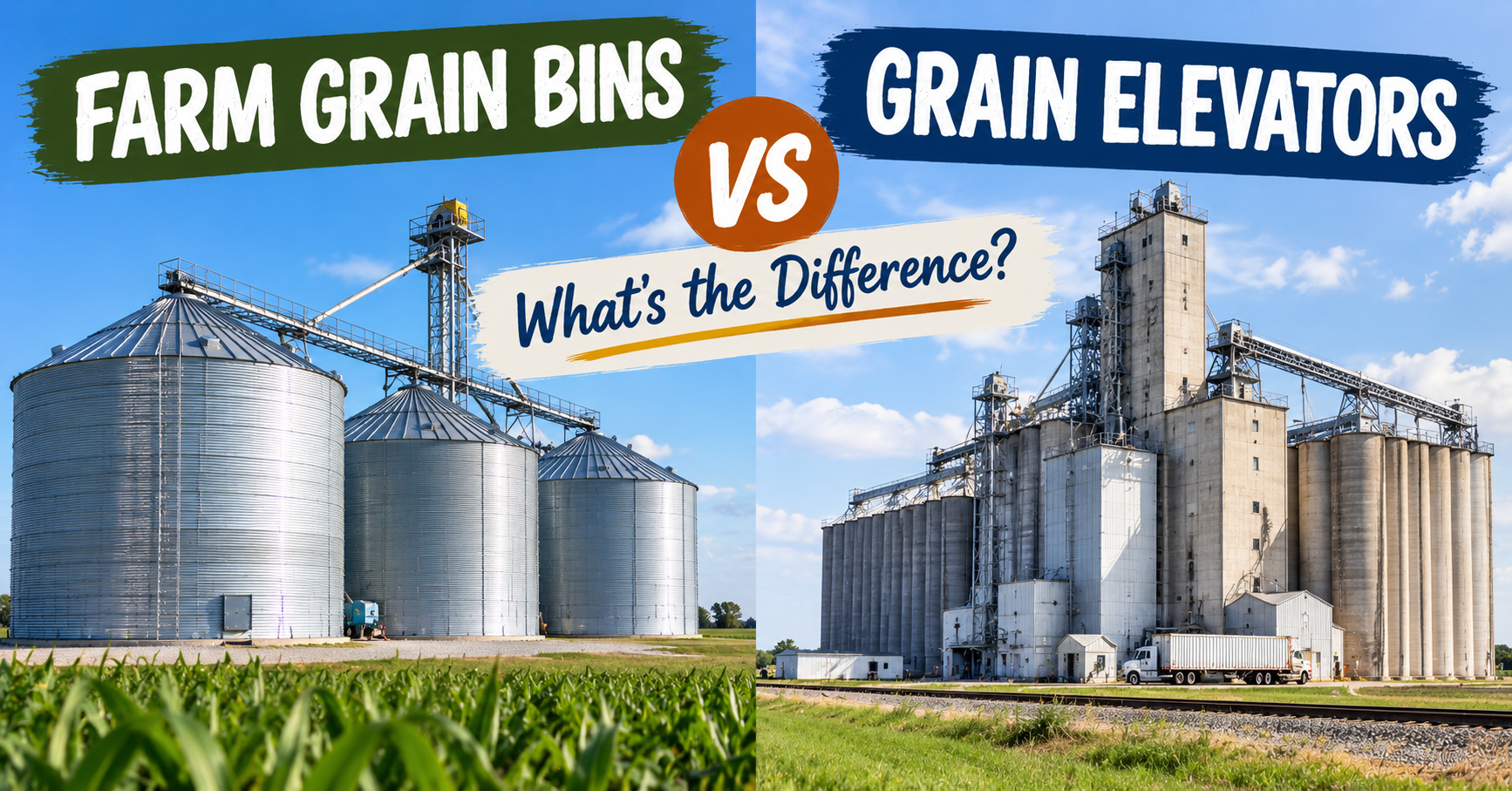
Before I started learning more about grain hauling, I honestly used the terms grain bin and grain elevator almost interchangeably.
After all, they both store corn, soybeans, wheat, and other crops.
But once I started hauling grain and seeing how the system works, I realized they’re built for very different jobs.
A farm grain bin is usually owned by an individual farmer and is designed to store that farm’s harvested grain.
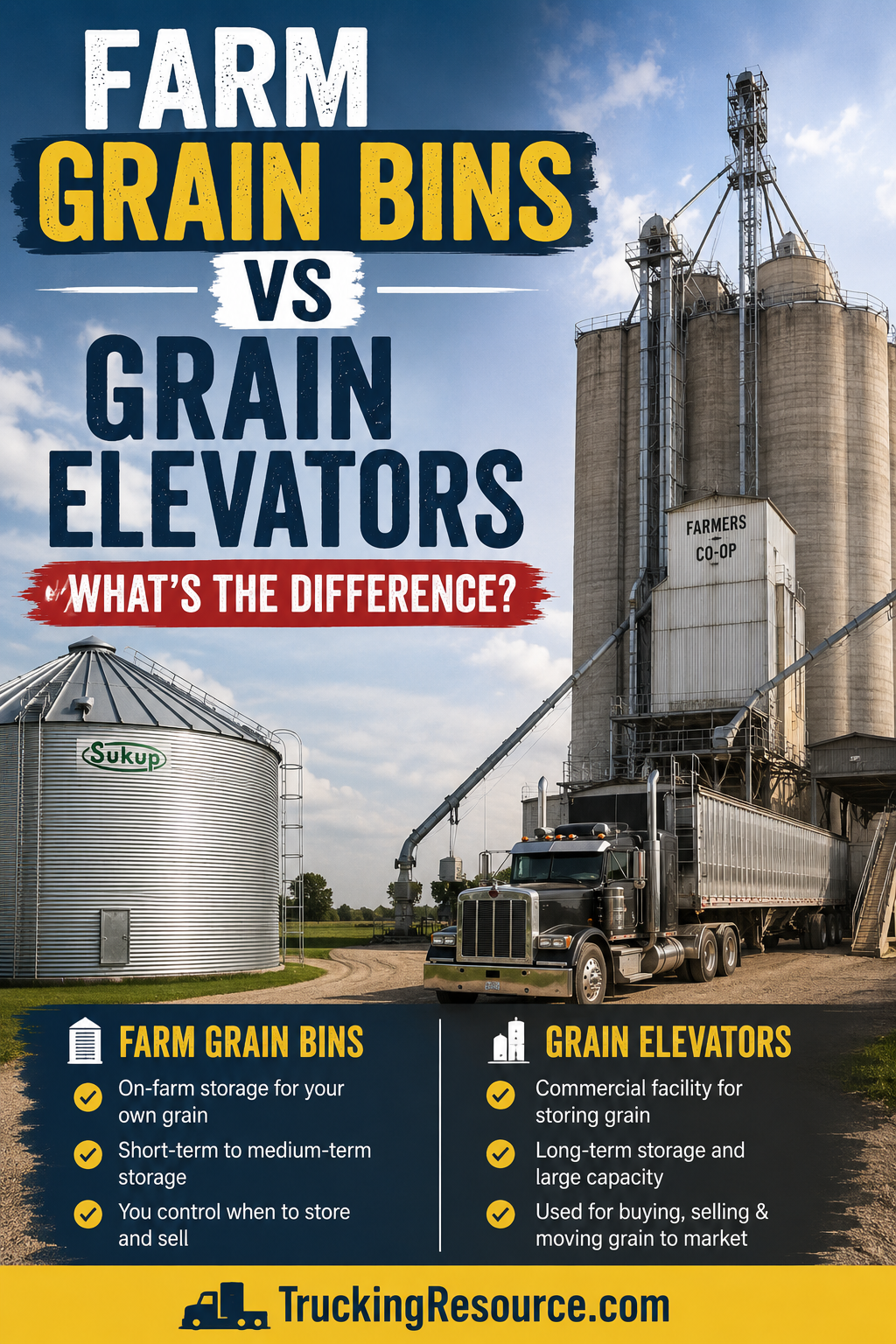
A grain elevator is a commercial facility that receives grain from many different farms, evaluates its quality, stores it, and eventually ships it to processors, feed mills, ethanol plants, or export terminals.
Understanding that difference makes the entire grain handling system much easier to understand.
If you’re new to this topic, I’d recommend reading What Is a Grain Elevator and How Does It Work? first because it explains how commercial grain elevators receive, test, store, and ship grain.
Farm Grain Bins Belong to the Farmer
Most farms that have grain bins use them to store crops they’ve grown themselves.
After harvest, trucks unload directly into the farm’s grain handling system.
From there, the grain is moved into storage bins where it may stay for weeks or even months.
This gives the farmer flexibility.
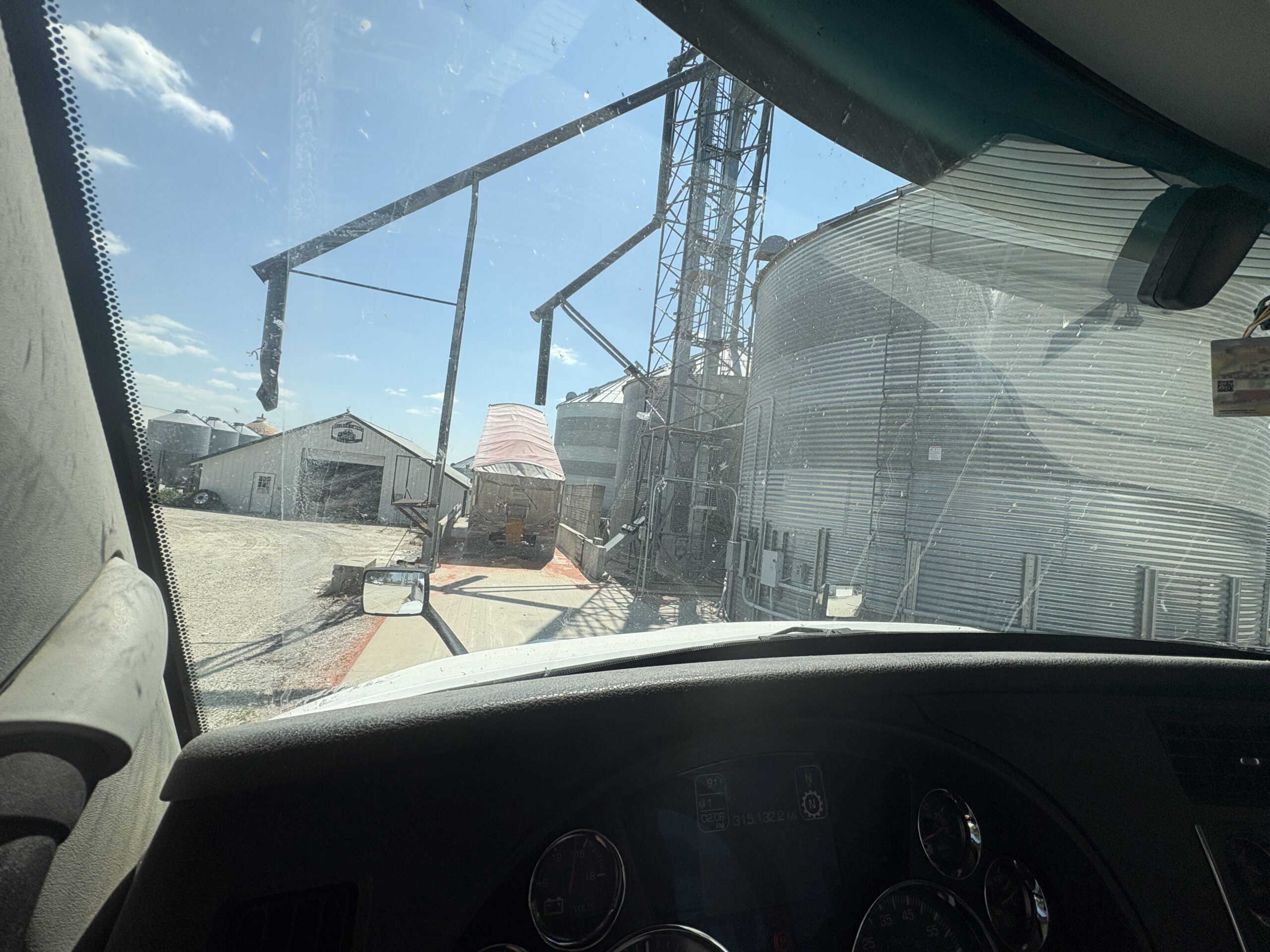
Instead of selling the crop immediately after harvest, they can often store it and decide later when they want to market it.
Many on-farm storage systems also include fans and, in some cases, grain dryers to help maintain grain quality while it’s being stored. Proper aeration and moisture management are essential for safe long-term storage. For a closer explanation of how moisture affects safe storage, see corn moisture and storage.



Grain Elevators Receive Grain From Many Farms
Commercial grain elevators work differently.
Instead of storing grain from only one farm, they receive grain from many different producers.
Every load is typically:
- Weighed.
- Sampled.
- Tested.
- Graded.
- Recorded.
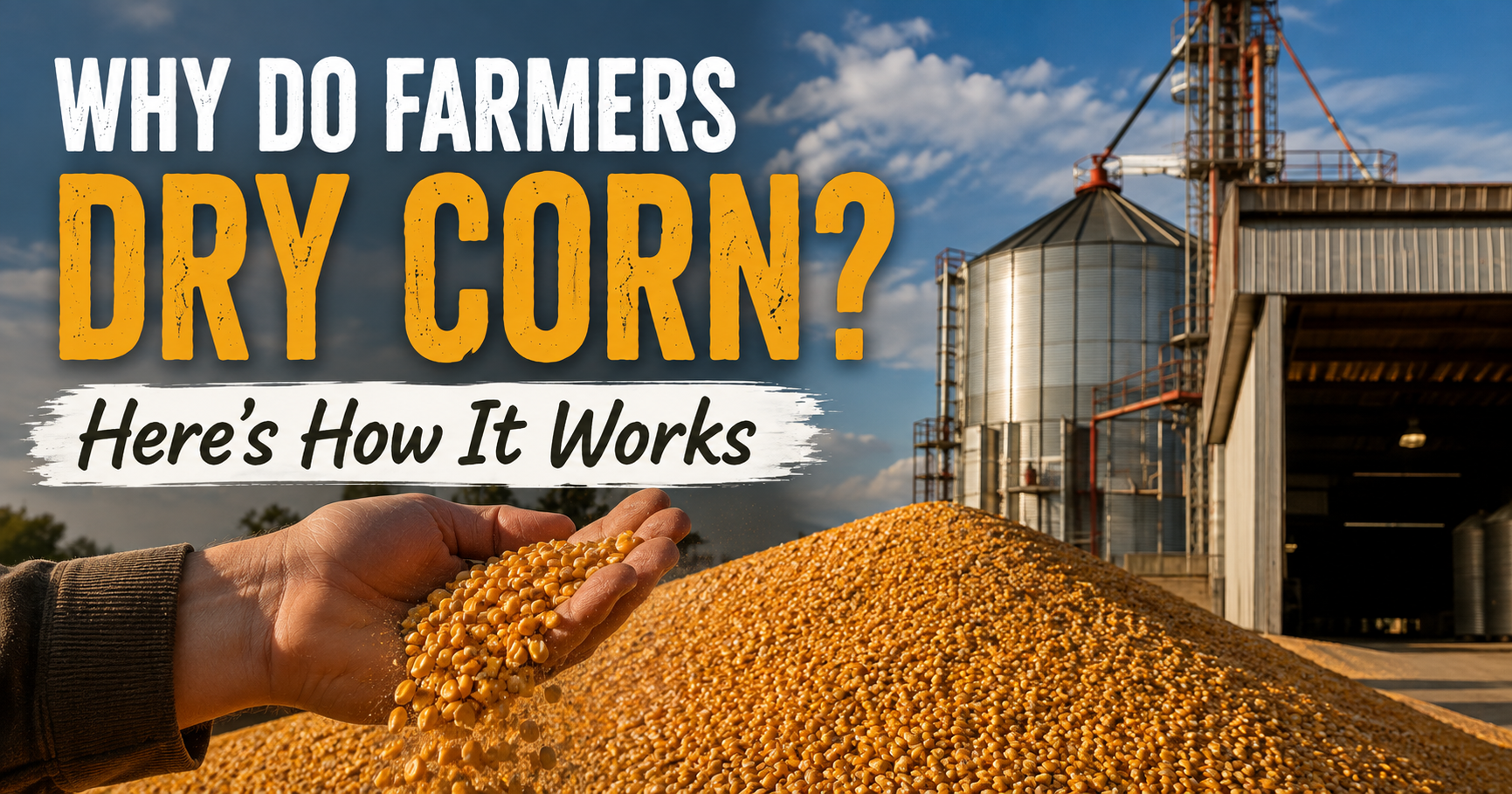
The grain may then be dried, cleaned, blended, stored, or shipped depending on the elevator’s operations and customer demand. Commercial elevators are designed for high-volume receiving, conditioning, storage, and shipment rather than simply long-term storage.
Farmers Often Use Both
One thing I didn’t realize before learning more about grain handling is that this isn’t an either-or decision.
Many farmers use both on-farm grain bins and commercial grain elevators.
For example, during harvest a farmer may haul grain back to bins on the farm while storage space is available.
Later in the year, that same grain might be hauled from those bins to a commercial grain elevator when the farmer decides it’s the right time to sell.
Having both options gives farmers much more flexibility instead of feeling pressured to market every bushel during harvest. On-farm storage can allow producers to choose when to market grain, while commercial elevators provide receiving, conditioning, storage, and shipping services.
Grain Bins Give Farmers More Control
One of the biggest advantages of on-farm grain bins is flexibility.
Instead of immediately hauling every load to town, a farmer can often store grain on the farm and make marketing decisions later.
That doesn’t guarantee higher prices.
But it does allow the farmer to avoid making every sale during the busiest part of harvest.
On-farm storage can also reduce long lines at commercial elevators during peak harvest and keep combines and trucks moving more efficiently.


Grain Elevators Handle Much More Than Storage
Commercial grain elevators aren’t simply giant warehouses.
They’re businesses built to move enormous amounts of grain.
Besides storing grain, they may:
- Receive hundreds of truckloads each day during harvest.
- Test every load for moisture and quality.
- Dry grain when needed.
- Blend grain to meet buyer specifications.
- Load railcars and semi trucks.
- Ship grain to processors, feed mills, ethanol plants, or export terminals.
Many facilities are constantly moving grain instead of simply letting it sit in storage.
Which One Is Better?
Neither.
They simply serve different purposes.
Farm grain bins are designed to help an individual farming operation.
Commercial grain elevators are designed to serve many different farms while connecting agriculture to grain buyers and processors.
Without grain bins, many farmers would have much less flexibility during harvest.
Without grain elevators, there would be no efficient way to receive, grade, market, and distribute millions of bushels of grain every year.
The two systems complement each other.
I’ve Started Looking at Them Differently
Before I started hauling grain, I honestly saw every large grain facility as basically the same thing.
Now I notice the differences almost immediately.
If I’m unloading at a farm, I know I’m helping move grain into that farm’s storage system.
If I pull into a commercial grain elevator, I know there’s an entire process waiting beyond simply dumping the load.
The truck gets weighed.
The grain gets sampled.
The quality gets checked.
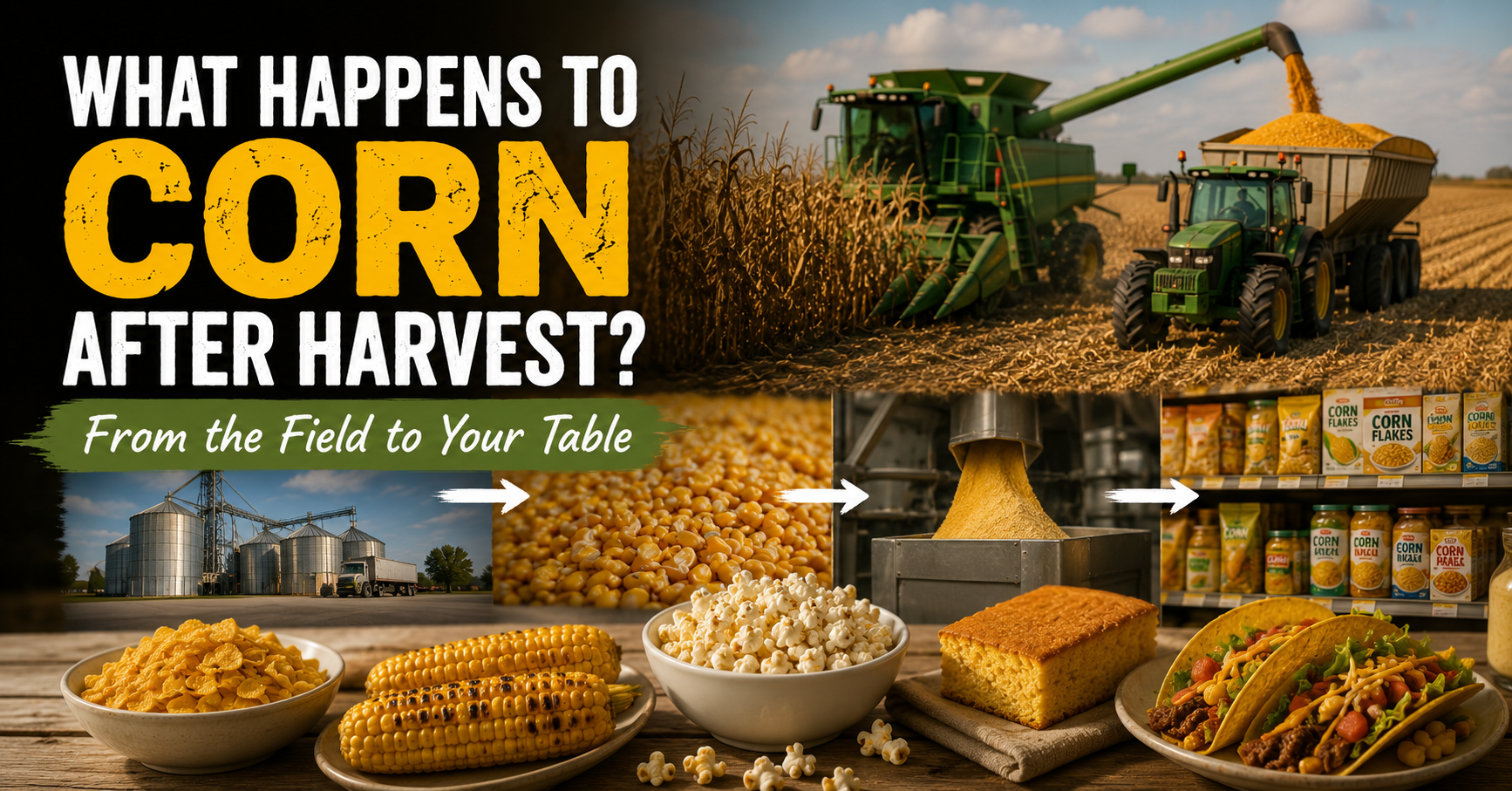
Then the grain begins its next step through the agricultural supply chain. For a fuller look at corn’s next steps through the supply chain, including storage, processing, and transportation, see the complete corn journey.
Understanding those differences has given me a much greater appreciation for everything that happens after the combine leaves the field.
Frequently Asked Questions
Can farmers sell grain directly from their grain bins?
Yes. Many farmers store grain in on-farm bins and later haul it to a commercial grain elevator or another buyer when they’re ready to sell.
Why don’t all farmers have enough grain bins for their entire harvest?
Building and maintaining on-farm grain storage is a major investment. Many farms balance their available storage with deliveries to commercial grain elevators, depending on the size of the crop and their marketing plan.
Do grain elevators own the grain they store?
Not always. Grain elevators may temporarily store grain while it’s waiting to be marketed, processed, or shipped. They also provide services such as receiving, grading, drying, and loading grain for customers.
Is every grain truck headed to a grain elevator?
No. During harvest, some trucks haul directly to on-farm grain bins, while others deliver to commercial grain elevators. Where the grain goes depends on the farmer’s storage capacity, marketing plan, and the needs of the operation.
Two Different Facilities With One Common Goal
At first glance, a farm grain bin and a commercial grain elevator might seem like they’re doing exactly the same thing.
Once you look a little closer, the differences become clear.
A farm grain bin helps an individual farmer store and manage a crop.
A grain elevator helps move grain from farms into the larger agricultural marketplace.
Both are essential.
Without grain bins, harvest would become much more difficult for many farms.
Without grain elevators, getting grain to feed mills, ethanol plants, food manufacturers, and export terminals would be far less efficient.
Together, they form an important link between the field and the products we use every day.
Author: Jake Harrison
Jake Harrison is a commercial transportation writer for TruckingResource.com who specializes in CDL training, trucking safety, commercial vehicles, freight operations, and agricultural transportation. He works with the TruckingResource.com editorial team to create practical, beginner-friendly guides that explain both trucking and the systems that keep American agriculture moving.