
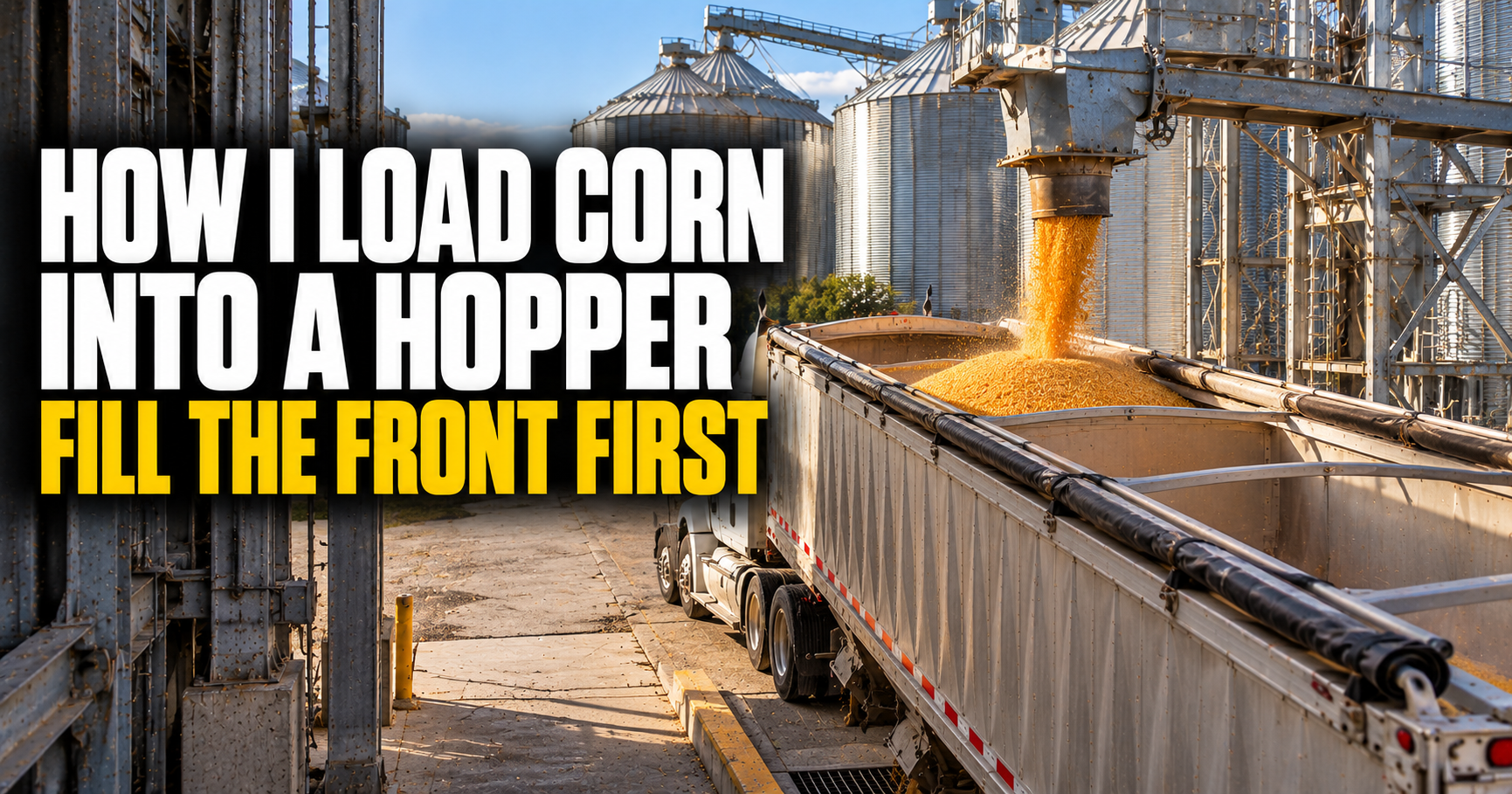
On a morning when I’m hauling corn from the farm, the trip to the grain elevator starts beside the grain bin. I back a semi and hopper bottom trailer into position, open the tarp, and load the trailer in two stages. I fill the front part first, pull the truck forward, and then fill the back.
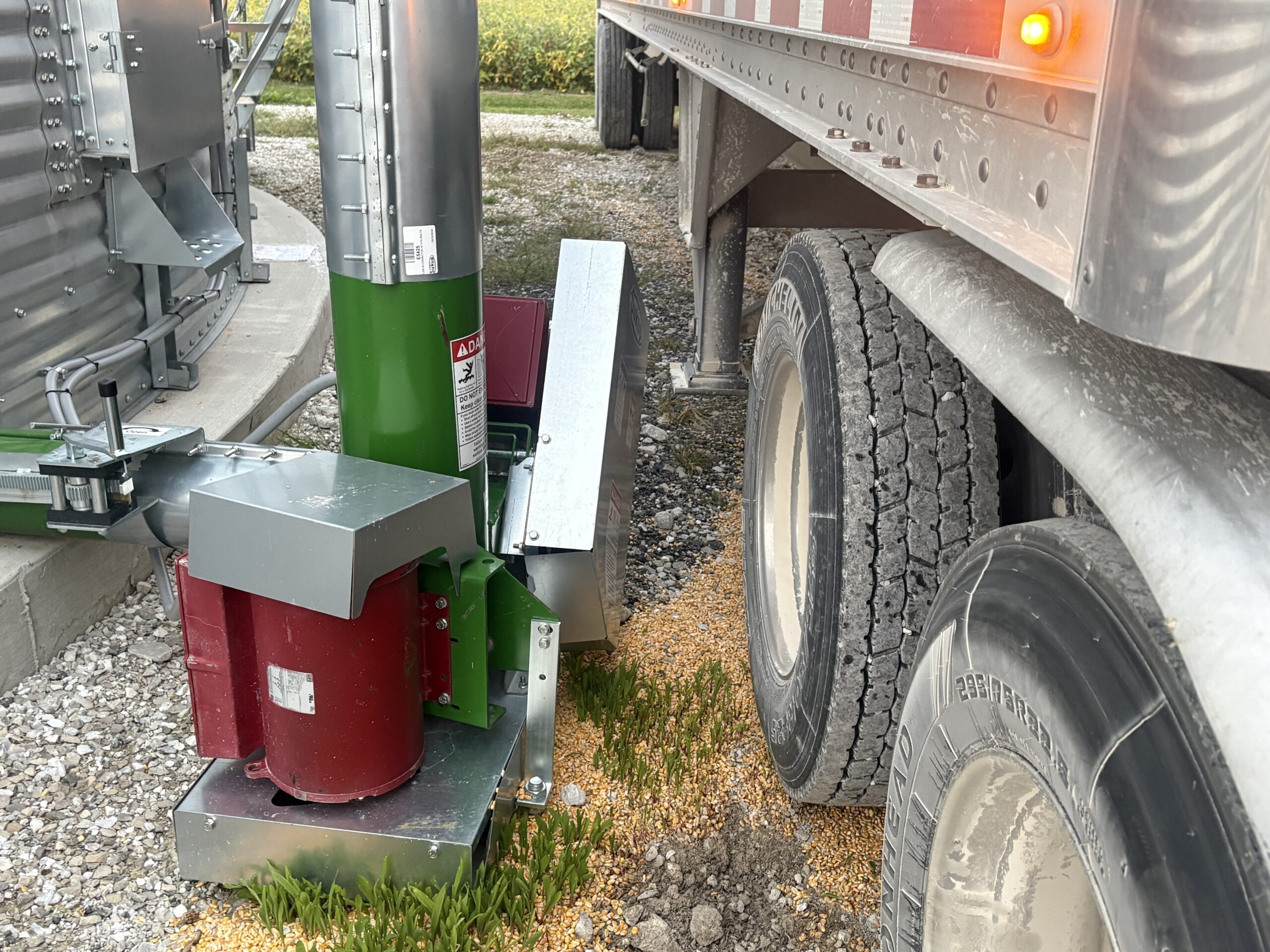
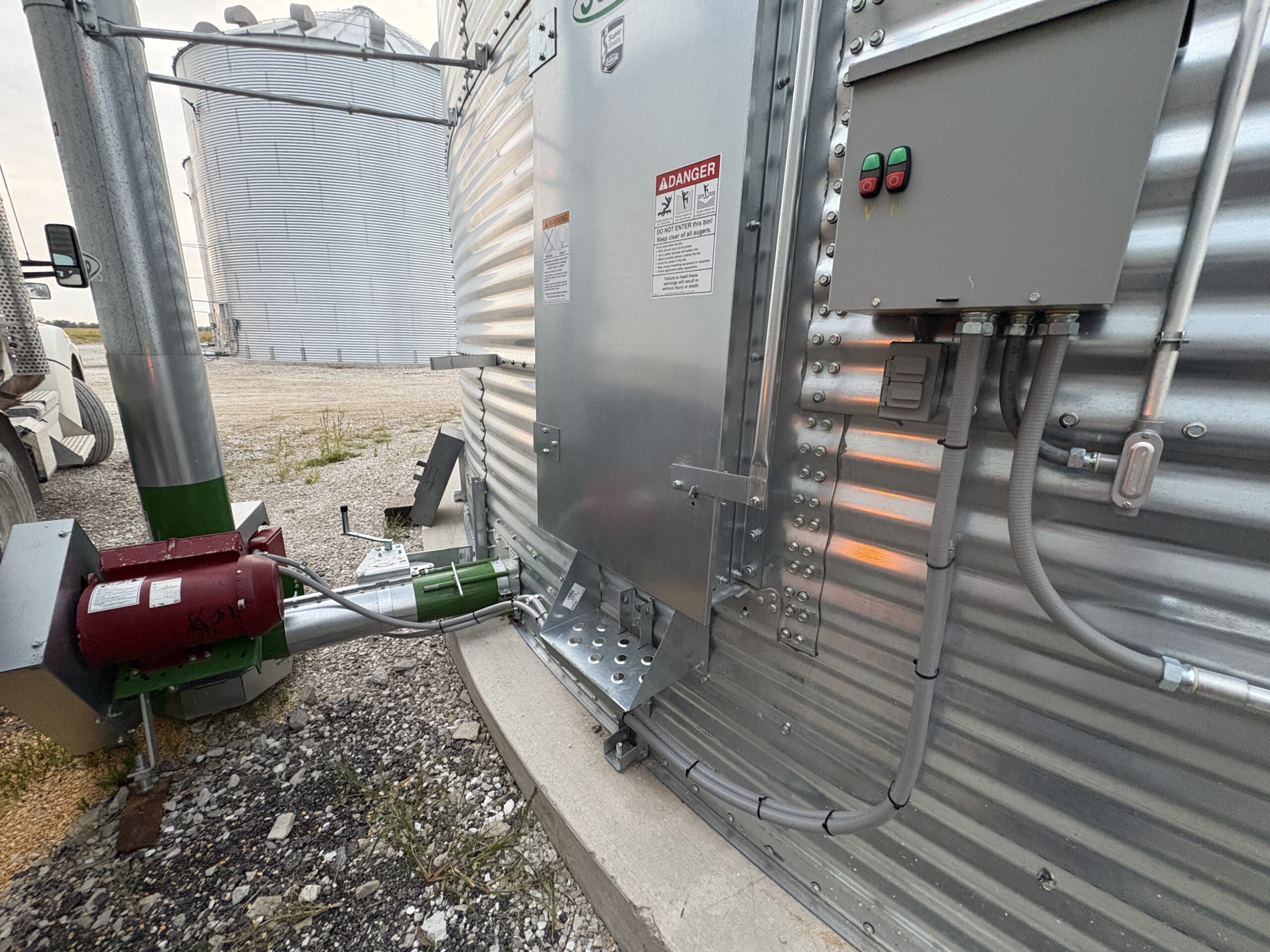
The photos I took show how close the trailer gets to the bin equipment. That is the first thing I have to get right. I need the auger to reach into the trailer, but there is a motor beside the bin that I do not want to hit. Once the corn starts flowing, I also have to watch how full each part is getting and how much weight I am putting on the truck.
This is the routine I use with this truck, trailer, and grain bin. I’m sharing what I actually do, including the little decisions that are hard to see if you’ve only watched a grain truck going down the highway.
Getting the trailer close to the grain bin
I back up beside the bin slowly. The trailer needs to be close enough for the auger outlet to reach over the top, but the bin motor and other equipment leave me little room for a mistake. I am watching the trailer’s path and its distance from the bin, not just trying to get the truck straight.
That close-up photo of the motor beside the trailer tires shows what I mean. From farther away, there appears to be plenty of open gravel around the bin. At the actual loading spot, the clearance is much tighter. I would rather stop and check my position than keep backing because I think I have another foot.
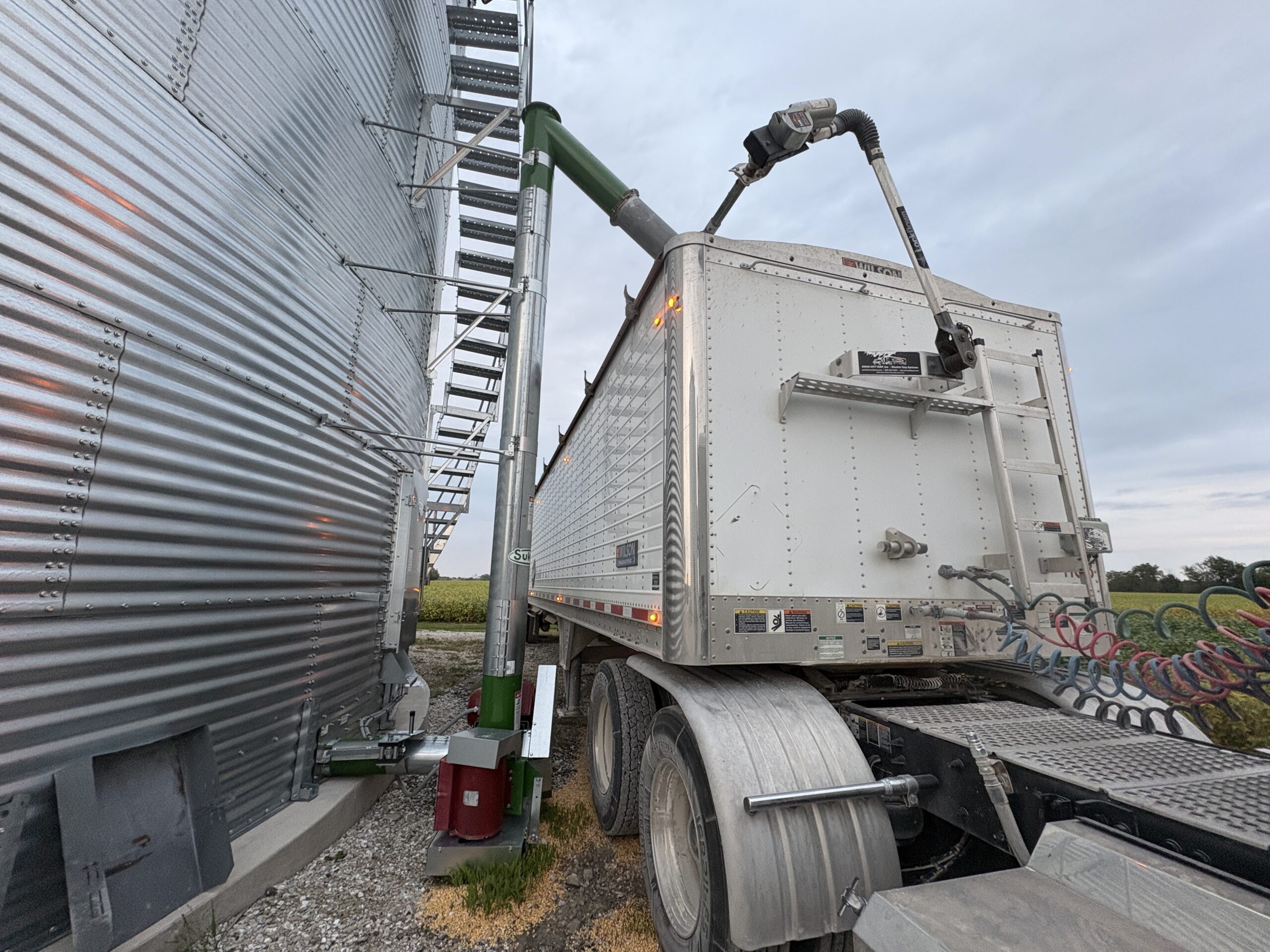
I also need to think ahead. The auger will load one part of the trailer at a time. After I fill the front, I have to pull forward and line up the back. My first position needs to put the corn where I want it while leaving me a clear way to make that second move.
I take the same care when pulling forward with corn already in the trailer. The truck is heavier by then, and the bin equipment is still right beside me. It is a short move, but it deserves my full attention.



The checks I make before loading
Before I let corn into the trailer, I make sure the hopper doors underneath are fully closed and locked. These are the doors I will open later to unload at the elevator. Right now, they need to hold the entire load. Finding out a door was not secured after corn starts pouring in would be a mess.
I make sure the truck’s air bags are inflated, too. I want the suspension carrying the weight as intended while the trailer is being loaded. The truck’s gauge gives me an approximate idea of the weight as I go, and its reading is only useful to me when the truck is set up the way I normally load it.
Then I secure the truck for loading. On flat ground with this particular setup, I keep the truck parking brake on and release the trailer brakes so the gauge gives me the reading I’m used to seeing. That is how my truck responds during loading. It is not an instruction to release trailer brakes at every grain bin. The ground, the equipment, and whether the truck can remain securely parked come first.
I open the tarp so I can see into the trailer and the corn has a clear place to fall. At this point, I want everything ready before the bin starts feeding corn. Once it is flowing, I need to pay attention to the load instead of discovering that I forgot a door or left the tarp in the way.
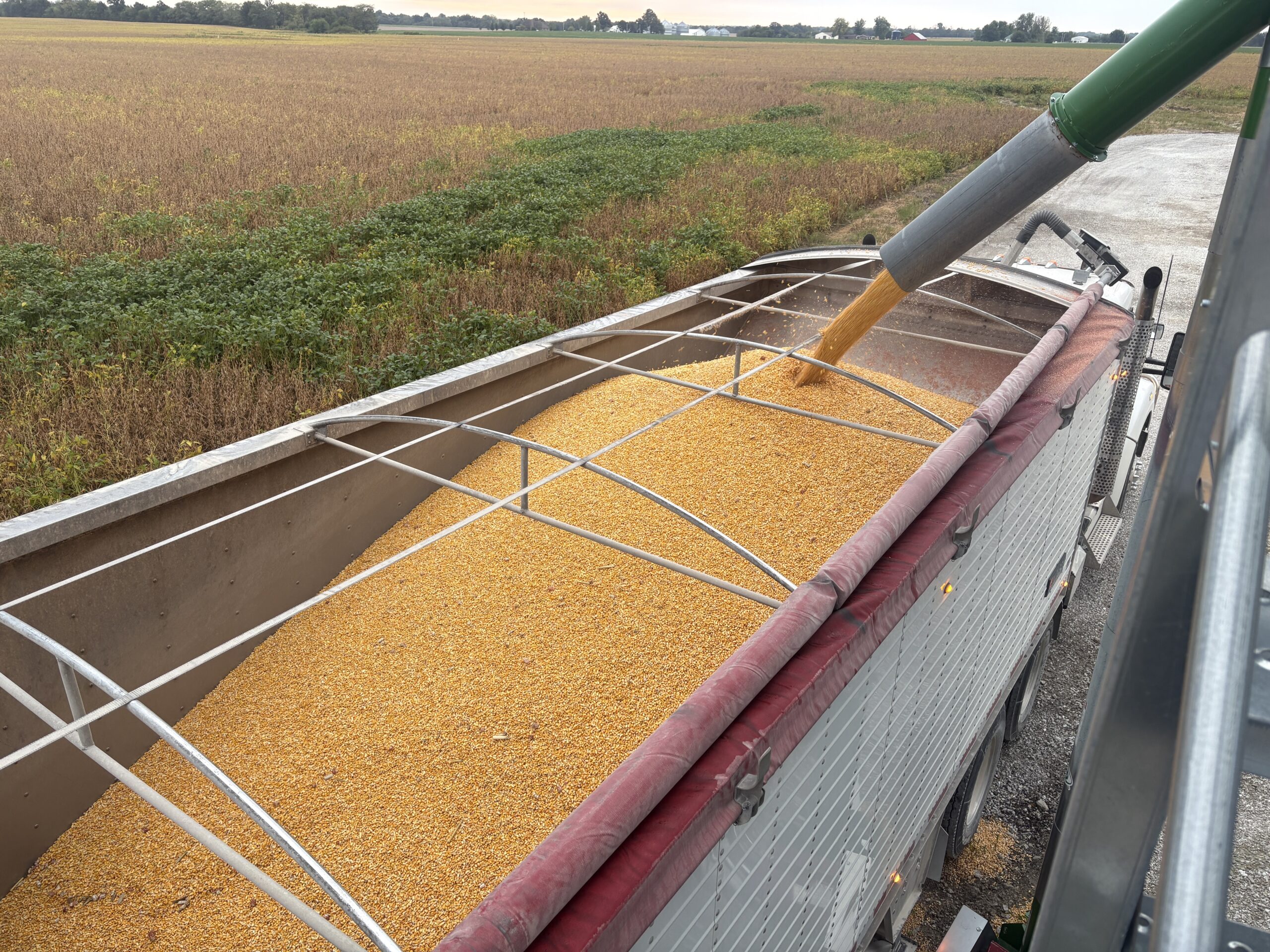
Watching the front fill from the steps
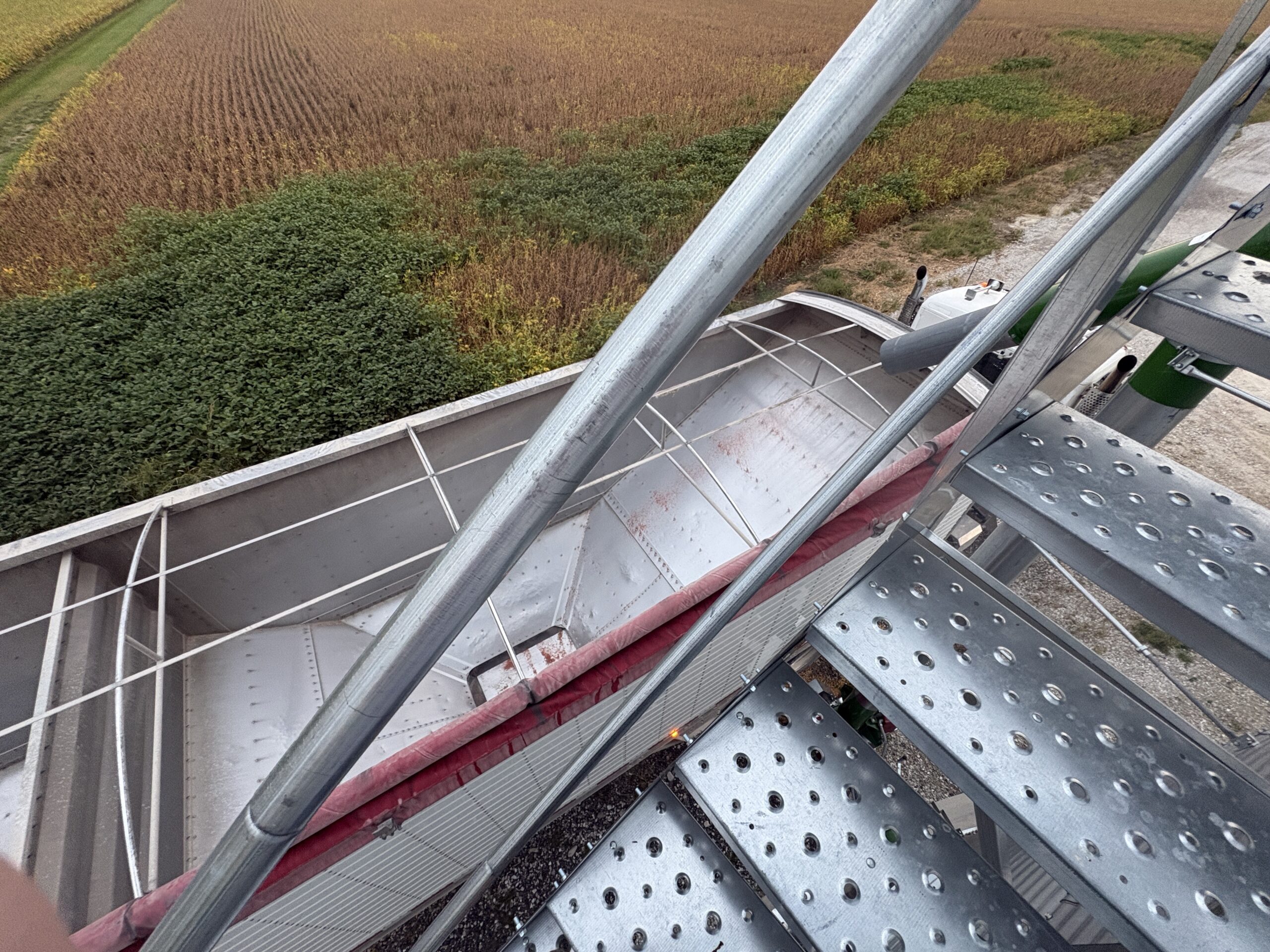
I start with the front part of the hopper trailer. After the corn begins flowing, I go up the steps where I can look down into the trailer. That view lets me see the stream coming out of the auger and the pile forming underneath it.
Looking into the trailer matters because the corn does not rise as one perfectly flat layer. It piles up where it falls and spreads outward. If I only watched from the ground, I would have a poor idea of how much room was left. From above, I can see the level relative to the trailer sides and watch how the load is building.
I keep an eye on it instead of walking away and hoping I hear when it is full. The auger keeps delivering corn until it is stopped. I want to stop the flow while the load is still where I intended it to be, not after corn starts spilling over the side.
I generally put a little more corn in the front part than in the back with this truck and trailer. That is the balance I work toward from experience with this combination. It does not mean I fill the front to the brim and leave the rear mostly empty. Both parts need corn, and I am also paying attention to what the truck’s gauge is telling me as the weight goes on.
Pulling forward to fill the back
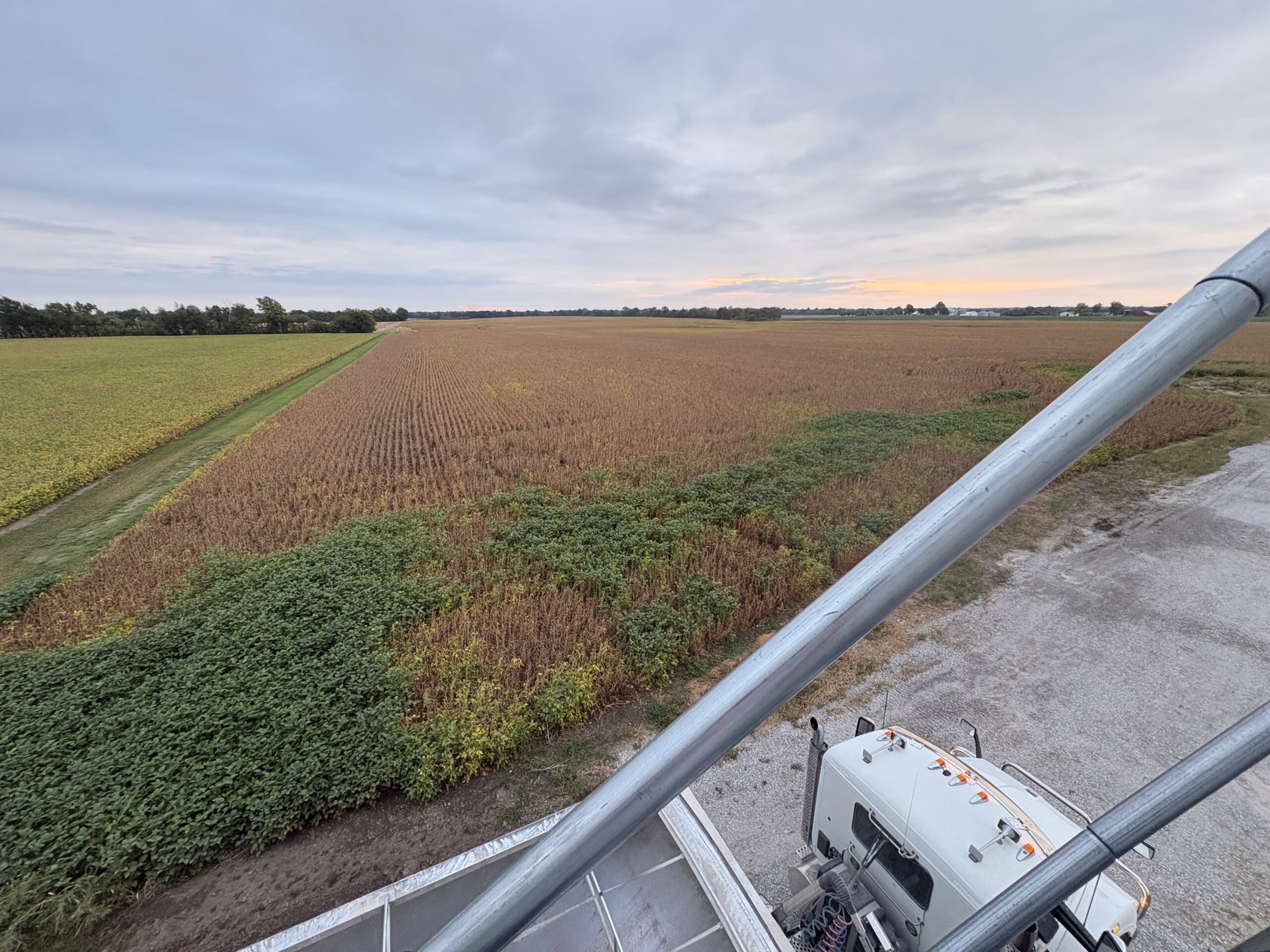
When the front is where I want it, I stop the grain flow before moving the truck. Then I climb back into the cab, pull forward carefully, and position the rear part of the trailer under the auger outlet.
I cannot load the whole trailer from one spot. That is one detail someone new to grain hauling might miss when looking at a finished load. I have to position the truck for the front, load it, reposition for the back, and load again. Each time, the corn needs to land inside the right part of the trailer.
I pay attention to my clearance during that move, especially because I am working so close to the motor and bin equipment. Once the rear is lined up, I can start the corn flowing again and watch that section fill.
My photos from above show the tarp rolled back along the side and the corn building inside the open trailer. They also show why I look into the trailer during both stages. I can see where the grain is landing. A gauge in the cab cannot show me whether the auger is dropping corn where I intended or whether one section is getting too full.
How I use the truck’s weight gauge
While loading, I watch the gauge in the truck for an approximate idea of how much weight I have put on. With this particular truck and the loads I haul, I usually aim for a reading around 80%.
That 80% figure is my reference point, not a number somebody can copy into another semi and expect the same load. It depends on this truck, how its gauge reads, and what I have learned from hauling with it. It is useful feedback while corn is going into the trailer, but it is still an estimate.
The gauge does not tell me the trailer’s exact grain weight. It does not give me a complete set of axle weights, either. I still have to load with the truck’s limits in mind. The actual scale weights come later. I am careful about that distinction because a trailer can look full without telling you whether the truck is loaded correctly.
The way I divide corn between the front and back is part of that judgment. I try to put a little more in front with this combination, while watching the grain level and the gauge as I go. Somebody driving a different truck or trailer should not assume that matching the piles in my photos will give them the same weight distribution.
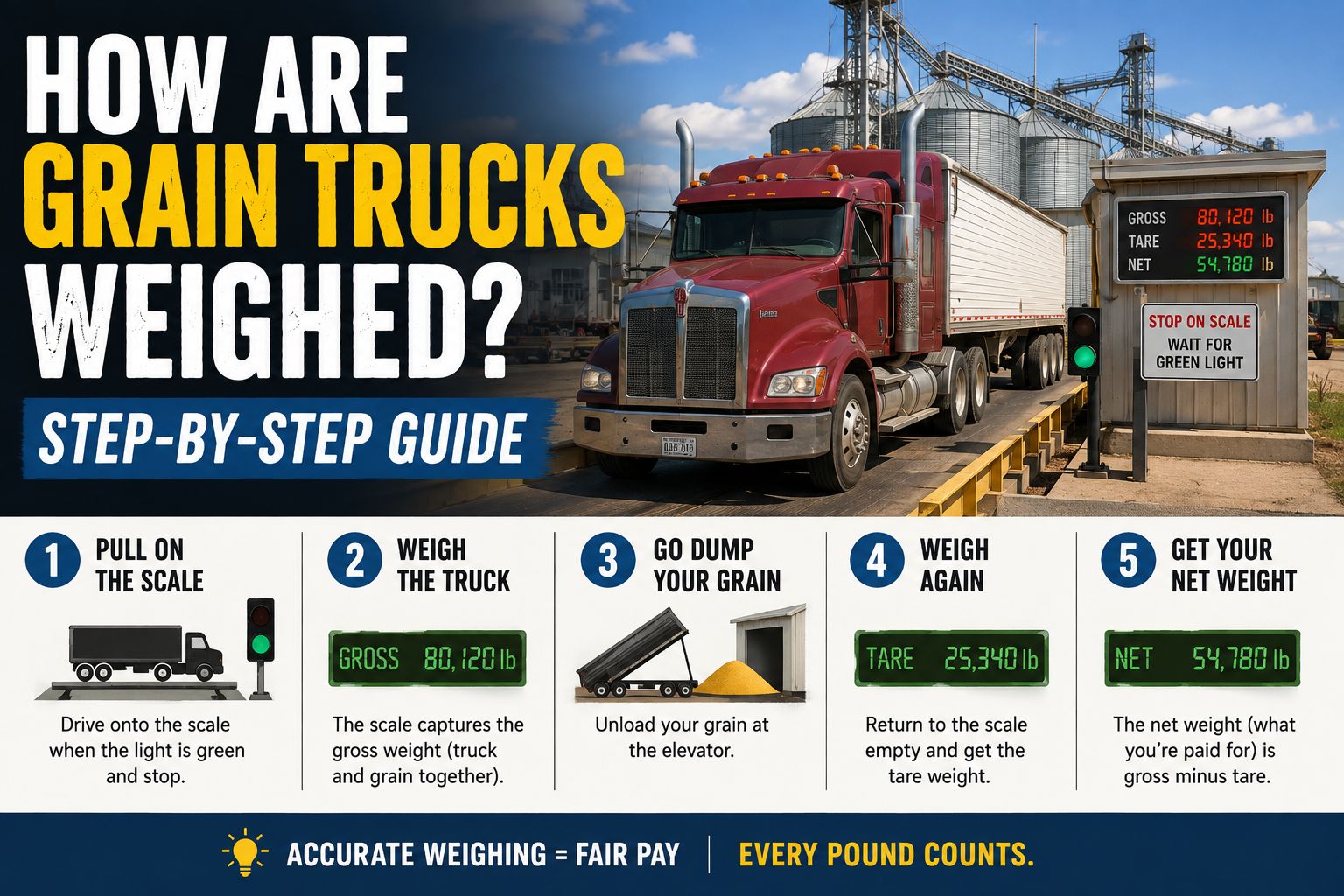
At the elevator, the truck goes across a scale loaded and again after the corn is unloaded. I explain that part more fully in how grain trucks are weighed at an elevator.
Why the loading spot takes more attention than it appears to
There are several things happening within a few feet of each other: the bin equipment is running, corn is flowing through the auger, the trailer is sitting close to the motor, and I am watching the load build in two different places.
The backing is the part that feels tightest to me. I need to get near the bin, but “near” can turn into “too close” quickly in a semi. I slow down and pay attention to where the trailer actually is. Getting out to look costs less time than dealing with damaged equipment.
The loading itself takes patience for a different reason. Corn can be coming in steadily while I am judging how full the front or back looks. I do not want to assume I know what is happening just because I loaded the same trailer before. I look at the grain that is going in on this load.
There is also the transition between hoppers. I stop loading, move the truck, and check the new position before continuing. That short move is part of loading, not a break from paying attention.
Finishing the load before the elevator run
Once I have the rear loaded where I want it, I shut the grain equipment off and make sure corn has stopped flowing. Then I close and secure the tarp.
Before leaving the bin, I make another check around the truck and trailer. The hopper doors must still be closed and locked. The tarp needs to be secured for the road. I also need to make sure I am clear of the bin equipment when I pull away.
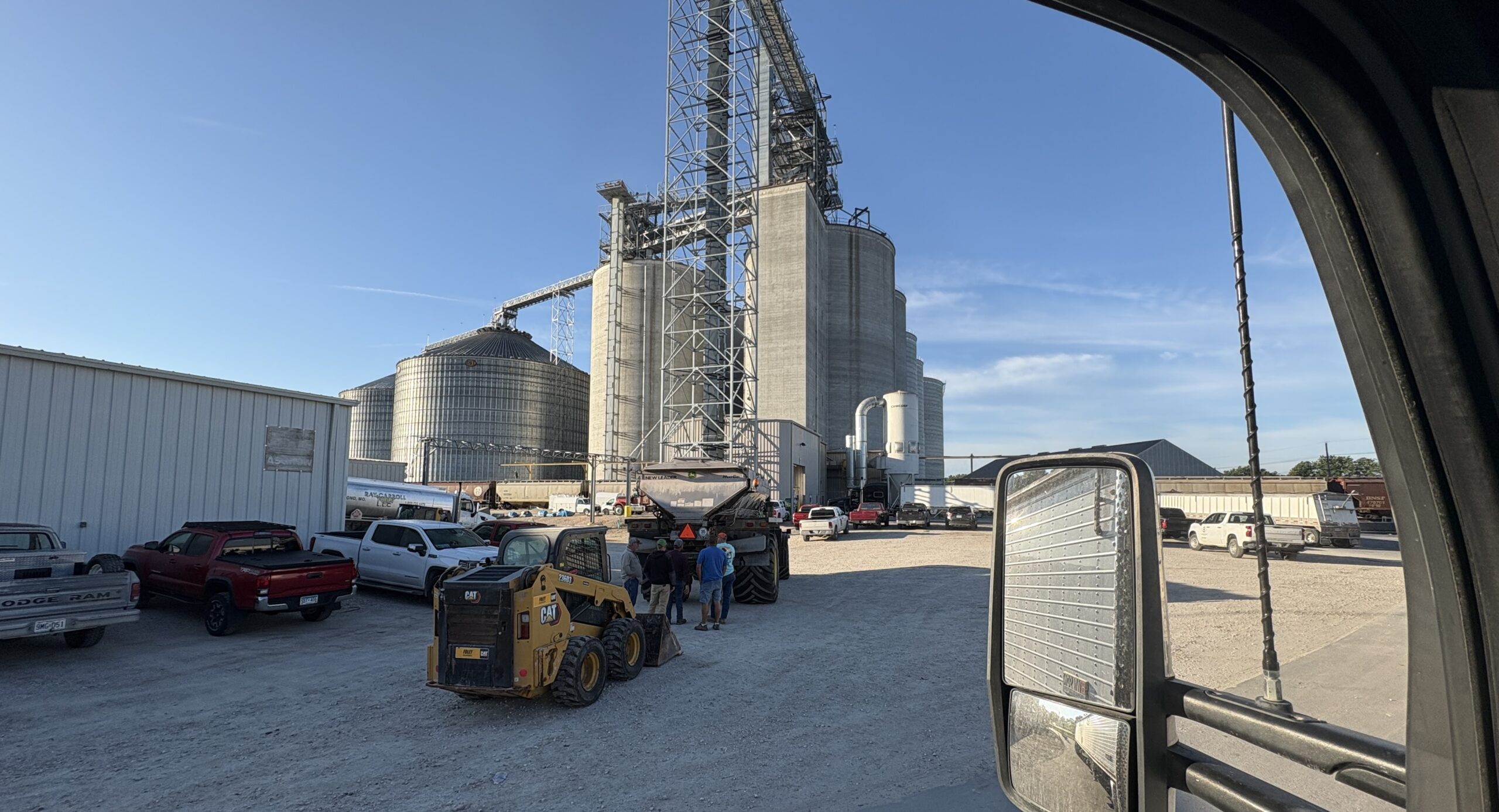
From there, I head to the grain elevator. The work changes, but the load is still my responsibility until it is delivered. At the elevator, I get on the loaded scale, follow the directions to the unloading bay, empty the trailer through the hopper doors, close everything back up, and return to the scale for the empty weight. I wrote about that side of the run in what it was like unloading corn at the grain elevator.
The scale ticket goes back to farm management for their records. That connects the load I watched going into the trailer at the bin with the corn delivered at the elevator. I start the morning making sure it gets into the trailer properly, and I finish with the paperwork showing where that load went.
About the author: I’m Dax, a Class A CDL driver sharing what I’ve experienced hauling grain and driving trucks at Trucking Resource.