
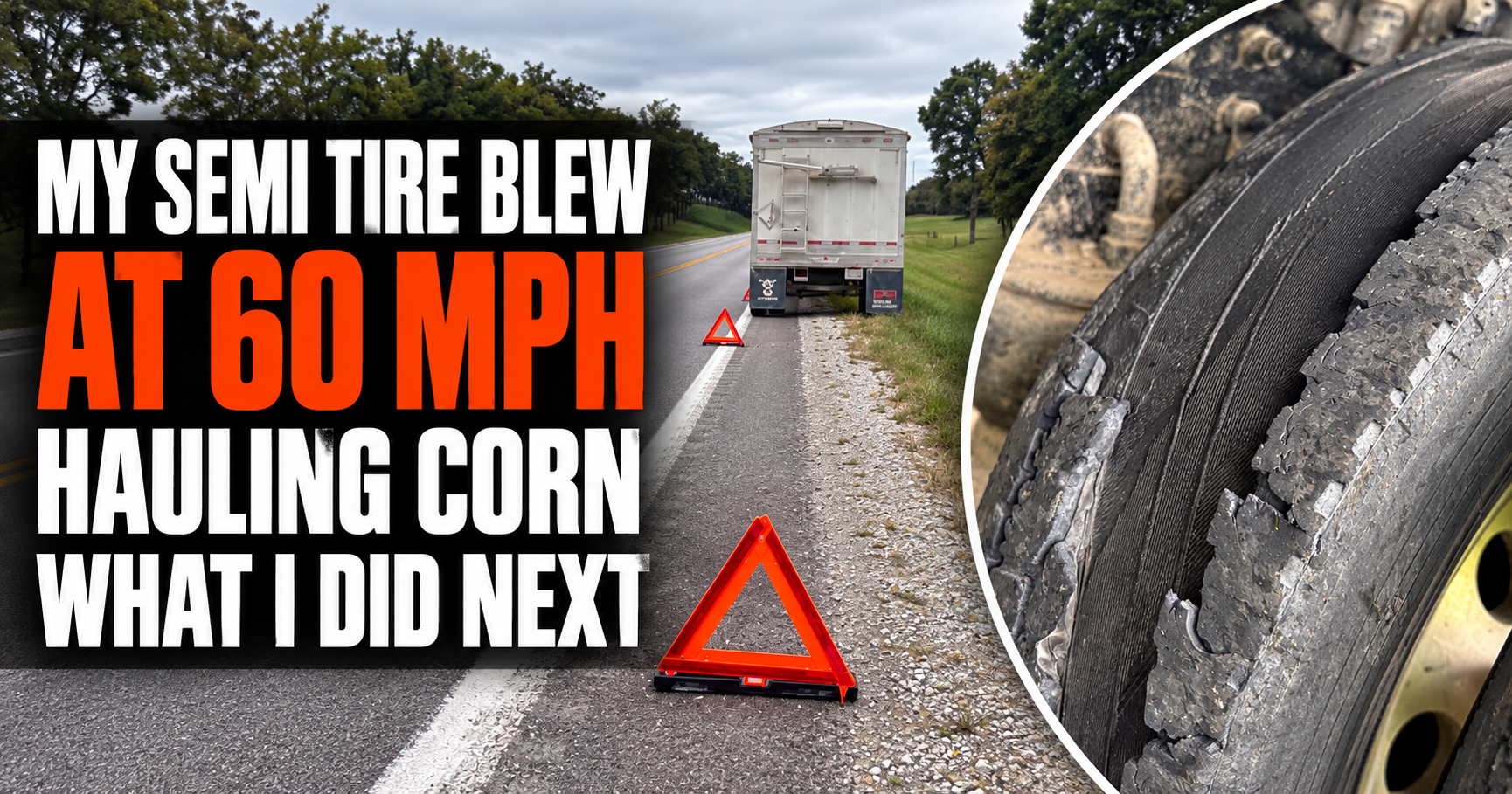
I was hauling corn on a rural highway, doing about 60 mph, when a tire blew. The bang sounded like a cannon going off.
Right after that, the truck started shaking. I saw smoke and smelled burning rubber. It was loud, sudden, and scary, especially with a loaded truck moving at highway speed. My first concern was getting out of the travel lane without losing control.
I made it onto a wide shoulder and stopped. I turned on the flashers and put out my warning triangles. The photos in this article are from that stop, including the damaged tire and the truck sitting beside the highway.
That should have been the point where I waited for someone to come replace the tire. Instead, I got a call saying no service truck was available. I was told to drive slowly to a tire shop in the next town, about eight miles away. I did, with my flashers on, and made it there safely.
Here’s the whole sequence, along with the things I think another truck driver would want to know about a blowout like this.
What the Tire Blowout Sounded and Felt Like
The sound came first. “Cannon” is the closest comparison I have. It wasn’t a little pop or a noise I had to think about. Something had failed, and I knew it immediately.
Then I felt the truck shake. At the same time, there was smoke and a strong rubber smell. I was hauling corn, so this wasn’t an empty truck I could casually coast to a stop. I needed to keep it under control, get off the road, and find a place where the truck could sit without blocking traffic.
People sometimes ask what signs tell you a semi tire has blown. From inside my cab, it was the combination that made it unmistakable: the explosive bang, the shaking, and then the smoke and smell. A driver might experience a blowout differently depending on which tire fails and how it comes apart. I can only tell you what this one was like from my seat.
The biggest surprise was how much happened at once. There wasn’t time to inspect the tire or work out why it failed while the truck was still moving. I had to deal with the truck and the road first.



Getting the Truck Onto the Shoulder
I was fortunate that this stretch of rural highway had a wide shoulder. I pulled over there, stopped, and turned on my hazard flashers.
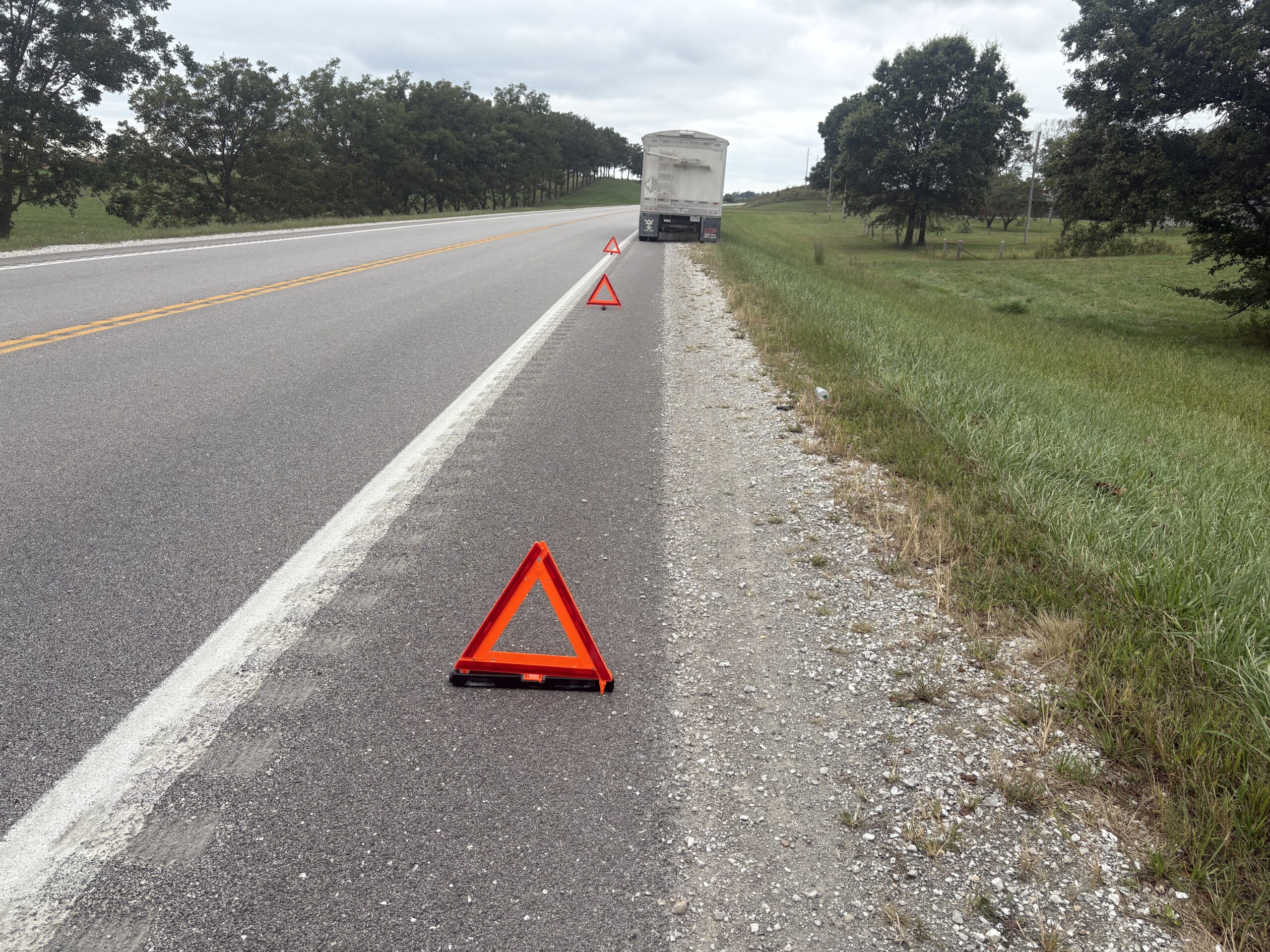
A wide shoulder made this stop possible, but it didn’t make the roadside feel comfortable. Traffic was still using the highway, and my truck was sitting close enough to the road that approaching drivers needed warning. I got out my three reflective warning triangles and placed them behind the truck.
My roadside photo shows the triangles leading up to the truck. I’m glad I took it. Looking at it now, you can see both the room I had to pull over and why I wanted the truck to be visible from a distance.
For a driver who has only handled warning triangles during CDL training, this is what they are for. When your truck unexpectedly ends up on the shoulder, they become part of a real roadside stop. Flashers were the first thing I used, and then I put the triangles out.
Federal rules address flashers and warning devices when a commercial vehicle is stopped on a highway shoulder. The exact placement depends on the road and conditions, so I’d rather point readers to the FMCSA guidance on emergency warning devices than guess at distances from my photo.
What the Tire Looked Like When I Stopped
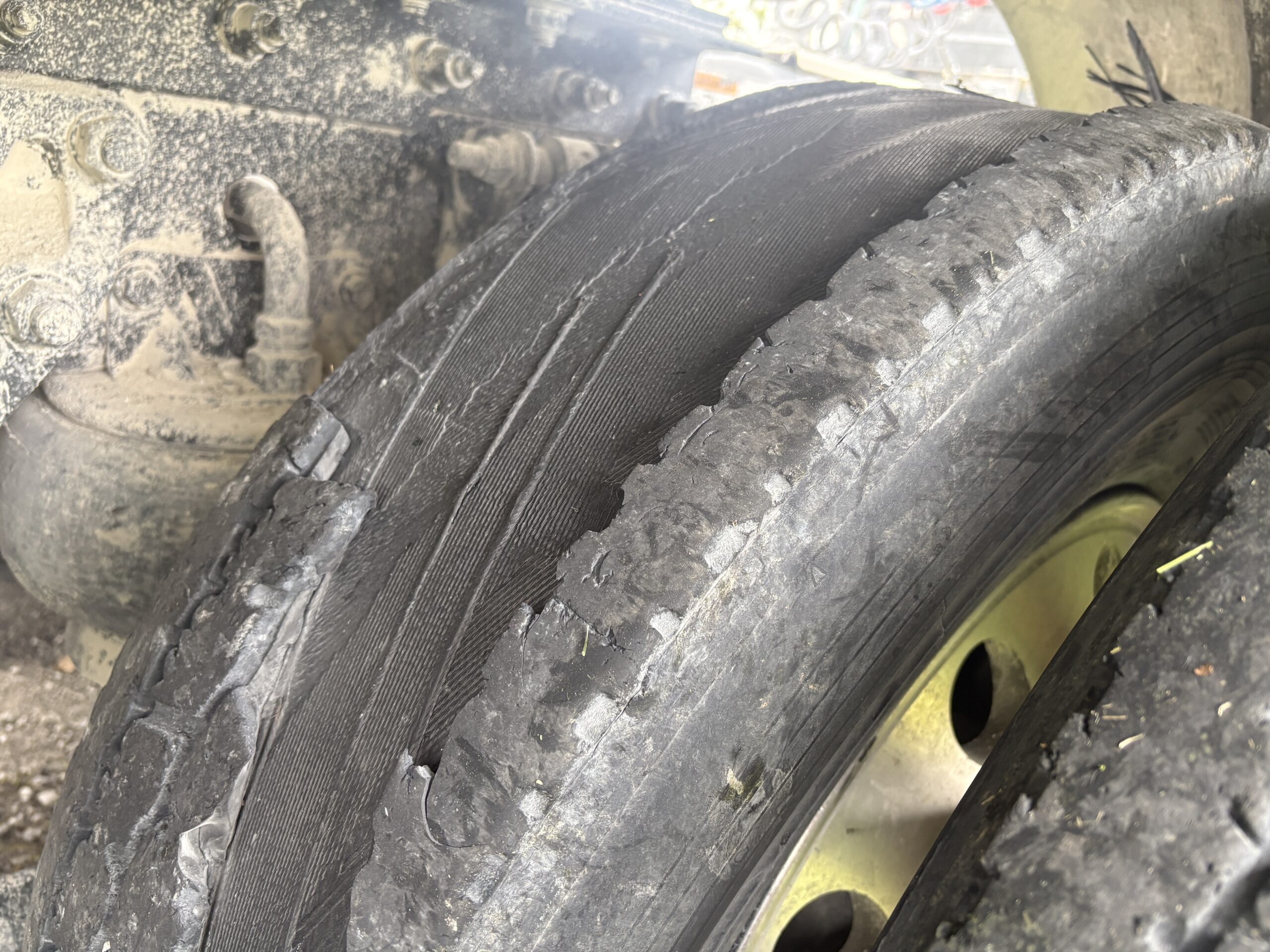
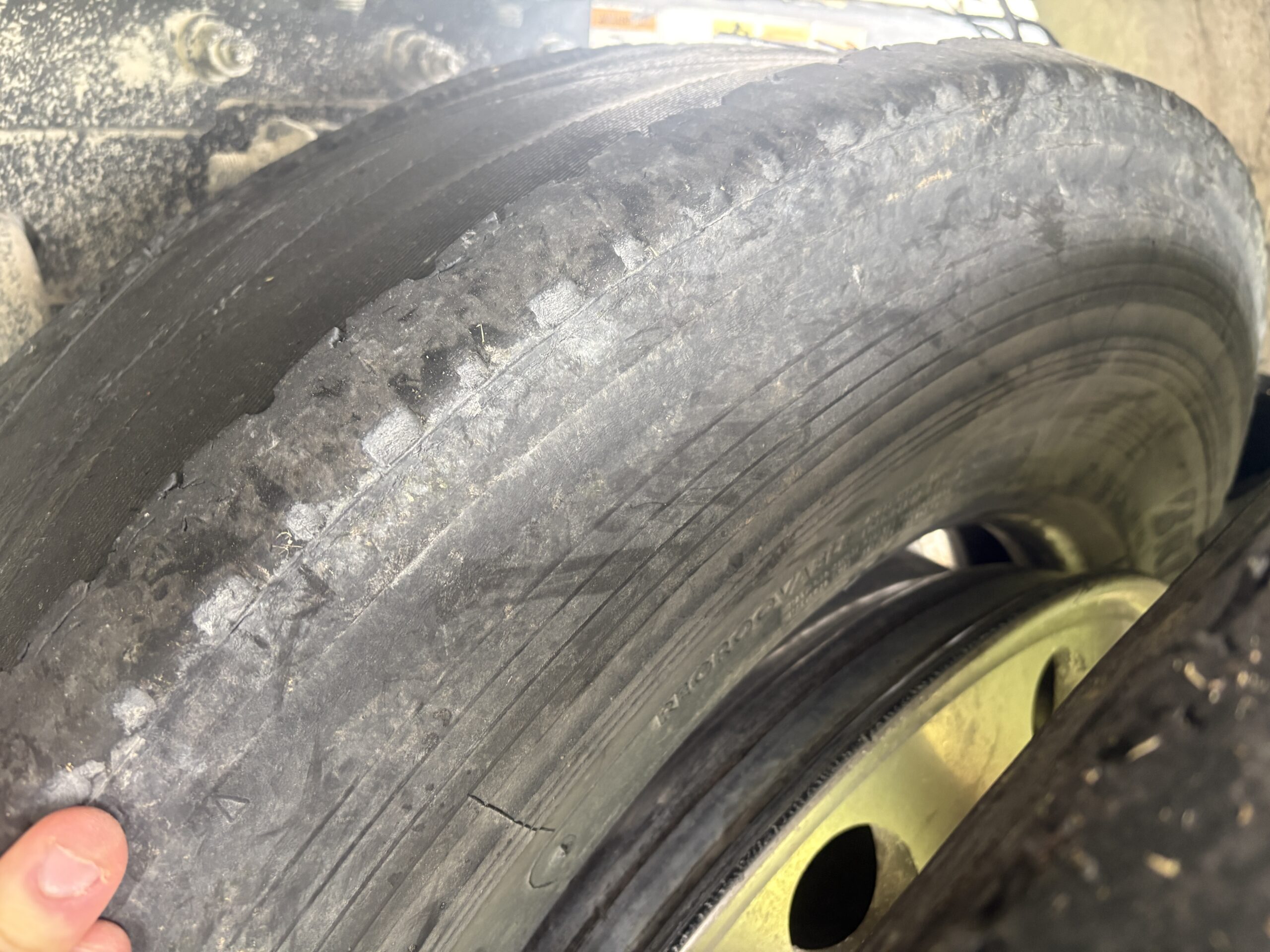
Once I was off the road, I could see how badly the tire had come apart. These weren’t photos of a tire that had merely lost a little air. A substantial portion was torn open, with damaged material exposed around it.
The second photo gives a closer look at the torn area. You can see why the bang was so loud and why I smelled rubber after it happened.
I don’t know exactly what caused the failure. A photo taken afterward can show damage, but it cannot tell me whether the tire had a hidden problem, picked something up, overheated, or failed for another reason. I’m not going to pin it on one cause without an inspection that supports it.
That distinction matters to me. It would be easy to turn this into a story about the one tire warning sign I supposedly missed. I haven’t said there was one. What I know is how the blowout happened from the cab and what the tire looked like after I got stopped.
The Call That Changed the Plan
After I pulled over and set out the triangles, I contacted the people handling the truck. They called back and said no service truck was available. I was told to drive slowly to a tire shop in the next town.
The shop was about eight miles away.
That’s the part of the day I keep thinking about. I had just gotten a loaded truck safely off the highway after a violent tire failure. I had the flashers on, the triangles out, and photos showing the damage. Then the plan changed from getting help at the roadside to moving the truck again.
I drove slowly with my flashers on and reached the shop safely. I’m including that because it’s what happened, not because I want anyone to take “drive eight more miles” as the answer to their own blowout. Another truck could have different damage, a different load, a narrower road, or a tire in a different position. The fact that I made it to the shop doesn’t make that trip a general rule.
Federal tire regulations prohibit operating a vehicle on a tire that is flat or has tread or sidewall separation. They also prohibit exposed belt or body ply material. That’s why a decision about moving a truck after this kind of failure deserves more than “just go slow.” If you’re in that position, the truck’s condition and the applicable rules need to be addressed before it moves.
Could a Pre-Trip Inspection Have Prevented It?
I think that’s a fair question, and I don’t have enough evidence to answer it for this tire.
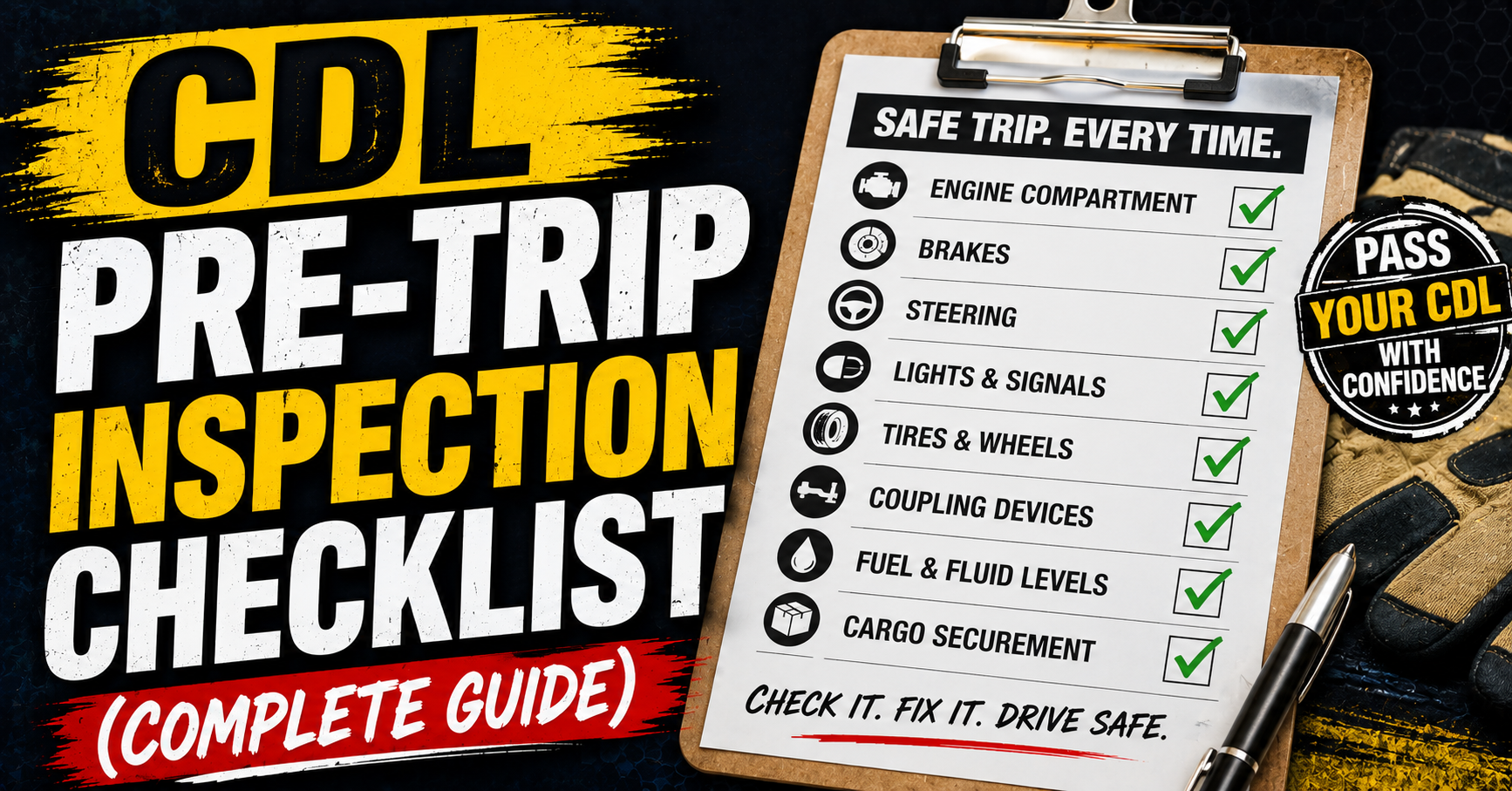
A good pre-trip inspection gives you a chance to catch visible tire problems before you leave. You can look for damage, check the condition of the tread and sidewalls, and pay attention to the tires as part of the whole vehicle inspection. Our CDL pre-trip inspection checklist covers the checks a driver should know.
But the photos I took after this blowout don’t prove what the tire looked like before it failed. The damage from the failure itself can be extensive. I won’t claim there was an obvious warning that I ignored, and I won’t promise that any inspection can predict every tire failure.
What this experience did was make the tire portion of a pre-trip feel a lot less abstract. I know what it sounds and feels like when one lets go at highway speed. If I spot damage before driving, I want it dealt with while the truck is parked, not after I’ve loaded up and headed down the road.
What I’d Tell a New Driver About This Experience
If you’re new to driving a semi, don’t picture a blowout as just a flat tire with a louder noise. Mine was a sudden bang, a shaking truck, smoke, and a rubber smell while I was hauling a load at about 60 mph. The first challenge was getting the truck safely stopped.
Once I reached the shoulder, I still had to think about traffic. The flashers and warning triangles weren’t details to add to a report later. They were things I needed at the roadside while the truck was stopped.
And once I called for help, I learned that the answer you get back may not be the one you expect. No service truck was available in my case. I’ve told you exactly what I was instructed to do and that I reached the shop safely, but I don’t want another driver reading this as permission to move an unsafe truck.
If you’re working toward your CDL, the emergency procedures practice test can help you review the basics. Just remember that the point of learning those procedures is to use good judgment when something happens on a real road with a real load.
Questions I Had After the Blowout
Can a semi tire blowout really sound like a cannon?
Mine did. It was an explosive bang that got my attention immediately. I also felt the truck shake, then noticed smoke and the smell of rubber. Those are the details I remember from the cab.
Was I able to pull completely off the highway?
I got onto a wide shoulder along the rural highway. That gave me a place to stop, turn on the flashers, and put out three warning triangles. The roadside photo shows where the truck ended up.
Did the tire shop send someone out?
No service truck was available when I called. I was contacted again and told to drive slowly to the shop in the next town, about eight miles away.
Would I tell another driver to drive eight miles on a blown tire?
No. I’m sharing the decision made during this particular incident and what happened afterward. I can’t know whether another truck is safe or legal to move based on mine.
Do I know why the tire blew?
No. I have photos of the damage after the blowout, but I don’t have a confirmed cause. I’d rather leave that question open than give readers an answer the evidence doesn’t support.
The part I’m grateful for is that I was able to get the loaded truck onto that shoulder without anyone getting hurt. The bang was frightening, the tire damage was severe, and the next eight miles were not what I expected when I started the trip. Those original photos show what this particular blowout left behind.
About the author: This account comes from a driver’s firsthand experience hauling corn for TruckingResource.com. The tire and roadside photos were taken during the actual incident.