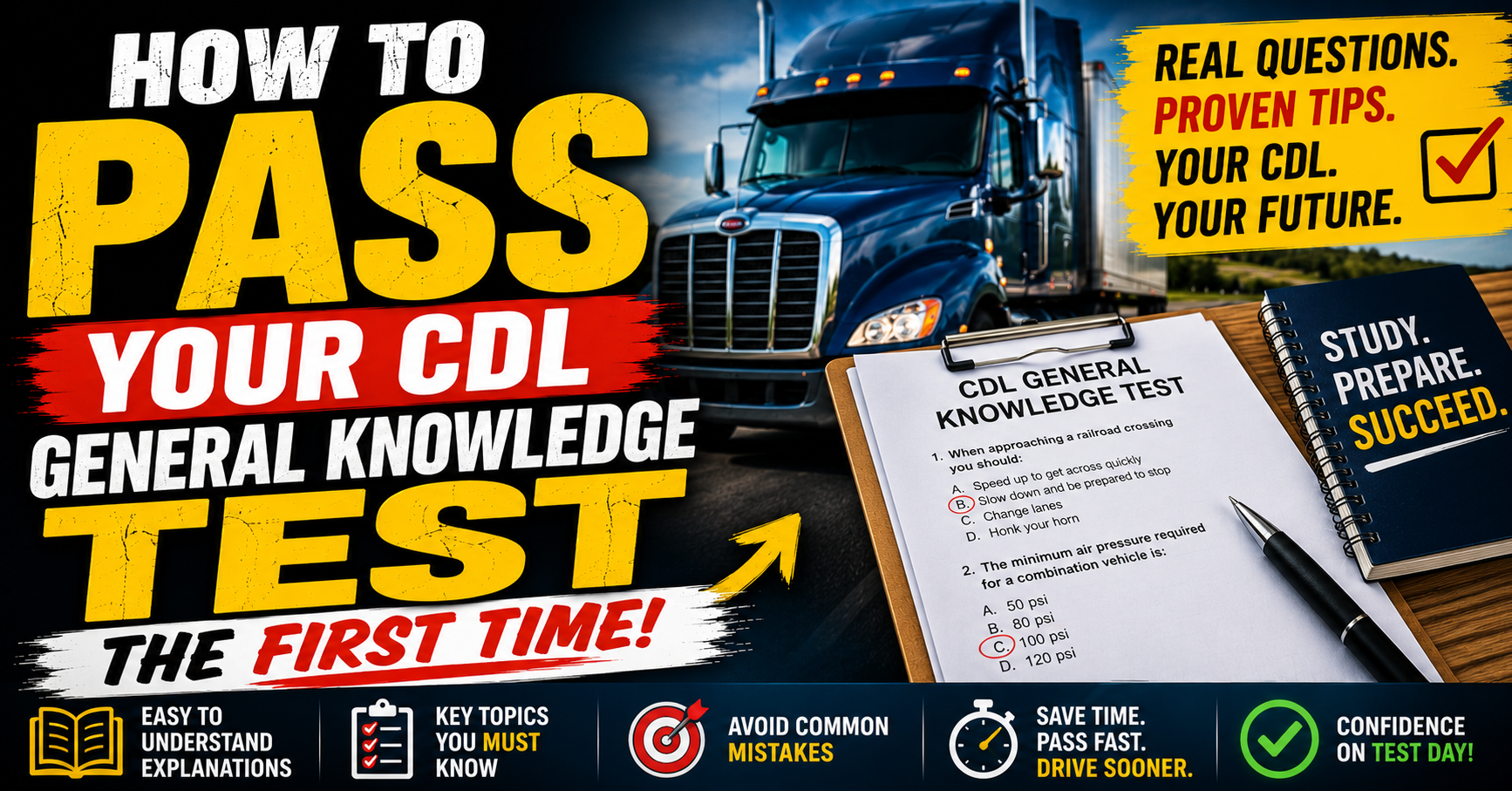
For many future truck drivers, the CDL General Knowledge test is the first real hurdle on the road to earning a Commercial Driver’s License.
I’ve talked with people who were more nervous about the written exam than they were about driving a tractor-trailer.
The funny thing is, it doesn’t have to be that way.
The drivers who pass the first time usually aren’t geniuses. They simply prepare the right way.
Over the years, I’ve found that studying consistently, taking practice tests, and understanding why the answers are correct is far more effective than trying to memorize hundreds of questions the night before the exam. The 25 Common CDL Permit Test Questions Explained (With Correct Answers) applies this understanding-focused approach to common exam topics.
In this guide, I’ll share the same advice I’d give someone sitting across the table from me who’s getting ready to take their CDL General Knowledge test for the very first time.
If you’re still in the early stages of earning your CDL, you may also want to read What Is a CDL Permit? Everything You Need to Know. Your permit is an important part of the licensing process, and understanding how it works will help everything else make more sense.
What Is the CDL General Knowledge Test?
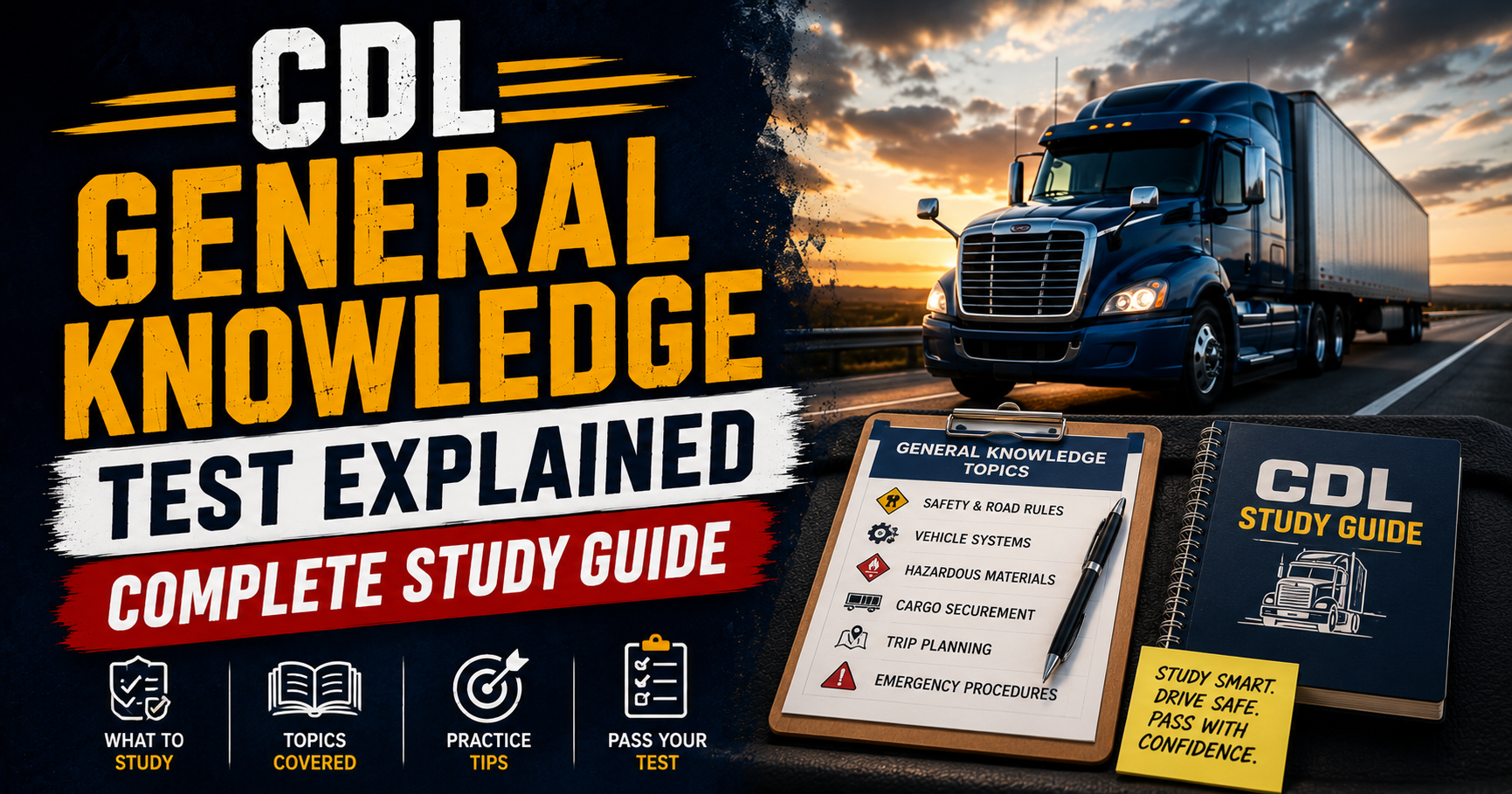
The CDL General Knowledge test is the written exam that most new commercial drivers must pass before receiving their Commercial Learner’s Permit (CLP). A detailed breakdown of the exam topics appears in CDL General Knowledge Test Explained: Complete Study Guide.
It covers the basic knowledge every professional driver should have before operating a commercial vehicle.
Questions often focus on topics such as:
- Safe driving practices
- Vehicle inspections
- Cargo safety
- Railroad crossings
- Speed management
- Defensive driving
- Emergency situations
- Sharing the road
- Distracted driving
- Basic commercial driving laws
The exact number of questions and passing score vary by state, but the overall purpose remains the same.
The exam is designed to make sure you understand the fundamentals before you begin your behind-the-wheel training.
Don’t Try to Memorize Questions
One of the biggest mistakes I see is people searching online for “CDL test answers” and trying to memorize them.
That’s a terrible strategy.
The wording on your actual exam may be different, and memorization won’t help you once you’re sitting behind the wheel of a commercial vehicle.
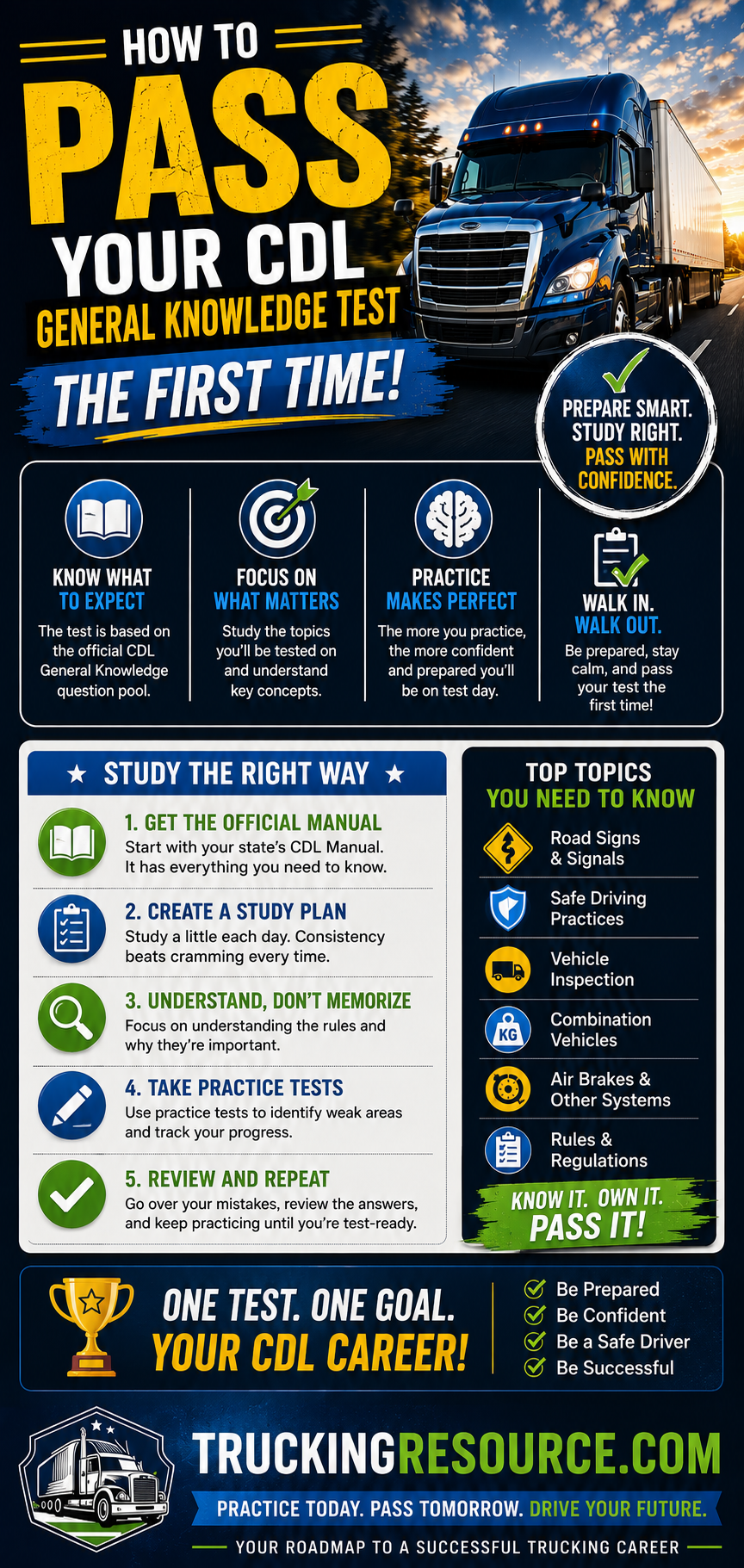
Instead, focus on understanding concepts.
Ask yourself why a particular answer is correct.
Once you understand the reasoning behind the rule, you’ll remember it much longer than if you simply memorized a sentence from a practice exam.


Start With Your State CDL Manual
It isn’t the most exciting book you’ll ever read, but your state’s CDL manual is still the best place to begin.
Everything else should build on that foundation.
Don’t try reading the entire manual in one sitting.
Instead, break it into manageable sections.
Spend time learning one topic before moving to the next.
That approach makes studying much less overwhelming and helps the information stick.
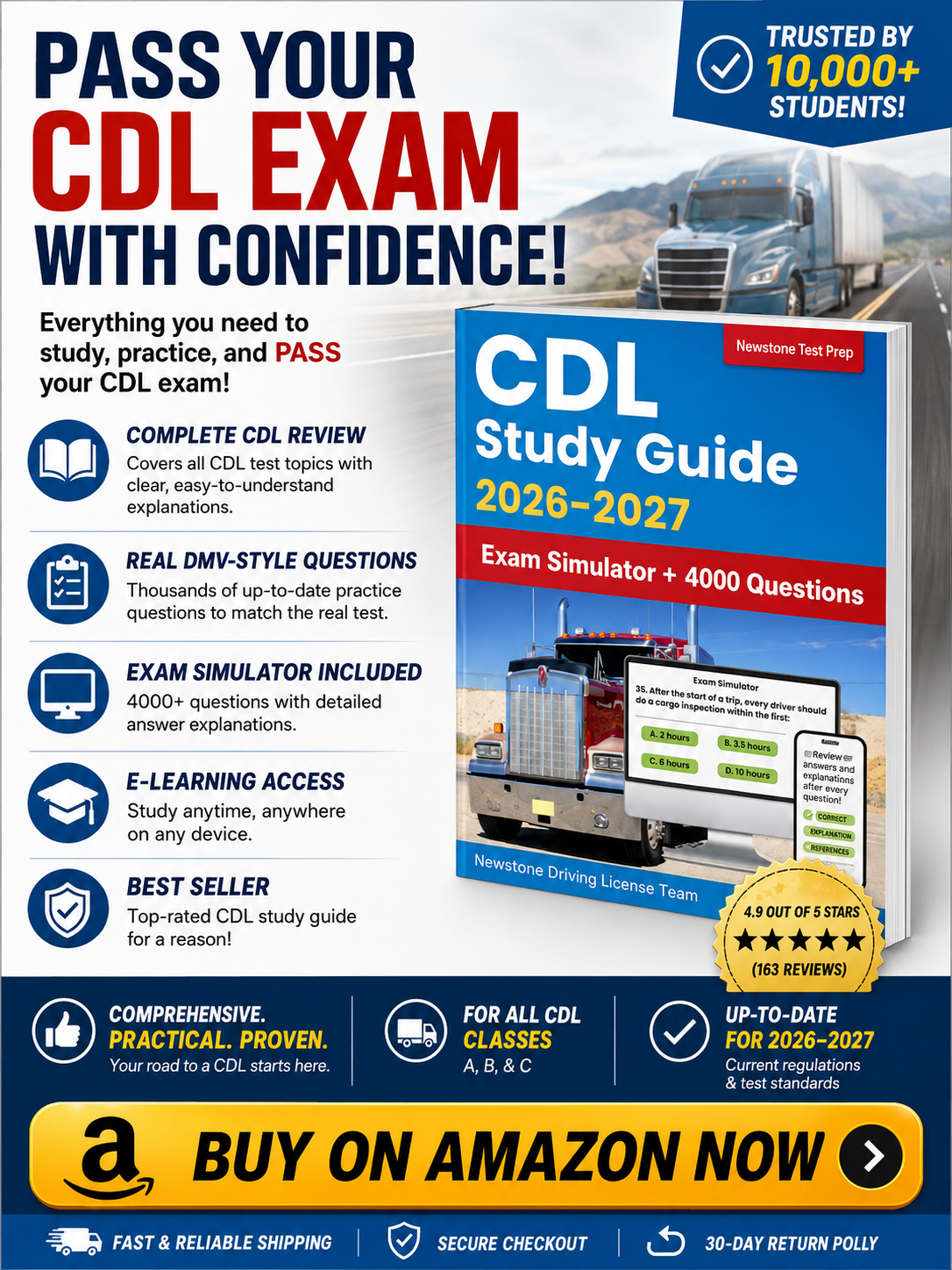
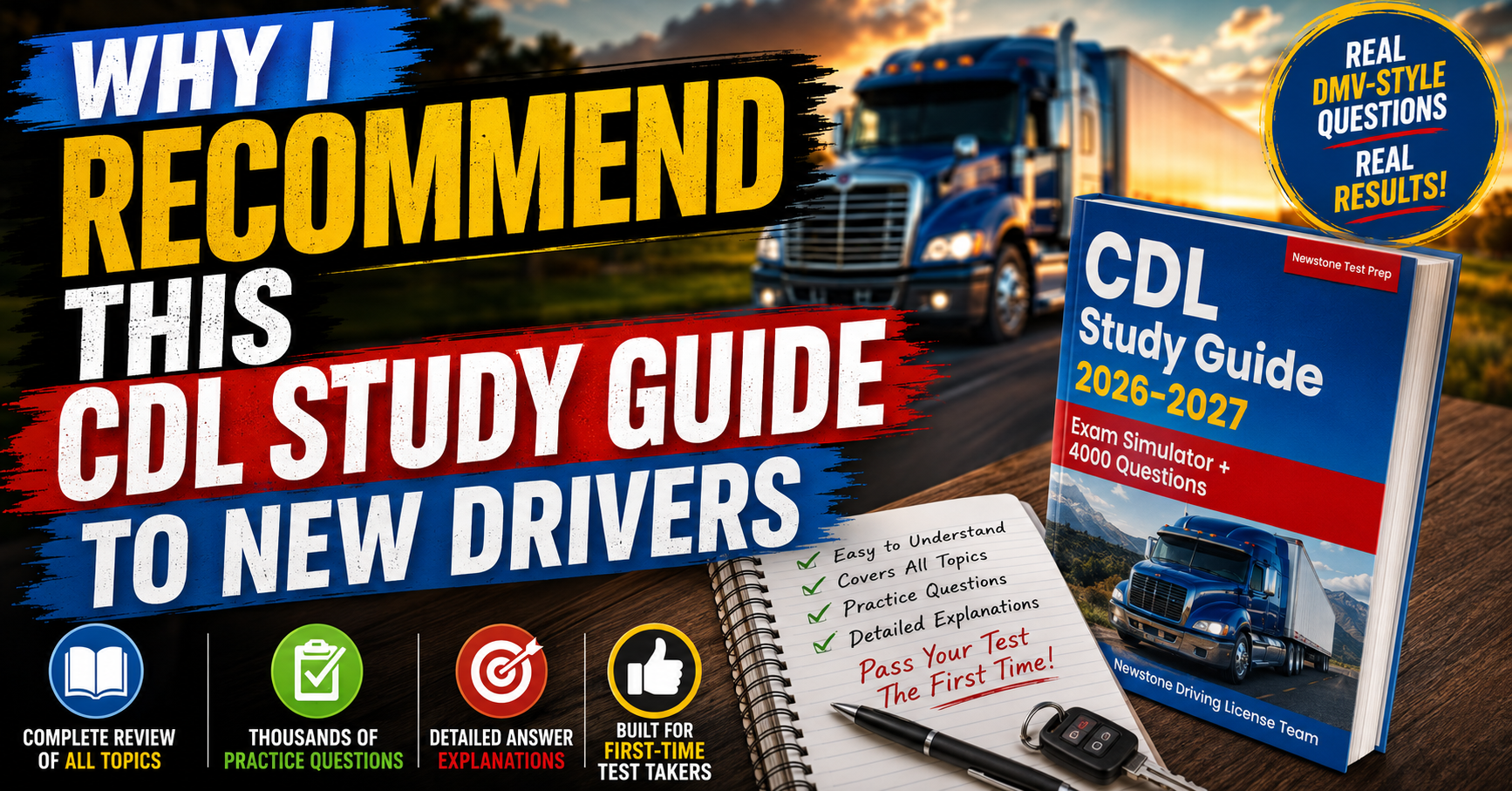
While the official CDL manual should always be your primary study resource, I also recommend having a dedicated study guide beside it. One of my favorites is the CDL Study Guide: Complete Review + Real DMV-Style Questions and Detailed Answer Explanations. It does an excellent job of reinforcing the information in the manual with realistic DMV-style questions, detailed answer explanations, and online practice tools that can help you walk into your permit exam feeling much more prepared.
Take Practice Tests Early
One mistake people make is waiting until they’ve finished studying before taking their first practice test.
I actually recommend the opposite.
Take a practice test early.
You’ll quickly discover which topics you already understand and which ones need more attention. Once you know where you need more practice, the CDL Permit Test Simulator: 125-Question Master Practice Exam can give you a broader test of your general knowledge.
That’s exactly why we created our Free CDL General Knowledge Practice Test 1 (25 Questions).
Don’t worry if you miss several questions.
That’s part of the learning process.
Every missed answer tells you where to spend more study time.
Study a Little Every Day
You don’t need to spend six hours a day studying.
In fact, I don’t think that’s the best approach.
I’ve always believed that thirty to forty-five minutes of focused studying each day beats trying to cram everything into one long weekend.
Your brain remembers information better when it’s reviewed consistently over time.
Even if you’re busy with work or family, finding a little study time each day can make a huge difference by the time your permit test arrives.
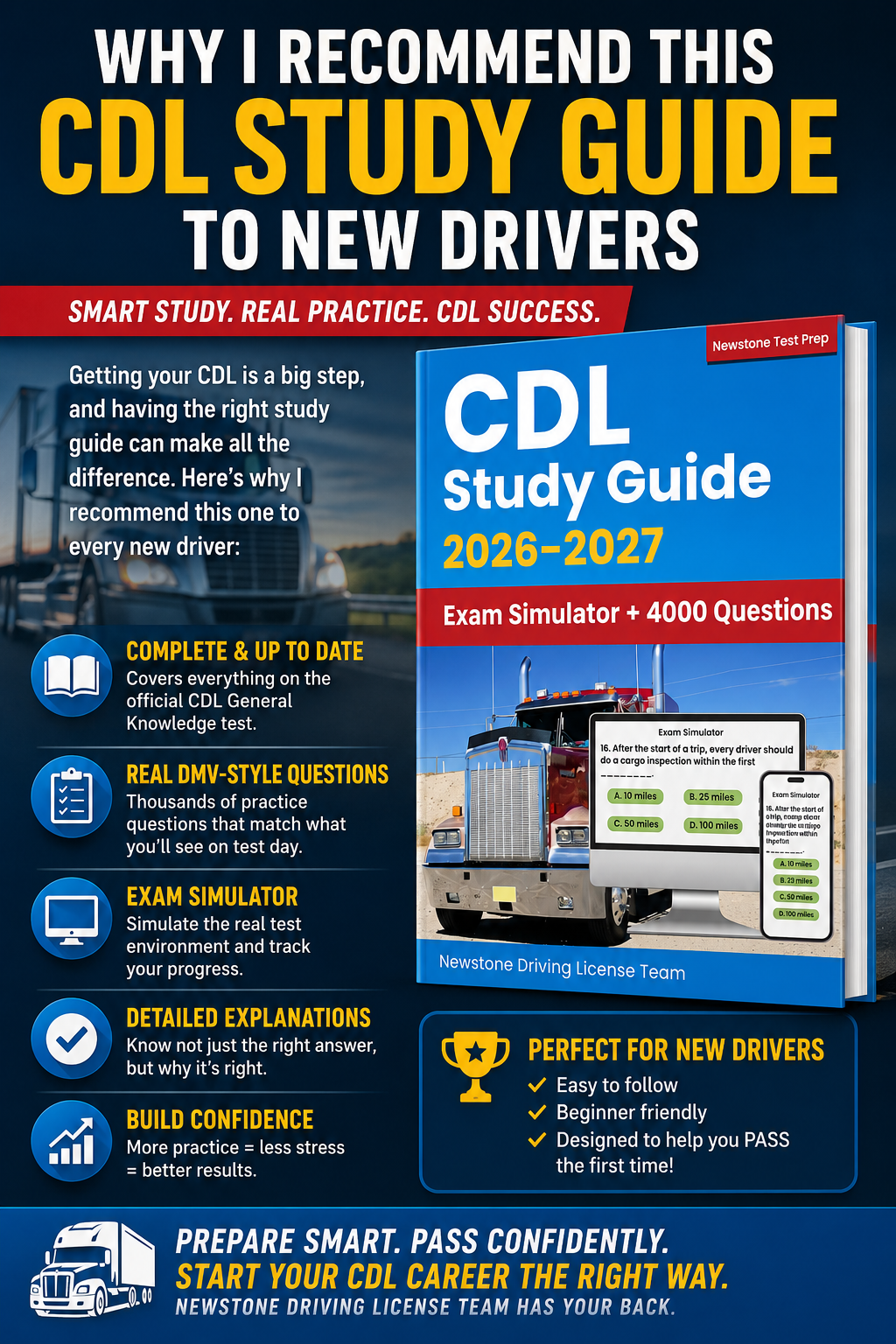
One resource I recommend keeping beside your CDL manual is our recommended CDL study guide. It includes realistic practice questions and detailed explanations that can help reinforce what you’re learning.
Learn the Language of Trucking
One thing that surprises many new students is how many unfamiliar terms appear throughout the CDL manual.
You’ll come across words and phrases that may not mean much if you’ve never driven a commercial vehicle before.
Instead of skipping over them, slow down and learn what they mean.
Once you understand the terminology, many of the practice questions become much easier to answer.
That’s also one reason I recommend reading explanations instead of simply checking whether your answer was right or wrong.
Understanding the “why” is what helps build confidence.

Focus on Understanding Safety
If there’s one theme you’ll notice throughout the CDL General Knowledge test, it’s safety.
Almost every section of the exam comes back to protecting yourself, your cargo, and everyone else sharing the road.
That’s because professional truck drivers operate vehicles that are much larger and heavier than the average passenger car.
The choices you make behind the wheel matter.
As you’re studying, don’t just ask yourself, “Will this be on the test?”
Instead, ask, “Why is this rule important?”
When you understand the reason behind a safety rule, remembering the correct answer becomes much easier.
Don’t Skip the Questions You Miss
I actually learn more from the questions I get wrong than the ones I answer correctly.
That’s a mindset that’s served me well throughout my trucking career.
Every incorrect answer points out an area where you can improve.
After you finish a practice test, spend time reviewing every missed question.
Figure out why your answer was wrong before moving on.
That extra effort often prevents you from making the same mistake on the real exam.
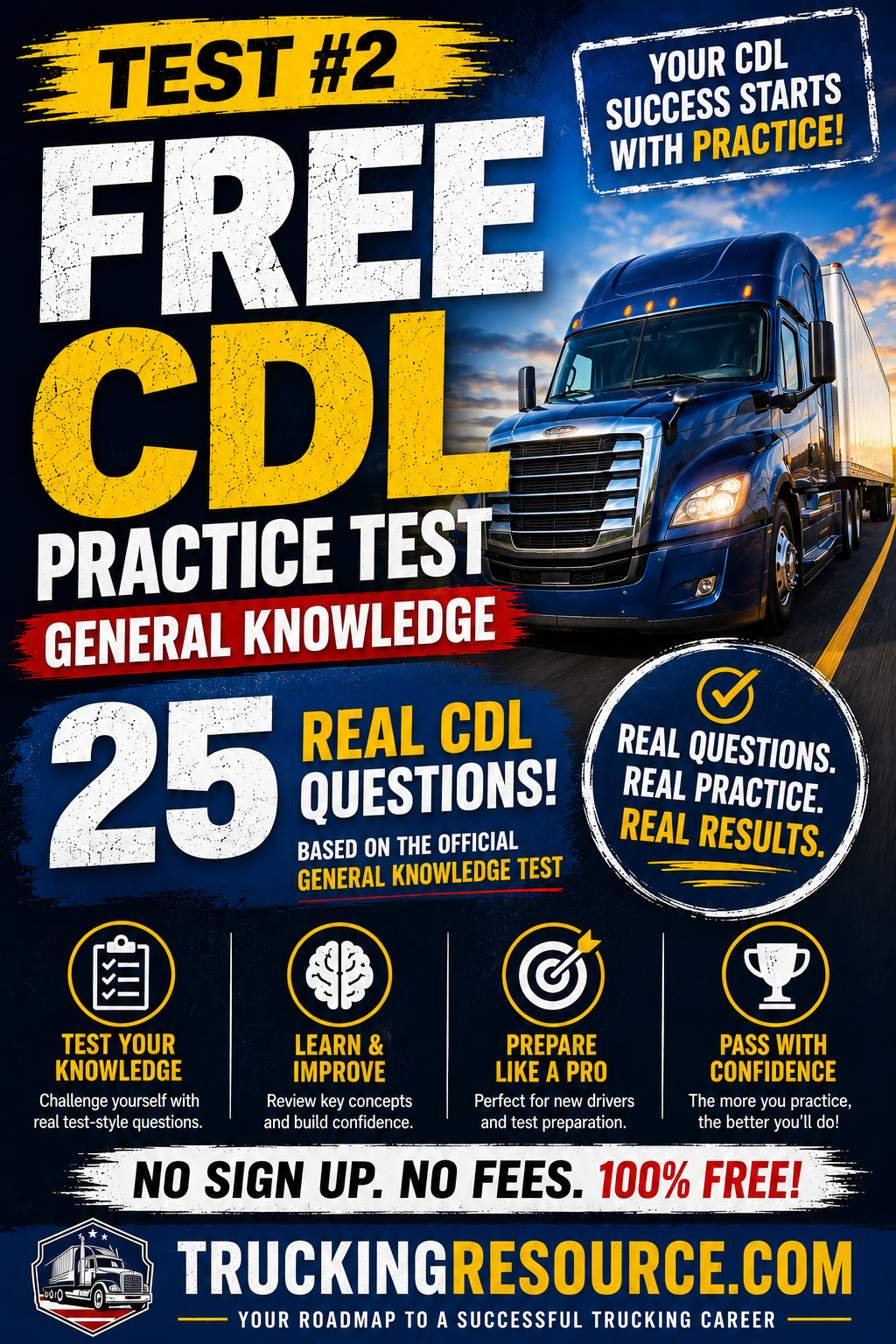
Once you’ve worked through our first practice quiz, challenge yourself with Free CDL General Knowledge Practice Test 2. Seeing a different set of questions is a great way to reinforce what you’ve learned and identify any topics that still need a little more attention.

Create a Study Routine
You don’t need an elaborate study plan.
You just need consistency.
A simple routine might look something like this:
- Read one section of your CDL manual.
- Review your notes.
- Take a short practice test.
- Go back and study any questions you missed.
Doing that several days each week is far more effective than trying to study everything at once.
Small improvements each day eventually turn into big improvements by test day.
Common Mistakes That Cause People to Fail
Most people don’t fail because the exam is impossible.
They fail because they make avoidable mistakes.
Some of the most common include:
- Waiting until the last minute to study.
- Memorizing answers instead of understanding them.
- Skipping practice tests.
- Reading questions too quickly.
- Changing correct answers because they second-guessed themselves.
- Ignoring sections they thought wouldn’t appear on the exam.
Fortunately, every one of those mistakes can be avoided with good preparation.
What If You Don’t Pass the First Time?
First of all, don’t panic.
It happens.
I’ve met plenty of outstanding truck drivers who didn’t pass every CDL exam on their first attempt.
One test doesn’t define your future.
If you don’t pass, look at it as a learning experience.
Figure out which topics gave you trouble, spend additional time studying those sections, and try again.
Many drivers pass easily on their second attempt because they know exactly what they need to work on.
The important thing is not giving up.
Getting Ready for the Skills Test
Passing the General Knowledge exam is a major accomplishment, but it’s only one step in the process.
After earning your Commercial Learner’s Permit, you’ll begin the hands-on portion of your training.
That includes:
- Pre-trip inspections
- Backing maneuvers
- Vehicle control
- Road driving
- Safe turning
- Defensive driving techniques
If you’re wondering what comes after the written exam, our How to Get a CDL: Step-by-Step Guide for New Driversexplains everything you’ll complete before earning your Commercial Driver’s License.
My Best Advice Before Test Day
The night before your exam, don’t stay up until two o’clock in the morning trying to read the CDL manual one last time.
Get a good night’s sleep.
Eat a decent breakfast.
Arrive early.
Read every question carefully.
Don’t rush.
Many test questions include words like always, never, except, or best. Missing one of those small words can completely change the correct answer.
Stay calm and trust your preparation.
If you’ve studied consistently and practiced answering questions, you’ll probably know far more than you think you do.
Remember, the Goal Isn’t Just Passing
Everyone wants to pass the CDL General Knowledge test.
I certainly did.
But after more than two decades in trucking, I’ve realized something.
The real goal isn’t earning a passing score.
The real goal is becoming the kind of driver who understands why these rules exist in the first place.
That knowledge helps you make better decisions, avoid accidents, and build a long career in the trucking industry.
The written exam is simply the first step toward becoming a safe professional driver.
As you continue preparing, don’t forget to explore the rest of our Trucking Topics page. We’re constantly adding new guides, study resources, and practical advice to help you succeed from your CDL permit all the way through your trucking career.
Author: David Walker
David Walker is a former CDL instructor with more than 22 years of experience helping new drivers prepare for CDL permit exams, pre-trip inspections, and skills testing. He has trained hundreds of future commercial drivers and enjoys making complex CDL topics easier to understand through practical, real-world instruction.