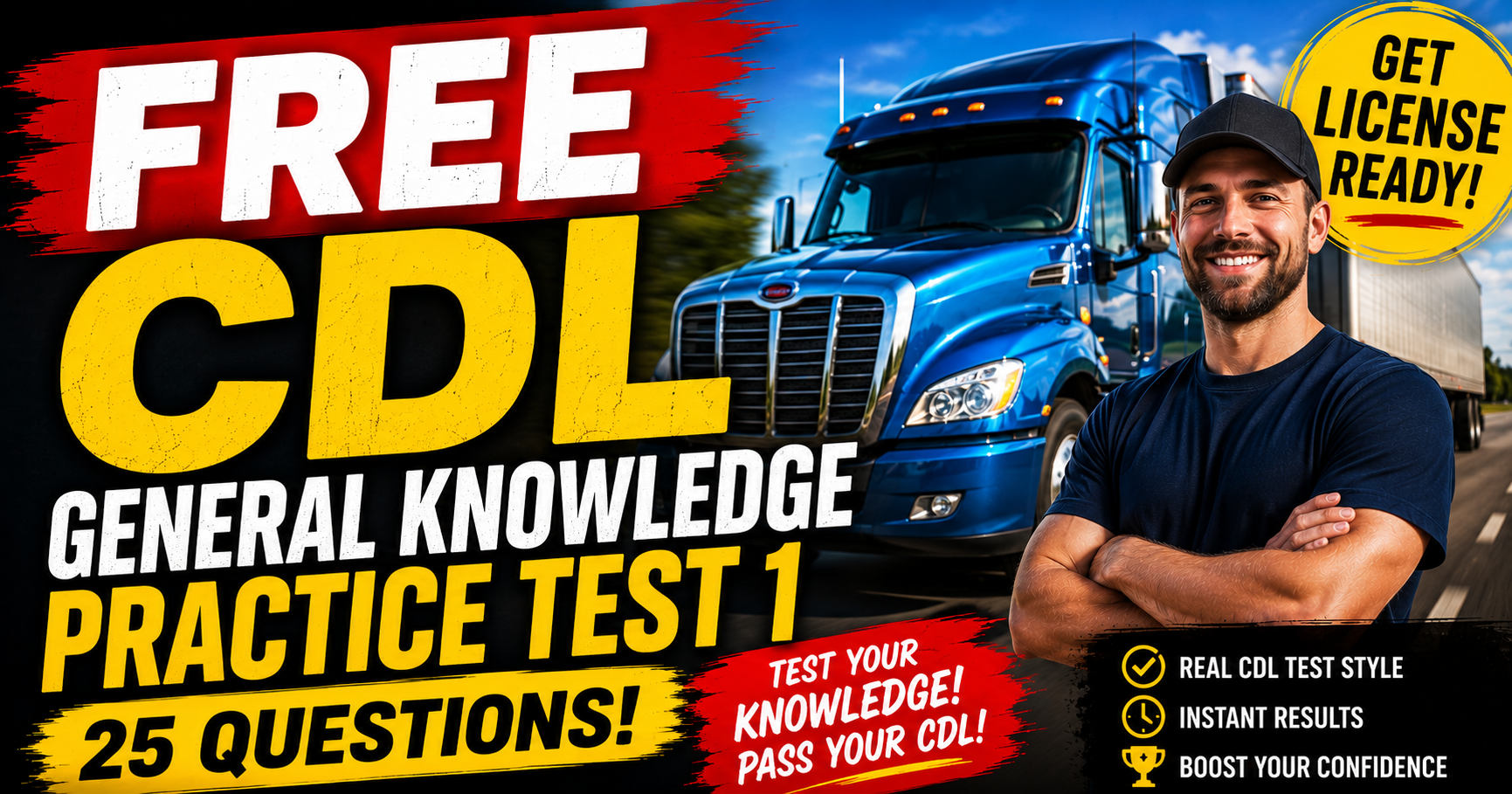
If you’re getting ready to take your Commercial Driver’s License permit exam, you’ve come to the right place. Our Free CDL General Knowledge Practice Test #1 includes 25 multiple-choice questions designed to help you build confidence before test day.
Free CDL General Knowledge Practice Test 1 | TruckingResource.com#tr-cdl-app,#tr-cdl-app *{box-sizing:border-box}#tr-cdl-app{–b:#031D3E;–bd:#031D3E;–ink:#1d2935;–muted:#5d6b78;–line:#d8e2ea;–g:#16713b;–gb:#eaf8ef;–r:#ad251b;–rb:#fff0ee;width:100%;padding:clamp(16px,4vw,48px) 12px;background:#ECF0F3;color:var(–ink);font:16px/1.55 system-ui,-apple-system,”Segoe UI”,Arial,sans-serif}#tr-cdl-app button{font:inherit}.shell{width:min(820px,100%);margin:auto}.hero{padding:clamp(23px,5vw,39px);color:#fff;background:#031D3E;border-radius:20px 20px 0 0;box-shadow:0 14px 35px #173b5425}.kicker{margin:0 0 5px;font-size:.78rem;font-weight:800;letter-spacing:.12em;text-transform:uppercase;opacity:.82}.hero h1{margin:0;color:#fff;font-size:clamp(1.55rem,5vw,2.35rem);line-height:1.15}.hero p:last-child{margin:10px 0 0;color:#eaf5fd}.card{padding:clamp(20px,5vw,40px);background:#fff;border:1px solid var(–line);border-top:0;border-radius:0 0 20px 20px;box-shadow:0 14px 35px #173b5420}.status{display:flex;justify-content:space-between;gap:12px;color:var(–muted);font-weight:750}.score{color:var(–bd)}.progress{height:9px;margin:11px 0 30px;overflow:hidden;border-radius:99px;background:#dce7ee}.bar{height:100%;width:0;background:#031D3E;border-radius:inherit;transition:width .45s}h2{margin:0 0 22px;font-size:clamp(1.2rem,3.5vw,1.55rem);line-height:1.35}.answers{display:grid;gap:12px}.answer{width:100%;min-height:58px;padding:15px 17px;border:2px solid var(–line);border-radius:12px;background:#fff;color:var(–ink);text-align:left;cursor:pointer;transition:.16s}.answer:hover:not(:disabled),.answer:focus-visible{border-color:var(–b);background:#eaf4fb;transform:translateY(-1px)}.answer:focus-visible,.btn:focus-visible{outline:3px solid #f4b72d;outline-offset:3px}.answer:disabled{cursor:default;opacity:1}.answer.good{border-color:var(–g);background:var(–gb);color:#105b2e;font-weight:750}.answer.bad{border-color:var(–r);background:var(–rb);color:#8d1a12;font-weight:750}.feedback{margin-top:20px;padding:18px;border-left:5px solid;border-radius:10px}.feedback.good{border-color:var(–g);background:var(–gb)}.feedback.bad{border-color:var(–r);background:var(–rb)}.feedback .title{display:block;font-size:1.08rem}.feedback.good .title{color:var(–g)}.feedback.bad .title{color:var(–r)}.nav,.actions{display:flex;justify-content:space-between;gap:12px;margin-top:28px}.btn{min-height:48px;padding:12px 20px;border:0;border-radius:10px;background:var(–b);color:#fff;font-weight:800;cursor:pointer}.btn:disabled{background:#e1e7eb;color:#84909a;cursor:not-allowed}.btn.secondary{background:#e5f1f9;color:var(–bd)}.results{text-align:center}.percent{margin:0;color:var(–bd);font-size:clamp(2.7rem,10vw,4.5rem);font-weight:900}.stats{display:grid;grid-template-columns:repeat(3,1fr);gap:12px;margin:25px 0}.stat{padding:15px 8px;border:1px solid var(–line);border-radius:12px}.stat b{display:block;color:var(–bd);font-size:1.35rem}.message{font-weight:700}.actions{justify-content:center;flex-wrap:wrap}.review-list{display:grid;gap:18px;margin-top:20px}.review-item{padding:20px;border:1px solid var(–line);border-radius:14px;background:#f9fbfc}.wrong{color:var(–r)}.right{color:var(–g)}[hidden]{display:none!important}@media(max-width:520px){.nav{flex-direction:column-reverse}.nav .btn{width:100%}}@media(prefers-reduced-motion:reduce){#tr-cdl-app *{transition:none!important}}
TruckingResource.com
CDL General Knowledge Practice Test 1
25 original questions with instant feedback and clear teaching explanations.
(function(){“use strict”;/* QUESTION BANK — replace only this array for future tests. */var Q=[[“Before moving a commercial vehicle, what is the best reason to perform a walk-around inspection?”,”To identify safety problems before they contribute to a breakdown or crash”,[“To warm up the tires before entering traffic”,”To replace the required inspection report”,”To guarantee no mechanical failure can occur”],”A systematic pre-trip inspection can reveal tire damage, leaks, loose cargo, faulty lights, and brake concerns while there is still time to correct them. It reduces risk but cannot guarantee that a future failure is impossible.”],[“A driver doubles speed from 30 mph to 60 mph. What happens to braking distance under similar conditions?”,”It becomes roughly four times as long”,[“It doubles exactly”,”It stays about the same with good brakes”,”It becomes shorter because momentum stabilizes the truck”],”Braking distance rises approximately with the square of speed. Doubling speed can quadruple braking distance, before perception and reaction distance are added.”],[“What following-distance practice provides a useful minimum safety margin in good conditions?”,”Allow one second per 10 feet of vehicle length below 40 mph, plus one second above 40 mph”,[“Stay one car length behind at every speed”,”Follow closely so cars cannot enter the gap”,”Use exactly three seconds regardless of vehicle length”],”Long, heavy vehicles need more stopping room. The one-second-per-10-feet guideline is a minimum in good conditions; rain, darkness, traffic, and poor traction call for more.”],[“Why shift to a lower gear before beginning a long downgrade?”,”To use engine braking and reduce heat buildup in the service brakes”,[“To increase fuel flow and cool the drums”,”To make steering lighter”,”To coast with the clutch depressed”],”Choose a safe gear before descending. Engine braking helps control speed and preserves service-brake capacity; coasting removes that help and is unsafe.”],[“If the vehicle begins to hydroplane, what should the driver do first?”,”Ease off the accelerator and avoid sudden steering or braking”,[“Brake hard to force the tires through the water”,”Turn sharply toward the shoulder”,”Accelerate until steering feels firm”],”Hydroplaning means the tires are riding on water. Smoothly reduce power, hold the intended direction, and avoid abrupt inputs until tire contact returns.”],[“Which tire condition requires prompt attention before driving?”,”A sidewall cut exposing fabric or cord”,[“Matching tread patterns on steering tires”,”Valve caps fitted on the stems”,”Even wear with legal tread depth”],”Exposed cord, bulges, severe cuts, low tread, or improper inflation can lead to sudden tire failure. A steering-tire failure can immediately affect control.”],[“What is the safest response when another driver is tailgating your truck?”,”Increase the space ahead so you can slow gradually if needed”,[“Tap the brakes repeatedly”,”Speed beyond the limit”,”Move onto the shoulder without checking it”],”Do not brake-check or retaliate. More room ahead lets you slow gradually, and the tailgater should be allowed to pass when a safe, legal opportunity exists.”],[“Why is a loaded truck often more rollover-prone than a passenger car?”,”Its higher center of gravity makes it sensitive to speed and sharp steering”,[“Its mirrors pull it outward”,”Its diesel engine creates sideways torque”,”Its air brakes release in curves”],”Weight carried high creates rollover leverage. Excess speed, abrupt steering, and shifting or poorly distributed cargo increase lateral force and rollover risk.”],[“When backing toward a dock with limited visibility, which method is safest?”,”Use a spotter when available and stop if you lose sight of that person”,[“Back quickly to reduce time in danger”,”Rely only on the passenger mirror”,”Honk and assume the path will clear”],”Avoid backing when possible. Otherwise get out and look, use both mirrors, move slowly, agree on signals, and stop immediately if the spotter disappears.”],[“What is brake fade?”,”A loss of braking effectiveness caused by excessive heat”,[“Normal cold-weather brake noise”,”A gradual change in pedal color”,”Extra braking force on a downgrade”],”Repeated or continuous braking can create more heat than the system can shed. Hot friction components lose effectiveness, which is why proper gear selection on grades matters.”],[“Why is a cargo check important shortly after starting a trip?”,”Cargo and securement devices may settle, loosen, or shift once moving”,[“Cargo becomes weightless after the first stop”,”The suspension stops working after 50 miles”,”Only the first check is ever required”],”Vibration, turns, and braking can settle cargo and loosen tie-downs. Recheck early, periodically, and after events that could disturb the load.”],[“Before entering a railroad crossing in a long vehicle, what must the driver confirm?”,”There is room on the far side for the entire vehicle to clear the tracks”,[“The transmission can be shifted on the tracks”,”Traffic behind is close enough to follow”,”Warning lights have been off exactly five seconds”],”Never enter unless the whole vehicle can clear without stopping. Account for congestion and vehicle length, and avoid shifting while crossing.”],[“What is the main purpose of checking mirrors regularly?”,”To track traffic, vehicle position, tires, and cargo around you”,[“To eliminate every blind spot”,”To avoid looking far ahead”,”To enforce laws on following drivers”],”Mirrors update your picture of surrounding traffic and vehicle condition, but they do not remove every blind spot. Scan ahead and around the truck.”],[“Why place warning devices promptly after an emergency roadside stop?”,”To give approaching traffic time and distance to avoid the stopped vehicle”,[“To reserve a lane for repairs”,”To replace four-way flashers”,”To show cargo was inspected”],”A disabled commercial vehicle may be hard to recognize in time. Flashers and correctly placed warning devices provide critical advance notice, especially near curves or hills.”],[“Why should steering inputs be smooth in a heavy vehicle?”,”Abrupt steering can shift weight suddenly and cause a skid or rollover”,[“The wheel may legally turn only one-quarter rotation”,”Smooth steering makes the vehicle shorter”,”Abrupt steering improves wet traction”],”Sudden direction changes rapidly transfer weight and may exceed tire grip. Looking ahead and steering smoothly keeps the vehicle and cargo more stable.”],[“What should a driver do when feeling drowsy behind the wheel?”,”Stop in a safe place and get adequate rest”,[“Open a window and continue for hours”,”Drive faster to arrive sooner”,”Turn up music and skip the next rest stop”],”Fatigue damages attention, judgment, and reaction time and can cause microsleeps. Coffee, cold air, and music do not replace sleep.”],[“Why are roads often especially slick when rain first begins after a dry period?”,”Water mixes with accumulated oil and road residue”,[“Rain permanently raises tire pressure”,”Wet pavement shortens stopping distance”,”Road markings disappear from legal maps”],”Early rain lifts oil, rubber, and dust into a slippery film. Reduce speed, add following distance, and brake and steer gently.”],[“Why avoid driving with one hand resting on the gearshift?”,”It reduces the ability to make quick, controlled steering corrections”,[“It makes the fuel gauge inaccurate”,”It applies the parking brake”,”It dims the headlights”],”Except when operating a necessary control, keep both hands available for steering. Heavy vehicles can require immediate correction in wind, ruts, or emergencies.”],[“If oncoming high beams create glare at night, where should you direct your vision?”,”Toward the right edge of your lane while maintaining awareness ahead”,[“Directly into the headlights”,”Close one eye until they pass”,”Only at the centerline”],”Do not stare into bright lights. Use the right roadway edge as a guide, maintain a broad scan, and slow if needed so you can stop within your sight distance.”],[“What is the safest response to a front-tire blowout?”,”Grip the wheel firmly, avoid braking initially, and slow before moving off-road”,[“Brake as hard as possible immediately”,”Turn sharply toward the shoulder”,”Release the wheel so the tires self-correct”],”A front blowout may pull strongly. Hold direction with both hands, ease off power, avoid immediate hard braking, and leave the roadway only after speed and control stabilize.”],[“What does a high center of gravity do to safe cornering speed?”,”It lowers the speed at which a rollover may occur”,[“It raises safe speed”,”It has no effect on dry roads”,”It matters only when empty”],”High weight creates more overturning leverage. A top-heavy truck may roll at a speed a lower vehicle handles, so slow before curves for the load and conditions.”],[“Why avoid setting the parking brake when brakes are extremely hot or wet brakes may freeze?”,”The brakes may be damaged by heat or freeze in the applied position”,[“It increases engine temperature”,”It drains the fuel tanks”,”It immediately removes tire tread”],”Very hot brakes can be harmed when held tightly, and moisture can freeze an applied brake. Use safe parking procedures and wheel chocks where appropriate.”],[“Which sequence best manages blind spots before a lane change?”,”Check mirrors, signal early, recheck the path, and move gradually when clear”,[“Signal after crossing the lane line”,”Rely on motorists to honk”,”Move quickly so no one can enter the blind spot”],”Large trucks have extensive no-zones. Observe repeatedly, signal early, and move smoothly only when clear; a signal never creates right of way.”],[“Why inspect brake components on every axle?”,”Balanced working brakes help prevent pulling, jackknifing, and excessive stopping distance”,[“Only one steering-axle brake is needed”,”Brake defects improve fuel economy”,”Axle brakes work only while parked”],”A defect at one wheel or axle can unbalance braking and reduce total stopping force. Look for damage, contamination, leaks, and adjustment problems.”],[“When visibility is reduced by fog, which choice is safest?”,”Slow down, use low beams, and be able to stop within the distance you can see”,[“Use high beams because they reach farther”,”Follow taillights closely”,”Turn off all lights”],”Fog shortens sight distance and reflects high beams. Reduce speed, use low beams, add following room, and leave the road safely if visibility becomes too poor.”]],S={q:[],i:0,s:0},$=function(x){return document.getElementById(x)},E={quiz:$(‘quiz’),results:$(‘results’),reviewScreen:$(‘reviewScreen’),qcount:$(‘qcount’),score:$(‘score’),progress:$(‘progress’),bar:$(‘bar’),question:$(‘question’),answers:$(‘answers’),feedback:$(‘feedback’),prev:$(‘prev’),next:$(‘next’),review:$(‘review’),reviewList:$(‘reviewList’)};function sh(a){a=a.slice();for(var i=a.length-1;i;i–){var j=Math.floor(Math.random()*(i+1)),t=a[i];a[i]=a[j];a[j]=t}return a}function esc(s){var d=document.createElement(‘div’);d.textContent=s;return d.innerHTML}function top(){$(‘tr-cdl-app’).scrollIntoView({behavior:’smooth’,block:’start’})}function start(){S.q=sh(Q).map(function(x){return{t:x[0],a:sh([{t:x[1],ok:true}].concat(x[2].map(function(w){return{t:w,ok:false}}))),e:x[3],p:null}});S.i=0;S.s=0;E.quiz.hidden=false;E.results.hidden=true;E.reviewScreen.hidden=true;render();top()}function render(){var q=S.q[S.i],done=q.p!==null,n=S.q.filter(function(x){return x.p!==null}).length;E.qcount.textContent=’Question ‘+(S.i+1)+’ of ‘+S.q.length;E.score.textContent=S.s;E.bar.style.width=n/S.q.length*100+’%’;E.progress.setAttribute(‘aria-valuenow’,n);E.question.textContent=q.t;E.answers.innerHTML=”;q.a.forEach(function(a,i){var b=document.createElement(‘button’);b.type=’button’;b.className=’answer’+(done&&a.ok?’ good’:”)+(done&&i===q.p&&!a.ok?’ bad’:”);b.textContent=a.t;b.disabled=done;b.onclick=function(){pick(i)};E.answers.appendChild(b)});E.prev.disabled=S.i===0;E.next.disabled=!done;E.next.textContent=S.i===S.q.length-1?’View Results’:’Next Question’;if(done)feed(q);else E.feedback.hidden=true}function pick(i){var q=S.q[S.i];if(q.p!==null)return;q.p=i;if(q.a[i].ok)S.s++;render()}function feed(q){var a=q.a[q.p],c=q.a.filter(function(x){return x.ok})[0];E.feedback.className=’feedback ‘+(a.ok?’good’:’bad’);E.feedback.innerHTML=’‘+(a.ok?’ Correct!’:’ Incorrect’)+’‘+(!a.ok?’
Correct answer: ‘+esc(c.t)+’
Why yours is incorrect: It does not correctly apply the CDL safety principles in this scenario.
‘:”)+’
Explanation: ‘+esc(q.e)+’
‘;E.feedback.hidden=false}function finish(){var n=S.q.length,b=n-S.s,p=Math.round(S.s/n*100);E.quiz.hidden=true;E.reviewScreen.hidden=true;E.results.hidden=false;$(‘percent’).textContent=p+’%’;$(‘final’).textContent=S.s+’/’+n;$(‘correct’).textContent=S.s;$(‘incorrect’).textContent=b;$(‘message’).textContent=p>=90?’Outstanding! You\’re well prepared for the CDL permit exam.’:p>=80?’Great job! Review the missed General Knowledge questions.’:p>=70?’Good progress. Keep practicing this section.’:’More General Knowledge review is recommended before testing.’;E.review.disabled=!b;top()}function review(){E.reviewList.innerHTML=”;S.q.filter(function(q){return!q.a[q.p].ok}).forEach(function(q,i){var c=q.a.filter(function(a){return a.ok})[0],d=document.createElement(‘article’);d.className=’review-item’;d.innerHTML=’
Each question includes an explanation after you answer, so you can understand not only which answer is correct, but also why it is correct. This approach helps reinforce important concepts instead of simply memorizing answers.
Whether you’re applying for a Class A, Class B, or Class C CDL, passing the General Knowledge exam is one of the first steps toward earning your commercial driver’s license. The more quality practice tests you complete, the better prepared you’ll be for the real exam.
Continue Practicing CDL Tests
Ready for another challenge? Keep building your knowledge by taking more free CDL practice tests below.
The CDL General Knowledge test is required for nearly every commercial driver’s license applicant in the United States. It covers the basic information every commercial driver should know before operating a commercial motor vehicle. A review of the 25 Common CDL Permit Test Questions Explained (With Correct Answers) can help clarify how these broad subjects appear on the exam.
Topics commonly include:
Safe driving practices
Vehicle inspections
Cargo safety
Braking techniques
Railroad crossings
Emergency procedures
Hazard awareness
Night driving
Following distance
Defensive driving
Every state bases its exam on its CDL manual, although the number of questions and passing score can vary slightly.
How Many Questions Are on This Practice Test?
This practice test contains 25 multiple-choice questions selected to help prepare you for many of the topics found on the real CDL General Knowledge exam.
Unlike simple flashcards, every question includes a detailed explanation so you can understand the reasoning behind the correct answer.
This is an educational practice test created to help reinforce important trucking knowledge. While many questions cover similar topics found on official CDL exams, your actual test may contain different questions or wording depending on your state.
Always study your state’s CDL manual in addition to taking practice tests.
What Score Should You Aim For?
Although many states require a passing score of around 80%, don’t settle for simply passing.
A good goal is consistently scoring 90% or higher on practice tests before scheduling your permit exam. If you’re regularly reaching that level, you’ll likely feel much more confident on test day.
Reading the CDL manual is important, but actively answering questions helps strengthen your memory and improve recall.
Practice tests help you:
Identify weak areas
Improve confidence
Become familiar with question formats
Learn from mistakes
Reinforce safe driving habits
Many successful CDL students combine manual study with repeated practice testing.
What Happens After You Pass?
Once you’ve passed your General Knowledge exam, you may continue working toward other CDL requirements depending on the type of license you’re earning.
Many drivers also complete additional endorsement exams, such as:
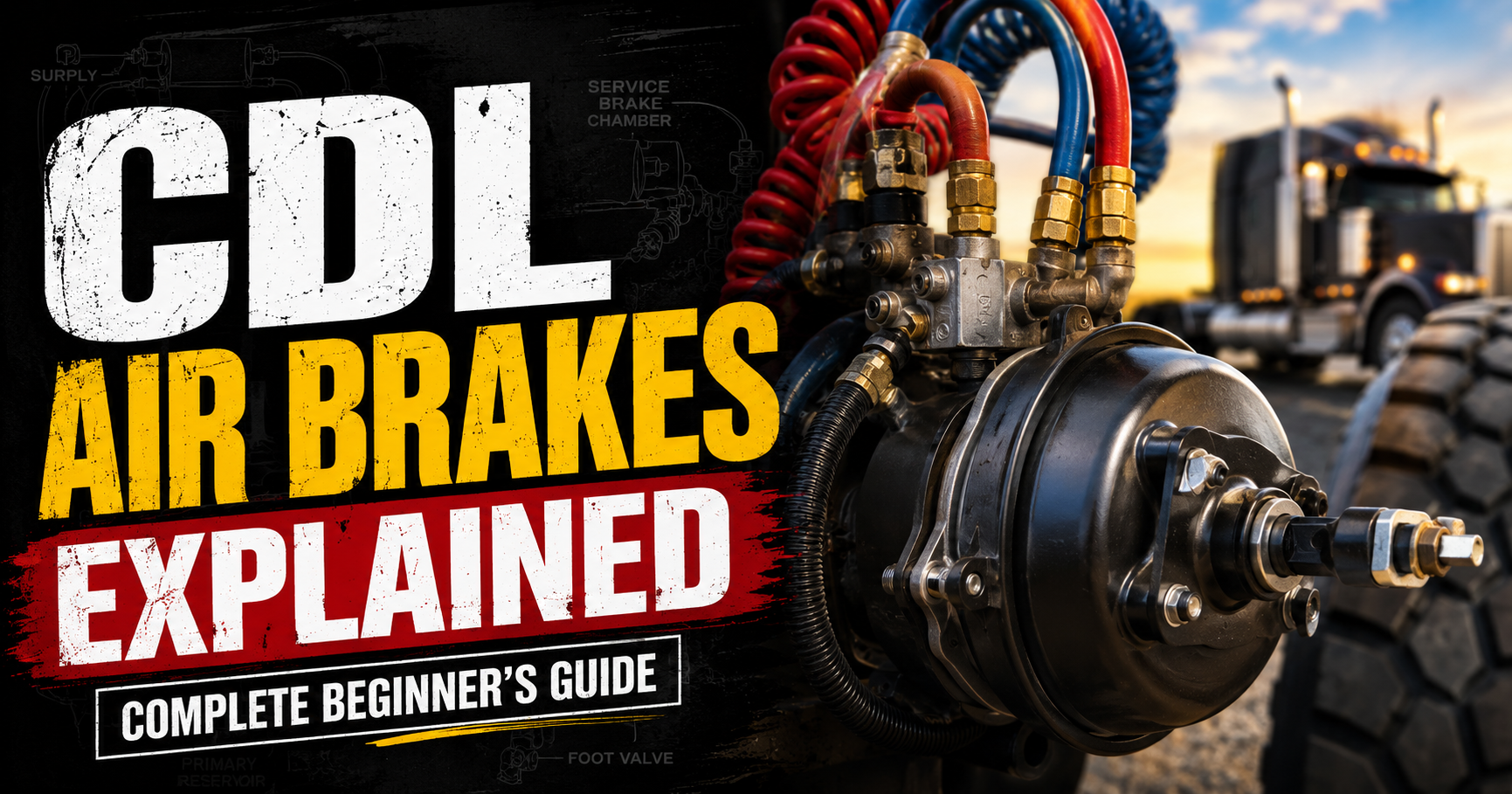
Air Brakes
Combination Vehicles
Tanker
Hazmat
Passenger
School Bus
Doubles and Triples
Each endorsement allows you to operate additional types of commercial vehicles.
One practice test isn’t enough to fully prepare for your CDL permit exam.
The best results come from taking multiple practice tests that cover different question sets and reviewing any questions you miss.
As Trucking Resource continues to grow, we’ll be adding many more free CDL practice tests covering General Knowledge, Air Brakes, Combination Vehicles, Hazmat, Tankers, and other endorsements.
Explore More CDL Resources
If you’re just beginning your CDL journey, you may also find these guides helpful: