
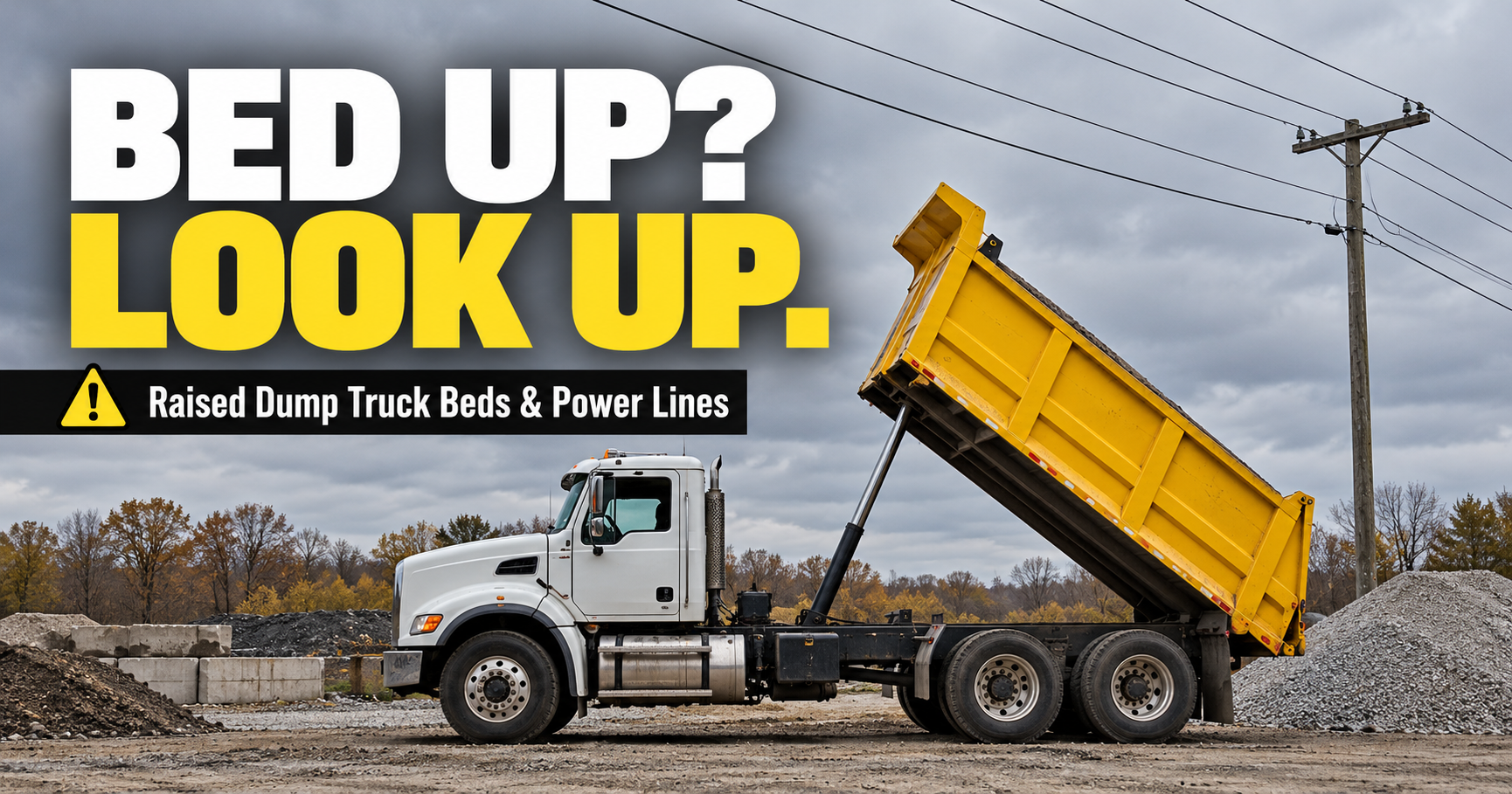
I got lucky during my first full day hauling gravel in a dump truck.
After dumping a load of 1-inch base at a parking-lot job, I started pulling out in an older early-2000s Freightliner dump truck. The bed was coming down, but it wasn’t completely lowered yet.
Then it bumped an overhead telephone line.
Thankfully, the bed was already down far enough that the line basically contacted it and slid past. It didn’t hook the line, rip anything down or cause any damage.
But I immediately understood how much worse it could have been.
And if that had been an energized electrical line rather than a telephone line, I’d be talking about an entirely different level of danger.
After that happened, I started looking much more seriously into the danger of raised dump truck beds around overhead lines.
OSHA specifically identifies raised dump truck beds as equipment that can contact overhead power lines.
So this isn’t some obscure hazard.
It’s something every dump truck driver needs to think about.
Why Are Raised Dump Truck Beds Dangerous Around Power Lines?
The biggest problem is obvious once you see a dump truck with its bed fully raised.
The truck gets much taller.
A dump truck can safely drive underneath an overhead obstacle with its bed completely lowered and then be nowhere close to clearing that same obstacle once the bed is raised.
That’s exactly what makes this different from driving a normal straight truck.
Your clearance changes.
And it can change dramatically.
A driver can enter a jobsite without getting anywhere near an overhead line and then create a completely different clearance situation when it’s time to dump.
OSHA Specifically Warns About Raised Dump Truck Beds
After my incident, I wanted to see whether raised dump beds were actually called out in official electrical-safety guidance.
They are.
OSHA lists raised dump truck beds among examples of equipment capable of contacting overhead power lines.
The agency warns that overhead power lines can create electrocution hazards and says workers should generally maintain at least 10 feet of clearance from overhead power lines.
For voltages above 50 kV, greater clearance can be required.
That’s much more serious than simply worrying about damaging a telephone cable.
If you don’t know what an overhead line is, don’t assume it’s harmless.

My Mistake Happened After I Had Already Dumped
That’s one reason I wanted to write about this.
I wasn’t raising the bed directly underneath a line.
I had already dumped.
The bed was coming back down.
I started pulling out of the small parking-lot jobsite and bumped the line before the bed was completely lowered.
That taught me something extremely simple:
Dumping isn’t finished when the material leaves the truck.
The process isn’t finished until that bed is safely back down.
I knew that before.
Now I really know it.
A Dump Truck With the Bed Down Is a Different Height
Think about how easy it is to get mentally comfortable with the normal height of your truck.
You drive underneath things all day.
You pass utility lines.
You drive underneath tree limbs.
You enter jobsites.
You eventually develop a sense for the truck’s size.
Then you raise a dump body.
Now the truck you’ve been driving all day has a completely different vertical profile.
That’s why I don’t think it’s enough to know your normal vehicle height.
Dump truck drivers need to think about the area the raised bed is going to occupy too.

Look Up Before You Raise the Bed
This is the habit I’m trying to make automatic now.
Before dumping, look up.
Don’t wait until the bed is halfway in the air.
Look at the area before you start.
Are there overhead utility lines?
Tree limbs?
A building overhang?
Signs?
Structures?
Anything else that could be above the path of the bed?
If something looks questionable, don’t assume you’ll clear it just because the cab and lowered bed fit underneath.
The truck’s normal height isn’t the relevant measurement anymore.
Don’t Assume an Overhead Line Is Safe
One of the most important things OSHA says about overhead electrical lines is to assume they’re energized unless you know otherwise.
That’s a good rule for a truck driver.
I’m telling you that the line I bumped was a telephone line because that’s what it was in my situation.
But if I’m pulling onto an unfamiliar construction site and see a wire overhead, I’m not going to base my safety on guessing what type of line it is.
That’s not something I need to gamble on.
If there is any possibility of contacting an overhead electrical line, that’s a hazard that needs to be addressed before raising the dump body.
How Far Should a Dump Truck Stay From Power Lines?
OSHA guidance generally uses 10 feet as the minimum clearance around overhead power lines up to 50 kV for applicable equipment and work situations.
Higher-voltage lines require greater distances.
There are also specific rules for different types of equipment and work.
So I don’t look at 10 feet as permission to get as close as possible.
I look at it as another reason not to put a dump truck underneath or immediately beside an overhead power line in the first place.
If I’m unsure about a situation, I want more room, not less.
What If You Don’t Know the Voltage?
Don’t guess.
OSHA’s guidance is clear that overhead power lines should be treated as energized unless the utility owner or operator confirms otherwise.
A truck driver isn’t supposed to look at a wire from the cab and magically determine its voltage.
That’s another reason jobsite planning matters.
If dump trucks are going to be repeatedly raising their beds in one location, overhead electrical hazards need to be recognized before drivers start cycling through the area.

The Danger Isn’t Only the Dump Bed Touching the Wire
This is the part that makes electrical lines especially scary.
Directly touching an energized line isn’t the only thing you should be thinking about.
Electricity can energize equipment.
OSHA warns that employees standing on the ground shouldn’t contact mechanical equipment that may be within hazardous proximity to energized overhead lines unless the appropriate protections are in place.
That means a dump truck contacting a power line can create danger for people around the truck too.
It’s not just a matter of damaging a wire.
It can become a life-threatening electrical incident.
What Should You Do If a Dump Truck Contacts a Power Line?
This is one situation where I don’t want to give somebody a casual answer based only on personal experience.
OSHA guidance for equipment that may become energized emphasizes an important principle:
The operator may be safer remaining inside the cab rather than immediately climbing out and touching the ground.
Why?
Because if the truck is energized, stepping from the truck onto the ground can put your body between two different electrical potentials.
OSHA also warns other workers not to approach or touch equipment that may be energized.
The correct response depends on the situation, including whether there is an immediate danger such as fire.
The important takeaway for a dump truck driver is that jumping out of an electrically energized truck without understanding the hazard can itself be dangerous.
If electrical contact happens, treat it as an emergency.
My Telephone-Line Incident Was a Warning Without the Consequences
That’s how I look at what happened to me.
I didn’t contact a power line.
I didn’t rip the telephone line down.
I didn’t damage the truck.
Nobody got hurt.
But I still got the lesson.
And I’d rather learn it that way.
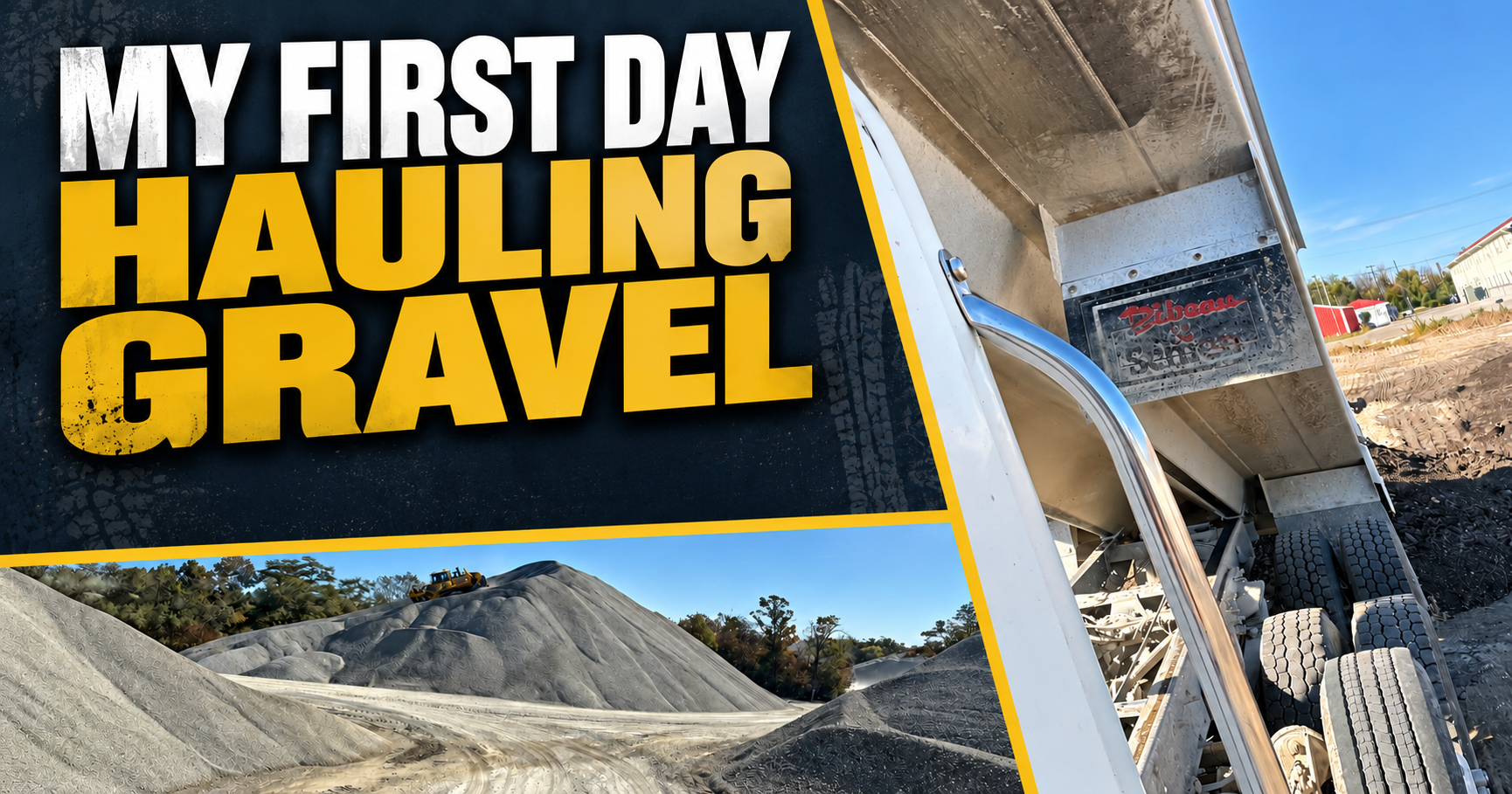
That experience happened during my first day hauling gravel in a dump truck, when I was making roughly 12-mile trips between a rock quarry and a parking lot project.
By the end of the day, I’d hauled about 125 tons of 1-inch base.
There were plenty of things I was proud of learning that day.
The overhead-line incident is the thing I’m probably going to remember longest.
The Quarry Wasn’t the Dangerous Part I Expected
Going into the day, most of my attention was on the quarry.
I’d never hauled rock from one before.
I needed to learn where to go, where the material was, how to position for the loader, when to move, how the scale worked and what to do with the ticket.
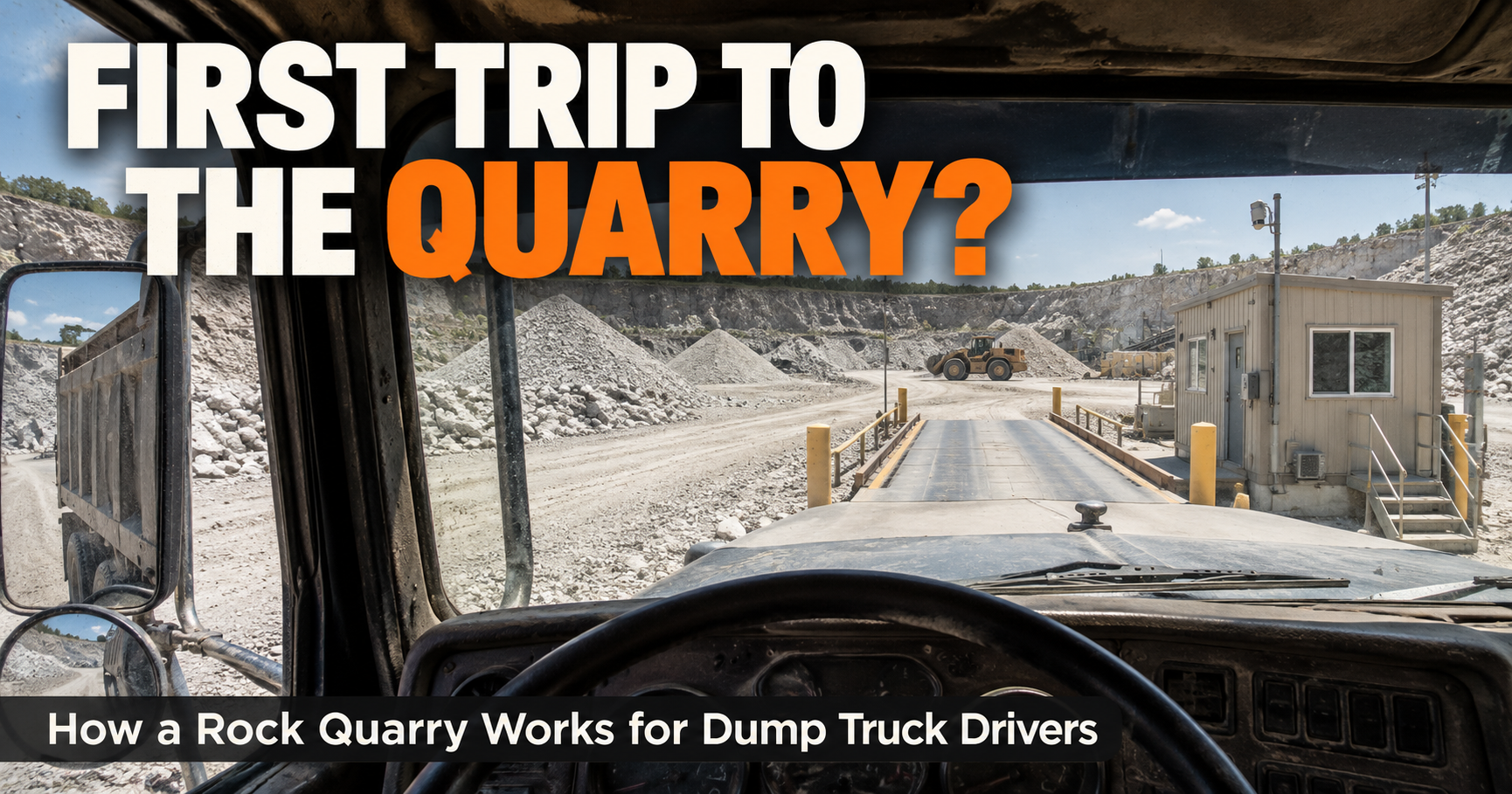
I wrote about that entire process in how a rock quarry works for dump truck drivers.
By afternoon, the quarry part felt easy.
The thing that nearly caused me a problem happened at the other end of the trip.
That’s another lesson I’ve learned since getting my CDL.
The thing you’re nervous about isn’t always the thing that gets you.
Jobsite Awareness Is a Huge Part of Dump Truck Driving
This experience is also why I don’t describe dump truck driving as simply hauling material.
A lot happens after you leave the highway.
You’re maneuvering around loaders.
Backing.
Getting weighed.
Entering construction sites.
Positioning the truck.
Operating the PTO.
Raising the bed.
Watching the ground.
Watching people and equipment.
And watching what’s overhead.
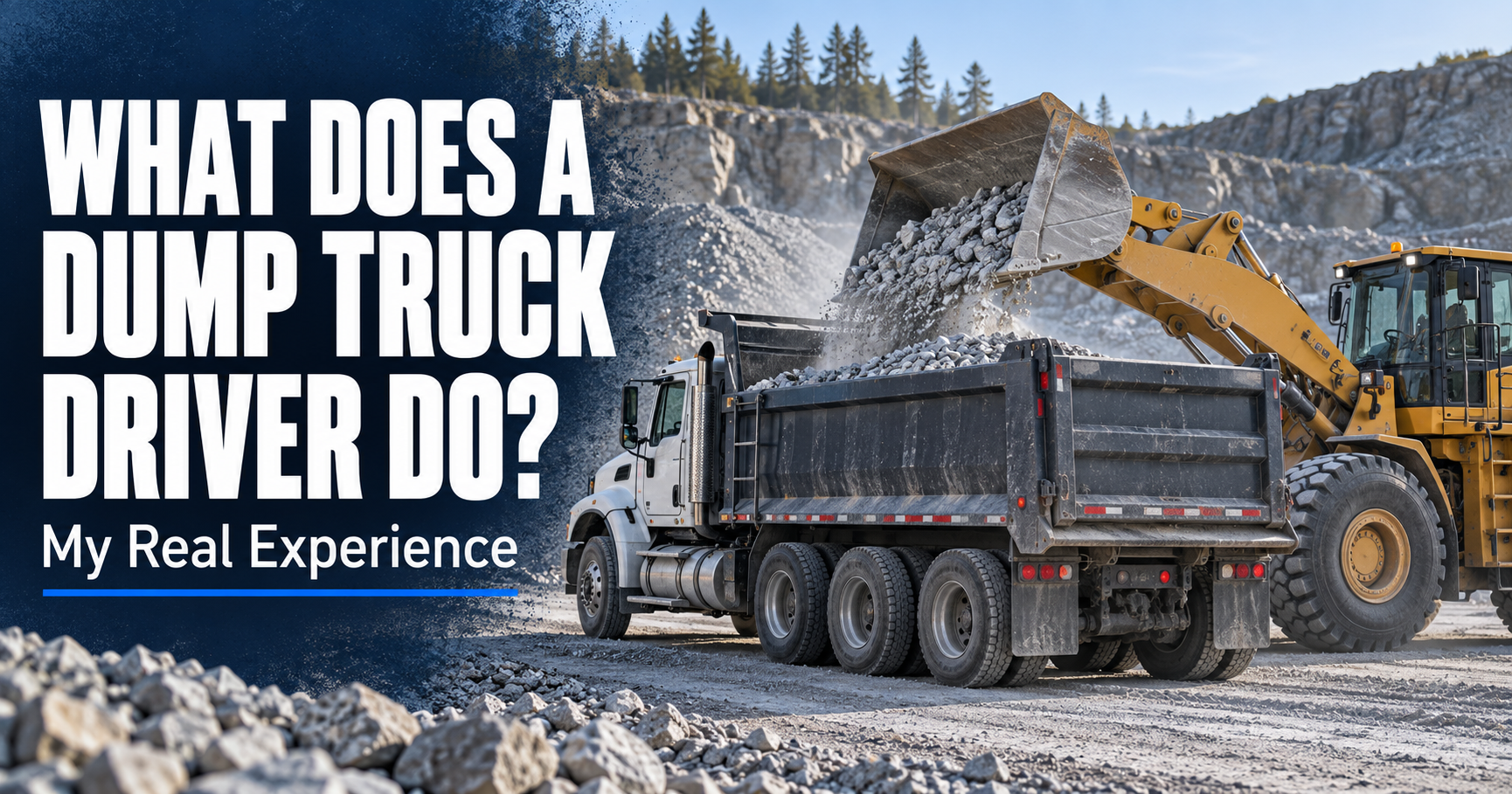
That’s part of what I explained in what a dump truck driver actually does.
Driving is obviously important.
Situational awareness is just as important.
Watch the Ground Before Raising the Bed Too
Overhead clearance isn’t the only thing worth checking before dumping.
Dump trucks can become unstable when the bed is raised.
The load moves upward.
The center of gravity changes.
Material can hang up instead of sliding evenly.
Uneven or soft ground can make the situation worse.
So my mental check around a dumping location is becoming broader.
What’s behind me?
What’s beside me?
What’s underneath me?
What’s above me?
The last one is what I almost missed.
Don’t Start Moving Just Because the Material Is Out
This is probably my biggest personal change after the incident.
When the rock leaves the bed, there’s a natural feeling that you’re finished.
You’re not.
The bed still has to come down.
Now I want to consciously verify that before leaving the dumping area.
I don’t want to rely on thinking:
“It’s almost down.”
That’s exactly where I was.
My bed was down enough that the telephone line didn’t catch it.
But “down enough” isn’t the standard I want to use going forward.
I want the bed down.
A Raised Bed Can Create Problems Beyond Power Lines
Power lines are the most serious overhead hazard because contact can be fatal.
But they’re not the only thing a raised dump body can hit.
There can be communication lines like the one I encountered.
Tree limbs.
Signs.
Building structures.
Doors.
Bridges.
Other overhead equipment.
That’s why the habit of checking upward is useful even when there aren’t electrical lines nearby.
You’re operating a truck whose height changes dramatically during part of its work cycle.
That needs to stay in your head.
The PTO Is Part of Why Drivers Need to Understand Their Truck
A dump truck isn’t just a truck with a big box attached to it.
You’re operating equipment.
The PTO powers the hydraulic system that raises the dump body.
Drivers need to understand how their particular truck’s system operates, including how to engage and disengage it correctly and how the bed controls work.
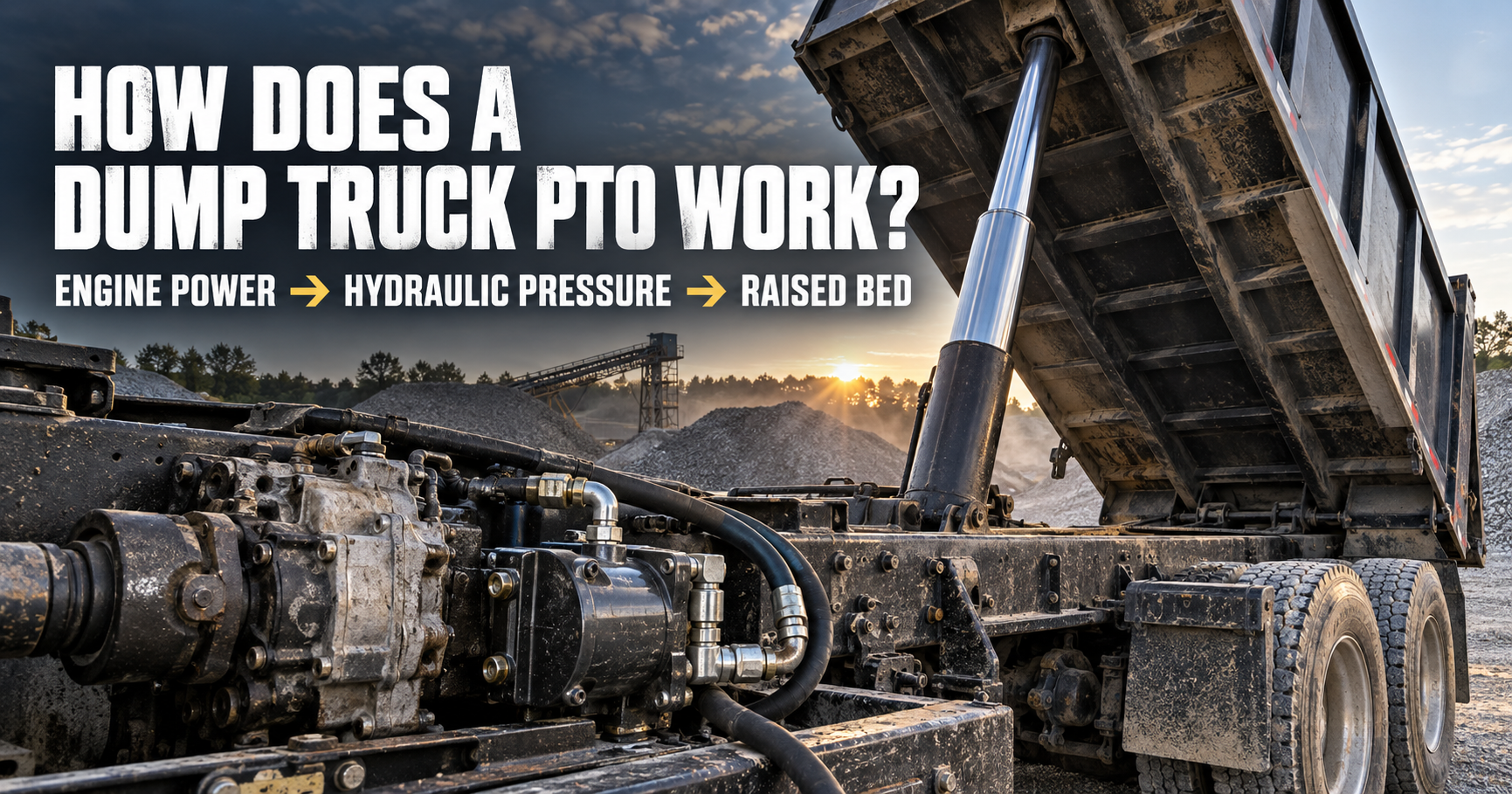
I’ve explained how a dump truck PTO works separately because this was one of the things I had to learn when I started driving dump trucks.
The more I use these trucks, the more I realize that understanding the equipment is every bit as important as understanding the road.
Heavy Loads Make Good Habits Even More Important
On that quarry job, I was hauling 1-inch base.
Rock is heavy.
I ended up moving around 250,000 pounds over the course of the day.
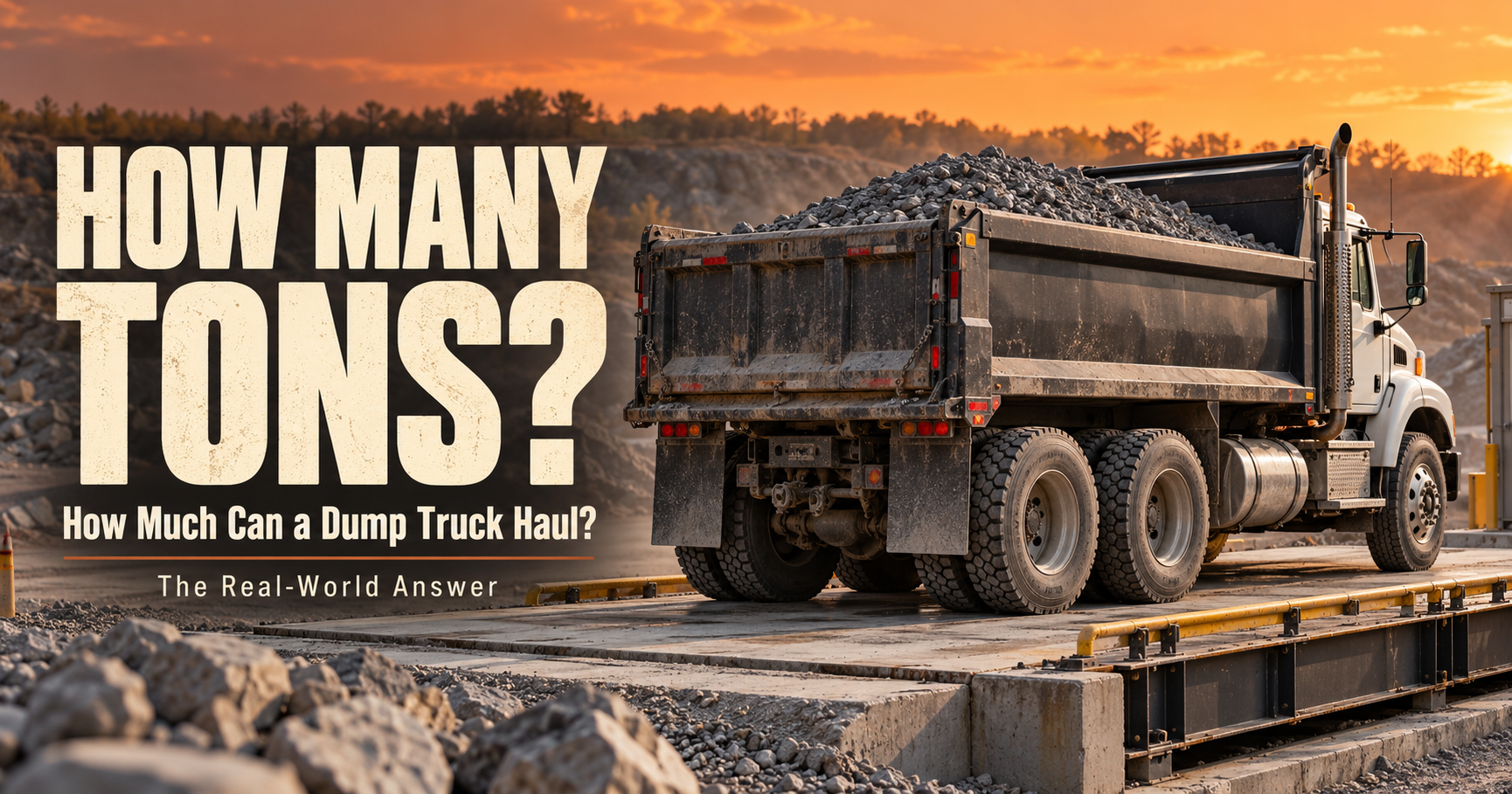
I explained in how many tons a dump truck can haul why there’s no universal payload for every truck.
But regardless of whether you’ve got 10 tons, 15 tons, 20 tons or some other legal payload behind you, you’re dealing with a serious piece of equipment.
That deserves serious habits.
CDL School Can’t Recreate Every Mistake You’re Going to Make
I don’t mean that as an excuse for being careless.
I mean there are situations you simply won’t encounter until you’re actually working.
I learned pre-trip inspection.
I learned backing.
I learned vehicle control.
I learned the things I needed to earn my CDL.
But CDL school couldn’t possibly recreate every farm, quarry, construction site, overhead line, grain bin and tight entrance I’d eventually encounter.
Real trucking keeps filling in those gaps.
Sometimes you learn because somebody teaches you.
Sometimes you learn because you watch another driver.
And occasionally you learn because something happens that makes you think:
I’m not doing that again.
Bumping that telephone line was one of those moments for me.
My Rule Now Is Pretty Simple
Before I raise a dump bed, I want to know what’s above me.
Before I move away, I want to know the bed is down.
Those two habits are incredibly simple.
They’re also the kind of habits that can prevent a bad day from becoming a catastrophic one.
I’m glad my mistake ended with nothing more than a bumped telephone line and a lesson.
Another driver might not get that lucky.
About the Author: Dax is a Class A CDL driver sharing what he’s learning through real-world trucking, including driving semis and dump trucks, hauling grain and quarry aggregate, and working around farms, quarries and construction sites. Through Trucking Resource, he shares firsthand lessons, including the mistakes, surprises and situations that CDL school can’t completely recreate for a new driver.