When I started hauling grain during harvest, I figured a T-shirt, jeans, and work boots were all I’d need.
Technically, that’s enough to get the job done.
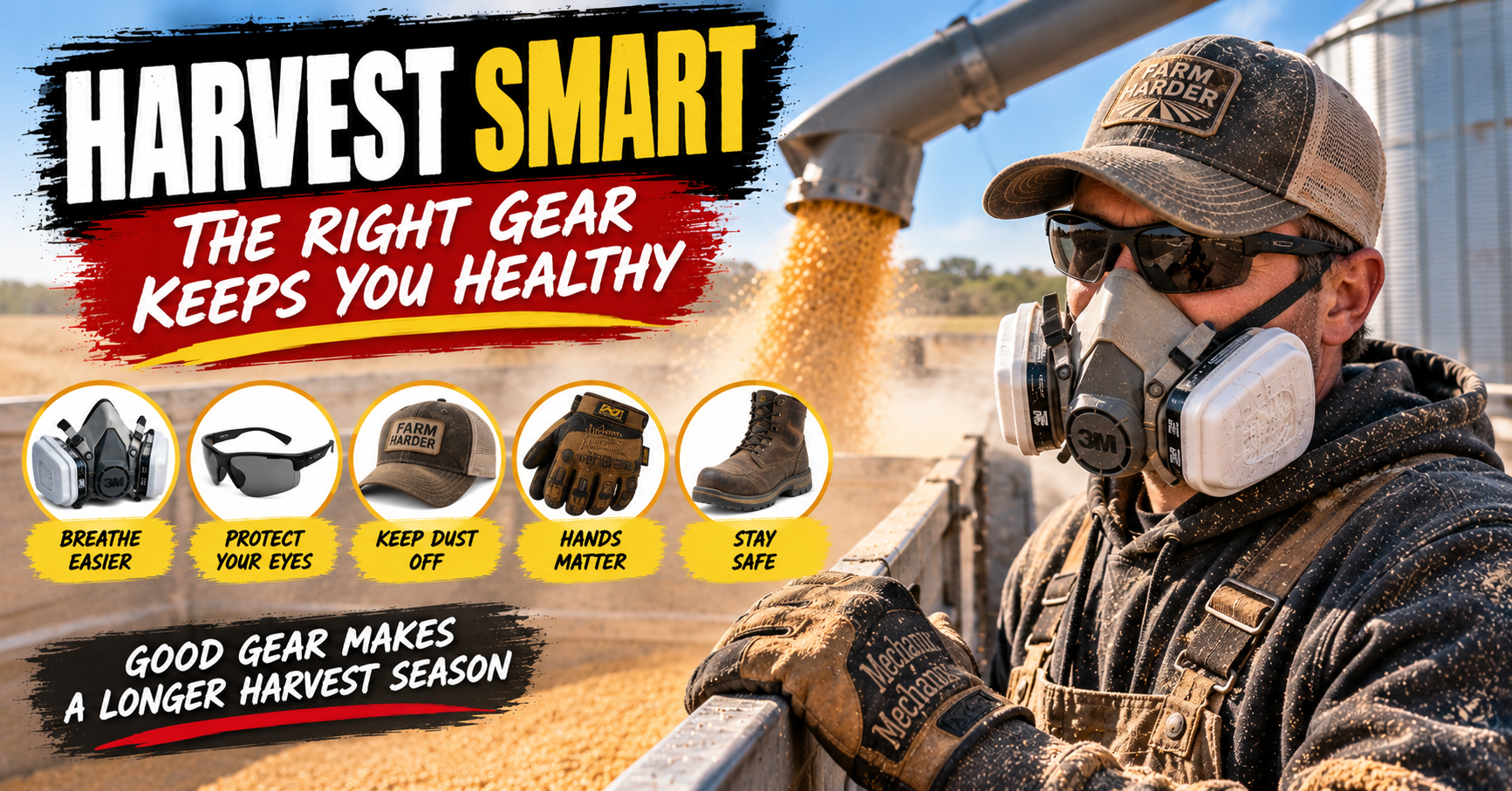
But after standing beside hopper-bottom trailers while they unloaded into grain bins, I quickly realized there are a few pieces of gear that make the job safer and a lot more comfortable.
Between the grain dust, hot sun, noisy equipment, and long days outside, harvest exposes you to much more than simply driving a truck. Those conditions are especially relevant during long harvest unloading waits, when drivers may spend extended periods beside the unloading area.
After a few weeks on the job, these are the items I’d consider worth having with me every day. Readers building their own work kit can compare more options in our trucking gear reviews.
A Good Respirator Is My Number One Recommendation
If I could only recommend one piece of safety equipment, this would be it.
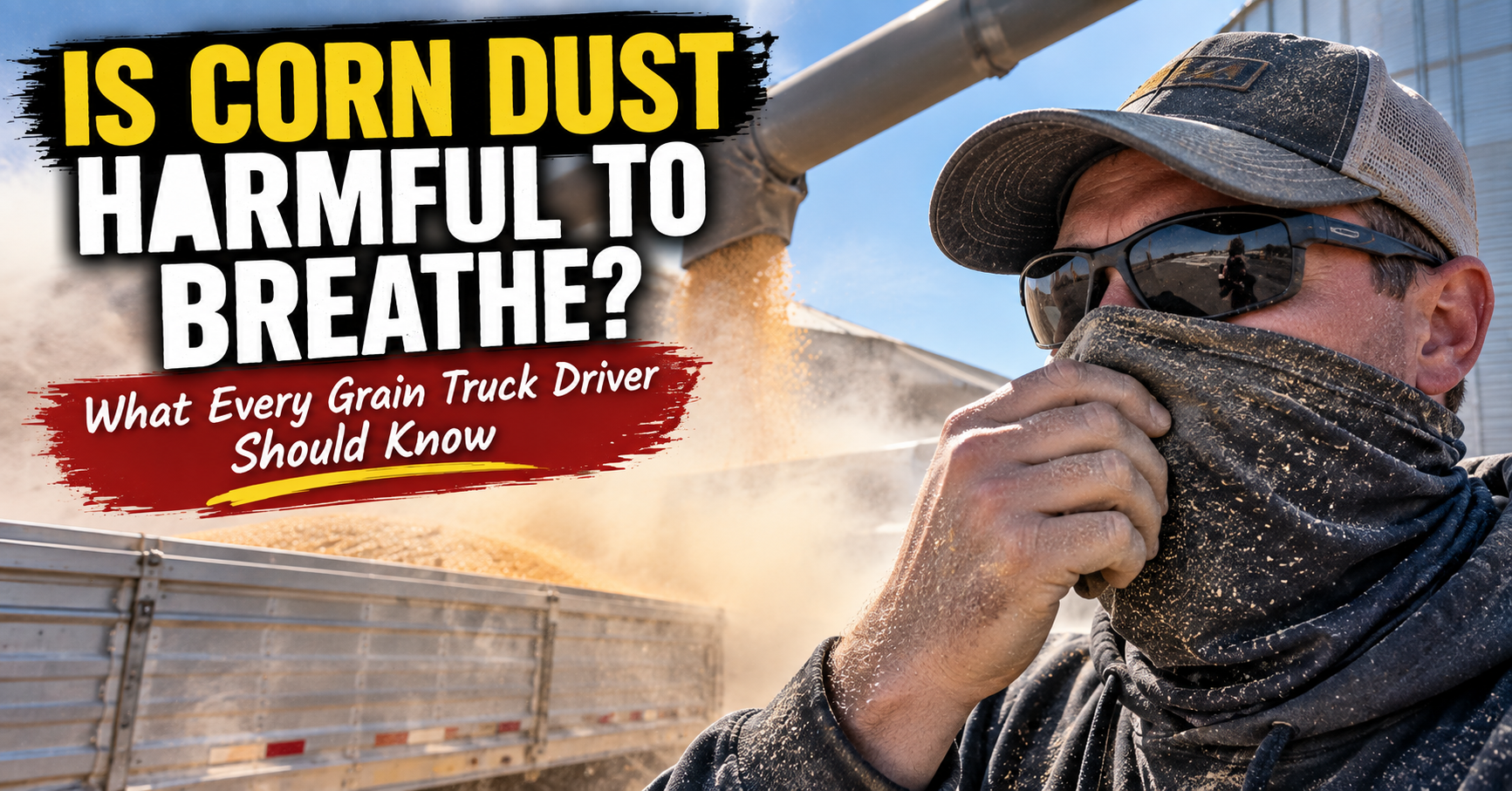
Standing beside a trailer while thousands of pounds of corn pour into a receiving pit creates an incredible amount of airborne dust.
Some days that dust hangs in the air until the trailer is completely empty.
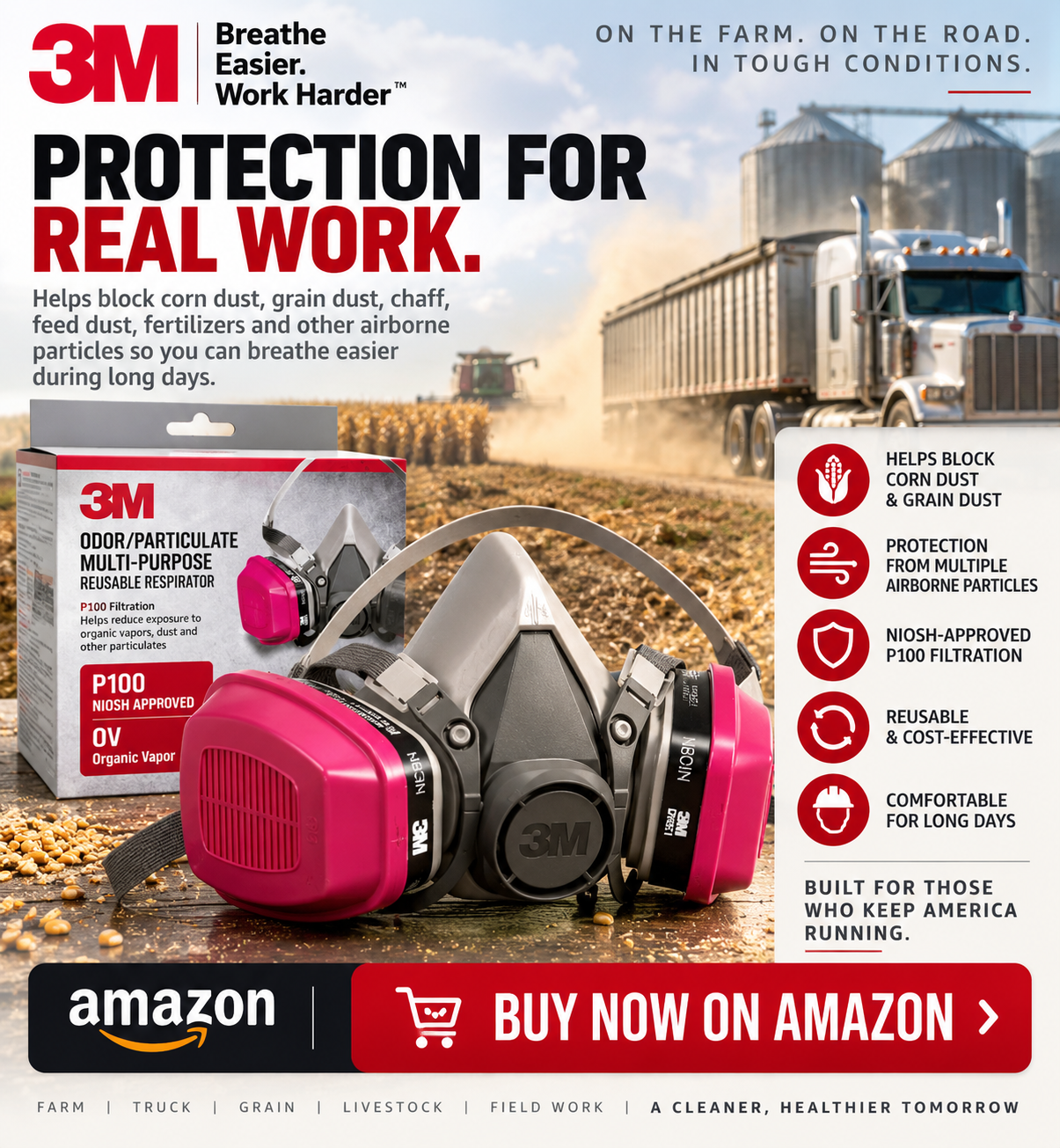
I’ve been using the 3M P100/OV Odor & Particulate Reusable Respirator because it seals much better than a basic paper dust mask and uses P100 particulate filters that are designed to capture at least 99.97% of airborne particles when properly fitted.
Since I started wearing it, I don’t finish unloading with a dry throat or feel like I’ve been breathing dust the entire time.
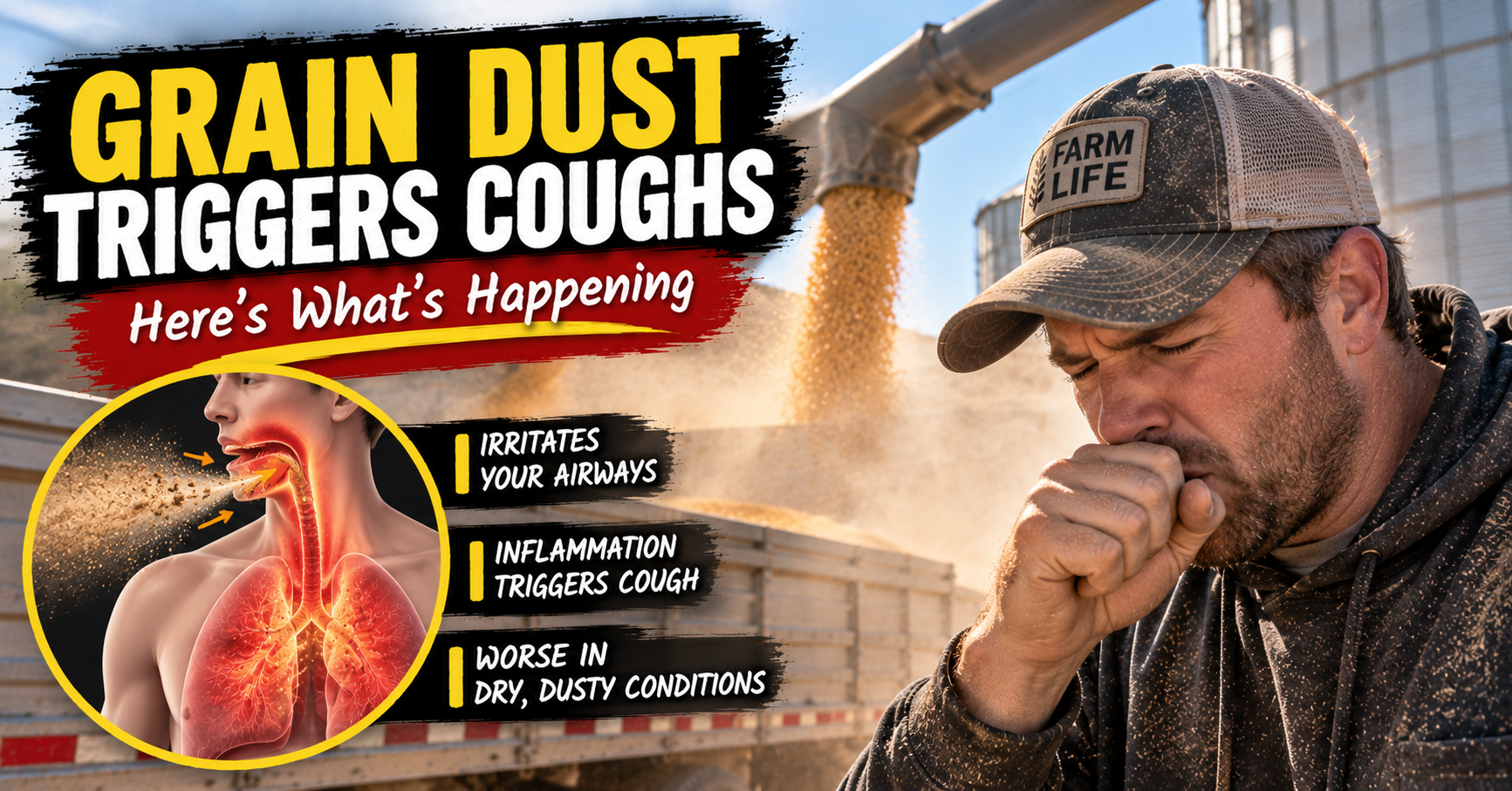
University of Missouri Extension recommends wearing a properly fitted respirator when combining, loading, unloading, drying, or otherwise working around grain dust because repeated exposure can contribute to respiratory problems.
Safety Glasses Make a Bigger Difference Than I Expected
One thing I wasn’t expecting was how often grain dust gets blown directly into your eyes.
Even on days without much wind, dust can swirl around the trailer while it’s unloading.
By the end of the day my eyes sometimes felt gritty and irritated.
A pair of wraparound safety glasses helps keep much of that dust out while still giving you a clear view of the trailer and unloading area.
They’re inexpensive, comfortable, and easy to keep in the truck.
Eye irritation is one of the common effects of grain dust exposure, especially during dusty handling operations.
Hearing Protection Is Worth Keeping Nearby
Most people think about grain dust.
Not as many think about noise.
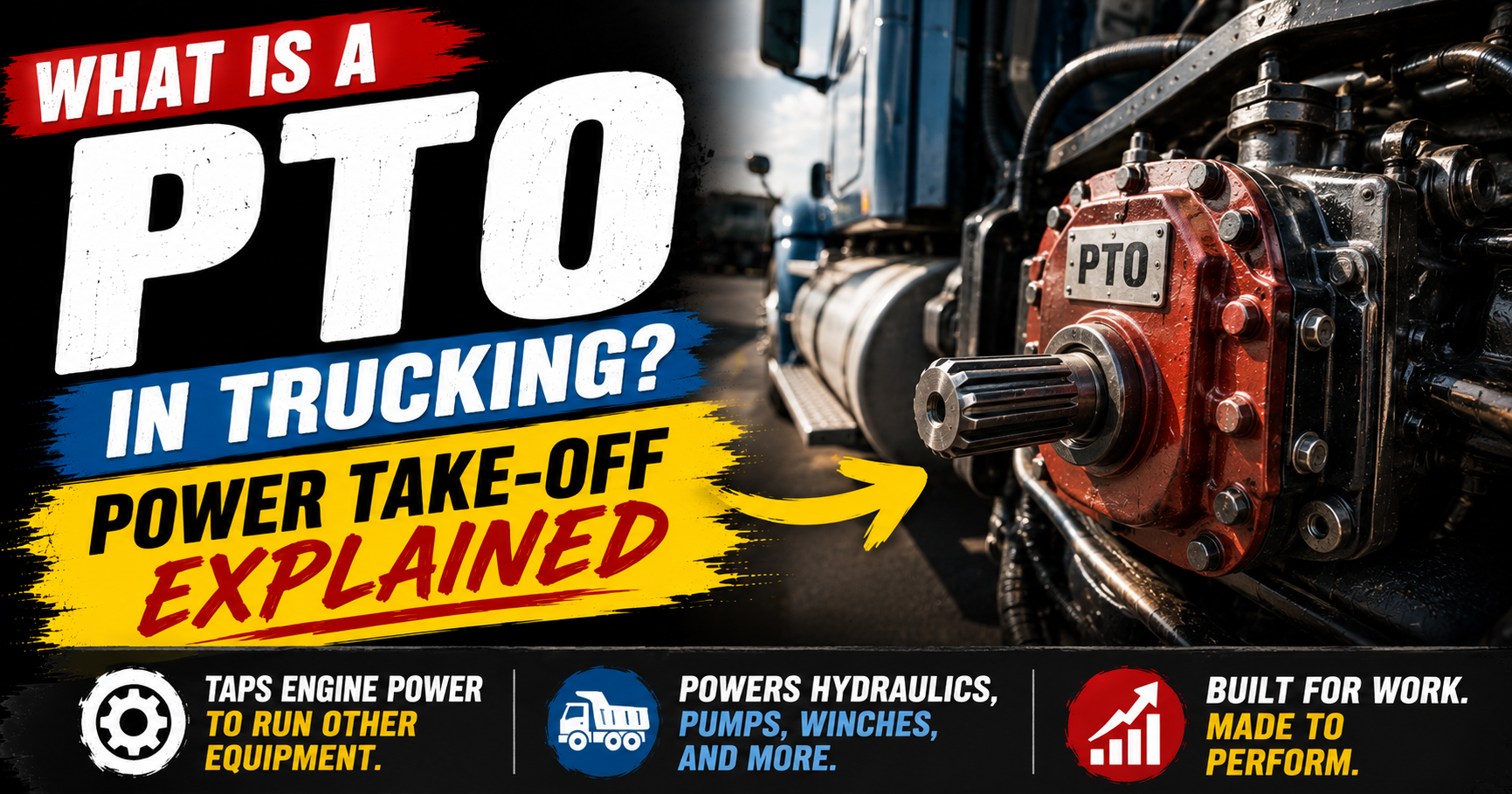
Between diesel engines, PTO equipment, augers, grain dryers, and other machinery, harvest can be surprisingly loud depending on where you’re unloading.
If you’re going to be around loud equipment for extended periods, keeping a pair of foam earplugs or earmuffs in the truck is a smart idea.
You may not need them at every stop, but they’re nice to have when the equipment is especially noisy.
Dress for the Sun, Not Just the Job
Harvest usually means spending a lot of time outside.
Even if most of your day is driving, unloading often has you standing in direct sunlight with very little shade.
I’ve found lightweight long-sleeve performance shirts are actually cooler than heavy cotton shirts because they block the sun while still breathing well.
A wide-brim hat or a cap with a neck flap can also help keep the sun off your face and neck during those long unloading stops.
Staying covered usually beats dealing with a sunburn after several consecutive harvest days.
Comfortable Boots Matter More Than Fancy Boots
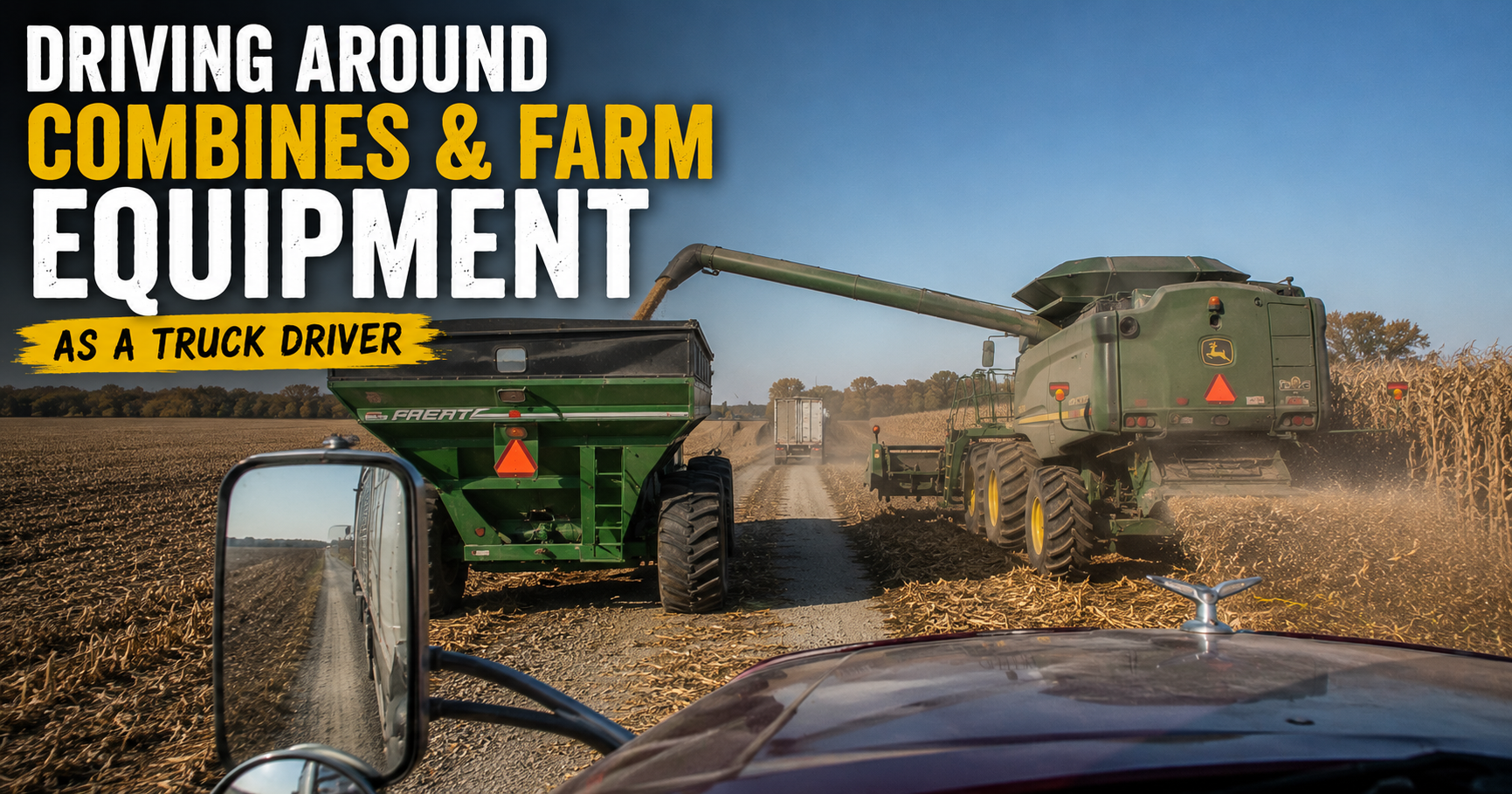
During harvest you’re climbing in and out of the truck, walking on gravel, dirt, uneven ground, and sometimes muddy areas around grain bins.
You don’t necessarily need the most expensive boots on the market.
You need boots that:
- Provide good traction.
- Support your ankles.
- Stay comfortable after climbing in and out of the truck all day.
- Handle mud, gravel, and dusty conditions.
After enough trips, your feet will let you know if you bought the wrong pair.
Keep Drinking Water Even If You Don’t Feel Thirsty
One thing I underestimated was how much water I’d lose simply standing outside while unloading.
The combination of heat, direct sunlight, dust, and physical activity can sneak up on you.
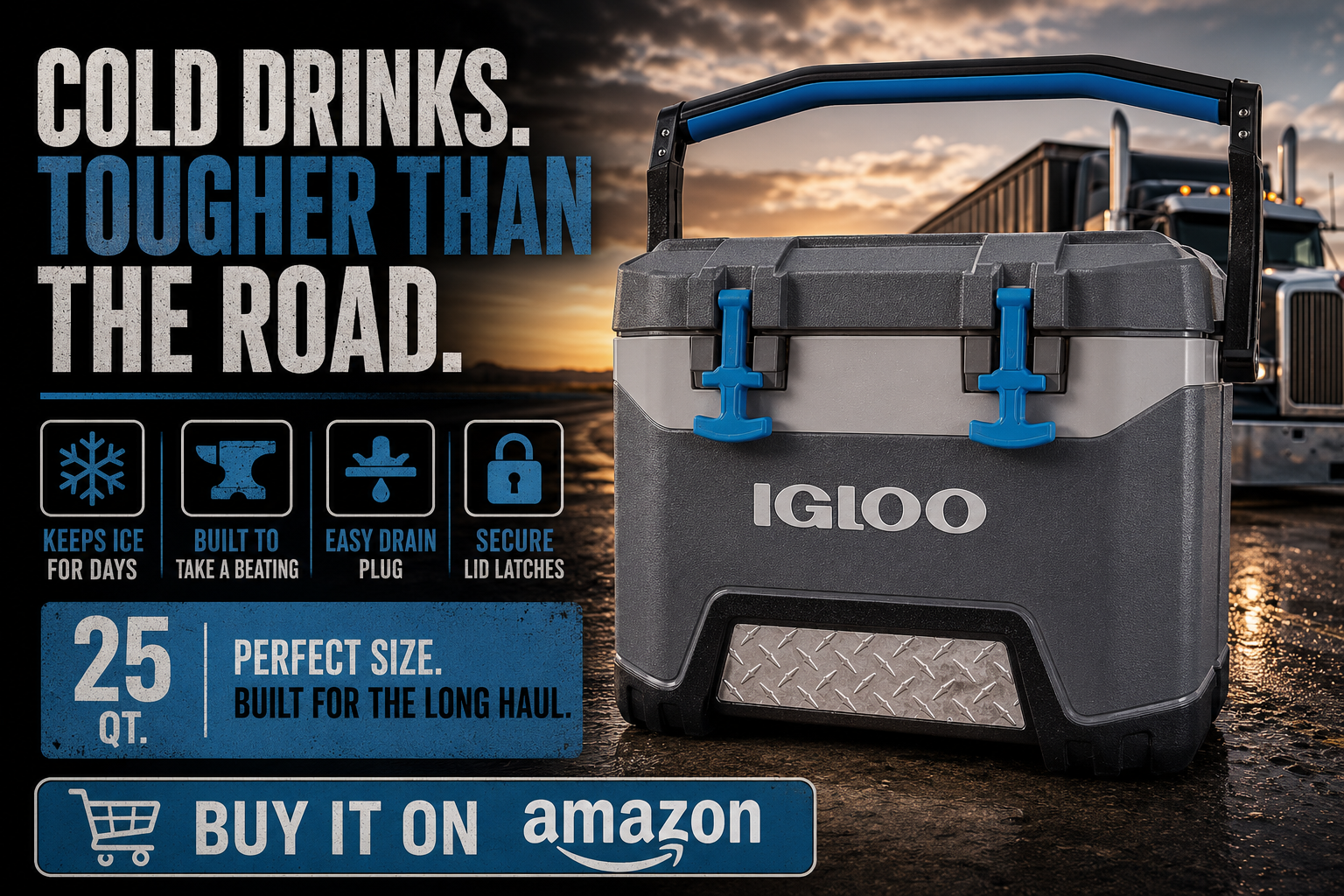
I try to keep a cooler with cold water in the truck so I’m not relying on finding drinks throughout the day. An insulated harvest cooler can help keep drinking water available during long unloading stops.
Even mild dehydration can leave you feeling sluggish before you realize what’s happening.

Keep a Small Harvest Kit in Your Truck
After a few weeks of hauling grain, I found it easier to keep everything together instead of searching through the cab every day.
My harvest kit includes:
- Respirator.
- Extra filters.
- Safety glasses.
- Foam earplugs.
- Work gloves.
- Sunscreen.
- Lip balm.
- Bottled water.
- Hand wipes.
It doesn’t take up much room, but having everything in one place means I’m much more likely to actually use it.
Frequently Asked Questions
Do I really need a respirator while unloading grain?
If you’re standing in heavy grain dust day after day, I think it’s one of the best investments you can make. Health agencies recommend appropriate respiratory protection during dusty grain handling tasks when exposure can’t otherwise be controlled.
Why should I wear safety glasses?
Grain dust commonly causes eye irritation, especially when unloading on windy days or around receiving pits. Wraparound safety glasses help reduce the amount of dust reaching your eyes.
Are earplugs necessary during harvest?
Not always, but they’re a good idea whenever you’re working around loud augers, grain dryers, or other equipment for extended periods.
What clothes are best for harvest trucking?
Lightweight, breathable clothing that covers your skin from the sun tends to be more comfortable than heavy clothing while still helping protect against UV exposure and dust.
Author: Daxon Weaver
Daxon Weaver is the founder of TruckingResource.com and earned his Class A CDL in 2026. He currently drives a grain truck during harvest in southeast Missouri and shares practical, first-hand advice to help new truck drivers learn the job safely and confidently.