
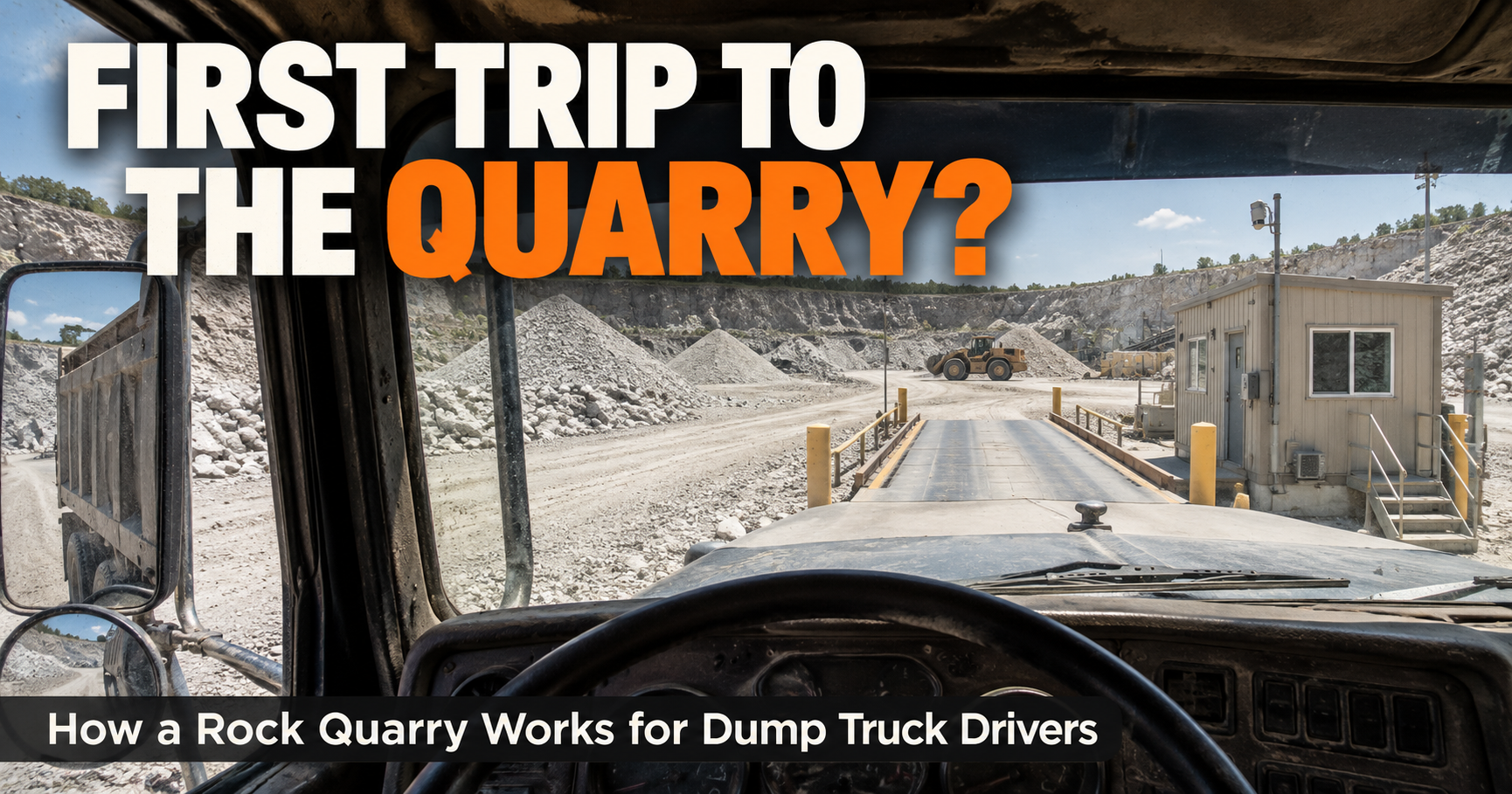
The first time I drove a dump truck into a rock quarry, I didn’t really know what the process was going to look like.
I knew what I was there to do.
Get loaded with 1-inch base and haul it about 12 miles to a parking lot job.
But knowing that doesn’t answer all the little questions that start going through your head when you’re the one behind the wheel.
Where exactly do I go?
Do I stop at the scale first?
How does the loader operator know what I need?
How do I know when he’s finished loading me?
Where do I go after that?
Do I get out at the scale?
What paperwork am I supposed to get?
After spending an 11-hour day running back and forth between the quarry and the jobsite in an older early-2000s Freightliner dump truck, the process became pretty routine.
At the quarry I hauled from, I would get to the correct material, position the truck for the loader, get loaded, wait for the loader operator to honk his horn, pull around onto the scale, pull forward when instructed, sign the load ticket, take my receipt and head toward the jobsite.
Then I’d come back and do it all over again.
Other quarries can absolutely have different procedures, but if you’re a newer dump truck driver wondering what happens when you show up at a rock quarry, here’s what my first experience was actually like.
How Does a Rock Quarry Work for a Dump Truck Driver?
From the driver’s perspective, a rock quarry is essentially a place where you’re picking up a specific aggregate product that needs to be transported somewhere else.
The quarry itself does far more than load trucks.
Rock has to be extracted, crushed, screened and processed into different aggregate products before those materials can be stockpiled and sold.
But as the outside dump truck driver coming in for material, you’re interacting mostly with the loadout side of the operation.
You need the correct material.
You need to get loaded.
You need an accurate weight.
You need the proper ticket.
Then you need to safely get out of the quarry and deliver the material.
That sounds simple after you’ve done it.
The first trip feels different.
I Was Picking Up 1-Inch Base
The first thing I needed to know was what material we were hauling.
In my case, it was 1-inch base.
The quarry isn’t necessarily going to have one giant pile simply labeled “rock.”
Different materials are produced for different uses.
The 1-inch base I was hauling was going to a parking lot that was being prepared for asphalt.
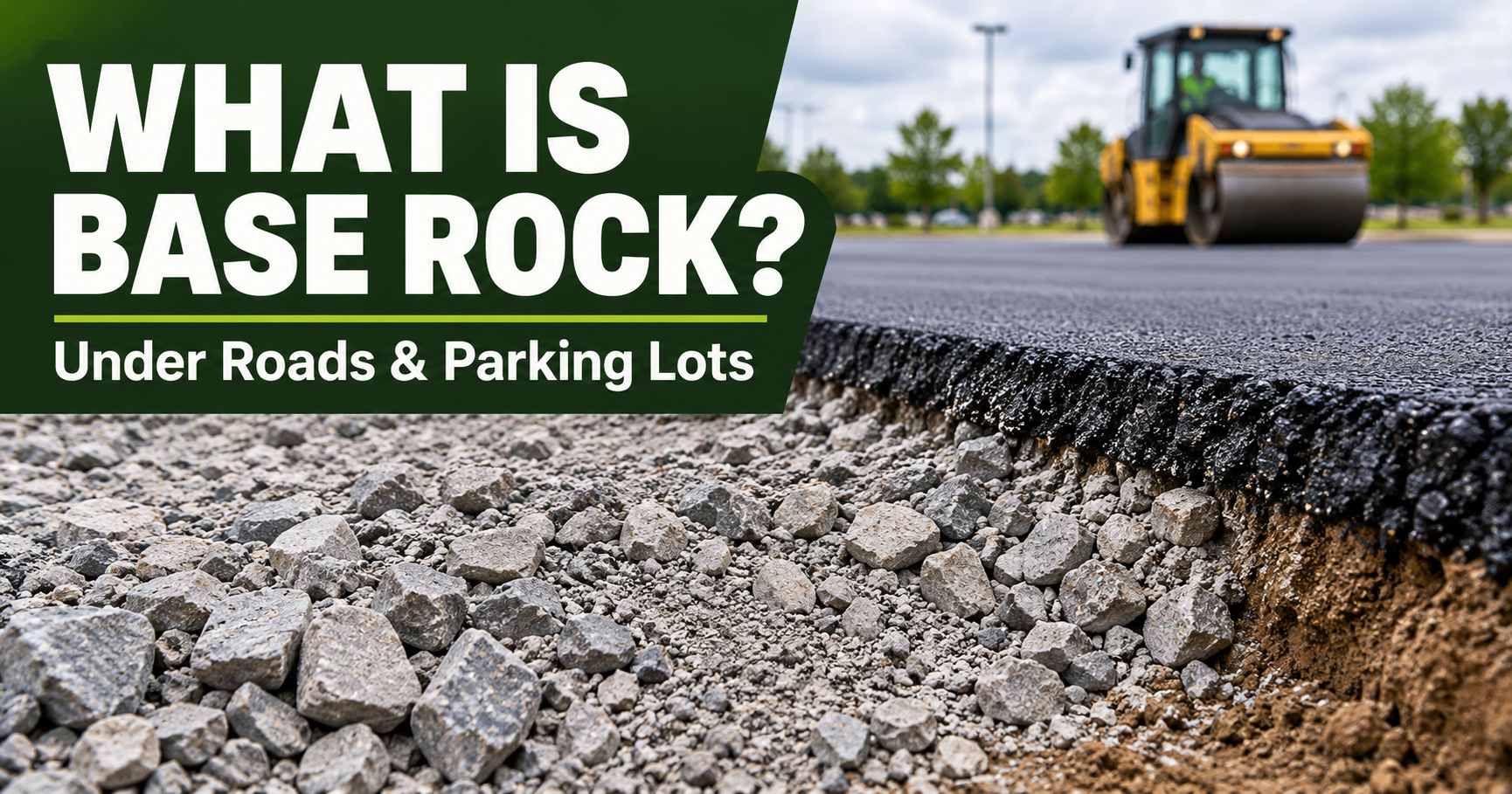
After hauling it, I dug deeper into what base rock is and why it’s used under roads and parking lots.
That helped me understand why the material wasn’t just a bunch of identical 1-inch stones.
Aggregate base contains a controlled range of particle sizes that can be placed and compacted into a strong foundation.
So as a driver, knowing what you’re supposed to pick up matters.
Getting loaded with the wrong pile of rock would be a pretty bad way to start the day.

You Need to Know Where to Go Inside the Quarry
This sounds obvious, but a quarry can be a big place when you’ve never been there.
You’re surrounded by piles of material and heavy equipment.
There may be loaders moving around.
Other trucks may be coming and going.
The quarry may have designated traffic patterns.
And depending on the operation, different materials may be loaded in completely different areas.
I wasn’t there to explore the quarry.
I needed to get the Freightliner where it was supposed to be without getting in everybody else’s way.
That’s something I think new drivers underestimate about trucking in general.
You can know how to drive a truck perfectly well and still pull into a new facility thinking:
Okay, where in the world do they want me?
The Quarry Loader Loaded My Dump Truck
Once I was positioned near the 1-inch base, the loader operator handled the actual loading.
And the loader working there was massive.
I was sitting in a full-size Freightliner dump truck, but quarry equipment can still make a highway truck feel pretty small.
The operator would drive into the stockpile, fill the loader bucket and bring the material over to my truck.
Then the rock would go into the dump body behind me.
The first time you experience that, there’s no question about when the material hits the bed.
You can feel it.
The driver isn’t necessarily loading anything himself.
My responsibility was getting the truck into the right position and letting the loader operator do his job.
How Do You Know When the Quarry Loader Is Finished?
This was one of those tiny details I would have loved to know before going there.
At this quarry, the loader operator honked his horn when he was finished loading me.
That was my signal.
Until I heard the horn, I stayed put.
Once he honked, I knew the load was finished and I could pull away.
It’s an incredibly simple system.
But on your first trip, you’re waiting for some indication that you’re supposed to move.
After several loads, the horn became automatic in my head.
Rock hits the bed.
More rock.
Wait.
HONK.
Time to go.
Other quarries may use different procedures, lights, radios, signs or loading systems, so I wouldn’t assume every facility works exactly this way.
The important part is understanding the signals used at the quarry you’re visiting.
Then I Drove to the Quarry Scale
Getting loaded wasn’t the end of the quarry process.
Next came the scale.
I’d pull the loaded Freightliner around and get onto the quarry’s truck scale.
This is where the operation can determine the loaded truck’s weight and the amount of material associated with the load.
Commercial aggregate operations rely heavily on weighing because rock is commonly sold and tracked by weight.
Looking into the dump body and saying, “Yeah, that looks like about 18 tons,” isn’t exactly a precision measurement.
The scale gives you an actual weight.
Why Does a Quarry Weigh Dump Trucks?
The quarry needs to know how much material is leaving.
That’s important for billing, inventory, load documentation and weight management.
A truck’s gross weight includes more than the rock.
The truck itself weighs a lot.
That’s why concepts such as tare weight, gross weight and net weight matter.
Tare is essentially the empty vehicle weight.
Gross is the loaded vehicle weight.
Net is the material being transported.
For a simple example, imagine a truck weighs 30,000 pounds empty and 60,000 pounds loaded.
The material would account for:
60,000 – 30,000 = 30,000 pounds
Since a U.S. ton is 2,000 pounds:
30,000 ÷ 2,000 = 15 tons
That’s the basic idea behind determining how much aggregate is on the truck.
You Can’t Tell Dump Truck Payload Just by Looking at the Bed
This became much clearer after actually hauling aggregate.
A dump body has a physical volume.
But physical space and legal payload aren’t the same thing.
Gravel and crushed rock are heavy.
A truck can potentially reach a weight limitation before somebody fills the dump body all the way to the top.
That’s why I don’t like articles that simply claim every dump truck carries one specific number.
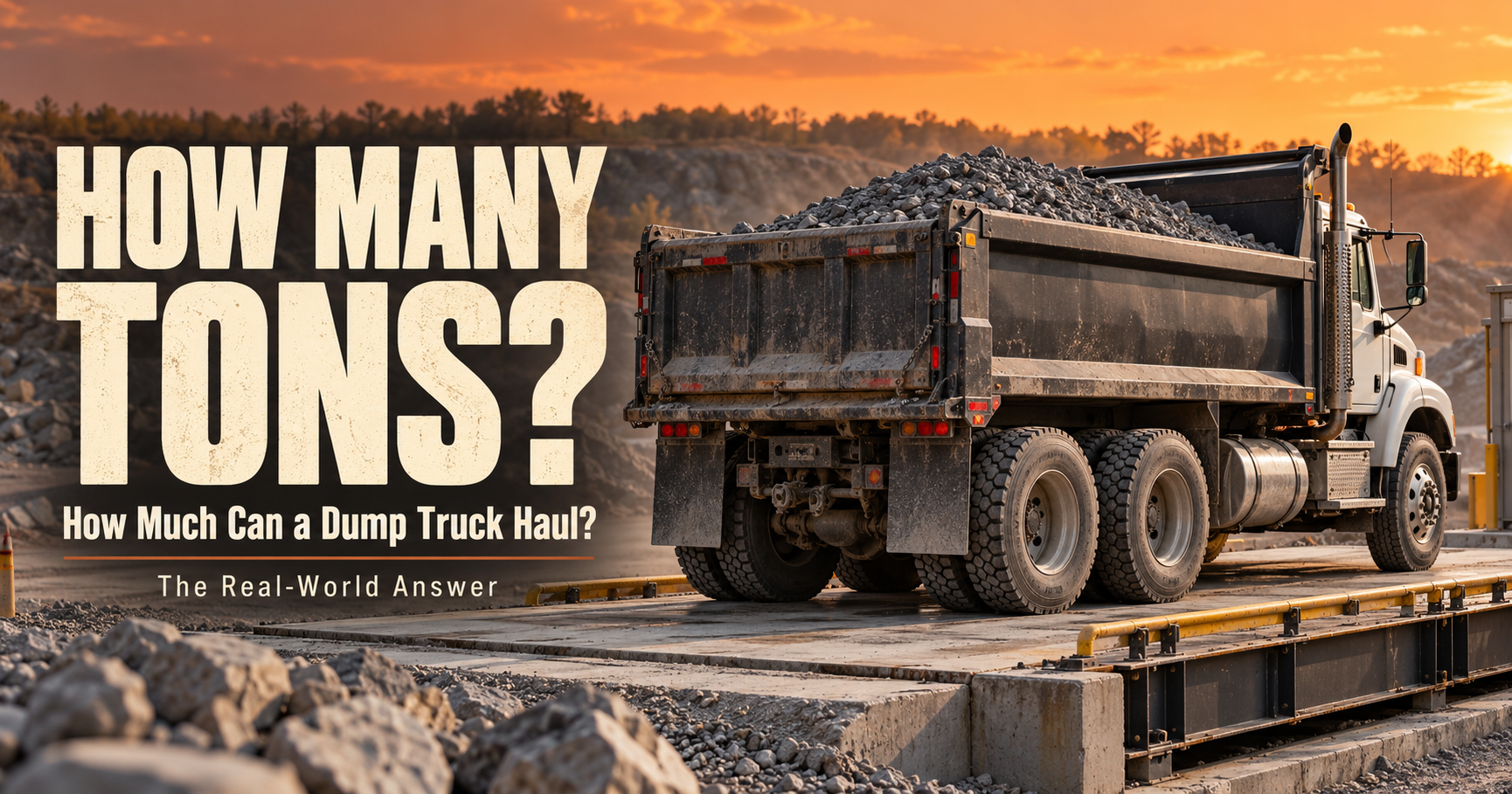
I went much deeper into this in how many tons a dump truck can actually haul.
Truck configuration, axle setup, empty weight, ratings and applicable weight laws all affect the answer.
The scale takes the guessing out of what the truck actually weighs.
After Weighing, I Pulled Forward
At the quarry I was using, I’d get weighed and then pull the truck forward.
This was another part of the routine that became almost automatic by later in the day.
Pull onto the scale.
Wait.
Then pull forward.
Once I moved forward, we’d deal with the load ticket.
Quarry loadout procedures vary significantly between operations. Some modern facilities use kiosks, stored tare weights, automated ticket printers or other systems.
My experience was more hands-on.
And honestly, I’m glad it was because now I understand what’s actually happening instead of just pushing buttons without knowing why.
Then I Signed the Quarry Ticket
After pulling forward, I’d sign the ticket.
Then I’d receive a ticket receipt for the load.
That piece of paper documents the load I just picked up.
Aggregate hauling and scale-ticket systems commonly track information such as the material, truck, gross weight, tare weight and net amount depending on the operation.
The ticket connects the truck, material and weight to an actual transaction.
And when you’re making load after load all day, those tickets start adding up pretty quickly.
What Is a Quarry Scale Ticket?
A quarry scale ticket is basically the weight record for a load of aggregate leaving the facility.
Exactly what appears on one can vary.
But weight tickets can contain information such as the truck identification, material, date and time, gross weight, tare weight and net weight.
That net weight is particularly important because it represents the material rather than the entire loaded truck.
If you’re being paid, billed or tracking production based on tonnage, accurate tickets matter.
Before doing this work, a scale ticket sounded like boring paperwork.
Once you’re actually hauling, it becomes the record of what you moved.
My Quarry Tickets Added Up to About 125 Tons That Day
This is where those individual loads become impressive.
I started around 6:00 AM.
The quarry closed at 4:30 PM.
We were finished working at around 5:00.
By the end of that 11-hour day, I had hauled approximately 250,000 pounds of 1-inch base over multiple trips.
That’s roughly:
125 tons of rock.
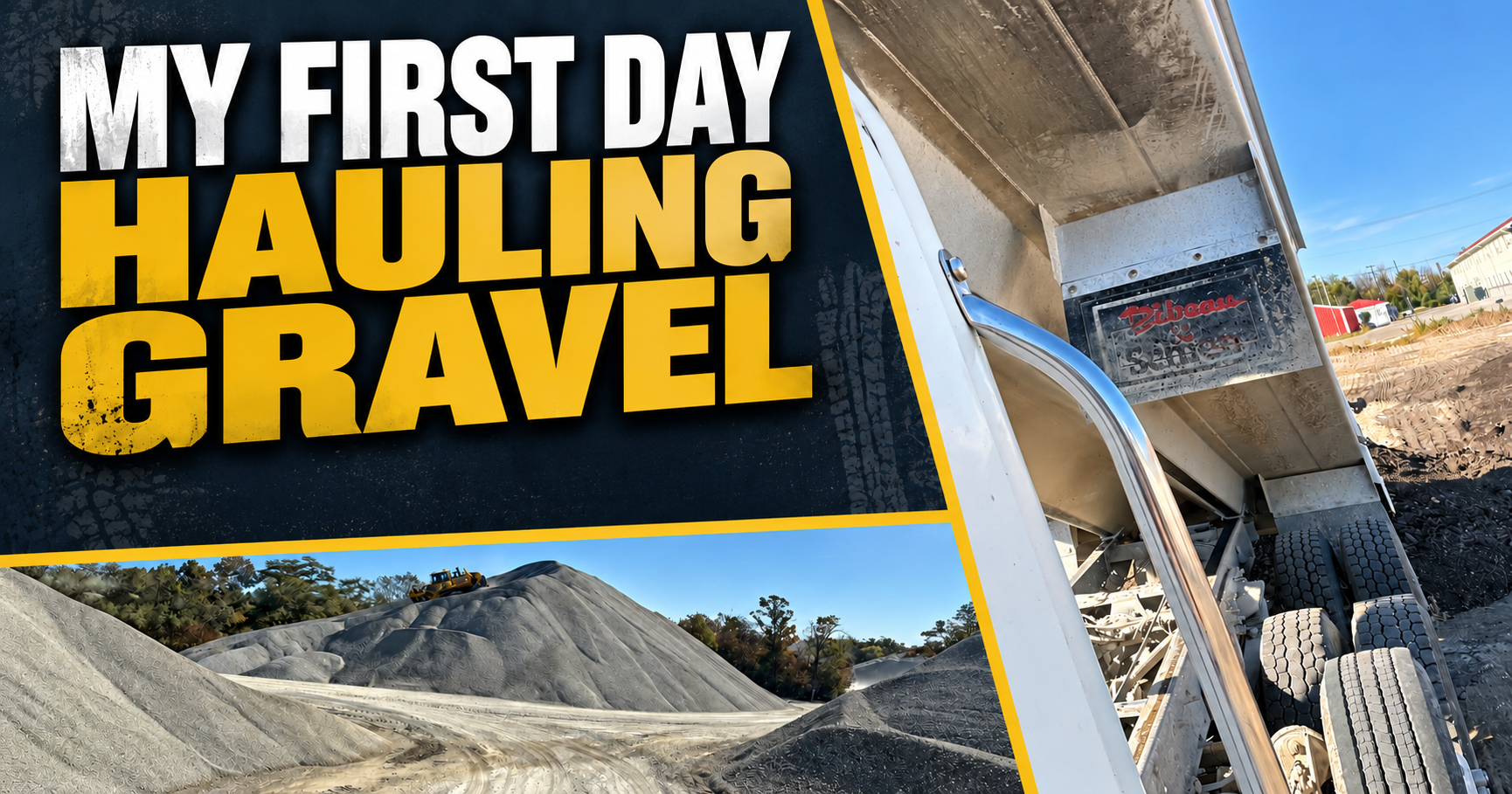
I described the entire day in my first day hauling gravel in a dump truck, and one thing that surprised me was how quickly all those loads accumulated.
One trip doesn’t seem enormous.
Then you keep doing it.
By the end of the shift, you’ve moved a quarter-million pounds of material.
Leaving the Quarry Was Only Half the Trip
Once I had the ticket, I was ready to head toward the parking-lot project.
The haul was only around 12 miles.
That’s short compared with many trucking jobs, but that’s also why we could move so much material throughout the day.
I wasn’t spending six hours getting to the customer.
I was cycling back and forth.
Quarry.
Parking lot.
Quarry.
Parking lot.
Over and over.
Short-haul aggregate trucking is a completely different rhythm from long-distance trucking.
A Loaded Dump Truck Feels Different From an Empty One
You definitely know you’ve got material behind you.
The truck accelerates differently.
Braking matters more.
You need to think ahead.
Turns matter.
Road conditions matter.
And after you dump, you immediately notice the difference again when you’re driving the truck empty.
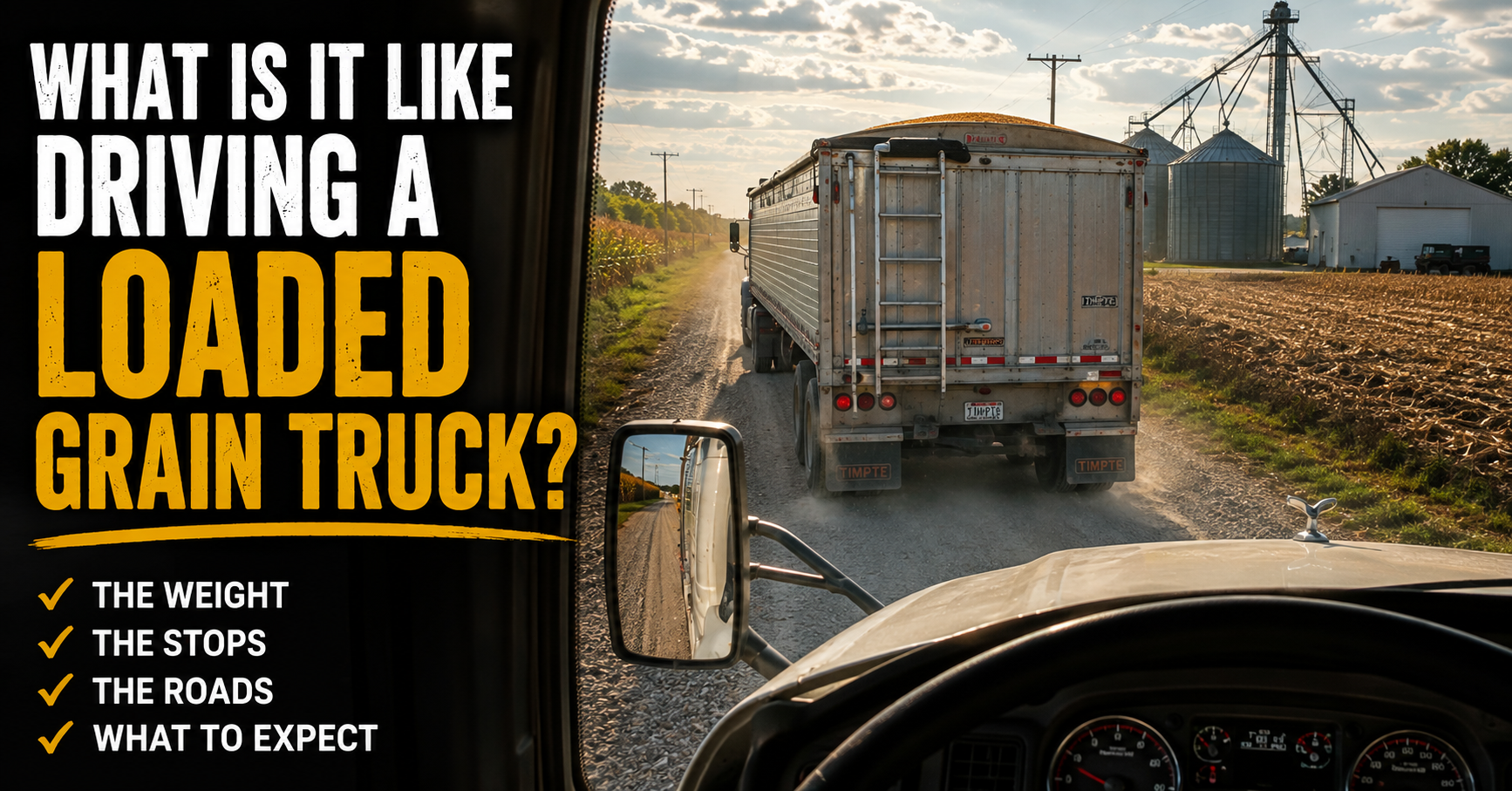
I’ve experienced the same loaded-versus-empty difference while driving a loaded grain truck, but dump truck work adds another element once you reach the destination.
You’ve got to raise the bed.
At the Jobsite, I Had to Position the Truck Again
The quarry wasn’t the only place where positioning mattered.
Once I reached the parking lot, I needed to get the truck where the material was actually supposed to go.
Construction sites aren’t always wide-open areas with unlimited room.
There can be workers.
Equipment.
Uneven ground.
Other trucks.
Buildings.
Overhead obstacles.
And you need to pay attention to all of it while maneuvering a heavy commercial vehicle.
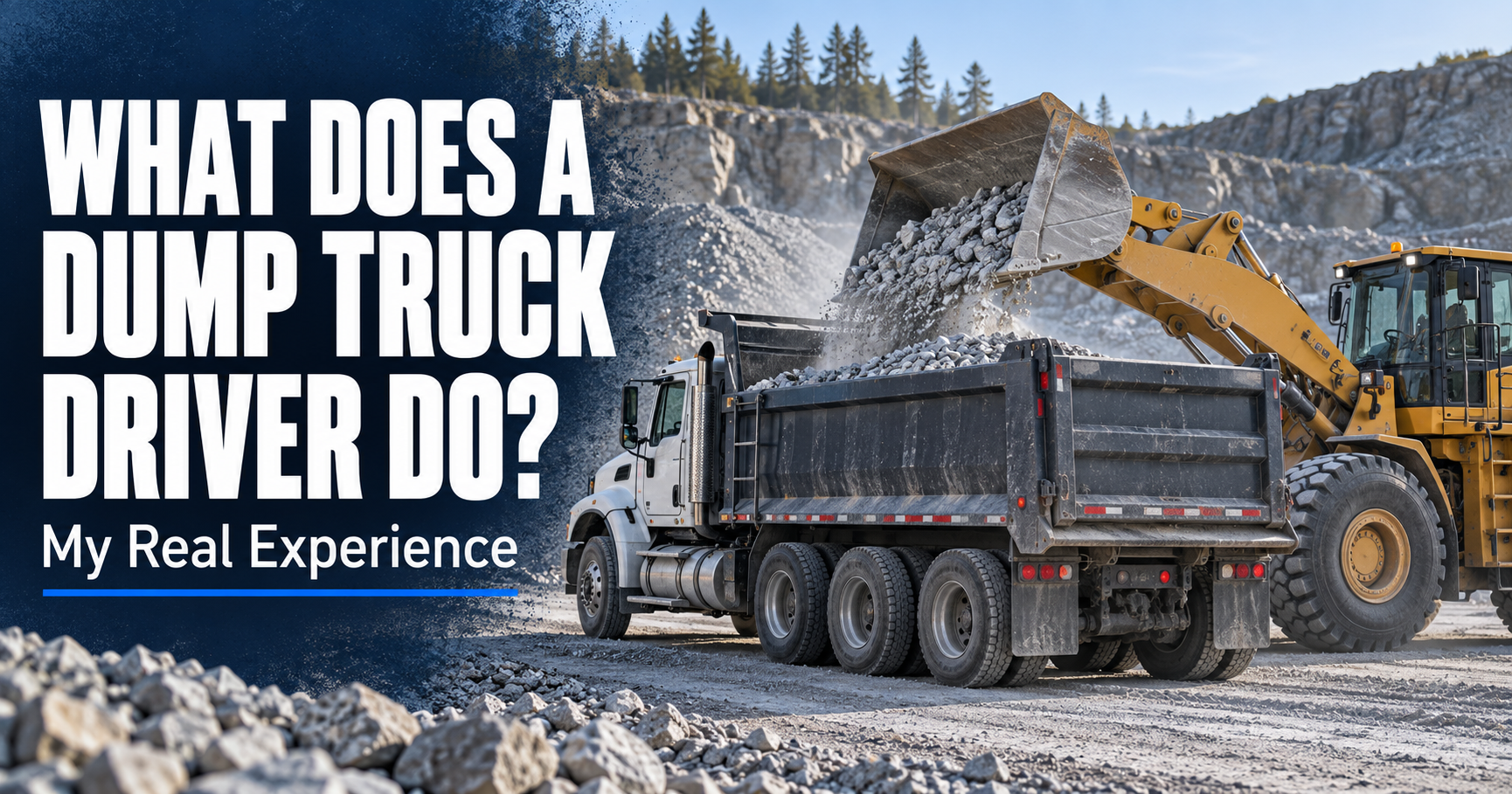
That’s part of why what a dump truck driver actually does involves a lot more than driving from Point A to Point B.
Then the PTO and Dump Body Take Over
Once the truck is positioned correctly, it’s time to unload.
That’s where the PTO and hydraulic system come in.
The PTO transfers power so the hydraulic system can raise the dump body.
As the bed rises, gravity moves the material toward the rear and out of the truck.
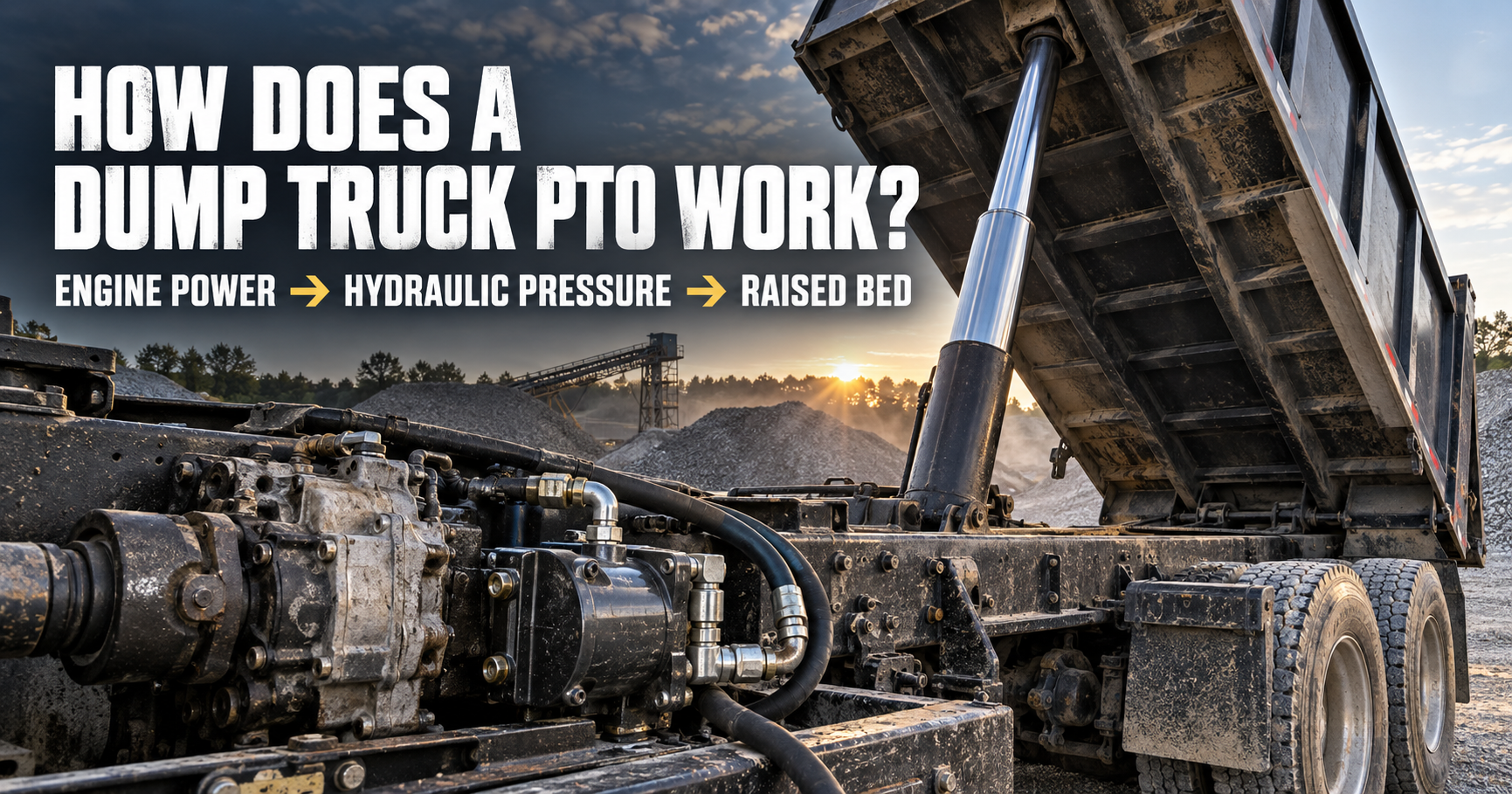
If you’re new to dump trucks, I have a separate explanation of how a dump truck PTO works, because understanding what that control is actually doing makes the entire dumping process less mysterious.
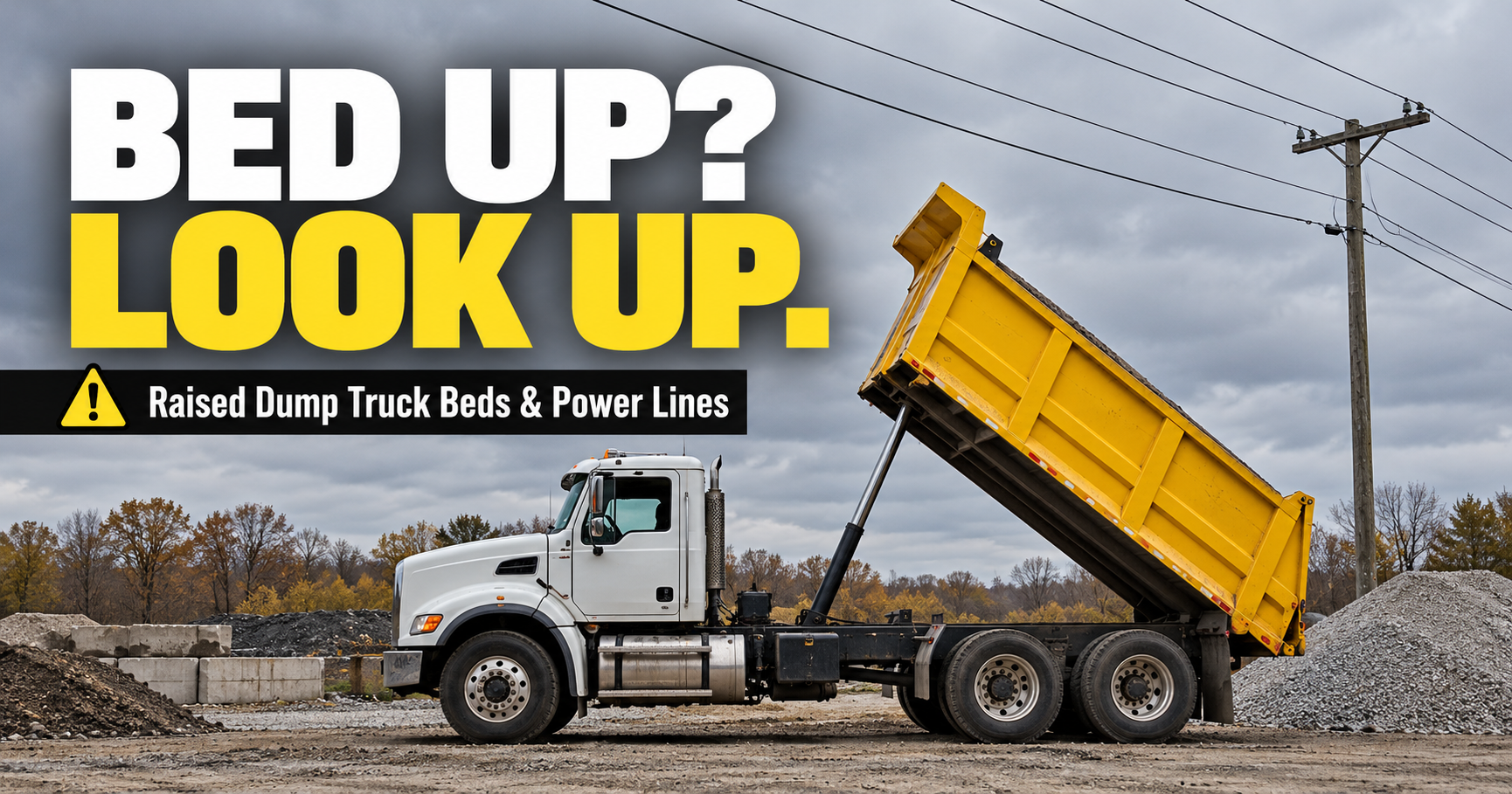
But raising the bed creates another hazard that didn’t really sink in for me until this job.
Dump Truck Drivers Need to Look Up
On one of my trips, I was pulling out of the small parking-lot jobsite after dumping when my dump bed bumped an overhead telephone line.
Thankfully, the bed was already lowered quite a bit.
The line didn’t catch.
It didn’t get ripped down.
Nothing broke.
But it absolutely got my attention.
A dump truck with its bed down and the same truck with its bed raised have dramatically different overhead clearance.
That’s now something I think about much more deliberately.
Power lines are an especially serious hazard, but even communication lines, tree limbs, structures and signs can create problems for a raised dump body.
My biggest takeaway was simple:
Don’t just look around the truck. Look above it.
Then I Went Right Back to the Quarry
Once the material was dumped and the bed was lowered, I headed back.
Then the entire quarry process started over.
Get to the 1-inch base.
Position the Freightliner.
Wait for the loader.
Get loaded.
Listen for the horn.
Pull onto the scale.
Pull forward.
Sign the ticket.
Take the receipt.
Leave.
After doing that enough times, something that felt unfamiliar early in the morning felt completely normal by afternoon.
That’s one thing I’ve noticed repeatedly since getting my CDL.
The first time at a new place can feel confusing.
Then you learn the routine.
Do All Rock Quarries Work This Way?
No.
That’s probably one of the most important things I’d tell another new driver.
Don’t pull into an unfamiliar quarry assuming its procedures will match mine.
Aggregate operations use different loadout systems.
Some have loader operators working from stockpiles like I experienced.
Some have bins.
Some have automated systems.
Some use kiosks and ticket printers.
Some may weigh the truck differently.
Some operations can use stored tare weights so a loaded truck only needs one scale pass to produce the final ticket.
Traffic patterns, PPE requirements, radio procedures and check-in requirements can also vary.
Follow the signs and instructions at the facility you’re actually visiting.
If you don’t know where you’re supposed to go, asking is a lot better than confidently driving a dump truck somewhere you shouldn’t be.
What Should a New Dump Truck Driver Know Before Entering a Quarry?
The biggest thing I’d say after my first experience is don’t rush simply because everyone else looks like they know what they’re doing.
They probably do.
They may have driven into that quarry hundreds of times.
You haven’t.
Know what material you’re supposed to pick up.
Pay attention to quarry traffic.
Watch the heavy equipment.
Give loaders room to operate.
Understand whatever signal tells you loading is complete.
Know where you’re supposed to weigh.
Keep track of your ticket.
And don’t be embarrassed to ask where you’re supposed to go.
I’d rather look inexperienced for 30 seconds than make an expensive mistake because I pretended I knew the facility.
Why Quarry Hauling Was Easier After the First Few Trips
By the third or fourth trip, most of my questions were gone.
I knew where the 1-inch base was.
I knew where to position.
I knew the loader operator would honk when I was ready.
I knew where the scale was.
I knew I’d pull forward afterward.
I knew I’d sign the ticket.
I knew where I was going once I left.
That’s when the work started feeling like a routine rather than a new experience.
And because my haul was only around 12 miles, I got plenty of repetition in one day.
Quarry Hauling Taught Me Another Side of Trucking
Before I started actually working with my CDL, I thought of truck driving mainly as the part that happens on the road.
The more I do it, the more I realize that a huge amount of trucking happens everywhere except the highway.
It’s knowing how to load from a grain bin.
It’s maneuvering around a farm.
It’s dealing with grain elevators.
It’s getting into a construction site.
It’s understanding a PTO.
It’s figuring out a quarry.
It’s dealing with scales and tickets.
The highway is just what connects all those places.
My first quarry trip started with me wondering where I was supposed to put the truck.
By the end of the day, I’d hauled roughly 125 tons of base and the entire process felt pretty normal.
That’s why I’ve started documenting these experiences while they’re still new to me.
A veteran dump truck driver may not even think to mention that the loader operator honks when he’s finished.
For somebody about to drive into a quarry for the first time, that’s exactly the kind of little detail they might want to know.
About the Author: Dax is a Class A CDL driver sharing what he’s learning through real trucking work, including driving semis and dump trucks, hauling grain and quarry aggregate, working around farms and construction sites, and learning the routines that CDL school can’t completely recreate. Through Trucking Resource, he shares those firsthand experiences to help newer drivers know what to expect before they encounter the same situations themselves.