
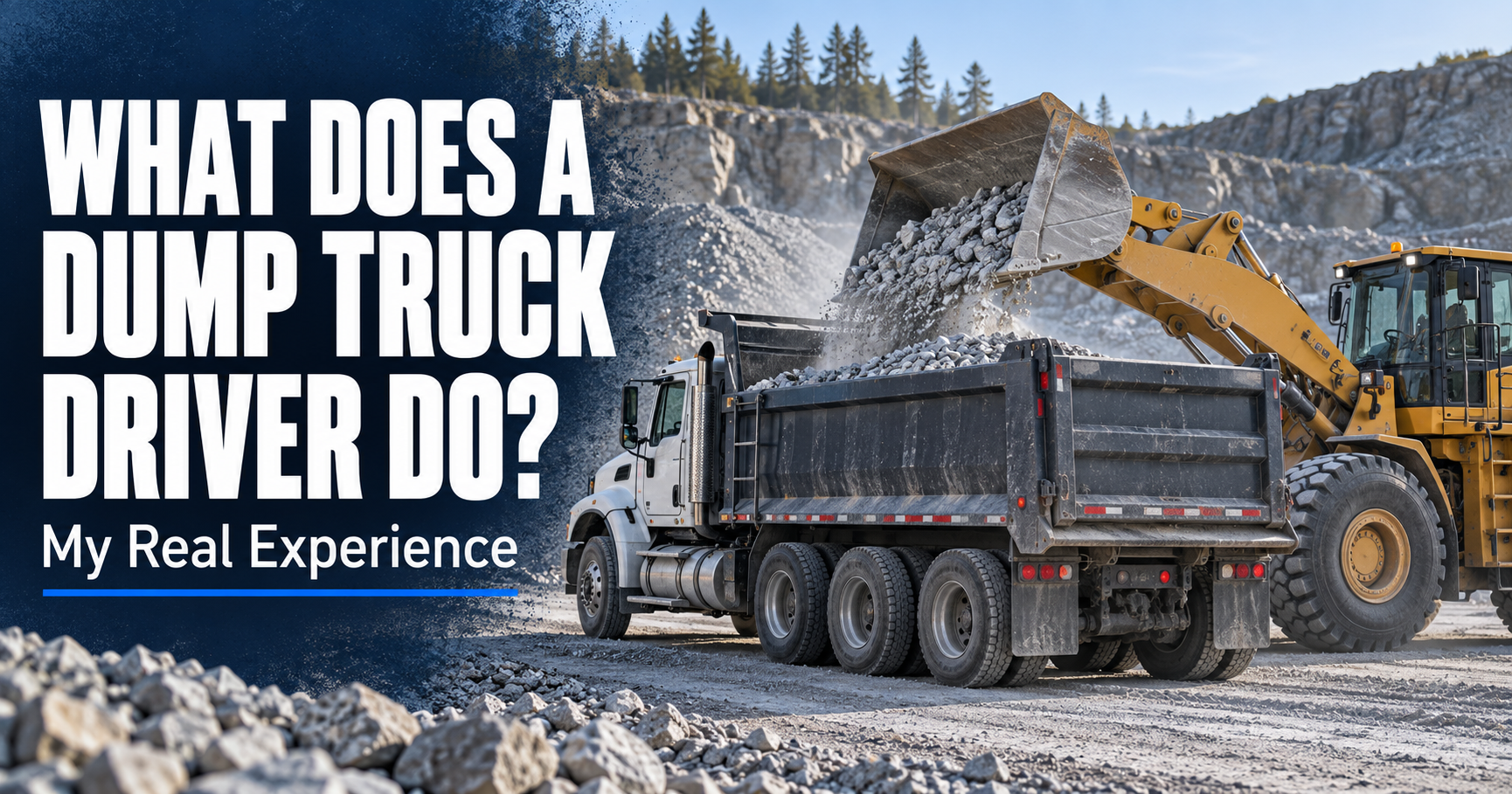
Boy oh boy, where do I start with this one?
Before I actually drove one for work, I probably would have described a dump truck driver’s job in about five words:
Drive somewhere and dump stuff.
That’s technically part of it, but after actually spending time behind the wheel of a dump truck, I can tell you there’s quite a bit more happening.
I’ve used a dump truck for farm work, and recently I spent an 11-hour day hauling 1-inch base from a rock quarry to a parking lot project in an older early-2000s Freightliner dump truck.
That day alone involved loading areas, a massive quarry loader, scale tickets, loaded driving, construction-site maneuvering, PTO operation, dumping, overhead clearance and about 125 tons of material moved over multiple trips.
So what does a dump truck driver actually do?
A dump truck driver transports loose bulk materials such as gravel, rock, dirt, sand and other construction or agricultural materials between locations. But the job also involves inspecting the truck, positioning for loading, monitoring weights, safely handling a heavily loaded vehicle, maneuvering around jobsites, operating the dump body and making sure the truck is safe before leaving after unloading.
And depending on the job, you might repeat that process all day long.
What Does a Dump Truck Driver Do During a Normal Day?
There isn’t one universal dump truck driver routine.
Where you work and what you’re hauling can completely change the day.
A construction dump truck driver might haul rock, dirt, sand or asphalt.
A driver working around a quarry might spend most of the day moving aggregate.
Farm work can involve completely different materials and jobs.
Some dump truck drivers travel between the same two locations all day. Others may be sent to several different jobsites.
But the basic job usually revolves around safely moving bulk material from one place to another.
The driving is only one part of making that happen.
My Quarry Day Started at 6 AM
My first full day hauling rock started at about 6:00 AM.
The assignment was simple enough.
We needed to move 1-inch base from a quarry in Huntsville, Missouri, to a parking lot project roughly 12 miles away.
I was driving an older early-2000s Freightliner dump truck.
I wasn’t driving hundreds of miles down the interstate.
Instead, I was making the same relatively short trip over and over.
By the time the quarry closed at 4:30 and we finished around 5:00, I’d hauled approximately 250,000 pounds of material.
That’s about 125 tons of rock in one workday.
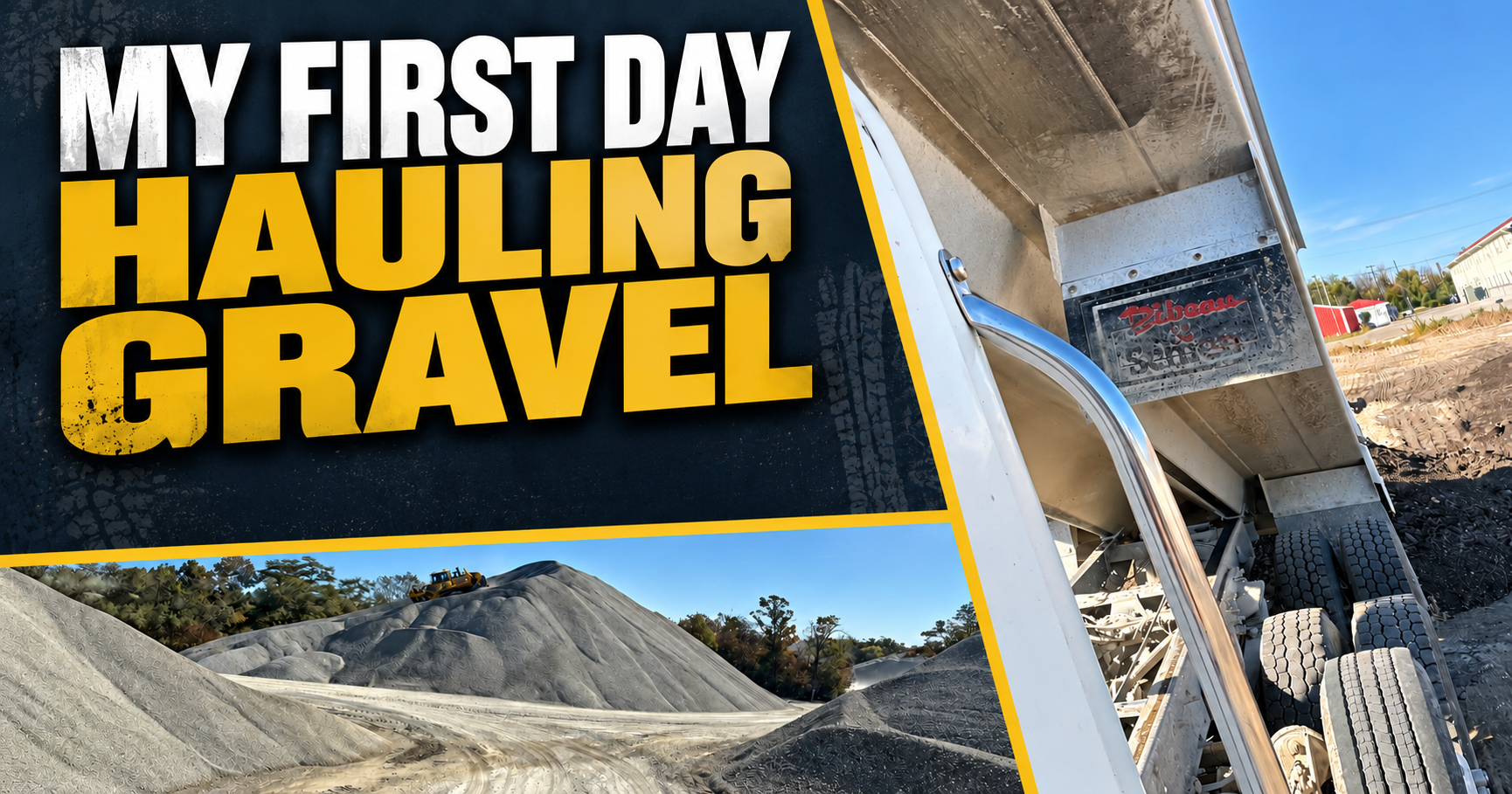
I documented the entire experience in what my first day hauling gravel in a dump truck was really like, but that day also gave me a much clearer picture of what dump truck drivers actually do.
A Dump Truck Driver Has to Inspect the Truck
The job starts before the first load goes into the bed.
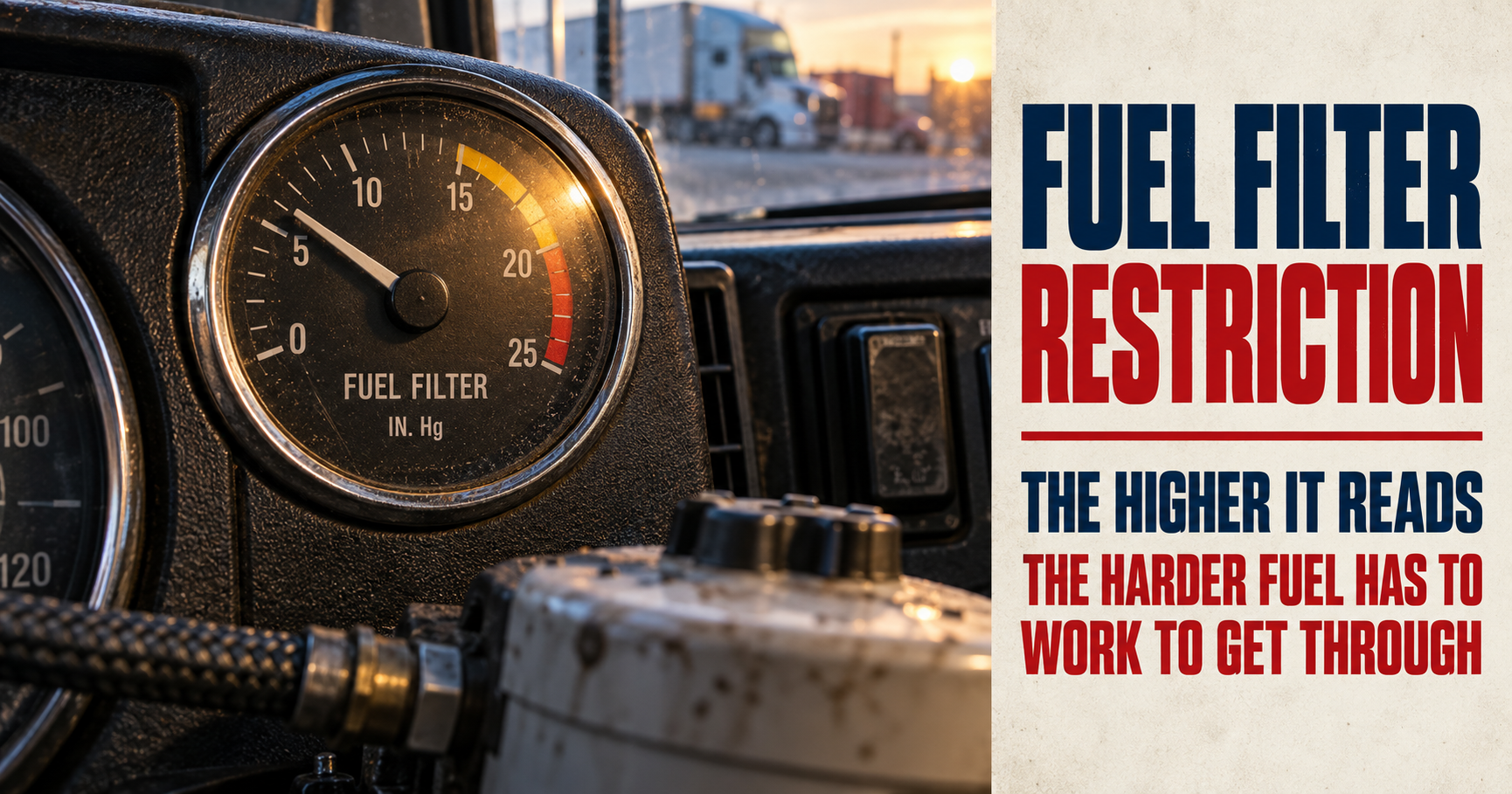
Commercial drivers need to know whether the vehicle they’re about to operate is safe.
That means paying attention to things such as tires, lights, brakes, fluid leaks and other vehicle components.
With a dump truck, you also have equipment that a regular highway tractor doesn’t have.
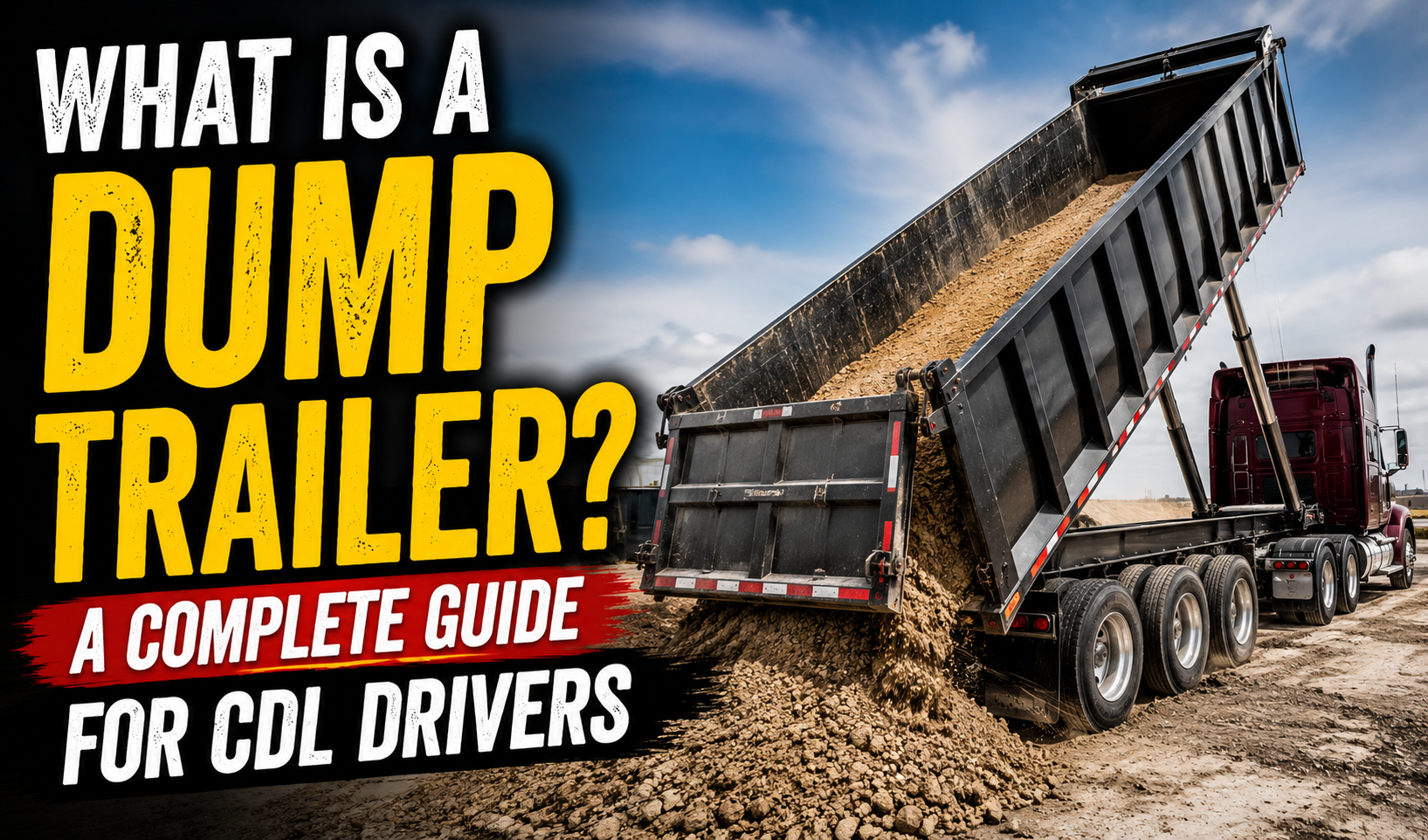
There’s the dump body itself.
There’s a hydraulic system.
There’s the PTO system used to power the hydraulics.
There are hinges, controls and other components involved in raising and lowering thousands of pounds of material.
Knowing how the truck operates is part of the job.
Then You Have to Get Positioned for Loading
This is something I hadn’t thought much about before actually hauling material from a quarry.
The dump truck driver usually isn’t the person operating the equipment that loads the truck.
At the quarry I hauled from, a huge loader handled that.
My job was to get the Freightliner where it needed to be.
I had to know what material I was there for and get positioned near the correct pile.
Then the loader operator took over.
He’d scoop up the 1-inch base and load the dump body.
Once he was finished, he’d honk the loader’s horn.
That was my signal that I was loaded and could move.
It’s a small part of the job, but positioning a large truck around heavy equipment is something a driver has to become comfortable doing.
Dump Truck Drivers Need to Know What They’re Hauling
You don’t necessarily need to become a geologist just because you’re driving a dump truck.
But you do need to know what you’re supposed to pick up.
At the quarry, I wasn’t simply told to “get some rocks.”
I needed 1-inch base.
There can be several different aggregate products at the same quarry, and bringing the wrong material to a jobsite isn’t exactly going to make anybody happy.
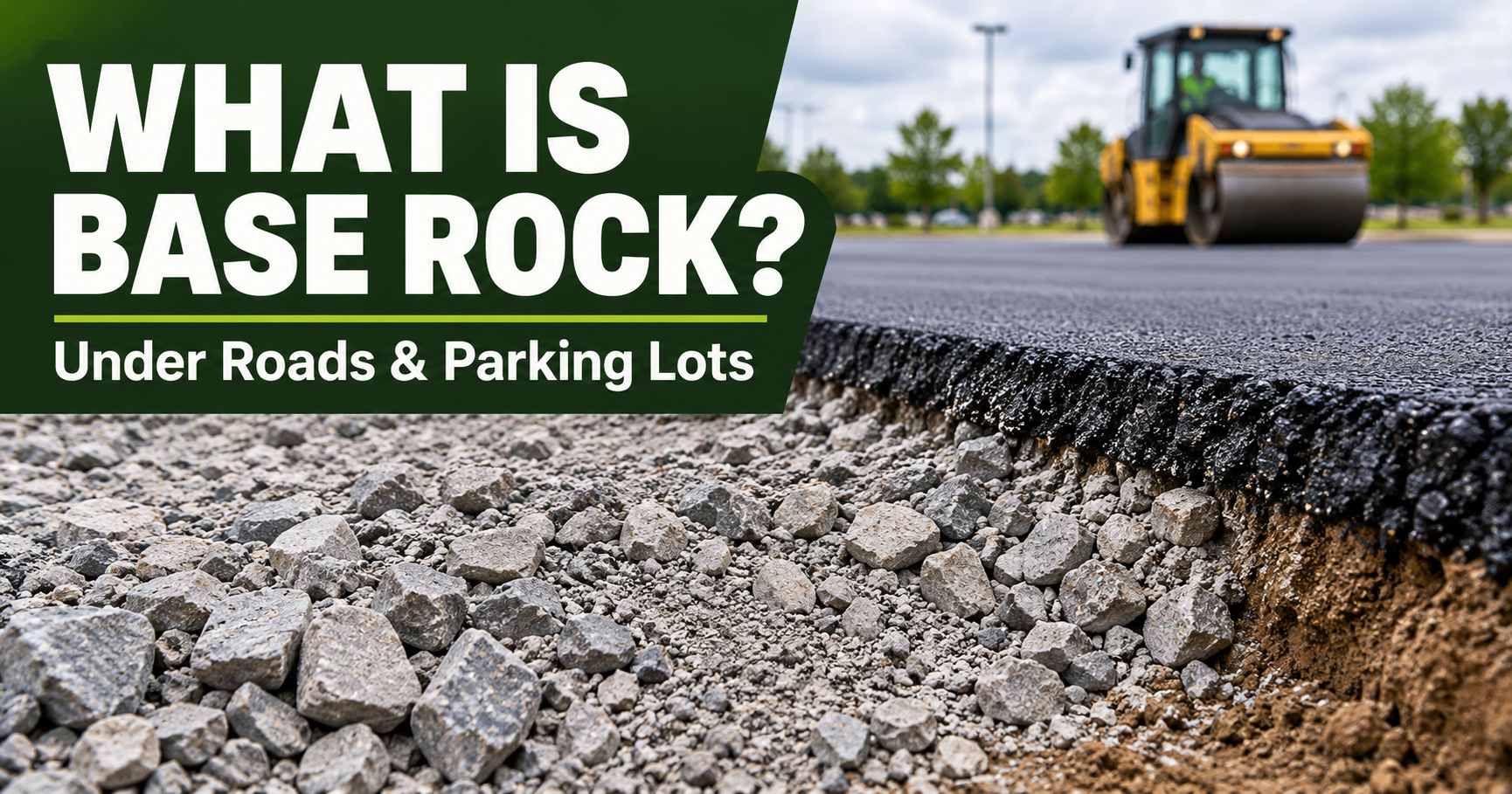
After hauling it myself, I dug deeper into what base rock actually is and why it’s used under roads and parking lots.
In my case, that material was going underneath a parking lot that would eventually receive asphalt.
Knowing what you’re hauling also matters because different materials have different weights and characteristics.
Getting Weighed Can Be Part of the Job
Once the loader finished filling my Freightliner, I wasn’t ready to leave the quarry yet.
I had to cross the scale.
I’d pull the loaded dump truck onto the quarry scale and get weighed.
Then they’d have me pull forward.
I’d sign the ticket.
They’d give me my ticket receipt.
Then I could head toward the parking lot.
This became part of the routine on every trip.
Commercial hauling involves a lot more paperwork and weight management than somebody watching a dump truck drive past might realize.
Dump Truck Drivers Have to Understand Weight
This is a big one.
The truck may physically have room for more material without being legally or safely able to carry more weight.
Those are two different things.
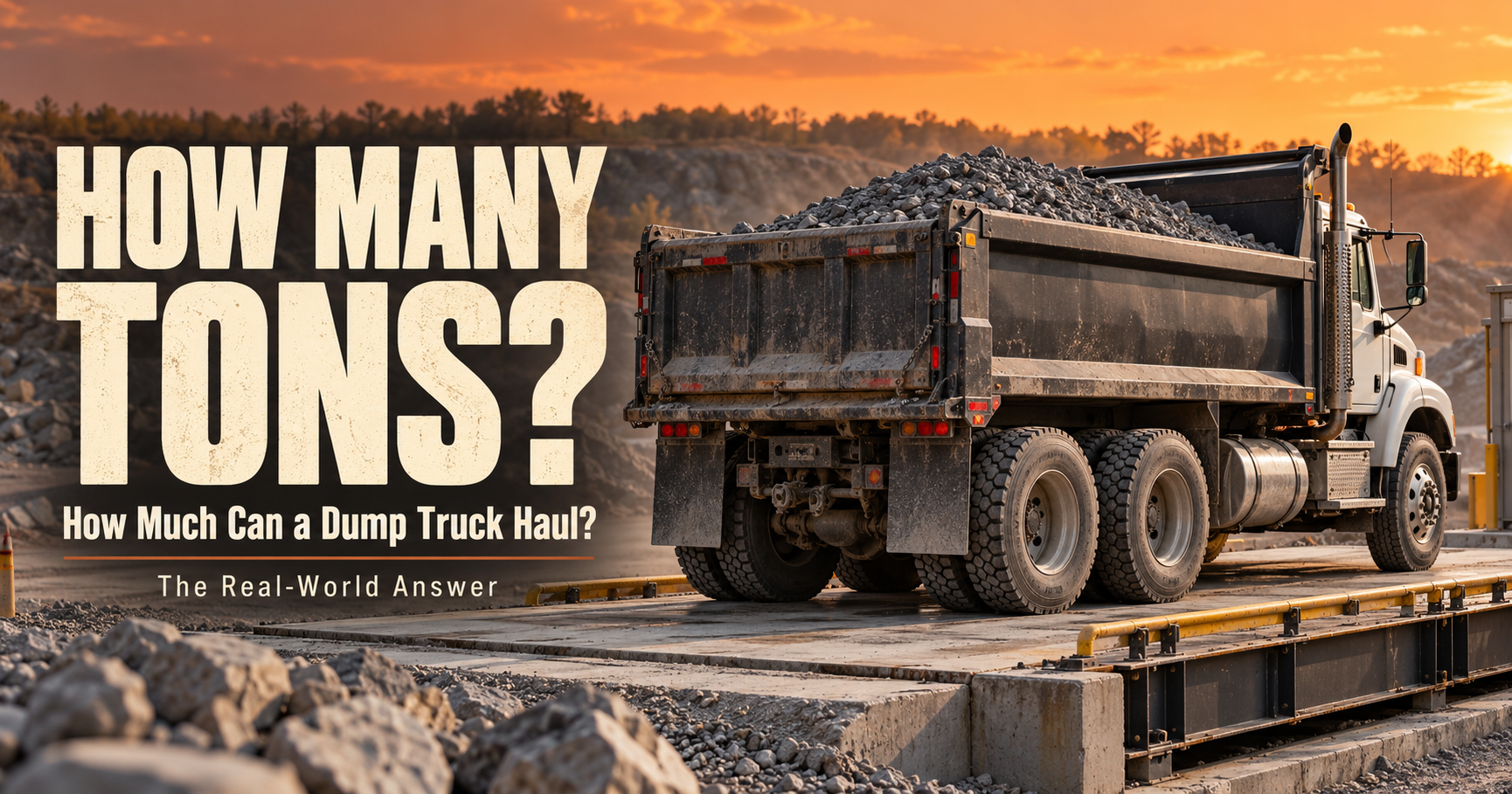
I went deeper into this when explaining how many tons a dump truck can haul, because there’s no single payload number that applies to every dump truck.
The truck’s configuration matters.
Its empty weight matters.
The axles matter.
The applicable weight limits matter.
The material matters.
That’s one reason quarry scales are so useful.
You don’t have to look in the dump body and guess what the load weighs.
Driving Loaded Is a Big Part of the Job
Then comes the obvious part.
You have to drive the truck.
But driving a loaded dump truck isn’t the same as driving an empty pickup.
You’ve got a heavy commercial vehicle underneath you and potentially many tons of material behind the cab.
Acceleration changes.
Braking changes.
Cornering matters.
Road conditions matter.
You need more awareness of what’s happening ahead of you.
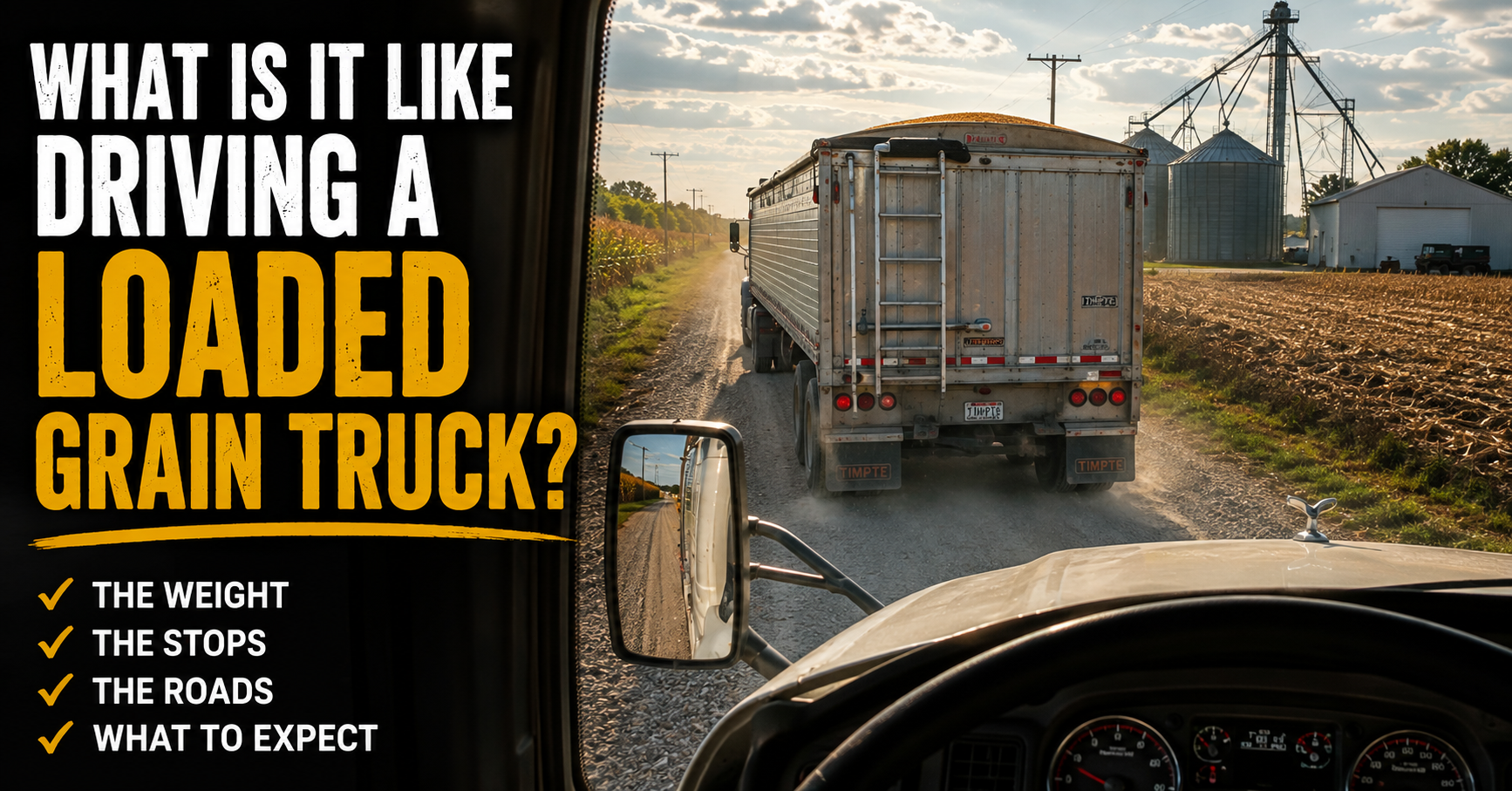
I’ve noticed the same thing driving a loaded grain truck. Once you start driving heavy commercial vehicles, you learn pretty quickly that you need to think farther ahead than you would in a passenger vehicle.
The fact that you’ve driven the same 12-mile route ten times that day doesn’t make the eleventh load weigh any less.


Construction Sites Add Another Challenge
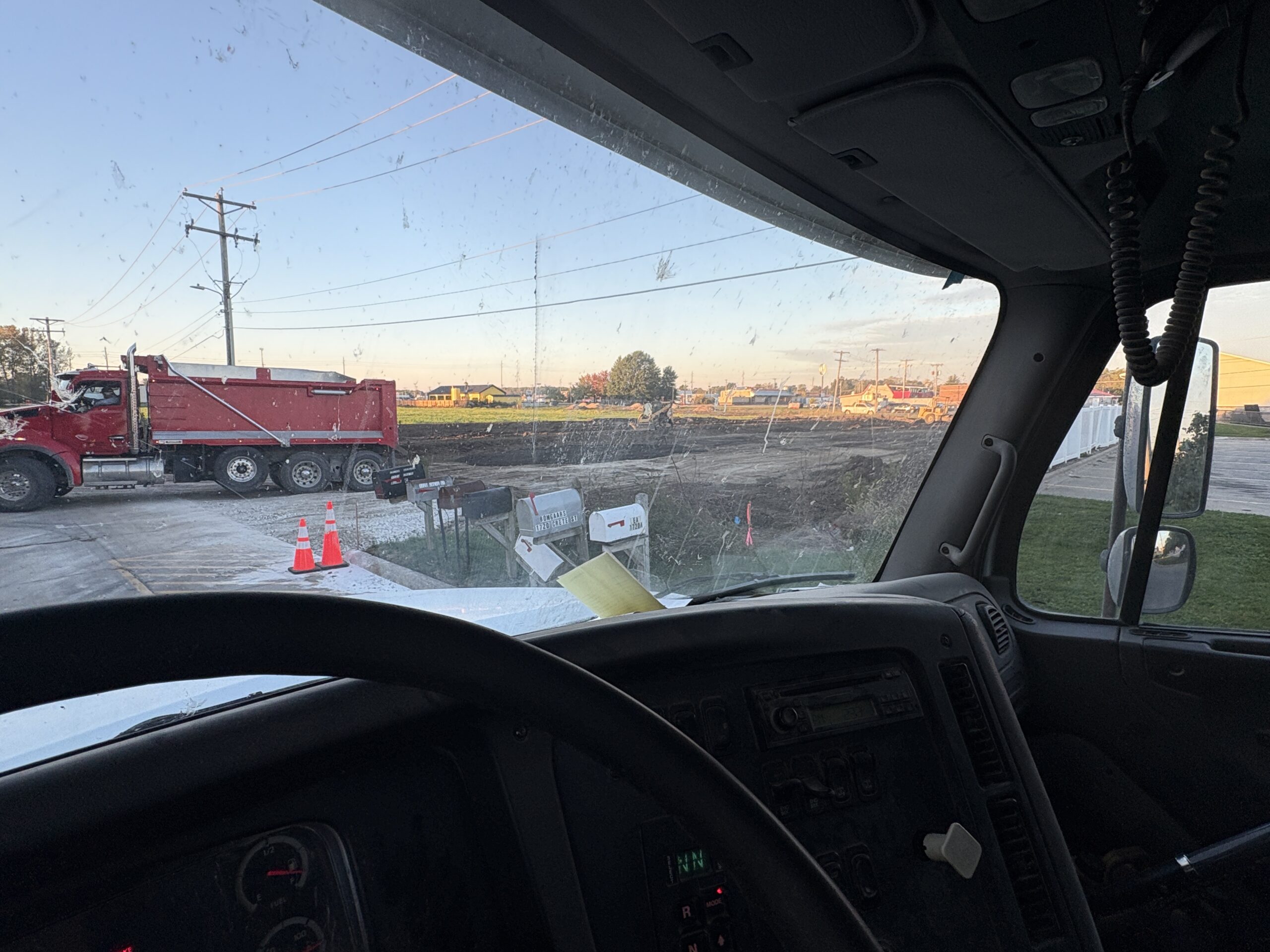
Once I arrived at the parking lot, the driving environment changed again.
Now I wasn’t simply following a highway lane.
I had to get a large dump truck into a relatively small jobsite and position it where the material was needed.
Jobsites can have workers, equipment, uneven ground, limited space and obstacles.
You need to watch your mirrors.
You need to know what’s behind you.
You need to pay attention to where you’re putting the truck.
And something I learned very clearly that day:
You need to look up too.
A Dump Truck Driver Operates the PTO and Dump Body
Getting the material to the jobsite isn’t the end of the trip.
Now you’ve got to get it out of the truck.
That’s where the PTO and hydraulic dump system come into play.
The PTO allows engine power to operate equipment such as the hydraulic pump that raises the dump bed.
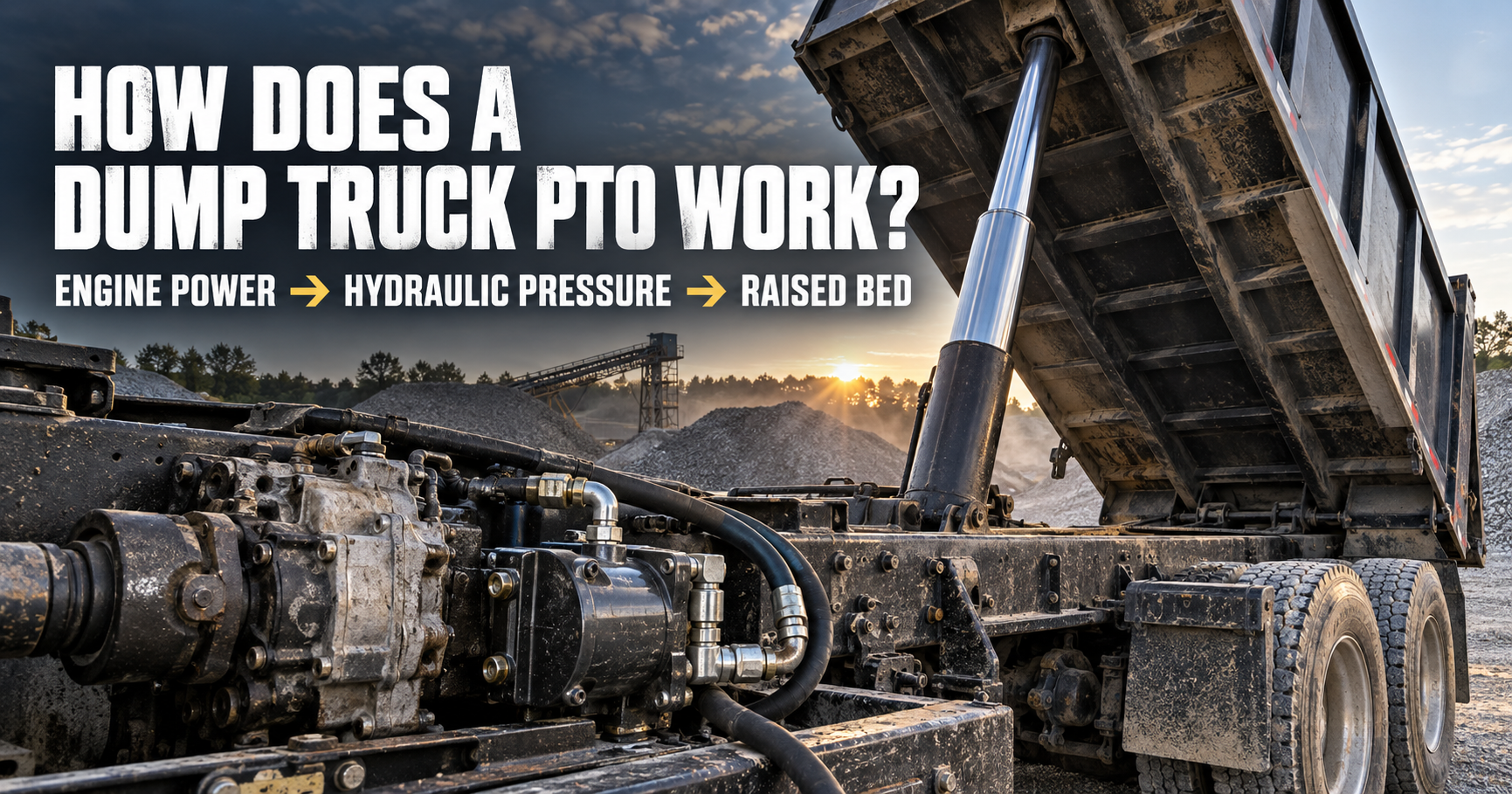
I’ve already put together a more detailed explanation of how a dump truck PTO works, because it can be confusing when you’re first learning a truck.
From the driver’s perspective, you need to understand the controls and the correct operating procedure for that particular truck.
Raise the body incorrectly or in the wrong place and you can create a serious problem.
You Have to Think About the Ground Before Dumping
A dump truck can be stable with the bed down and become a very different machine once that loaded bed starts rising.
The load moves.
The center of gravity changes.
The bed gets extremely high.
That means where you dump matters.
Drivers need to be aware of uneven or unstable ground and other conditions that could make raising the body dangerous.
This is one reason dump truck work requires more than simply knowing how to steer the truck down the road.
You’re operating equipment too.
You Also Have to Look Above the Truck
I learned this one firsthand.
While pulling out of the parking-lot jobsite after dumping a load, my dump bed bumped an overhead telephone line.
Thankfully, the bed was already lowered quite a bit.
The line didn’t snag.
It didn’t get ripped down.
Nothing was damaged.
But it immediately made me realize how different your clearance becomes when you’re operating a dump truck.
With the bed down, the truck can fit underneath something that the raised bed can’t come close to clearing.
That’s obvious when you say it.
It becomes much more memorable when your own dump bed touches a line.
Now overhead clearance is one of the things I think about much more deliberately.
Lowering the Bed Is Part of the Job Too
Dumping isn’t finished just because the material has left the truck.
You still have to lower the dump body.
After my experience with the telephone line, my personal rule is pretty simple:
I want that bed down before I leave.
Not mostly down.
Not “it’s coming down.”
Down.
There’s too much that can go wrong if a driver forgets about a raised or partially raised dump body.
Overhead lines are one concern.
Bridges, signs, buildings and tree limbs are others.
Then You Do Everything Again
Once I dumped the 1-inch base and lowered the bed, I headed back toward the quarry.
Then the process restarted.
Get positioned.
Get loaded.
Wait for the horn.
Get weighed.
Sign the ticket.
Drive to the parking lot.
Dump.
Return.
That repetition is a major part of some dump truck jobs.
You might run the same route many times in a day.
Other dump truck jobs are much less predictable.
That’s why I wouldn’t describe all dump truck driving based solely on the quarry hauling I’ve done.
This is one type of dump truck work.
What Are Typical Dump Truck Driver Duties?
When I put together what I’ve experienced with the actual job requirements used in dump truck training programs, the duties make a lot of sense.
A dump truck driver may be responsible for inspecting the truck, driving loaded and empty, positioning for loading, backing, hauling material, operating the dump equipment, delivering material to the correct location and maintaining situational awareness around jobsites.
Formal dump truck training programs also emphasize things such as maximizing legal payload, balancing loads, entering and exiting gravel pits, backing, making deliveries, inspections and safety procedures.
That lines up surprisingly well with what I encountered once I actually started doing the work.
Do You Need a CDL to Drive a Dump Truck?
This depends on the vehicle you’re operating and its weight ratings.
Many full-size commercial dump trucks require a CDL.
A straight dump truck that meets the federal definition for a Class B commercial motor vehicle can be operated with a Class B CDL, assuming the driver has the appropriate qualifications and no restriction prevents operating that particular truck.
A Class A CDL covers combination vehicles meeting the Class A definition and also allows operation of vehicles in the lower CDL classes when properly qualified.
I personally have a Class A CDL, which gives me considerably more flexibility in the types of commercial trucks I can drive.
If you’re starting from scratch, federal Entry-Level Driver Training requirements apply to drivers obtaining a Class A or Class B CDL for the first time. They also apply when upgrading from Class B to Class A.
The CDL gets you legally qualified for the appropriate class of vehicle.
It doesn’t automatically make you an experienced dump truck driver.
CDL Training and Dump Truck Training Aren’t Exactly the Same Thing
This is something I understand much better now.
CDL training teaches you the fundamentals necessary to safely operate a commercial motor vehicle and pass the required testing.
Dump truck work adds another layer.
Now you’re dealing with loading.
Material.
Jobsites.
PTO controls.
Hydraulics.
Dump-body clearance.
Quarries.
Payloads.
Scale tickets.
And potentially completely different driving environments.
There are even dedicated dump truck training programs for existing CDL holders that teach things such as gravel-pit procedures, maximizing legal payload, load balancing, loaded versus empty driving, backing, spreading and jobsite awareness.
I didn’t take a separate dump truck course before doing this work.
A lot of what I’m learning is happening on the job.
What CDL School Didn’t Teach Me About Dump Trucks
This has become one of the recurring themes since I got my CDL.
School gave me the foundation.
Real trucking keeps giving me the education.
I’ve written before about the biggest difference between CDL school and real trucking, and dump truck work is another perfect example.
My CDL training didn’t involve driving into an active quarry and figuring out where to position for a giant loader.
It didn’t involve hauling 1-inch base.
It didn’t involve repeating 12-mile construction runs for 11 hours.
It didn’t involve pulling onto a quarry scale and signing load tickets.
And it didn’t involve a raised dump body underneath telephone lines.
You can’t realistically recreate every trucking job during CDL school.
Eventually you have to experience some of this stuff for yourself.
Is Dump Truck Driving Hard?
I wouldn’t call the basic concept complicated.
You’re hauling material from one place to another.
The difficulty comes from doing every part of that process correctly and safely for an entire workday.
You’re driving something heavy.
You’re working around equipment.
You may be backing into tight places.
You’re maneuvering around jobsites.
You’re operating the dump body.
You’re dealing with changing ground conditions.
You’re watching weights.
You’re watching overhead clearance.
And depending on the job, you’re doing all of that repeatedly.
The first trip of the morning requires your attention.
So does the last trip of the afternoon.
Is Dump Truck Driving a Good Job for a New CDL Driver?
I think it can teach a new driver a lot, but the employer and training matter tremendously.
I’ve already learned things from dump truck work that I wouldn’t have learned nearly as quickly just driving highway miles.
You’re constantly maneuvering the truck.
You get experience loaded and empty.
You deal with backing.
You work around heavy equipment.
You learn how weight changes the truck.
You learn jobsite awareness.
And short-haul work can mean you’re doing those things repeatedly instead of once or twice during a shift.
At the same time, I wouldn’t want a completely inexperienced driver thrown into a dump truck with no explanation of the equipment or job.
A CDL proves something important.
It doesn’t mean you know everything.
What Surprised Me Most About Being a Dump Truck Driver
The biggest surprise is probably how little of the job is simply “driving down the road.”
That part is obviously important.
But on my quarry day, I was constantly transitioning between different tasks.
One minute I was driving.
Then I was positioning underneath a loader.
Then I was crossing a scale.
Then dealing with the ticket.
Then driving loaded.
Then entering a construction site.
Then positioning to dump.
Then operating the PTO.
Then watching the bed.
Then heading back empty.
It’s much more hands-on than I probably would have imagined before doing it.
Dump Truck Driving Is Another Side of Trucking I Didn’t Understand Before
Before I earned my CDL, “truck driver” sounded like one occupation.
Now I realize how broad that term is.
Driving a semi hauling grain is different from running a dump truck.
Hauling rock is different from hauling corn.
A local construction driver has a completely different workday from an OTR driver sleeping in a truck hundreds of miles from home.
I’ve done enough different things now to realize that having a CDL doesn’t lock you into one type of work.
And I’m still pretty early into learning all of it.
For me, dump truck driving has meant operating an older Freightliner, hauling farm material, hauling quarry rock, learning PTO controls, crossing scales, working around heavy equipment and discovering some mistakes before they became expensive ones.
That’s what I like about sharing these experiences while I’m still learning them.
I remember what I didn’t know.
And sometimes the little details, like waiting for a quarry loader to honk before pulling away, are more useful to another new driver than another generic explanation of what a dump truck is.
About the Author: Dax is a Class A CDL driver who shares what he’s learning from real-world trucking experience, including driving semis and dump trucks, hauling grain and quarry rock, working around farms and construction sites, and dealing with the situations CDL school can’t fully recreate. He shares those firsthand experiences on Trucking Resource to help newer drivers understand what the job actually looks like from behind the wheel.