
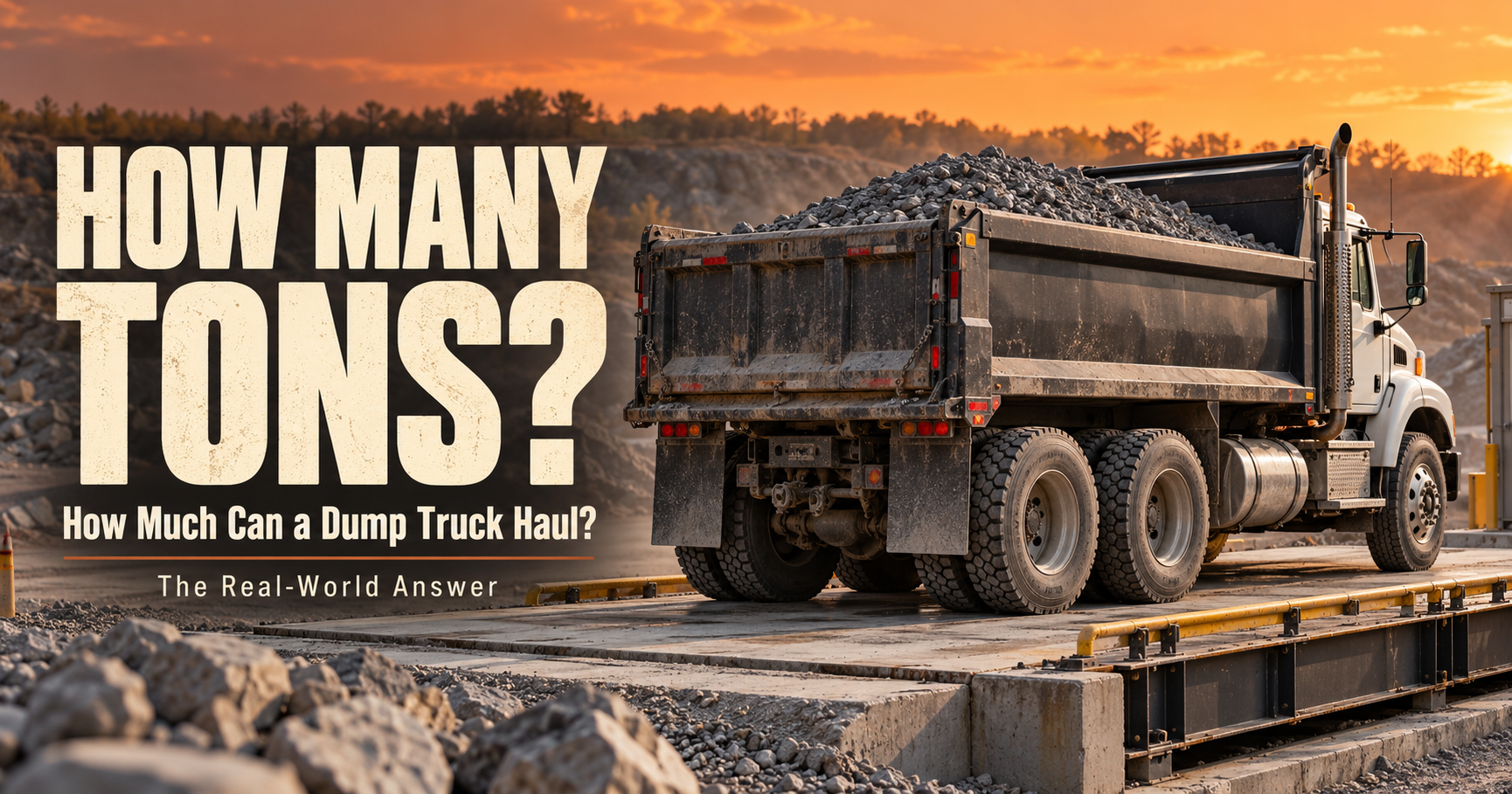
If you’re wondering how many tons a dump truck can haul, there isn’t one number that applies to every truck. A highway dump truck may carry somewhere around 10 to 25 tons of material depending on its configuration, empty weight, axle setup, legal weight limits, dump body, and the material being hauled. Larger off-road quarry trucks are an entirely different category.
I got a much better appreciation for dump truck payloads when I spent my first full day hauling rock from a quarry.
I was driving an older early-2000s Freightliner dump truck and hauling 1-inch base to a parking lot project. The trip was only about 12 miles each way, but I made enough runs throughout the day to move roughly 250,000 pounds of gravel.
That’s about 125 tons in one day.
To be clear, that’s the total amount I hauled throughout the day, not what was in the truck on one trip. Your actual payload per load is something you determine from the truck’s weights and scale tickets, not by dividing somebody else’s daily total and assuming your truck can legally carry the same amount.
Here’s what I’ve learned about how much a dump truck can actually haul and why the answer isn’t as simple as saying “a dump truck holds 15 tons.”
How Many Tons Can a Dump Truck Haul?
For the highway dump trucks most people picture, roughly 10 to 25 tons per load is a useful general range, but some trucks will legally carry less and some configurations can carry more.
That’s a range, not a legal loading recommendation.
There are single-axle dump trucks, tandem-axle trucks, tri-axles, quad-axles and other configurations. The truck’s gross weight rating, axle ratings, empty weight, local weight laws and axle spacing all affect how much material can actually go into the bed.
Even dump-body size isn’t enough to answer the question by itself.
A truck having room for more rock doesn’t necessarily mean you can legally put more rock in it.
That’s one of the things that makes this question more interesting than it initially sounds.

How Much Gravel Can a Dump Truck Haul?
If you’re specifically asking how much gravel a dump truck can haul, the same rough 10-to-25-ton range is useful for many full-size highway dump trucks, but you need the truck’s actual specifications and weights to get a reliable number.
Gravel is heavy.
You can potentially reach a truck’s allowable weight before physically filling the dump body to the top.
That’s very different from hauling a lighter material where the available volume in the body might become the limiting factor first.
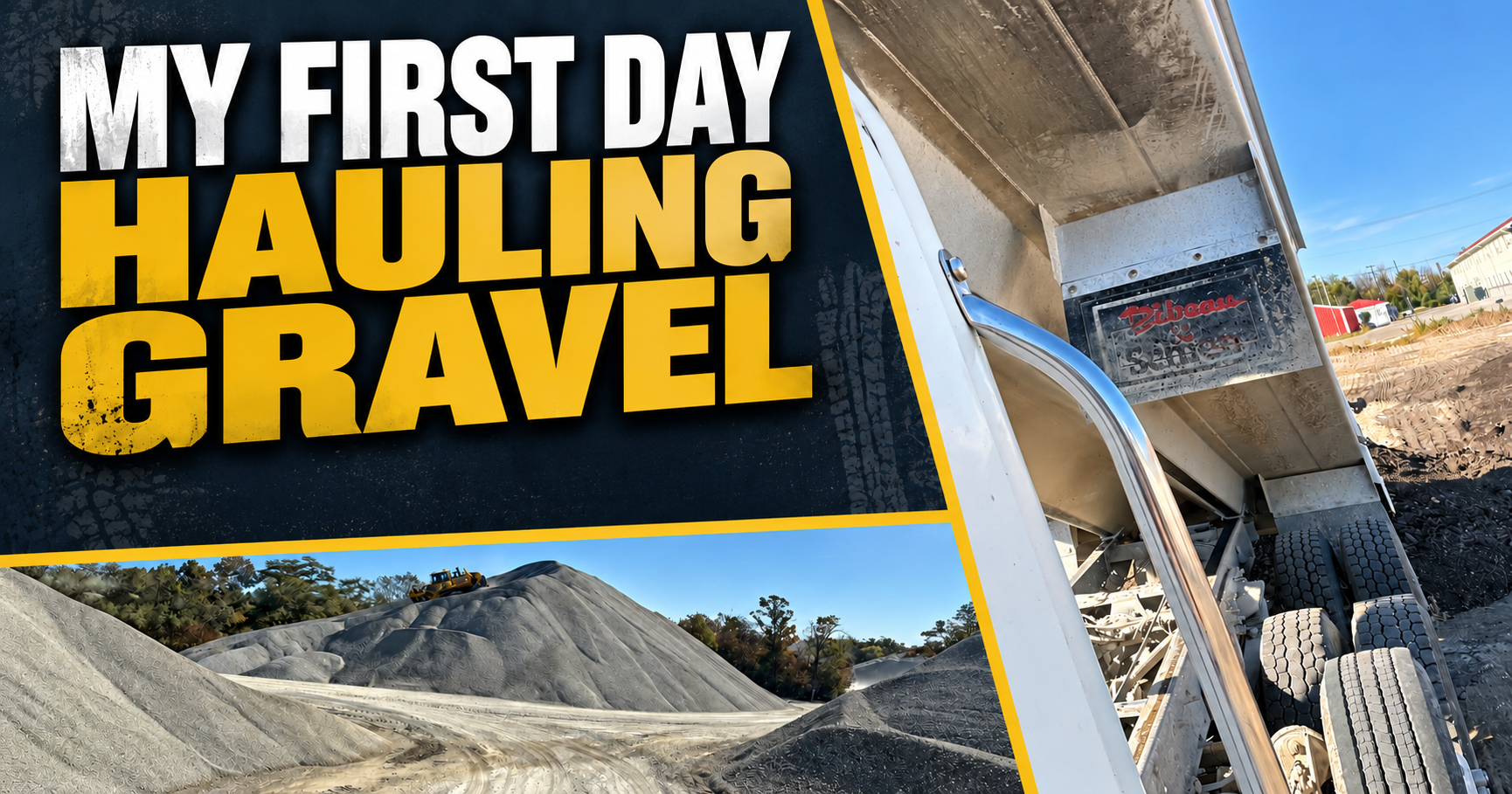
I saw this firsthand during my first day hauling gravel in a dump truck. The quarry loader operator wasn’t simply trying to make the bed look full. The truck had to leave the loading area and go across the quarry scale.
That’s where the weight becomes real.


I Hauled About 125 Tons in One Day
This is the part that still sounds pretty wild to me.
I started working at about 6:00 AM. The quarry closed at 4:30 PM, and we finished up around 5:00.
During that time, I hauled approximately 250,000 pounds of 1-inch base from the quarry to a parking lot project.
The conversion from pounds to tons is simple:
250,000 pounds ÷ 2,000 = 125 tons
So I moved roughly 125 tons of rock during an 11-hour workday.
I wasn’t traveling very far. The run was only around 12 miles, which meant I could keep cycling between the quarry and the jobsite.
Get loaded.
Get weighed.
Take the load to the parking lot.
Dump it.
Return empty.
Then start over.
One load doesn’t necessarily seem like you’re accomplishing that much when you’re sitting behind the wheel.
Add the entire day together and suddenly you’ve moved a small mountain of rock.
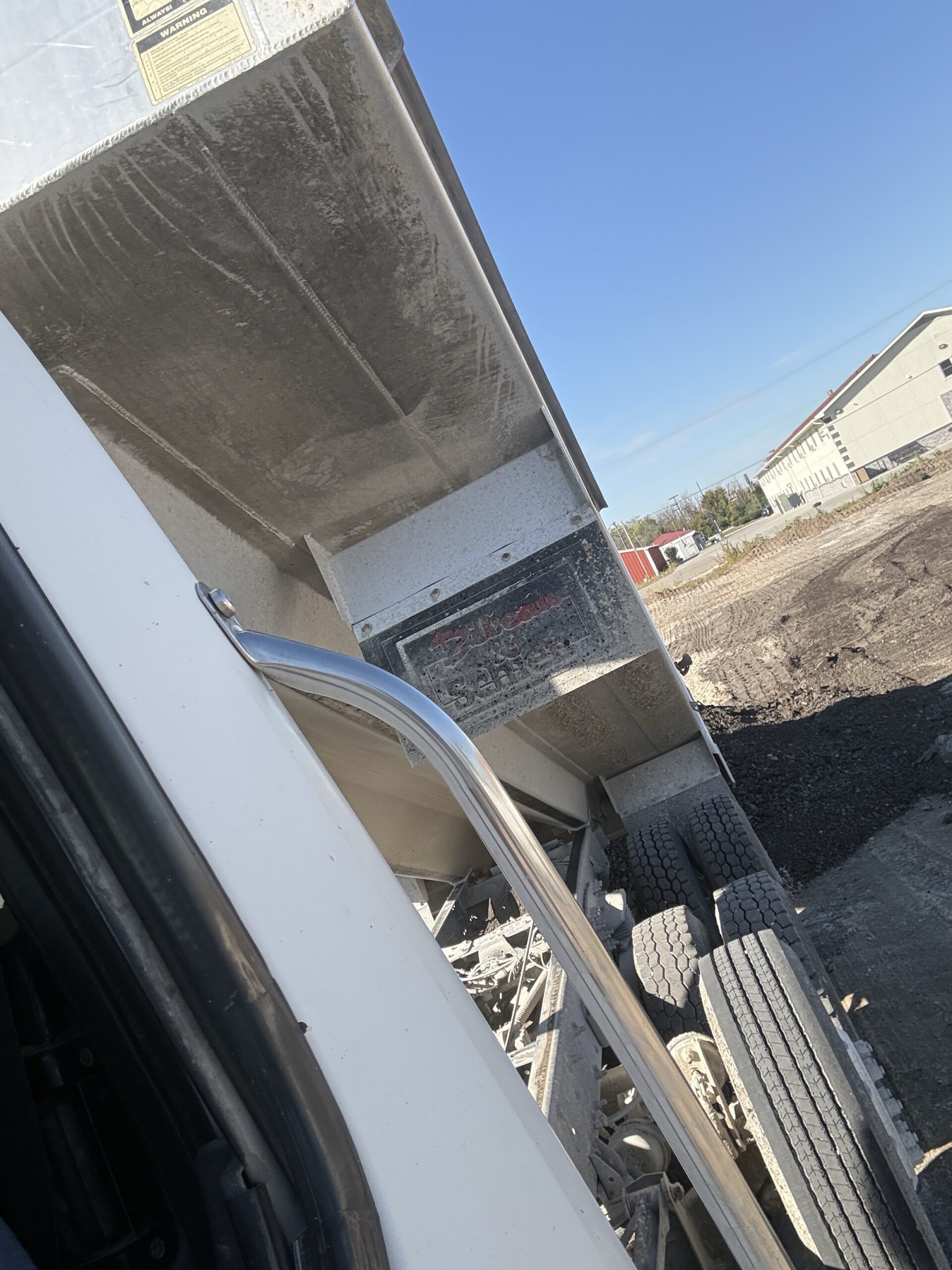
I Don’t Want to Guess How Many Tons Were on My Freightliner
There’s an important distinction I want to make here because I see plenty of trucking information online that gives numbers with way too much confidence.
I know approximately how much material I hauled throughout the entire day.
I don’t have every individual quarry scale ticket sitting in front of me while writing this.
So I’m not going to tell you my early-2000s Freightliner was carrying exactly 15 tons, 18 tons, 20 tons or some other number on every trip.
That’s guessing.
If I have the individual tickets, I can look at the actual weights and tell you.
That’s much more useful than pretending every dump truck carries the same amount.

The Scale Tells You What the Truck Actually Weighs
Every time I was loaded at the quarry, I pulled onto the scale.
The loading process itself was pretty interesting the first time I did it.
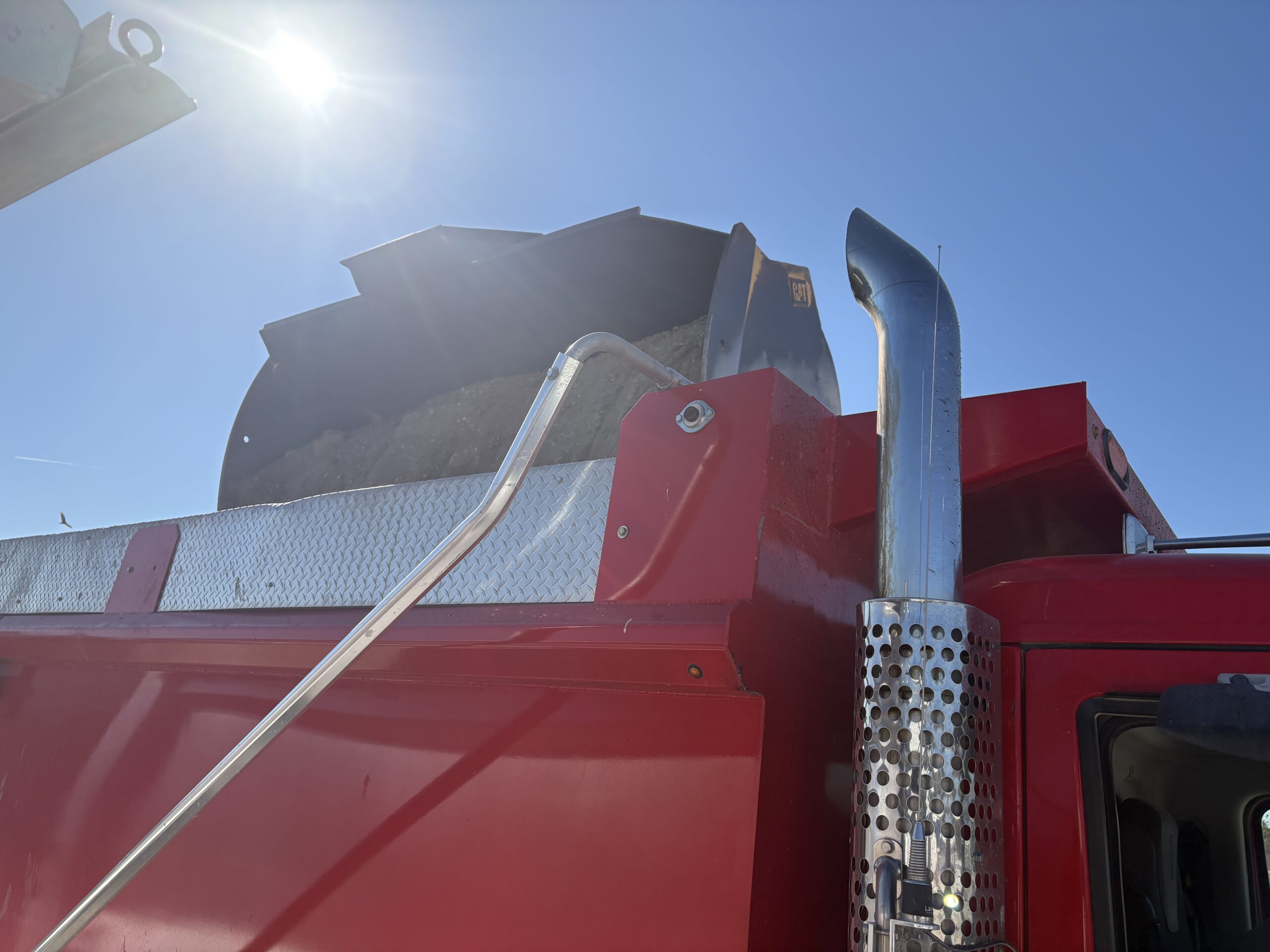
I’d position the Freightliner near the material we needed. A massive quarry loader would come over and load the dump body with 1-inch base.
When the loader operator was finished, he’d honk his horn.
That was my signal to go.
I’d then pull around onto the quarry scale.
After the truck was weighed, I’d pull forward, sign the ticket, and receive my ticket receipt for the load.
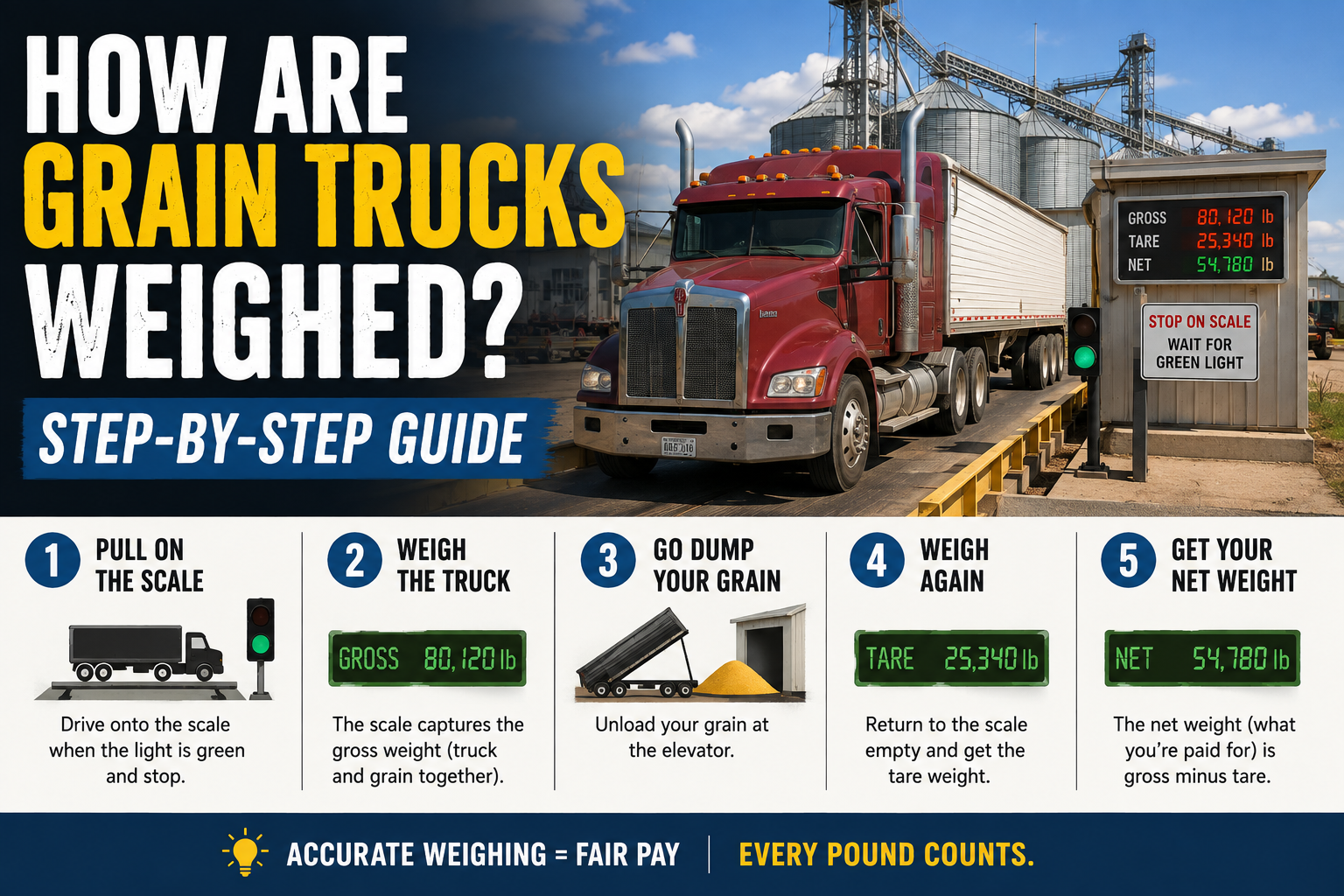
Coming from grain hauling, scales weren’t completely new to me. I’ve already explained how grain trucks are weighed, but seeing the quarry side of the process helped connect the dots.
You can look at a pile of gravel in a dump body and make an educated guess.
A scale gives you a number.
Gross Weight Isn’t the Same as Payload
This is one of the most important things to understand when talking about dump truck capacity.
Suppose a loaded truck weighs 60,000 pounds.
That does not mean it’s hauling 30 tons of gravel.
The truck itself weighs thousands of pounds.
The engine, frame, axles, fuel, cab, tires, hydraulic system and steel dump body are all part of the weight sitting on that scale.
That’s why you need to understand three different terms.
Tare weight is essentially the weight of the empty truck.
Gross weight is the loaded truck’s total weight.
Payload is the material you’re actually carrying.
A simplified example makes this easier.
If a dump truck weighs 30,000 pounds empty and weighs 60,000 pounds loaded, then:
60,000 – 30,000 = 30,000 pounds of payload
Divide that by 2,000 pounds per ton:
30,000 ÷ 2,000 = 15 tons
In that hypothetical example, the truck is hauling 15 tons.
But change the empty weight or allowable loaded weight and the payload changes too.
Why Two Dump Trucks Can Haul Different Amounts
This is where simply Googling “dump truck capacity” can become misleading.
Two trucks parked beside each other can have different legal payload capacities.
The number and configuration of axles matter.
The truck’s empty weight matters.
The dump body matters.
The chassis matters.
The weight ratings matter.
Axle spacing matters.
And the laws where the truck is operating matter.
A modern heavy dump truck gives us a good example of how substantial the hardware can be. Some current tandem-axle vocational dump configurations have front axle ratings around 20,000 pounds and rear axle ratings in the mid-40,000-pound range.
Add additional axles and you’re dealing with another configuration entirely.
That’s why I wouldn’t look at another driver’s load and assume my Freightliner should carry exactly the same amount.
Dump Body Capacity and Weight Capacity Aren’t the Same Thing
Here’s another distinction that confused me more before I started working around trucks.
Dump bodies are often described by cubic yards.
Payload is often discussed in pounds or tons.
Those measurements tell you different things.
Cubic yards describe volume.
Tons describe weight.
Imagine filling the same dump body with two completely different materials.
One might be relatively light.
The other might be dense rock.
The volume could be identical while the actual weight of the load is dramatically different.
That’s why the question “How many yards does the truck hold?” isn’t necessarily the same as asking “How many tons can this truck legally haul?”
For heavy aggregate, weight can become the limiting factor before you run out of physical room in the bed.

The Type of Gravel Matters Too
“Gravel” is a broad word.
On my quarry run, I was hauling 1-inch base for a parking lot that was being prepared for asphalt.
That’s different from hauling decorative rock, sand, topsoil, demolition debris or some other material.
The density and moisture content of the material can change how much a given volume weighs.
So even if somebody tells you their dump truck has a certain cubic-yard body, you still don’t automatically know how many tons of a particular material should go into it.
That’s another reason commercial operations use scales.
Why Dump Trucks Have Different Numbers of Axles
Once you start paying attention to dump trucks, you’ll notice all kinds of axle configurations.
That’s not just for looks.
Weight has to be supported and distributed through the truck’s axles, and allowable highway weight isn’t determined simply by asking whether the engine is powerful enough to move the load.
You’ll see tandem dump trucks, tri-axles and trucks with additional lift or pusher axles depending on the operation and jurisdiction.
More axles don’t mean a driver can simply pile on unlimited material, either.
The truck still has ratings and applicable weight laws.
But axle configuration is one of the major reasons one dump truck may be capable of legally hauling a different payload than another.
A Quarry Loader Can Put a Lot of Rock in a Truck Fast
This was one of the cooler parts of my first day.
The loader working at the quarry was huge compared with the kind of equipment I’m used to seeing around ordinary farm work.
I would get the Freightliner positioned, and the loader operator would start filling the dump bed.
You definitely knew when a bucket of rock landed behind you.
Then I’d wait for the horn.
Once the operator honked, I knew he was finished and I could move toward the scale.
There’s a lot of coordination happening even though the process looks simple from the outside.
The loader operator needs to load trucks efficiently.
Drivers need to position correctly.
Loaded trucks need to move toward the scale.
Then they need to get out of the quarry so the next truck can come through.
After several trips, I started getting into the rhythm of it.
Hauling 125 Tons Doesn’t Mean My Truck Holds 125 Tons
This sounds obvious, but it’s worth saying because daily hauling numbers can be misleading.
If somebody says, “I hauled 125 tons today,” they’re generally talking about multiple loads.
That’s exactly what I’m saying here.
My older Freightliner wasn’t cruising down a Missouri highway with 250,000 pounds of gravel in the bed.
I made repeated trips.
That’s one of the advantages of short-haul dump truck work.
When the quarry and jobsite are relatively close together, the same truck can move a surprising amount of material over the course of a full workday.
My roughly 12-mile haul was a good example.
Each trip added another load.
By quitting time, those loads added up to approximately 125 tons.
How Many Loads Can a Dump Truck Haul in a Day?
Now we’re getting into another question where there’s no universal answer.
Distance is huge.
A 12-mile haul is very different from a 60-mile haul.
Loading time matters.
Traffic matters.
The quarry scale can matter.
Waiting for equipment at the jobsite matters.
How quickly you can safely dump matters.
The quarry’s operating hours matter too.
In my case, we started around 6:00 AM and the quarry closed at 4:30 PM.
That puts a hard limit on how many additional loads you can get.
You can have the fastest truck in the world, but once the place supplying your material closes, you’re not getting another load that day.
Payload Is Only Useful If You Can Haul It Safely
When people ask how much a dump truck can haul, it’s tempting to think that more is automatically better.
From the driver’s seat, that’s not how I look at it.
I want the truck loaded correctly and legally.
A heavy truck requires respect.
Acceleration is different.
Braking distance matters.
Corners matter.
Road conditions matter.
And when you’re making the same short run repeatedly, it’s easy for the route to start feeling routine.
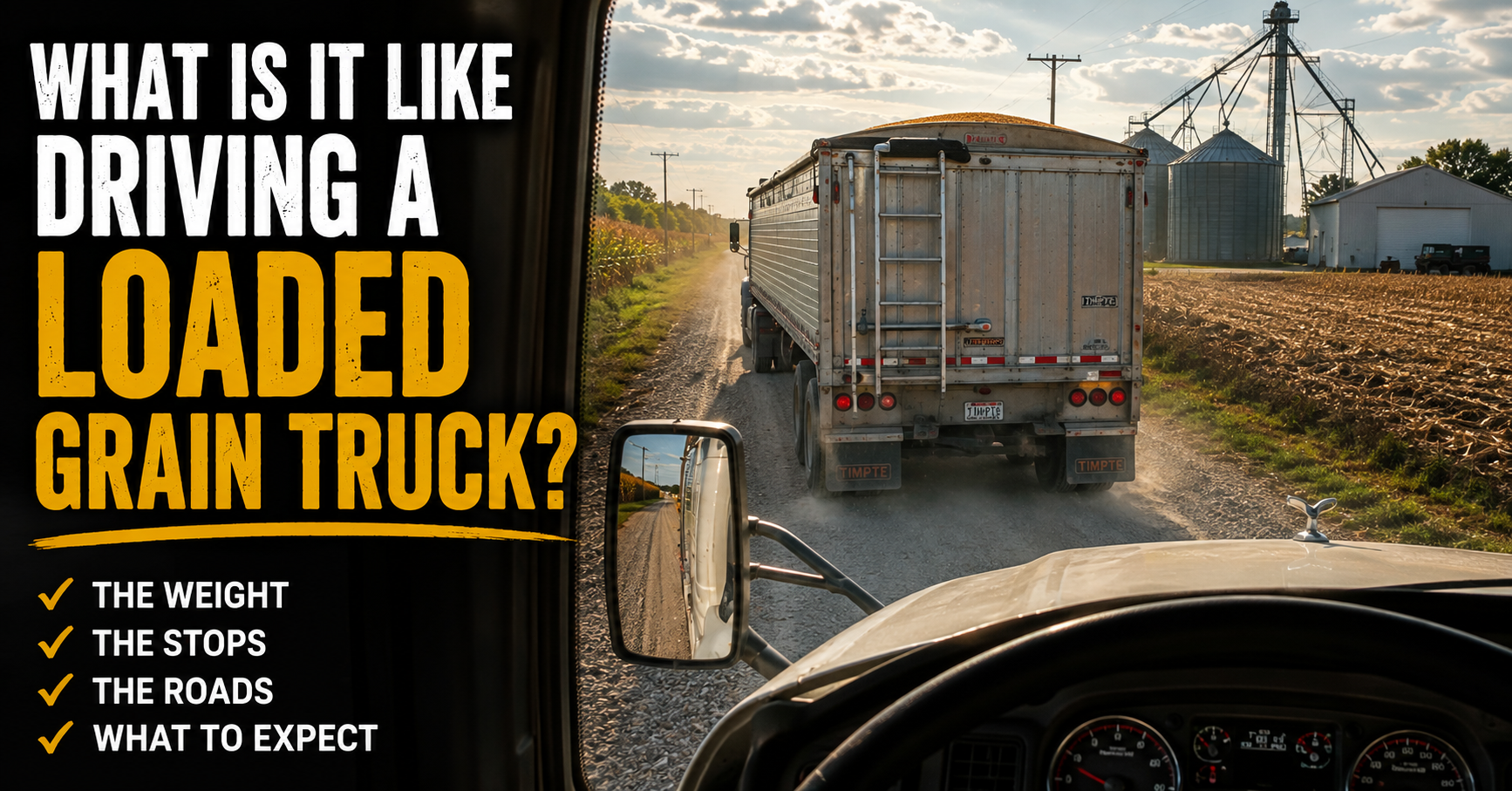
I’ve noticed the same thing driving loaded grain trucks. Once you’ve driven a route several times, you know where you’re going, but the weight behind you hasn’t magically disappeared.
The truck is still heavy.
Dumping the Load Adds Another Set of Risks
Getting the gravel to the parking lot was only half the job.
Then I had to dump it.
That means using the truck’s hydraulic system to raise the dump body and let the material slide out.
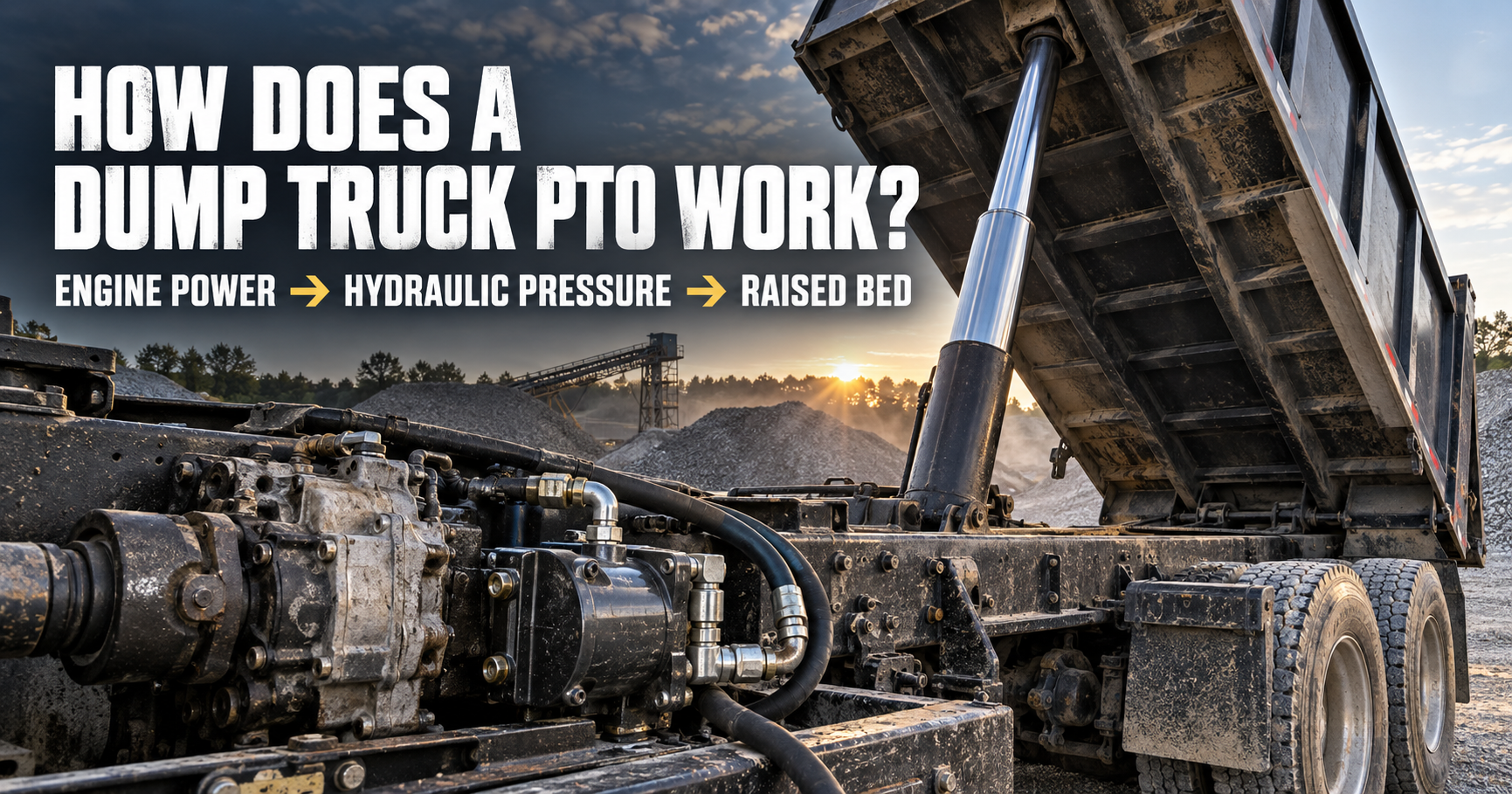
If you’ve never operated one, I have a separate explanation of how a dump truck PTO works and what the driver is actually doing.
My first day hauling rock also gave me a reminder I won’t forget.
While pulling out of the small parking-lot jobsite after dumping, the bed of my truck bumped an overhead telephone line.
Thankfully, I had already lowered the bed quite a bit.
The line didn’t snag.
Nothing got ripped down.
But it showed me how quickly dump-truck clearance changes when that bed isn’t completely lowered.
Moving 15 or 20 tons of material sounds impressive.
Moving it without damaging the truck, road, jobsite or anything around you is what actually matters.
So How Much Should You Put in a Dump Truck?
Don’t use a generic internet number to decide how much material to load into an actual truck.
That’s probably the most important takeaway here.
A statement such as “dump trucks carry 10 to 25 tons” is useful when you’re trying to understand the general scale of these trucks.
It is not a loading instruction.
For an actual truck, you need to know its specifications, axle ratings, empty weight, applicable weight limits and what the scale says.
That’s exactly why I like the quarry system I experienced.
The truck gets loaded.
Then it gets weighed.
There’s no need to eyeball the pile in the bed and pretend that’s precise.
What 125 Tons Looked Like From the Driver’s Seat
Before I started doing this work, 125 tons would have just sounded like a big number.
Now I think about it differently.
I think about starting at 6:00 in the morning in an older Freightliner.
I think about driving into the quarry and getting positioned near the 1-inch base.
I think about that huge loader coming toward the truck.
I think about waiting for the horn.
I think about pulling onto the scale.
I think about moving forward, signing the ticket and taking my receipt.
Then driving roughly 12 miles to the parking lot.
Dumping.
Lowering the bed.
Driving back.
And doing the whole thing again.
That’s how a dump truck moves 125 tons in a day.
Not all at once.
One load at a time.
About the Author: Dax. I’m a Class A CDL driver sharing what I’m learning from real-world trucking, including hauling grain, driving dump trucks, working around farms and quarries, and handling the situations CDL school can’t completely prepare you for. I created Trucking Resource to give new and working drivers straightforward answers based on actual experience behind the wheel.