
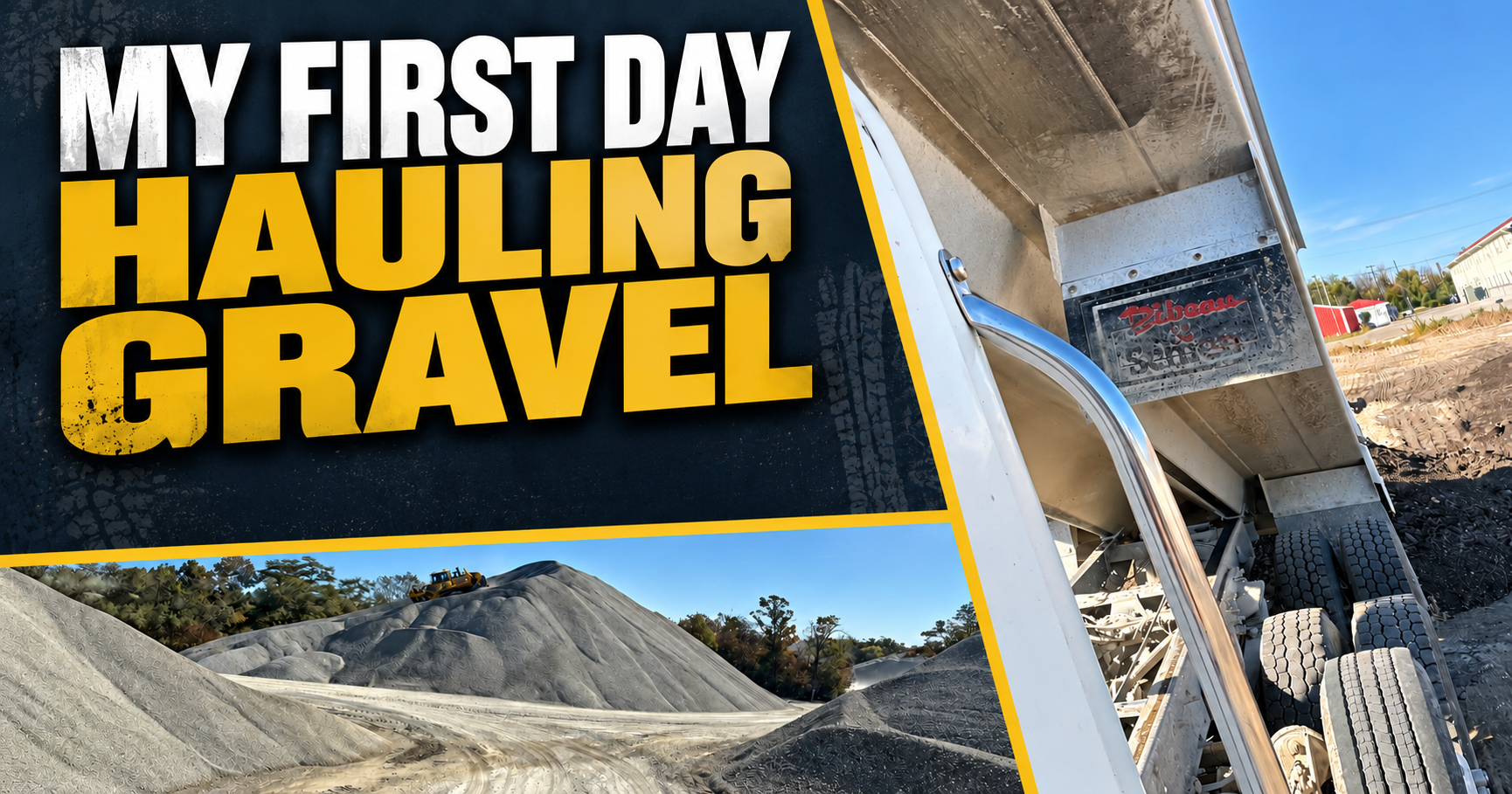
Today was my first full day hauling gravel in a dump truck, and even though I’ve already spent time driving both semis and dump trucks for farm work, this was a completely different kind of trucking.
The truck I was driving was an older early-2000s Freightliner dump truck. Nothing fancy or brand new, just an older working truck that’s there to haul material and get the job done.
I started at 6:00 in the morning and spent most of the day making roughly 12-mile runs back and forth between a rock quarry in Huntsville, Missouri, and a parking lot job. By the time the quarry closed at 4:30 and we finished working around 5:00, I had hauled roughly 250,000 pounds of 1-inch base gravel.
That’s about 125 tons of rock in one day.
The driving itself wasn’t necessarily the hardest part. What was new to me was everything surrounding it: figuring out where to go at the quarry, getting loaded by a massive loader, crossing the scale, signing for each load, taking the ticket with me, getting into a small parking-lot jobsite, dumping, and then doing the whole thing again.
I also bumped an overhead telephone line with the dump bed while pulling out of the jobsite.
Thankfully, the bed was already lowered quite a bit and the line didn’t catch on anything or get pulled down. Nothing happened, but it was close enough to teach me something I’m probably not going to forget.
So if you’ve ever wondered what it’s actually like hauling gravel in a dump truck, here’s what my first day doing it looked like from inside an older Freightliner.
My Gravel Hauling Day Started at 6 AM
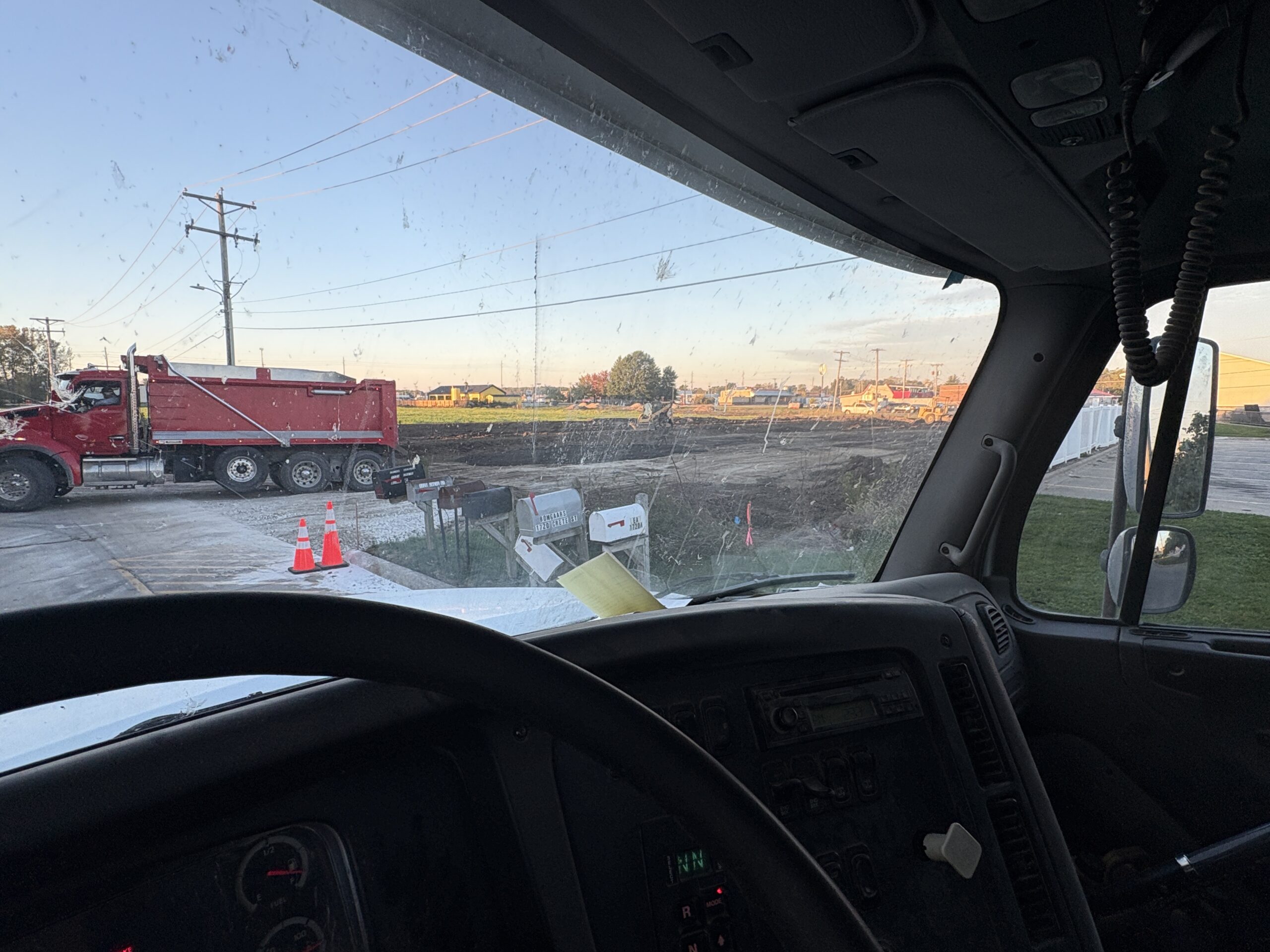
We started at 6:00 AM.
The job was pretty straightforward once I understood the routine. We were hauling 1-inch base from the quarry to a parking lot that was being built and would eventually be paved with asphalt.
The trip was only around 12 miles each way.
That doesn’t sound like much, but short-haul dump truck work isn’t really about putting hundreds of highway miles behind you. You’re trying to move load after load of material between two relatively close locations.
My day became a repeating cycle.
Drive to the quarry, get loaded, weigh, get my ticket, drive back, dump, and return for another load.
Then do it again.
And again.
By the end of the day, all those relatively short trips had moved around a quarter-million pounds of gravel.
The Early-2000s Freightliner Was Made for This Kind of Work
The Freightliner I was driving wasn’t a new truck with every modern feature you can get.
It’s an older early-2000s work truck.
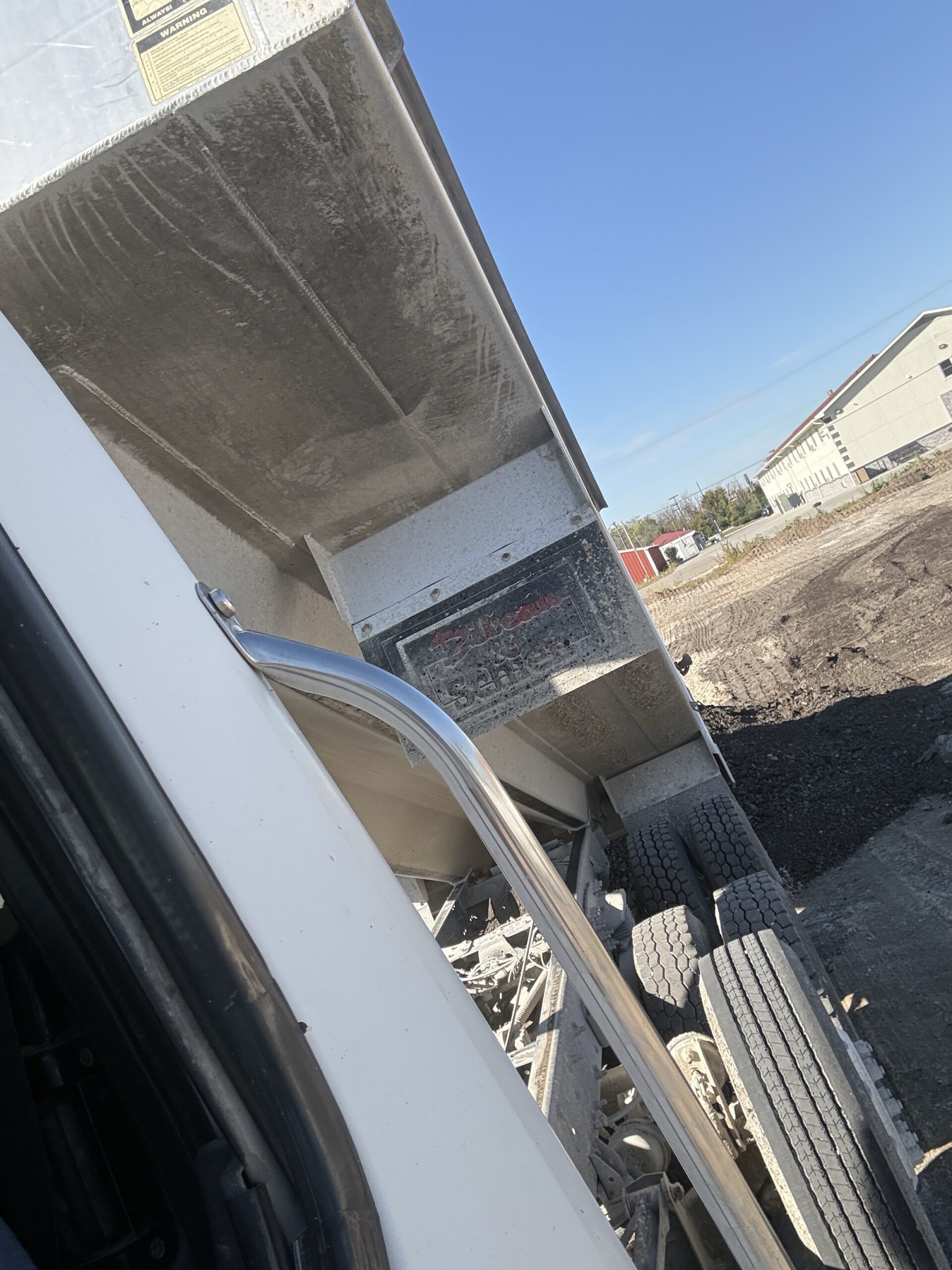
And honestly, that seems fitting for this kind of job.
You’re going in and out of a quarry, driving onto a construction site, hauling rock, raising and lowering the dump bed, and repeating it all day.
I’ve already spent time driving trucks since getting my CDL, but every truck takes some getting used to. Controls can be in different places, visibility can feel different, and even the way an older truck responds can take a little time to learn.
That’s one thing I’ve learned quickly since my first day as a truck driver. Getting your CDL doesn’t mean every commercial truck suddenly feels exactly the same.
You still have to learn the truck you’re sitting in.
Here’s How I Got Loaded at the Rock Quarry
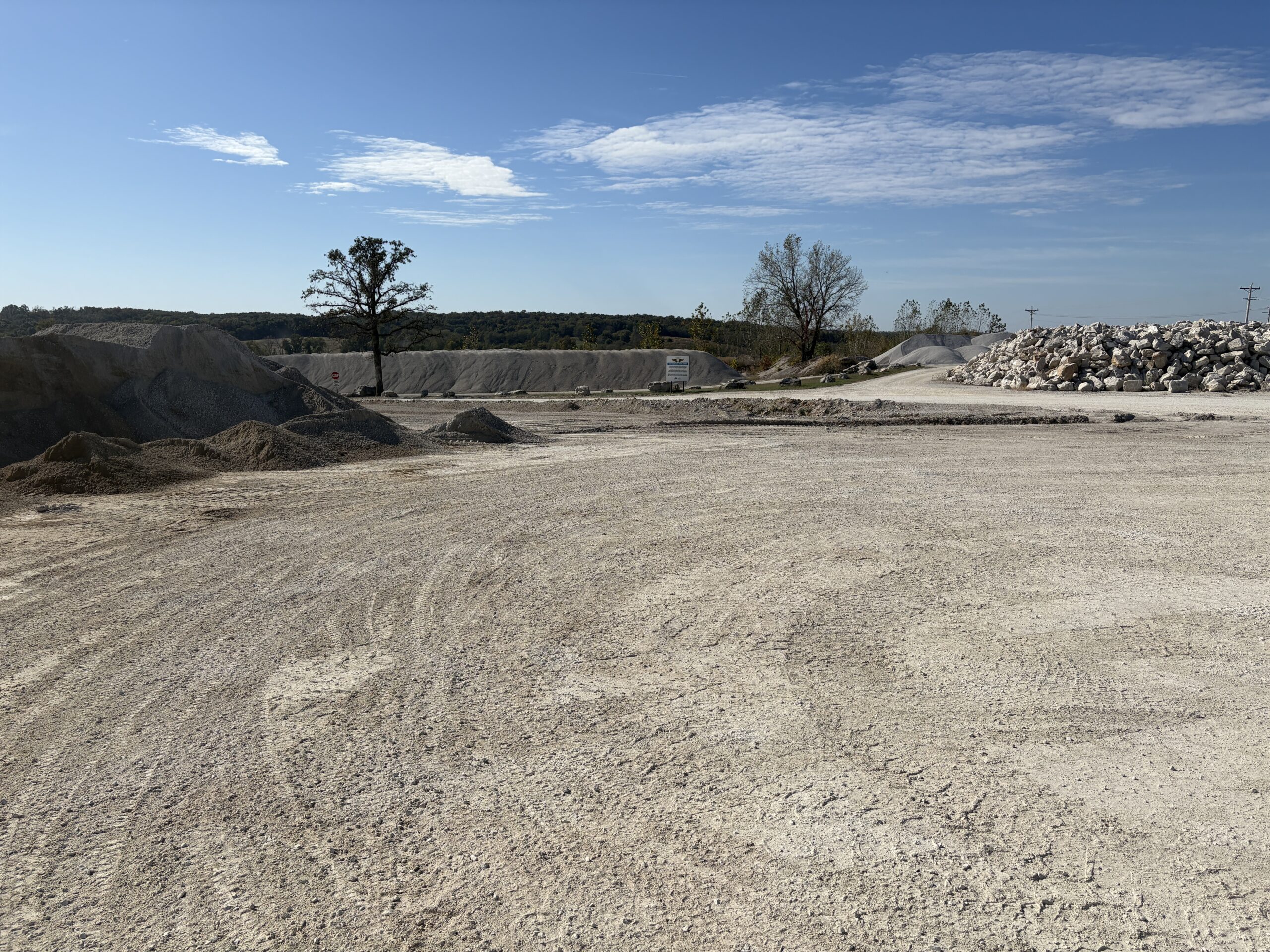
The quarry was one of the most interesting parts for me because I’d never done this type of hauling before.
When you arrive, you need to know what material you’re there to get.
For this job, I was hauling 1-inch base.
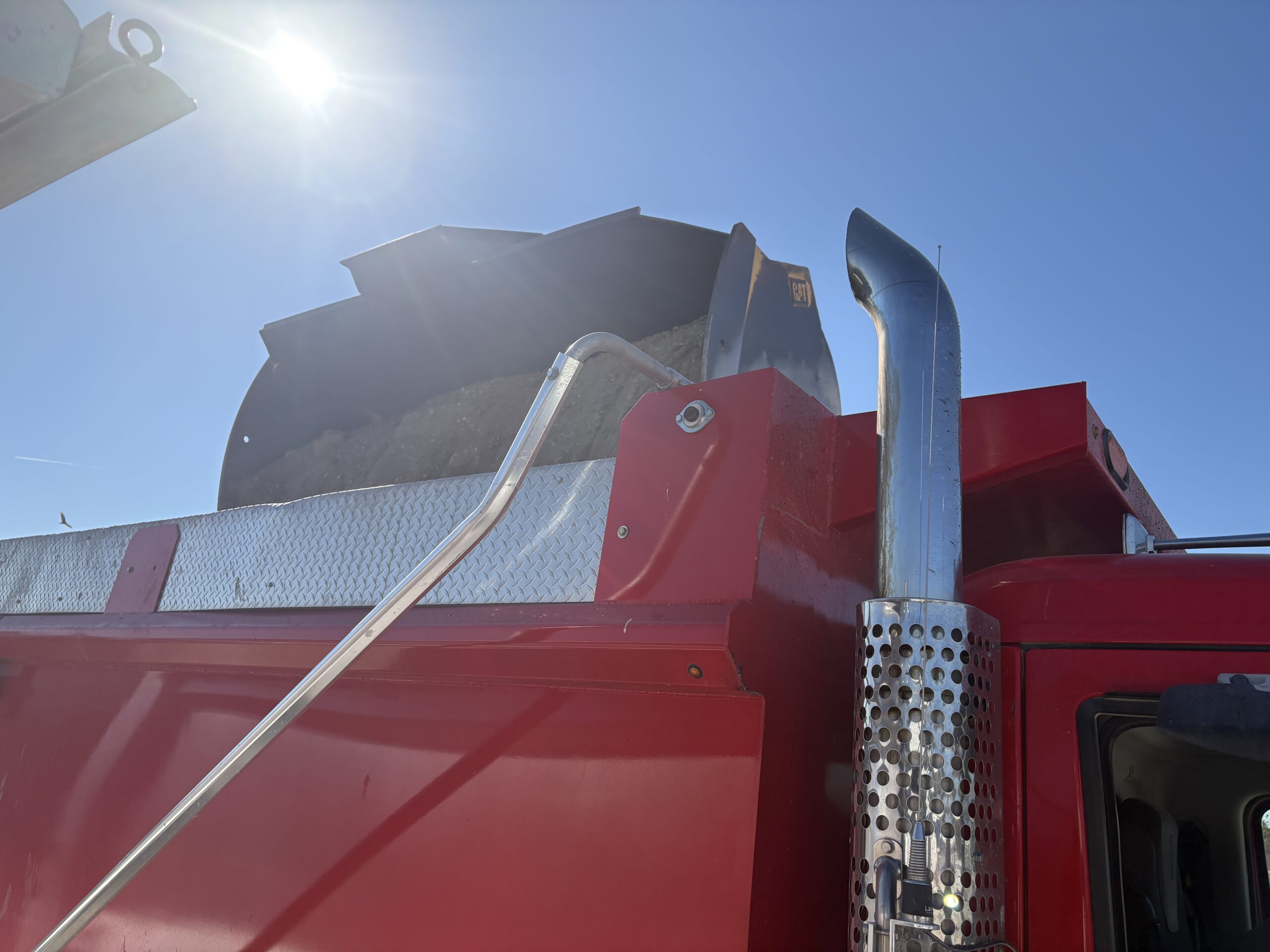
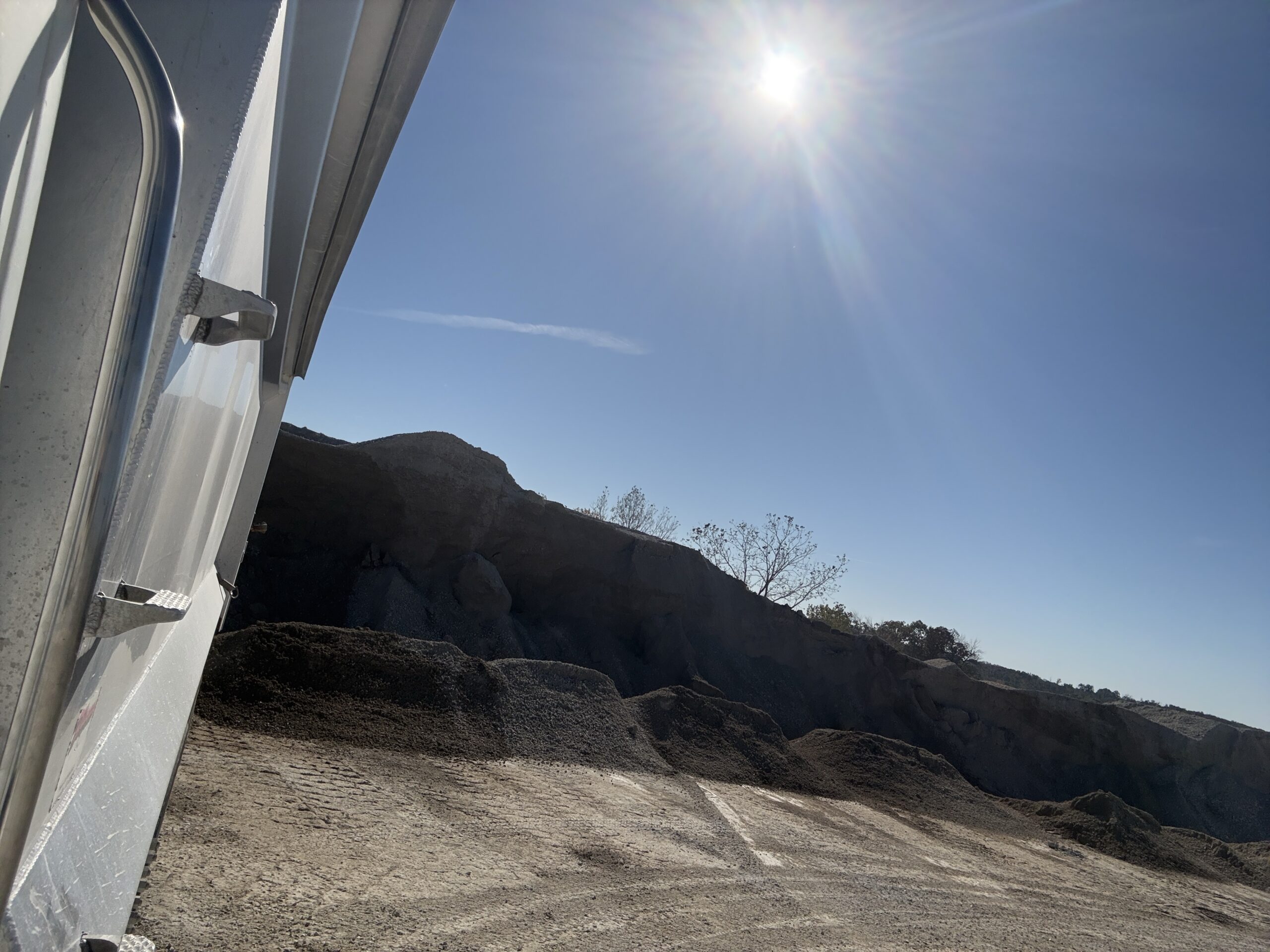
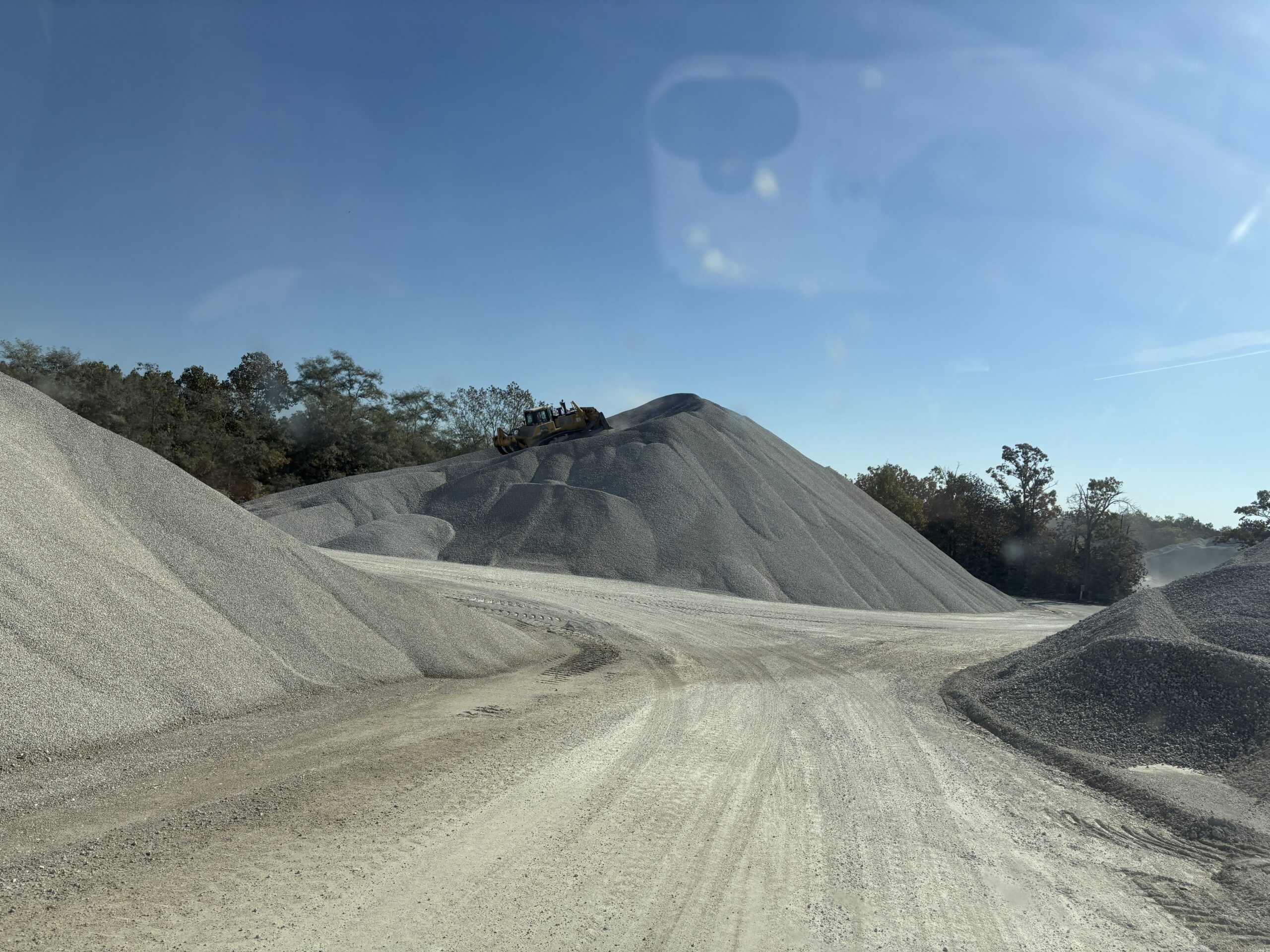
I’d drive into the quarry, get over by the material I needed, and position the Freightliner so the quarry loader could load me.
Then you wait.
The loader comes over and starts dropping rock into the dump bed.
And this isn’t a little tractor loader.
It’s a massive quarry loader moving enough material with each bucket that you definitely know when the rock hits the bed behind you.
I wasn’t the one deciding when the truck was finished being loaded either.
The loader operator handled that.
Once he was done, he’d honk the loader’s horn.
That was my signal that the load was ready.
Then I’d pull out and head toward the quarry scale.
By later in the day, that horn had basically become part of the routine.
Hear the horn.
Time to go.
Every Load Went Across the Quarry Scale
After getting loaded, I couldn’t simply leave the quarry.
The truck needed to be weighed.
I’d pull the Freightliner onto the quarry scale with the load of 1-inch base in the bed.
After they got the weight, they’d have me pull forward. Then I’d sign the ticket and they’d give me a ticket receipt for the load.
Then I was ready to leave.
I’ve already dealt with scales while hauling grain, so the idea of weighing a loaded commercial truck wasn’t new. The actual routine was different, though.
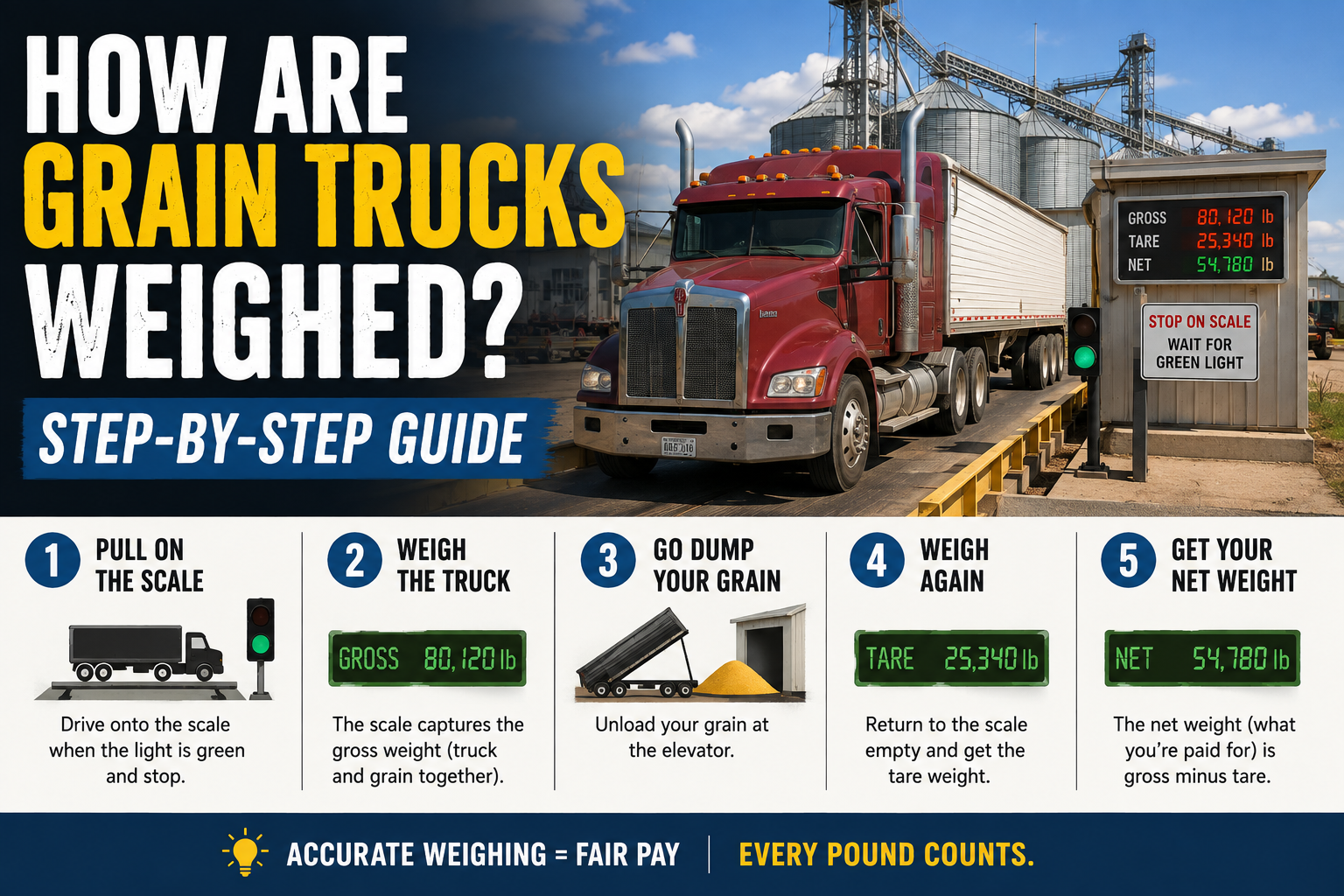
I explained the grain side in my guide to how grain trucks are weighed, and today’s experience really showed me how the same basic idea can work differently depending on what you’re hauling and where you’re loading.
After several trips, the quarry routine became pretty easy to remember.
Get to the correct rock pile.
Get positioned.
Let the loader fill the truck.
Wait for the horn.
Pull onto the scale.
Pull forward.
Sign the ticket.
Take my receipt.
Head back to the parking lot.
I Hauled About 250,000 Pounds of 1-Inch Base
This was probably my favorite number from the whole day.
By the time we were finished, I had hauled approximately 250,000 pounds of gravel.
That’s around 125 tons.
Obviously, that wasn’t in one load. It was the result of making trip after trip throughout the day.
But saying I moved 125 tons of rock in one day puts those short trips into perspective.
Each individual load is only one piece of the job.
After enough trips, though, you can physically see the parking lot taking shape.
That’s something I liked about this type of hauling.
There’s a visible result at the end of the day.
Driving Loaded With Rock Felt Different
I’ve hauled grain since getting my CDL, so driving a heavily loaded truck wasn’t completely new to me.
Still, hauling rock in an older Freightliner dump truck has its own feel.
You know when you’re loaded.
Acceleration changes.
Braking changes.
The truck responds differently.
You’re also doing it repeatedly throughout the day, switching between a loaded truck going toward the jobsite and an empty truck heading back to the quarry.
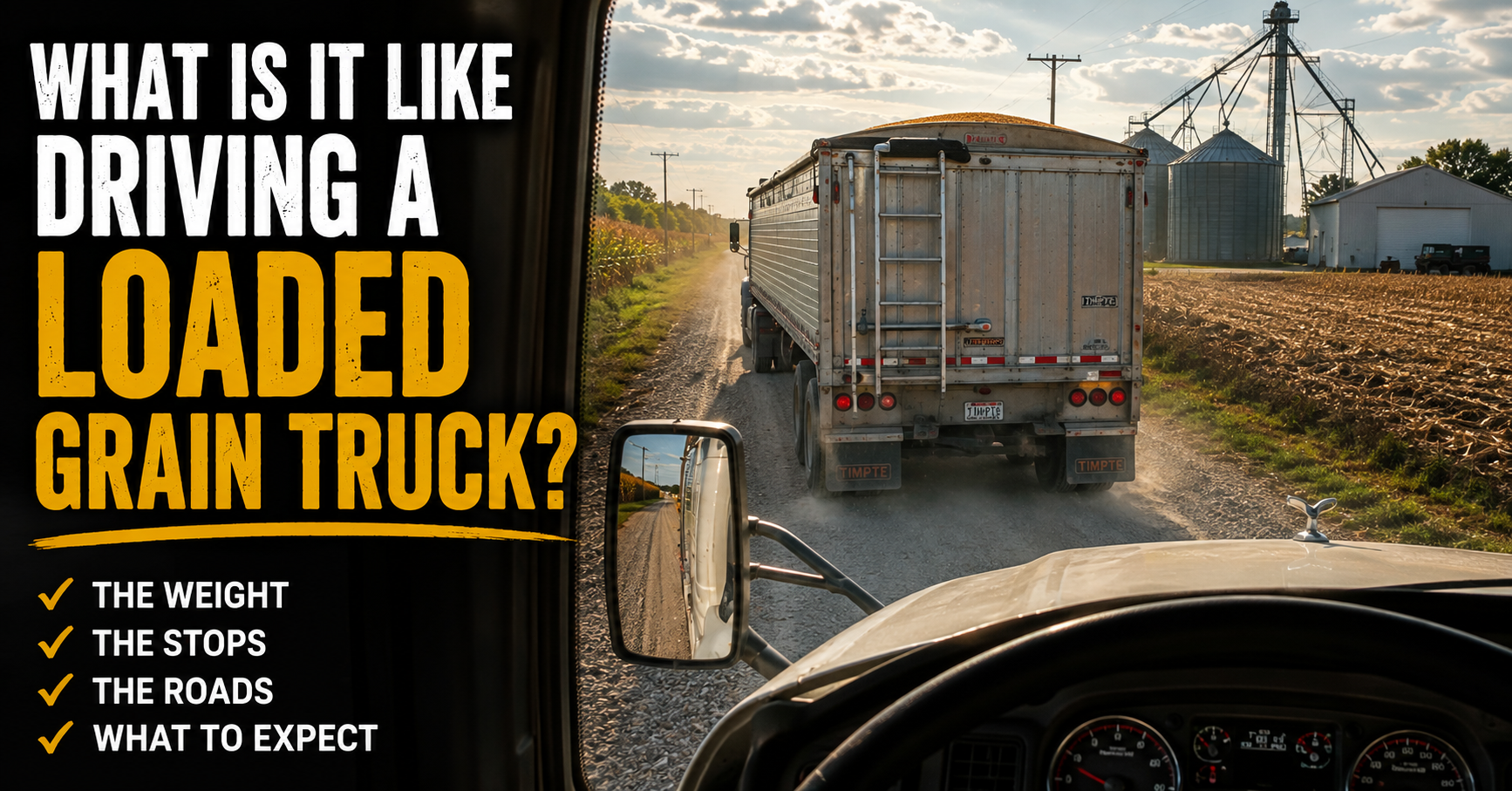
That’s similar in some ways to driving a loaded grain truck, but the jobs start feeling very different once you reach the destination.
With this job, I wasn’t opening hopper doors.
I was raising the entire dump bed.
And that introduced something I hadn’t thought enough about before today.
Dumping Gravel Means You Have to Think Above the Truck
Operating the dump bed itself wasn’t completely foreign to me because I’ve driven a dump truck before.
But dumping load after load on a construction site made me much more aware of how different a dump truck becomes once that bed starts going up.
The truck may fit somewhere perfectly with the bed down.
That tells you almost nothing about whether you have enough clearance with the bed raised.
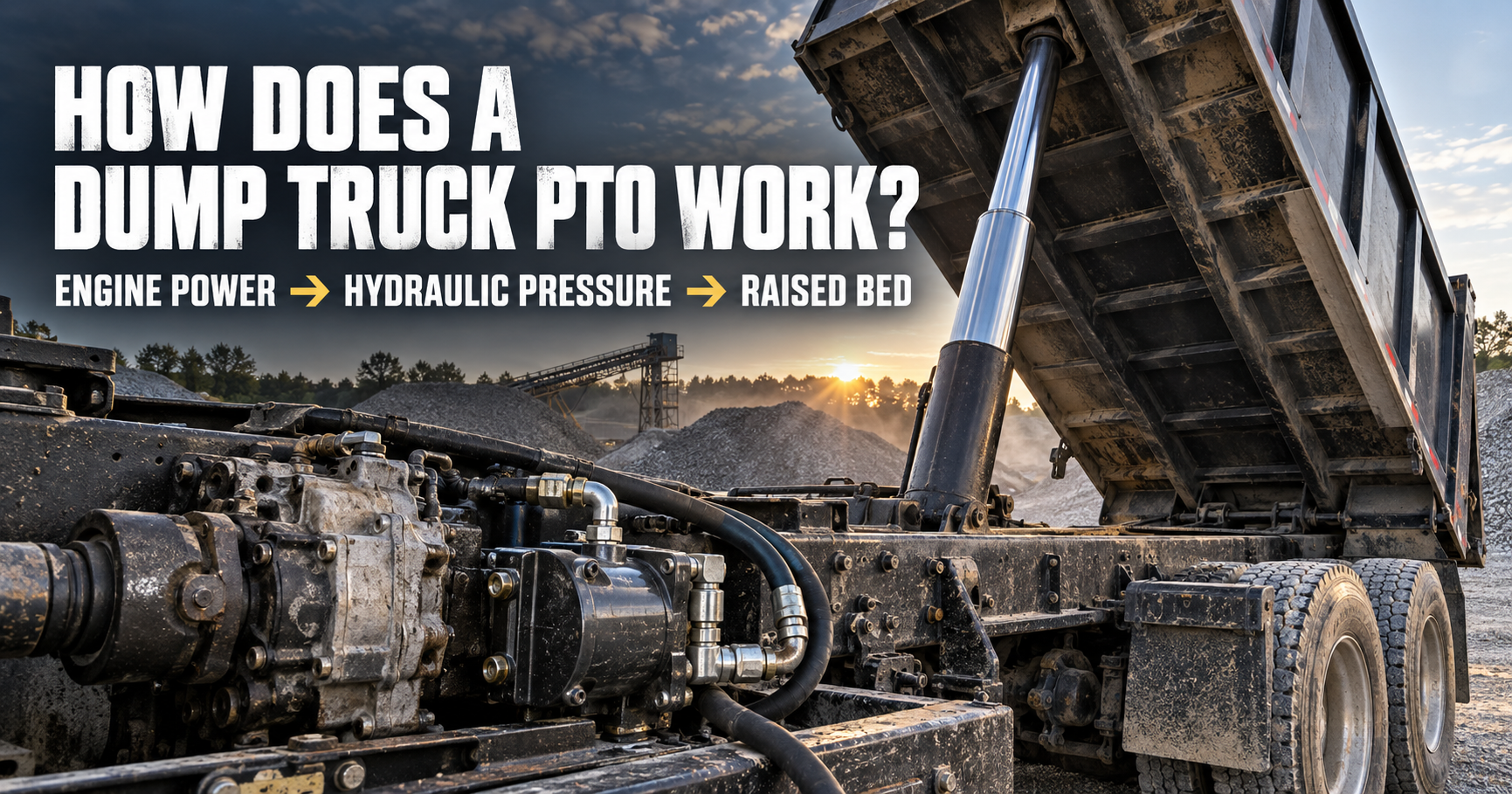
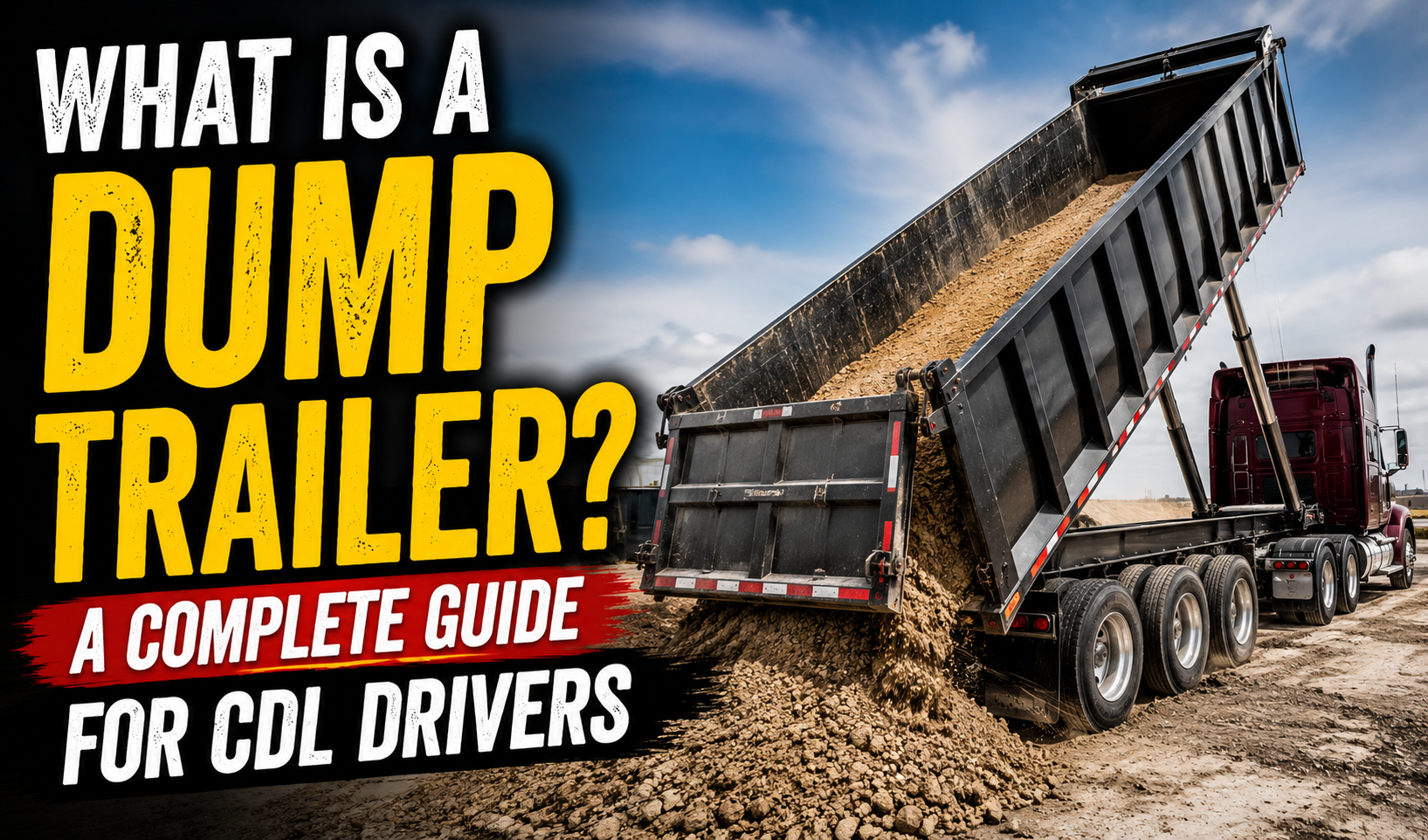
The Freightliner’s PTO powers the hydraulic system used to raise the dump bed. I’ve already explained how a dump truck PTO works for newer drivers who are trying to understand what’s actually happening when they engage one.
When the bed starts rising, your truck suddenly becomes a much taller piece of equipment.
That’s important.
I got a very real reminder of it today.
I Bumped a Telephone Line With the Dump Bed
While pulling out of the small parking-lot jobsite after dumping one of my loads, the dump bed bumped an overhead telephone line.
Thankfully, the bed was already lowered quite a bit.
The line hit the bed, but it didn’t snag.
It didn’t get caught.
It didn’t pull the line down.
Nothing broke.
But I knew immediately that the situation could have been worse.
If that bed had still been farther up and managed to hook the line instead of simply bumping it, I could have had a completely different problem on my hands.
And it taught me something in about two seconds that I’m going to remember for a long time:
With a dump truck, you can’t just look around you. You have to look up.

From Now On, I Want That Dump Bed Down Before Moving
I already knew you’re supposed to lower a dump bed before driving away.
That’s basic dump-truck operation.
But there’s knowing something because somebody tells you, and then there’s understanding why it matters because you nearly created a problem yourself.
Today gave me the second kind.
The bed was coming down.
It was already low enough that I got lucky.
But after today, I’m going to be much more conscious about knowing exactly where that bed is before moving out of a dumping area.
Not almost down.
Not most of the way down.
Down.
I’m also going to pay more attention to overhead obstacles before raising it.
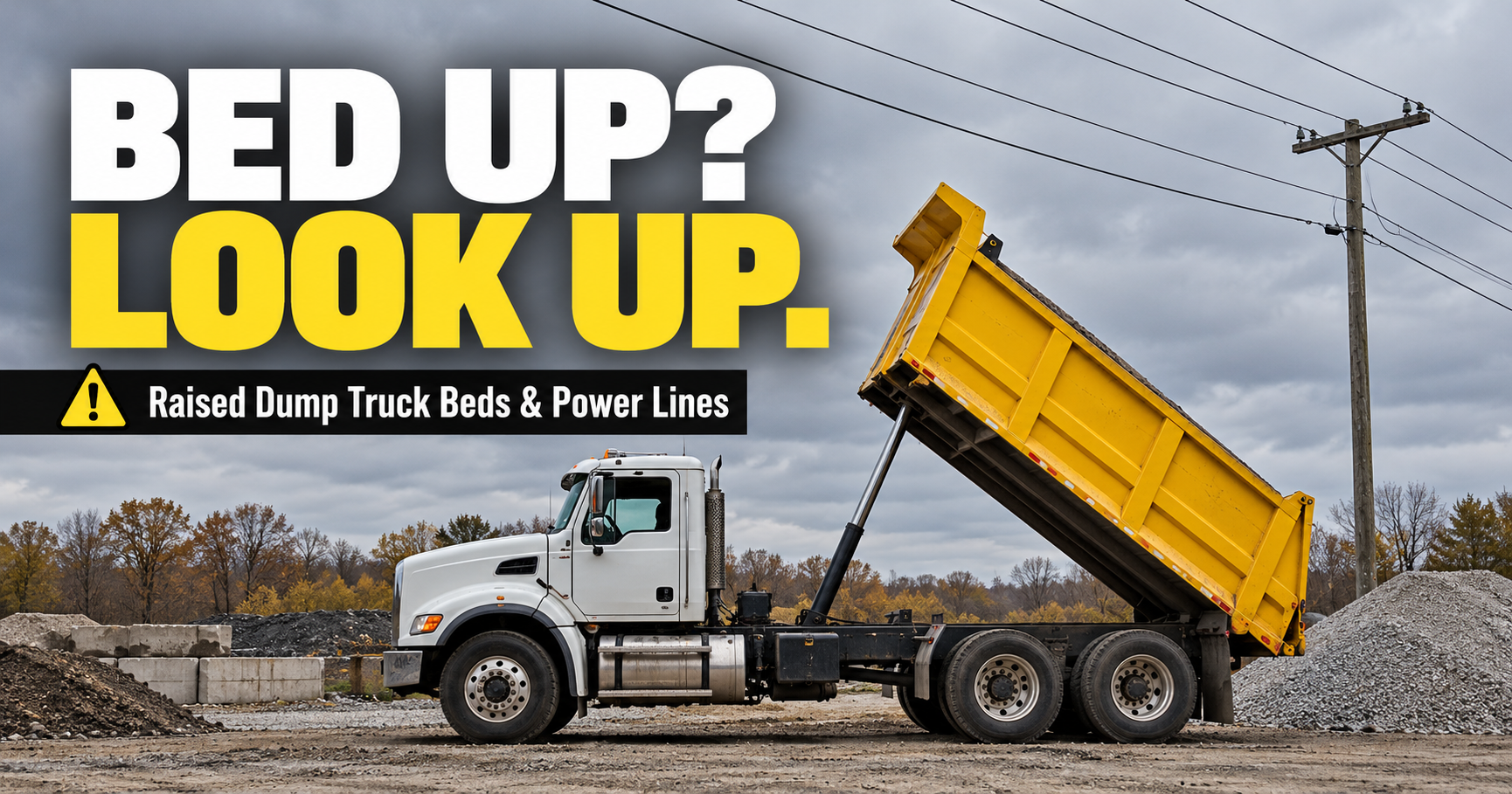
Telephone lines are one concern. Electrical lines are an even more serious hazard. Then there are tree limbs, buildings, signs and anything else above a jobsite that you may not notice when you’re focused on backing and positioning the truck.
An empty dump truck with its bed down and a dump truck with its bed raised are two very different clearance situations.
That’s probably the biggest lesson I took home today.
This Is Another Thing CDL School Couldn’t Really Teach Me
The more I actually work as a CDL driver, the more I understand the difference between learning to pass the CDL test and learning to work as a truck driver.
I’m glad I went through CDL training.
I needed the fundamentals.
But there is no realistic way CDL school can recreate every situation you’re eventually going to encounter.
I’ve written about the difference between CDL school and real-world trucking before, and today gave me another example.
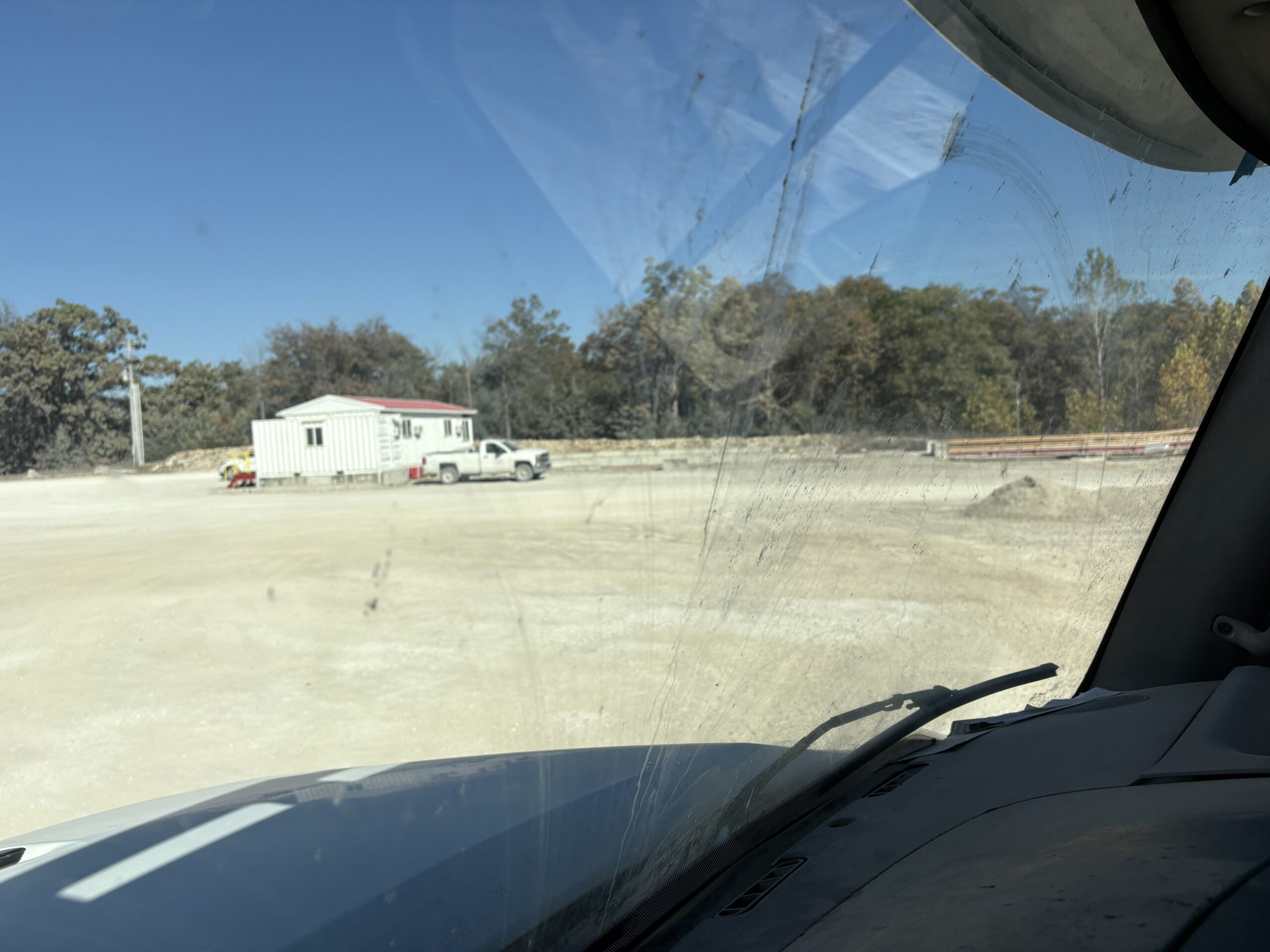
CDL school didn’t have me pulling an early-2000s Freightliner into a quarry.
It didn’t have a giant loader filling my dump bed with 1-inch base.
It didn’t have me signing quarry scale tickets.
It didn’t have me making 12-mile construction hauls all day.
And it definitely didn’t have me maneuvering through a little parking-lot jobsite underneath overhead lines.
Those are things you learn once somebody actually gives you the keys and sends you to work.
Hauling Gravel Was Very Different From Hauling Corn
Before today, a lot of my real trucking experience had involved farm work and grain.
Gravel hauling felt different almost immediately.

When I’m hauling corn during harvest, what’s happening in the field can dictate the entire day.
You may wait for a combine.
You may load from a grain cart.
You may haul to a bin.
You may haul somewhere else.
Something changes and suddenly the plan changes with it.
Today felt more repetitive.
Quarry.
Parking lot.
Quarry.
Parking lot.
Once I learned where I needed to go at both ends, I pretty much knew what the next hour would look like.
There was actually something nice about that.
I wasn’t constantly wondering where I was supposed to go next.
My job was to keep that Freightliner moving between the quarry and parking lot and safely deliver as much material as we needed.
Short-Haul Dump Truck Driving Keeps You Busy
An 11-hour day sounds long because it is.
But today’s shift went surprisingly fast.
I started at 6:00 AM. The quarry closed at 4:30 PM, and we were finished working around 5:00.
With a short haul of around 12 miles, you’re constantly reaching the next part of the job.
Drive to the quarry.
Get loaded.
Cross the scale.
Get the ticket.
Drive to the parking lot.
Position the truck.
Dump.
Lower the bed.
Head back.
There isn’t much opportunity to settle in and think, “I’ve got another four hours before anything changes.”
Something is always happening.
And by the end of the day, those repeated little trips had moved about 125 tons of rock.
I Understand Dump Truck Drivers a Little Better Now
Before getting my CDL, I probably would have looked at a dump truck hauling gravel and thought the job was pretty simple.
Get rock.
Drive somewhere.
Dump rock.
Technically, that’s what I did today.
But that description leaves out most of the job.
You have to safely handle the loaded truck.
You need to know the quarry routine.
You need to position yourself for a loader.
You need to understand the scale process.
You need to keep track of tickets.
You need to enter and exit construction sites.
You have to put the material where it’s needed.
You have to operate the PTO and dump body correctly.
You need to watch the ground underneath the truck.
You need to watch what’s behind you.
And, as I learned today, you’d better watch what’s above you too.
That’s becoming a pattern since I started trucking.
A job looks simple from the outside until you’re the person sitting behind the wheel.
I’m Still Learning What “Truck Driver” Actually Means
One of the most interesting things about getting my Class A CDL has been discovering just how many completely different jobs fall under the words “truck driver.”
I’ve driven a semi.
I’ve hauled grain.
I’ve driven a dump truck.
I’ve worked around combines, grain bins and grain elevators.
And now I’ve spent a full day hauling rock from a quarry for a construction job.
Each one uses some of the same basic driving skills, but the actual work can feel completely different.
That’s something I wish I’d understood better before getting into trucking, and it’s part of why I’ve been documenting these experiences.
I talked about some of those early surprises in what I wish someone had told me before my first trucking job, but the list keeps growing every time I do something new.
Today I learned the quarry routine.
I learned how they loaded my Freightliner.
I learned how their scale and tickets worked.
I got another full day of experience handling a loaded dump truck.
I moved approximately 250,000 pounds of 1-inch base.
And I got a very memorable lesson about overhead clearance without having to learn it by actually tearing something down.
For my first day hauling gravel, I’d call that plenty of experience packed into 11 hours.
About the Author: Dax. I’m a Class A CDL driver sharing what I’m learning from real-world trucking, including hauling grain, driving dump trucks, working around farms and quarries, and handling the situations CDL school can’t completely prepare you for. I created Trucking Resource to give new and working drivers straightforward answers based on actual experience behind the wheel.