
You’re driving down the highway when you glance at the dashboard and notice the coolant temperature gauge sitting a little higher than it was twenty minutes ago.
Immediately, your mind starts racing.
Is the engine overheating?
Should I pull over?
Or is this completely normal?
If you’re a newer driver, you’re not alone.
The coolant temperature gauge is one of the most watched gauges in a semi truck because nobody wants to damage an expensive diesel engine. The good news is that the needle isn’t supposed to stay in exactly the same place all day. In fact, it’s completely normal for coolant temperature to rise and fall depending on the conditions you’re driving in.
The trick is knowing the difference between normal temperature changes and a problem that needs immediate attention.
What Does the Coolant Temperature Gauge Actually Measure?
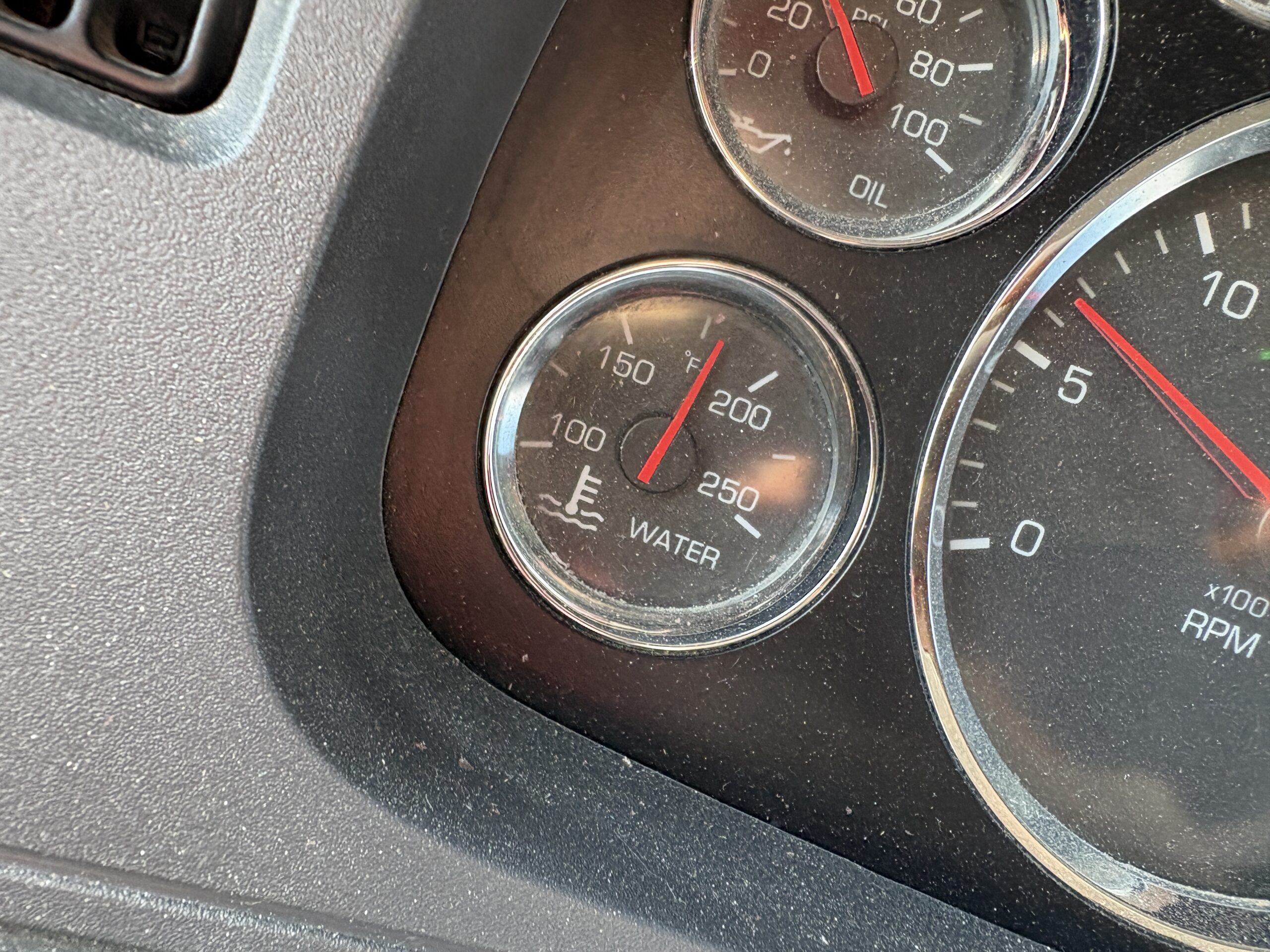
Even though many drivers still call it the water temperature gauge, it’s actually measuring the temperature of the engine coolant.
That coolant circulates through the engine, absorbing heat before flowing through the radiator where the heat is released into the outside air.
As long as the cooling system is working properly, the engine stays within its normal operating temperature range.
The gauge simply gives you a real-time picture of how well that’s happening.



What Is Considered Normal?
There’s no single number that’s correct for every truck.
Different engine manufacturers use different thermostats and cooling system designs.
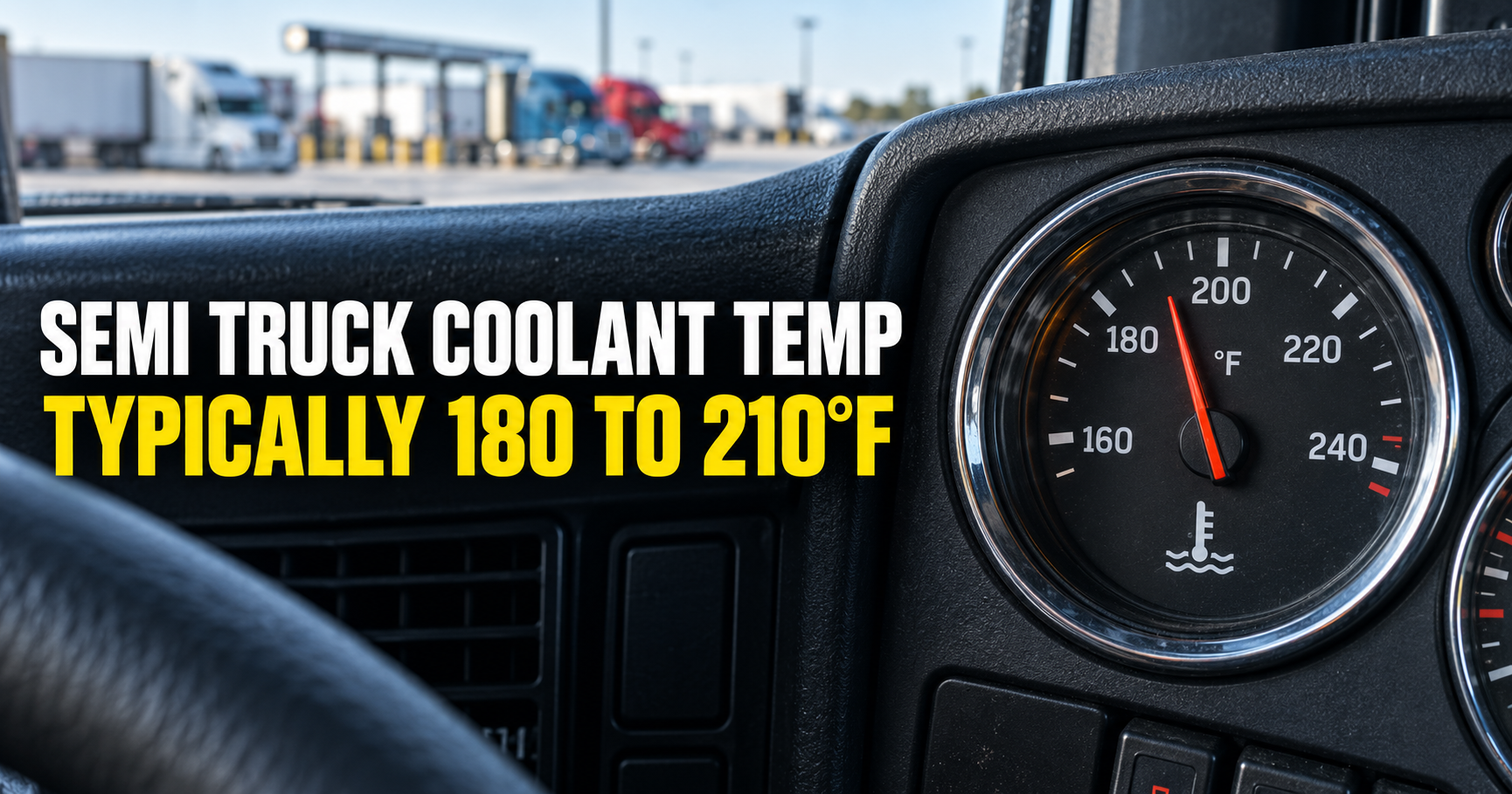
However, most modern heavy-duty diesel engines normally operate somewhere around 180°F to 210°F once they’re fully warmed up.
Don’t be surprised if your truck spends most of its day somewhere within that range.
That’s exactly where many engines are designed to run.
The important thing isn’t memorizing one exact number.
It’s learning what your truck normally does.



Don’t Expect the Needle to Stay Still
One of the biggest mistakes new drivers make is assuming the temperature gauge should stay in one position all day.
It won’t.
Think about everything your truck experiences.
Cruising across flat ground.
Pulling a long hill.
Sitting in traffic.
Idling while waiting to unload.
Running the air conditioner on a hot afternoon.
Every one of those situations changes how hard the engine is working.
As engine load increases, coolant temperature often rises.
When the load decreases, it usually comes back down.
That’s completely normal.
Why Does the Temperature Rise Going Uphill?
This is probably the most common situation that worries new drivers.
You’re climbing a long grade with a loaded truck.
Halfway up the hill, you notice the temperature gauge creeping upward.
Most of the time, that’s exactly what you’d expect.
The engine is producing much more power.
More power creates more heat.
The cooling system has to work harder to remove that heat.
Once you reach the top of the hill and the load decreases, you’ll often see the gauge slowly return toward its normal position.
That isn’t overheating.
That’s simply the cooling system responding to changing engine load.


Hot Weather Makes the Cooling System Work Harder
A truck driving across Missouri in September has a much easier job than one pulling the same load across Texas in July.
When outside temperatures rise, the radiator has a harder time getting rid of engine heat.
The cooling system still works.
It just has to work much harder.
That’s one reason you may notice slightly higher coolant temperatures during extremely hot weather without anything actually being wrong.
Why the Temperature Sometimes Drops Going Downhill
Just as climbing a hill can make the coolant temperature rise, going downhill often has the opposite effect.
When you’re coming down a long grade, the engine usually isn’t working nearly as hard.
In many situations you’re using the engine brake, gravity is helping move the truck, and fuel demand is much lower.
That means the engine produces less heat.
It’s completely normal to see the temperature needle slowly move back toward its usual position after cresting a hill.
That’s actually a good sign.
It shows the cooling system is doing exactly what it’s supposed to do.
Sitting at Idle Is Different Than Driving
One thing that surprises new drivers is that coolant temperature doesn’t always behave the same while the truck is sitting still.
When you’re driving down the highway, thousands of cubic feet of air pass through the radiator every minute.
Once you stop moving, all of that airflow disappears.
Now the cooling fan has to do almost all of the work.
That’s why you may notice the temperature slowly creeping upward while:
- Waiting in traffic.
- Sitting at a jobsite.
- Waiting to unload.
- Fueling.
- Idling for long periods on a hot day.
As long as the cooling fan engages and the temperature stabilizes, that’s generally part of normal operation.
When Should You Start Worrying?
The biggest mistake isn’t seeing the needle move.
It’s ignoring it when it keeps moving.
If the temperature climbs higher than it normally does and doesn’t come back down, it’s time to start paying attention.
Some warning signs include:
- The gauge continuing to climb after the hill is over.
- A high-temperature warning light or alarm.
- Steam coming from under the hood.
- Coolant leaking onto the ground.
- The engine automatically reducing power.
Those are signs that the cooling system may no longer be controlling engine temperature properly.

Common Causes of High Coolant Temperature
If your truck consistently runs hotter than it normally does, there are several possible causes.
Some of the most common include:
- Low coolant level.
- Dirty radiator.
- Debris packed into the cooling package.
- A sticking thermostat.
- A failing water pump.
- A weak fan clutch.
- A coolant leak.
- Heavy dust and chaff restricting airflow through the radiator.
Harvest trucks can be especially prone to radiator restrictions because corn leaves, bugs, chaff, and dust collect in the cooling package surprisingly fast.
I’ve already noticed how much debris builds up around the front of the truck during harvest compared to normal highway driving.
Don’t Ignore the Cooling Package
One thing I’ve learned is that overheating isn’t always caused by something expensive.
Sometimes the radiator simply can’t breathe.
If you’ve spent weeks hauling grain, running gravel roads, or driving through insects during the summer, it’s worth taking a close look at the radiator and charge air cooler.
Even a layer of packed dust and bugs can reduce airflow enough to make the engine run hotter than normal.
Cleaning the cooling package is a lot cheaper than replacing an engine.
What If the Gauge Suddenly Drops?
A temperature gauge that’s suddenly much lower than normal isn’t always good news either.
Possible causes include:
- A thermostat stuck open.
- A faulty temperature sender.
- A bad gauge.
- Low engine load in very cold weather.
An engine that never reaches normal operating temperature may use more fuel, produce more emissions, and not operate as efficiently as it should.
Frequently Asked Questions
Is it normal for coolant temperature to increase going uphill?
Yes.
When the engine is working harder to pull a load uphill, it naturally produces more heat. It’s common to see the temperature rise slightly before returning closer to normal once the grade levels out.
Why does my temperature drop after I reach the top of the hill?
Because the engine is no longer working as hard. Less engine load means less heat is produced, allowing the cooling system to bring the temperature back down.
Should I shut the truck off immediately if it starts overheating?
If the gauge continues climbing into the danger zone, warning lights appear, or you notice steam or coolant leaking, safely pull over as soon as possible. Continuing to drive an overheating diesel engine can cause severe engine damage.
Why does my truck run hotter during harvest?
Harvest creates ideal conditions for clogged cooling systems. Dust, corn chaff, bugs, and other debris can collect in the radiator and charge air cooler, reducing airflow and making it harder for the cooling system to remove heat.
The Most Important Thing Isn’t the Number
After spending more time driving, I’ve stopped worrying about whether the gauge says one exact temperature.
Instead, I pay attention to patterns.
I know where my truck normally runs.
I know how it reacts on long hills.
I know what it does while idling on a hot afternoon.
That’s really what the coolant temperature gauge is for.
It isn’t there to make you stare at one number all day.
It’s there to let you know when your truck is doing something that’s different than normal.
Once you learn your truck’s normal behavior, you’ll recognize problems much earlier, and that’s often the difference between a simple repair and a very expensive one.
Author: Mike Reynolds
Mike Reynolds is a heavy-duty truck technician and commercial equipment writer who specializes in diesel engines, truck maintenance, and troubleshooting. He writes practical, real-world guides for TruckingResource.com to help drivers understand their trucks, diagnose common problems, and keep heavy equipment running reliably.