
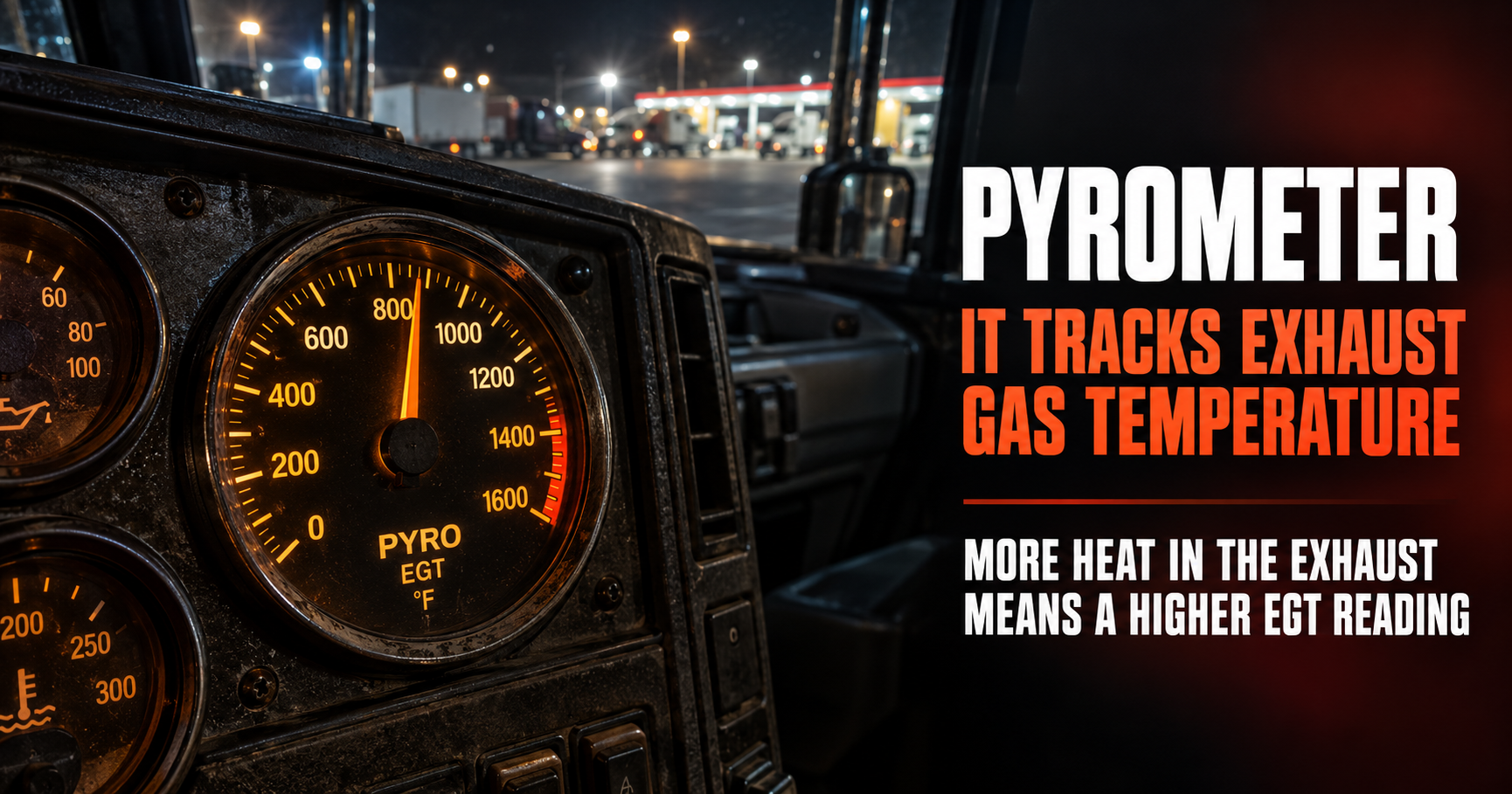
There’s a gauge on some semi trucks that can climb several hundred degrees in a surprisingly short amount of time.
It might say PYRO, PYROMETER, EXHAUST TEMP, or simply show a temperature scale that goes far higher than your coolant gauge ever should.
The first time you really watch one, the numbers can look alarming.
600°F.
900°F.
1,100°F.
Maybe even higher while the engine is working hard.
Those temperatures would be disastrous if we were talking about engine coolant, but that’s not what this gauge is measuring.
A pyrometer measures exhaust gas temperature, commonly shortened to EGT. It gives you a look at how much heat is leaving the engine through the exhaust, usually measured near the turbocharger.
And unlike coolant temperature, exhaust temperature can change very quickly as engine load changes.
What Does a Pyrometer Actually Measure?
A pyrometer measures the temperature of the exhaust gases coming out of the engine.
A temperature probe, often called a thermocouple, sits in the exhaust stream. That sensor sends a signal to the gauge showing how hot the exhaust is at that location.
Kenworth describes the pyrometer as an engine exhaust-gas-temperature gauge and notes that it responds almost immediately to changes in exhaust temperature.
That’s what makes it useful.
Put the engine under a heavy load and EGT can climb quickly.
Back out of the throttle and the temperature can start falling almost immediately.
The gauge gives you a much faster look at changing engine load than something like coolant temperature, which generally responds more slowly.



Why Does Exhaust Temperature Matter?
A diesel engine creates heat every time it burns fuel.
Some of that heat becomes useful mechanical energy.
Some enters the cooling system.
And a significant amount leaves through the exhaust.
When the engine is working harder and burning more fuel, exhaust temperature generally rises.
That’s why the pyrometer can give you a pretty good indication of how hard the engine is working.
Kenworth even describes it as an excellent indicator of engine output and recommends monitoring it along with engine RPM and manifold pressure.
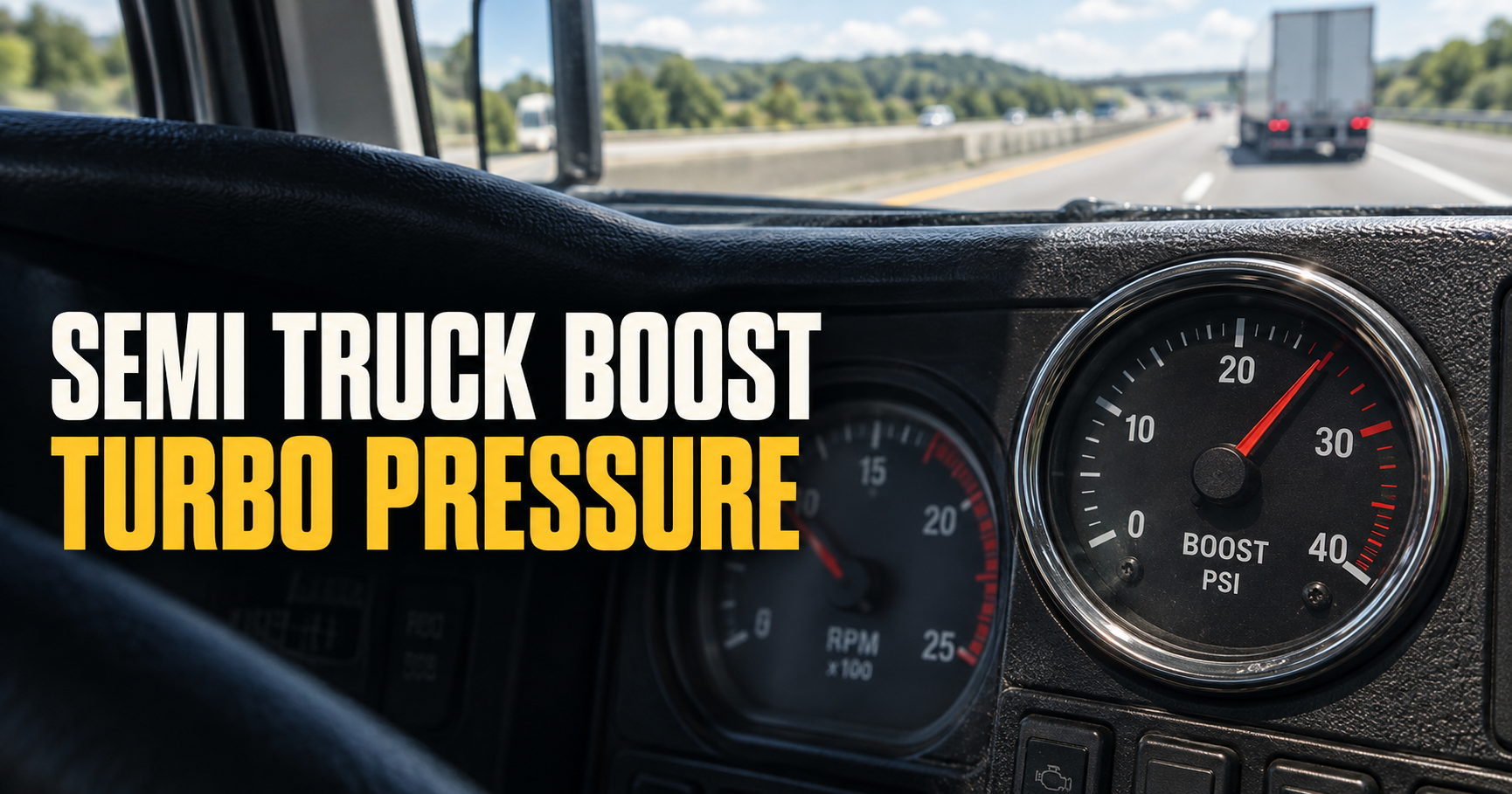
That manifold pressure is essentially what you’re watching with the boost gauge on a semi truck.
Together, boost and exhaust temperature can tell you quite a bit about what the engine is doing under load.



Why Is the Pyrometer Low at Idle?
At idle, the engine isn’t producing much power.
It isn’t burning anywhere near as much fuel as it would while pulling a loaded truck uphill.
Less fuel being burned means less exhaust heat.
So a relatively low pyrometer reading at idle is completely expected.
Start driving and the temperature rises.
Put the truck under a heavy load and it may rise dramatically.
Take your foot out of the throttle and you’ll usually see it begin falling again.
That’s normal behavior.
Why Does Exhaust Temperature Rise Going Uphill?
Picture a loaded truck approaching a long hill.
You press farther into the accelerator to maintain speed.
The engine has to produce considerably more power.
More fuel is burned.
Cylinder temperatures increase.
Exhaust temperature rises.
The pyrometer responds quickly enough that you can actually watch this happening from the driver’s seat.
This is one reason the gauge was particularly useful on older mechanically controlled diesel engines. A driver could use EGT along with RPM and boost to avoid working the engine excessively hard for long periods.
Modern electronic engines provide much more automatic protection and control, but the pyrometer can still be useful information when a truck is equipped with one.



There Isn’t One Safe EGT Number for Every Semi Truck
This is probably the most important point in the article.
Don’t search online, find someone saying “1,200°F is safe,” and assume that number applies to every diesel engine.
It doesn’t.
Maximum acceptable exhaust temperature depends on several things, including:
- Engine model.
- Turbocharger setup.
- Where the temperature probe is located.
- Engine calibration.
- Manufacturer specifications.
Probe location matters enormously.
A pyrometer measuring exhaust before the turbocharger can show a different temperature than one measuring after the turbocharger.
That’s why an exact EGT number without knowing the engine and sensor location isn’t particularly useful.
Kenworth specifically directs drivers to the engine operation and maintenance manual for maximum temperature recommendations.
Why Probe Location Changes the Reading
This part is easy to miss.
Exhaust gases lose energy as they pass through the turbocharger.
A sensor mounted upstream of the turbocharger is measuring hotter exhaust before some of that energy has been used to spin the turbine.
A sensor downstream is measuring exhaust after it has passed through the turbo.
That means two trucks could be working similarly while displaying noticeably different pyrometer readings simply because their sensors are located in different places.
Before comparing your EGT to somebody else’s truck online, you need to know where both sensors are located.
Is a High Pyrometer Reading Always Bad?
No.
Heavy engine load naturally increases exhaust temperature.
Climbing a hill.
Accelerating with a heavy load.
Pulling through soft ground.
Working a dump truck hard.
Those conditions can all increase EGT.
A temporary increase under heavy load isn’t automatically evidence of a problem.
What matters is whether the temperature remains within the engine manufacturer’s acceptable range and whether it drops again when engine load decreases.
Freightliner’s driver guidance similarly notes that engine load causes exhaust temperature to vary and instructs drivers to reduce fuel and shift lower if exhaust temperature exceeds normal.
What Should You Do if EGT Gets Too High?
If the pyrometer climbs beyond the normal or manufacturer-approved range, the first response is usually reducing engine load.
Ease out of the throttle.
If you’re climbing a grade and the engine is lugging, selecting a lower gear can help bring the engine into a more appropriate RPM range.
Kenworth’s own operator guidance recommends easing up on the throttle when exhaust temperature becomes excessive.
The goal isn’t to stare at the gauge and panic.
It’s to recognize that you’re asking a lot from the engine and respond before excessive heat becomes a bigger problem.



Lugging the Engine Can Create Heat
This is where the tachometer becomes part of the story.
A diesel engine doesn’t necessarily like being asked for maximum power at excessively low RPM.
That’s commonly called lugging.
You’re pressing heavily into the accelerator, but the engine is turning too slowly for the load you’re asking it to carry efficiently.
Downshifting can raise engine RPM and put the engine into a better operating range.
That’s why Kenworth recommends monitoring the pyrometer together with the tachometer and manifold pressure gauge rather than treating EGT as an isolated number.
EGT and Coolant Temperature Aren’t the Same Thing
This is another easy mistake.
The pyrometer might show 900°F while the coolant temperature gauge shows around 190°F.
Both can be completely normal.
They’re measuring temperatures in completely different parts of the truck.
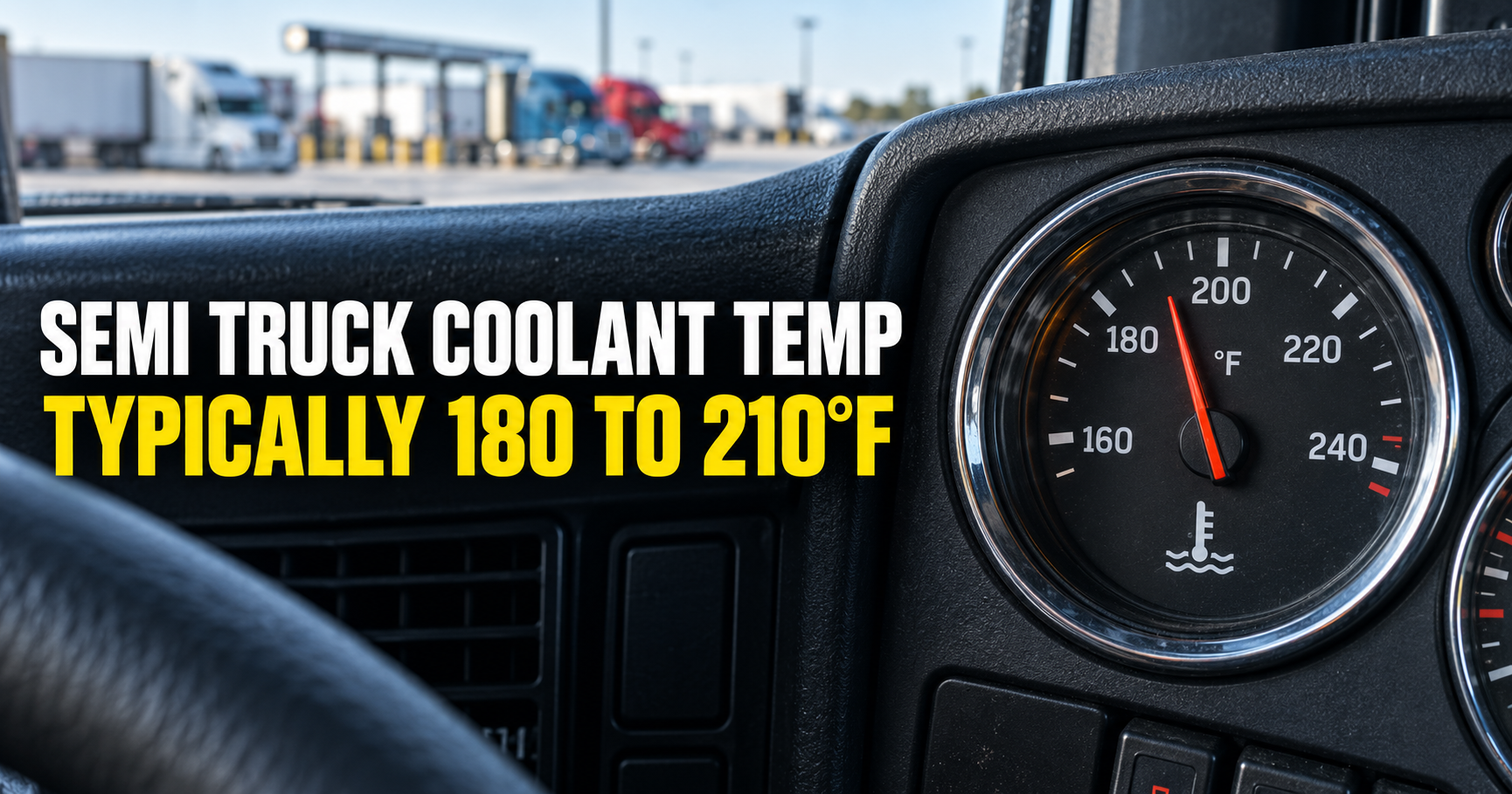
The coolant temperature gauge on a semi truck measures the temperature of coolant circulating through the engine’s cooling system.
The pyrometer measures hot exhaust gas.
Exhaust temperatures change much faster and reach much higher numbers.
So don’t compare the two gauges directly.
Why Does the Pyrometer Drop So Quickly?
You crest a hill.
Take your foot out of the throttle.
The pyrometer starts falling almost immediately.
That’s one of the characteristics that makes it useful.
Exhaust temperature responds quickly to combustion and engine load.
Coolant temperature has a huge thermal mass behind it. You’ve got coolant, engine metal, a radiator, and the rest of the cooling system absorbing and releasing heat.
The exhaust stream can change temperature much faster.
That’s why you can watch EGT rise under load and fall soon after the load disappears.
Can a Pyrometer Help Spot an Engine Problem?
Sometimes it can provide a clue.
Kenworth notes that large variations in maximum exhaust temperature can be an early indication of possible engine problems.
That doesn’t mean the pyrometer diagnoses the problem for you.
An unusual EGT could be related to fueling, airflow, turbocharger performance, exhaust restrictions, engine load, altitude, or several other factors.
But if you’ve driven the same truck long enough to know what it normally does and suddenly the pyrometer behaves completely differently under familiar conditions, that’s worth paying attention to.
Look at Boost and EGT Together
This is where our dashboard gauge cluster starts becoming genuinely useful.
Say you’re pulling the same hill you’ve driven dozens of times.
Normally you know roughly how much boost the truck makes and how hot the pyrometer gets.
Then one day:
Boost is lower.
EGT is different.
The truck feels weak.
Now you’ve got several clues instead of one.
You still haven’t diagnosed the problem, but you’re in a much better position than someone who simply says, “The truck feels slow.”
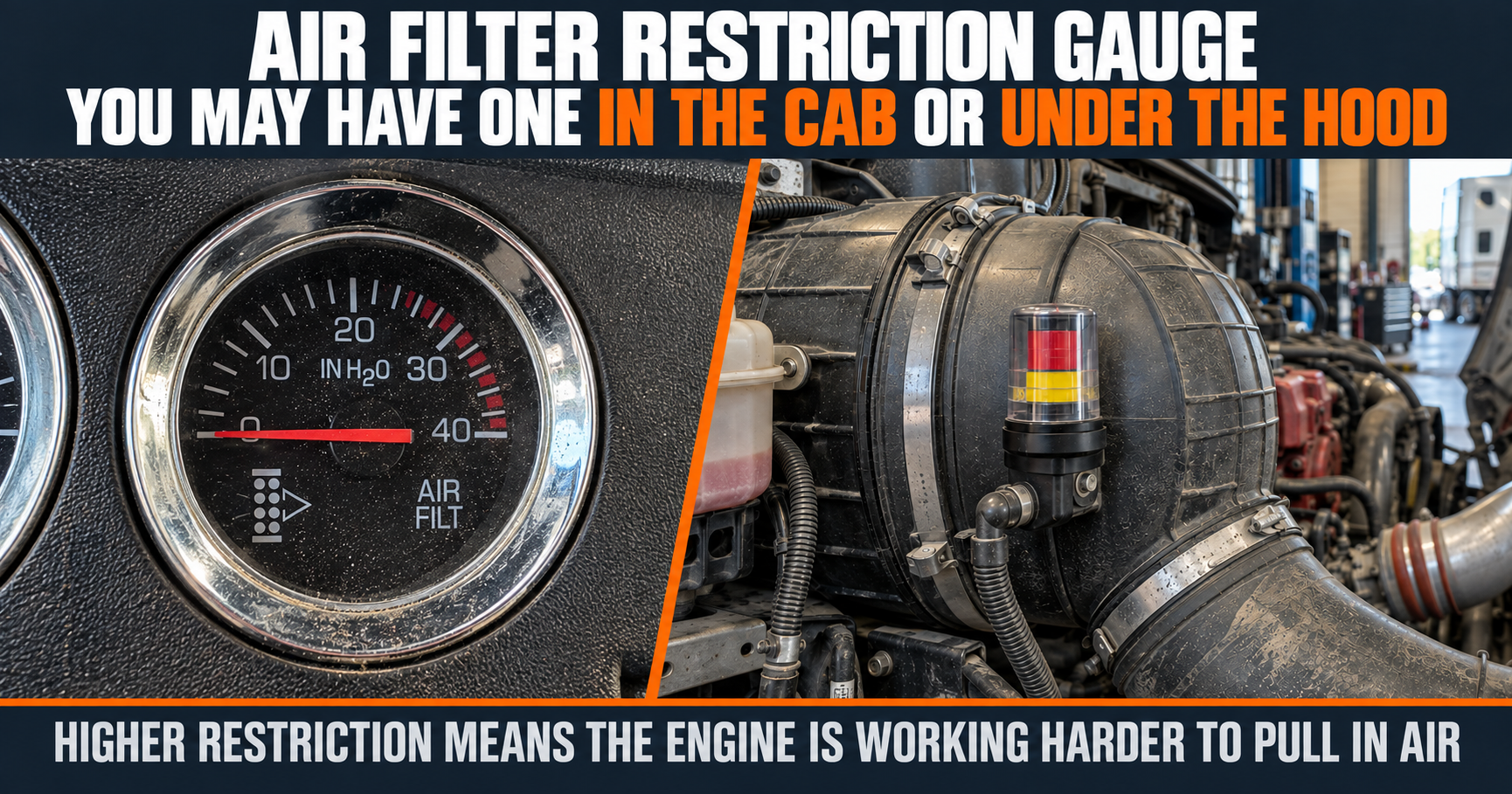
The air filter restriction gauge can add another piece to that puzzle if the engine is struggling to get enough intake air.
Fuel Delivery Can Affect the Picture Too
Air isn’t the only thing a diesel needs.
Fuel delivery matters just as much.
A truck that can’t get enough fuel under heavy load may not behave the way it normally does in terms of power, boost, and exhaust temperature.
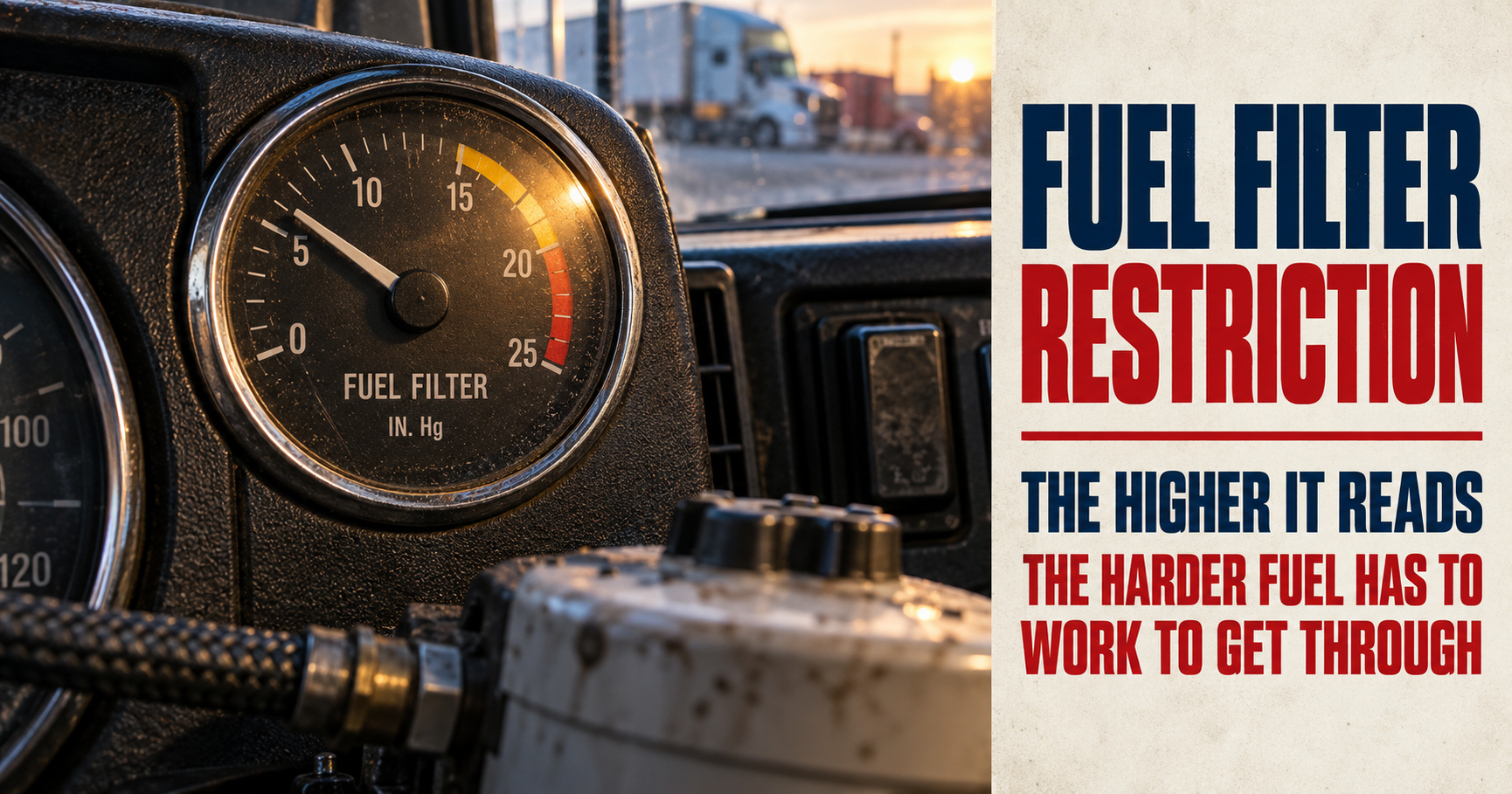
That’s where the fuel filter restriction gauge becomes another useful diagnostic clue.
No single gauge tells the whole story.
The more you understand how they relate to one another, the easier it becomes to notice when something isn’t right.
What About Modern Trucks During a Regen?
Modern diesel trucks add another wrinkle.
Diesel particulate filter regeneration intentionally raises exhaust-system temperatures to burn accumulated soot from the DPF.
That means parts of the exhaust aftertreatment system can become extremely hot during regeneration.
Modern trucks use electronic controls and warning lamps to manage that process, including the High Exhaust System Temperature, or HEST, warning on many systems.
Cummins notes that higher-than-normal exhaust temperatures can occur during exhaust-system cleaning and that drivers should keep the exhaust outlet away from combustible materials.
That’s related to exhaust heat, but it isn’t exactly the same thing as interpreting a traditional engine pyrometer.
Frequently Asked Questions
What does PYRO mean on a semi truck gauge?
PYRO is short for pyrometer. The gauge measures exhaust gas temperature, usually somewhere near the turbocharger.
What does EGT mean?
EGT stands for exhaust gas temperature.
Why does my pyrometer rise when I accelerate?
The engine is producing more power and burning more fuel, which increases exhaust temperature.
Why does EGT climb going uphill?
A loaded engine has to work harder climbing a grade. Increased engine load generally means higher exhaust temperature.
What is a safe EGT for a semi truck?
There isn’t one universal safe number. Maximum exhaust temperature depends on the engine, calibration, sensor location, and manufacturer’s specifications. Use the engine manufacturer’s limits rather than a generic number from another truck.
Why does the pyrometer drop when I let off the throttle?
Engine load and fueling decrease, so exhaust temperature falls quickly.
Is the pyrometer the same as the coolant temperature gauge?
No. Coolant temperature measures the engine cooling system. A pyrometer measures exhaust gas, which operates at much higher temperatures.
Does every semi truck have a pyrometer?
No. Some trucks have one, some display exhaust-related information electronically, and others don’t give the driver a traditional EGT gauge at all.
It’s One of the Best Gauges for Seeing Engine Load in Real Time
A pyrometer can look intimidating because the numbers are so much higher than the other temperature gauges on the dash.
Once you know what it’s measuring, those numbers make a lot more sense.
Light engine load means relatively low exhaust temperature.
Work the engine harder and EGT climbs.
Back out of the throttle and it falls.
The useful part isn’t trying to make the needle stay at one exact temperature all day.
It’s learning what the truck normally does and knowing the maximum temperature recommended for the engine you’re actually operating.
Then, if the pyrometer suddenly starts behaving differently under the same loads you’ve driven a hundred times before, you’ve got another early clue that something deserves attention.
Author: Daniel Brooks
Daniel Brooks writes about heavy-duty diesel engines, commercial truck systems, and driver-focused maintenance for TruckingResource.com. His work breaks down the gauges and mechanical systems drivers see every day without assuming everyone behind the wheel is also a diesel mechanic.