
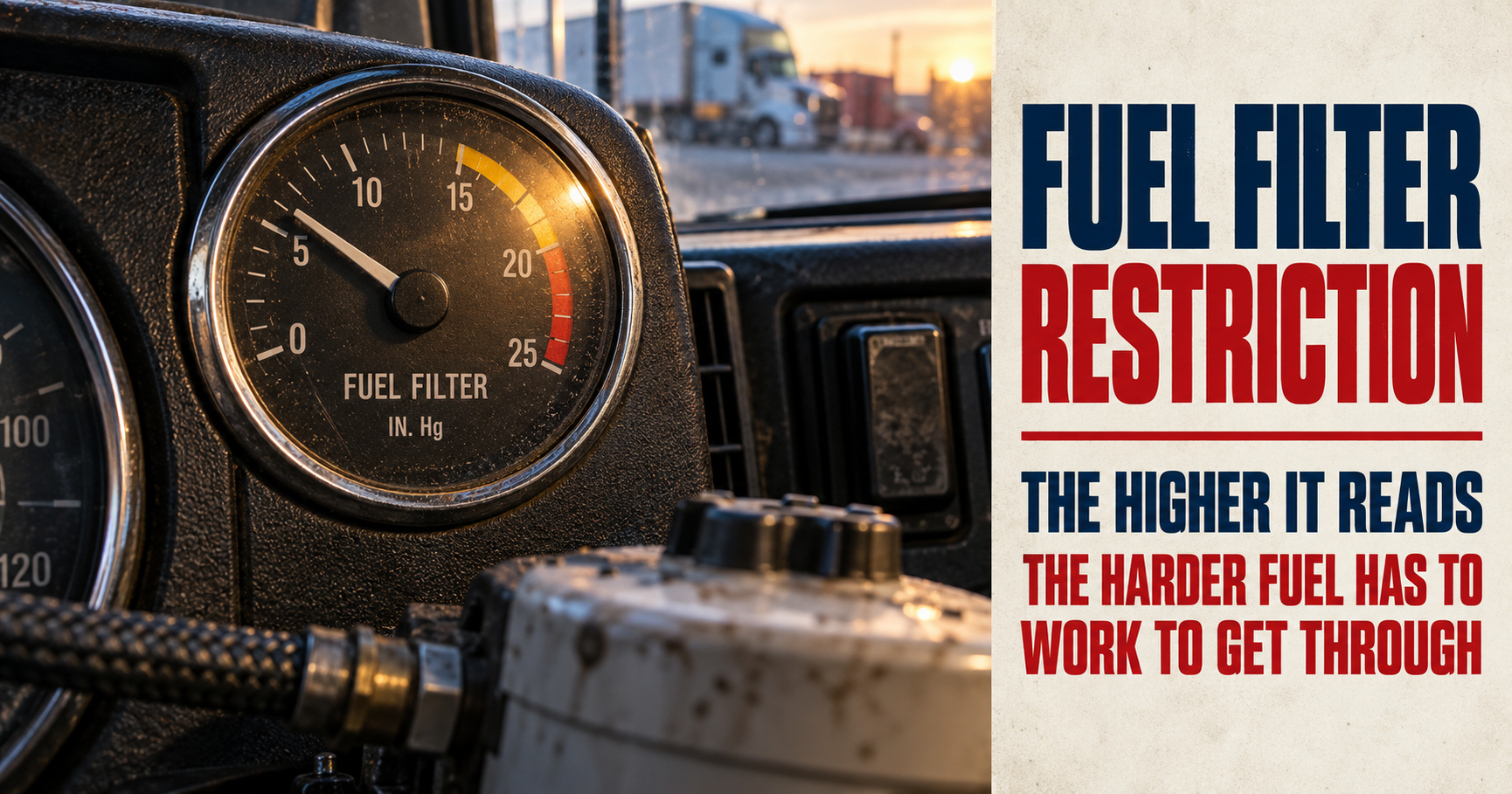
A truck can have plenty of diesel in the tanks and still struggle to get enough fuel to the engine.
That’s where the fuel filter restriction gauge becomes useful.
It’s one of those smaller dashboard gauges that doesn’t get nearly as much attention as oil pressure, coolant temperature, or air pressure. But if the truck starts losing power under load, that little gauge can give you a pretty valuable clue.
The basic idea is simple.
The engine’s fuel system has to pull diesel through the fuel filter. As that filter collects dirt and contamination, it becomes harder for fuel to pass through it.
The restriction gauge measures that resistance.
A low reading generally means fuel is moving through the filtration system without much trouble. As restriction increases, the gauge climbs.
If it gets high enough, the engine may eventually have trouble getting all the fuel it needs.
What Does Fuel Filter Restriction Actually Mean?
A fuel filter creates some resistance even when it’s new.
That’s normal.
Fuel has to pass through extremely fine filter media before it reaches expensive components such as the high-pressure fuel pump and injectors.
As contamination collects in the filter, however, the pressure drop across it increases.
That’s what fuel filter restriction is measuring.
Donaldson describes fuel restriction as the pressure drop across the filter at a given fuel flow, temperature, and viscosity.
In plain English, the gauge is showing you how hard the fuel system is having to work to pull diesel through the filter.
Why Does a Diesel Engine Need Such Fine Fuel Filtration?
Modern diesel injection systems operate at extremely high pressures and use very small tolerances.
Dirt that doesn’t look like much to you can cause expensive damage inside a fuel system.
That’s why heavy-duty diesel engines often use more than one stage of fuel filtration.
A primary filter or fuel-water separator removes larger contamination and water.
A secondary filter provides finer filtration before fuel reaches sensitive injection components.
The filters protect the engine, but they also eventually collect enough contamination that fuel flow becomes restricted.
That’s when the restriction gauge becomes important.

What Is a Normal Fuel Filter Restriction Reading?
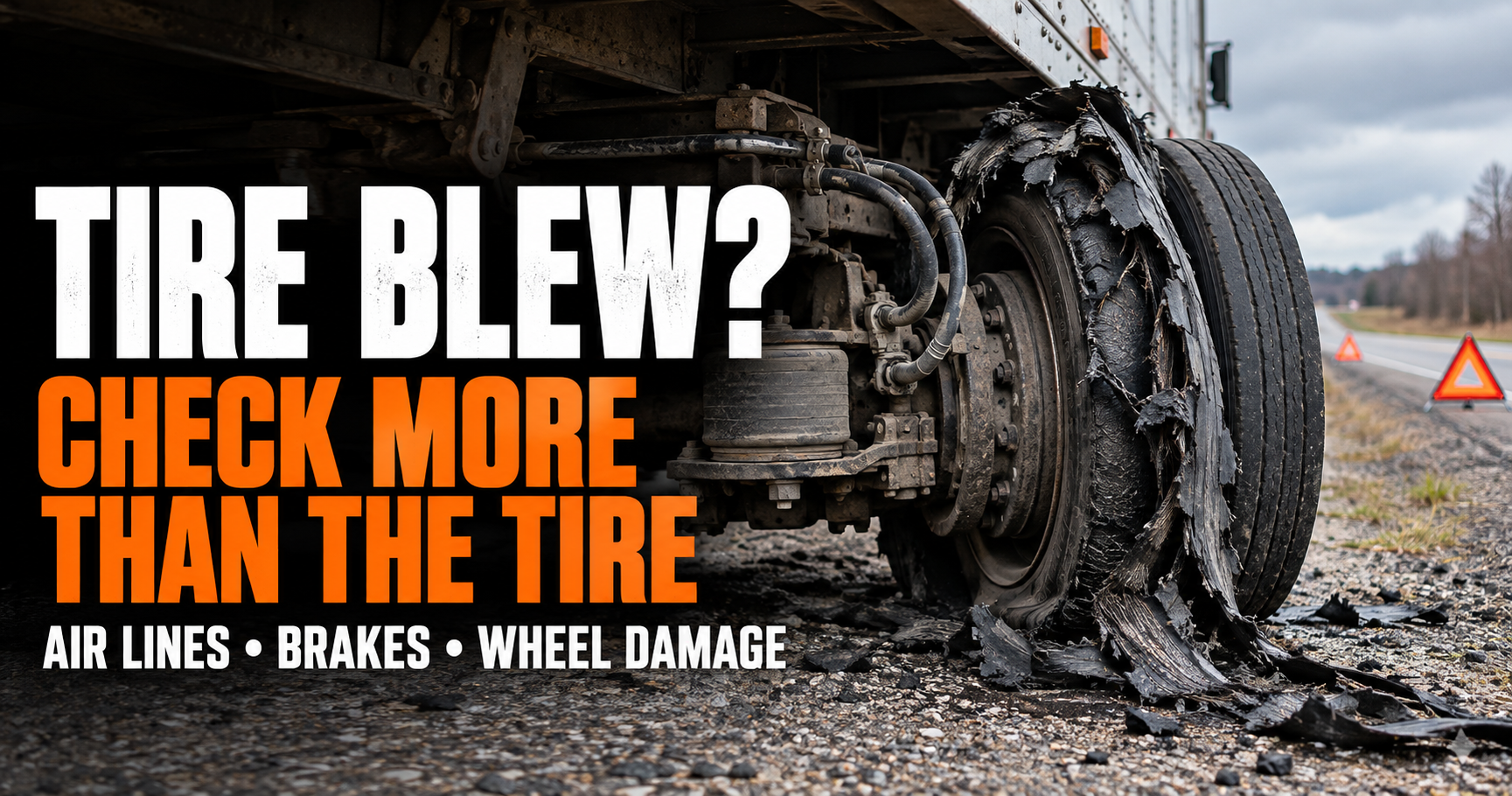
This is another gauge where I don’t like pretending there’s one universal number for every semi truck.
There isn’t.
The acceptable restriction depends on the engine, fuel system, filter arrangement, gauge, and where the restriction is being measured.
Some heavy-duty fuel filtration systems use restriction indicators set around 10 inches of mercury, commonly written as 10 inHg, but that absolutely does not mean every truck should use 10 inHg as its service limit.
Use the specification for the engine and fuel system actually installed in your truck.
The most useful thing for a driver is understanding the pattern.
Low restriction is good.
Increasing restriction means something is making it harder for fuel to reach the engine.
A reading approaching the manufacturer’s service limit means the system needs attention.
Why Does Fuel Restriction Increase?
A plugged fuel filter is probably the first thing most people think about.
And that’s a good place to start.
But it isn’t the only possibility.
High fuel restriction can result from:
- A dirty fuel filter.
- Contaminated diesel fuel.
- Water or debris in the fuel system.
- Wax buildup during cold weather.
- Fuel gelling.
- A restriction in a fuel line.
- A problem in the fuel pickup.
- Other restrictions before the fuel pump.
The gauge tells you there’s a restriction.
It doesn’t automatically tell you exactly where it is.



Why Can the Reading Be Worse Under Heavy Load?
This is where the gauge becomes especially useful.
A diesel engine doesn’t need the same amount of fuel sitting at idle as it does pulling a loaded trailer uphill.
Under heavy load, fuel demand increases dramatically.
Now the system has to move much more diesel through the same filter.
A partially restricted filter may supply enough fuel for the engine to idle perfectly.
It might even drive normally under light load.
Then you put the truck to work and suddenly it feels weak.
That’s why some fuel-delivery problems don’t become obvious until you’re accelerating hard, climbing a grade, or pulling a heavy load.
A Plugged Fuel Filter Can Feel Like an Engine Problem
This is where drivers can start chasing expensive problems.
The truck feels weak.
It doesn’t pull the way it normally does.
Maybe it struggles more under load.
It’s easy to start thinking about injectors, the turbocharger, or major engine problems.
Sometimes the problem is much simpler.
The engine just isn’t getting enough fuel.
That’s why the restriction gauge belongs in the conversation when you’re troubleshooting a loss-of-power complaint.
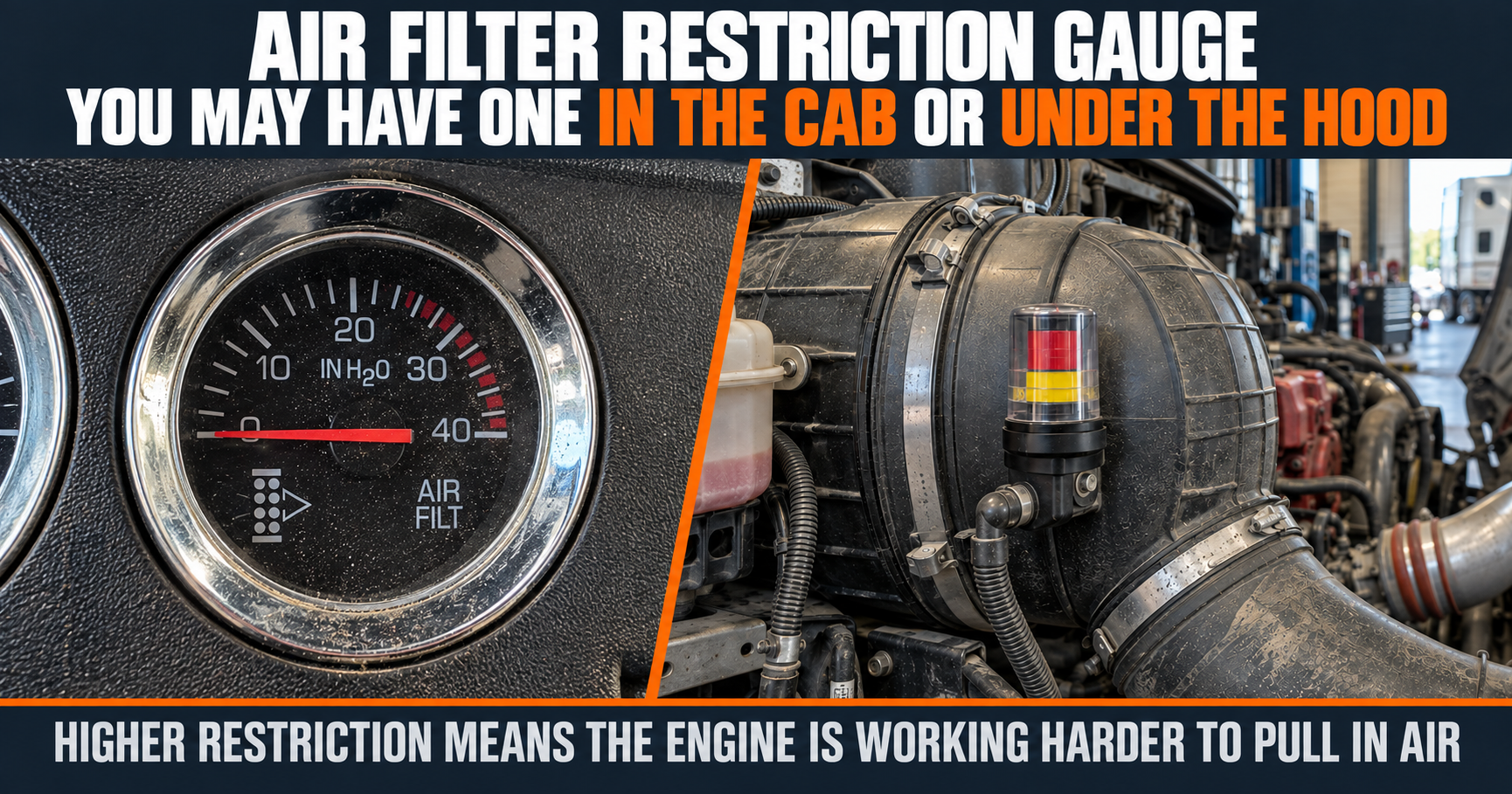
The same principle applies on the air side of the engine. Our air filter restriction gauge guide explains how a restricted intake can also make an engine struggle to breathe.
Fuel and air are both essential.
Restrict either one enough and engine performance can suffer.



Fuel Restriction and Turbo Boost Can Tell a Story Together
This is where understanding several gauges starts paying off.
Suppose the truck suddenly feels weaker than normal while you’re pulling a familiar hill.
You notice boost isn’t behaving the way it normally does.
That doesn’t automatically mean the turbocharger is bad.
If the engine isn’t receiving enough fuel, it can’t produce the same power and exhaust energy it normally would under load.
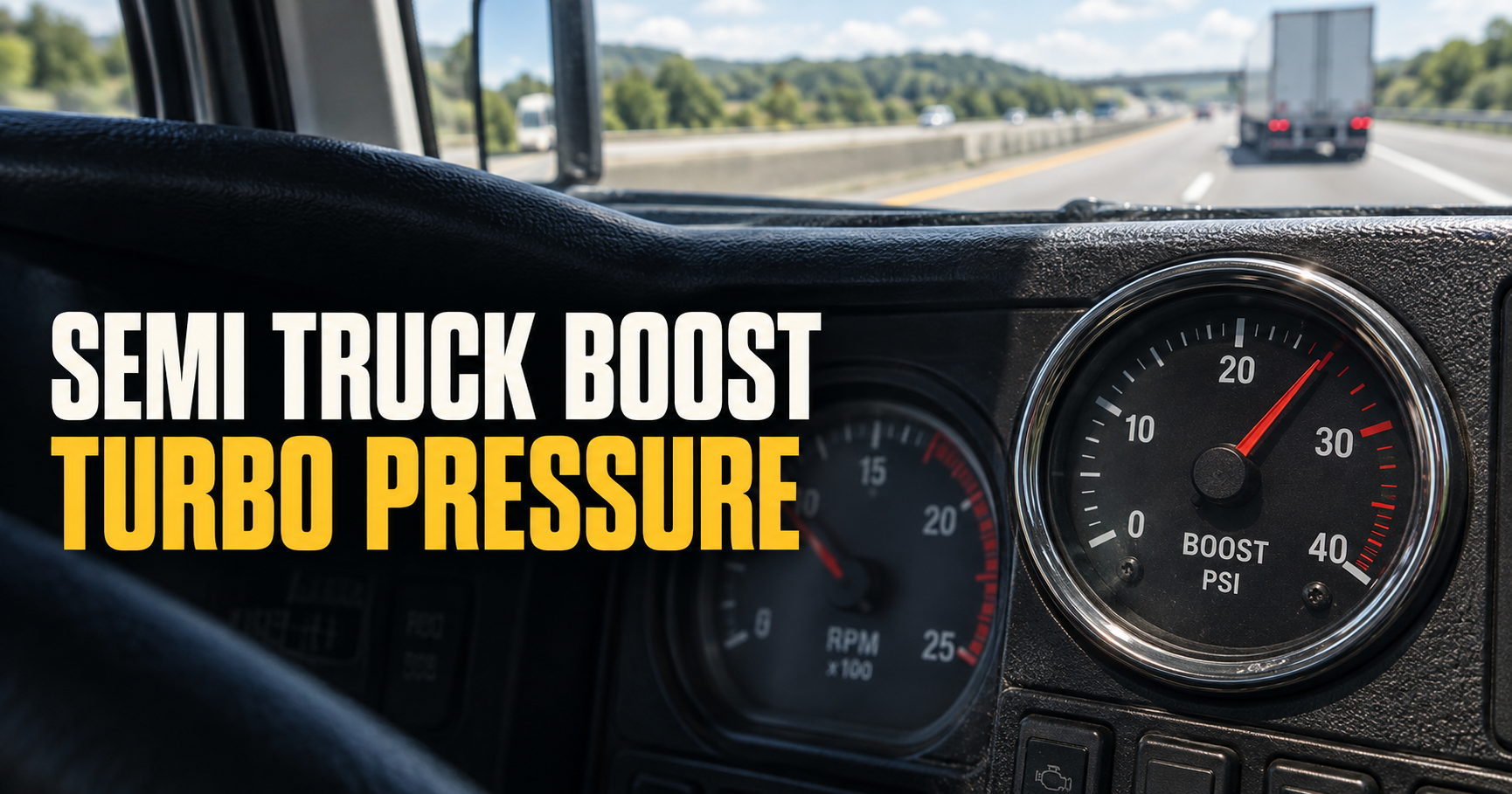
Looking at the fuel restriction gauge along with the semi truck boost gauge gives you more information than either gauge alone.
One gauge rarely diagnoses an engine problem by itself.
Several clues pointing in the same direction are much more useful.
Cold Weather Can Make Fuel Restriction Much Worse
This is one reason the gauge can become particularly useful in winter.
Diesel fuel contains paraffin wax.
At low temperatures, those wax crystals can begin forming and eventually restrict fuel flow through the filter.
That’s commonly referred to as fuel gelling, although the process begins before the fuel becomes completely gelled.
A filter can become restricted enough that the engine loses power or stops running even though there’s still plenty of fuel in the tanks.
If fuel restriction suddenly becomes much higher during extremely cold weather, don’t automatically assume ordinary dirt plugged the filter.
Temperature and fuel condition need to be part of the diagnosis.



Water in Diesel Fuel Creates Its Own Problems
Water is another reason heavy-duty diesel systems commonly use fuel-water separators.
Water doesn’t belong in a modern diesel injection system.
Besides contributing to corrosion, it can damage precisely machined fuel-system components.
Depending on the truck, you may have a separate water-in-fuel warning rather than seeing the problem directly on the restriction gauge.
Still, contaminated fuel can contribute to premature filter plugging and increased restriction.
That’s why draining and servicing a fuel-water separator according to the manufacturer’s instructions matters.
What if the Gauge Suddenly Goes High?
Gradual restriction over time makes sense.
Filters collect contamination.
Eventually they need service.
A sudden change deserves a little more thought.
Maybe you recently fueled somewhere different.
Maybe contamination entered the system.
Maybe the temperature dropped dramatically overnight.
Maybe something is restricting a fuel line or pickup.
The important part is recognizing that a sudden increase isn’t normal simply because the engine is still running.
The gauge is giving you an early clue.
Can You Keep Driving With High Fuel Filter Restriction?
That depends on how high the restriction is and how the truck is behaving.
If the reading is approaching or exceeding the manufacturer’s service limit, the filter or fuel system needs attention.
If the truck is also losing power, surging, stumbling, or struggling under load, continuing to push it harder isn’t going to fix the restriction.
A severely restricted fuel supply can eventually leave you with an engine that won’t maintain power or may not continue running.
I’d much rather deal with a fuel filter problem somewhere safe than discover how restricted it really is while pulling a loaded truck onto a highway.
Don’t Automatically Change Filters Based Only on Mileage
Mileage-based maintenance schedules still matter.
But operating conditions matter too.
A truck receiving clean fuel and running highway miles may experience very different filter life than equipment exposed to contaminated fuel, farm tanks, construction sites, or harsh winter conditions.
The restriction gauge gives you another piece of real information about what’s happening inside the system.
That doesn’t mean ignoring scheduled maintenance.
It means you’re not completely blind between service intervals.
What if You Replace the Fuel Filter and Restriction Is Still High?
That’s an important troubleshooting clue.
If a fresh filter doesn’t bring the restriction back down, the filter may not have been the real problem.
Now you need to look farther upstream.
Possible issues include a restricted fuel line, tank pickup problem, contamination in the tank, another filter in the system, or another restriction before the pump.
Replacing the same filter again probably isn’t going to solve it.
Fuel Filter Restriction vs Fuel Pressure
These aren’t the same measurement.
Fuel pressure tells you the pressure available at a particular point in the fuel system.
Fuel restriction generally describes how much resistance the fuel encounters as it’s being pulled through the suction side of the system.
You can have a restriction problem that eventually causes fuel-pressure and performance problems, but the gauges are measuring different things.
That’s why it’s important to know what the gauge on your particular dashboard is actually labeled to measure.
Don’t Confuse This With the Engine Air Filter Gauge
The names sound similar.
Air filter restriction gauge.
Fuel filter restriction gauge.
They’re monitoring completely different systems.
The air restriction gauge tells you how difficult it is for the engine to pull air through the intake.
The fuel restriction gauge tells you how difficult it is for the fuel system to pull diesel through the filtration and supply side.
Both are valuable because both can warn you about restrictions before they become much bigger performance problems.
Frequently Asked Questions
What does a fuel filter restriction gauge measure?
It measures resistance or pressure drop in the fuel supply system, commonly on the suction side of the fuel filtration system. As restriction increases, it becomes harder for the fuel system to pull diesel through the filter.
Does a high fuel restriction reading mean my filter is plugged?
A plugged filter is a common cause, but it’s not the only possibility. Fuel-line restrictions, contaminated fuel, cold-weather wax buildup, tank pickup problems, and other issues can also increase restriction.
Can a plugged fuel filter make a semi truck lose power?
Yes. If the restriction becomes high enough, the engine may not receive enough fuel under heavy demand. Power loss may be most noticeable while accelerating or pulling a heavy load.
Why does the truck run fine at idle but lose power under load?
Fuel demand is much lower at idle. A partially restricted system may supply enough fuel for idle and light driving but struggle when the engine demands much more fuel under load.
Can cold weather cause high fuel restriction?
Yes. Wax crystals can form in diesel fuel as temperatures fall and begin plugging the fuel filter. Severe cold-weather restriction can cause major power loss or prevent the engine from running.
Should I replace the filter as soon as the gauge moves?
Not necessarily. Some restriction is normal. Service the system according to the truck and engine manufacturer’s specified restriction limit and maintenance schedule.
What if the gauge is still high after changing the filter?
That suggests the restriction may be somewhere else in the fuel supply system. Fuel lines, tank pickups, additional filters, contamination, and other components may need inspection.
This Gauge Can Save You From Chasing the Wrong Problem
A fuel restriction gauge isn’t something most drivers stare at all day.
That’s fine.
Its value shows up when the truck stops behaving normally.
Maybe it doesn’t pull as hard.
Maybe power falls off under a heavy load.
Maybe cold weather suddenly makes the truck struggle.
Instead of immediately assuming something expensive has failed, you’ve got another clue sitting right on the dashboard.
Check the restriction.
Compare it with what the truck normally shows.
Look at the other gauges.
Then start with the simple possibilities before jumping to the expensive ones.
Sometimes a truck that feels like it has a major engine problem is simply trying to tell you that it’s having a hard time getting fuel through the filter.
Author: Ryan Cole
Ryan Cole writes about diesel trucks, engine performance, fuel systems, and everyday commercial vehicle maintenance for TruckingResource.com. His work focuses on turning confusing dashboard readings and truck problems into straightforward information drivers can actually use.