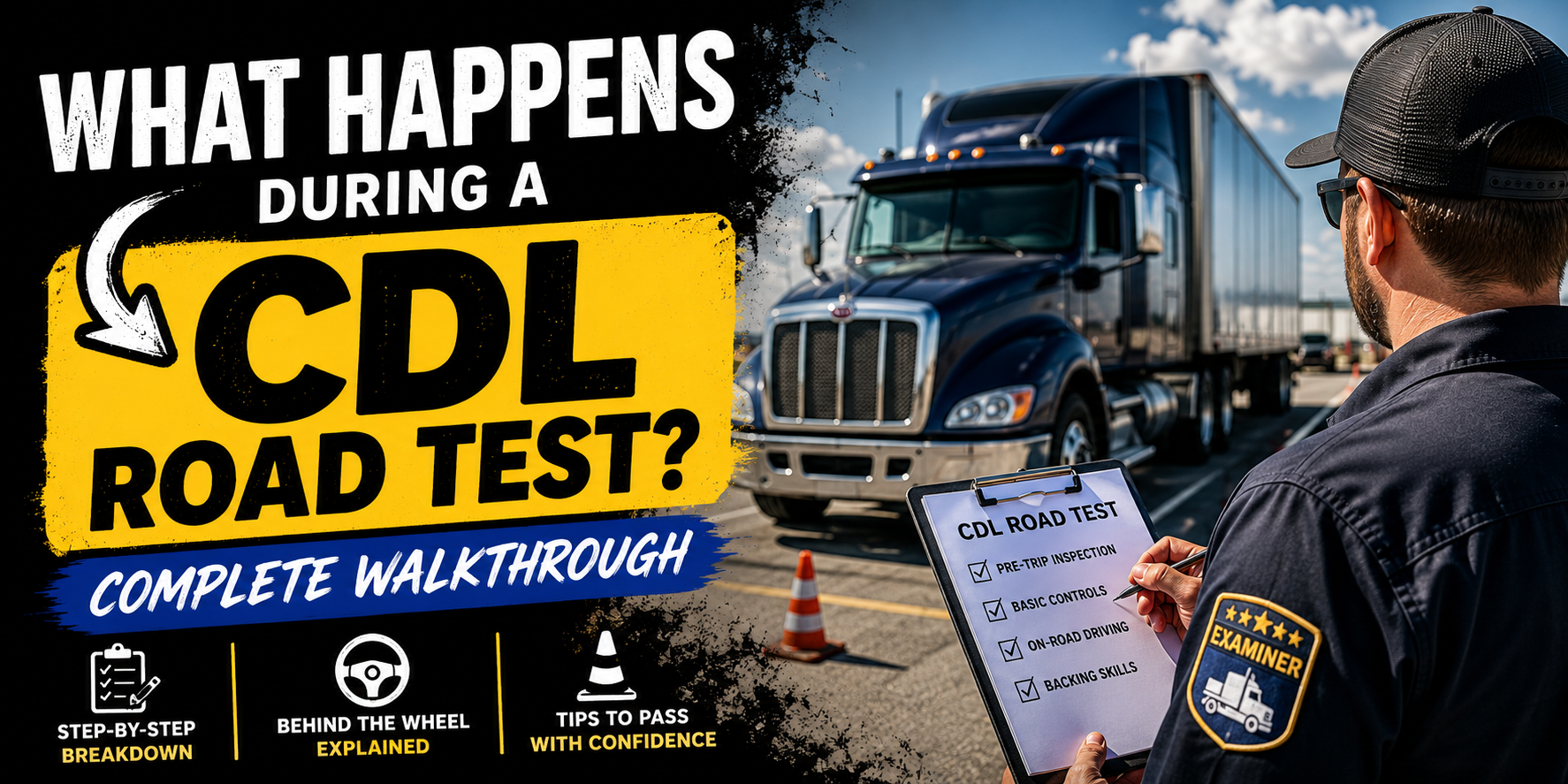
If your CDL road test is coming up, there’s a good chance the unknown is making you more nervous than the actual driving.
What exactly will the examiner ask you to do?
How closely are they watching every little movement?
Can one mistake fail you?
What happens if you need to correct a backing maneuver?
And are you supposed to drive like someone who’s already spent years behind the wheel?
The biggest thing to understand is that the examiner isn’t expecting you to look like a 20-year trucking veteran.
They’re trying to answer a much simpler and more important question:
Can you safely control and operate a commercial vehicle?
That’s the mindset I want you to carry through the entire test.
If you’re still earlier in the licensing process and haven’t reached the skills test yet, start with our complete guide to getting a CDL so you understand how the permit, training, skills testing, and licensing steps fit together.
Exact CDL testing procedures can vary by state, testing location, CDL class, vehicle, and which testing model your state currently uses. Always check your state’s current CDL manual before test day.
But generally, you’re proving that you can inspect the vehicle, control it during low-speed maneuvers, and safely operate it on public roads. The inspection portion deserves special preparation, and our What Happens During a CDL Pre-Trip Inspection? explains what examiners typically expect.
Here’s what you should expect.
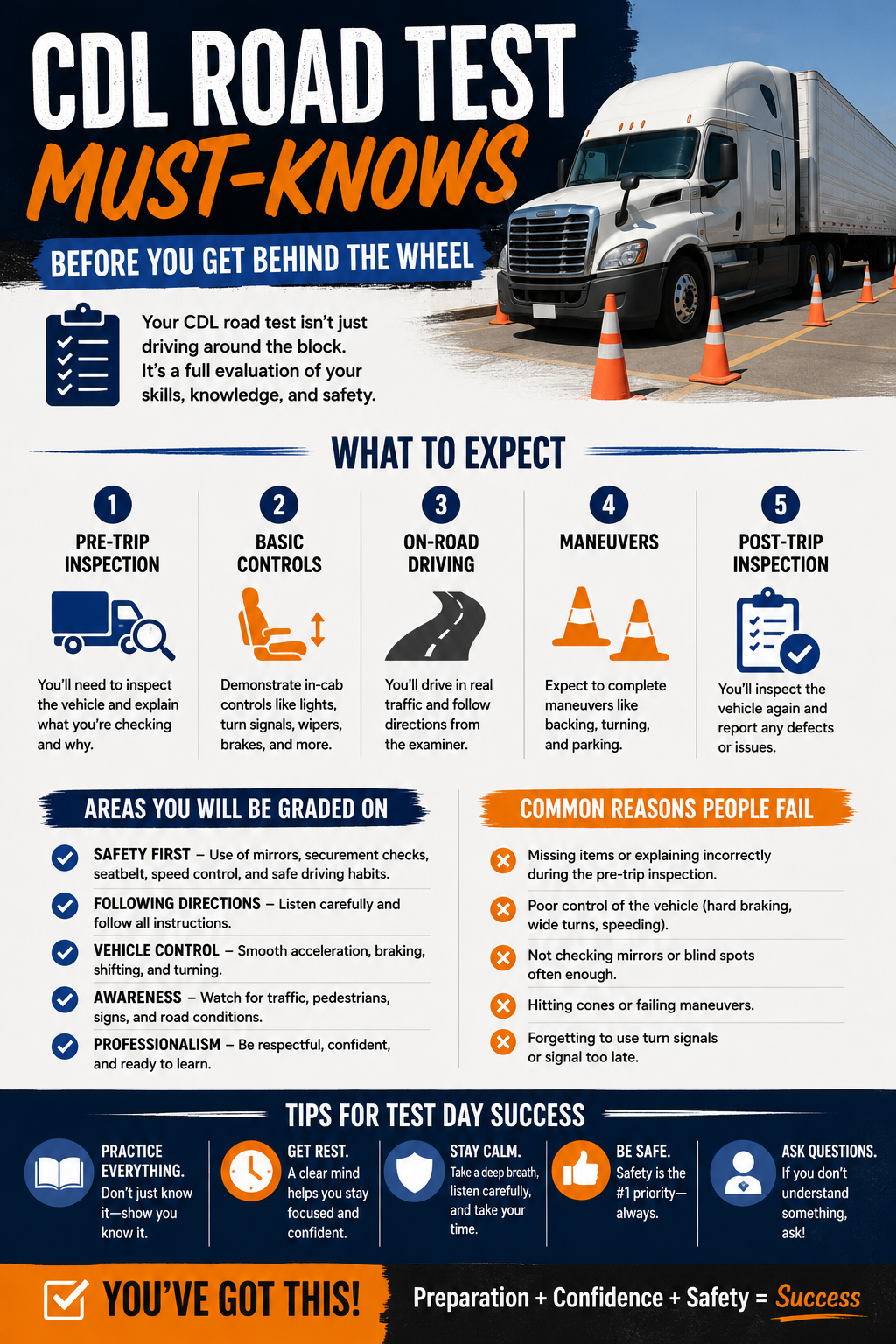
The CDL Road Test Is Really Part of a Bigger Skills Testing Process
When beginners say “CDL road test,” they’re often talking about the entire hands-on portion of earning a CDL.
The actual process involves more than simply driving around town with an examiner sitting beside you.
Depending on where you are in the testing process, you’ll generally be evaluated in three broad areas.
Vehicle Inspection
You need to demonstrate that you understand how to determine whether important parts of the commercial vehicle are safe to operate.
This isn’t just about memorizing a speech.
You need to know what you’re looking at and why it matters.
Basic Vehicle Control
You’ll demonstrate that you can maneuver a large commercial vehicle safely at low speeds.
Depending on your state’s current test, this can involve specific backing and control exercises.
On-Road Driving
You’ll operate the commercial vehicle in actual traffic while the examiner evaluates your turns, intersections, mirror use, speed management, lane positioning, following distance, traffic awareness, and overall decision-making.
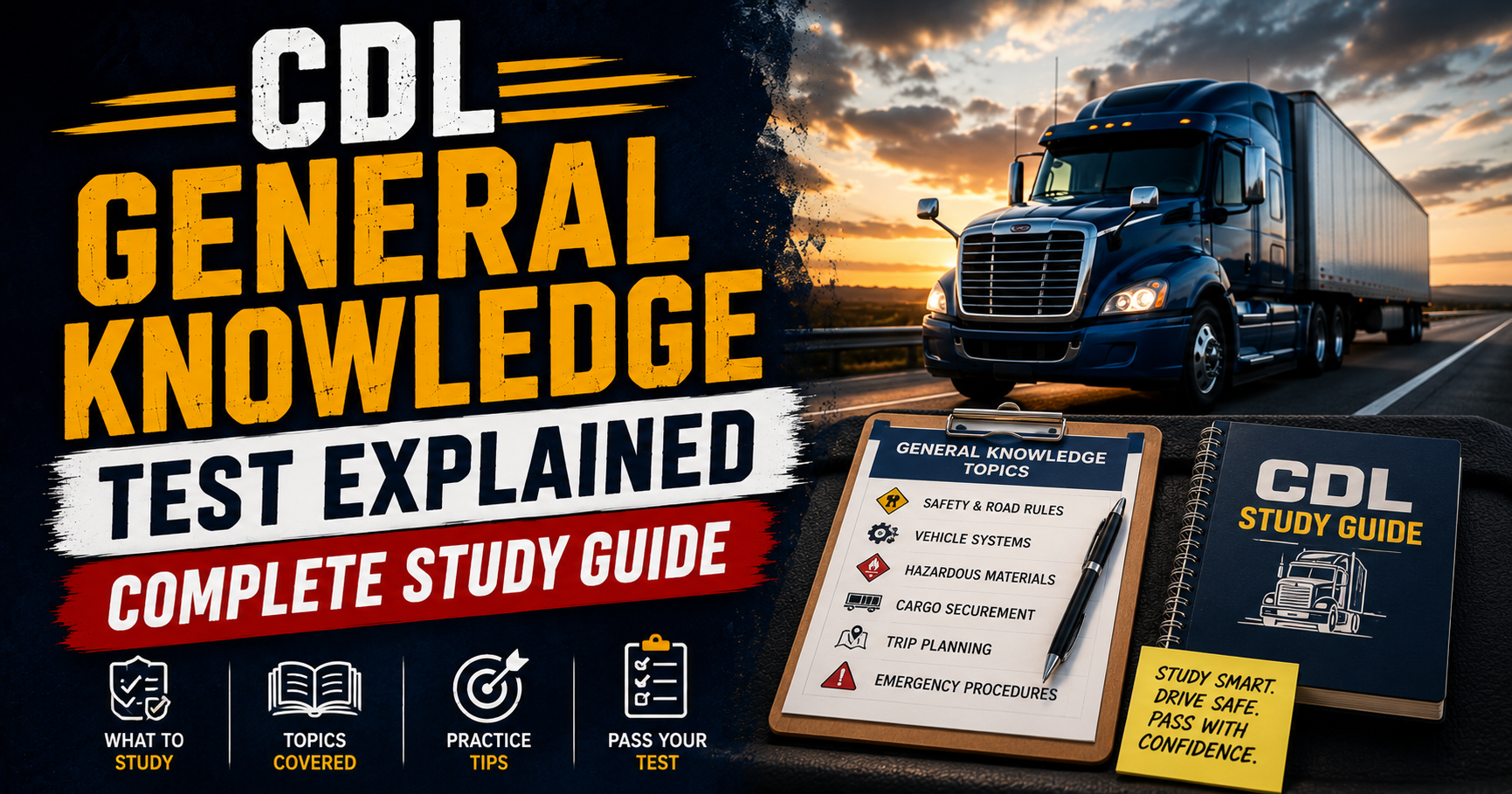
If you’re still preparing for the written portion before reaching this stage, our CDL General Knowledge Test Study Guide breaks down the major subjects you’ll need to understand before moving deeper into CDL training.
What Happens During the Vehicle Inspection Portion?
The inspection portion makes a lot of students nervous because there can be so much to remember.
Depending on your vehicle and testing requirements, you may need to identify and explain inspection items involving areas such as the engine compartment, steering, suspension, brakes, tires and wheels, lights, coupling equipment, trailer components, and in-cab safety systems.
The mistake I see beginners make is trying to memorize everything as one enormous speech.
That’s much harder than actually understanding the vehicle.
Watch Out for Pre-Trip Mistakes That Can Cost You
Knowing the inspection sequence is important, but test-day mistakes often happen because students rush, rely too heavily on memorized wording, or lose their routine when they become nervous. Safety-critical areas such as brake checks, steering, tires and wheels, suspension, and coupling equipment deserve especially careful preparation.
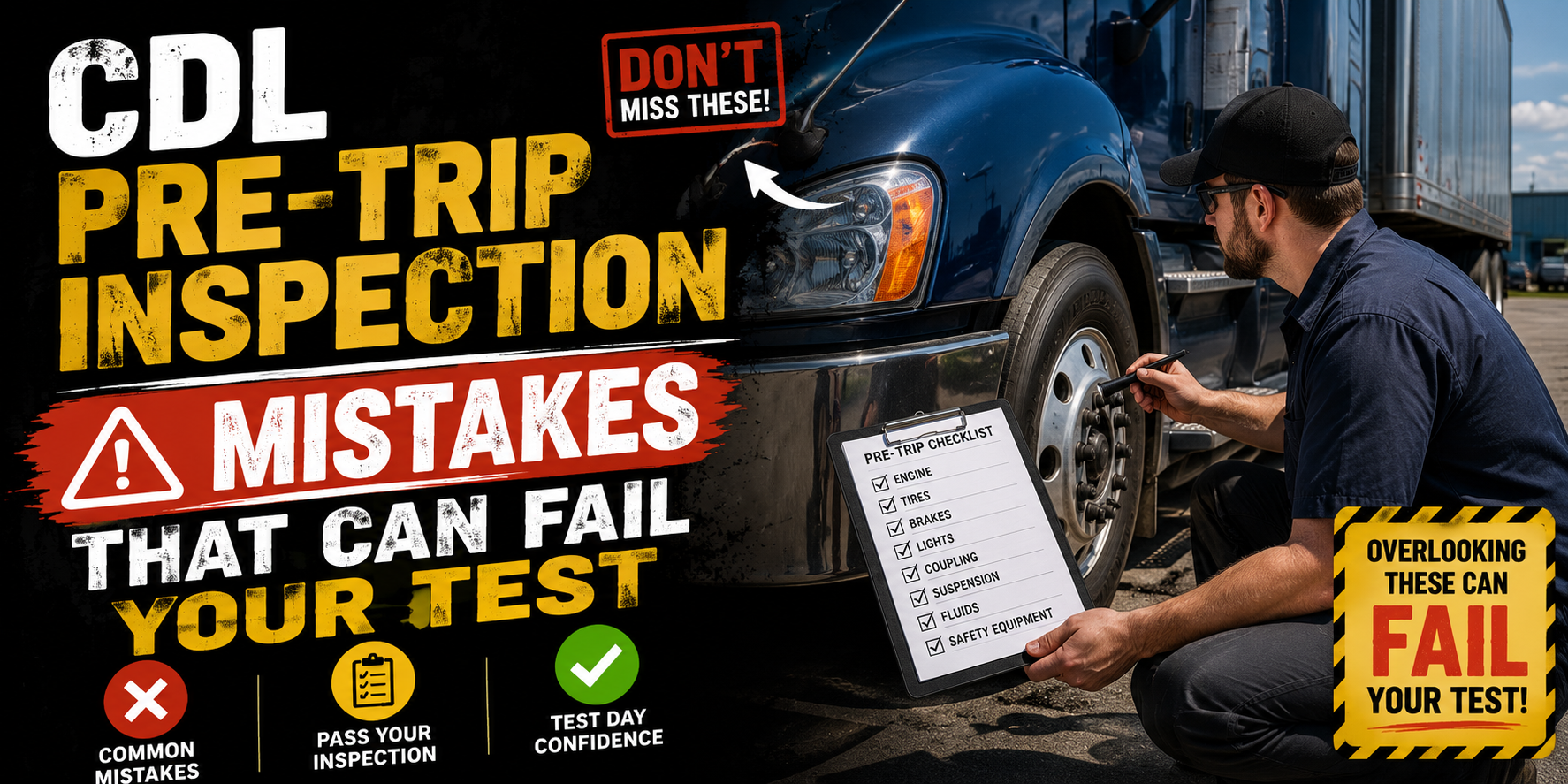
Before test day, review our guide to CDL pre-trip inspection mistakes that can fail your test. It explains which mistakes deserve the most attention, why understanding each component is better than memorizing a speech, and what to do if you suddenly realize you forgot something during the inspection.
Don’t let one missed item cause you to mentally give up on the rest of your test. Stay focused, follow the examiner’s instructions, and keep demonstrating what you know.
Understand What You’re Checking Instead of Memorizing Random Words
You’ve probably heard students repeat phrases like:
“Properly mounted and secured.”
“Not cracked, bent, or broken.”
“No abrasions, bulges, or cuts.”
Those phrases can help, but they shouldn’t become meaningless words you’re repeating from memory.
If you’re checking a brake hose, understand why leaks or damage matter.
If you’re inspecting a tire, understand why tread, inflation, sidewall damage, and overall condition matter.
If you’re looking at suspension components, understand what could happen if something were broken or missing.
Once you understand why you’re inspecting each component, remembering what to say becomes much easier.
Our complete CDL pre-trip inspection checklist is worth reviewing before test day because it helps organize the inspection into manageable areas instead of treating the entire truck like one giant memorization exercise.
What Happens During Basic Vehicle Control Testing?
After inspection-related testing, another major part of CDL skills testing involves demonstrating that you can control the vehicle at low speeds.
This is where backing becomes one of the biggest concerns for new drivers.
And that’s understandable.
A tractor-trailer doesn’t back like a car.
Small movements at the steering wheel can eventually create much larger changes at the rear of the trailer.
You also have limited visibility and need to constantly understand where both the tractor and trailer are positioned.
Don’t Assume Every State Uses the Exact Same Maneuvers
This is important because there’s a lot of outdated CDL test information online.
The exact basic-control exercises and scoring procedures can differ depending on your state and the testing model being used.
Don’t watch one video from another state and assume your test will be identical.
Use your state’s current CDL manual and practice the actual procedures you’ll be expected to perform.
The underlying goal, however, stays the same.
You need to demonstrate controlled, safe maneuvering.
Avoid Overcorrecting While Backing
One of the most common beginner problems is making corrections that are far too large.
You see the trailer moving slightly away from where you want it.
You make a huge steering adjustment.
Now the trailer moves too far the other direction.
You make another huge correction.
Before long, you’re fighting the trailer.
Small, deliberate corrections are usually easier to manage.
Give the trailer time to respond.
Watch both mirrors.
Understand where the tractor is going and where the trailer is going.
Backing becomes much easier when you stop trying to fix everything with one giant steering movement.
Get Out and Look When the Rules Allow It
If your testing procedure permits you to get out and look, understand exactly how and when you’re allowed to use that opportunity.
There’s nothing impressive about guessing where the rear of a trailer is and hitting something.
Professional drivers get out and verify their surroundings when they’re unsure.
However, testing rules involving get-out-and-look opportunities, pull-ups, encroachments, boundaries, and scoring vary, so know your state’s rules before test day.
What Happens Once You Start the Actual Road Test?
This is the portion most students picture when they hear “CDL road test.”
You’ll drive the commercial vehicle on public roads while the examiner observes how you handle normal traffic situations.
But they’re watching much more than whether you keep the truck between the lines.
They’re evaluating how you think as a driver.
Can you recognize hazards?
Do you understand how much space your vehicle needs?
Are you checking what’s happening around the truck?
Do you adjust your speed when conditions change?
Can you make safe decisions without someone telling you what to do every few seconds?
These are the skills that matter once you’re driving professionally.

Mirror Use Is One of the First Habits the Examiner Will Notice
Commercial drivers need to know what’s happening around a much larger vehicle.
That requires frequent mirror checks.
You shouldn’t stare into a mirror long enough to stop watching what’s ahead.
Instead, develop a pattern of quick, regular checks.
Check More Than What’s Directly Behind You
Your mirrors help you monitor traffic, but they’re also how you keep track of your trailer.
They’re especially important before and during:
- Turns
- Lane changes
- Merging
- Slowing
- Entering traffic
- Passing hazards
The examiner wants to see that you’re aware of the entire vehicle, not just what’s visible through the windshield.
This connects directly to concepts you’ll have already studied for the written exam. Our guide to common CDL permit test questions with explained answers is useful because many of those written-test concepts, including space management and safe driving decisions, become real actions once you’re behind the wheel.
Intersections Can Reveal a Lot About Your Driving
Intersections bring multiple hazards together.
You may have traffic signals, stop signs, pedestrians, bicycles, turning vehicles, cross traffic, and limited visibility all within a relatively small area.
Approach under control.
Scan before entering.
Watch traffic signals carefully.
Look for people or vehicles that could enter your path.
And don’t rush through a yellow light because you’re afraid stopping will make you look inexperienced.
The examiner isn’t looking for aggressive confidence.
They’re looking for safe judgment.
Make Complete and Controlled Stops
Don’t rush stops.
Give yourself enough room.
Maintain control of the vehicle and make sure you’re positioned appropriately before proceeding.
If visibility is limited, follow the procedures you’ve been taught rather than simply rolling into an intersection hoping it’s clear.
Turns Are One of the Biggest Areas to Pay Attention To
A long commercial vehicle doesn’t follow exactly the same path through a turn as a passenger car.
Your rear wheels track differently from your front wheels.
That’s especially important on right turns.
Watch Your Trailer Throughout the Turn
You need enough room to prevent your rear wheels from climbing a curb or your trailer from striking signs, poles, vehicles, or other objects.
But there’s another side to this.
Don’t automatically swing unnecessarily far into another lane because you’re afraid of getting close to the curb.
Set the turn up correctly.
Use your mirrors.
Know where your trailer is tracking.
Control the entire vehicle through the turn.
Your Speed Matters Even When You’re Below the Speed Limit
Speed management isn’t simply about avoiding a speeding violation.
You need to choose a speed that’s safe for the conditions.
A posted speed limit may still be too fast for:
- A sharp curve
- Heavy rain
- Congested traffic
- Limited visibility
- Construction
- Other roadway hazards
The examiner wants to see judgment.
Driving exactly the posted speed limit isn’t automatically safe in every situation.
The same principles show up throughout the CDL written exam, which is why our CDL General Knowledge Test Study Guide covers subjects like speed management, stopping distance, weather, hazards, and defensive driving rather than focusing only on memorizing test answers.

Leave More Following Distance Than You Think You Need
Don’t crowd the vehicle ahead because you’re nervous about other traffic moving into the gap.
You’re operating a vehicle that can weigh tens of thousands of pounds.
You need room to react and stop.
If another vehicle moves into the space ahead of you, don’t get frustrated and immediately close the gap again.
Back off and rebuild your following distance.
That space is there for a reason.
What Else Is the CDL Examiner Watching?
It can feel like the examiner is watching absolutely everything you do.
In reality, most of what they’re evaluating comes back to safety, control, awareness, and proper driving procedures.
Lane Position
Keep the commercial vehicle properly positioned within the lane.
Be aware that the trailer needs to remain under control as well.
Lane Changes
Check traffic carefully, use your mirrors, signal properly, and make sure there’s enough space before moving.
Traffic Signs and Signals
Don’t become so focused on shifting, mirrors, or the examiner that you miss important traffic-control devices.
Railroad Crossings
Know the rules that apply to the vehicle you’re operating and follow the procedures required during your test.
Manual Transmission Control
If you’re testing in a manual-transmission vehicle, shifting should not cause you to lose awareness of traffic or control of the vehicle.
Overall Awareness
The examiner wants to see that you’re thinking ahead.
Professional driving is much easier when you’re anticipating what’s coming instead of reacting to every situation at the last possible second.
Can One Small Mistake Fail Your CDL Road Test?
This is where a lot of students mentally sabotage themselves.
You make one imperfect turn.
Immediately you think:
“I failed.”
Then you spend the next several minutes replaying that mistake instead of concentrating on driving.
Don’t do that.
A minor error isn’t necessarily the same thing as a serious safety violation.
Exact scoring and automatic-failure rules vary by state, so be careful with online lists claiming that one specific mistake always means an automatic failure everywhere.
What Comes After the Pre-Trip Inspection?
The pre-trip inspection can feel like the entire CDL test when you’re spending hours trying to learn it, but it’s only one part of demonstrating that you’re ready to operate a commercial vehicle.
Once you move beyond inspection-related testing, you’ll also need to show that you can control the vehicle during required maneuvers and safely drive in real traffic. Our walkthrough of what happens during a CDL road test takes you through the rest of that experience, including backing and vehicle control, turns, intersections, mirror checks, speed, following distance, common mistakes, and what to keep in mind if something doesn’t go perfectly.
Understanding the whole process ahead of time makes it easier to see why the pre-trip matters. You’re not memorizing parts just to pass a test. You’re learning how to determine whether the vehicle you’re about to drive is actually safe.
Serious Safety Problems Matter Much More
Examples of potentially serious mistakes can include:
- Running a red light
- Failing to yield when required
- Losing control of the vehicle
- Causing or contributing to a collision
- Ignoring critical traffic signs
- Making an unsafe maneuver that forces another road user to take emergency action
Your state’s testing rules determine exactly how individual mistakes are scored.
Your job isn’t to calculate your score while driving.
Your job is to keep operating safely.
Don’t Let One Mistake Become Five
Imagine you make a turn that wasn’t as smooth as you wanted.
Your brain immediately starts replaying it.
“That was terrible.”
“I probably failed.”
“I knew I wasn’t ready.”
Meanwhile, the truck is still moving.
Now you miss a sign.
Then you forget a mirror check.
Then you approach the next intersection too quickly.
The original mistake may have been minor.
The loss of concentration afterward becomes the real problem.
If something doesn’t go perfectly, mentally move on.
Ask yourself:
What is the safest decision I need to make right now?
Let the examiner determine your score.
You Don’t Get Bonus Points for Finishing Quickly
Rushing is another mistake that hurts nervous students.
Take the time necessary to make safe decisions.
Check traffic.
Use your mirrors.
Set up your turns.
Come to proper stops.
Make sure there’s enough room before entering an intersection or changing lanes.
Being deliberate isn’t the same as being dangerously hesitant.
The goal is controlled, confident driving.
Practice the Vehicle You’ll Actually Test In Whenever Possible
Vehicle familiarity can make a huge difference.
You don’t want to spend half your mental energy on test day trying to remember where controls are located or how the vehicle responds.
Know How the Vehicle Feels
Before testing, become familiar with:
- Mirror positioning
- Brake response
- Steering
- Turning radius
- Trailer tracking
- Control locations
- Clutch and shifting characteristics if using a manual
The more familiar the vehicle feels, the more attention you can devote to traffic and safe decision-making.
Practice Your Weakest Skills Before Test Day
Don’t spend all your practice time doing what you’re already comfortable with.
If backing makes you nervous, practice backing.
If right turns are difficult, practice right turns.
If you’re inconsistent with mirror checks, deliberately work on building a scanning routine.
If you struggle with inspection terminology, go back through our CDL pre-trip inspection checklist and focus on understanding each system instead of trying to memorize everything the night before.
Practice should expose weaknesses while you still have time to improve them.
Drive Every Practice Session Like It’s the Real Test
Don’t tell yourself:
“I’ll remember to do that when I’m actually testing.”
Do it now.
Signal correctly.
Check mirrors.
Maintain following distance.
Come to proper stops.
Watch signs.
Control your speed.
The goal is to build habits so deeply that you don’t have to suddenly remember 50 different things when the examiner sits beside you.
If you want more practice connecting written CDL knowledge with real driving situations, our CDL General Knowledge practice material can help reinforce the safety concepts you’ll actually use once you’re behind the wheel.
What Should You Do the Night Before the CDL Road Test?
Don’t stay awake until 2 a.m. trying to cram every CDL fact you’ve ever learned.
At this point, preparation matters more than panic studying.
Get your documents together.
Confirm the testing location.
Know when you need to arrive.
Review the applicable sections of your state’s current CDL manual.
Know which vehicle you’re using.
Get some sleep.
You want your brain alert enough to recognize hazards and make good decisions.
If you’re still nervous about the types of questions and concepts you learned during the permit stage, reviewing these 25 common CDL permit test questions with correct answers and explanations can be a useful refresher without trying to relearn your entire CDL manual the night before.
What Happens If You Fail Your CDL Road Test?
Failing doesn’t mean you can’t become a truck driver.
Plenty of professional drivers didn’t pass every portion of CDL testing perfectly on their first attempt.
The important thing is figuring out why you didn’t pass.
Was it backing?
Turns?
Mirror usage?
Vehicle control?
Traffic awareness?
Inspection knowledge?
Once you identify the weakness, work specifically on that area before retesting.
Retesting rules, waiting periods, fees, and allowed attempts vary by state, so check with your licensing agency rather than assuming another state’s rules apply to you.
And don’t confuse failing one test with failing at trucking.
One of our newer drivers shared exactly what the experience felt like in I Passed My CDL Test Today and Here’s What I Learned, which gives you a completely different perspective from someone who had just gone through the CDL testing process herself.
Frequently Asked Questions About the CDL Road Test
How long does a CDL road test take?
There isn’t one universal time. The total testing process depends on your state, location, vehicle class, testing procedure, and which portions you’re completing that day. Don’t schedule something immediately afterward assuming you’ll be finished at an exact time.
Does the CDL examiner try to trick you?
The purpose isn’t to trick you. The examiner needs to determine whether you can demonstrate the required skills and safely operate the vehicle. Listen carefully to directions and don’t make an unsafe maneuver just because you’re nervous about missing an instruction.
Do I have to drive perfectly to pass?
You should perform every skill as correctly as possible, but don’t assume one small imperfection automatically means you’ve failed. Scoring varies by jurisdiction. Keep driving safely until the examiner tells you the test is complete.
Can hitting a curb fail the CDL test?
It depends on the situation and your state’s testing rules. Curb contact during certain maneuvers can be treated differently depending on severity and testing procedures. Learn your state’s scoring rules rather than relying on a blanket answer from another state.
What if I miss a turn the examiner tells me to make?
Never make a dangerous last-second maneuver just to follow an instruction. Continue operating safely and follow the examiner’s next direction. Missing a turn safely is better than cutting across traffic or losing control because you panicked.
Can I use a backup camera during the CDL skills test?
Rules involving cameras and driver-assistance technology can vary. Don’t assume you’re allowed to rely on electronic aids as a substitute for demonstrating required skills. Check your state’s current testing requirements.
What happens after I pass?
Once you’ve completed the required CDL testing and licensing steps, the next stage is usually finding or beginning your first professional driving job.
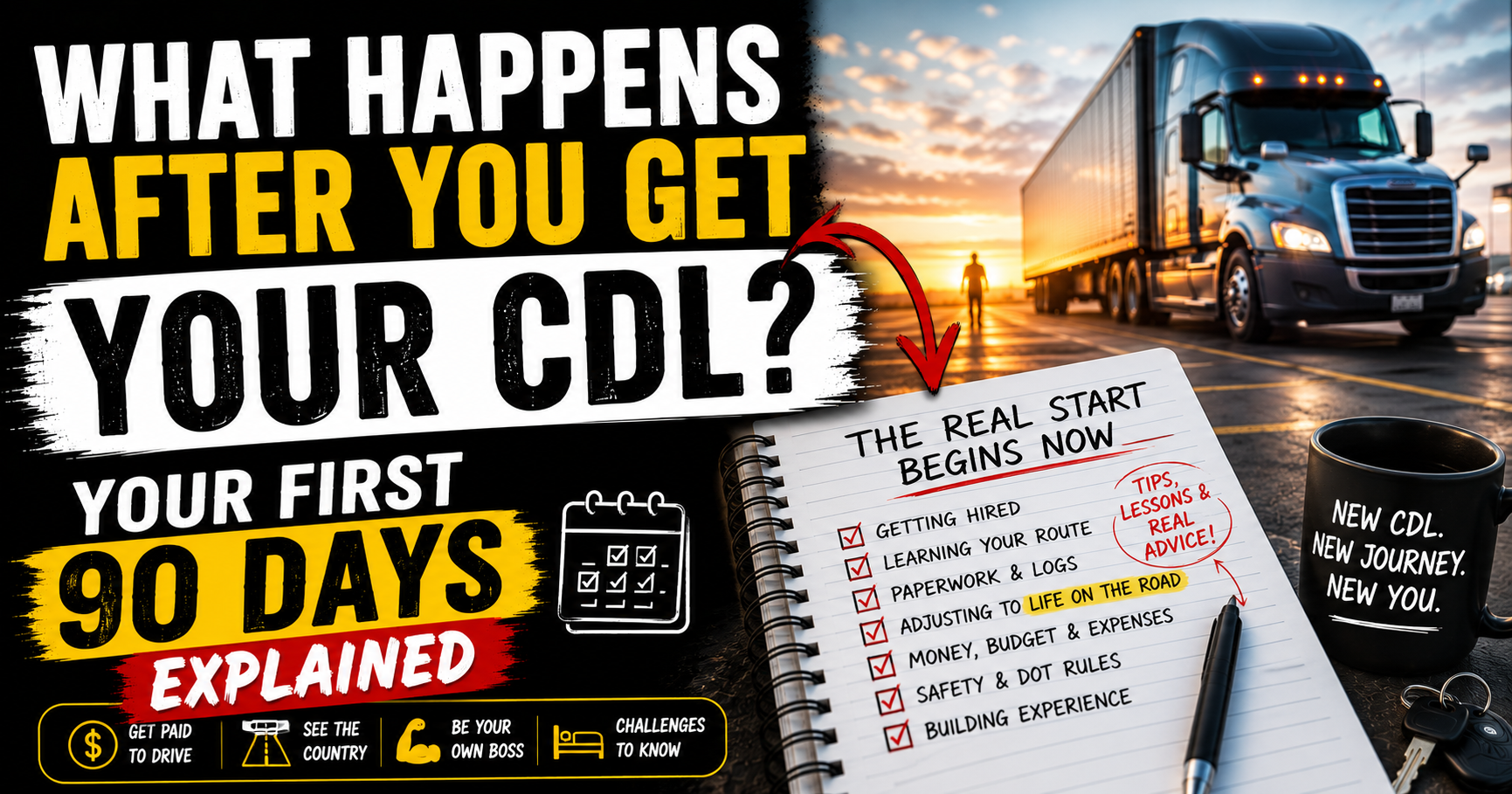
That transition can happen quickly. Our What Happens After You Get Your CDL? Your First 90 Days Explainedwalks through what happens as you move from newly licensed driver to company orientation, training, and eventually handling loads with much more independence.
Passing Is About Proving You Can Handle the Responsibility
Try not to think of the CDL road test as an examiner waiting for you to make one tiny mistake.
Think about what the license actually allows you to do.
You may soon be responsible for a commercial vehicle weighing tens of thousands of pounds, traveling at highway speeds alongside families, workers, pedestrians, and everyone else using the road.
The examiner needs to see that you can handle that responsibility safely.
Check your mirrors.
Manage your speed.
Leave space.
Pay attention to signs.
Set up your turns.
Don’t rush.
And if something doesn’t go perfectly, make the next decision a safe one.
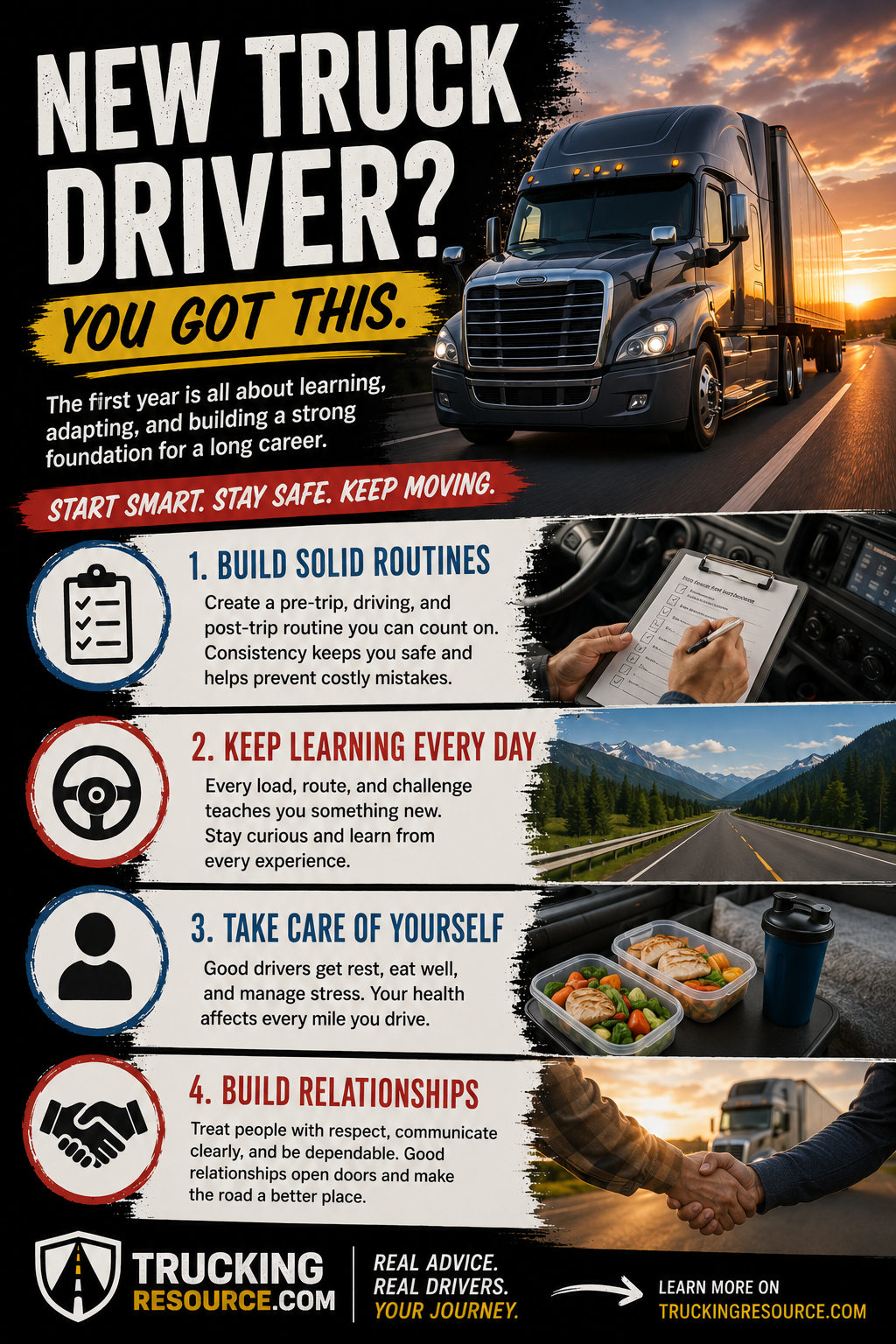
Once you’ve passed and are preparing to enter the industry, our New Truck Driver Survival Guide picks up where CDL testing leaves off and covers the things you’ll need to know during your first year that no road test can fully prepare you for.
Author: Tyler Brooks
Tyler Brooks has worked around commercial trucks and CDL training for more than a decade, helping new drivers understand the skills, safety habits, and real-world expectations involved in starting a trucking career. He focuses on turning complicated CDL topics into straightforward information that new drivers can actually use.