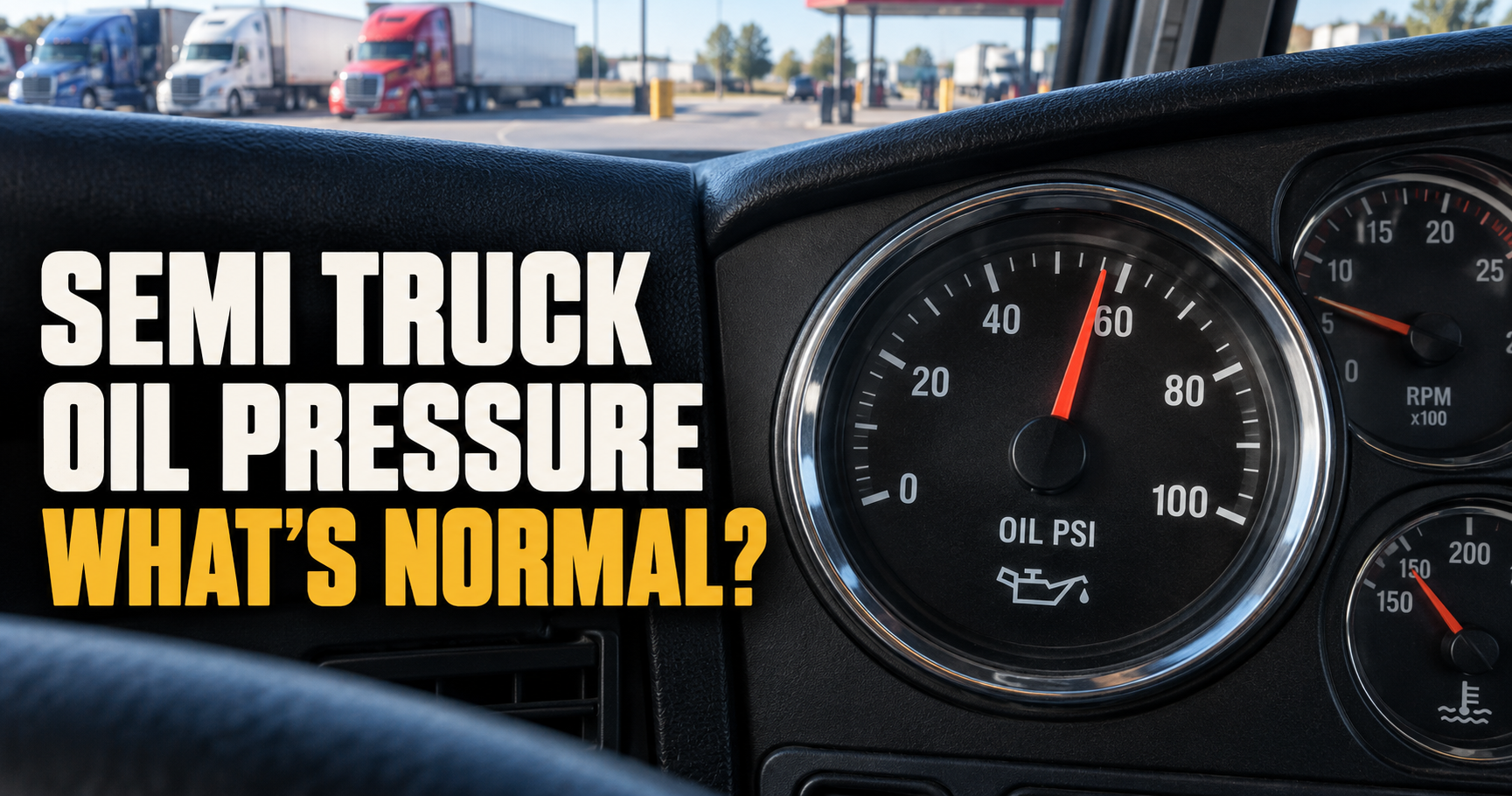
When I first started driving, one of the gauges I watched the most was the oil pressure gauge.
Every time the needle moved, I found myself wondering if it was supposed to.
Why was it higher when I first started the engine?
Why did it drop after the truck warmed up?
Why did it change every time I accelerated?
It turns out that all of those things are completely normal.
In fact, oil pressure is one of the few gauges that almost never stays in exactly the same place.
That’s because it’s constantly changing based on engine speed, oil temperature, and engine load.
Once you understand why it moves, you’ll spend a lot less time worrying every time the needle changes position.
What Does the Oil Pressure Gauge Measure?
The oil pressure gauge shows how much pressure the engine’s oil pump is creating as it circulates oil through the engine.
That oil forms a protective film between moving metal parts.
Without enough oil pressure, the engine can’t maintain proper lubrication.
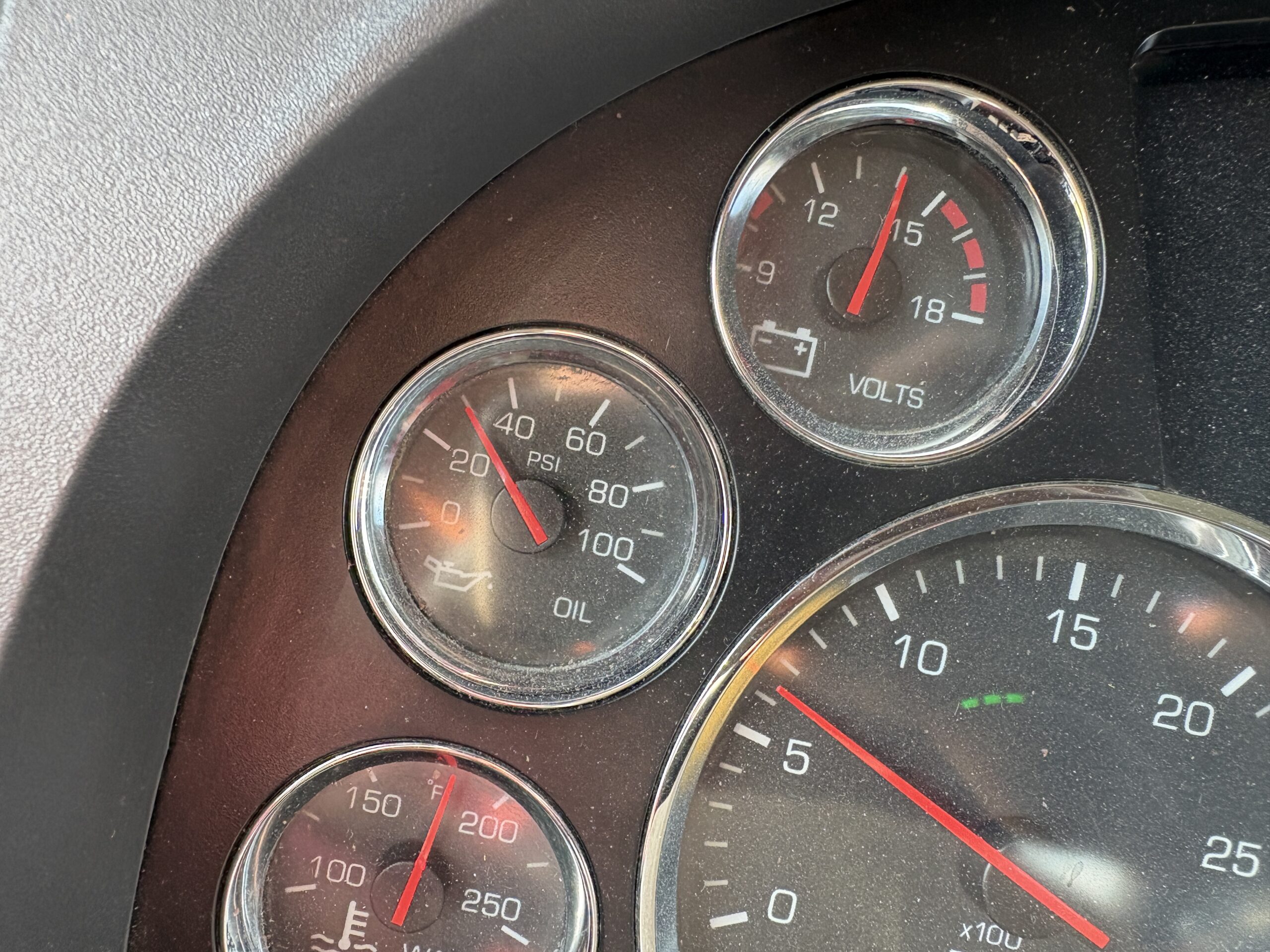
That’s why this is one of the most important gauges on the dashboard.
If oil pressure suddenly disappears, severe engine damage can happen very quickly.
Most manufacturers recommend shutting the engine down immediately if oil pressure suddenly drops to zero or far below normal while driving.


There Isn’t One “Normal” Oil Pressure
One mistake a lot of new drivers make is expecting the needle to stay in one spot all day.
It won’t.
Oil pressure changes naturally depending on several things:
- Engine temperature.
- Engine RPM.
- Oil viscosity.
- Engine load.
That means the reading you see at idle in the morning won’t be the same reading you see pulling a hill with a fully warmed-up engine.
That’s exactly how it’s supposed to work.
Oil Pressure Is Usually Highest Right After Startup
One of the first things you’ll notice is that the gauge often reads higher just after starting the engine.
That’s because the oil is still cold.
Cold oil is thicker.
The oil pump has to work harder to move it through the engine, which creates higher pressure.
As the engine warms up, the oil becomes thinner.
That’s when you’ll usually see the needle gradually settle lower.
For most heavy-duty diesel engines, this change is completely normal.
Oil Pressure Normally Drops at Idle
This is probably the question I hear the most.
“My oil pressure was 60 PSI going down the highway, but now it’s only around 25 to 35 PSI sitting at a stoplight. Is that bad?”
Usually…
No.
When the engine is idling, it’s turning much slower than it is at highway speed.
A slower oil pump creates less pressure.
As long as the pressure stays within the engine manufacturer’s normal operating range and rises again when engine RPM increases, a lower idle reading is expected. Heavy-duty engine manuals consistently note that oil pressure naturally decreases at idle and increases with engine speed.

Oil Pressure Should Increase as Engine RPM Increases
One thing that confused me when I first started watching the gauge was why the needle climbed every time I accelerated.
The answer is pretty simple.
The oil pump is driven by the engine.
As engine RPM increases, the oil pump also turns faster.
A faster pump moves more oil through the engine, which usually results in higher oil pressure.
That’s why it’s completely normal to see:
- Lower oil pressure at idle.
- Higher oil pressure cruising down the highway.
- Higher pressure while climbing a hill than sitting at a stoplight.
If the pressure rises smoothly as RPM increases and drops again at idle, that’s generally what you’d expect to see.
What Can Cause Low Oil Pressure?
Low oil pressure doesn’t always mean the engine is worn out.
Sometimes the problem is relatively simple.
Some common causes include:
- Low engine oil level.
- Oil that’s too thin for the application.
- A worn oil pump.
- A restricted oil pickup screen.
- Excessive engine bearing wear.
- A faulty oil pressure sending unit or gauge.
The important thing is to look at the whole picture.
Did the pressure suddenly change?
Did a warning light come on?
Is the engine making unusual noises?
Those clues often tell you more than the gauge alone.
What About High Oil Pressure?
Higher-than-normal oil pressure isn’t nearly as common, but it can happen.
Some possible causes include:
- Very cold oil during startup.
- Oil that’s heavier than recommended.
- A sticking pressure relief valve.
- Restrictions inside the lubrication system.
One thing I’ve noticed is that drivers sometimes panic when they see high pressure immediately after starting a cold engine.
That’s usually one of the most normal times to see elevated pressure because cold oil is thicker and doesn’t flow as easily.
As the engine reaches operating temperature, the pressure should gradually settle down.
When Should You Shut the Engine Off?
This is probably the most important part of the article.
If the oil pressure suddenly drops far below normal or goes to zero while the engine is running, don’t keep driving hoping it’ll come back.
Modern heavy-duty engines often illuminate warning lights or even derate the engine when oil pressure becomes critically low, but you should never rely on the protection system alone. Running an engine with insufficient oil pressure can cause severe engine damage in a very short time.
If you suddenly notice:
- The oil pressure gauge dropping rapidly.
- An oil pressure warning light.
- Knocking or ticking noises.
- A STOP ENGINE warning.
Safely pull over and shut the engine down as soon as it’s safe to do so.


Don’t Watch the Exact Number Every Minute
One thing I’ve learned is that experienced drivers usually don’t stare at the oil pressure gauge all day.
Instead, they learn what’s normal for their truck.
Every engine is a little different.
The exact PSI on your Cummins may not match a Detroit or a Paccar engine.
The important thing is consistency.
If your truck normally idles around one pressure and suddenly it’s much lower, that’s worth investigating.
If it normally cruises at another pressure and suddenly drops, that’s another sign something has changed.
Getting familiar with what’s normal for your engine is often more useful than memorizing one exact PSI number.
Frequently Asked Questions
Is it normal for oil pressure to drop when the engine warms up?
Yes.
Cold oil is thicker, so pressure is usually higher immediately after startup. As the oil warms and flows more easily, pressure normally decreases somewhat.
Why is my oil pressure lower at idle?
Because the engine is turning more slowly. Lower engine RPM means the oil pump is also turning more slowly, which generally produces lower pressure than when you’re driving down the highway.
Should my oil pressure change while driving?
Yes.
It’s completely normal for oil pressure to increase with engine speed and decrease when the engine returns to idle. Small fluctuations during normal operation are expected.
What should I do if my oil pressure suddenly drops?
Safely pull off the road as soon as possible and shut the engine down if the pressure drops far below normal or reaches zero, especially if warning lights or unusual engine noises appear. Continuing to drive with critically low oil pressure can quickly damage the engine.
Learn What’s Normal Before Something Goes Wrong
The oil pressure gauge isn’t there to give you a perfect number every minute of the day.
It’s there to help you notice when something changes.
Once you understand why the needle moves, you stop worrying every time it climbs or falls a few pounds.
Instead, you start watching for changes that don’t fit your truck’s normal pattern.
In my opinion, that’s the best way to use the oil pressure gauge.
Know what normal looks like for your engine, pay attention when something changes, and don’t ignore warning signs if the pressure suddenly drops far below where it normally runs.
Author: Jake Harrison
Jake Harrison is a commercial transportation writer for TruckingResource.com who specializes in CDL maintenance, heavy-duty truck systems, commercial vehicle equipment, and practical repair guides. He works with the TruckingResource.com editorial team to create detailed, easy-to-understand articles that help drivers better understand the trucks they operate every day.