If you’ve ever heard an experienced truck driver say, “I’m going to turn around so I can sight-side it,” there’s a good reason.
Whenever I have the option, I’ll choose a sight-side back every single time.
After more than 25 years behind the wheel, I’ve learned that making one extra loop around a parking lot is usually a whole lot cheaper than backing into another truck.
Backing accidents happen every day.
Most of them aren’t because drivers don’t know how to back.
They’re because someone rushed, ignored their mirrors, or tried to force a difficult setup when there was an easier option available.
That’s why professional drivers almost always prefer a sight-side back whenever it’s possible.
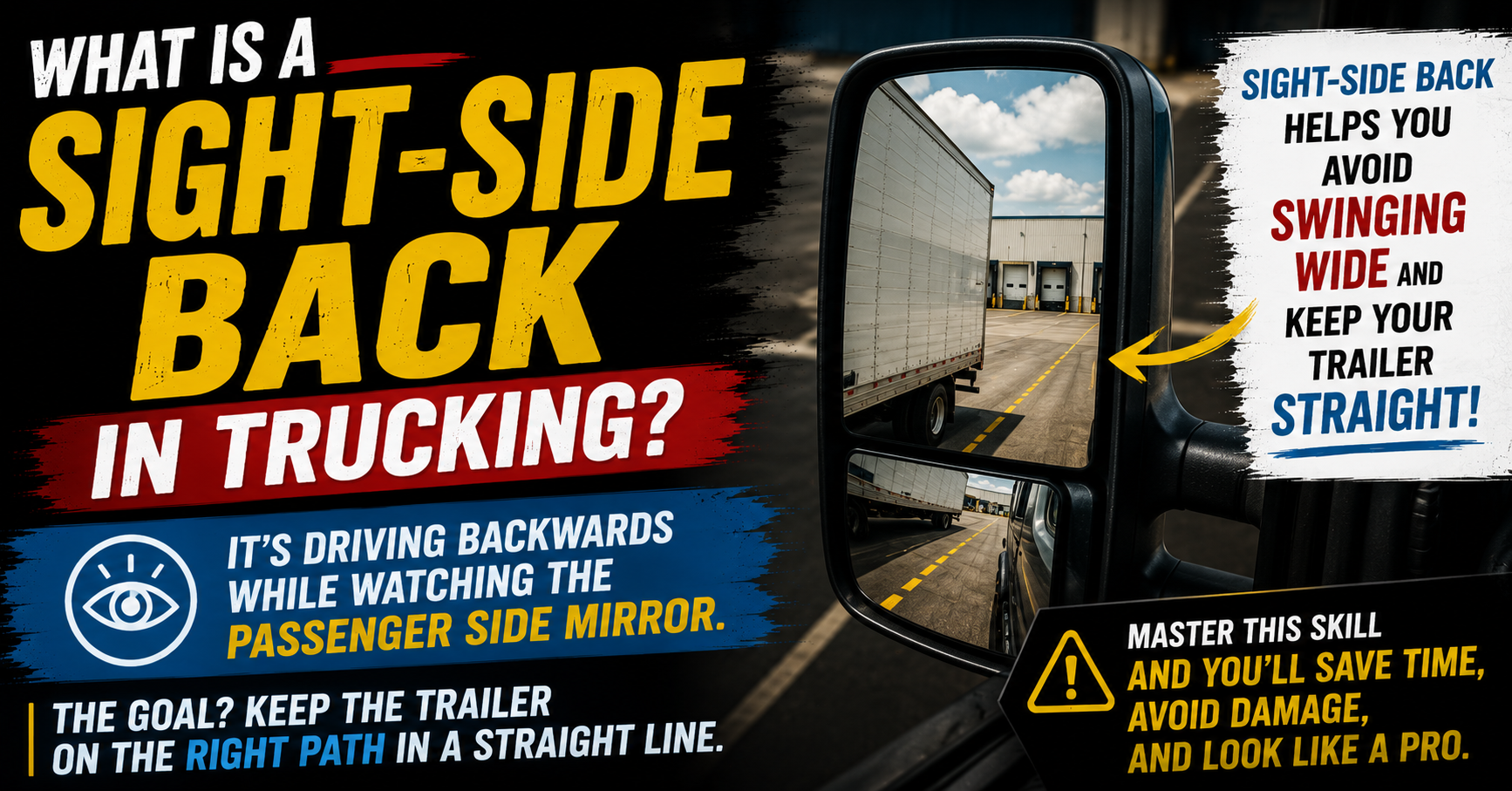
What Is a Sight-Side Back?
A sight-side back is a backing maneuver where the trailer moves toward the driver’s side of the truck. This gives the driver a much better view of the trailer, the parking space, and nearby obstacles through both the driver’s window and mirrors.
Because visibility is much better, most trucking companies and CDL instructors teach drivers to use a sight-side back whenever they have a choice.
Why Is It Called a Sight-Side Back?
The name is pretty straightforward.
You’re backing toward the side where you have the best visibility.
From the driver’s seat you can:
- Look directly out the driver’s window.
- Watch the driver’s side mirror.
- Better judge the trailer’s angle.
- See obstacles sooner.
- Keep a closer eye on the dock or parking space.
Those advantages make sight-side backing much less stressful than backing toward the passenger side.
Why Experienced Drivers Prefer It
I’ve backed into thousands of docks over the years.
One lesson has never changed.
The more you can see, the safer you’ll be.
A sight-side back gives you better awareness of:
- The trailer.
- The dock.
- Curbs.
- Parked trucks.
- Pedestrians.
- Light poles.
- Loading dock edges.
It doesn’t make backing easy.
It simply gives you more information while you’re doing it.
Sight-Side Back vs. Blindside Back
These two terms are opposites.
A sight-side back places the trailer on the driver’s side where visibility is best.
A blindside back places the trailer on the passenger side where much of the trailer is hidden from direct view, forcing the driver to rely heavily on mirrors. Because of the limited visibility, blindside backing is generally considered the more difficult and higher-risk maneuver.
If I have enough room to turn around and create a sight-side setup, I’ll do it almost every time.
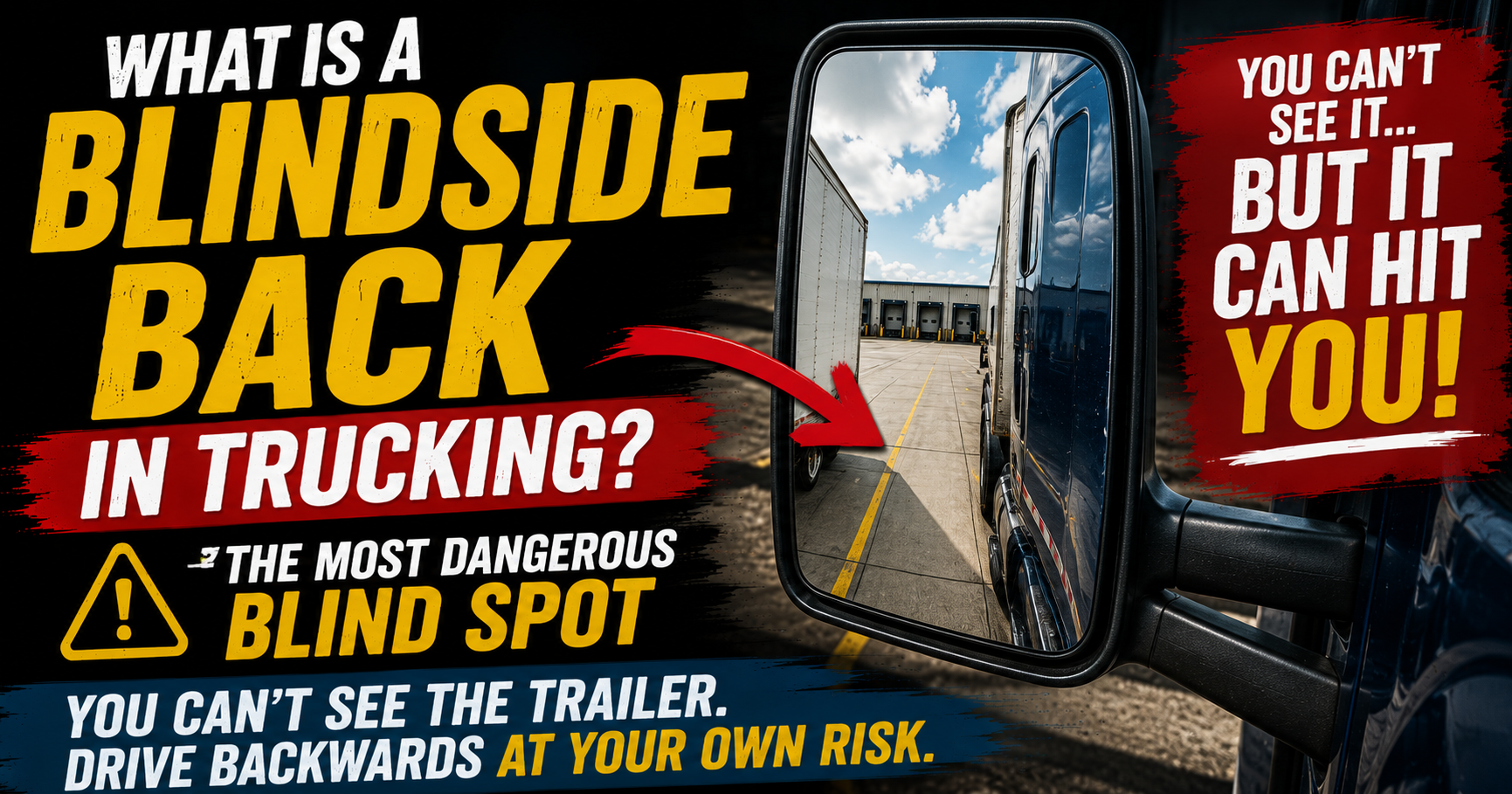
If you haven’t already, be sure to read our guide on What Is a Blindside Back in Trucking? because understanding the differences between these two maneuvers is important for every new CDL driver.
Where You’ll Use a Sight-Side Back
You’ll encounter this maneuver almost everywhere commercial trucks operate.
Some common locations include:
- Distribution centers.
- Grocery warehouses.
- Manufacturing plants.
- Truck stops.
- Customer loading docks.
- Equipment yards.
- Freight terminals.
As you gain experience, you’ll begin spotting opportunities to turn difficult blindside backs into much easier sight-side approaches.
My Routine Before I Start Backing
People often ask if I have a secret technique.
Not really.
I simply stick to the same routine every time.
I stop.
I study the area.
I decide where I want the trailer to end up.
Then I slowly position the truck before ever putting it in reverse.
A good setup usually makes the rest of the backing maneuver much easier.
GOAL Still Matters
One mistake I see from newer drivers is thinking a sight-side back means they don’t need to get out.
That’s not true.
Even with excellent visibility, I still use GOAL.
Get Out And Look.
If I’m unsure about clearances, obstacles, or trailer alignment, I climb out and check.
I’ve never regretted taking an extra minute to prevent an accident.
Watch for Off-Tracking
One thing every driver needs to remember is that the trailer won’t follow exactly where the tractor goes.
As the tractor turns, the trailer cuts a different path.
That’s called off-tracking, and it’s something you should always keep in mind while backing into tight spaces. Apply that concept to realistic scenarios with these off-tracking CDL questions.
If you haven’t read it yet, our article on What Is Off-Tracking in Trucking? explains why trailers don’t follow the exact path of the tractor.
Common Mistakes New Drivers Make
I’ve helped train quite a few new drivers over the years, and I tend to see the same mistakes.
The biggest ones include:
- Backing too fast.
- Turning the steering wheel too much.
- Watching only one mirror.
- Refusing to pull forward and reset.
- Skipping GOAL because they think they’re “close enough.”
None of those mistakes are caused by a lack of skill.
They’re usually caused by rushing.
Frequently Asked Questions
Is a sight-side back easier?
Almost always.
Because you have much better visibility from the driver’s side, most drivers find sight-side backing far less stressful than a blindside maneuver.
Will I always be able to use a sight-side back?
No.
Some loading docks, truck stops, and customer locations simply don’t allow it.
That’s why every professional driver eventually learns how to perform both types of backing safely.
Is sight-side backing on the CDL test?
Many CDL schools teach sight-side backing because it helps drivers learn trailer control safely.
The exact backing exercises you’ll perform depend on your state’s CDL testing requirements.
Practicing either type of backing improves your overall vehicle control.
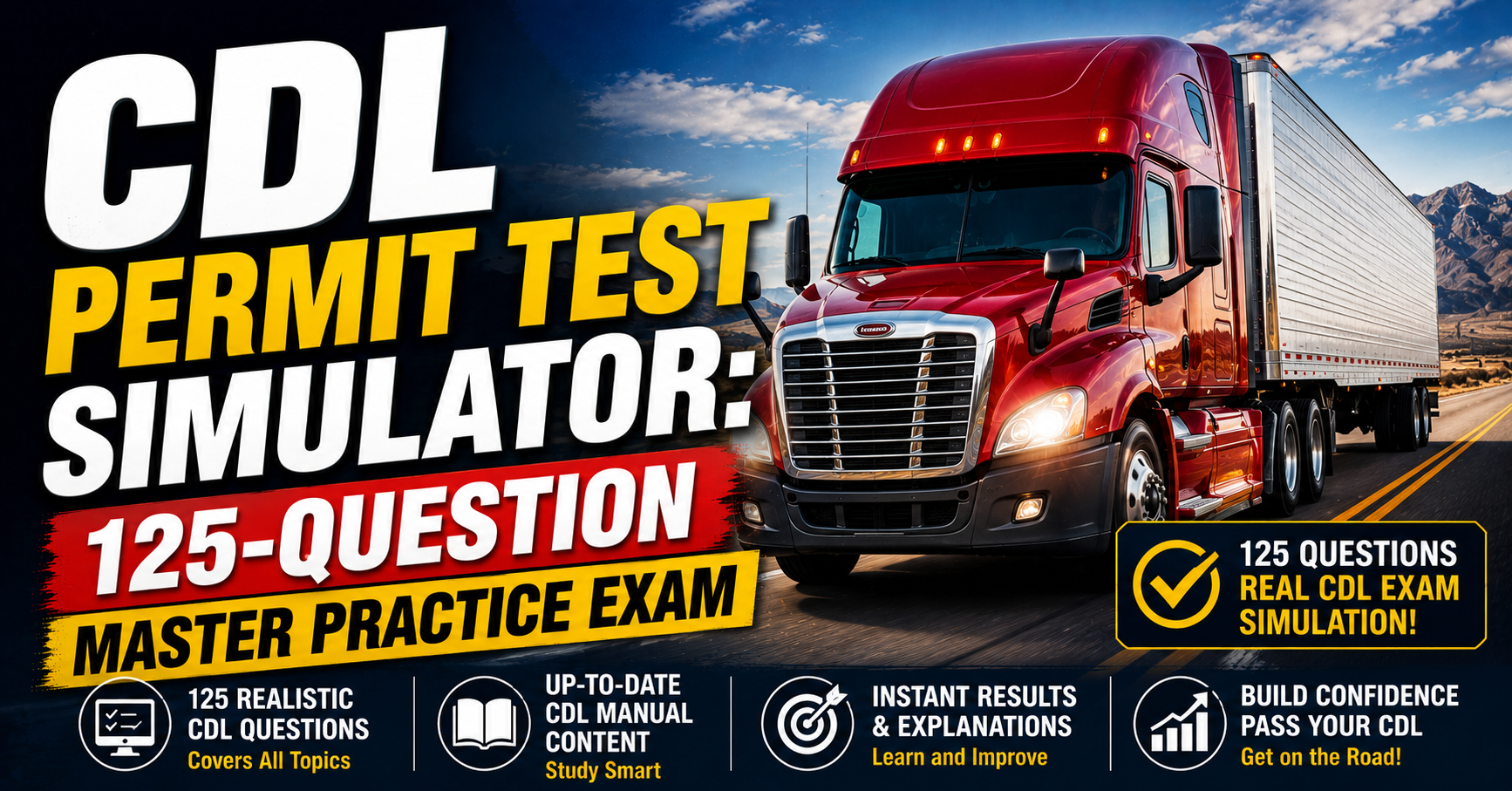
Our CDL Permit Test Simulator: 125-Question Master Practice Exam is a great companion while preparing for every part of your CDL exam, including the knowledge you’ll need before getting behind the wheel.
One Tool I Never Back Without
Whether I’m backing into a warehouse before sunrise or squeezing into a truck stop after dark, I always want a good look at my surroundings.
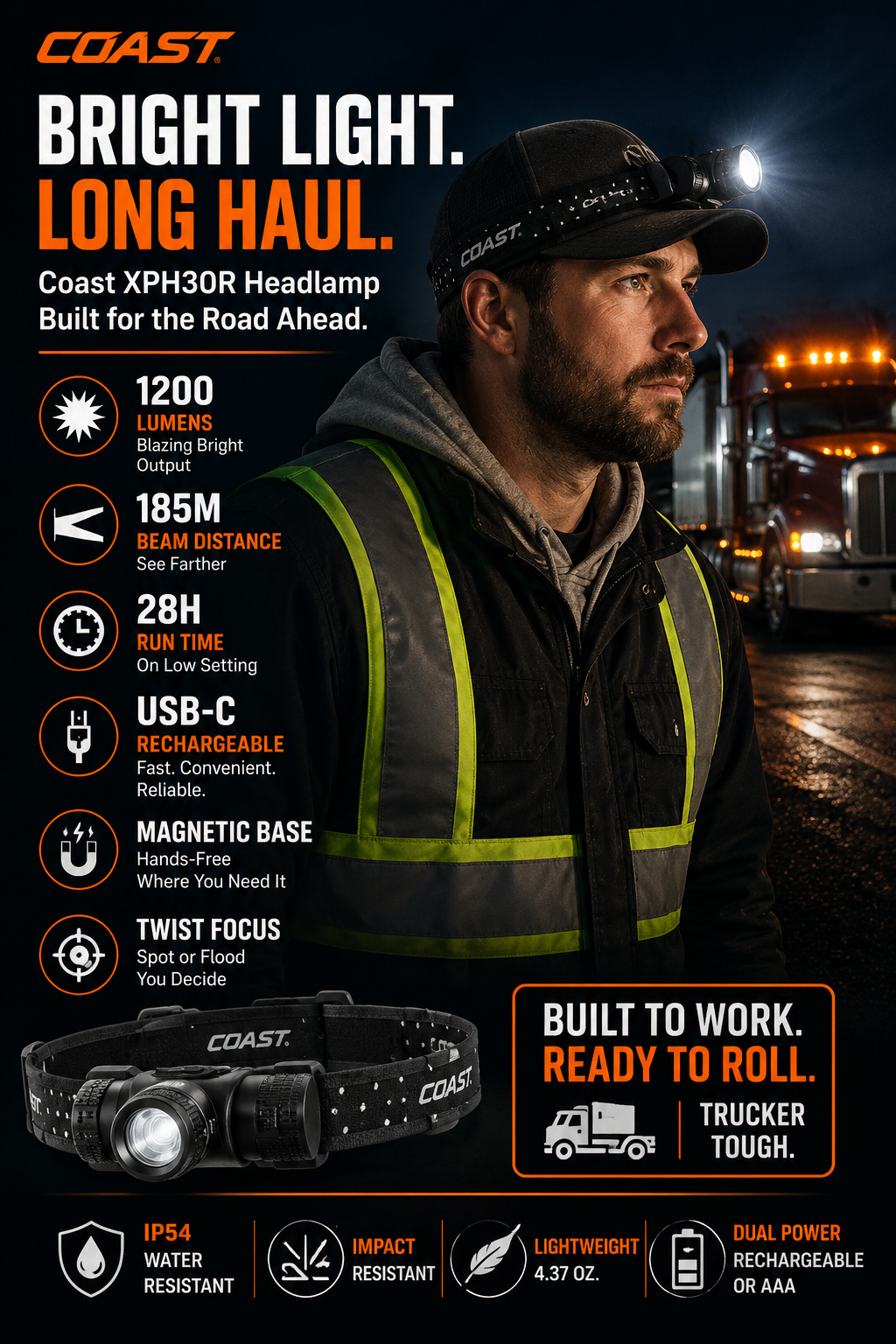
That’s why I keep the Coast XPH30R USB-C Rechargeable Dual Power Headlamp within easy reach.
It makes GOAL much easier, especially when checking trailer corners, curbs, and obstacles at night.
My Advice After Thousands of Dock Backings
Backing isn’t about showing off.
It isn’t about finishing first.
It’s about putting the trailer exactly where it belongs without hitting anything along the way.
Whenever you have the option, choose the sight-side setup.
Take the extra minute.
Pull around the building.
Reset your angle.
Ignore anyone waiting behind you.
Professional drivers aren’t judged by how quickly they back.
They’re judged by how safely they do it.
That’s one lesson that has served me well for millions of miles, and it’s one I still follow every single day.
Author: Kevin Lawson
Kevin Lawson spent nearly three decades hauling refrigerated freight, dry vans, and flatbeds across the United States. Throughout his career, he trained new drivers on backing techniques, loading dock safety, and defensive driving, believing that patience and proper setup prevent far more accidents than fast reflexes ever will.