The first time I heard the term off-tracking, I was in CDL school.
My instructor pointed toward a tractor-trailer making a right turn through an intersection and asked us a simple question.
“Why aren’t the trailer tires following the same path as the front tires?”
Nobody answered.
A few seconds later, the trailer tires rolled several feet inside the path the tractor had taken.
“That’s off-tracking,” he said.
It’s one of those trucking terms that every professional driver eventually learns, but many people outside the industry have never heard of it.
Understanding off-tracking is incredibly important because it affects every turn you make in a tractor-trailer. Whether you’re backing into a dock, turning at a busy intersection, or navigating a truck stop, off-tracking is happening every single time.
What Is Off-Tracking?
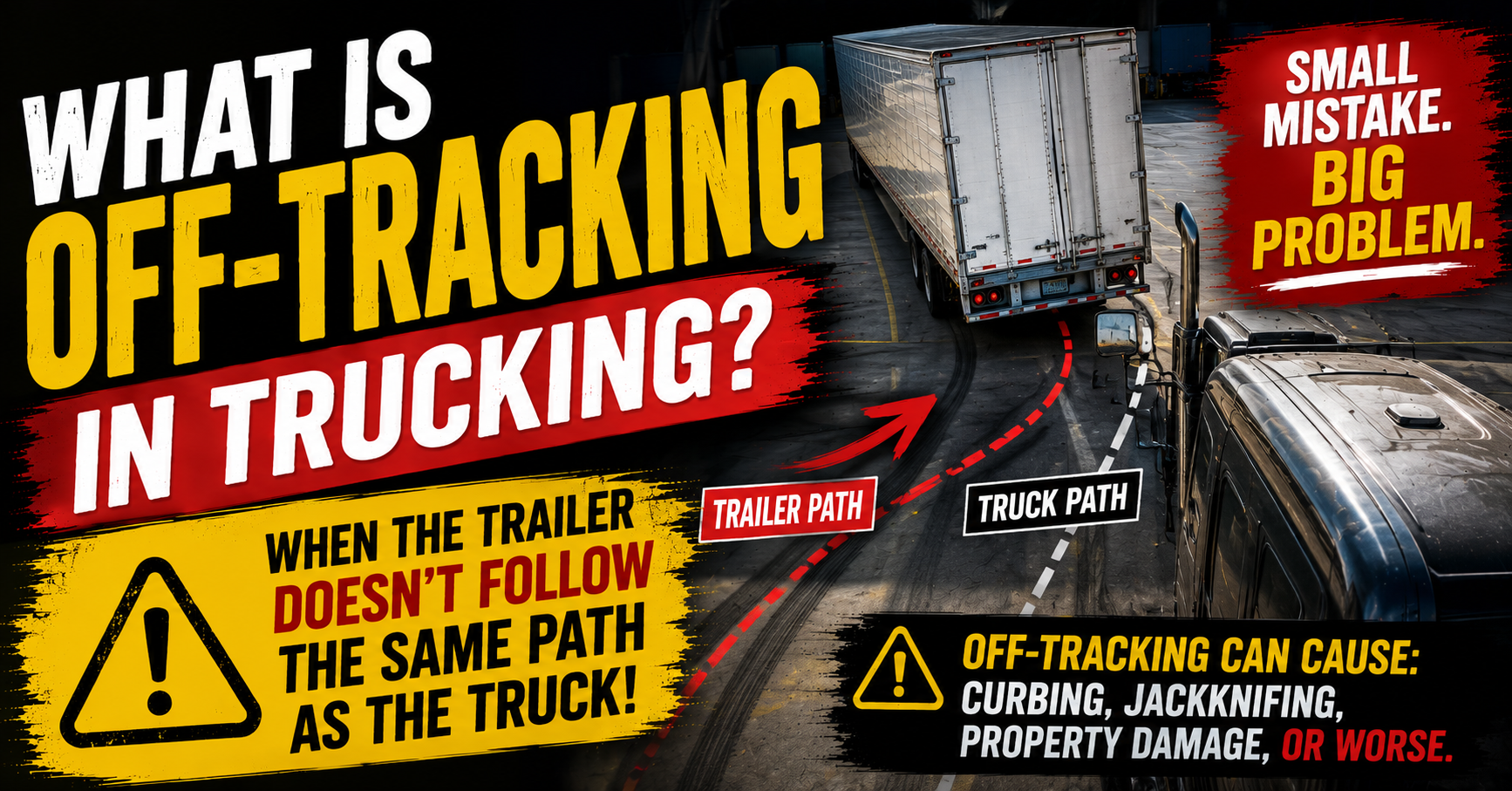
Off-tracking occurs when the rear wheels of a truck or trailer do not follow the same path as the front wheels during a turn. Instead, the rear wheels take a shorter path toward the inside of the turn. This turning behavior is one of the key handling concepts explained in the guide to CDL Combination Vehicles Explained: Complete Beginner’s Guide.
This is completely normal.
Every tractor-trailer experiences off-tracking.
The longer the vehicle, the more noticeable the effect becomes.
Why Does Off-Tracking Happen?
The answer is actually pretty simple.
When the steer axle begins turning, it’s guiding the tractor into the corner.
The trailer doesn’t instantly follow.
Instead, it pivots behind the tractor around the fifth wheel connection.
Because of that pivot point, the trailer wheels naturally cut closer to the inside of the turn.
The longer the trailer, the farther inside those rear wheels travel.
Once you understand that concept, you’ll begin noticing it every time you see a semi make a turn.
Why Is Off-Tracking Important?
Off-tracking is one of the biggest reasons truck drivers make wide turns.
If they turned like a passenger car, the trailer would likely:
- Strike the curb.
- Run over traffic signs.
- Hit parked vehicles.
- Clip utility poles.
- Endanger pedestrians.
- Cross sidewalks unexpectedly.
Wide turns aren’t drivers trying to be difficult.
They’re giving the trailer enough room to complete the turn safely.
How Much Does a Trailer Cut the Corner?
There isn’t one exact number.
Several factors affect how severe off-tracking becomes.
These include:
- Trailer length.
- Wheelbase.
- Turn radius.
- Speed.
- Tractor configuration.
- Number of trailers.
Generally speaking, longer combination vehicles experience greater off-tracking than shorter ones.

Low-Speed Off-Tracking
Most drivers first notice off-tracking during slow turns.
Think about:
- Truck stops.
- Loading docks.
- City intersections.
- Warehouse entrances.
- Parking lots.
At slower speeds, the trailer tires cut sharply toward the inside of the turn.
That’s why experienced drivers often pull farther into an intersection before beginning a right turn.
It gives the trailer more room to clear the corner safely.
High-Speed Off-Tracking
Off-tracking isn’t limited to parking lots.
It also occurs on highway ramps and sweeping curves.
At higher speeds, something slightly different happens.
While the trailer still tracks differently than the tractor, centrifugal forces can also cause portions of the combination vehicle to move outward, making proper speed control even more important.
That’s one reason experienced drivers slow down well before entering curves.
How the Fifth Wheel Affects Off-Tracking
The fifth wheel plays a major role in trailer movement.
It’s the pivot point between the tractor and trailer.
As the tractor changes direction, the trailer rotates around that connection.
Without the fifth wheel, the trailer couldn’t turn smoothly behind the tractor.
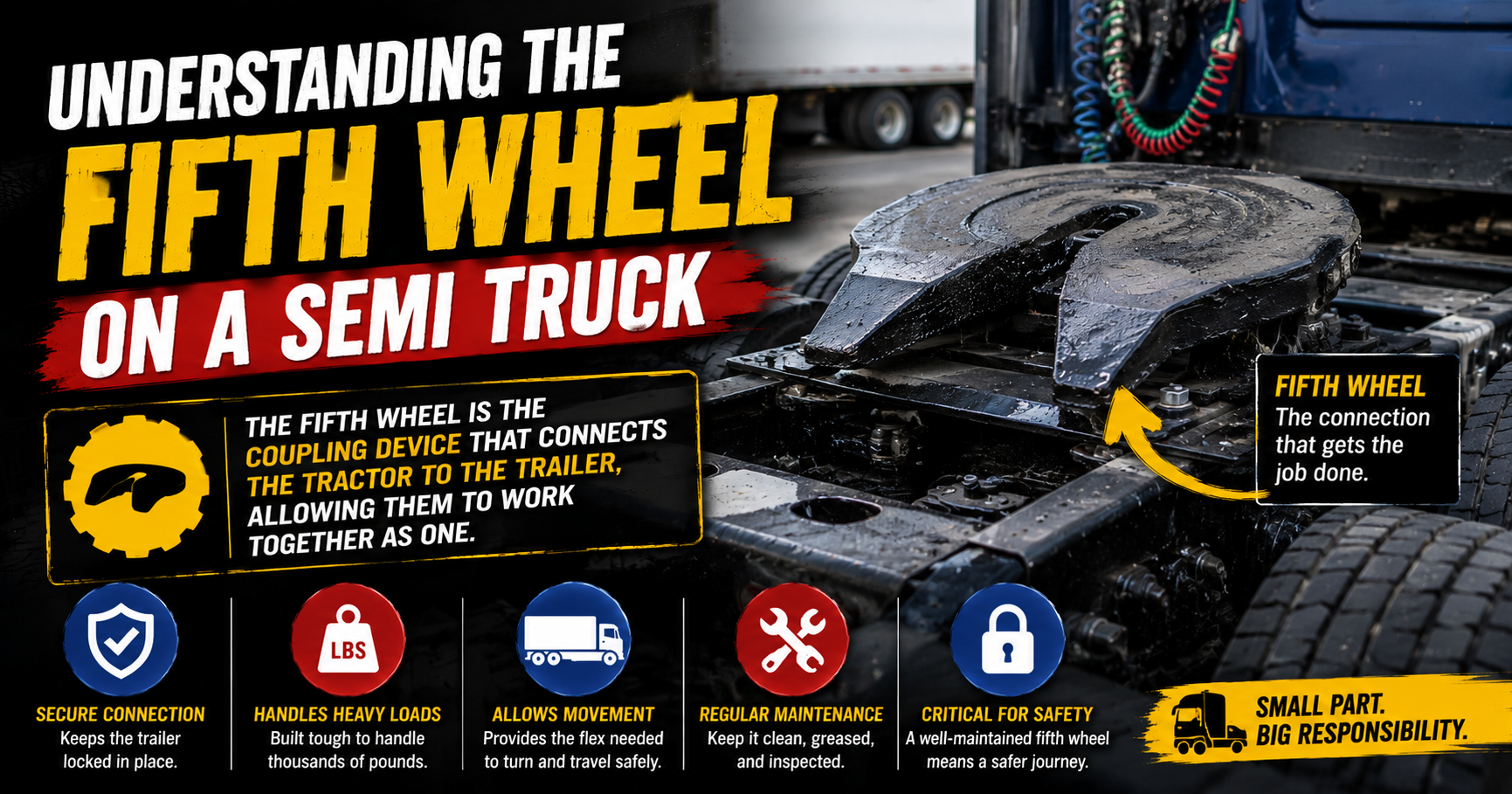
If you’re still learning how that system works, our guide on Understanding the Fifth Wheel on a Semi Truck explains the entire coupling system in detail.
Off-Tracking and Combination Vehicles
Every combination vehicle experiences off-tracking.
In fact, multiple trailers increase the effect.
Each trailer follows a path slightly farther inside than the one ahead of it.
That’s one reason double and triple trailer combinations require even more planning during turns.
If you’re preparing for your Class A CDL, our Free CDL Combination Vehicles Practice Test covers many of the concepts related to turning combination vehicles safely.
Tips for Managing Off-Tracking Safely
After years behind the wheel, I’ve developed a few habits that help reduce problems caused by off-tracking.
They include:
- Slow down before the turn.
- Pull farther into the intersection before turning.
- Watch both mirrors continuously.
- Leave extra room around curbs.
- Be patient in tight spaces.
- Never rush a turn.
Those habits become automatic after enough experience.
Common Mistakes New Drivers Make
I’ve watched plenty of new CDL drivers struggle with off-tracking.
The most common mistake is beginning the turn too early.
That usually causes the trailer tires to climb the curb or come dangerously close to signs and parked vehicles.
Another mistake is focusing only on the front of the truck.
Professional drivers spend just as much time watching their mirrors as they do looking through the windshield.
Your mirrors tell you exactly what the trailer is doing.
Will Off-Tracking Be on the CDL Exam?
Yes.
Off-tracking is part of the CDL knowledge requirements for operating combination vehicles and is an important concept during both written testing and behind-the-wheel training.
You should understand:
- What off-tracking is.
- Why it happens.
- Why trucks make wide turns.
- How to reduce the risk.
- Why longer vehicles experience greater off-tracking.
One of the best ways to reinforce these concepts is by working through our CDL Permit Test Simulator: 125-Question Master Practice Exam after you’ve finished studying.
One Tool I Always Keep in the Truck
Many of the tightest turns happen early in the morning or late at night.
Whether I’m checking trailer clearance or walking around the truck before pulling into a tight loading dock, I like having both hands free.
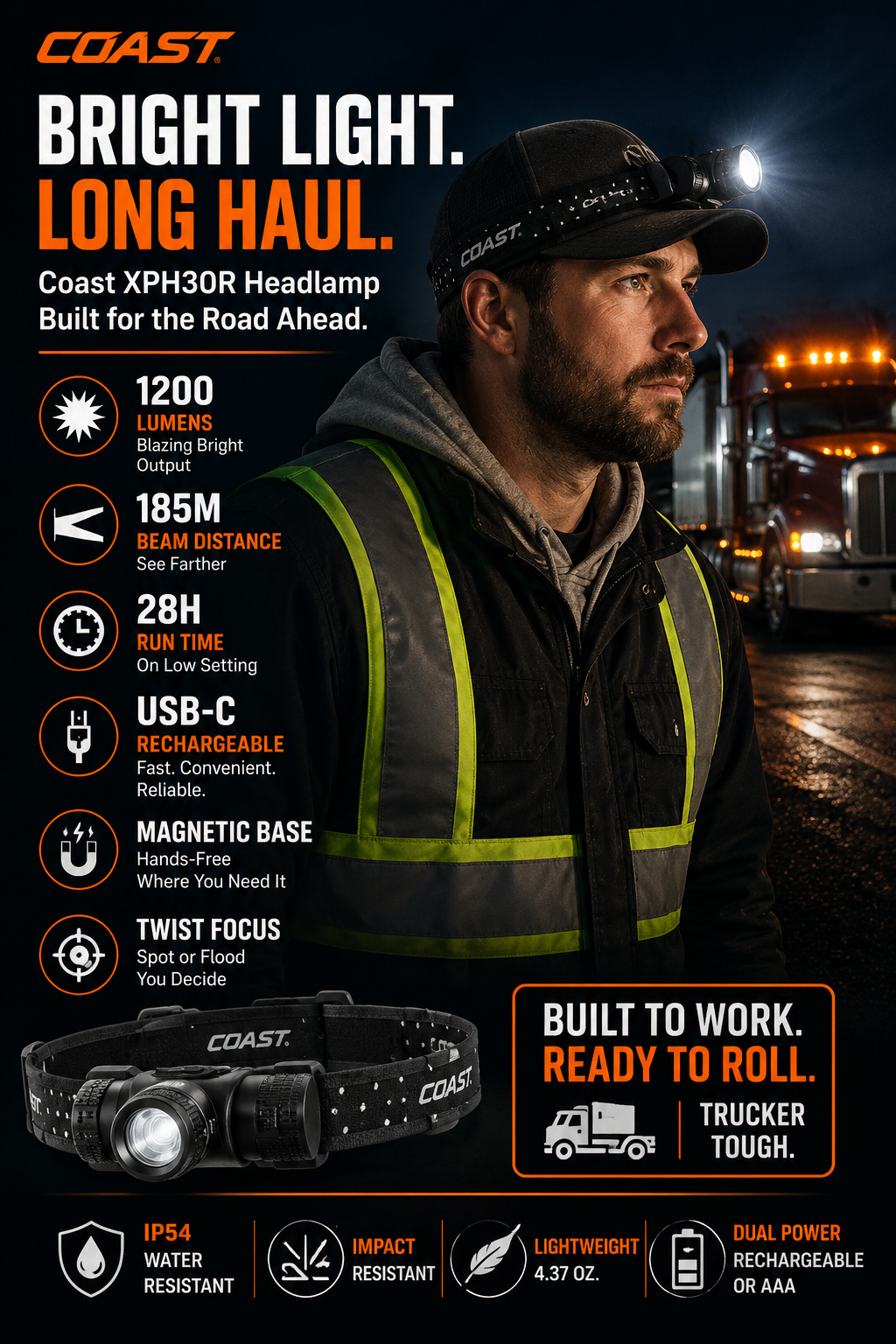
That’s why I always carry the Coast XPH30R USB-C Rechargeable Dual Power Headlamp. It makes nighttime inspections and checking trailer clearance much easier than trying to hold a flashlight.
My Advice After Thousands of Tight Turns
Every experienced truck driver has made a turn that was tighter than expected.
The difference is that experienced drivers know when to slow down, when to swing wide, and when to stop and reset instead of forcing the truck through a bad angle.
Off-tracking isn’t something you eliminate.
It’s something you learn to anticipate.
Once you understand how your trailer moves, you’ll become much smoother in intersections, truck stops, loading docks, and anywhere else space is limited.
The best truck drivers aren’t the ones who never encounter tight turns.
They’re the ones who understand how their equipment behaves and plan every maneuver before they start turning.
Author: David Walker
David Walker spent more than 22 years as a CDL instructor and professional truck driver, teaching new drivers how to safely operate combination vehicles in city traffic, truck stops, and tight loading docks. His practical approach to turning techniques and mirror usage has helped hundreds of CDL students become safer, more confident drivers.