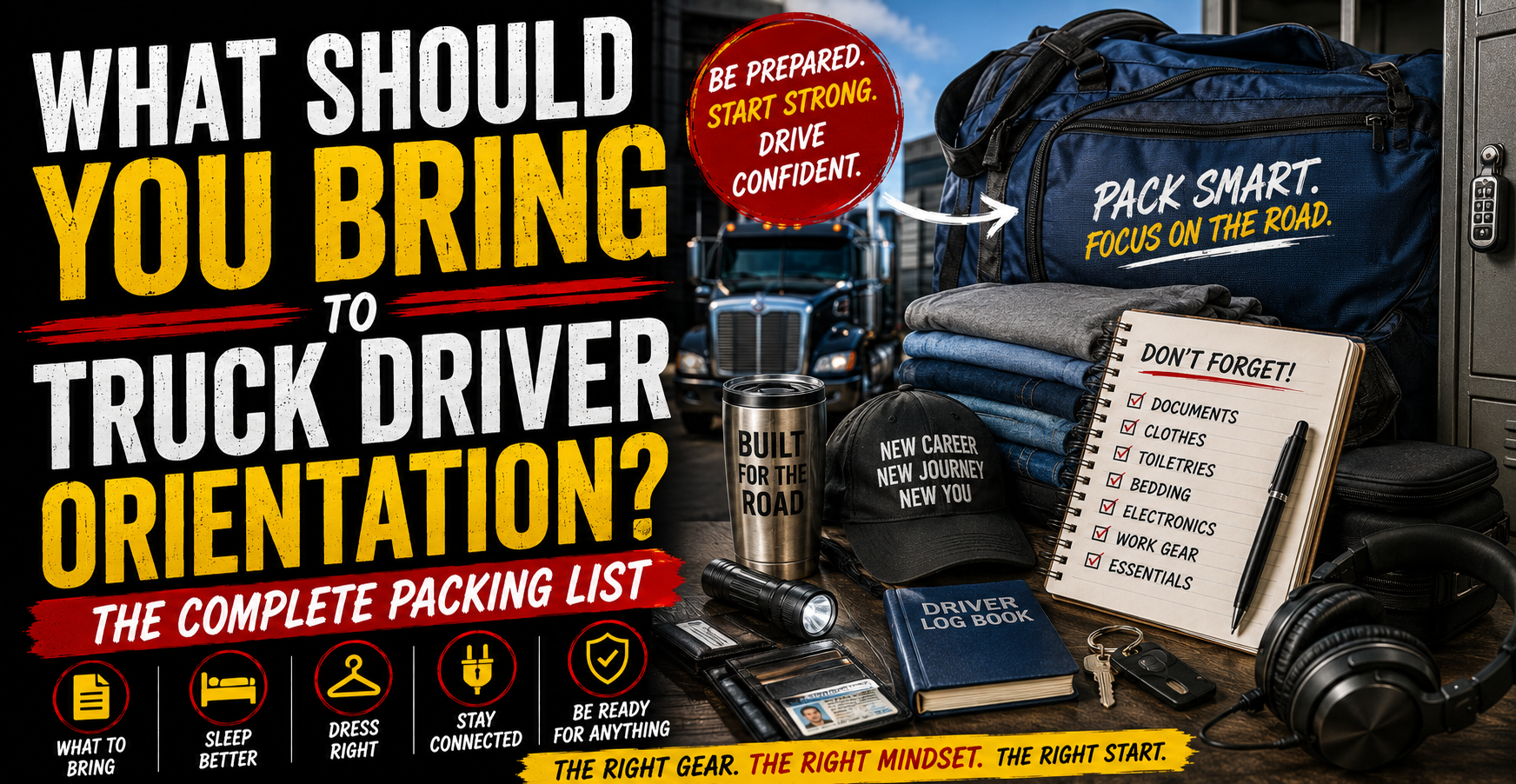
Getting ready for truck driver orientation is exciting, but it can also be stressful.
You’ve accepted the job.
Your travel is booked.
Your hotel is arranged.
Now comes the question almost every new driver asks:
What should I pack?
Most trucking companies will send you a basic packing list, but those lists often focus only on required paperwork. A CDL school packing checklist can help future drivers prepare for training beyond the paperwork their school requires.
They don’t tell you about the little things that make orientation much easier.
I’ve talked to plenty of drivers who forgot something simple like a phone charger, work gloves, or extra socks and ended up buying replacements at truck stop prices.
Fortunately, packing for orientation doesn’t have to be difficult.
If you prepare ahead of time, you’ll have everything you need and can focus on learning instead of worrying about what you left at home.
If this is your very first trucking job, I also recommend reading the Truck Driver Orientation Guide: What to Expect Before Your First Load. It explains what happens once you arrive, while this guide focuses on making sure you arrive prepared.
Start With the Required Documents
Nothing is more important than bringing the paperwork your employer requires.
Without it, you may not even be able to complete orientation.
Every company has slightly different requirements, so always follow the instructions from your recruiter first.
Common documents include:
- Commercial Driver’s License (CDL)
- Medical Examiner’s Certificate
- Social Security card
- Direct deposit information
- Any hiring paperwork requested by the company
- Driver training certificate if applicable
- TWIC card, if required for your position
- Prescription information if needed

Keep everything together in a folder or document organizer so you’re not digging through your luggage on the first morning. Many carriers specifically remind new hires to bring identification, medical documents, banking information, and any requested employment paperwork. Organizing these materials also helps you avoid orientation paperwork problems that could interrupt the onboarding process.



Pack Enough Clothes for the Entire Week
Even if your company says orientation will only last three or four days, it’s smart to pack for at least a week.
Schedules sometimes change.
Training may be extended.
You could also move directly from orientation to training with your driver trainer.
Bring clothing that’s comfortable but professional.
A good starting point includes:
- Several T-shirts or polo shirts
- Jeans or durable work pants
- Undergarments and socks for each day
- Hoodie or lightweight jacket
- Rain jacket if the forecast calls for it
- Comfortable clothes for the hotel
Some companies also recommend bringing weather-appropriate gear, work clothing, and enough outfits for up to a week in case plans change.


Wear Comfortable Work Boots
Don’t show up wearing flip-flops or worn-out sneakers.
Many orientations include walking around trucks, trailers, and maintenance areas.
Some companies even require safety footwear.
A comfortable pair of work boots with slip-resistant soles is usually your best choice.
If your company hauls flatbed freight or requires additional safety equipment, your recruiter will let you know before orientation begins.
Don’t Forget Your Toiletries
This sounds obvious until someone realizes they left their toothbrush sitting on the bathroom counter at home.
Pack a small toiletry bag with your everyday essentials.
Include things like:
- Toothbrush and toothpaste
- Shampoo
- Soap
- Deodorant
- Razor
- Prescription medications
- Glasses or contact lens supplies if needed
If you use a CPAP machine or other medical equipment, bring that as well. Several trucking companies specifically remind drivers not to forget prescription medications and required medical devices.


Bring a Notebook and Pen
You’ll receive a lot of information during orientation.
Phone numbers.
Fuel procedures.
Breakdown instructions.
Payroll information.
Safety policies.
You probably won’t remember everything.
A simple notebook and pen are still one of the best tools you can bring.
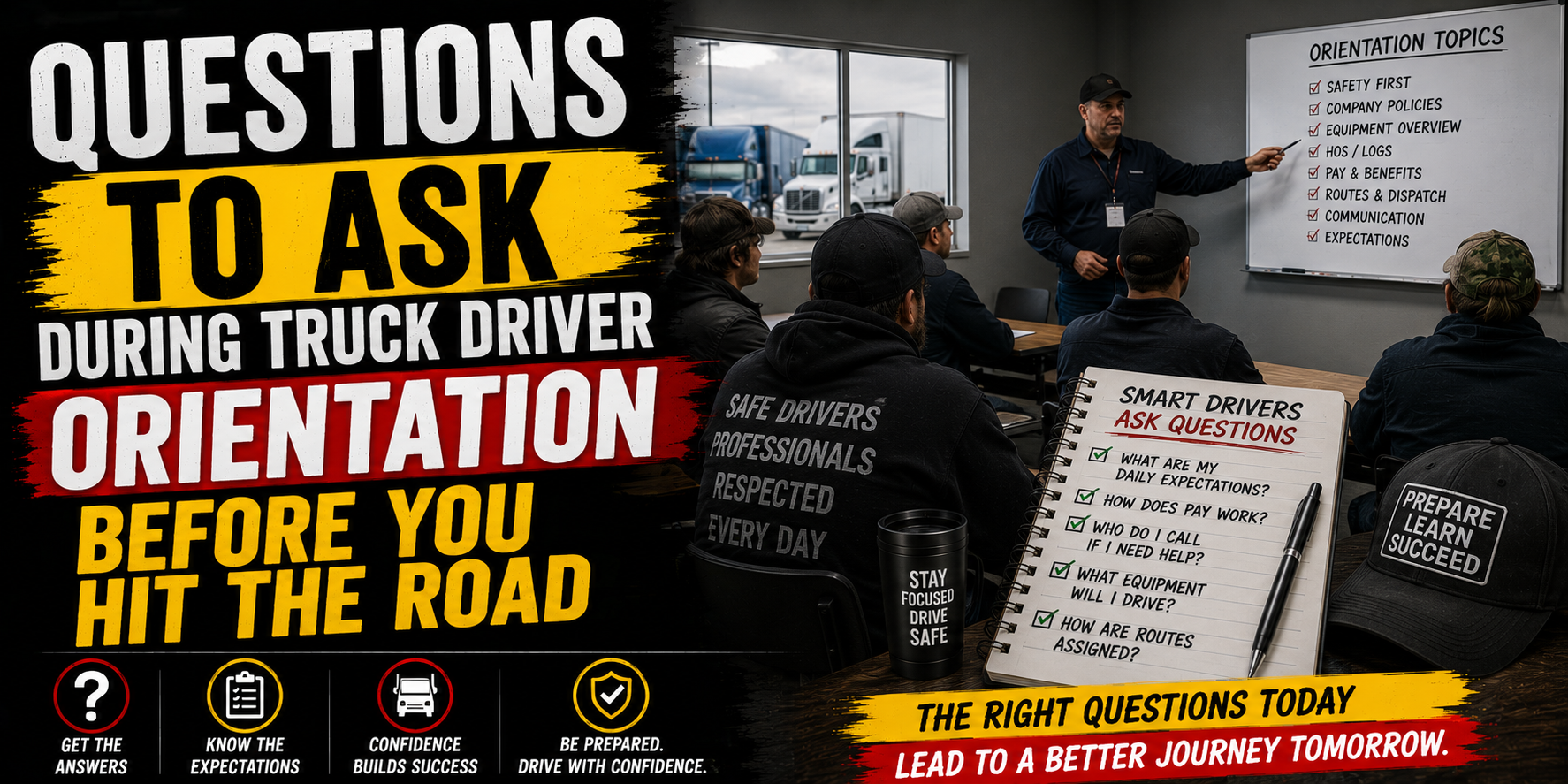
Many experienced drivers recommend taking notes throughout orientation because you’ll refer back to them later. Leave space in those notes for questions worth recording and the answers you receive.
Pack a Few Comfort Items
The company will tell you what you need to bring.
Experienced drivers know there are a few extra items that simply make the week easier.
Consider packing:
- Refillable water bottle
- Healthy snacks
- Phone charger
- Portable battery pack
- Headphones
- Small flashlight
- Work gloves
These items don’t take much room, but they can make long orientation days much more comfortable. Community advice from experienced drivers consistently highlights water bottles, gloves, flashlights, chargers, and snacks as useful additions.
What Not to Bring to Truck Driver Orientation
Packing too much can be almost as inconvenient as packing too little.
Remember, you’re only attending orientation. You don’t need to bring your entire household.
Leave items like expensive electronics, large amounts of cash, unnecessary valuables, and anything that could distract you from training at home if possible.
You should also avoid bringing anything that violates company policies, including alcohol or prohibited items. Most companies have strict workplace rules, and orientation isn’t the time to test them.
If you’re unsure whether something is appropriate, ask your recruiter before you leave home.
Should You Pack for Time With Your Driver Trainer?
Yes.
This is one mistake many new drivers make.
Orientation may only last a few days, but your training with a driver trainer often begins immediately afterward.
Depending on the company, you could be living in a truck for several weeks before returning home.
That means you’ll want enough clothing and personal items to be comfortable during that time.
Think beyond orientation and ask yourself what you’ll need while sharing a truck with another driver.
Items worth bringing include:
- Extra changes of clothes
- Additional socks and underwear
- Laundry detergent pods or travel-size detergent
- Flip-flops for truck stop showers
- Shower bag
- Small towel
- Pillow if you prefer your own
- Sleeping bag or blanket if your company recommends it
Ask your recruiter how long you’ll be with a trainer so you can pack appropriately without bringing unnecessary luggage.

Common Packing Mistakes New Drivers Make
Most packing mistakes aren’t major, but they can make your first week more stressful than it needs to be.
Some of the most common include:
- Forgetting important paperwork
- Bringing too few clothes
- Not packing work boots
- Forgetting prescription medications
- Leaving phone chargers at home
- Packing clothing that’s inappropriate for the weather
- Assuming you’ll have time to shop before orientation begins
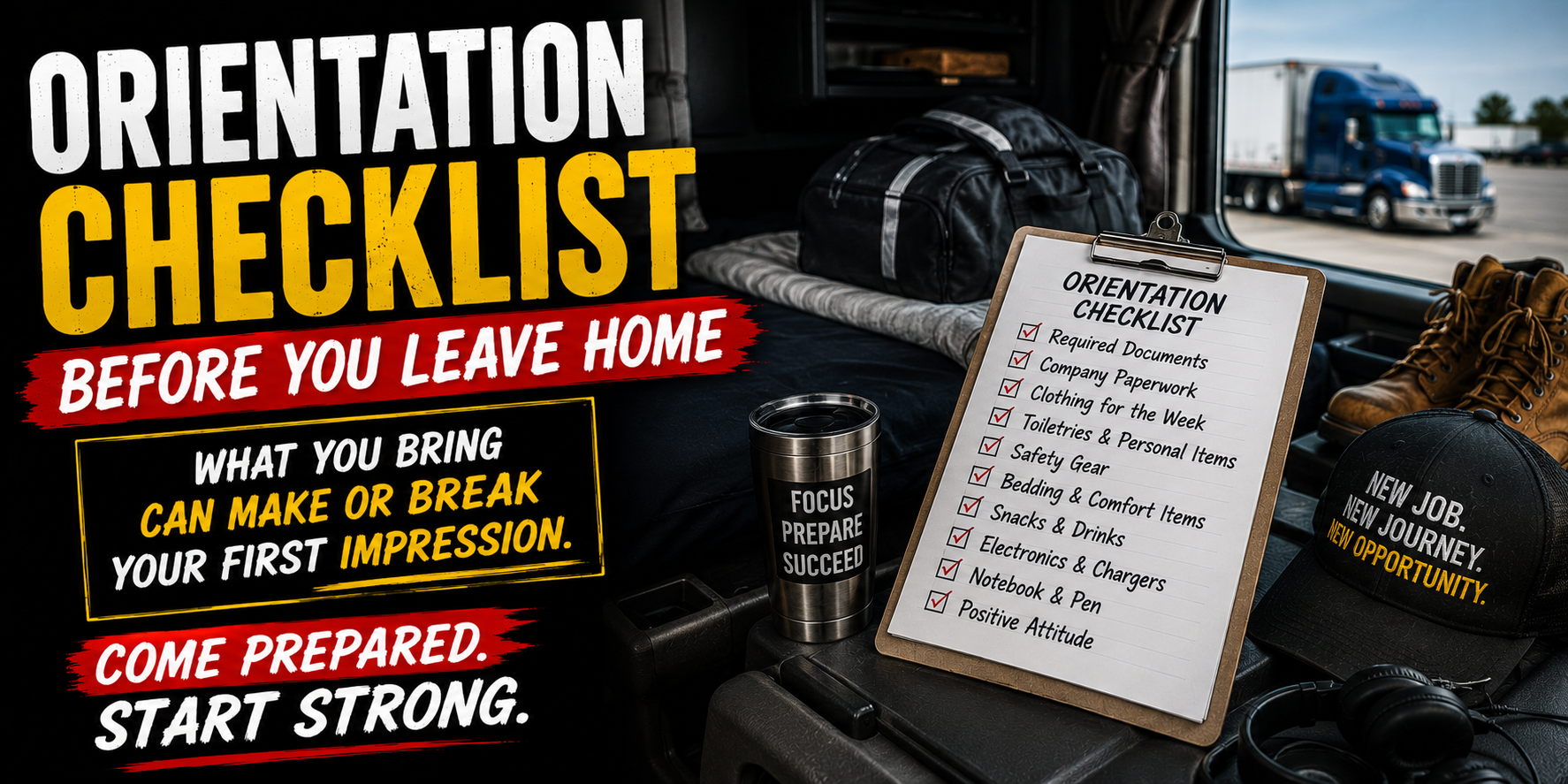
The easiest way to avoid these problems is to make your packing list several days before you leave and check everything off as you put it in your bag. Pair that packing list with a pre-departure orientation checklist to cover documents, travel details, and other last-minute tasks before leaving home.
Giving yourself time to double-check your luggage is much less stressful than realizing you’ve forgotten something after arriving at the hotel.
Simple Truck Driver Orientation Packing Checklist
Here’s a quick checklist you can use before leaving home.
Documents
- CDL
- Medical Examiner’s Certificate
- Social Security card
- Direct deposit information
- Company paperwork
- TWIC card (if required)
Clothing
- Shirts
- Jeans or work pants
- Socks
- Underwear
- Hoodie or jacket
- Work boots
- Casual clothes for evenings
Toiletries
- Toothbrush
- Toothpaste
- Shampoo
- Soap
- Deodorant
- Razor
- Prescription medications
Electronics
- Phone
- Phone charger
- Charging cable
- Portable battery pack
- Headphones
Extras
- Notebook
- Pens
- Water bottle
- Snacks
- Flashlight
- Work gloves
- Laundry bag
A few minutes spent checking this list before you leave can save a lot of frustration later.
Frequently Asked Questions
Should I bring my own bedding?
Usually no.
If the company is providing a hotel room, bedding and towels are almost always included.
If you’re heading directly to a trainer afterward, ask your recruiter whether you should bring a sleeping bag or bedding for the truck.
Can I bring more than one suitcase?
Yes.
Most companies don’t have strict luggage limits, but remember that everything you bring eventually has to fit in a truck during training.
Packing efficiently is usually better than bringing multiple oversized bags.
Should I bring food?
Bringing a few snacks is always a good idea.
Granola bars, trail mix, jerky, or other easy-to-carry snacks can be helpful during long orientation days.
Even if meals are provided, having something available between breaks is nice.
Do I need to bring my own safety vest?
Usually not.
Many companies provide safety vests and other required personal protective equipment during orientation.
If your recruiter tells you to bring specific safety gear, follow their instructions.
Can I do laundry during orientation?
If you’re staying at a hotel for several days, many hotels have guest laundry facilities.
However, for a typical three- to five-day orientation, most drivers simply pack enough clothes to avoid needing laundry.
Should I bring cash?
It’s smart to have a small amount of cash, but you probably won’t need much.
A debit or credit card is useful for meals, vending machines, or unexpected expenses that aren’t covered by the company.
Being Prepared Builds Confidence
Packing for truck driver orientation isn’t complicated, but being prepared makes a noticeable difference.
When you arrive with your paperwork organized, the right clothing packed, and the essentials already taken care of, you can focus on learning instead of worrying about what you forgot at home.
Orientation is your first impression with your new employer, and showing up organized demonstrates professionalism before you ever climb into a truck.
If you’re still wondering what your first week will actually look like, take a few minutes to read What Happens During Truck Driver Orientation? A Day-by-Day Guide.
You should also read Do You Get Paid During Truck Driver Orientation? to understand how orientation pay works, what expenses companies typically cover, and when you can expect your first paycheck.
Author: Mason Carter
Mason Carter has spent more than 15 years driving regional and over-the-road freight while helping new CDL graduates transition into professional trucking careers. He enjoys sharing practical advice that helps rookie drivers feel more prepared, more confident, and ready for life on the road.