A few weeks before I started my first trucking job, I thought hauling grain was pretty simple. That assumption changed in practice, as what starting a trucking job was really like explains through firsthand lessons from the first weeks on the job.
A combine harvested the corn.
A truck showed up.
The truck hauled it away.
The end.
Now that I’ve been hauling corn during harvest, I realize there’s a lot more coordination than most people ever see.
The truck driver is only one part of a much bigger operation.
You’ve got combines harvesting.
Grain carts moving through the field.
Trucks hauling loads.
People unloading at the grain bins.
Everyone depends on everyone else to keep harvest moving.
Once you understand how the entire process works, it becomes much easier to appreciate why timing matters so much during harvest.
The Goal Is To Keep the Combine Harvesting
The combine is the most expensive machine in the field, and every minute it sits waiting costs time during a season when weather can change quickly.
That’s why harvest is organized around keeping the combine moving whenever possible.
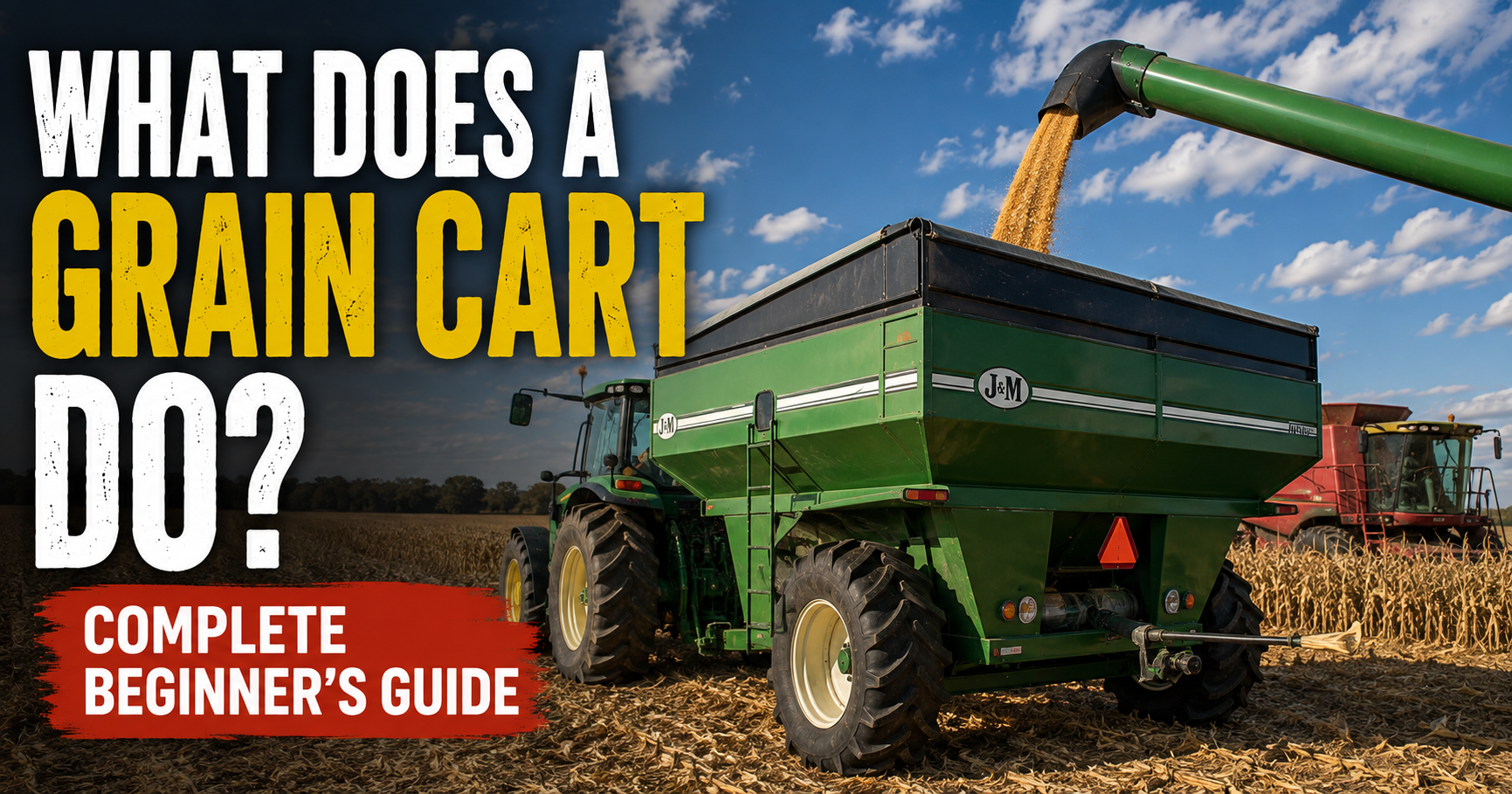
Instead of stopping every time the combine’s grain tank fills up, the grain is unloaded while harvesting continues. Grain carts and trucks work together so the combine can spend more time harvesting and less time sitting still.
That was one of the first things I noticed after starting this job.
Everything revolves around keeping the harvest flowing.
It All Starts With the Combine
The combine cuts the corn, separates the grain from the rest of the plant, and stores that grain in its onboard grain tank.
That tank doesn’t hold nearly enough grain to finish an entire field.
Eventually it fills.
When that happens, the grain has to be transferred somewhere else so the combine can keep harvesting.
This is where another important piece of equipment enters the picture.
The Grain Cart Keeps Harvest Moving
Before this job, I honestly didn’t know much about grain carts.
Now I see why they’re so valuable.
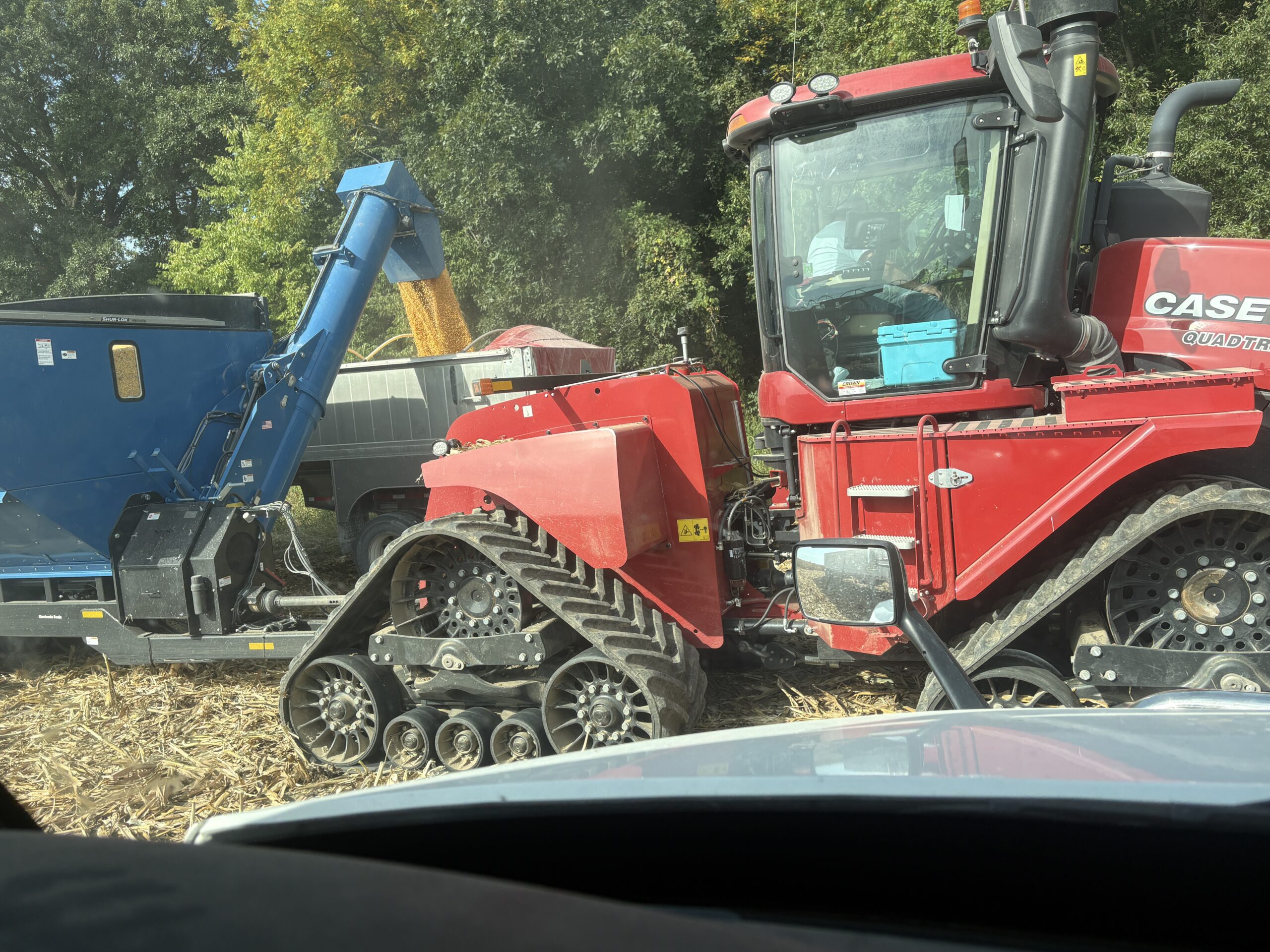
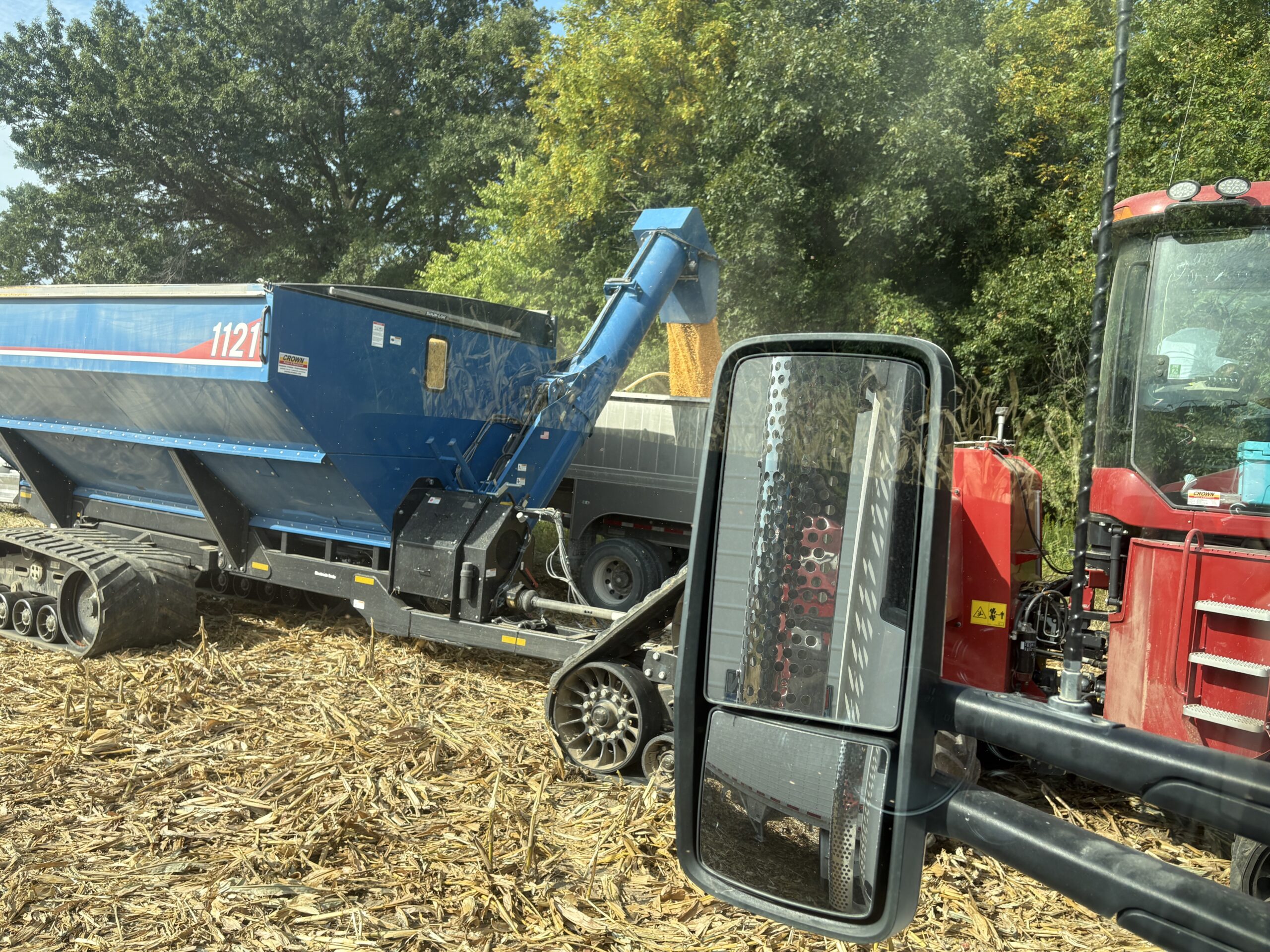
A grain cart is pulled by a tractor and acts as a temporary holding tank for the harvested grain.
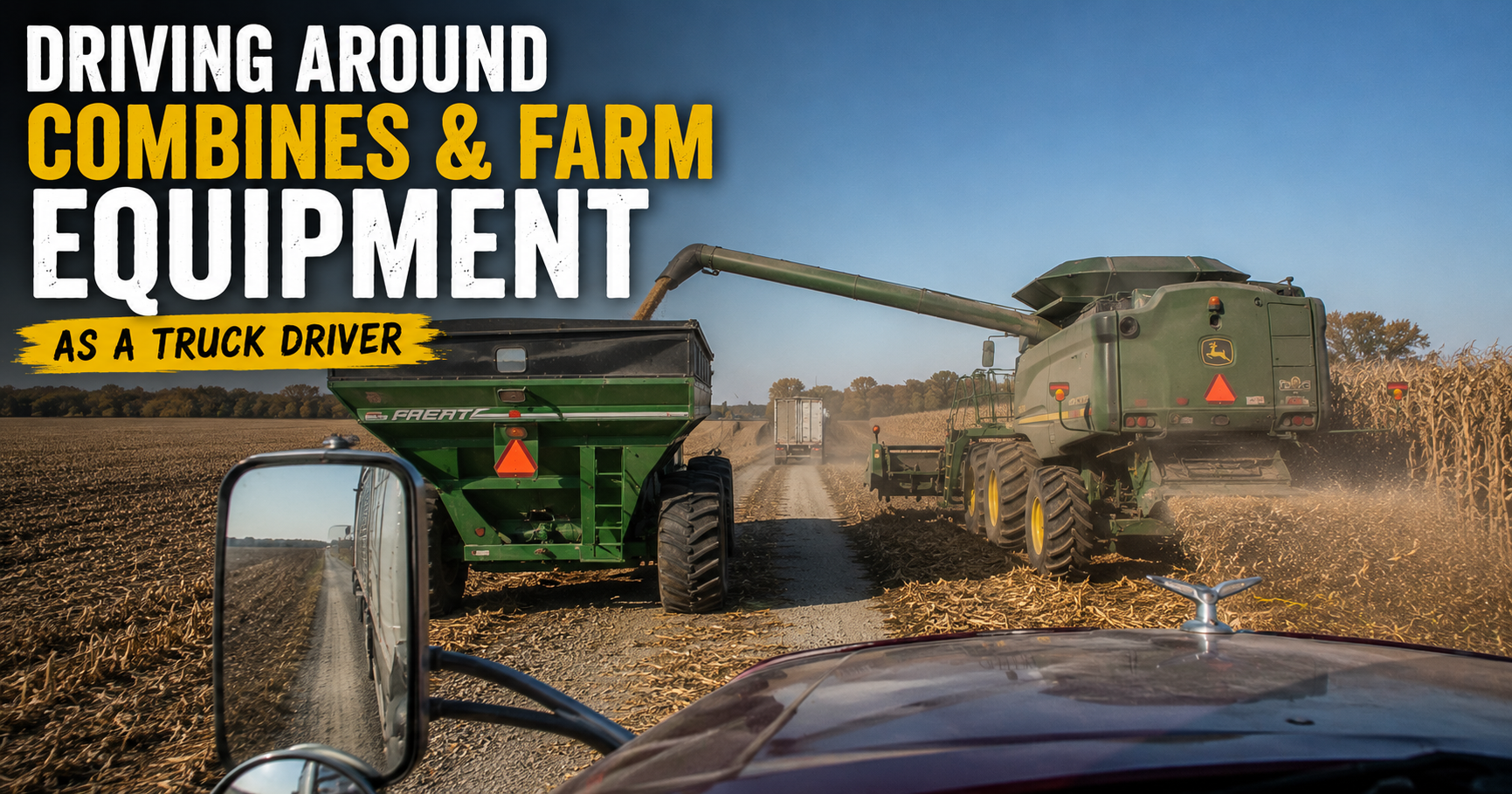
Instead of having a semi truck drive all over the field, the grain cart drives alongside the combine and receives the grain while the combine continues harvesting.
Once the cart is full enough, it heads toward the waiting truck.
The grain cart is really the link between the combine and the truck.
Without it, the combine would spend much more time stopped and waiting.
Modern grain carts are specifically designed to receive grain from the combine and then unload rapidly into waiting trucks so harvest stays efficient.
The Grain Truck Connects the Field to Storage
Once the grain cart is ready, it’s time for the truck.
This is where I spend my day.
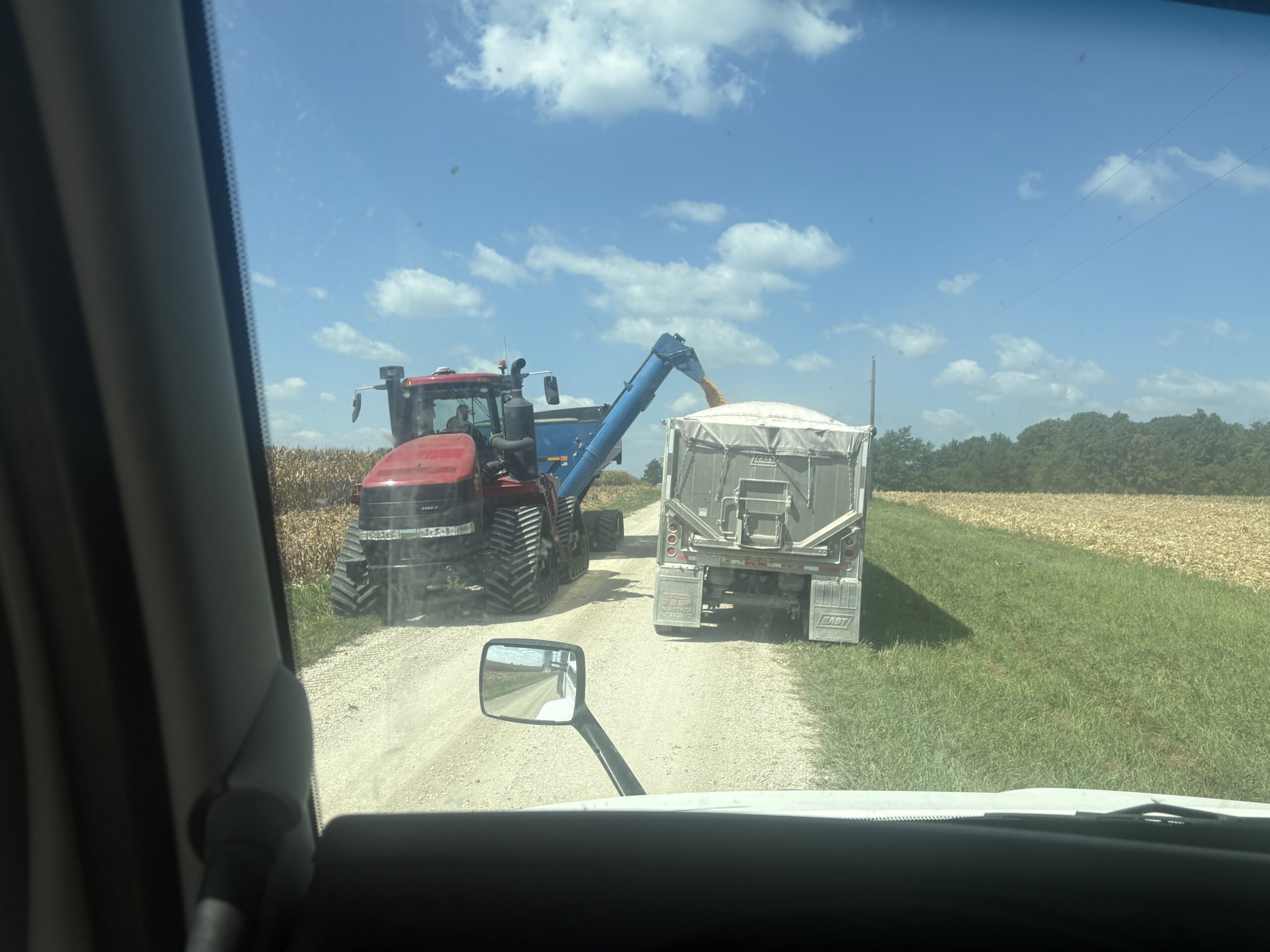
The grain cart pulls alongside and unloads the corn into the trailer.
Once the trailer is loaded, it’s time to head toward the grain bins.
Before I started this job, I thought the truck was simply hauling grain from one place to another.
Now I realize the truck is what keeps the entire harvest moving.
If trucks fall behind, grain carts eventually fill up.
If grain carts fill up, combines have nowhere to unload.
Eventually, the combines have to stop harvesting.
That’s why every part of the process depends on the others.

Driving Is Only Part of the Job
This was one of the biggest surprises for me.
I imagined spending nearly every minute driving.
Instead, there’s a balance.
You drive.
You wait.
You load.
You drive again.
You unload.
Then you repeat the process.
Sometimes everything moves quickly.
Other times you’re waiting on combines or grain carts.
At first I wondered why there was so much waiting.
Now I understand that the goal isn’t to keep the truck moving every second.
The goal is to keep the entire harvest operation moving as efficiently as possible.
That’s a big difference.
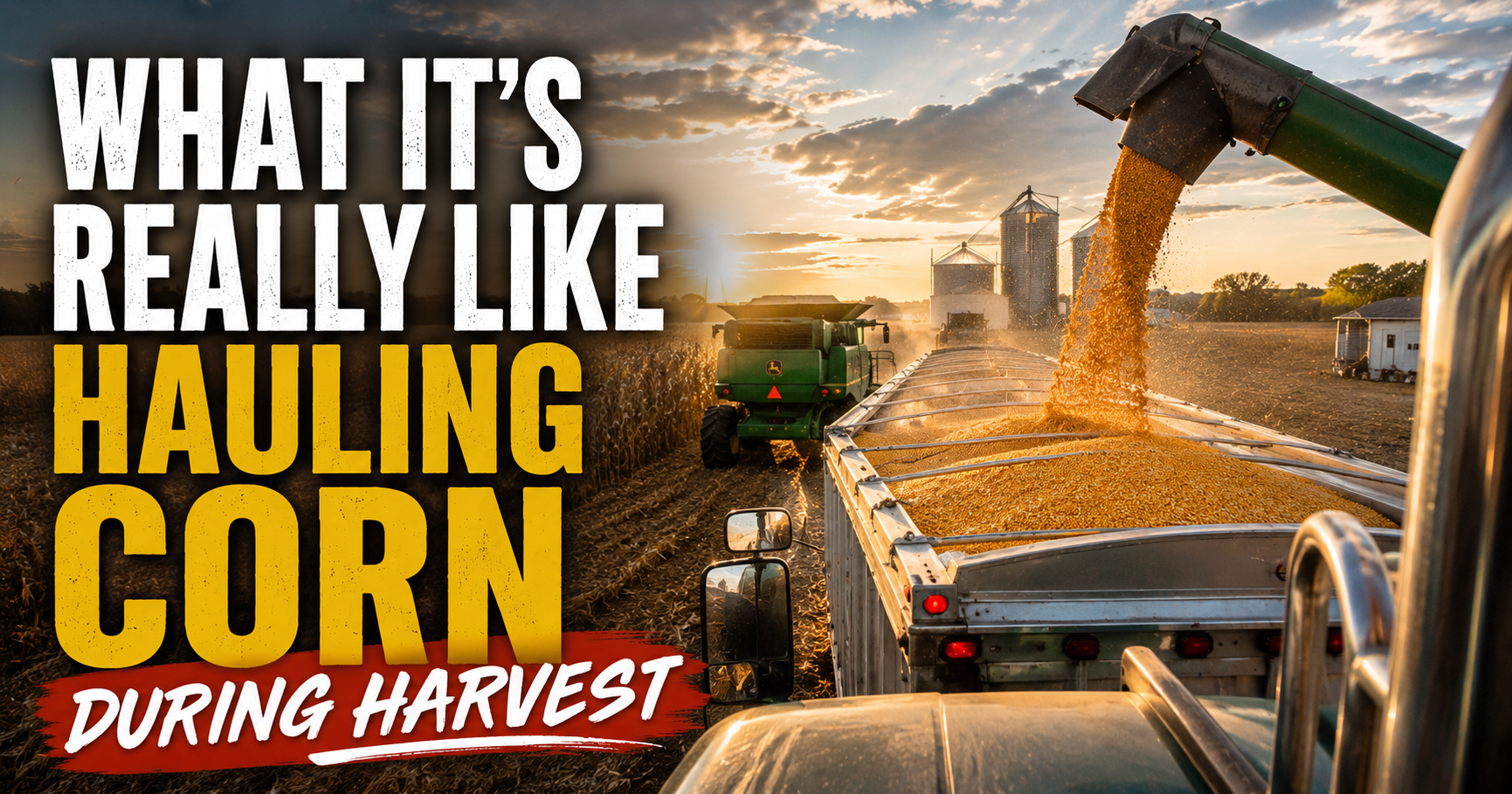
I talked more about that in What It’s Really Like Hauling Corn During Harvest because it was probably the biggest surprise during my first weeks on the job.
The Grain Bins Are the Final Stop
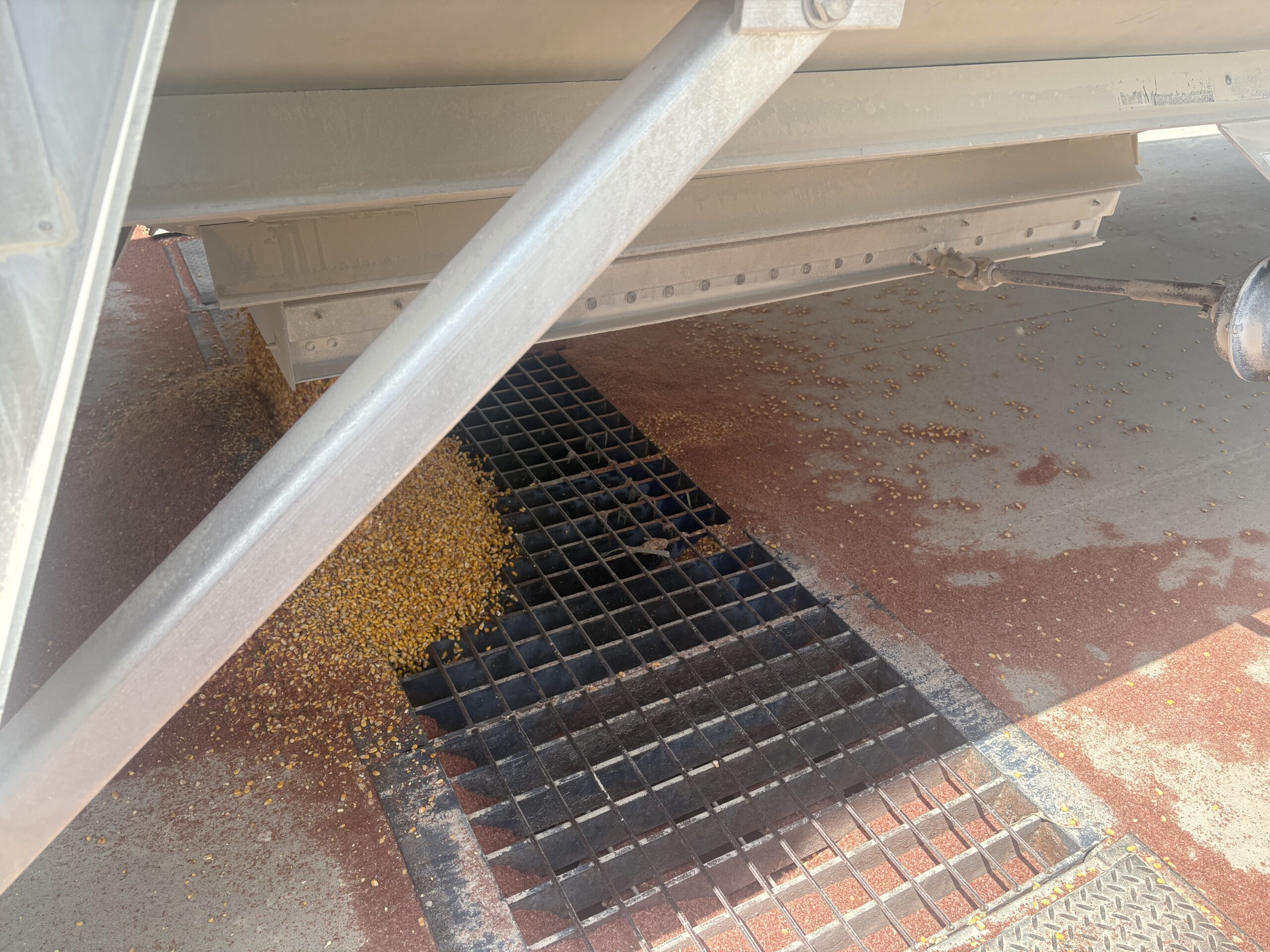
Once the truck reaches the farm, the grain has to be unloaded into storage.
Every farm’s setup is a little different, but the basic idea is similar.
The grain is unloaded from the truck into a receiving pit or hopper.
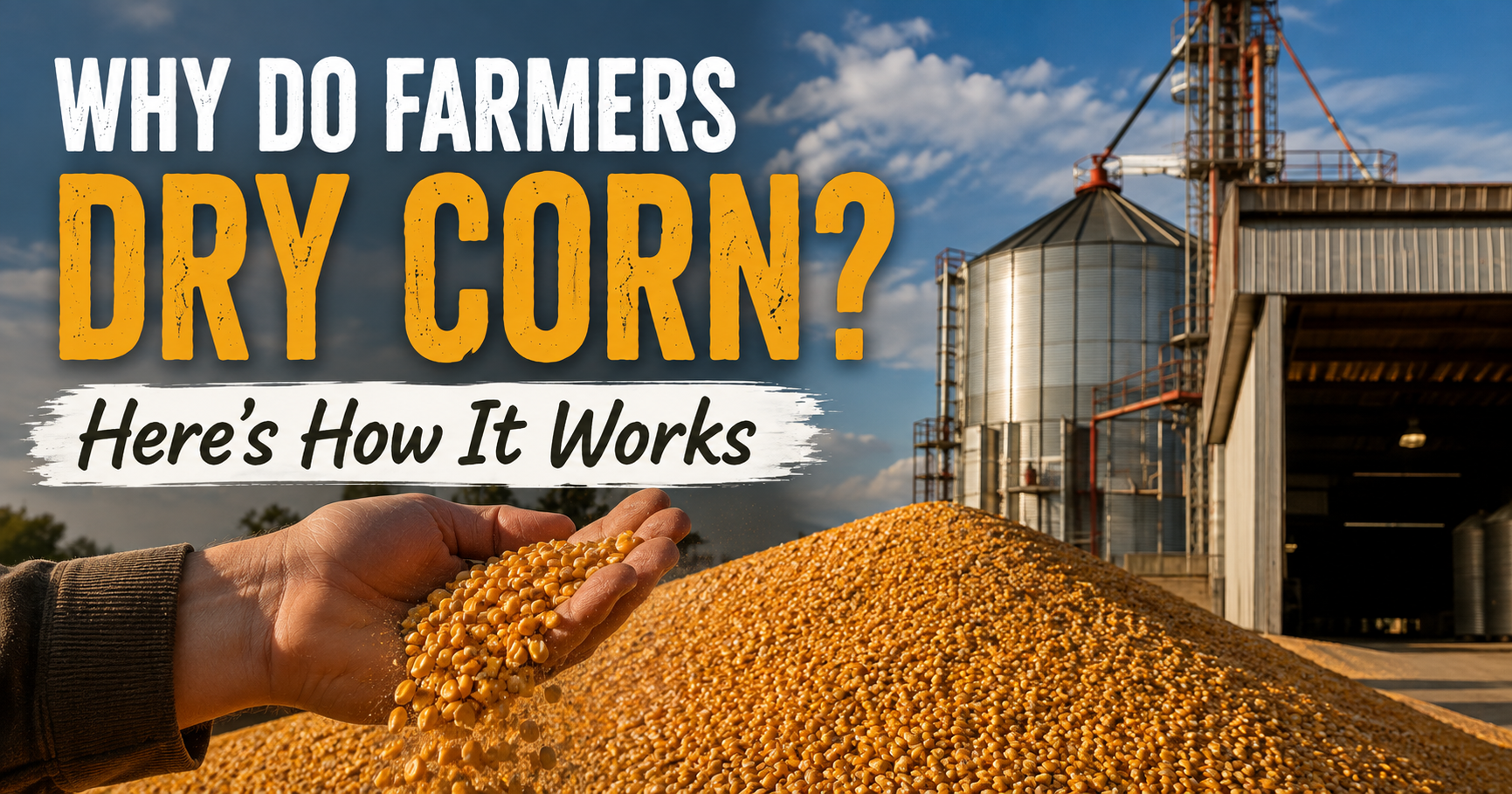
From there, augers or elevators move the grain up into the storage bins where it can be dried, cooled, or stored until it’s needed or sold. On many farms, augers are used throughout the process to move grain from trucks into bins and later back out of storage.
When I first started, I honestly had no idea how much equipment was involved after the truck arrived.
The truck’s job isn’t finished when it reaches the farm.
The grain still has to make its way safely into storage.
Weather Controls Almost Everything
One thing I’ve learned very quickly is that harvest doesn’t follow a perfect schedule.
The weather has a huge influence on what happens.
Rain can stop combines from getting into fields. For drivers working around wet fields and equipment, a lightweight waterproof rain suit can be a practical item to keep available.
Soft ground can make moving equipment more difficult.
Grain moisture can determine whether harvesting continues or pauses.
Some mornings start later than expected.
Other days everyone is moving as fast as possible because a weather change is coming.
It’s a reminder that agriculture works with nature, not against it.
No matter how well everyone plans, Mother Nature still gets the final vote.
Why Communication Matters So Much
Something I didn’t appreciate before starting this job was how much communication keeps everything running smoothly.
Everyone needs to know what’s happening.
Where the combines are.
Which truck is loading next.
Who’s headed to the bins.
Who’s coming back.
One missed message can slow things down for everyone else.
It really is a team effort.
The truck driver isn’t working alone.
Neither is the combine operator.
Everyone has a role.
Harvest Trucking Is More Than Just Driving
If someone asked me before I started what harvest trucking involved, I probably would have said, “You drive corn from the field to the bins.”
Now I’d answer very differently.
It’s about timing.
Planning ahead.
Working with other people.
Being patient.
Paying attention.
Making safe decisions.
And helping keep an entire operation moving.
The driving is obviously important.
But it’s only one piece of the job.
I Understand the Entire Process Much Better Now
One thing I’ve enjoyed most about this job is finally seeing how everything fits together.
Growing up around farming, I’d seen combines and grain trucks.
What I hadn’t really understood was how each machine depends on the others.
Now I get to see that process every day.
Watching the combine harvest.
Seeing the grain cart transfer the corn.
Loading the truck.
Driving to the farm.
Watching the grain move into storage.
It’s pretty satisfying knowing you’re helping move a crop from the field into a place where it can be safely stored until it’s needed.

Frequently Asked Questions
Do grain trucks drive directly beside the combine?
Not always. On many farms, the combine unloads into a grain cart while both are moving. The grain cart then transfers the grain into the truck, allowing the combine to continue harvesting with fewer interruptions.
Why don’t semi trucks just drive all over the field?
Driving heavy trucks throughout a field can create unnecessary soil compaction and isn’t always practical depending on field conditions. Grain carts are designed to bridge the gap between the combine and the truck while helping the harvest stay efficient.
Why do grain trucks spend so much time waiting?
Because harvest is a coordinated operation. Trucks often wait for combines, grain carts, unloading areas, or other equipment. Waiting isn’t wasted time. It’s simply part of keeping the entire harvest flowing smoothly. That same patience matters when equipment moves between fields, and sharing roads with harvest equipment shows how truck drivers can handle those road encounters safely.
What happens after the grain reaches the farm?
On many farms, the grain is unloaded into a receiving pit or hopper. Augers or elevators then move it into grain bins where it can be dried, aerated, and stored until it’s sold or used.
Author: Dax Weaver
Dax Weaver is the founder of TruckingResource.com and a first-year Class A CDL driver from central Missouri. After earning his CDL on his first attempt, he began hauling corn during harvest for a local farming operation. Through TruckingResource.com, Dax shares honest first-hand experiences, practical trucking advice, and real-world insights from learning the industry one load at a time.