You’ve accepted the job.
Your travel is booked.
The hotel is reserved.
Now you’re counting down the days until orientation starts.
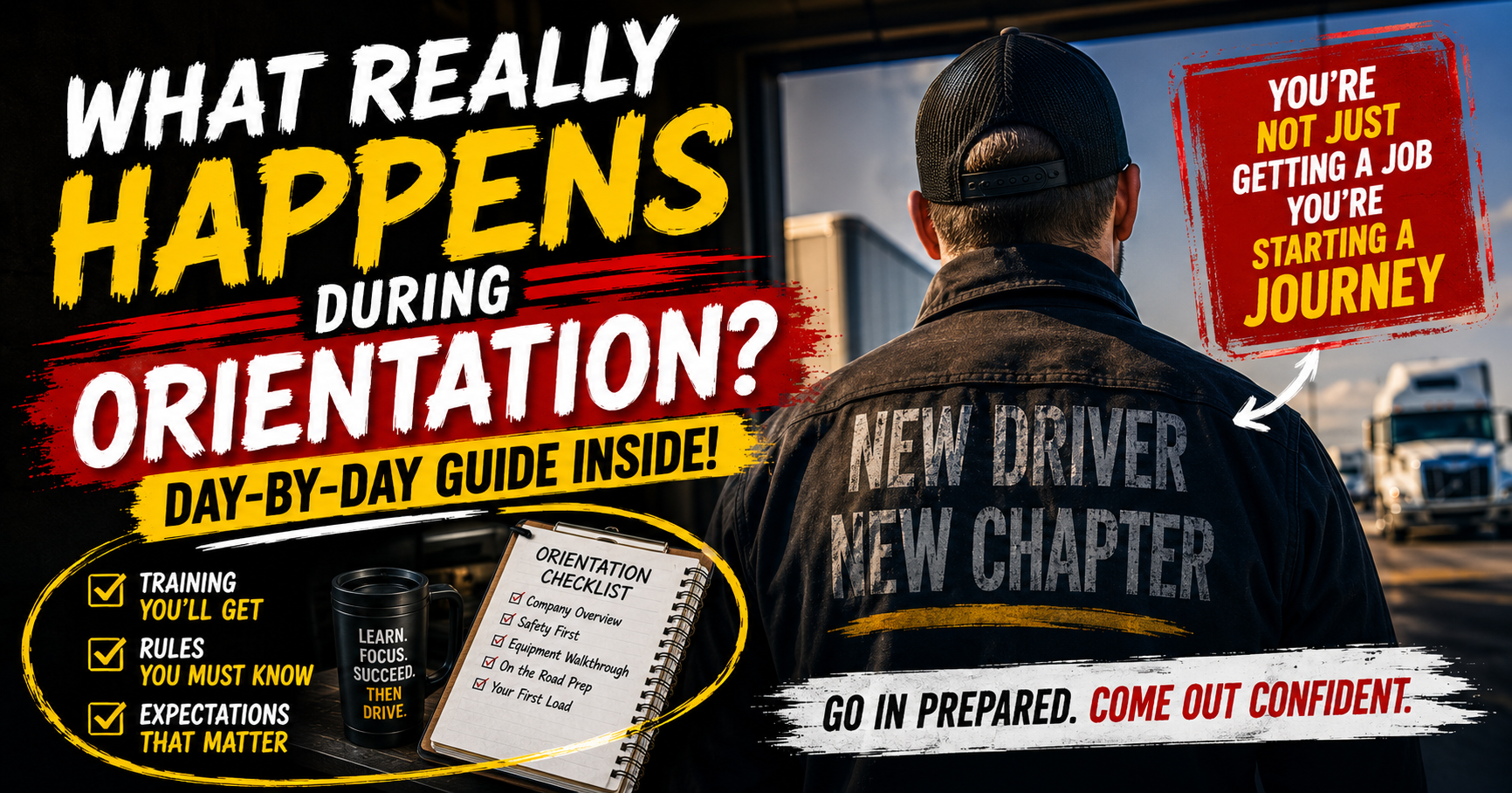
If you’re like most new drivers, you’re probably wondering what actually happens once you walk through those doors. A firsthand account of what my first day was like can make that transition feel less intimidating.
Will you spend all day watching videos?
Will you have to drive a truck?
Will there be another test?
Will you meet your trainer?
The exact schedule varies from one trucking company to another, but most orientations follow a very similar pattern.
Knowing what to expect ahead of time can help you relax, arrive prepared, and make a great first impression.
If you haven’t already, I recommend reading our Truck Driver Orientation Guide: What to Expect Before Your First Load. It covers the overall orientation process, while this article takes a closer look at what each day often includes.
Before Orientation Even Begins
Technically, orientation starts before you ever arrive at the terminal.
Most companies will contact you beforehand with instructions about:
- Hotel accommodations
- Travel arrangements
- Required paperwork
- Start time
- Dress code
- Drug testing
- Parking
- What to bring
Take time to read every email or text message from your recruiter.
Many problems during orientation happen simply because drivers overlook an important instruction before they leave home.
Arriving organized helps your first day get off to a smooth start.


Day One Is Mostly Paperwork and Introductions
For most companies, the first day isn’t about driving.
It’s about getting everyone checked in and making sure all required paperwork is complete.
Expect to spend time filling out employment forms, verifying your identification, enrolling in benefits, confirming direct deposit information, and reviewing company policies.
You’ll probably also meet members of the safety department, orientation instructors, recruiters, and other new drivers who were hired around the same time.
Many companies begin with a welcome presentation explaining their history, safety culture, expectations, and company values.
The first day may feel slow compared to what you expected, but it’s an important foundation for everything that follows.
Safety Training Usually Starts Early
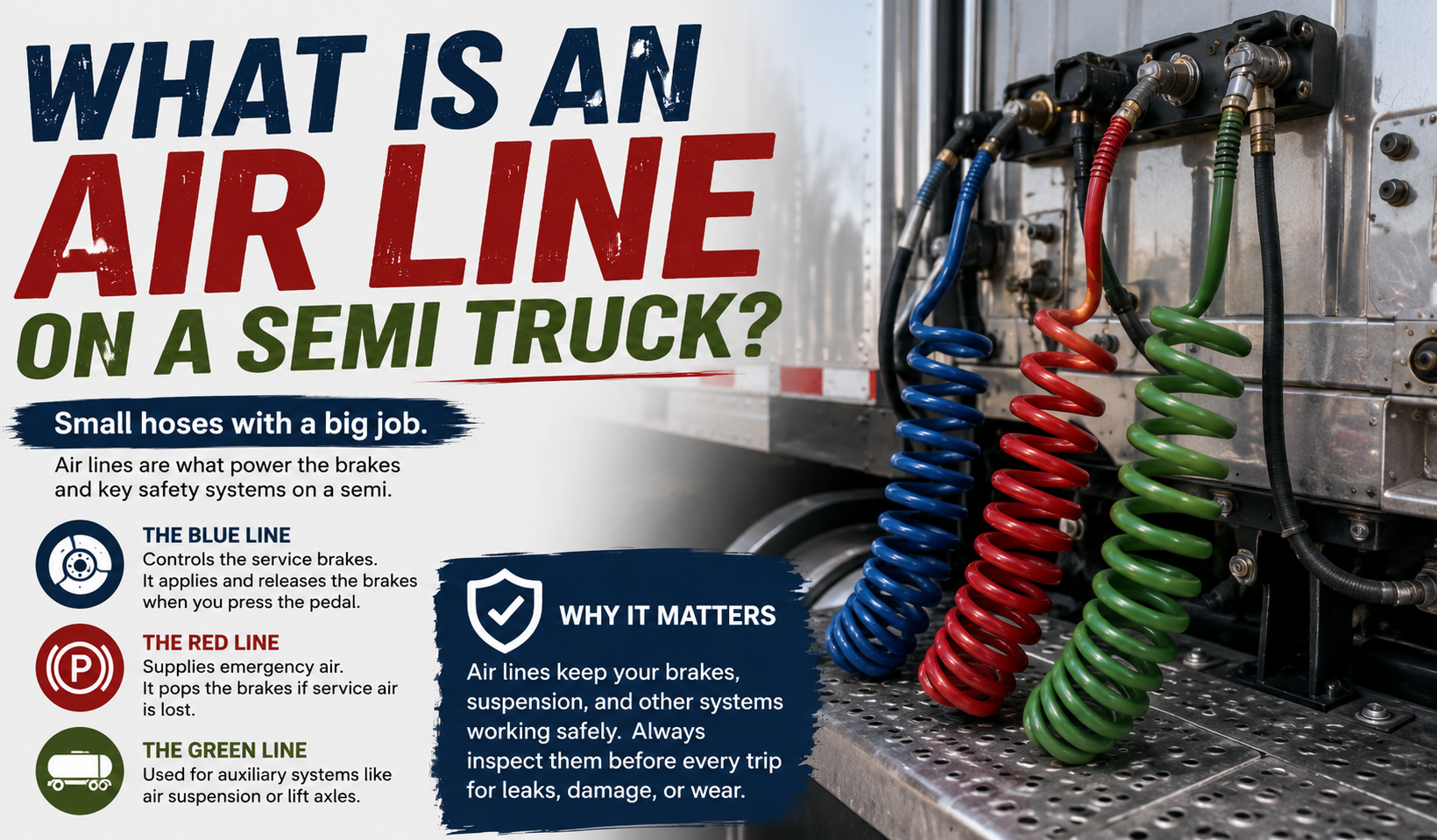
Safety is the backbone of every trucking company.
That’s why one of the biggest parts of orientation focuses on operating safely and following federal regulations.
Topics often include:
- Hours of Service
- Electronic Logging Devices (ELDs)
- Speed management
- Following distance
- Accident reporting
- Drug and alcohol policies
- Distracted driving
- Defensive driving
- Fatigue management
Even experienced drivers usually receive this training when joining a new company because each carrier has its own procedures.
Learning the Company’s Equipment
One company may use Freightliners.
Another may run mostly Kenworths or Peterbilts.
Some fleets are entirely automatic.
Others still operate manual transmissions.
During orientation, you’ll usually become familiar with the trucks and trailers you’ll be driving.
This may include:
- Cab controls
- Dash displays
- Collision mitigation systems
- Lane departure warnings
- In-cab cameras
- Electronic logging devices
- Qualcomm or other communication systems
- Trailer inspection procedures
Understanding company equipment before your first dispatch helps build confidence and reduces surprises later.

Expect Plenty of Questions
Orientation isn’t a lecture where you quietly sit in the back of the room.
Good instructors encourage participation.
They expect questions about company policies, dispatch procedures, fuel cards, breakdowns, pay, home time, and dozens of other topics.
Don’t worry about asking something that seems basic.
If you’re wondering about it, chances are several other new drivers are wondering the same thing.
The drivers who ask thoughtful questions often leave orientation feeling much more confident than those who stay silent.
Will You Take Another Drug Test?
In many cases, yes.
Even if you recently completed a pre-employment drug screen, the company may require another test as part of its onboarding process.
This is completely normal.
Some companies also complete alcohol testing, physical paperwork verification, or other compliance requirements during orientation.
It’s simply part of the hiring process.
Some Companies Include a Road Evaluation
One of the biggest concerns new CDL graduates have is whether they’ll be tested behind the wheel again.
The answer depends on the carrier.
Some companies conduct a short road evaluation.
Others include a backing exercise or pre-trip inspection.
Experienced drivers may complete more extensive evaluations, especially if they’re being hired directly into solo positions.
These evaluations aren’t usually as demanding as your CDL skills test.
The company simply wants to verify that you can safely operate a commercial vehicle before assigning loads.
Meeting Your Driver Trainer
For many new CDL graduates, one of the biggest moments during orientation is finding out who their driver trainer will be.
Some companies introduce you to your trainer before orientation ends. Others wait until the last day or even after you’ve traveled to another terminal.
Don’t worry if you don’t meet your trainer immediately. Every company has its own process.
Once you’re assigned, you’ll usually have time to get acquainted before heading out on your first trip together. This is your opportunity to ask questions, understand your trainer’s expectations, and start building a working relationship.
Remember, your trainer isn’t expecting you to know everything. They expect you to arrive with a willingness to learn, work hard, and put safety first.



The Last Day of Orientation
By the final day, most of the paperwork and classroom instruction is complete.
Instead, you’ll usually focus on what comes next.
Depending on the company, that could include:
- Receiving your trainer assignment
- Learning your travel plans
- Completing any remaining paperwork
- Picking up company equipment
- Reviewing dispatch procedures
- Receiving company IDs or fuel cards
- Asking final questions before training begins
Many drivers are surprised that the last day feels much more relaxed than the first.
By this point, you’ve met the instructors, become familiar with company policies, and probably made a few friends among the other new hires.
There’s usually a sense of excitement because you’re finally getting closer to driving.
What Happens After Orientation Ends?
Orientation is really just the starting line.
For most new CDL graduates, the next step is over-the-road training with an experienced driver.
During this period, you’ll begin applying everything you’ve learned in real-world situations.
You’ll practice:
- Trip planning
- Backing into customer docks
- Fueling procedures
- Communication with dispatch
- Load securement (when applicable)
- Time management
- Parking at truck stops
- Customer interactions
This is where classroom knowledge starts becoming real experience.
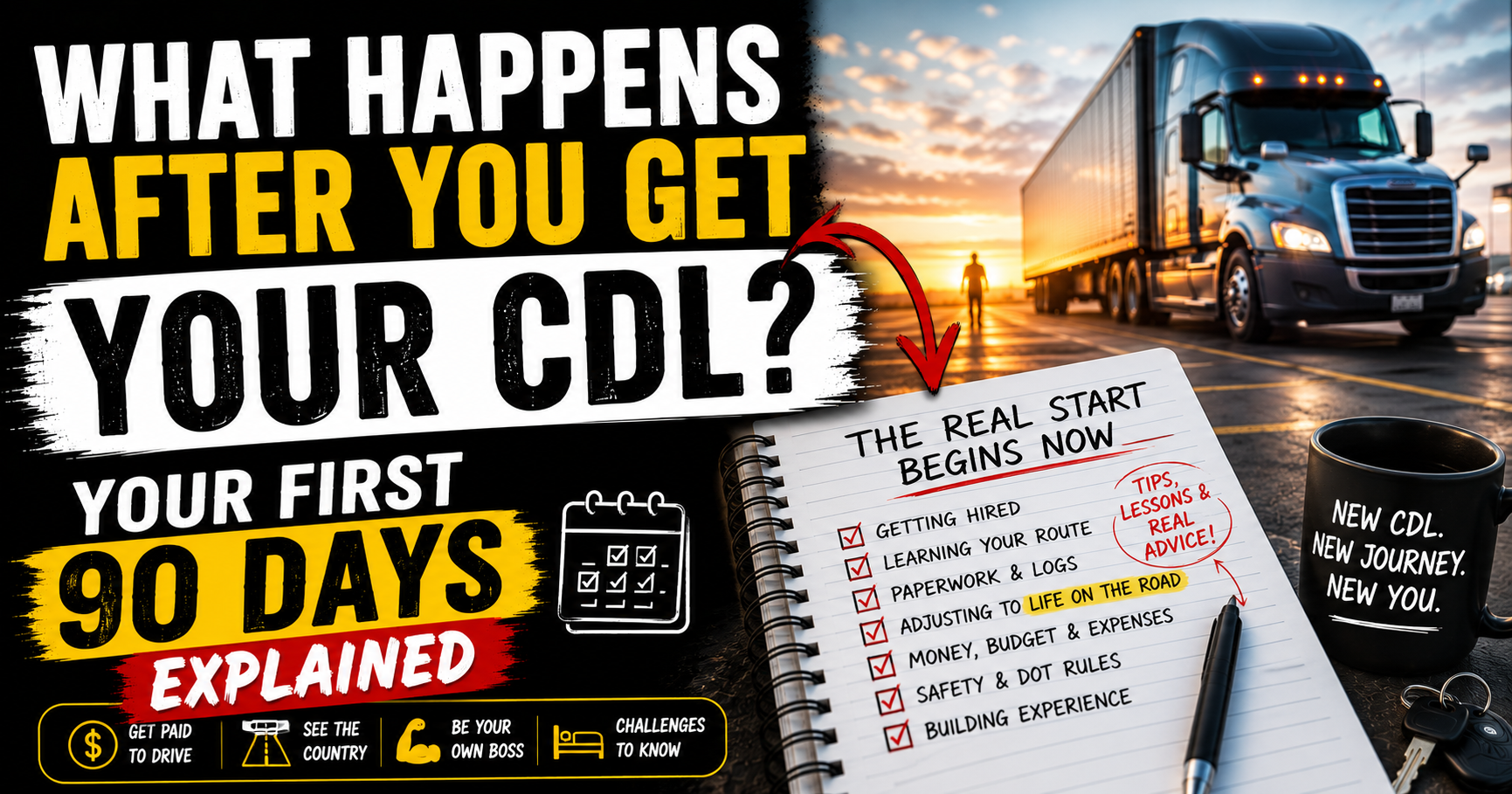
If you’re wondering what those first weeks look like, What Happens After You Get Your CDL? Your First 90 Days Explained explains the transition from orientation to your first solo loads.
Common Myths About Truck Driver Orientation
There are a lot of rumors online about trucking orientation.
Some are true.
Many aren’t.
Let’s clear up a few common myths.
Myth: Orientation is designed to eliminate drivers.
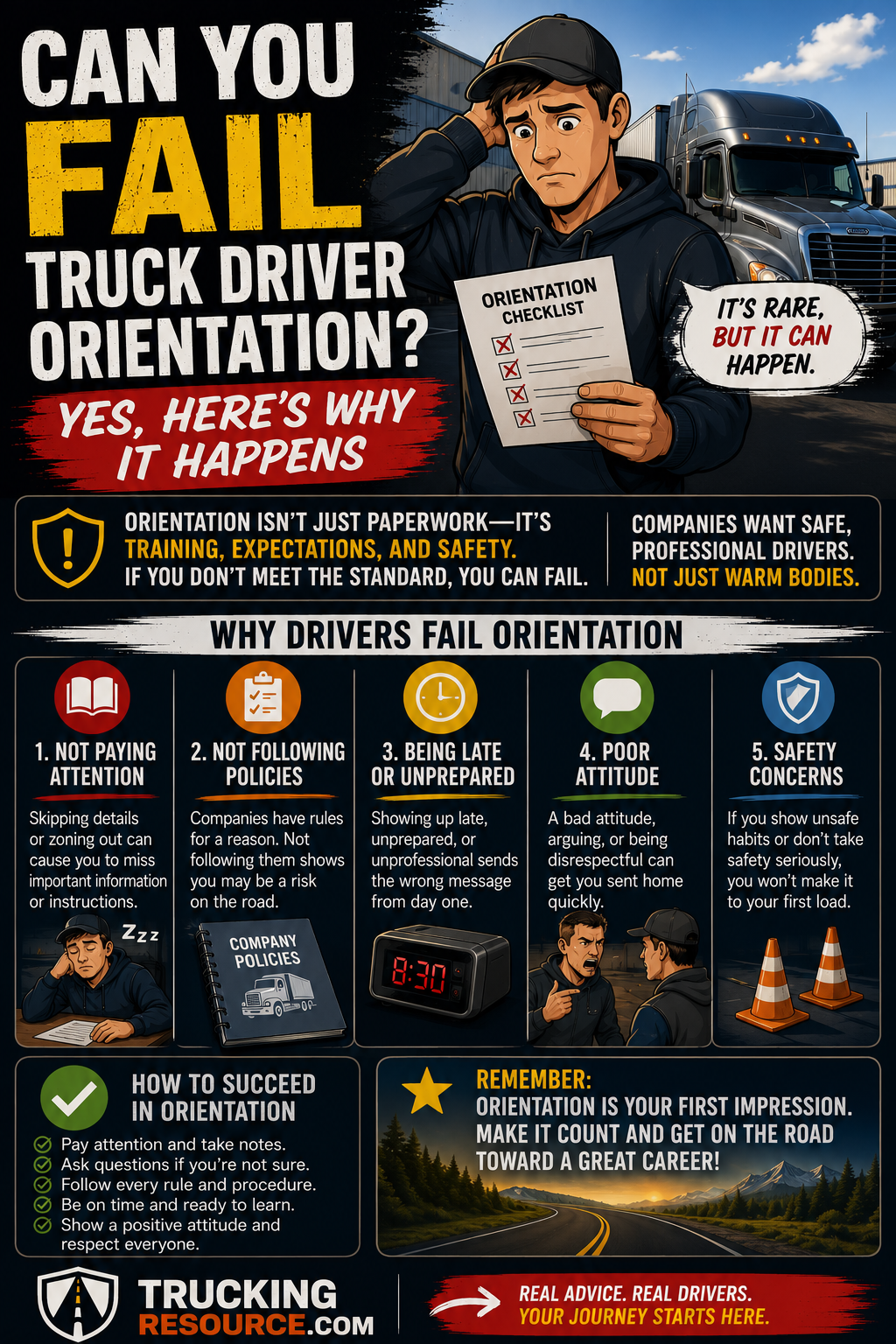
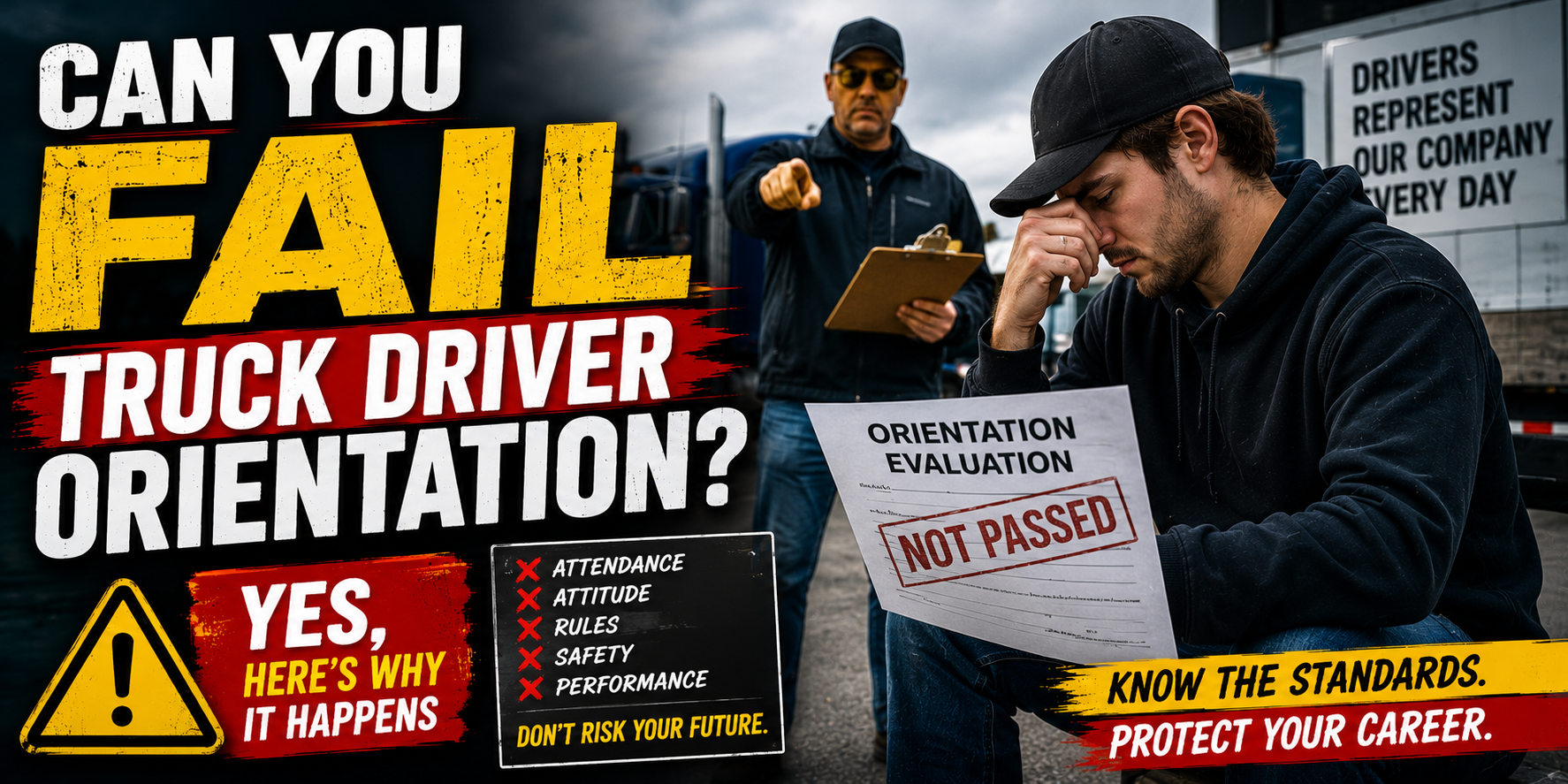
Reality: Companies invest a lot of money recruiting and hiring drivers. They want you to succeed, not fail. Understanding why drivers can fail orientation can help you focus on the standards that matter most during the hiring process.
Myth: You’ll spend the entire week watching videos.
Reality: While classroom instruction is part of orientation, you’ll also complete paperwork, learn company systems, ask questions, and often receive hands-on training.
Myth: You need to know everything before you arrive.
Reality: Orientation exists because you’re still learning. Showing up prepared and willing to learn matters far more than knowing every answer.
Myth: Every trucking company has the same orientation.
Reality: Every carrier has its own schedule, policies, equipment, and training methods. While most orientations cover similar topics, the experience can vary quite a bit from one company to another.
Tips for Getting the Most Out of Orientation
Your attitude during orientation can make a bigger difference than you realize.
Here are a few simple ways to set yourself up for success.
- Arrive early each morning.
- Keep your phone put away during training.
- Take notes instead of trying to remember everything.
- Introduce yourself to other drivers.
- Ask questions whenever something isn’t clear.
- Treat everyone with respect, from instructors to hotel staff.
- Stay positive, even if there’s downtime or delays.
Companies notice drivers who are dependable, engaged, and eager to learn. Those qualities often leave a better impression than trying to act like you already know everything.
Frequently Asked Questions
Will I know my driving schedule before orientation ends?
Sometimes.
Some companies assign trainers and travel plans before orientation is finished, while others finalize schedules afterward. Your recruiter or instructor will usually explain the next steps before you leave.
Can I leave after class each day?
If you’re staying in a company-provided hotel, you can usually leave after the day’s activities are over. Just make sure you’re back on time the next morning and avoid doing anything that could affect your performance, such as staying out late.
What if I don’t understand the electronic logging device?
That’s completely normal.
Many new drivers have never used an ELD before orientation. Instructors expect questions and will usually provide demonstrations and practice before you start driving.
Will I be driving with a full trailer during orientation?
Usually not.
If your company includes a road evaluation, it’s often a short drive designed to verify basic driving skills rather than a full freight run.
Should I memorize company policies?
No one expects you to memorize everything immediately.
Instead, focus on understanding the most important safety procedures, asking questions, and taking notes you can refer to later.
Orientation Is the Beginning, Not the Finish
Walking into orientation can feel intimidating, especially if you’ve never worked in the trucking industry before.
By the end of the week, though, most new drivers realize it isn’t about proving yourself. It’s about learning how your new company operates and preparing for the next step in your career.
Stay organized, pay attention, ask questions, and keep an open mind. Those habits will serve you well long after orientation is over.
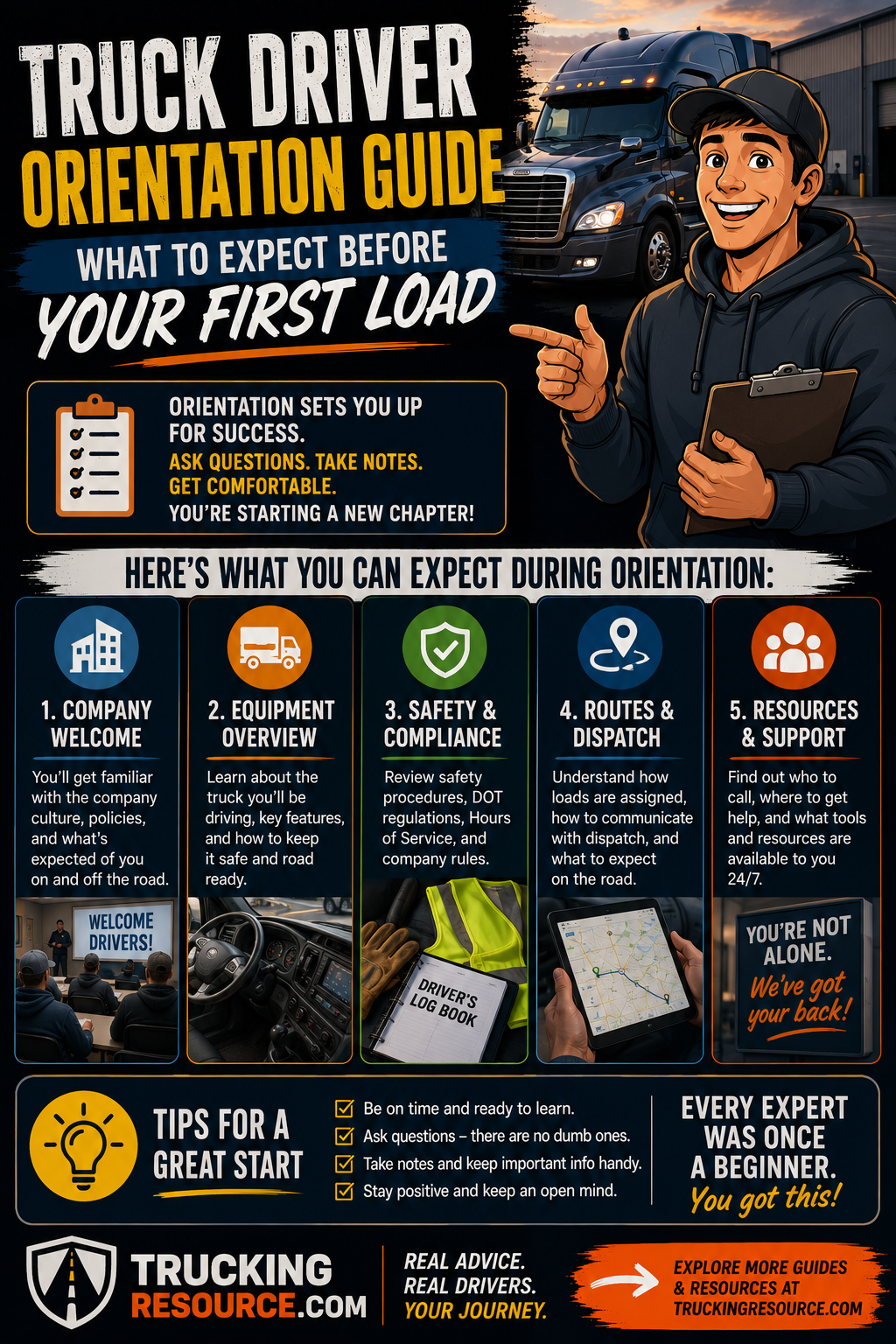
If you’re preparing for orientation, you may also find our Truck Driver Orientation Guide: What to Expect Before Your First Load helpful, since it covers the entire process from preparing at home to starting your first load.
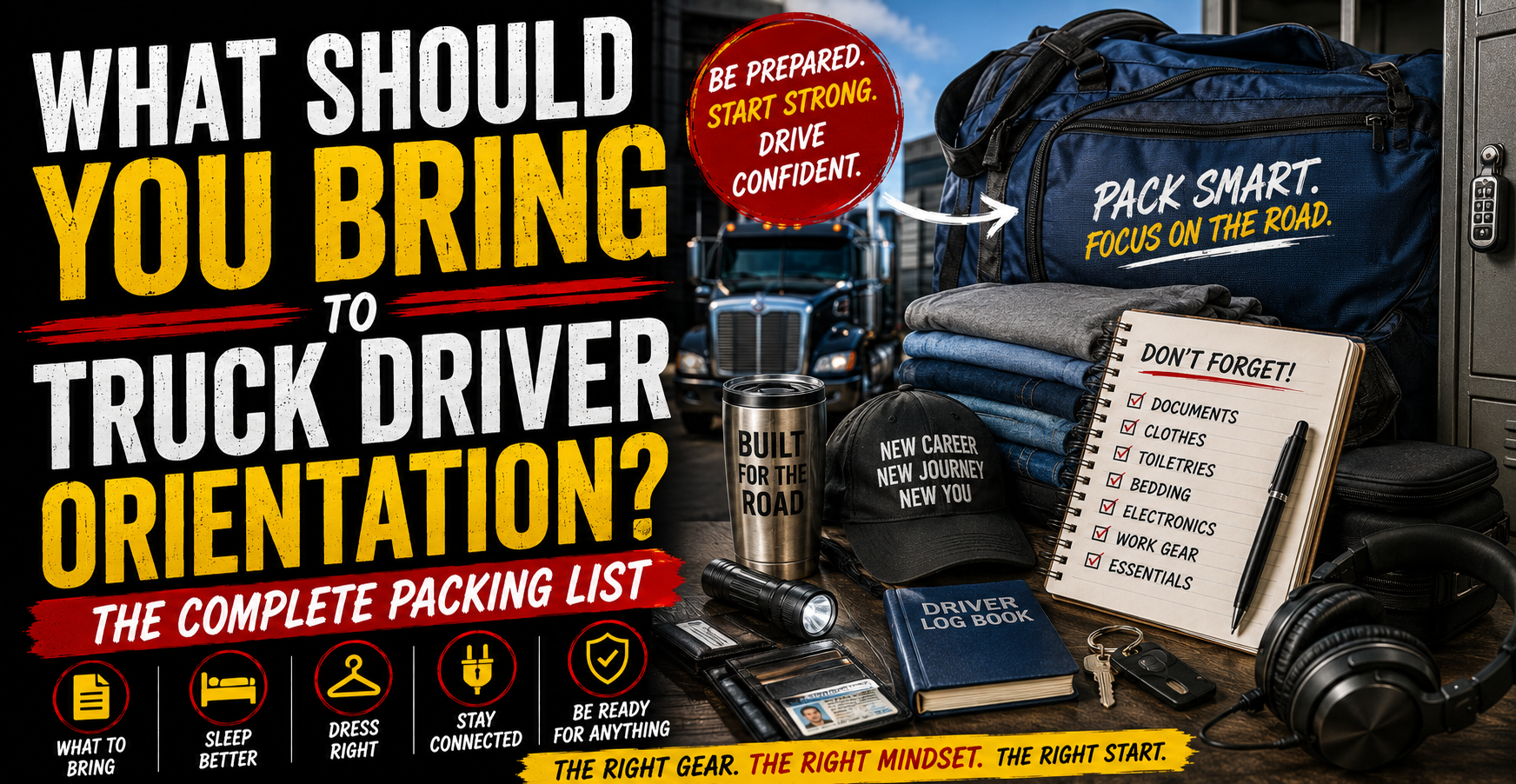
Next, be sure to read What Should You Bring to Truck Driver Orientation? to make sure you arrive with everything you need and avoid one of the most common mistakes new drivers make during their first week.
Author: Mason Carter
Mason Carter has worked in the trucking industry for more than 15 years, driving regional and over-the-road freight while mentoring new CDL graduates. He enjoys helping new drivers navigate the transition from CDL school to professional driving by sharing practical advice based on real-world experience.