

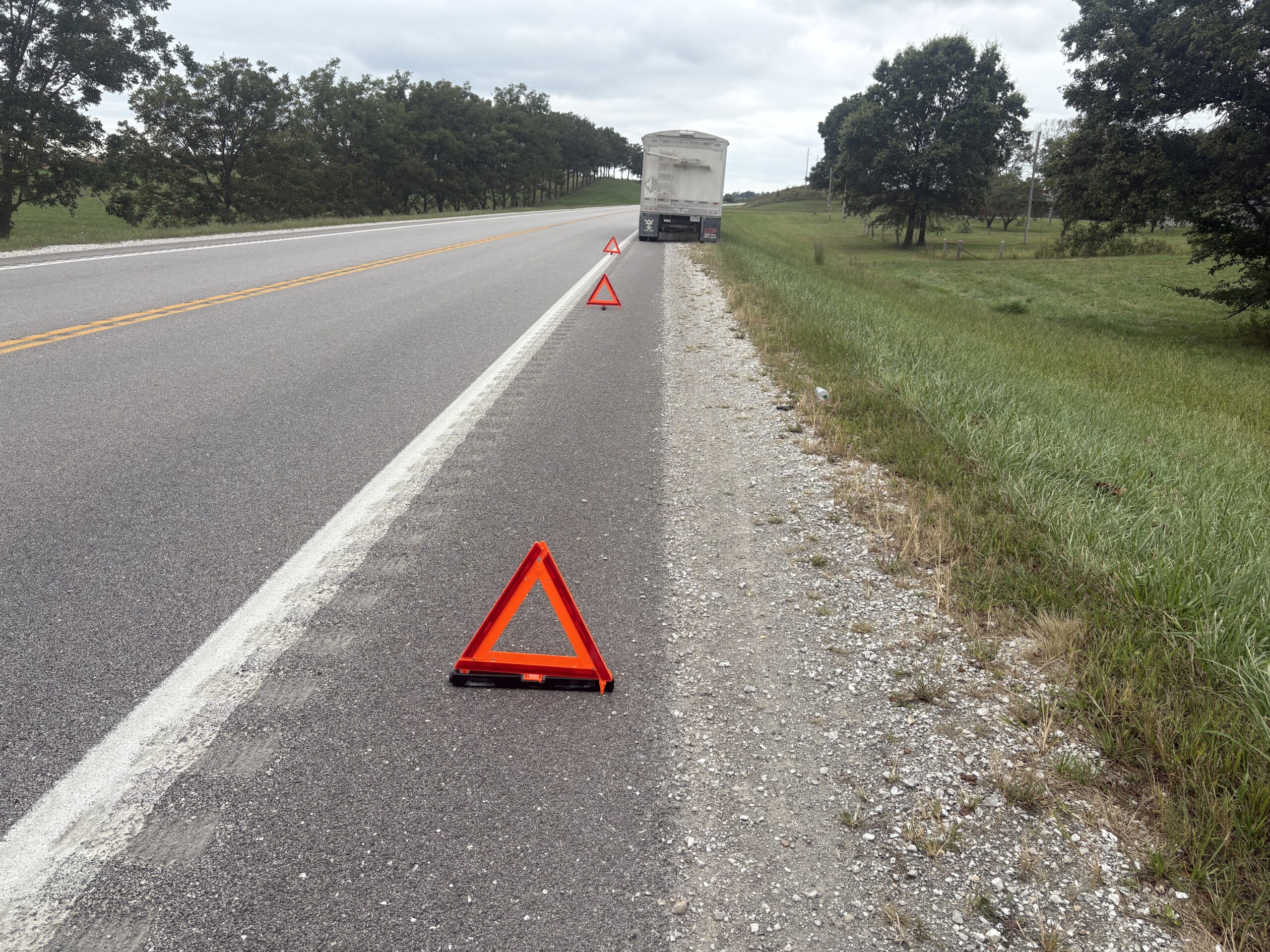
When my semi tire blew while I was hauling corn, I got the truck onto the shoulder of a rural highway. I turned on my flashers and put out three reflective warning triangles.
I’d been doing about 60 mph when the tire let go. The bang sounded like a cannon, the truck shook, and I could smell rubber. Once I was stopped, I had another problem to deal with: drivers coming down that road needed warning that a loaded truck was sitting on the shoulder.
I took a photo of the truck and triangles that day. It documents the stop, but a photo taken from one spot cannot show measured distances or serve as a placement diagram. So I checked the actual rule while writing this. On a straight, two-way road, the three locations are roughly 10 feet behind the truck, 100 feet behind it, and 100 feet ahead of it. Hills, curves, and other blocked views can change where a warning device needs to go.
Where the Three Triangles Go on a Straight Two-Lane Road
For a commercial vehicle stopped on a highway or its shoulder, the federal rule generally calls for three warning devices. On a straight road carrying traffic in both directions, the standard placement is:
- About 10 feet behind the truck, on the traffic side, in the direction of approaching traffic.
- About 100 feet behind the truck, in the center of the lane or shoulder the truck occupies.
- About 100 feet ahead of the truck, in the center of the lane or shoulder the truck occupies.
That third device is easy to forget when most of your attention is on the traffic approaching from behind. On a two-way road, vehicles can approach the stopped truck from either direction. The layout differs from the one used on a divided highway, where traffic beside the truck approaches from one direction.
Those distances are approximate because the regulation also describes them in paces: four paces for the close device and 40 paces for each of the two farther devices. The federal rule for stopped commercial vehicles gives the full placement requirements and the situations that call for a change.



Flashers Come First, but They Do Not Replace the Triangles
I turned on my flashers when I stopped. They make a truck easier to notice, especially while the driver is still dealing with the first moments of a breakdown.
The rule says to activate the flashers immediately when a commercial vehicle stops on a highway or shoulder for a reason other than a necessary traffic stop. It also says to put out the required warning devices as soon as possible and within 10 minutes. Hazard lights can be used while the truck is stopped, but they do not replace the warning devices.
That distinction matters in daylight too. My blowout happened while there was enough light to photograph the truck, yet the triangles still had a job to do. A driver coming toward a stopped semi needs an earlier warning than the truck’s lights alone may give.
Flashers also come back into the picture when the driver picks up the warning devices before moving the truck. After I was told to drive slowly to a tire shop about eight miles away, collecting the triangles was part of leaving the shoulder.


Why the Type of Road Changes the Layout
The rural road where I stopped had traffic in both directions. That is why a warning position ahead of the truck matters as well as positions behind it.
On a divided or one-way highway, the federal rule uses a different layout: one device near the rear on the traffic side, with the others about 100 and 200 feet back toward approaching traffic. Putting all three devices behind a truck on a two-way road because that’s what you remember from an interstate example would miss the traffic coming from the other direction.
Don’t choose a layout just because the road has two lanes. Look at whether traffic beside the stopped truck can approach from both directions and whether a divider changes that. Then check for a hill, curve, or anything else that keeps drivers from seeing the truck soon enough.
A Curve or Hill Can Change the Distance
The standard 10-foot and 100-foot positions are a starting point for an unobstructed road. If the truck is within 500 feet of a curve, the crest of a hill, or another obstruction to the view, the rule calls for a warning device in the direction of that obstruction at a distance of 100 to 500 feet from the truck so other road users have adequate warning.
That is a more useful way to think about placement than memorizing three numbers and setting the triangles down without looking up the road. The purpose is to give approaching traffic time to see that something is wrong.
I was fortunate to find a wide shoulder. That gave me room to stop my loaded truck. A wide shoulder does not guarantee that every approaching driver has a clear view, though. The road’s shape and sight lines still matter.

How Many Warning Triangles Does a Semi Need?
Three reflective triangles are the familiar setup most drivers carry and practice with. The federal regulation also addresses other approved warning devices and special circumstances, but three triangles are what I had when my tire blew.
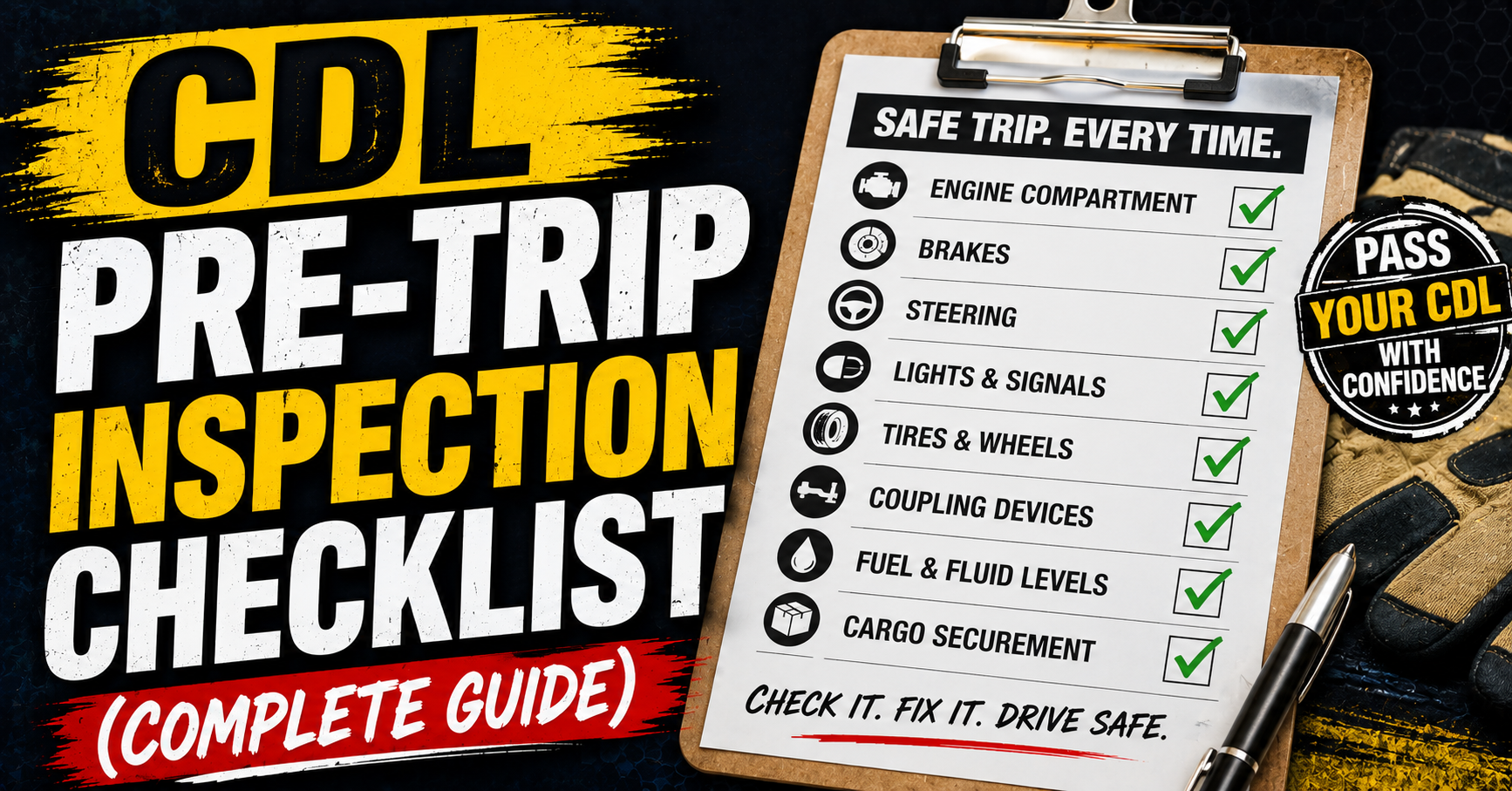
If you’re checking your truck before a trip, make sure the warning equipment is actually there and accessible. Knowing the placement rule is less helpful if you discover during a roadside stop that the case is missing or you cannot find it. Our CDL pre-trip inspection checklist covers the emergency equipment along with the rest of the inspection.
There is also a practical difference between opening a set of triangles while parked in a yard and doing it beside moving traffic. I’d rather have worked through how the case opens and how the triangles stand before I need them on a shoulder.
Is My Roadside Photo a Placement Example?
No. It’s a firsthand photo of my truck stopped after a tire blowout and the warning triangles I put out. I’m glad I have it because it shows the actual setting: a rural highway, a shoulder, and a truck that wasn’t supposed to be parked there.
It does not establish the distance from each triangle to the truck, and readers should not copy positions from the perspective of a photograph. Use the road type, sight lines, and the placement rule to determine where the devices belong at your stop.
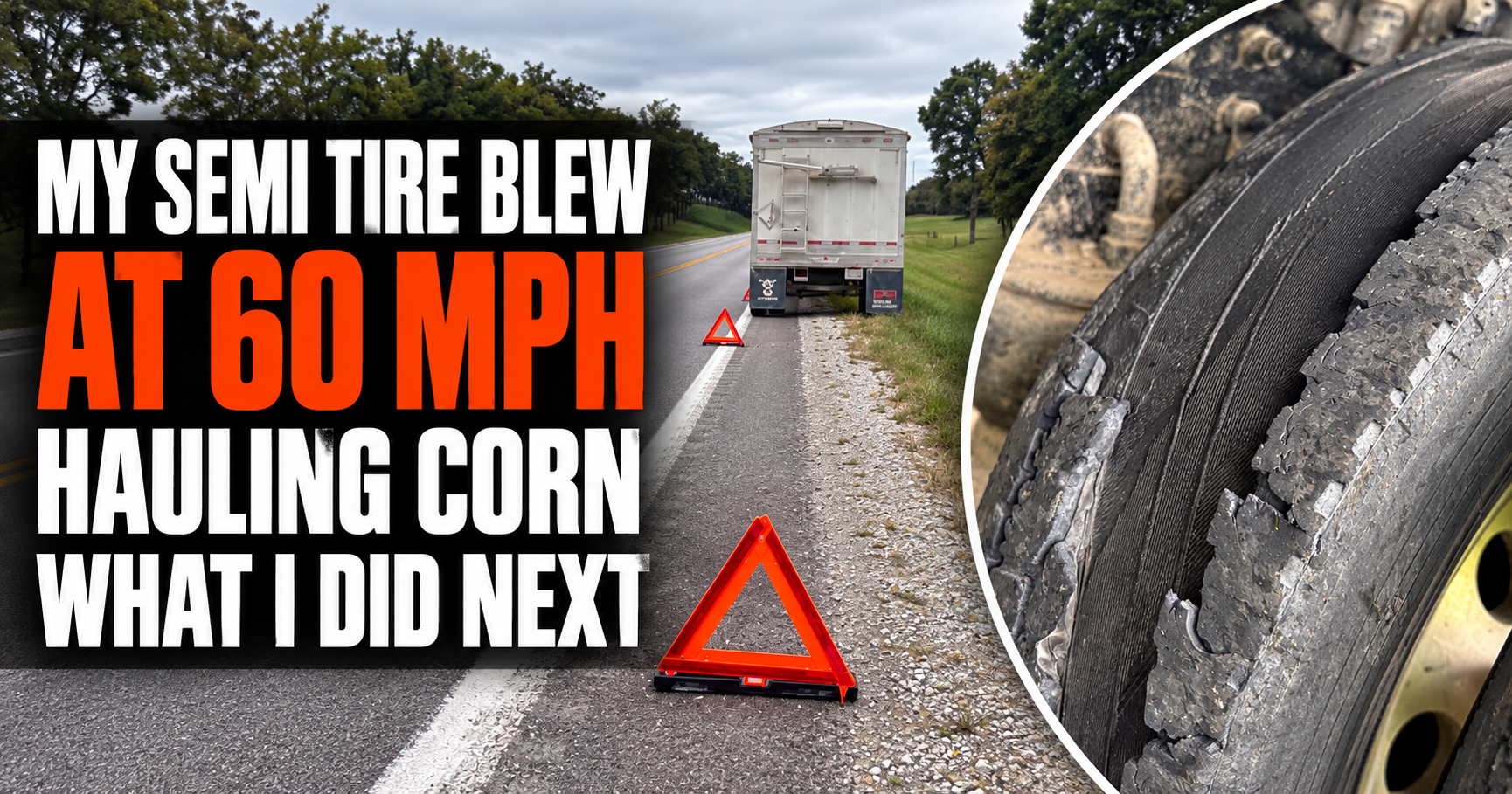
For the full account of the bang, shaking, smoke, damaged tire, and the stop itself, I wrote about my tire blowing while I hauled corn at 60 mph. This article focuses on the roadside warning question that came out of it.
Do You Need Triangles If You Are Entirely on the Shoulder?
Generally, yes. The federal warning-device rule applies when a commercial vehicle is stopped on the shoulder as well as when it is stopped in the traveled part of a highway, apart from the exceptions specified in the rule.
That’s relevant to my stop. I got onto a wide shoulder, but I didn’t consider the truck invisible to traffic or the situation over. It was still a roadside breakdown on a highway.
The regulation has a specific exception for certain stops in business or residential districts of a municipality. It also has special provisions for daylight and for flares. If you’re reading this to prepare for the CDL exam or to refresh your knowledge as a working driver, read those conditions in the rule instead of assuming every stop uses an identical setup.
The Detail I’ll Remember From That Day
I remember the bang first, but I also remember seeing my truck from farther down the shoulder after putting out the triangles. A few minutes earlier I’d been driving a normal load of corn. Now the truck was parked beside a rural highway with a tire torn apart.
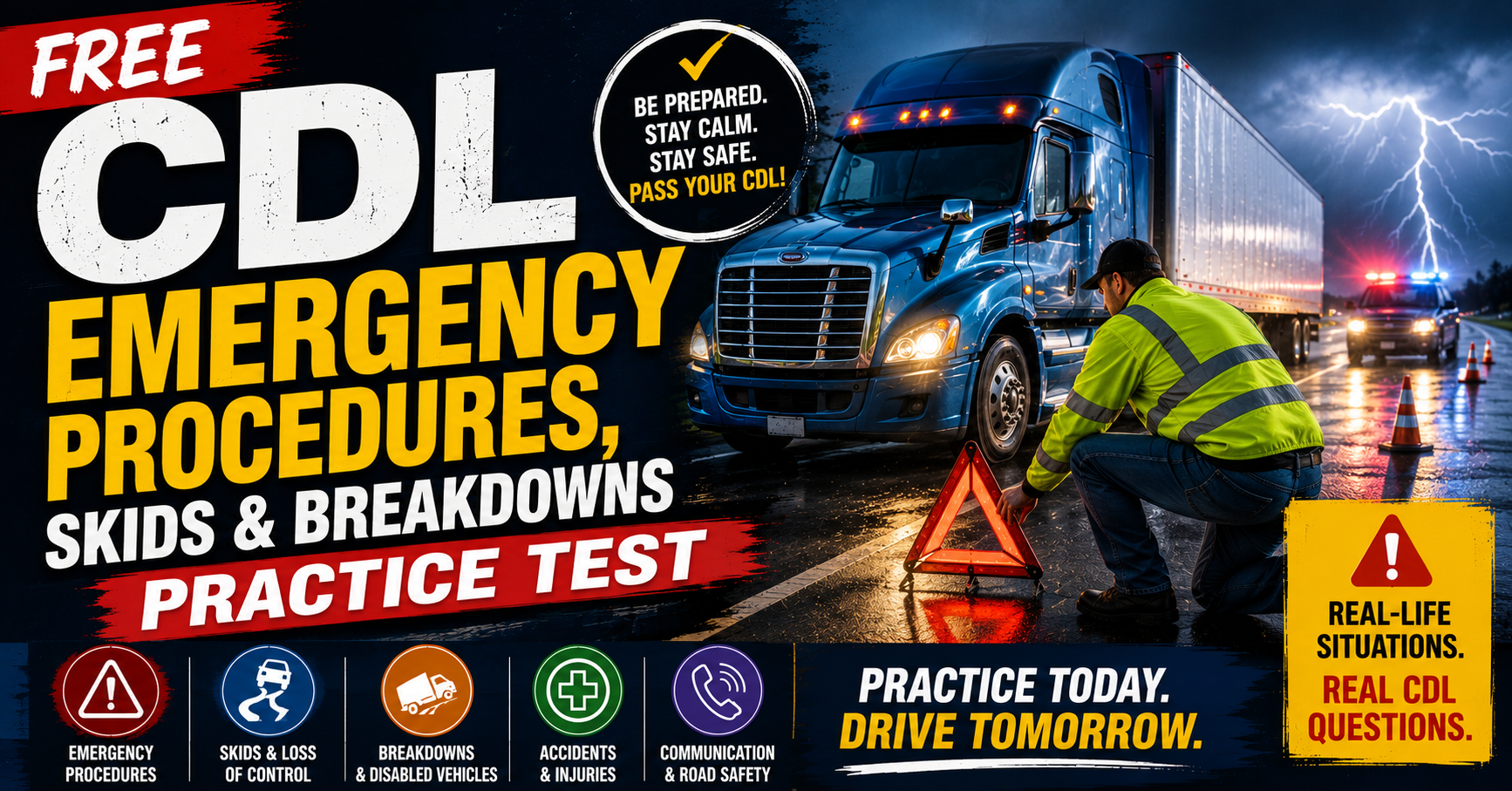
That is why this belongs in a driver’s working knowledge, not just in a practice-test answer. Know where your warning devices are, know how to set them up, and know that a two-way road calls for warning traffic from both directions. If you’re still studying these situations, the CDL emergency procedures practice test is a way to check what you remember before you have to use it on the roadside.
About the author: This article draws on a firsthand roadside stop after a tire blew while hauling corn. Read more practical driving accounts at TruckingResource.com.