If you’ve ever driven through a farming community, you’ve probably noticed a group of towering grain bins or tall concrete structures standing above everything else.
That’s a grain elevator.
For years, I drove past them without giving them much thought.
Then I earned my CDL and started hauling corn during harvest.
Suddenly, those buildings became much more interesting.
I realized a grain elevator is much more than a place where trucks dump grain.
It’s a carefully designed system that receives grain from farmers, checks its quality, stores it safely, and eventually ships it to places where it becomes livestock feed, ethanol, food products, or exports around the world. The broader story of corn’s journey after harvest shows how the elevator fits into the steps between the field and the final destination.
Understanding how a grain elevator works also helped me better understand how every truckload fits into the much bigger picture of agriculture.
What Is a Grain Elevator?
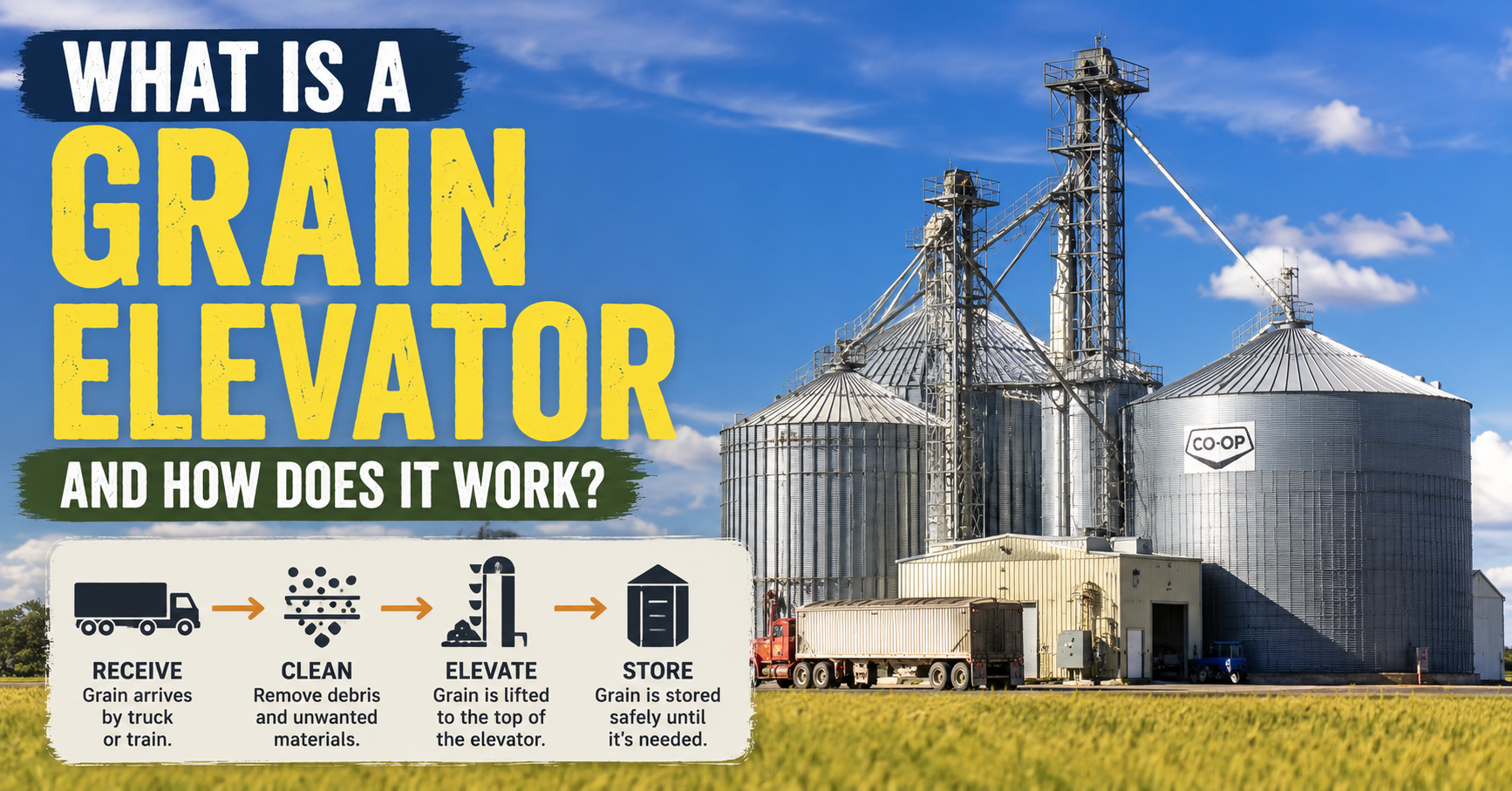
A grain elevator is a commercial facility designed to receive, handle, store, and ship large amounts of grain.
Although the name includes the word elevator, it doesn’t work like the elevator inside a building.
The name comes from the equipment that lifts grain vertically after it is unloaded from a truck.
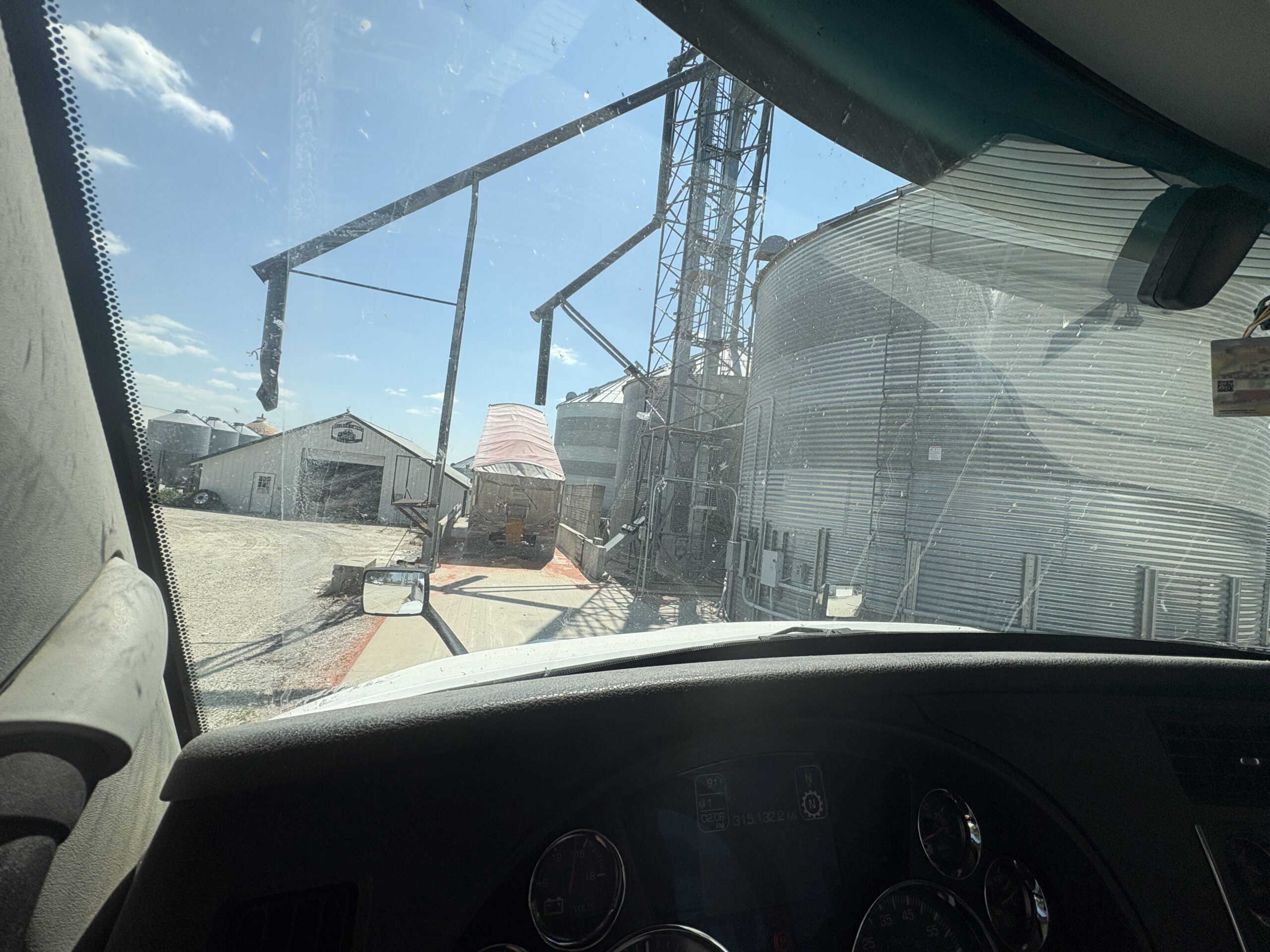
That lifting system allows the grain to be moved into storage bins, dryers, conveyors, or loading systems throughout the facility.
Modern grain elevators can store anywhere from thousands to millions of bushels depending on their size and the type of operation they serve. They use bucket elevators, conveyors, and storage bins to move grain efficiently while protecting its quality.



Grain Elevators Do Much More Than Store Corn
Before I started learning about grain handling, I assumed grain elevators simply stored grain until someone wanted to buy it.
That’s only one part of their job.
A modern grain elevator may:
- Receive grain from trucks.
- Weigh every load.
- Test grain quality.
- Measure moisture levels.
- Separate different grain types.
- Dry grain when needed.
- Store grain safely.
- Load railcars, barges, or trucks for shipment.
Every load entering the facility is tracked carefully because farmers are being paid based on the quantity and quality of the grain they deliver.
It All Starts at the Scale
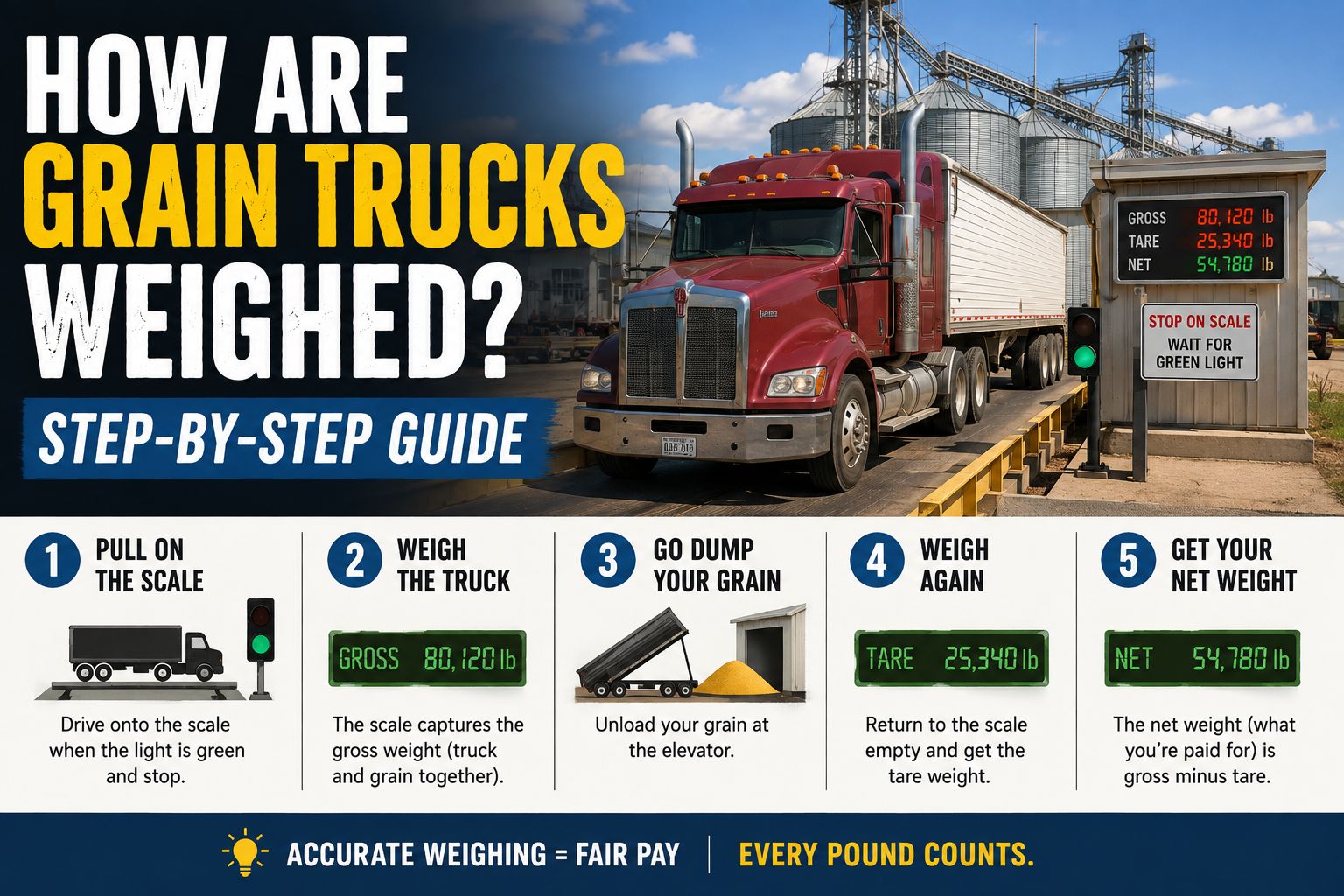
When a truck arrives at most commercial grain elevators, the first stop isn’t the unloading pit. The grain truck weighing process explains why the scale comes before unloading and how the final delivery weight is calculated.
It’s the scale.
The entire truck is weighed before unloading.
That weight is called the gross weight.
After the truck unloads, it returns to the scale and is weighed again.
That’s the tare weight, which is simply the weight of the empty truck and trailer.
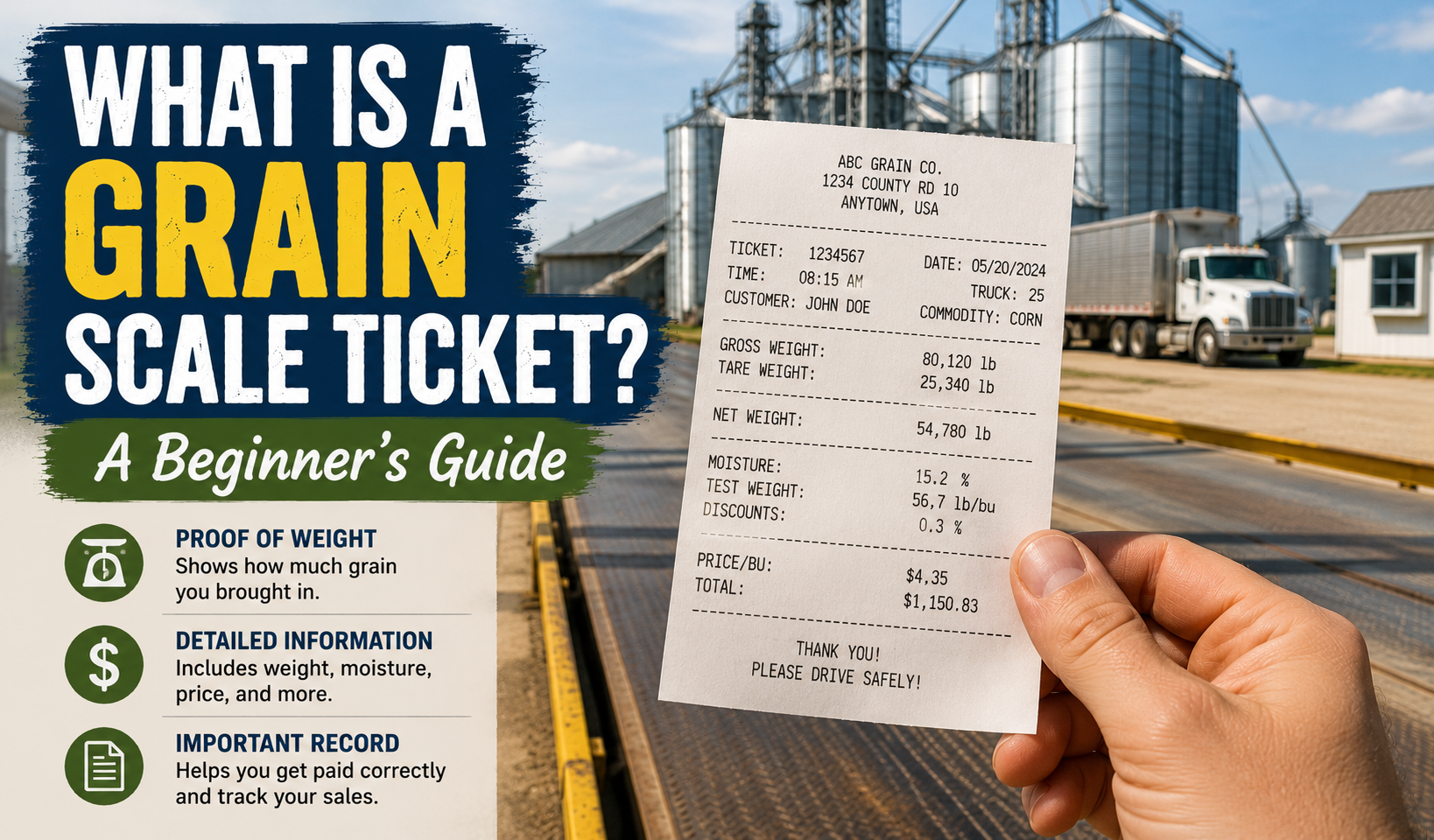
The difference between those two numbers tells the elevator exactly how much grain was delivered. The relationship between those figures is explained more clearly in this guide to gross and tare weights and net weight.
That process keeps transactions accurate for both the farmer and the grain elevator.
I’ll cover scale tickets and how they’re used in much more detail in another article because there’s quite a bit more involved than simply weighing the truck.
A Sample Is Usually Taken Before Unloading
One thing many people don’t realize is that grain isn’t simply dumped without being inspected.
Most commercial grain elevators collect a sample from every load before it is unloaded.
That sample helps determine several important things.
Moisture content.
Test weight.
Foreign material.
Damaged kernels.
Overall grain quality.
Those measurements help determine whether the grain meets buying standards and whether any discounts or drying charges apply. Grain grading and sampling are standardized to help ensure consistent quality throughout the grain marketing system.
If you’ve ever wondered why farmers care so much about moisture levels, that’s something we’ll dive into in a dedicated article because it affects storage, grain quality, and ultimately how much the crop is worth.
The Grain Finally Gets Unloaded
Once the truck has been weighed and approved, it’s directed to the unloading area.
Most hopper-bottom grain trailers unload through gates underneath the trailer.
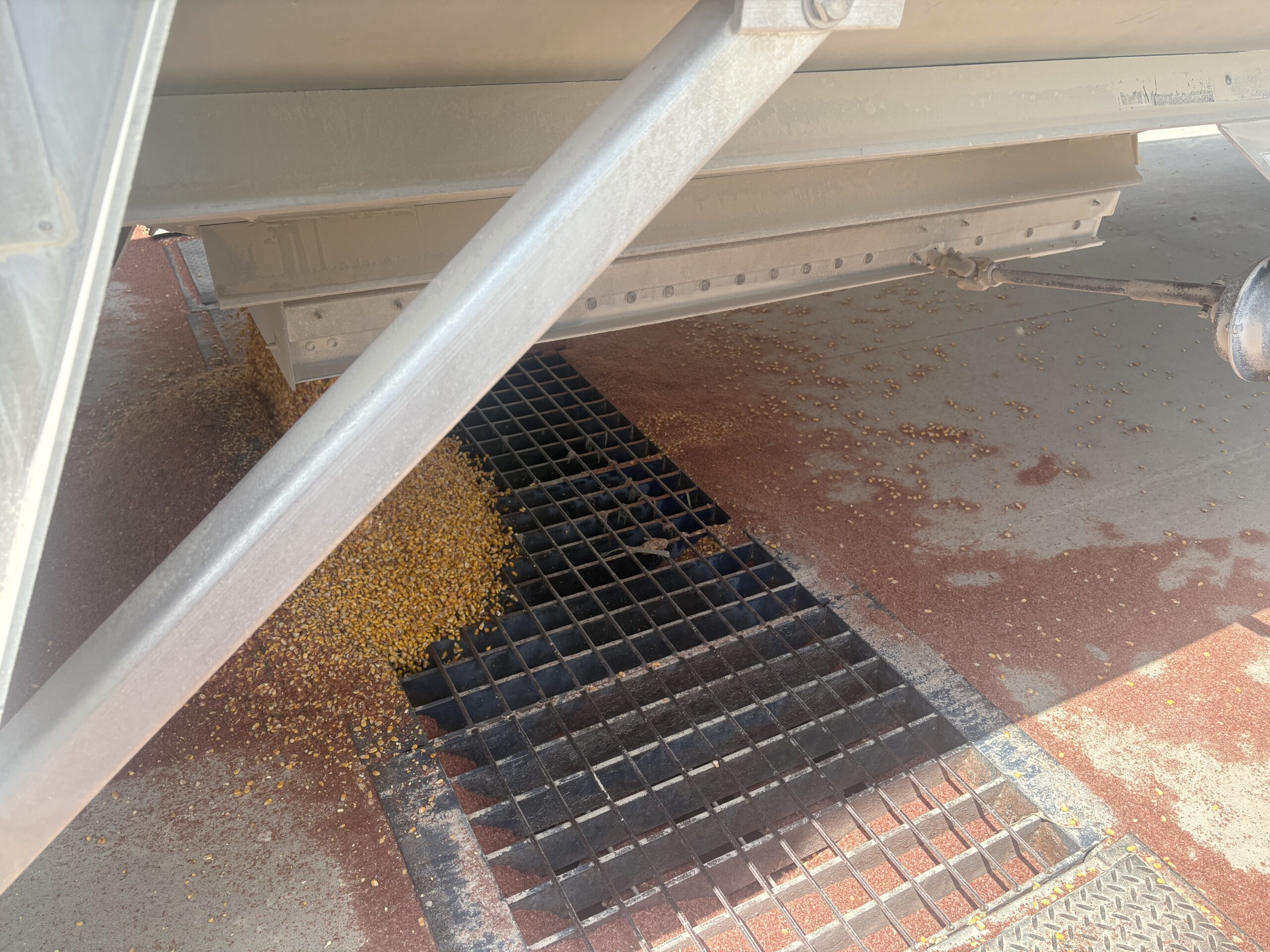
When the hopper doors are opened, gravity allows the grain to flow into a large receiving pit below the truck.
From there, the elevator’s equipment takes over.
If you’ve never seen a hopper trailer in action, check out What Is a Hopper Bottom Trailer? where I explain why this type of trailer is used for hauling grain throughout the country.
The Receiving Pit Is Where Everything Begins
The receiving pit might not look very exciting, but it’s one of the busiest parts of the entire grain elevator.
Once the grain leaves the truck, it falls into this underground pit.
From there, large conveyors or bucket elevators begin moving the grain through the facility.
The truck driver’s job is mostly finished at this point.
The elevator now takes over.
One thing I found interesting is how quickly the grain disappears.
A trailer that took time to fill in the field can empty surprisingly fast once those hopper doors are opened.
That’s one reason hopper-bottom trailers are so popular for hauling grain.
Why It’s Called a Grain Elevator
This confused me for years.
I always pictured an elevator like you’d find in an office building.
That’s not what it means.
Inside the facility is a machine called a bucket elevator.
It uses a continuous belt fitted with buckets that scoop grain from the receiving pit and carry it vertically to the top of the elevator.
Once the grain reaches the top, gravity takes over again.
It flows through chutes into storage bins, dryers, or conveyor systems that send it wherever it needs to go next. Bucket elevators have been the heart of commercial grain handling systems for more than a century because they move large volumes of grain efficiently.
Some Grain Goes Straight Into Storage
If the grain is already dry enough and meets quality standards, it may go directly into one of the elevator’s storage bins.
These bins aren’t randomly filled.
Elevators carefully separate grain based on several factors.
Different crops stay separated.
Different moisture levels may be separated.
Different quality grades may also be stored separately.
Keeping grain organized helps preserve its value and ensures buyers receive exactly the quality they’re purchasing.



Wet Corn Often Has to Be Dried
One thing I didn’t appreciate before learning more about grain handling is how important moisture is.
Corn that’s too wet usually can’t be stored safely for very long.
If it sits with excessive moisture, mold, spoilage, and heating can develop.
That’s why many grain elevators have large grain dryers.
These systems remove excess moisture before the grain goes into long-term storage.
Drying grain isn’t free, though.
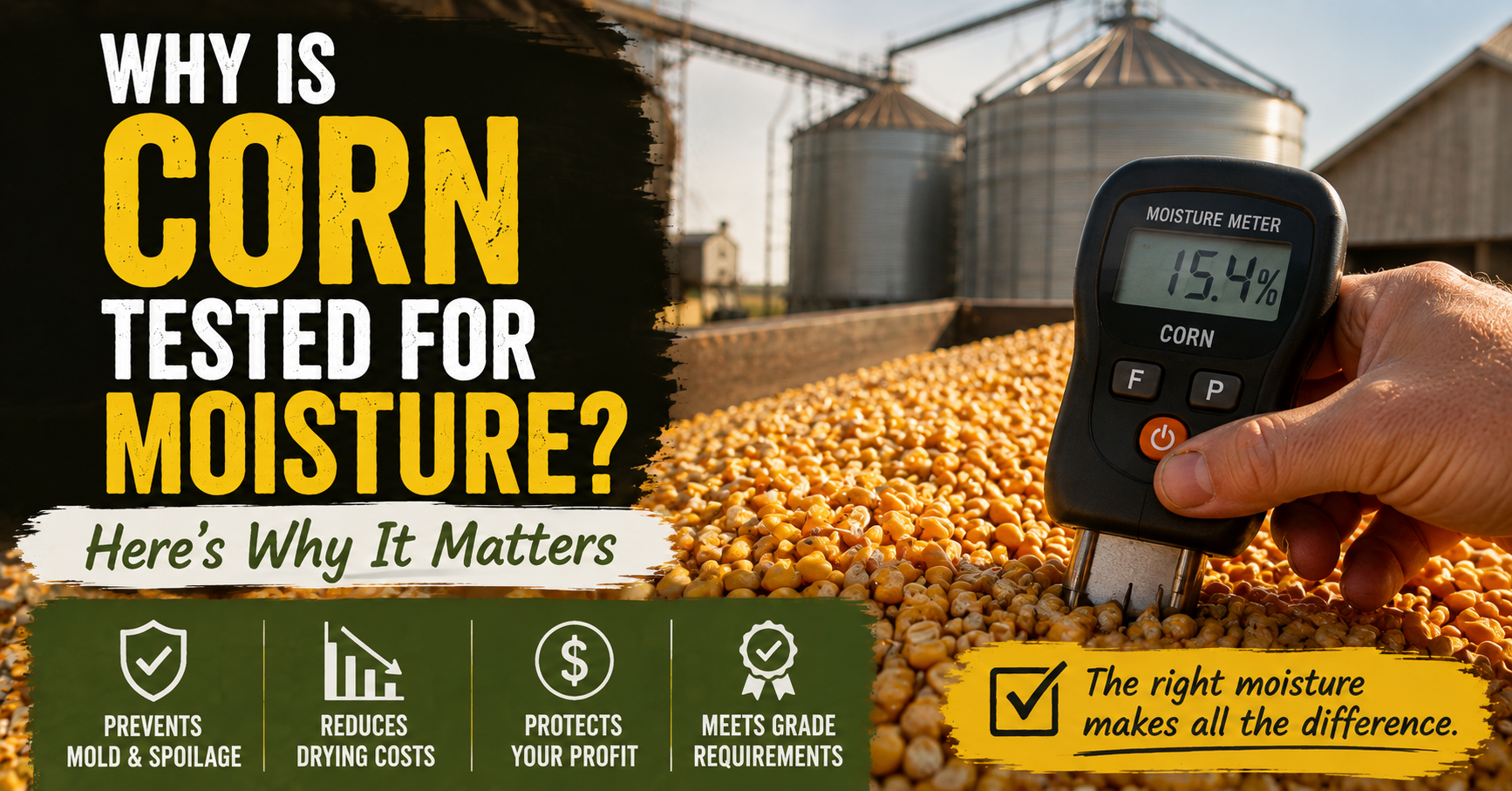
If a farmer delivers corn above the elevator’s moisture standard, drying charges are commonly deducted before payment. That’s one reason farmers pay such close attention to harvest moisture throughout the season. Grain drying is a critical part of preventing spoilage during storage. The reasons behind those moisture standards are explained in why corn moisture is tested.
I’ll cover moisture and grain drying in much greater detail in a future article because it’s an important topic all by itself.
Grain Doesn’t Stay There Forever
Many people assume grain elevators are simply giant warehouses.
In reality, they’re constantly moving grain.
Some grain stays only a short time.
Some may remain in storage for months.
Eventually it’s loaded back onto transportation so it can continue its journey.
Depending on the location, that might mean:
- Semi trucks.
- Railroad cars.
- Barges.
- Ocean export terminals.
From there, the grain may become livestock feed, breakfast cereal, ethanol, cooking ingredients, or countless other products people use every day.
It’s pretty amazing to think a load of corn leaving a local farm may eventually end up feeding livestock hundreds of miles away or even be shipped to another country.
Grain Elevators Keep Harvest Moving
After spending time hauling corn, I’ve realized grain elevators play a much bigger role than simply buying grain.
Without them, harvest would slow down dramatically.
Farmers would eventually run out of storage.
Grain trucks would have nowhere to unload.
Harvest would come to a stop.
Grain elevators provide the capacity and infrastructure needed to keep millions of bushels moving every harvest season.
They’re one of the most important links between the farm and the rest of the food supply chain.
Frequently Asked Questions
What’s the difference between a grain elevator and a grain bin?
A grain elevator is a commercial facility that receives, tests, stores, dries, and ships grain from many different farms. A grain bin is usually an on-farm storage structure owned by an individual farmer. I’ll compare the two in more detail in Farm Grain Bins vs. Grain Elevators once that article is published.
Why is grain tested before it’s unloaded?
The elevator checks things like moisture content, test weight, damaged kernels, and foreign material. These measurements help determine the grain’s quality and how it will be handled or priced.
Can grain elevators dry wet corn?
Yes. Many commercial grain elevators have large grain dryers that reduce moisture before long-term storage, helping protect grain quality and reduce spoilage.
Do all grain trucks go to grain elevators?
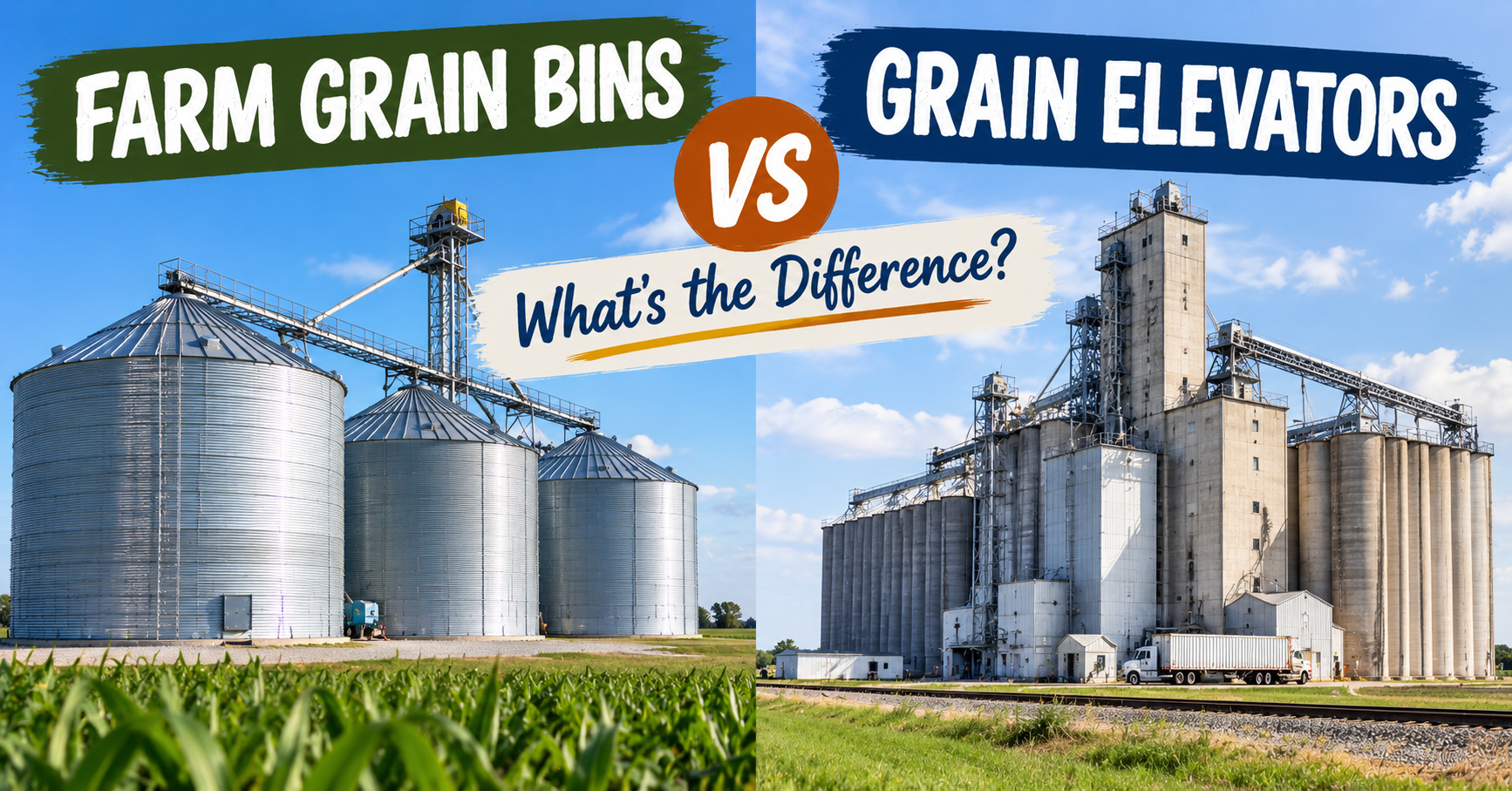
No. Some trucks haul directly to a farmer’s own grain bins, while others deliver to commercial grain elevators. It depends on the farm, available storage, and where the grain is being marketed. That distinction is explained further in farmer's own grain bins.
Seeing Grain Elevators Differently
Before earning my CDL, I drove past grain elevators without thinking much about them.
Now I understand they’re one of the most important parts of the entire agricultural system.
They don’t just store grain.
They inspect it.
Dry it.
Protect it.
Market it.
And move it to the next destination.
Whether you’re a truck driver, a farmer, or simply someone curious about where crops go after harvest, understanding how a grain elevator works helps connect all the pieces from the field to the products we use every day.
Author: Jake Harrison
Jake Harrison is a commercial transportation writer for TruckingResource.com who specializes in CDL training, trucking safety, commercial vehicles, freight operations, and agricultural transportation. He works with the TruckingResource.com editorial team to create practical, beginner-friendly guides that explain how trucking and the agricultural supply chain work together.